Bangalore Metro | Bus stops to have metro card top-up machines

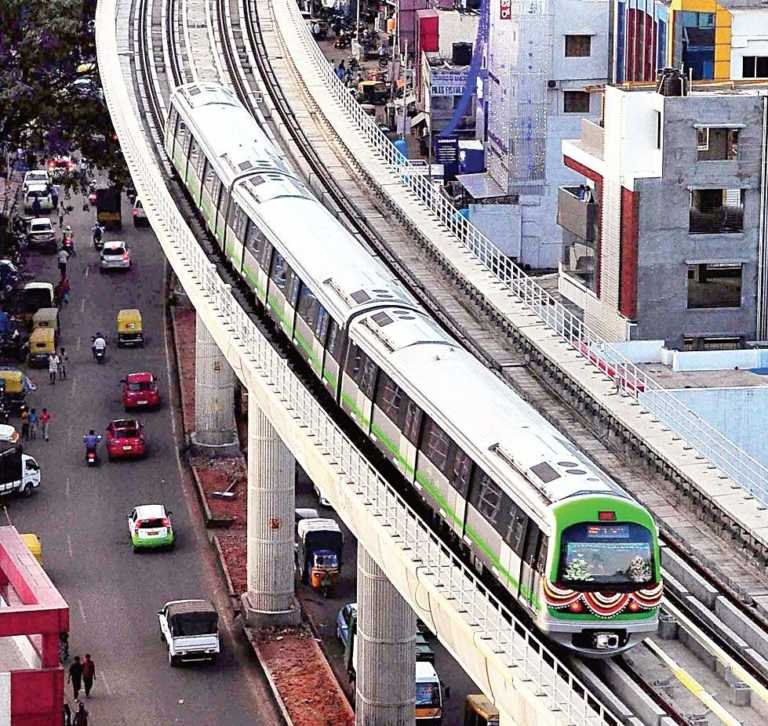
Bengaluru: The Bangalore Metro Rail Corporation Limited (BMRCL) plans to set up automated top-up machines at key places in the city. This moves comes in wake of customers complain regarding long queues at to-up travel card counter. To ease the problem, BMRCL plans to have top-up machines at various places including bus stops.

Based on the current data, 60 % commuters use ‘Smart Card’ or ‘Varshik Card’. This card offers 15% discount to rider on each trip.

Ajay Seth, BMCRL’s managing director shares that the to-up automated machines to be kept on places with high footfall rates.

Seth adds that they plan to put the automated top-up machines at TTMC centres of BMTC, prominent banks as well as metro stations. They are also considering other places where these machines can be placed.

The MD however, did not give a time frame as to when these machines will be installed.

From February this year, BMCRL had allowed to increase the storage value on the card. At Metro stations if top-up facility is used, then commuters can deposit around Rs 3,000. If the same is done online, then they can add up to Rs 2,500.

Another problem encountered is the ticket-vending machines at metro stations. Off late they have been functioning erratically. Metro officials are dependent on external agencies to mend and rectify the error. Post demonetisation, the machines need calibration as per Bangalore Metro official.

In terms of further development, BMRCL has had a meeting with delegates from Japan International Cooperation Agency (JICA). The delegation was there in the city.

Seth informs that they had a dialogue with the delegates of JICA. Together they discussed the possibility of long term JICA financing for metro projects in the city.

JICA has also given funds for Phase-1 and Seth explored the chances of them funding Phase-II as well. As per records, JICA has given Rs 4,000 crore out for the 42.3 km Phase-I project whose total outlay is 13,845 crores.
Delhi Metro | Durgabai Deshmukh South Campus-Lajpat Nagar on Pink line open for public

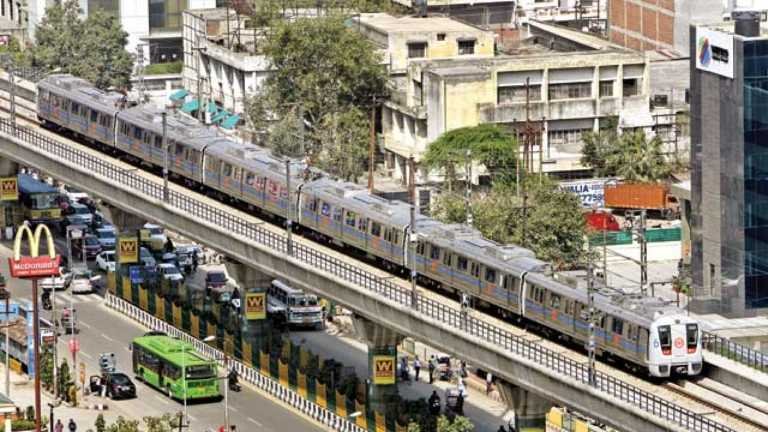
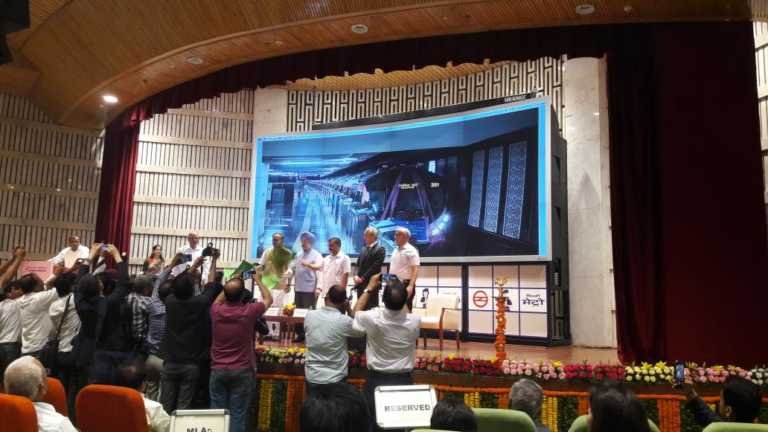
New Delhi:  On 6 August Delhi Metro Rail Corporation (DMRC) inaugurated the Durgabai Deshmukh South Campus to Lajpat Nagar section on the Pink Line. The Executive Director of Corporate Communications, DMRC, Anuj Daya said that 8.10-km long route will be flagged off by  The Minister of State (Independent Charge), Housing and Urban Affairs Hardeep Singh Puri and Delhi Chief Minister Arvind Kejriwal.

The service on Durgabai Deshmukh South Campus -Lajpat Nagar section of Delhi Metro’s Pink line was today flagged off by Union Minister Hardeep Puri and Delhi Chief Minister Arvind Kejriwa. Delhi Metro’s new service will link four major shopping destinations of the city. This section from Lajpat Nagar to Sir Vishweshwaraiah Moti Bagh will have the six stations viz. Vishweshwaraih Moti Bagh, Bhikaji Cama Place, Sarojini Nagar, INA, South Extension and Lajpat Nagar. It also has two interchange stations at INA and Lajpat Nagar.

Pink Line Map
Delhi Metro Route Map (Photo: DMRC)

About Pink line corridor:

  • The services for commuters for pink line will began from 1 Pm.
  • This stretch will provide great facility for commuters who usually like to go for shopping i.e, Sarojini Nagar, INA, South Extension and Lajpat Nagar.
  • This streatch consist both elevated as well as underground station, Sir Vishwesaraiya Moti Bagh is elevated whereas Bhikaji Kama Place, INA, Sarojini Nagar, South Extension and Lajpat Nagar are underground stations.
  • There will be total 23 number of trains will run on Delhi metro pink line’s new corridor.

All the six stations of new corridor of Delhi Pink line metro are approved from Green building Council of India. After the extension of this line, the total network of Metro the city has expanded to 296 Km through 214 stations.

The Pink Line’s section flagged off via remote from Metro Bhawan at 11.30 am. This was open for passengers from 1 pm onwards from 6 July onward. The stretch consists total six number of stations which includes two interchange stations one at  Lajpat Nagar and another at INA.

Dayal also mention that this new section would also shrink travel time for commuters by up to 20 minutes.

Kolkata Metro | KMRCL plans microsurgery to solve E-W metro hurdle

Kolkata: Kolkata Metro Rail Corporation Ltd (KMRCL) plans microsurgery. This is to remove key hurdle of tunnel boring machines (TBMs) that East-West Metro corridor encountered. The Kolkata Metro officials are using international method to remove the hurdle.

The metro officials are facing trouble from the Esplanade to Sealdah stretch. They now plan to employ Australian tunnelling method to remove the hurdle. Five steel H-Piles blocking the route just beyond Esplanade station will be manually removed.

Parashuram Singh, managing director, KMRCL explains that a 40m-long and 3m-wide pilot tunnel will be manually dug linking the two tunnels that the TBMs will excavate. To avoid the earth from caving in, engineers will employ a technique called Fore-poling. As the excavation progresses, sharp metal poles will be employed to form a cover. The H-piles will then be cut by the workers.

Four more such piles will be cut through to clear the hurdle ads Singh.

By middle of August work will begin and continue for three months. Metro officials inform that two TBMs that have by now been lowered underground at the Esplanade station site can commence work by the October end. The officials believe this will aid in meeting the projected June 2021 deadline for the complete 16.6km Kolkata metro project.

Interestingly, the H-Piles date back to the late 70s and early 80s. This was when the when the North-South Esplanade Metro Railway station was being built.  It was completed using conventional top-down cut-and-cover technique.

Singh assures that work is going on at good pace. They are able to meet deadlines. A trial run of also carried out on the east-bound line between Salt Lake Sector V and Salt Lake stadium. It was also first full trial run for the east-bound stretch. For west-bound line a full run was conducted previously.

Singh also shares that platform screen doors material has come. Workers have begun installing the doors too.

Delhi Metro | DMRC awaits state government approval for Phase-IV projects

New Delhi: The Delhi Metro Rail Corporation (DMRC) planned for Phase-IV to provide last mile connectivity for the new housing hubs in the NCR. Whose aim is to   complete the projects by 2022. The work on this project was likely to start in 2017. But project is still waiting for Delhi’s government approval.

Union Minister Hardeep Sing Puri said that the approval for Delhi Metro’s phase-IV was of “utmost importance.” The Centre was mulling bringing on board foreign companies to provide financial aid to the Delhi government, for the project.

He further added that despite of several reminders, Chief Minister Arvind Kejriwal has not been available for a discussion regarding the road block that the proposal has hit.

He also said that, “I have been trying to meet Mr. Kejriwal over this issue for a very long time, but every time the meeting is being delayed for one reason or another. Now the Delhi government is saying that the delay is over financial matters. In order to provide financial aid to the State government, we can also help them take a loan from companies abroad. I will try and meet him next week to convince him. The Delhi Metro’s phase-IV is of utmost significance and it is important that the proposal is approved.”

The central government given the in-principle approval for phase-IV prjects. But still seeking state government approval. Now two years had over but Delhi government is not responding for the projects.

Mr. Puri referring to the deadlock over the project, in March this year had said that the Centre will take a “decision” if the Delhi government fails to take one.

About Phase- IV projects:

The phase-IV consists 104-kilometre network proposed in this phase is expected to cater to 1.5 million passengers daily.

The 104 Km extension includes different station viz. Rithala to Narela (21 km), Inderlok to Indraprastha (12 km), Tughlakabad to Aerocity (20 km),Lajpat Nagar to Saket G-Block (8 km), Janakpuri to RK Ashram (28 km), Mukundpur to Maujpur (12 km) ,HUDA City Centre to Gurgaon Railway Station (29 km) ,IFFCO Chowk to Dwarka Sector 21 (12.5 km), Gurgaon Railway Station to Palam Vihar (23 km)

delhi metro phase 4 iv map 2
Infographis (Source: TOI)

delhi metro ph 4 route Map

The Delhi Metro Rail Corporation (DMRC) has seeking for approval from state government in two phases. In the first phase, the DMRC is seeking an approval for the Mukundpur-Maujpur, the Tughlakabad – Terminal 1 and the Janakpuri (West)-RK Ashram sections. In the second phase, the Rithala–Narela, the Inderlok–Indraprastha and the Lajpat Nagar–Saket G-Block sections can be considered.

Concessional passes:

Mr. Puri also mentioned about the concessional passes for students and senior citizens is being considered.

He said, “We are committed to the proposal and once the Delhi Metro Rail Corporation (DMRC) tells us that the required technology is ready, we can consider it. We can even think of linking Aadhaar to make it easier to identify.”

Jaipur Metro | Country’s first art gallery to come up at metro station

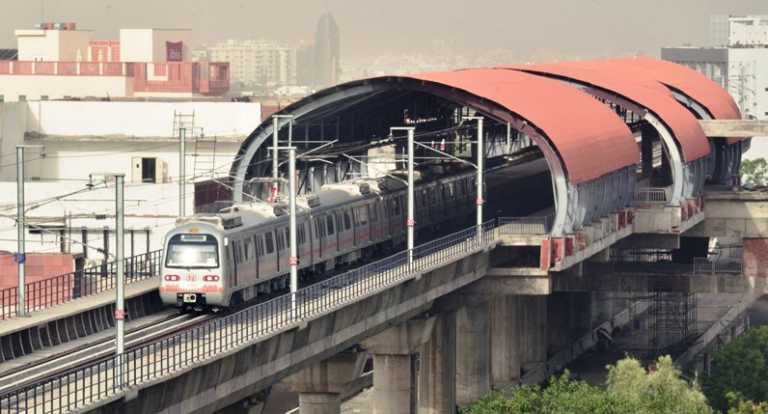
Jaipur: India’s first art gallery to showcase Rajasthan’s archaeological artefacts and sculptures to come up at Jaipur metro station. The gallery is expected to open by August 15. It will be inaugurated by chief minister Vasundhara Raje.

Jaipur Metro Rail Corporation (JMRC) is working tirelessly to blend heritage structure into its designs. Chief managing director (CMD) Pawan Goyal, post inspection has instructed the team to meet the deadline.

Inspired by foreign countries, JMRC has designed art gallery at the underground Chotti Chaupar metro station. The authorities plan to keep old items unearthed during excavation work in and around the old city area. Artefacts from other parts of the state will also be put on display at the art gallery.

JMRC’s project director, Ashwani Saxena says that this gallery will be one-of-its kind in the country. He adds that no other art gallery is themed around historical architect and artefacts. Along with construction of art gallery, restoration work of step well at Chotti Chaupar is on way to completion. Around 5 crore have been spent by corporation on restoration work.

Restoration work at Baddi Chaupar step well is likely to be completed in time.

The art gallery at the Chotti Chaupar will be at the first level. Interestingly, the gallery will have a passage connecting both the khandas (crossroads).

Two age-old step wells at Chotti Chaupar and Baddi Chaupar will also be restored by the corporation. These two step wells were buried owing to non-utility.

The rail corporation aim at restoring the step wells is to showcase its true beauty to people of Rajasthan.

Hurdles cleared for Jaipur Metro underground corridor between Badi Chaupar and Chandpol in Walled City. Work is expected to be compelted by September.

Jaipur Metro officials inform that 80 per cent of civil work and tracks is completed for metro stations. JMRC is hoping to meet the deadline given the pace of work.

Bangalore Metro | Employees face trouble to work in graveyard shift

Bengaluru: Bangalore Metro Rail Employees Union (BMREU) is now taking an action after the request of 36 employees which also includes 6 women of the P-Way department of Line-1 (Baiyappanahalli to Mysuru Road).

The Union has written a letter to both the BMRCL management and the Labour Commission. Trouble for Bangalore Metro Rail Corporation Limited (BMRCL) is slowly increasing. The main problem this time is the sudden increase of work force in the graveyard shift for Track Maintenance employees at the Baiyappanahalli depot.

This has become big problem and heartburn among the staff. Since July 7 the mandatory duty for nights shift a month has been increased to anywhere between 16 and 18-night shifts from 6 shifts.

P-way Track Maintainers have been told to work four nights and two days with a day off every week instead of working on the first shift (6 am to 2 pm), second shift (2 pm to 10 pm) and night shift (10 pm to 6 am) in rotation every month so that the number of nights for each staffer comes to six a month.

“Trebling the number of night shifts will take a toll on the health of these employees as well as their ability to perform their duties efficiently, particularly in a sensitive department like Track Maintenance,” Union Vice-President Suryanarayana Murthy said.

A senior BMRCL official said that Metro track maintenance work could be done only between 12 midnight and 4 am when operations are shut. Work in the Track Maintenance department is of that nature only. Our operations have increased massively since Phase-I commenced, forcing us to carry out more track-related work. There is no desire to forcibly make anyone work throughout night.

BMRCL has also adopting rental bike facilities. To provide parking services at Mysuru Road Metro station. Beginning Saturday, paid parking will resume at the station after a one-week gap from August 4, M/s Wicked Ride said an official release.

Delhi Metro | Safety and fare hike issue leads to daily ridership decrease

New Delhi: When Delhi Metro service was started its aim was to ease the transport difficulties of commuters and to give best services and safety to them, but from number of incident occurring in the Delhi Metro Rail Corporation (DMRC) can prove that’s it has get distracted from its aim. One more incident occur at Mandi House on 3 July.

On Friday evening man fall on to the track, reportedly after slipping to the platform at Mandi House Station of Delhi Metro. As soon incident occurs he rushed to the hospital but his life could not save.

Vinod  Pathak, was UP  forest department officer was standing at platform number-2 of Mandi House at 7.35 Pm. As train going towards Dwarka, driver could not stop the train because he trembled forward on the path as train arrive. When train hits him, he was very injurious was taken to Ram Manhor Lohia Hospital, but could’t save him.

Central Industrial Security force official said that we have checked the CCTV footage and discovered that the man lost his footing and slipped on the track. There was no pushing or suicide case, it was just incident that he couldn’t maintain the balance and slipped.

Approximate one lakh of ridership has been reduced from last one year. For this Delhi Metro Rail Corporation will also commission a comprehensive study to find a reason in reduction of ridership. In this study they will try to find a reason that which transport is best and affordable for commuters.

It can be also concluded that ridership is decreasing because of several factors:

  • Safety issues are one of the most effective factors for this. From last two-three months suicidal case has been increased at a larger scale.
  • Delhi Metro has installed Platform Screen Door (PSD) in newly built Metro station which provides better safety services to commuters. But what about other Metro station?
  • Metro fare has almost increased by 100% in 2017 which is also one of the leading factors for decreasing ridership.
  • DMRC Employees Union strike of salary hike. DMRC could’t resolved there demands as it is running in loss due to corrupt practices ( Airport Metro line) in Delhi Metro.

Hyderabad Metro | Work begins on Cyber Towers Metro route

Hyderabad: Cyber Towers compound in the HiTech city of Hyderabad is partially demolished. This is to pave way for construction of two metro piers. Work on pillar one is going on, foundation for the other pillar has opened too. The construction for the same is expected to be wrapped up in three months.

Construction of piers at this stretch is a big challenge as Cyber Tower turn is steep. As per the current set up, one side there is a Cyber Tower and the other side there is flyover. Metro will have to pass between these two constructions. The metro needs to pass which has to be negotiated vigilantly for the left turn to be taken.

Hyderabad Metro Rail Limited (HMRL) had rounds of negotiations with representatives of Cyber Towers. Interestingly, the metro towers will be constructed closer to the footpath. No land will be acquired from Cyber Tower but both the piers will be built on its compound.

NVS Reddy, HMRL’s managing director assures to compensate Cyber Towers. The track way and compound wall of Cyber Towers is getting disturbed due to the construction. HMRL will restore it once the work is done. Metro track is laid out without acquiring land from them and metro will let Cyber Towers keep their land the way it is shares Reddy.

The other pier is stationed across the road. The metro will be crossing from the flyover. Given that cantilever will not be able to take the load and stress at the centre alone, a portal structure will be built. One column will be on the ramp of the flyover in centre, whereas the other at footpath. On the portal beam, the metro suspension bridge will run.

Reddy adds that they will widen the flyover’s ramp portion on both sides initially. The column will be installed in the middle of the flyover.

The entire construction is done carefully given the fact it is challenging engineering structure. Reddy says that subsequent to it a few metres, the piers will come into the central median.

Preparatory work has stated at the flyover and technical measurement taken. The piers at Cyber Towers will be wrapped in three months time. Given the traffic situation, HMRL will be constructing one pillar at a time. At present the U-turn at Raheja has been blocked to facilitate to the Metro works.  The other U-turn is just ahead of biodiversity junction.

Delhi Metro | DMRC misguides UD Minister, no action on Airport Express line case

New Delhi: The government told Rajya Sabha today that Delhi Metro authorities have taken action against the consultant and engineers involved in executing the Airport Express Metro line for alleged lapses, including providing ‘unfit’ track fittings for the project.

In his written reply Housing and Urban Affairs Minister Hardeep Singh Puri said that the Delhi Metro Rail Corporation has informed the ministry that the track fittings provided by concessionaire are “not fit” for trains to be run at more than 80 kmph, even though the prescribed limit on the metro line is 120 kmph.

He further added that as an outcome, the consultant, who was the engineer for the project, forfeited the performance security of Rs 5.80 crore.

He also said the civil contractor was disqualified for participating in DMRC tenders, adding that the assistant engineer and deputy chief engineer for the project were taken up under the Discipline and Appeal Rules.

“The prescribed speed of Delhi Airport Express Line is 120 kmph. At present, there is no defect in the line except that the tract fittings provided by concessionaire are not fit for more than 80 kmph,” informed by DMRC.

However  DMRC has informed the ministry that irregularities have not been found in the terms and conditions of the Delhi Airport Express Metro Line.

Puri said that “accordingly, trains are being run at a maximum speed of 80 kmph.”

In month of July Delhi Chief Minister Arvind Kejriwal demanded a CBI inquiry into the alleged “negligence and corruption” regarding the termination of the concession agreement of the airport line.

Chief Minister said that in a letter to Puri, a copy of which was also sent to Home Minister Rajnath Singh, “Given the alarming proportions of negligence and corruption. He told that I would request you to entrust this case to CBI for expeditious investigations and prosecutions.

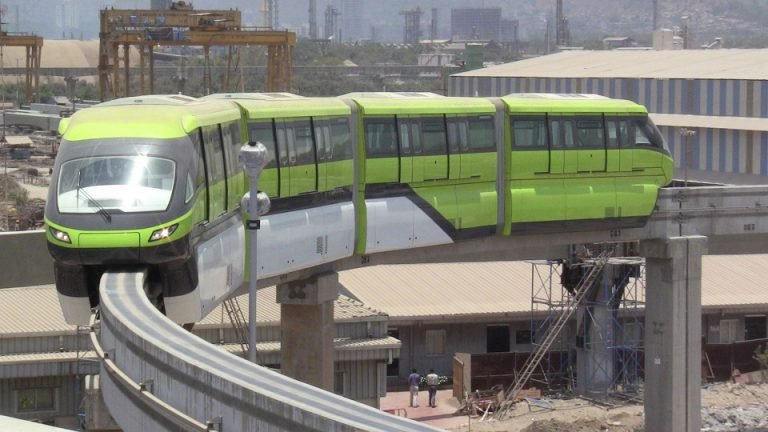
Mumbai Monorail | LTSE demands more than five times trip rate to operate Phase-I

Mumbai: Monorail which comes under Metropolitan Region Development Authority (MMRDA). Now contractors of this are demanding higher trip rate for resuming the services on Phase I. Now the consortium of Larsen & Toubro-Scomi Engineering (LTSE) are demanding more than five times the earlier trip rate to run the country’s only monorail corridor between Chembur and Wadala.

Already the LTSE has demanded Rs 18,000 per trip in order to operate Phase I of the monorail corridor.

The Metropolitan Commissioner R A Rajeev said that we have not yet decided and are holding meetings with them. They have to come back to us regarding the rate.” Mumbai Metro Rail Development Authority (MMRDA). When Phase I operations were suspended in November last year following a fire, the LTSE had been charging a trip rate of Rs 3,131. The new rate will mean an increase by at least 470 per cent.

On November 9, 2017 monorail is set to down for around nine months due to fire damaged two coaches at Mysore Colony Station. While the MMRDA is expecting to restart Phase I in August and hoping to resume services on the Phase I corridor and start Phase II simultaneously, with shortage of rakes. The Phase II which is likely to start from early next year. The IL&FS Rail this year sought Rs 7,000 as trip rate for the same length which had emerged as the lowest bidder in a call to appoint a new contractor for operating and maintaining the corridor. But LTSE will operate phase-1.

Rajeev said that they have to complete the contract and obligations and then we will take over. We intend to start both the phases as soon as possible.”

The corridor which connecting Chembur and Wadala has reached to higher ridership of around 17,000 a day. Now there will also increase in fare for the Phase I corridor which will be approximate to the range of between Rs 10 and Rs 40 from the earlier Rs 5-19.

Kolkata Metro | BEML to supply futuristic rakes for metro

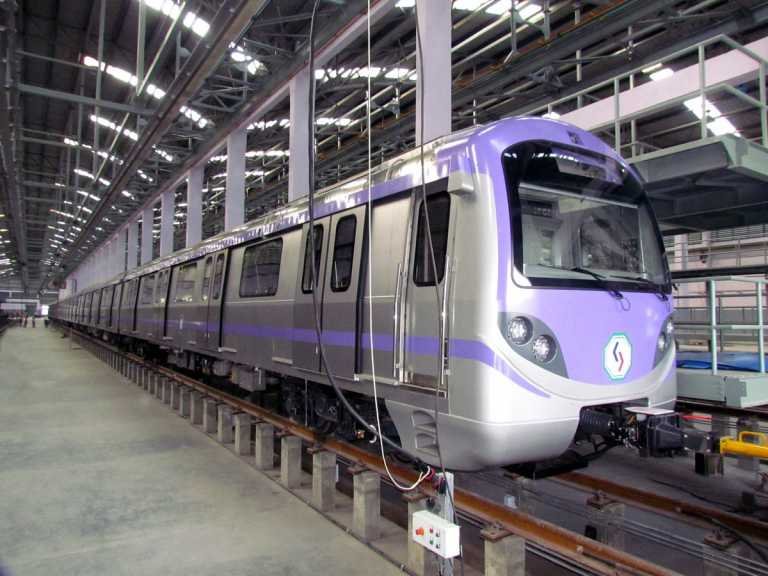
Kolkata: Commuters in Kolkata will soon get the ‘bullet train’ experience. The new set of rakes for the Kolkata’s East West Metro corridor of Kolkata Metro will receive futuristic rakes. These will be supplied by Bharat Earth Movers Limited (BEML). As per news these rakes will have Bullet Train like features.

The brand new coaches from BEML will be technologically advanced. These will look like bullet train but made of aluminium instead of steel. All the 14 six coach rakes will have futuristic features and promises to give a bullet train like feel to commuters.

Kolkata Metro, country’s oldest underground rail system. Initiated in 80’s, the metro services are the lifeline of city’s transportation. The network is expanding and ushering in modernisation.

Now it soon will boost of having Bullet Train like rakes for its East-West metro corridor. BEML, a Bengaluru-based body will be supplying the state-of-the-art rakes to the Kolkata Metro Rail Corporation (KMRC).

A BEML spokesperson shares that the rakes will be akin to bullet train coaches. The difference will be the material used in making them; these will be made in aluminium.

Chairman and Managing Director, BEML, DK Hota says that the National High-Speed Rail Corporation is looking at Mitsubishi Hitachi and Kawasaki for approximately 240 coaches by 2022-23. BEML has joined hands with Hitachi and is also collaborating with Kawasaki.

BEML is the oldest coach manufacturer of the country. Currently, 45% of the railway coaches are manufactured by BEML. The company has an illustrious past and has been building railway coaches as per Hota.

The MD and Chairman also assert that even in face of tough competition globally, BEML coaches are seen at par with international standards.

BEML has received positive response from all locations from where they have sent their coaches. Kolkata metro soon will get new rakes.

Currently, three coaches are undergoing trails in the city. Fourth coach is expected to reach this month itself. KMRC is hoping to start commercial operations by January 2019. These coaches will be operated between Sector V and Salt Lake Stadium.

Kolkata Metro has commissioned coaches from BEML, previously too. The six coaches had excellent features comprising of advanced automation, a remote operation hub that operates like an airport’s ATC tower, push-button start and stop and track-synced safe signalling.

Pune Metro | 13.83 acres land to develop Hinjewadi to Shivajinagar Metro

Pune: Work on Hinjewadi to Shivajinagar Metro corridor gains momentum. The state government has given approval to offer 13.83 acres in Balewadi. This land will act as a bank for constructing the metro corridor under the public private partnership.

The land will be given to top bidder for 35 years as part of viability gap funding. The firm constructing the corridor will be able to use the same for commercial purposes.

This decision was taken today during the state cabinet meeting. During the meeting it was unanimously agreed to give 13.83 acres of land to top bidder.

Pune metropolitan region development authority (PMRDA)’s executive officer, Kiran Gittee shares that the land will handed over to top bidder. The land will act as a viability gap funding. The bidder will have the authority to make use of land for any commercial purpose.

Additionally Gitte informs that the bidder will develop the plot proportional to the Metro work progress. Once 25 per cent of metro work is finished; the operator can utilise 25 per cent of total land for construction.

The ownership of the plot will continue to be with PMRDA after completion of long-lease contract.

Gitte is happy with state government’s move as it will help in expediting tendering process.

Both the state and central government are not offering funds for carrying out work on the Shivajinagar to Hinjewadi Metro corridor. Instead the whole project will be operated under public private partnership.

Gitte adds that it is good idea to give land instead of subsidiary or grant. PMRDA is giving land in lieu of funds to operator.

The land in turn can be utilised for building metro corridor and operations, shares Gitte.

Tender for the same will be finalised by August 15 avers Gitte. The work on this corridor will be implemented differently as compared to that of Maharashtra Metro Rail Corporation Limited’s (Maha-Metro) two corridors. All works will be done under single tendering and no multiple tender processes to follow for every work.

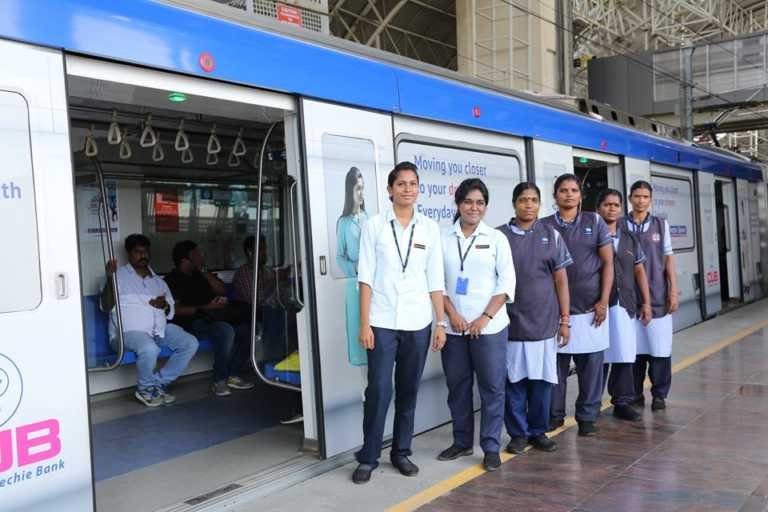
Chennai Metro | First metro to have all women run staff at Shenoy Nagar station

Chenani: Chennai Metro Rail Limited (CMRL) has planned to recruit every staff as women at the Shenoy Nagar station. The official sources said that Chennai Metro Rail plans to turn Shenoy Nagar into an all-women-run station within a week.

A staff member said that “women are more efficient and much more responsible. We think this will be a great move and give a major boost to women employees. It may now seem like a trivial step, but moves like these play a great role in creating a larger impact.”

Sources added apart that from official staff the station to housekeeping, women will only control every aspect of running this station. Chennai Metro Rail Limited (CMRL) which covers 26 stations covering nearly 35 km. Till now there was a mix of men and women staff in each station handling responsibilities such as issuing tickets, checking passengers, housekeeping and monitoring stations. But this is first time not only in Chennai Metro but also in India that a station will be completely run by women.

The official also mentions that “we think it will greatly encourage women working here and give them a sense of pride. Also, we are taking extreme care to ensure no woman employee or passenger is harassed in our station. So far, we have not had any such case. The CCTVs are monitored meticulously throughout the day and the stations are well guarded too.

Chennai Metro | CMRL floats tender for detail design consultant for phase-2 project

Chennai: The Chennai Metro Rail limited (CMRL) has floated tender for detail design consultant (DDC) for about 12 Km stretch in corridor from light house to Meenakshi College with 12 underground stations. For the detail designed consultant (DDC) for a part of corridor-4 which consists 167.55 km.

A Metro Rail official said that, “we are floating tenders for a detail design consultant much early as it was the final design of the time. When we built the 45 Km phase-I. It was one of the lessons we learnt while implementing the project.

The consultant is planning to draw a final design of the alignment, the underground stations which will also include the station box, ramps linking underground with elevated stations, other features in the station like ventilation and air-conditioning system, mechanical, electrical, and plumbing works as the track along the alignment.

The official also mentions that the conceptual design will be made first followed by a preliminary and a final design. The first design should take at least six to seven months.

Total time to complete the contract for the DDC is six years. The detail design consultant (DDC) will be helpful in assisting contractors during the construction stage. The line of phase-2 from light house and Meenakshi college in corridor will be ready in 6 year.

The phase-2 project which has three corridors including corridor-4 covering 17.1 km from light house to CMBT with 20 underground stations.The detailed project report will also help in extending the line to another 15 km from CMBT to Poonamallee whose estimated cost is Rs 3, 850 crore. The total cost of phase-2 project is Rs 85047 crore.