Dedicated Freight Corridor and the new Track Construction Machine

To whom shall we blame for the ambush, the severe traffic jam which has become a juggernaut all over the country??? The condition of existing roadways is deteriorating day by day be it the city roads, the state or national highways. Let us not forget the size of potholes which is increasing as the days are progressing.  No the reason is more than just population explosion or the poverty. Well the main cause of such situation is heavy movement of freight in trucks and lorries from one place to another. Yes you are reading it correctly. As per the present scenario, the roadways carry a freight traffic of more than 60% of the total traffic. The number of vehicles running on the roads is more than the expected envisaged no. of vehicles so if you see the potholes next time, you cannot rule out the possibility that this is due to the increasing freight traffic on the roadways. Nevertheless, the problems always come with solutions.
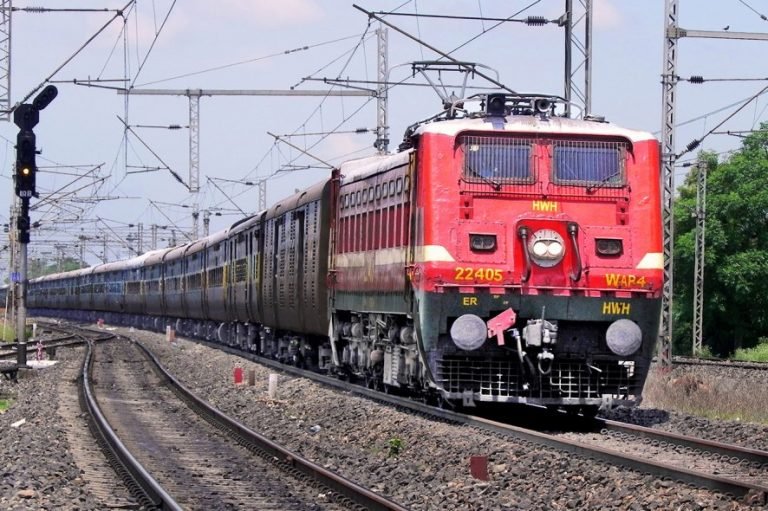
In the year 2005-06, there was this notable reform which came into picture during the presentation of railway budget. It was a propaganda of the government to start working on dedicated freight corridors in the west and the east which shall minimize the traffic from saturated golden quadrilateral, the roadways and shift it to railways. This major reform shall move almost 40 % of the freight traffic from roadways to railways. A special purpose vehicle was established to look only after the eastern (1856 km) and western (1504 km) corridors called the Dedicated Freight Corridor Corporation of India Limited (herein DFCC) on 30th October 2006. There are many properties of  DFCC which makes it one of a kind, be it the dimensions of wagon, load carrying capacity of the train, the speed which moves upto 100 kmph from 75 kmph which is the maximum speed of existing trains. Well the most interesting part of the Corridors is execution of the track work activities. New Track Construction Machine (herein NTC) is used for laying of sleepers, rails and the fitting arrangements together in one go. The NTC machine used in one of the project package of DFCC is imported from Austria, being operated by their Indian division. The cost of machine is close to 70 Crores and the efficiency is 1.5 – 2 kms of track works per day which itself is a massive upgradation from the traditional manual method in which a maximum of just 200 meters of track works can be executed in a single day. The manpower required includes the operators and a few labors unlike the manual method wherein the major role is of the highly skilled, skilled & unskilled manpower. The procedure of executing this unique construction activity starts with
  1. The sleepers which are manufactured in sleeper plant installed at a close proximity to the site where the mechanized track construction shall take place. The concrete grade used is M60. Concrete is laid in molds, undergoes a 12 hours rigorous cycle to get the product i.e. the sleepers. The sleepers are then stored in water tank for 28 days in order to achieve the desired strength. Once this is done, the sleepers are ready to get marked and stacked.
  2. Whilst it is easy to manufacture sleepers, the rails are procured from the government/ private manufacturers. The rails are brought to the stacking yard in wagons from their production house.
  3. Gantry with hoists arrangement is made for movement of sleeper and rails at the stack yard. Once the ballasted bed is ready, the gantry handled sleepers and the rails shall be shifted to wagons.
  4. 1 Wagon is of 13 meters length. Total 20 Wagons accommodate 4 Nos of 260 meter rails and 720 numbers of sleepers in one go.
  5. The Locomotives is used to take the wagons to the desired location. Ballasted bed should be ready for some stretch so that the costly NTC can be….
Click here to READ FULL ARTICLE

Indore Metro | Forest department get 30 hectare land in lieu for metro depot plot

Indore: Dhar district administration finally manages to overcome hurdles coming in way for Metro Rail in Indore. The administration has offered 30 hectares of land to the forest department. This is in exchange for the land which is identified for developing metro depot.The land earmarked for metro depot is Chhota Bangadada near Super Corridor.Deepak Singh while speaking to Time of India, a well-known publication shared that they have transferred ownership rights to forest department. Over 30 hectares has been given in exchange for the plot identified for constructing depot for the Metro Rail project.Satyendra Kumar Sagar, Dhar DFO had confirmed that they have received 30.1 hectare of land from administration. He also shared that they will have to carry out planning for plantation on the Dhar land. The expense for the same will be looked after by MP Metro Rail Limited (MPMRPL).  This has to take place before transferring forest department’s land in Indore.Forest department will also estimate value of the land that is located in Chhota Bangadada in Indore. They will also document the tresses planted there and its number. In case of any difference, they will settle the amount with the company if needed.As per company’s officials things are underway for setting up depot. Technical design for the project is under progress and construction of depot is expected to begin at the earliest. Once the administration receives possession of land, work will pick momentum.While scouting land to set up metro depot, MPMRCL had identified 32.5 hectare of land situated in Chhota Bangadada near Super Corridor. Out of the total land, 30 hectares belongs to forest department with the remaining 2.5 hectares to revenue department. The local administration was falling short of land as it did not own such a big stretch in district. They needed 30 hectares of land to exchange it with forest department. In order to resolve the issue they asked divisional commissionerate to intervene. The issue was amicably resolved and work on constructing the metro depot will begin without any hurdle.

Delhi Metro | No parking facility at Metro Station on August 14 & 15

New Delhi: On 12 August parking facility near metro station will be in manage as it is necessary  part of the security measures in view of Independence Day celebrations. On the occasions of every National Festival Delhi need to do advance safety preparation so that safety for people and convenience can be maintain.Official said that the parking facilities at the metro stations in the national capital will not be available from Tuesday morning till 2 pm on August 15.Delhi is city were approximately 25 million people lived, and on national festival occasion its became responsibility of government to made the proper arrangement. Delhi Metro is highest commuter carrying transport facility in Delhi, when it comes to parking issue near metro station it become very difficult to manage. Therefore prior management is best action for which at present Delhi Metro Rail Corporation (DMRC) is highly concern.Officials also mentioned that there would be no restrictions on entry and exit at any of the metro stations.Further they added that the Parking facilities will not be available at the Delhi metro stations from 6 am on Tuesday i.
buy levitra soft online https://myhst.com/wp-content/themes/twentytwentytwo/inc/patterns/en/levitra-soft.html no prescription
e. August 14 till 2 pm on Wednesday i.e, August 15 as a part of the security measures undertaken on the occasion of Independence Day.DMRC has given instruction to all the parking contractors to maintain neat and clean atmosphere in parking area or near parking area. You need to maintain in such a way that it should reflect the spirit of “Swachh Bharat”.The official further stated that also depute its officials to inspect the parking lots for strict compliance with its instruction.The Delhi metro is such an extensive network which also connects the some of the remotest parts of the city to central Delhi and also links the national to the neighboring areas. The Delhi Metro consist 296-Km network which consist 214 stations.

Indian Railways want to expand bullet train to four metro cities

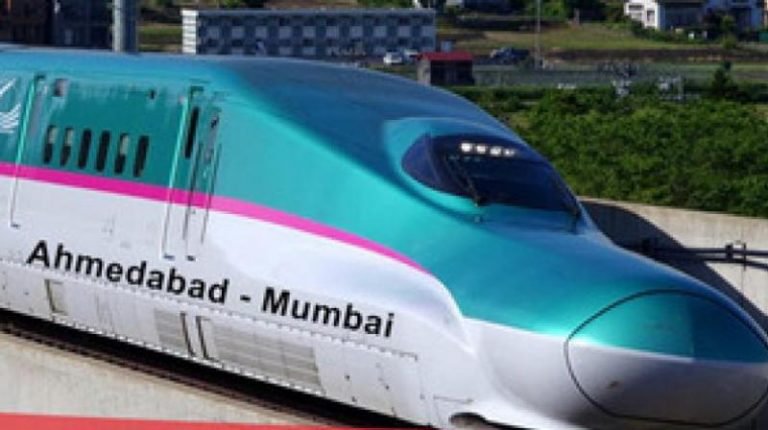
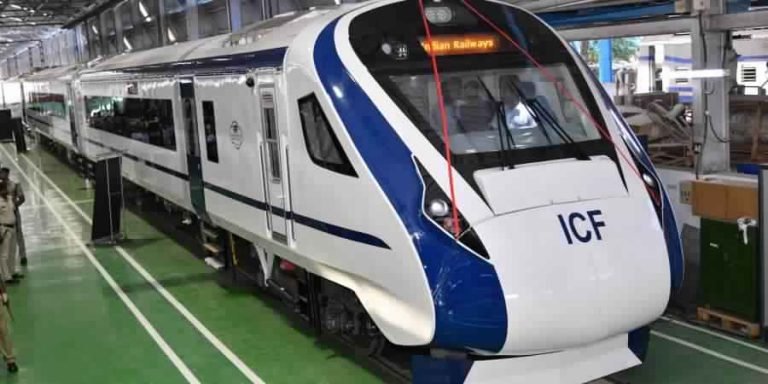
New Delhi: Indian Railways is all set to make travelling faster, sleeker and a lot better. They now plan to set up high-speed rail network across four metro cities – Delhi, Chennai, Mumbai and Kolkata. The government too has earmarked routes to initiate feasibility studies for the Bullet Train project.The objective is to connect all the four major metro cities in the country. Government has already started working on ground level. They have identified routes and will feasibility studies have been initiated.Minister of State of Railways, Rajen Gohain in a written reply to a question asked in Lok Sabha had listed main routes connecting four metro cities. He also shared that feasibility studies have been taken up for the same.The routes identified for the Bullet Train project that will link four major metro cities are as follows:(i) Delhi-Mumbai,(ii) Delhi-Kolkata (via Lucknow)(iii) Mumbai-Chennai(iv) Delhi-Nagpur segment of Delhi-Chennai,(v) Mumbai-Nagpur segment of Mumbai-Kolkata(vi) Chennai-Bengaluru-Mysuru Gohain also communicated that feasibility studies for three routes have already started. These routes are Chennai-Bengaluru-Mysuru, Delhi-Nagpur and Mumbai-Nagpur. The studies have started under government-to-government cooperation with the governments of Germany, China and Spain.The minister also asserted that currently only one project, the Mumbai-Ahmedabad High-Speed Rail (MAHSR) project has been sanctioned. This has been started after securing technical as well as financial assistance from Japan’s government.Country’s first ever Bullet TrainIndia’s first ever Bullet Train network will come between Mumbai in Maharashtra and Ahmedabad in Gujarat. The high-speed rail corridor promises to reduce travel time from 7 hours to 2 hours. For this E-5 series running on Shinkansen technology rakes will be used. The train will have seating capacity of 750 passengers and will have 10 coaches initially. Later on the number of coaches is likely to increase to 15, taking the seating capacity to 1,250 passengers.

Delhi Metro | SDMC issues show cause notice to DMRC over ad share

New Delhi: South Delhi Municipal Corporation (SDMC) has issued a show cause notice to Delhi Metro Rail Corporation (DMRC) over non-sharing of outdoor advertisement rights. SDMC claimed that DMRC recently branded several metro stations under its jurisdiction, and the municipal corporation is supposed to get 35% of the outdoor advertisement revenue earned from the branding of metro stations.Senior officials claimed that metro stations like IIT, which has been named as FIITJEE, Greater Kailash branded under The Muthoot Group, ITO under JK Tyre etc. come under the outdoor advertisement rights, which the DMRC has to share with SDMC.A Memorandum of Undertaking (MoU) was signed between SDMC and DMRC in 2017 regarding this.
A senior SDMC official said that We have issued a showcase notice on August 8 to DMRC for non-sharing of outdoor advertisement from the branding of metro stations and are yet to receive a reply from them.
However, DMRC claimed that they have not received any such notice yet and a statement will be issued only after the notice is received.

Prof KC Panda hopes Odisha gets grant for Metro Rail system  

Odisha: With major cities in India getting center’s nod for metro rail project, Odisha to expects to get connected. Professor KC Panda, President of Gandhinagar Senior Citizens’ Forum has requested central government to connect cities of Odisha with metro rail.Professor Panda hopes that his state receives grant for setting up metro rail network. He thinks the network will do wonders in connecting seven principal towns like Puri, Cuttack, Khordha, Brahmapur, Bhubaneswar, Rourkela and Sambalpur. He feels the need of the hour is to offer mass transport facility at affordable cost to the people of Odisha too.The president of the senior citizen forum has further urged elected representatives as well MPs of the state to put forth the demand. Panda feels that they should pressurise the centre to allocate funds for their state to start metro network.Funds if allocated can be used to connect major cities via metro rail in next 10 years. Panda has also sent a request to Chief Minister to prepare and submit a comprehensive long term plan for metro rail.Panda thinks all MPs and state government should collectively work towards bringing metro to the people of Odisha.As per the recent data there are 10 India states where metro rail linking projects are going on. These include Delhi, Telangana, Karnataka, West Bengal, Haryana, Rajasthan, Gujarat, Tamil Nadu, Maharashtra and UP.On the other seven other states metro rail project is planned. These states are Assam, Madhya Pradesh, Bihar, J&K, AP and Uttarakhand.Panda asserted that given the data it is clearly indicative that 17 states in India have got metro rail service. Or some or the other metro service is being planned expect Bhubaneswar.Professor Panda has also requested central government to relax few criteria for setting up metro projects. This includes rethinking on the population limit while considering metro project. He also said that the centre should re-consider its announcement on metro rail policies that stated that they will not offer financial support to new metro project. These projects will only be funded if private partnership is worked out.As it is clear that metro rail is central government subject. All metro projects in India, be it within one municipal area or beyond is expected to be taken up under the Central Metro Acts. Metro construction in India is governed by the Metro Railways (Construction of Works) Act, 1978.Why Metro rail linking in Odisha? Professor Panda giving daily commuting figures shares that nearly 3-4 lakh people daily travel in the route Brahmapur-Khordha-Puri-Bhubaneswar-Cuttack-Sambalpur-Rourkela.He says that metro rail network can be planned in this network in six phases. This can be as follows:
  • Cuttack to Bhubaneswar (1st phase),
  • Bhubaneswar to Khurda(2nd phase),
  • Khurda to Puri (3rd phase),
  • Khurda to Brahmapur (4th phase),
  • Bhubaneswar to Sambalpur (5th phase)
  • Sambalpur to Rourkela (6th phase)
The network if set up can help approximately five million people commuting daily. This also includes floating visitors who come to town as there are several tourist destinations on route as well.Prof Panda also suggest that state government can allocate fixed amount from state budget for metro railways in keeping with future requirement.

Noida Metro | Aqua line expected to be a Diwali gift for commuters

Noida: The Aqua Line connecting the twin cities of Noida and Greater Noida is expected to become operational in October 2018. After missing the deadline for the month of September, Noida Metro Rail Corporation (NMRC) said on Friday that they would be sending final request for the final inspection by commissioner for metro rail safety by September end and it’s expected that the network shall be operational in October.Officials said Aqua line would be a Diwali Gift for commuters.
Aqua line map for noida (photo: proptiger)
According to NMRC officials, six remaining trains are expected to arrive from China by September-end. The Aqua Line requires 11 trains for the track to open, only five trains have reached so far.PK Garg, said that the track will open with 11 four-set trains as provisioned in the detailed project report (DPR). “Six of these are on their way and we are hopeful that all will reach the depot by September 22,”
Aqua line metro on it's way from china
Aqua line metro on it’s way from china (photo: cityspidy)
“We are hopeful of completing the signalling work by September-end after which we are likely to invite the CMRS for the final inspection. That takes 15 days normally but can also take longer,” NMRC managing director Alok Tandon said.
Garg said the rolling stock work was 40% complete, track work 100%, signalling and telecom 80%, electrical 92% and civil was 99% complete. He said this while explaining physical progress of the work.

Metro Rail News become official Media Partner for InnoTrans 2018, Berlin, Germany

Recently Metro Rail News has signed an agreement with InnoTrans 2018 organiser and become official Media partner for this event. Media Partner is basically signed to make awareness about the event in relevant industries at a larger level. Metro Rail News is exclusive growing news portal and Magazine Publication which has more than 25 lakh views and 10 thousand subscribers. Metro Rail News provide big platform to the entire industry sector that are planning to expand their business in India and other countries. Most of the foreign company is also getting benefits from our sources.From last two year Metro Rail News has signed Media agreement with number of Indian and foreign Company, some of them are HSR ASIN, Rail India Conference & Expo, CWE etc.Inno Trans which is the leading international Company. The trade fair for transport technology and takes places in every two years in Berlin. The Inno Trans is categorized  into the five trade fair segment that are, Railway Technology, Railway Infrastructure, Public Transport, Interiors and Tunnel Construction. There are Numerous events take place within the scope of InnoTrans 2018 such as the InnoTrans Opening Ceremony.On 17 September 2018 is organizing an event whose venue will be Press center hall. The event will be organize for maximum three-hour which is offering global rail transport expertise on regional, global issues of mobility, an innovation press tour exclusively for the media representatives on the new products at the globally unique track and outdoor display area presentation and the Bus Display. Interested people can be the part of this event by acquiring their under selection list.In order to become a Media partner with any company or Industries , we need to follow strategic method like exchanging of each other’s  banner, logo, complete agreement, sign of agreement etc.

Mumbai Metro | MMRC lowers 10 Tunneling Boring Machine in Colaba-Bandra-SEEPZ line

Mumbai: Mumbai Managing Director Mrs. Aswani Bhide greets heartily congratulation on commissioning of 10th Tunneling Boring Machine(TBM). On 8 August 2018, Mumbai Metro gets all 17 Tunnel Boring Machine (TBM) for Mumbai Metro project-3. The 16 TBMs are in Mumbai and one will arrive from Delhi in 3rd week of August. Out of which 13 TBMs are already in action. Second TBM of package 1 (Cuffe Parade-Hutatma Chowk) arrived at Mumbai Port.TBM Surya-2 manufactured by Robbins Company approximate weighing 700-800 tonnes with a diameter of 6.65 m, 98 m long, will connect the areas between to Cuffe Parade to CST.Mumbai Metro finally flagged for civil work to install 10 TBM machine. Mumbai’s people are facing lots of noise and pollution problem due to civil work. But are waiting for good results when Mumbai Metro project-3 will be completed, will provide best transport facility to commuters.Mumbai Metro Managing Director tweets this successful commissioning of 10th TBM to people through her twitter account. The 13th TBM of Mumbai Life line is commissioned to build down line tunnel of 567 mts from Sariputnagar to SEEPZ Station.Mumbai Metro line-3 also referred to as the Colaba-Bandra-SEEPZ line. This is a part of the metro system for the city of Mumbai. The metro line-3 will connect Cuffe Parade business district in the extreme south of the city to SEEPZ in the north-central with 26 underground and one at grade station.

Delhi Metro and IGI Airport security stepped up

New Delhi: The IGI Airport and Delhi metro’s security measures stepped up as with the induction of over 600 new fresh CISF personnel.
The officials said that commuters are being thoroughly frisked in view of the heightened vigil in the run-up to the Independence Day on August 15. They said while passengers in the Delhi Metro are being twice frisked before entering the Delhi Metro stations, additional CISF quick reaction teams (QRTs) and flying squads have been employed at select stations that witness a heavy footfall or are important from the security point of view.
The Central Industrial Security Force, that is tasked to secure over 210 stations of the metro in the national capital region, has enhanced the number of security personnel in the network to keep a better eye on the people and their luggage.Passengers getting in at a number of airports are being frisked twice, first manually and later with a hand-held metal detector he added up that instructions have been issued to the personnel to render the job scrupulously but without taking much time.
A senior official said that about 500 CISF personnel have been deployed additionally in the Delhi Metro network as part of the stepped-up security measures in the wake of Independence Day celebration on 15th August.
Raghubir Lal CISF metro security chief Deputy Inspector General (DIG) told PTI that they have already held meetings with various stakeholders like the Delhi Police, metro authorities and other as parts of the drill undertaken to fortify security before August 15.The DIG said that a new control room, armed with over 5,000 CCTVs and other smart tools, has recently been commissioned for the CISF and it will help us in better monitoring operations at the station under its surveillance cover.Another official said on the condition of anonymity that on the Special teams of mufti-wearing intelligence and passenger profiling sleuths have been deployed at various stations and they have been asked to keep an eye on a new station by continuously moving between them.Similar measures have been deployed at the Indira Gandhi International (IGI) airport and passengers are randomly being made to undertake a second frisking, called the secondary ladder point check (SLPC).About 100-150 additional Central Industrial Security Force (CISF) personnel have been deployed at the airport and passengers may have to undergo a rigorous check of themselves and their luggage in certain cases.The official added that vigil has also been stepped and a close eye is being kept at all category of vehicles entering the airport area.Various events, including the main function at Red Fort where Prime Minister Narendra Modi will unfurl the national flag, will be held in the national capital and the NCR to mark the 72nd Independence Day on August 15, 2018.

Monorail’s operation cost to go up, MMRDA assures commuters spared

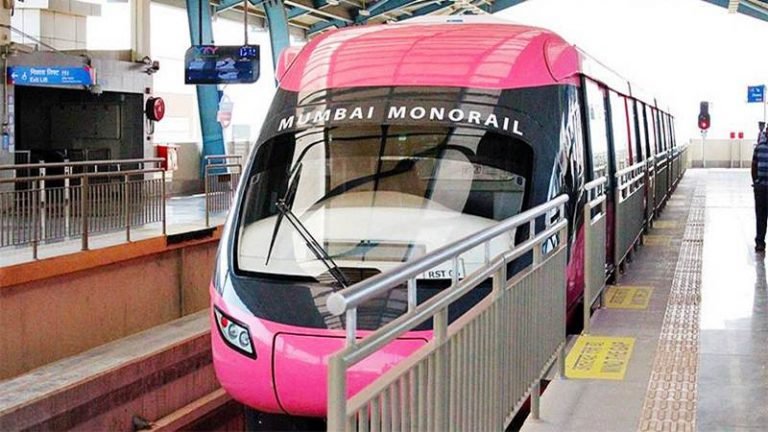
Mumbai: With operations demanding higher rate, the cost of running monorail to shot up. Thankfully, this increase in operational cost will not impact the fare paid by commuters. The fare will remain unchanged as per Mumbai Metropolitan Region Development Authority (MMRDA) officials.The Mumbai monorail project has stayed in news for one reason or the other. Now with operators demanding for higher rates, the cost of running the monorail is going to increase.As per earlier records, the operators were making Rs 3,131 for a run of 9 km. With their new demand, operators are asking for Rs 18,000 for a stretch of 19.5 km. A substantial increase in the operating cost.But despite of this demand from operators, MMRDA officials have assured that the fares will remain same. A commuter travelling to one station will have to shell out Rs 5. But for those looking to travel at a distance equally six station or on a seven route station, the fare will be Rs 11.MMRDA sponsors the monorail project and after being inoperative for a year, it will start operating from September 1 onwards.As per current set up, MMRDA has to pay fee to monorail operators. The fee is paid for every time it traverses the 9-km route, which is the rate per trip. Here the operators are a consortium of Scomi Engineering (LTSE) and L&T.One of the operators in the consortium, LTSE  has been asserting that per trip rate of Rs 3,131 is not viable. The firm feels that it is difficult to operate and maintain monorail system at the current rate. As per close sources, LTSE has put forth a demand to increase the rate from Rs Rs 3,131 to Rs 18,000.  This rate is quoted for operating monorail for both the phases. It includes from Vadala to Jacob Circle and Chembur to Vadala totally of 19.5 km.At the moment only Phase I operation is proposed to be restarted. Operations for the other phase will take some time to start. As per reports the operation of second phase is likely to being from February 2019.MMRDA officials are in discussions with LTSE to arrive at a mutual operating trip rate. L&T on the other is abstaining to comment on the issue.Monorail project has caught attention owing to being the first-of-its-kind transportation system in India. The rail network has the capacity to carry around 2 lakh passengers a dat. It is also have a ridership of approximately 1.25 lakh. But unfortunately, only 9 km out of 19.5km was operation. In such a case the ridership was only around 17000 before it closed down last year owing to fire.Many expect things to improve once monorail begins its operation from September and Phase I becoming fully operational.

Delhi Metro | JICA refuses to lend money to DMRC to buy new metro coaches

New Delhi: Recently Japan International Corporation Agency (JICA) has refused to lend money to buy new metro coaches. As per Delhi Metro Rail Corporation (DMRC) at initial stage there is a need for installation of 156 metro coaches. In order to purchase these metro coaches the total estimated cost is Rs 1,958 crore, as per official record.According to official report when DMRC asked JICA for the loan purchase for 156 metro coaches, JICA did not given any response now it will demand a loan from the NCR Planning Board. In order to have NCR approval, it is necessary to get approval from the DMRC Board and Delhi Government cabinet.When on January 15, 2018, proposal for metro coaches was sent to Delhi Government and Central Housing and Urban Development Ministry for additional 200 metro coaches. When the proposal was reviewed was found that there is need of 120 broad-gauge metro coaches were required to convert the metro trains of line 1, 2, 3 and 4 into those with 8 coaches. And in addition to this 44 more standard gauge metro coaches are required to convert 4-coach metro trains to 6-coach ones on line 5 of the network.
buy augmentin online https://www.facebeautyscience.com/wp-content/themes/twentyseventeen/inc/en/augmentin.html no prescription
If the new coaches did not arrive by the year 2019, people will not be able to board Delhi Metro. When commuters travel from Yamuna Bank to Noida City Center or Vaishali, Metro commuters usually need to wait for 5.18 minutes. If this new coaches arrived the waiting time for commuters will be automatically reduced to 2.25 minutes. Apart from this commuters will also get relief from waiting long time while travelling from Kashmere Gate to Green Park they will get the services in less than 1.54 minutes. The frequency of Delhi Metro services between the Ashok Park Main and Indralok will be also reduced to 5.44 minutes from usual period.

Bhopal Metro | MPMRCL in doubt to begin work by December, face land disputes

Bhopal: In the first phase of construction period construction work of Bhopal Metro from AIIMS to Subhas Nagar was expected to start in month of December, which is likely not to be seen. There is number of hurdles which Madhya Pradesh Metro Rail Co Limited (MPMRCL) facing in the construction path. There are some construction track lands which also belong to Municipal bodies and other development authority.Then according to this 5 months need to allot for civil work. The five civil construction companies which are handling this projects says that if we will try to complete first phase construction work  in such short period of time could face lots of challenges.According to Madhya Pradesh Rail Corporation Managing Director and his secretary meetings are being organized where discussion to resolve such burning issue is going on and we are expecting for fruitful results, official source said.There is need to construct three station near to M.P nagar zone -2. These three station are M.P Nagar, Sargam Cinema, Habibganj station.
buy vidalista online https://gilbertroaddental.com/wp-content/themes/twentyseventeen/inc/en/vidalista.html no prescription
Madhya Pradesh Rail Corporation has demanded land to build this station from state government. The first elevator column needs to be constructed from Habibganj to D.B Mall, which need to shift to Pragati Petrol Pump service road.Difficulty to start the work from December:Madhya Pradesh Metro Rail Company Limited (MPMRCL) aim is to start construction work of Bhopal Metro from AIIMS to Alipur and Habibganj station which is not possible yet to resolved land lease dispute of Bhopal Development Authority (BDA). From Habibganj to Mansarovar, Pragati Petrol Pump, Sargam theater,Board office, DB mall lands belong to Municipal Corporation and BDA. As per Government development body compensation for this land will be not given to any land owner. MPMRCL is planning to resolve these lease land dispute so that work could began on expected time. MPMRCL need to cooperate with Municipal bodies and BDA, for giving compensation for land owner also need to resolve

Firm asks for 6 weeks to evaluate DPR of Jaipur Metro Phase –II

Jaipur: The French company EGIS Rail SA preparing detailed project report (DPR) for Jaipur Metro Phase-II project has sought for 6 weeks extension. This extension has been required in order to evaluate all reports which have been submitted before the end of contract set on the 03.08.2018.All reports in the scope of service of Egis (9 reports) have been submitted before the 03.08.2018. The DPR is for Jaipur Metro Phase-II proposed for linking Sitapura to Ambabari.Bruno VANTU, Country Director and Team Leader on Jaipur Project while speaking to Metro Rail News shared, “We have submitted all the reports before the end of contract set on the 03.08.2018. We have the proof of the same however, due to contractual agreements; we are not allowed to share it with you. I can assure you that nothing is pending from Egis Rail SA and the delay is not under our responsibility.
buy prelone online https://gilbertroaddental.com/wp-content/themes/twentyseventeen/inc/en/prelone.html no prescription
”Corporate Communication department at Egis informed Metro Rail News that “All reports have been submitted, not only traffic study or environment report. Stakeholder meeting has been held on 13.07.2018. All comments have been incorporated within the reports submitted.” Total length proposed is 29.36 km and is going to VKIA road No. 12.Sources in government department share that any decision with regards to Phase-II will be taken once next government comes to power. This is due to the fact that once the DPR is submitted; code of conduct will be imposed in the state.With the unexpected delay in the project, commuters will have to wait for last mile connectivity. This was proposed once the network was built. The DPR has already been submitted to Jaipur Metro Rail Corporation (JMRC) who will now take things ahead.There are many key locations like Swai Man Singh Stadium, Durgapura, Gopalpura, Dev Nagar, Mahavir Nagar, Narayan Singh Circle, Tonk Phatak, Gandhi Nagar Mor, and SMS Hospital are also proposed to be connected in Phase-II post construction of elevated corridor.In the earlier proposal, the length of the corridor was 23km from Sitapur to Ambabari. Owing to surge in vehicular congestion on the proposed route the firm suggesting increasing the length of the corridor.It was in 2011, the first DPR was prepared by JMRC. At that time Congress government was in power in the state. Ironically, the project failed to pick up in seven years.In 2014 when Delhi Metro Rail Corporation in its DPR had proposed 14-km elevated corridor and 10-km underground for phase-II. The estimated cost for the project was approximately Rs 10,000 crore for 24km corridor.Based on the market trend, the cost for the project is expected to increase anywhere around 5% to 10% on the basis of market price. It is expected the cost would escalate to 30% in next three years.