RRTS | Delhi Government rejects Delhi-Meerut RRTS corridor

New Delhi: The Delhi Government has rejected the Delhi- Meerut  RRTS corridor,  National Capital Region Transport Corporation’s (NCRTC) proposal to build an elevated station at Sarai Kale Khan. The Delhi-Meerut Regional Rapid Transit System (RRTS) aims to reduce travel time between the two cities to just 55 minutes.The construction of the station would delay the redevelopment project of the existing Sarai Kale Khan inter-state bus terminal (ISBT) by more than two years. The Sarai Kale Khan station was supposed to be the starting point of the RRTS line from Delhi. However, State Transport Minister Kailash Gahlot returned the file on September 12 saying that the government would approve the station only if it’s according to the previous plan in which the station was designed to be underground, said Delhi government. While changing the station’s design, the Delhi government was not kept in loop by the NCRTC. At least 11 approvals including DDA, ASI, Delhi Urban Arts Commission (DUAC), fire department, forest department, environment department have been taken to start work on the ISBT project. If the project is delayed, approvals will have to be taken again which will delay the project massively, the minister pointed out.The Sarai Kale Khan ISBT currently has a daily average footfall of 57,000 passengers, after the redevelopment which was estimated to touch 97,000. The multi-modal hub is designed to connect the ISBT with the Delhi-Meerut RRTS line, the Nizamuddin railway station, the Nizamuddin metro station of the Delhi Metro’s Pink Line as well as the bus stand.

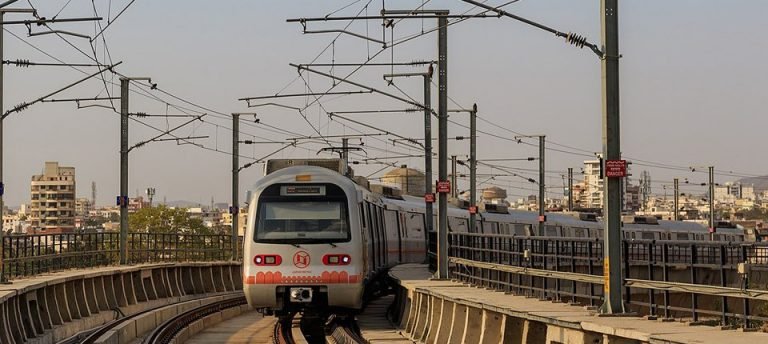
Jaipur Metro | Soon metro to run on an automatic mode

Jaipur: The Commissioner for Metro Rail Safety (CMRS), Mumbai conducted a trial run last week. With this process completed Jaipur Metro is likely to run on Automatic Train Operation (ATO) mode soon.This was a much awaited request from the Jaipur Metro Rail Corporation (JMRC). The metro authorities had sent an application to CMRS requesting them to carry inspection between Mansarovar to Chandpole.The request was made to upgrade metro operation from Automatic Train Protection (ATP) to ATO. This request will finally see the light of the day if things go as planned.Project director of JMRC Ashwani Saxena informed that c Commissioner of Railway Safety (Western Circle) Sushil Chandra, conducted inspection on Friday night between 10 pm to 1pm. The trail runs were conducted successfully.JMRC is hopeful to start ATO system once they receive approval from the authorities. The Jaipur Metro officials are optimistic that they will get the permission soon post successful trail run.The good news is that once ATO is in place, metro trains will run without any intervention from metro drivers. The automatic system will take control of the operation including speed, braking, movement and various other functions.
buy kamagra soft online https://www.ecladent.co.uk/wp-content/themes/twentyseventeen/inc/en/kamagra-soft.html no prescription
The role of metro driver will only be to press a button to open and close doors of metro trains at the stations.JMRC on the other hand conducted internal trials to test the ATO system during non-operational hours. These trail runs were conducted between Mansarovar to Chandpole stretch. Once ATO is in place it will reduce running time. The new system allows trains to be operated on high frequency and come with in-built safe mechanism.Driverless trains will improve train’s operation, are safe and reliable as well. In absence of a driver, the cabin will be decked up with safety features, ensuring smooth functioning of the train. CCTV cameras will be installed to closely monitor critical systems both in and out the metro train.

Chennai Metro | CMRL appoints new design consultants

Chennai: Recently the Chennai Metro Rail Limited (CMRL) has appointed two new consultants. Which are Consulting Engineers Group CEG-AECOM consortium and Systra, a France-headquartered company to carry out the detailed design work for Phase II.The companies have been entrusted with preparing the detailed design for the two major corridors in Phase II — Madhavaram to CMBT and Madhavaram to Shollinganallur via Purasawalkam and Mylapore — that will be constructed first, according to official.The official sources releases that in July, the CEG-AECOM consortium was awarded the underground section of Madhavaram Milk Colony-Thousand Lights-Taramani Road and elevated section of Nehru Nagar to Sholinganallur section. The AECOM was a consultant which has also  work on the preliminary design of Hyderabad Metro.Further official data says that Systra, which prepared the design for the Metro Phase, expansion from Washermenpet to Tirvottiyur, has been chosen for the CMBT route. The design reports will carry the exact location of each station, streets and roads Metro Rail will pass through and the land needed for the construction. The Phase II project will be built at a cost of ₹80,000 crore and will cover 108 km of the city in three corridors.The Chennai Metro Rail Limited (CMRL) official said that the Japan International Cooperation Agency (JICA) will provide a large sum as loan and the State will fund about 25-30% of the project, CMRL officials say. Once the design part is over, the construction can start in full swing. Meanwhile, we are hoping to get the first installment from JICA.
buy Cipro generic buynoprescriptionrxonline.com over the counter
In the meantime the CMRL has also started sending notices to residents to acquire land for Phase II, for which they plan to take over 800 Properties.There have been also soil tests in several location of the city to find out the geological conditions before building stations and underground tunnel.

Pune Metro | Maha-Metro wants special planning authority status like Nagpur

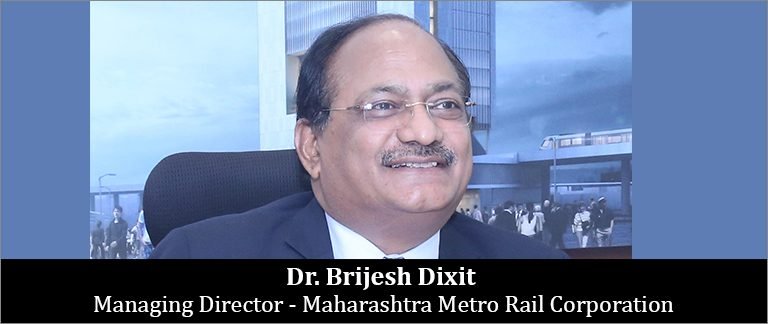
Maharashtra: For Pune the Maharashtra Metro Rail Corporation (Maha-Metro) has demanded for special planning authority (SPA) status, like in Nagpur.This status will be helpful in different way which will also helpful for devloping the land. Recently the Maha-Metro got the SPA status in Nagpur. The SPA will help in organisation plan for developing the lands for this reason only the Maha-Metro is expecting the same in Pune.The Managing Director Brijeh Dixit said that the SPA status is applicable only for Maha-Metro’s properties and the commercial properties coming on Metro lands.The Pune metro which at present one of the fast developing metro. Which also focus regional employment development.Mr. Dixit further stated said that the Maha-Metro has planned some commercial buildings at Civil Court station, Multi-Model hub at Swargate and Shivajinagar. Some commercial activities have also been planned near Metro stations. All these will help to generate non-ticket revenue.He also added that if the Maha-metro gets its this status, it need not go to Pune municipal corporation and Pimpri Chinchwad municipal corporation for getting the plans approved. Now, the Maha-Metro has planned the city’s highest building at Civil Court junction.
buy citalopram online http://padstyle.com/wp-content/languages/new/citalopram.html no prescription
The investors will definitely ask for related permissions from PMC. To give confidence to the investors, it is necessary that the Maha-metro get special planning status.The Maha-Metro planned to get 50 per cent share in the revenue from the building permissions along the metro corridor. Therefore it also plans to ask for one per cent stamp duty on properties from the state governmentThe state government has given special panning authority status to Maha-Metro in Nagpur apart from giving 50 per cent revenue share from property developed along the Metro corridors. The commercial operations of the Nagpur Metro are yet to start but the Maha-Metro has made whopping ₹108 crore non-ticket revenue in a year, said Brijesh Dixit.

Patna Metro | UDHD asks RITES to submit metro rail DPR

Patna: The state government’s urban development and housing department (UDHD) has asked Rail India Technical and Economic Services (RITES), to submit detailed project report (DPR). The RITES has been asked to submit DPR for Patna Metro by 20 September.RITES is the executing agency for Indian Railways and they have been asked to work on the report at the earliest. UDHD on the other hand has sent final proposal for creating Patna Metro Rail Corporation. This will be the special purpose vehicle (SPV) for implementing metro rail project in Patna.The authorities have also come to a decision that the Saguna Mor-Bailey Road- Patna Junction-Mithapur alignment be moved toward north of the central alignment of Bailey Road between Hanuman Mandir and Patna high court. This will steer clear of overlapping of the Patna metro rail tracks with the underpasses planned under Lohia Path chakra project, which predicts building of four underpasses on Bailey Road flanked by Lalit Bhawan and High Court.In a review meeting chaired by UDHD minister Suresh Kumar Sharma, the delayed metro project was discussed. The minister shared that the foundation stone for Patna Metro project to be laid in November.Senior officials from UDHD informed that once RITES submits the final DPR, the same will be sent to Public Finance Committee (PFC) that is chaired by development commissioner.Sanjay Dayal, special secretary in UDHD explaining the process stated that once PFC gives its nod, DPR will be tabled before state cabinet. This report will then be sent to centre for approval added Dayal.Chief Minister Nitish Kumar has given preliminary approval to the DPR in February. The DPR for Patna Metro had to be revised after centre came out with New Metro Policy.As per the plan there are two corridors planned in Phase one covering a distance of 31km.
  • First corridor will cover the stretch starting from Saguna Mor- Bailey Road- Patna Junction-Mithapur bus stand route. This will be made from east to west covering a distance of 14.5km.
  • North-south corridor with be the second corridor. It will start from Patna Junction to proposed bus stand at Bairiya on Patna-Gaya Road via Ashok Rajpath, Gandhi Maidan and Rajendra Nagar Terminal. This stretch will be covering a distance of 16.5km.
 

Chennai Metro | Technical glitches disrupt metro services

Chennai: Last week for two consecutive days metro services were disrupted owing to glitches in signalling system. The Chennai Metro commuters were fuming as this caused unexpected delay in travel. Metro train was stopped for more than an hour and this certainly did not go down well with metro riders.For almost thrice now, metro services were stalled due to problem in signalling system. Services have been hit due to technical glitches and this issue needs to be addressed by Chennai Metro.As reported train was stopped at regular intervals and when services were resumed the train ran at the nearly 25 kmph.How does a metro train run? As per protocol, a Chennai Metro staff member feeds in all the necessary information in special software within the Operations Control Centre (OCC). In this entire schedule of the train is feed. A OCC is a system that monitors and controls movements of all trains.Once the information is entered into the software, this is then transferred to each train. Every train has its individual speed, schedule and frequency.The Chennai Metro network’s signalling system has a vital component called – Automatic Train Supervision (ATS). This instructs the train regarding the next stoppage and also monitors movement of train.It is to be noted that the disruption in metro services occurred due to problem in the ATS. This implies that when ATS system failed to perform. Additionally, two backup systems also failed to respond leading to disruption in signalling systems.Trains operated in semi automatic or fully automatic mode in such cases have to be manually operated by train operator.In last three instances when train services were halted, the train had to be operated manually. But that did not happen on time. This is so as OCC has to communicate to the driver and ask them to operate the train. When the train operator runs the train it can only be operated at kmph for safety reasons.Chennai Metro Rail Limited is trying to sort out glitches in ATS. They will ensure that such instances are reduced and quick action is taken. Sources in Chennai Metro ensured that they would ensure no more interruption in services or delays. Currently, Siemens provides signalling system to CMRL.Siemens, which provides the signalling system said, it is providing all necessary support to Chennai Metro Rail Limited (CMRL) to ensure that there are no interruptions and delays to the train operations. 

China plans underway for a bullet train between India and China

Kolkata: There are murmurs that China is planning to moot a Bullet Train project between India and China. They are looking to connect the Kunming and Kolkata via the high-speed rail. China is aggressively pushing for this project.If this becomes possible people from both the countries will be able to travel via Bullet Train. Chinese Consul-General Ma Zhanwu had recently shared they are mooting the idea to start Bullet Train services in its neighboring countries like Bangladesh, Myanmar, and India.In a press conference in Kolkata, the Chinese Consul-General said if there is a joint effort between two countries, it will be possible to set up high-speed rail link. This will connect Kolkata with Kunming and people will be travel between two cities within a few hours. Ma Zhanwu also shared that Kunming-Kolkata high-speed rail link will help neighboring countries too. Bangladesh and Myanmar will benefit from this project.The Chinese Consul-General also added that several industries could be developed along the route as well. This high-speed rail project can also facilitate economic development of countries participating in the project.
buy super kamagra online https://www.mydentalplace.com/wp-content/themes/twentytwelve/inc/en/super-kamagra.html no prescription
This entire project will be around 2,800 km long.In the conference highlighted that high-speed rail link project was also mentioned at the Greater Mekong Subregion (GMS) meet in Kunming, China held in 2015.Ma Zhanwu shared the optimism that this high-speed project will help in boosting trade flow between Bangladesh-China-India-Myanmar (BCIM) corridors. He also informed that China is aiming to revive the Silk Route via increasing connectivity between Kolkata and Kunming.He also made it clear that the Belt and Road Initiative (BRI) is not a scheme made by China to conquer neighboring countries or the rest of the world. The Chinese diplomat pointed out that the Bullet Train project is all about sharing development and benefits via discussions and consultation.

Light Metro dreams stuck in red tape

THIRUVANANTHAPURAM: The Light Metro Rail, a major infrastructure project for the development of the capital, is stuck in the red tape with the Finance Department yet to give a final approval for the revised Detailed Project Report (DPR).The DPR was submitted by Delhi Metro Rail Corporation (DMRC) as per the new metro policy last December. Though the DMRC has withdrawn from the project, the state government proceeded with it finding new consultants. But, the tender process to identify a new consultant has not yet begun leaving the project in a complete deadlock. The Finance Department is sitting over the file for the past nine months sources said.As per the new policy, it’s the respective state governments that should submit the request for approval. Kerala Rapid Transit Corporation Ltd (KRTL), the Special Purpose Vehicle formed by the state government for the implementation of Thiruvananthapuram and Kozhikode Light Metro projects, has been entrusted with the task of collecting necessary details. On behalf of KRTL, DMRC has revised the DPR.Since the DMRC withdrew from the project, all the proceedings are moving at a slow pace. DMRC has quit from the project following the state government’s reluctance to ink the turnkey consultancy contract for preparatory works of the transit system even 14 months after the DMRC had undertaken the consultancy. The government has shown the least interest in finding a new consultant. The highway from Kazhakoottam to Ulloor, proposed along with the Light Metro, is also dragging. Now, the stretch has turned out a bottleneck during the peak hours, sources said.Cost escalation:Rs 6,728 crore was the initial amount envisaged for the project. Following the delay, the project has suffered cost escalation, making the cost as high as Rs 7,500 crore. The Kerala Infrastructure investment fund board (KIIFB) is the funding agency of the project. According to the proposal, the Light Metro rail in Thiruvananthapuram was to be live by 2020.  According to a senior official of KRTL, the revised DPR is under the consideration of the Finance Department.  “It is learned that the department has completed the proceedings and the approval will come soon. DMRC has submitted the revised DPR in December last year”, the official said.  When contacted, the Finance Secretary Manoj Joshi was unavailable for a comment. As per the revised DPR, the total project cost for Thiruvananthapuram alone is Rs 4,219 crore.  Of this 20 percent, each will be borne by the state and Central Governments.Three flyovers:The preliminary proceedings including the three major flyover projects at the capital are underway. There were three proposed flyovers in the city to support the Light Metro Rail and the designs prescribed by the DMRC team. The sites are at Sreekaryam, Ulloor, and Pattom.  The Social Impact Assessment (SIA) at Sreekaryam flyover is over.  The district administration has assigned the Revenue Department to proceed with the land acquisition. At Ulloor, the SIA is underway and the study will be conducted at the Pattom flyover in the next phase. As per the information from sources, the project will be delayed as the land acquisition project will need at least six to seven months. The tender for finding out the new consultant will also begin later.   There are four flyovers on the 21.8-km Pallipuram-Karamana corridor. Total project cost Rs 4,219 crore. The state government had also been in parleys with the Japan International Cooperation Agency (JICA) officials for step loans at 4 percent interest with repayment tenure spread over 40 years.Land acquisition:Rs 272.68 crore would be needed for the land acquisition to procure 2.27 hectares of land and shift 163 buildings. Earlier, the Mayor V K Prasanth has openly come out against the project. He had said the city does not really require mega projects like Light Metro which involves huge cost and large-scale land acquisition. According to Prasanth, the present road and traffic conditions should be improved first before going for projects involving several thousands of crores. 

L&T gets repayment extension for Hyderabad Metro project

Hyderabad: L&T gets an extension on repayment deadline from financial lenders for Hyderabad Metro Rail project. The company is also in talks with state government relating to the escalating project cost.Hyderabad Metro is heading towards completion by March 2019. This is almost a year and a half after the preliminary programmed schedule of July 2017. The lenders have given L&T more time for commercial operation up to July 2019, with a corresponding enhancement in loan stage.As per the schedule revised, L&T will start repayment of the loan from 30th September 2020. With this extension corresponding cost delays is also estimated for claiming compensation, based on the L&T’s annual statement to its shareholders.Looking at the cost of implementing the 72km rail project, the estimated cost comes to ₹16,375-crore for the elevated metro rail project. This is entire project covers over 6 million sq ft of transit-oriented development.The project is financed via a term loan of ₹11,478 crore, Viability Gap Fund from the government of ₹1,458 crore and equity share capital of ₹3,439 crore. Additionally, the state government has already invested over ₹2,000 crore in facilitating constructions.Investment pattern As of March 2018, L&T has invested ₹14,723 crore in the project including ₹2,241 crore invested during 2017-18.One stretch of 30 Km was inaugurated by Prime Minister Narendra Modi in November 2017. The two stretches are likely to be made operational by September and October-November. The other stretch excluding the Old City segment, where there are right of way challenges, will be commissioned by March-April next year.L&T while refereeing to Transit-Oriented Development stated that commercial, operations at two locations together with at the IT hub of Hitec city have commenced. The other two Hyderabad Metro stretches are closer to completion.L&T is also exploring non-fare revenue generation option via the sale of products to metro commuters. This effort will be strengthened further owing to metro expansion leading to augmented ridership.The Telangana government is also planning to implement phase II of Hyderabad Metro project. This will be covering 85Km and will also include airport link. This will improve the average ridership on the Hyderabad metro system considerably. L&T is also exploring the opportunity of giving consultancy services for other metros projects.

Government will encourage ‘Make in India’ with Metro Rail Projects

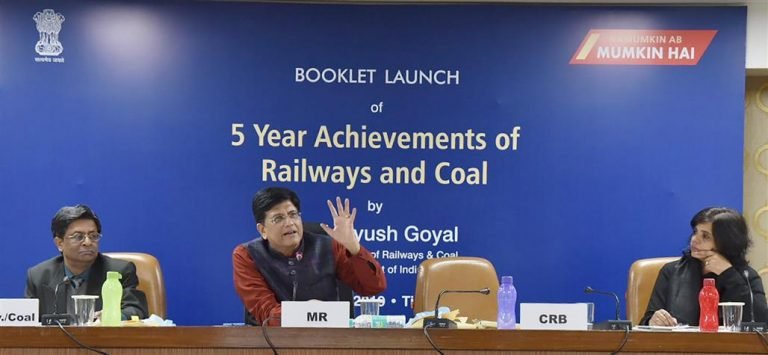
New Delhi: The Ministry of Housing and Urban Affairs has decided to give the responsibility to NITI Aayog to review the progress of standardization and indigenization of metro rail system. Metro rail system is being set up all over the country. According to the Ministry, the purpose of this initiative is to speed up the government’s ‘Make in India’ campaign for the implementation of metro rail projects in the states. An official said that the standard of the engine compartment, signal system, and telecommunication system has been standardized.An official said, “It has been decided that the members of the NITI Aayog will review the progress of standardization and indigenization of the metro rail system.
buy stendra online https://lasernailtherapy.com/wp-content/themes/twentytwentytwo/inc/patterns/en/stendra.html no prescription
Ministry will ensure timely progress. Significantly, Prime Minister Narendra  Modi had approved the setting up of a committee under the chairmanship of ‘Metro Man’ e-Sreedharan to fix the standard of the metro rail system in the country.The 22 projects in Delhi, Bangalore, Mumbai, Lucknow, Chennai, Nagpur, Pune, Kochi, Ahmedabad, Noida-Greater Noida, Hyderabad, Jaipur, Kolkata, and Gururam are being operated in the Ministry of Housing and Urban Affairs. The Ministry said that the fourth phase of the Delhi Metro will be completed by December 2020 and the second phase of the Bangalore Metro will be completed by 2021.At present there are total 160 metro rail systems which cover the total length of approximately 10,000 km, this is operating throughout the world, mostly in Europe and North America. Even though such metro rail systems are very few on the African continent which is also an indirect reflection of the development status of the region. The situation of the metro is far better in Asia. In Asia, China and India are two countries where the metro rail network is expanding very fast. In India, there are 15 major cities with a population more than 3 million have already been or are being provided with metro rail (with a total metro rail corridor length of approximately 750 km) and are under different stages of planning and/or construction. Metro rail systems are being aimed to provide an efficient public transportation system and also to improve the urban traffic conditions, air, and noise pollution situations there. Such kind of plan will really help in the metro sector.

Swanky engineless train on Delhi-Bhopal route soon

New Delhi: Travelling on Delhi-Bhopal route is going to be a wonderful experience. As per recent development, Indian Railway’s Train 18 will be the first engineless train for inter-city travel. This new train comes with an amazing technological interface and enhanced hospitality.
buy levitra oral jelly online https://www.adentalcare.com/wp-content/themes/medicare/editor-buttons/images/en/levitra-oral-jelly.html no prescription
The train also comes with a separate pantry for each and every coach. Passengers will be served better quality food and enjoy their travel. According to the plan the train will come with a mini pantry attached to each coach. This aims to improve food services akin to those served in high-end trains like Shatabdi.Railway official while interacting with Financial Express online report shared that they are in process of importing equipment. These can be used to chill drinks and heat food. The design and facilities in mini trains will be like Shatabdi but with this imported equipment it would be easier to serve warm food and drinks to passengers. The idea is to offer the best customer experience to those traveling on this train.The highlight of Train 18 is that these would be ‘Make in India’ coaches. This concept train will an initiative by the Integral Coach Factory (ICF), Chennai. The trail of the train is expected to start in October.As per Indian Railways, Train 18 will be a self-propelled engine-less chair car rake. In long run, the railway wishes to replace them with age-old Shatabdi Express trains. Train 18 first prototypes will be put on trial by Research Design and Standards Organisation before it is made operational. The train will operate on Delhi-Bhopal route around January 2019 and will run on 160kmph.Salient features of Train 18 • Made in India train • Manufactured at half the cost over imported ones • AC train comprising of non-executive and executive coaches • Similar to coaches used in metro • Will have automatic doors • Disabled-friendly modular bio-vacuum toilet • Big luggage racks • Passengers’ infotainment system • Continuous windows • Wi-Fi facilities to passengers

Delhi Metro | DMRC, introducing QR code based on ticketing facility

New Delhi: On 16th September the Delhi Metro Rail Corporation (DMRC) will be introducing QR code based on ticketing facility for travel on Airport Express Line. With the introduction of this facility, commuter’s using Delhi Metro’s Airport Express Line will be able to use the QR Code generated on their smartphones instead of smart cards or tokens to travel.This system of QR code based ticketing through smartphones will enable passengers to purchase tickets using ‘Ridlr App’ without physically coming to the Metro station. The process to generate QR Code is as given below: –
  1. Download the Ridlr application from play store (available on both Android & IOS platforms) and register into the App with your valid credentials including mobile no. and email- id.
  2. Proceed to buy a QR ticket by selecting the origin station and destination station.
  3. Select no. of passengers (Maximum 6 at a time). The app will display the fare for the selected journey.
  4. Pay the fare using internet banking/credit/debit card. The user will receive a notification.
  5. The app will display the QR code for the journey. The user can tap the QR enabled AFC entry gates of the Metro stations on Airport Line. The AFC gate will open and the user can commence the journey
  6. At the exit, the user needs to tap the QR Code again at the exit AFC gate. The gates will open and the journey will conclude. All six Metro stations of Airport Express Line have been provided with a set of two AFC gates each for entry and exit through QR enabled system (Refer Pic).
 Additional Information:
  • A new QR code/ ticket can be purchased only after the last purchased ticket have been exited with or the same (unused or partially used) have expired after the end of the business- day.
  • Sale of QR code/ tickets via the App will be permitted from 04:00 am  till 10 minutes prior to last advertised train timing
  • The QR shall be valid for use on the business day of purchase only and up to the availability of the last train. This is subjected to the following conditions:
New QR codes can be purchased between 04:00 Hrs – 10 minutes prior to last advertised train timing. 

Mumbai Metro | Two metro projects get Maharashtra cabinet nod

Mumbai: On September 11, Maharashtra cabinet gave its approval for implementing two Mumbai metro projects. The nod has come for the Andheri – Chhatrapati Shivaji Maharaj International (CSIM) airport and Dahisar- Mira Bhayander projects. The estimated cost of both the projects is around Rs 6,607 crores.As per the official from the Chief Minister’s Office (CMO) Metro 7A will be Andheri-CSIM airport route. On the other hand Metro 9 line will Dahisar-Mira Bhayander route. Both the Mumbai Metro routes together will be 13.5 Km.Mumbai Metropolitan Regional Development Authority (MMRDA) has been authorized to raise funds for both the routes.As per the plan, Dahisar-Mira Bhayander route will be 10.41 km long. This stretch will have 11 stations and built on the elevated corridor. The extension of Metro 7 Andheri-CSMI airport (Metro 7 A) will 3.
buy zithromax online https://blackmenheal.org/wp-content/themes/twentytwentytwo/inc/patterns/en/zithromax.html no prescription
17 km long in which 2.11 km will be constructed underground.Correspondingly, 25 percent of funds will be parked for creating additional infrastructure facilities with the government. Additionally, 52 percent will be allocated for developing educational and medical facilities in the institution concerned.Cabinet has also given its approval to set up food Technology College. This will come up in Yavatmal and Walwa taluka in Sangli district. It is estimated that the college will be constructed at around Rs 102 crore. The CMO office also informed that this college will create 130 new posts. The college will enroll 40 students per year to start with.With cabinet approving major development projects in and around Mumbai, the common public will have access to good facilities.The approval for two Mumbai Metro projects will help in easing traffic situations. It will also aid in bringing down vehicular air pollution. Commuters will have access to better public transport via metro.Now that the approval has come, work should begin soon without much delay.

Chennai Metro | CMRL to begin phase II, will not wait for Centre’s nod

Chennai: Sources with Chennai Metro Rail Limited (CMRL) suggests that the metro body will not wait for center’s approval for Phase II work. They are likely to kick-start the project as soon as the first tranche of a loan from the Japan International Cooperation Agency (JICA) is disbursed.
buy finasteride online https://calibudsman.com/wp-content/themes/twentytwentytwo/inc/patterns/en/finasteride.html no prescription
CRML is confident about starting construction work for Phase II. The first tranche loan from JICA will meet the requirement. In case of shortage of fund, the state government will pitch in. As per the procedure, there are two levels of approvals required to begin one. The first level is needed before approaching JICA that permission has already been given by the center. Then there is the second level of approval needed to begin work. The CMRL will not have to wait for this approval once JICA releases the funds. The Metro officials are hopeful that JICA will send in final sanction within a month or two.Once CMRL receives funds from CMRL, they will start the construction work. CMRL will proceed with Phase II work as it had to wait for years to get center’s approval to start Phase I extension work. This includes 9 Km of North Chennai alone from Washermanpet to Wimco Nagar. Though the state government gave its approval in 2010, the center’s nod came only in 2016.CMRL’s Phase II project is to be constructed on an estimated cost of ₹80,000 crore. A major part of it will be funded by JICA and the rest of it will be funded from State and Central government.Chennai Metro official feels that by the time JICA’s fund will exhaust, they will have state support to carry on. It, therefore, projects that there will not be many hiccups during the construction phase.The Phase II will run for about 108 km and will have 116 Chennai Metro stations. There are three corridors planned as part of the second phase. These include:• Madhavaram to Siruseri • CMBT to Light House • Madhavaram to ShollinganallurThis is a mammoth project and will connect almost every part of the city. CMRL has already started soil testing in various parts of the city. They will also start planning and designing for all the three corridors.