Chennai Metro suspended staffers to appeal decision

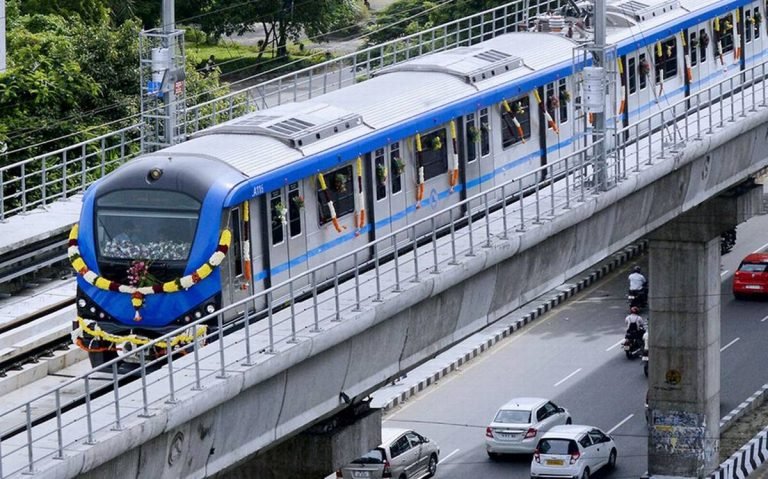
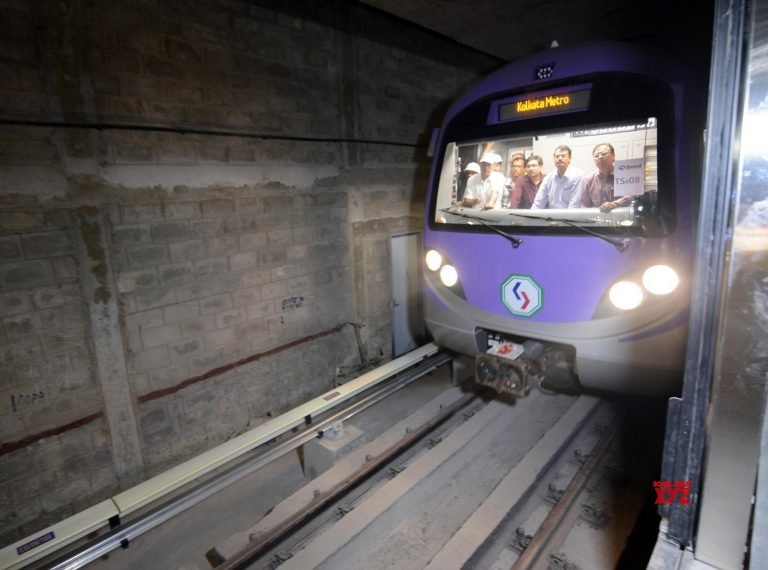
CHENNAI (Metro Rail News): In the meeting held with union members Chennai Metro Rail Limited (CMRL) has agreed to look into the issue of the Operation and Maintenance staff who were removed from service.

“The O&M staff who were removed could give an appeal, as per the procedures laid down, and the remaining striking staff has been directed to report to duty on May 2, 2019,” said Chennai Metro Rail in a press release. The CMRL had carried nearly 82,000 commuters despite the strike, the release added.

The CMRL also thanked the services rendered by staff and outsourced personnel for carrying on with the metro services during the strike on Tuesday.

“CMRL is concerned about its staff welfare but will not tolerate any action which will cause inconvenience to our commuters. Service to our Metro customers is supreme.” The press release further indicated the body’s attitude to the sabotage activity in no uncertain terms.

Chennai Metro Staff call off strike after talks

Chennai (Metro Rail News): The Chennai Metro Rail Limited (CMRL) on Wednesday suspended two workers from traffic controllers and one worker from depot controller for sabotage of train services on April 29.

Near the end of that day, employees who had boycotted work called off their strike following the successful conclusion of talks between the employees’ union, management and Labour Department officials.

All the 250 staff members who boycotted work would report for duty on Thursday said a CMRL official. A Labour Department official said that eight employees, who were dismissed by the management last month, can now appeal to the managing director of CMRL requesting revocation of the termination order.

On the three suspensions, CMRL said it was found that non-executive staff members R. Manokaran, K. Prem Kumar and Cynthia Roshan Samson were controlling train movements on both Corridor 1 and 2 on April 29. They had deserted their workplace and halted the trains by giving false critical commands to the signalling system to disturb/ hamper the train services intentionally, CMRL said and placed them under suspension for sabotage of services.

False propaganda

Earlier, the Centre of Indian Trade Unions (CITU) sought the State government’s intervention to bring CMRL to the negotiating table to solve the workers’ issues and guarantee the safety of commuters. In a statement, CITU State president A. Soundararajan said the Metro workers were on total strike demanding the revoking of the termination of eight employees from service for forming a union. The strikers were also against CMRL trying to introduce contract staff.

Instead of finding a solution through talks, the CMRL management was indulging in false propaganda against the workers, he said, adding that CMRL’s claim that the terminated staff members indulged in theft was a blatant lie. Mr. Soundararajan said it was he, who as CITU president, wrote a letter to a contractor and none of the office-bearers had signed it. Even if they had written a letter, it could not be reason for termination from service, he said.

Claiming that only semi-automatic systems were in place which were mostly controlled by software, he questioned CMRL’s theory of workers sabotaging the signalling system on April 29.

Meanwhile, Metro services were normal and there were not many complaints from commuters.

ADB to fund Delhi–Meerut RRTS Corridor and 4 Metro Projects

Metro Rail News: The Asian Development Bank (ADB) has given the in-principle
indication for financing 4 metro rail projects and a Delhi-Meerut rapid rail corridor as part of its efforts to improve the urban transport system in India.

Hun Kim, ADB Director-General said on May 1, 2019, that Concurrent discussions are going on with other multilateral funding agencies for co-financing of these large urban transport projects including Bhopal and Indore Metro projects.

Other projects especially the expansion of Chennai and Bengaluru Metro are also under consideration, he added at the Annual Meet of ADB here.

“ADB has in-principle agreed to finance these projects with the Centre, which is the guarantor. It depends on the client. If they complete the formalities, we’re ready to go (for final approval from the board),” he said.

ADB has funded Jaipur Metro and expansion of Mumbai Metro in the past.

On talking about Delhi-Meerut RRTS, Kim said Regional Rapid Transport System (RRTS) is a huge project and ADB is looking to co-finance with other multi-lateral funding agencies including Asian Infrastructure Investment Bank.

Approval from Government

In March 2019, Union cabinet approved construction of a Delhi-Meerut RRTS Corridor worth Rs. 30,274 crore RRTS to connect the Capital city with Meerut through Ghaziabad (in Uttar Pradesh). The 82-km stretch will be covered in less than 60 minutes.

The RRTS is a first-of-its-kind rail-based, high-speed regional transit system to be implemented in India. Once operational, it will be the fastest, most comfortable and safest mode of commuter transport in the National Capital Region (NCR).

Kim highlighted that financing logistics projects will also be a priority for the bank. “We want to be a bank for logistics,” he said, pointing to the Vizag-Chennai and the Chennai-Kanyakumari industrial corridors where the ADB is involved in financing preparation of the master plan.
buy clomiphene online https://healthcoachmichelle.com/wp-content/themes/twentytwentyone/inc/en/clomiphene.html no prescription

Tamil Nadu — a major client

Meanwhile, Tamil Nadu is emerging as a major “client” of the bank, he said, adding the bank is planning to lend $500 million each for energy projects and the Chennai Metro Phase II.

Metro Rail News April 2019 Issue Published

Our April issue focuses on interesting topics such as HVAC and Refrigeration equipment systems and also provides cover story on PodTaxi, Metrino.

Further, Delhi Metro Phase IV is chosen as our project of the month and exclusive Interviews with Dr. Mangu Singh, Managing Director, Delhi Metro Rail Corporation Ltd, and Mr. Ramesh Munot, MD, Mandev Tubes are also covered, along with other regular columns such as new development in metro project, pre/post event coverage, technology updates, opinions, Q&A with Industry Experts, appointments, Passenger information, live tenders, Industry Contract, upcoming events and current job openings.

Index

S.No.DescriptionPage No.
1
Editor Note6
2Round-Up9
3Editor Choice12
4New Development15
5Cover Story: Pod Taxi, Metrino24
6Project of the Month: Delhi Metro Phase IV26
7Exclusive Interview with Dr. Mangu Singh, MD, DMRC28
8Focus System: HVAC and Refrigeration System33
9Interview with Mr. Ramesh Munot, MD of Mandev Tubes Pvt. Ltd.34
10Technology Update: One Nation, One Card36
11Pre Event Coverage: 5th Smart Cities India 2019 Expo38
12Post Event Coverage: Metro Rail India Summit 201940
13Global Opinions45
14Women in Tech: Mrs. Gurneet Kaur48
15Q&A with Industry Expert: OP Agarwal51
16Achievements and Initiatives of Ministry of Railways54
17Appointment57
18Upcoming Event58
19Metro Rail Project Status60
20Live Tender62

The Future of Traffic Management is ‘Intelligent’

Technology has gradually permeated across domains over the years, however, inventions have been comparatively less visible in the field of traffic management and control. Recent years have seen intelligent transport systems (ITS) become popular in light of their endless possibilities, which range beyond traffic congestion information & control to efficient infrastructure usage and road safety.

Advances in ITS technologies conceived the concept of intelligent traffic management systems (ITMS), which are currently perceived as a conjunctive multidisciplinary field of work, prompting several organizations worldwide develop advanced solutions to ease traffic congestion and control. ITMS are becoming indispensable components of traffic management, saving time of commuters while ensuring smooth vehicle flow along with safety and comfort.

Software Innovation is the Key to ITMS Advancements

The concept of “smart city,” continues to transmute cities into digital societies. Emphasis laid on controlling traffic flow is becoming stronger, at a time when cities are brainstorming innovative technologies and ideas to evolve into “smart” ones. This has rubbed off on the developments in intelligent traffic management systems, which emphasize the integration of vehicle-to-roadside wireless communication, and short-range, dedicated vehicle-to-vehicle communication.

Software innovations are the key to optimizing the existing antiquated systems, and while there are myriad complexities involved in digitalizing road networks, numerous technologies exist that leverage existing assets to morph and upgrade traffic management. Powered by distributed acoustic sensor (DAS) – a state-of-the-art technology, fiber-enabled solutions have offered smarter way to manage and improve efficiency of traffic management. Integrating edge computing systems and advanced artificial intelligence with DAS has facilitated detection, classification, and reporting on traffic infrastructure activities in real-time.

Volkswagen Group (VW), a leading automotive giant, recently developed an intelligent traffic management system leveraging a quantum computer, which are capable of replacing the forecasting for transport demand, travel times, and urban traffic volumes. This breakthrough in quantum algorithm is claimed by VW to enable transport service providers, taxi companies, and public transport organizations, to deploy their fleets with utter efficiency, meanwhile minimizing waiting times of commuters. This collaborative effort of VW with D-Wave is a paradigm of the real-world influence that quantum computing can have on business operations and consumer regimes alike.

Intelligent traffic management systems are not only holding their ground firm, but also taking off into the skies, with the introduction of TopSky-SimDebrief by Thale. This intelligent air traffic management training solution of Thale monitors the use of air traffic controls, while tracking the physiological reactions of the controller. As the air traffic continues to show a tremendous increase, solutions such as the TopSky-SimDebrief are the key to cope up with rising air traffic control requirements and maintaining safety.

Challenges Remain in Maintaining Existing Infrastructure While Deploying New Ones

The rapid internationalization of economies and changing landscape of infrastructure have meant that demand patterns for the infrastructure services continue to change across as well as within geographies. Financing the existing traffic control infrastructure, while working on new deployments through holistic management has emerged as a key challenge in the ITMS landscape. Accomplishing the user requirements involves numerous functions called service requirements, and addition of new functions entails the need for defining new requirements for traffic management and control.

Multiple technology layers are involved in the implementation of intelligent traffic management systems, and there is a lack of expertise regarding identification and selection of technologies vis-à-vis application. Apart from these technological challenges, inherent issues barricade the efforts to change traffic management infrastructure in cities. Safety critical nature of traffic management systems, reliability testing and regulatory policy requirements impede deployments of technologies, such as ITMS. Although challenges prevail in ITMS deployments, several real-life examples have proved that advancements and implementation of these technologies is not intangible.

The Road Ahead

IoT proliferation has played a pivotal role in the realization of smart cities, and eventually on relevant technologies, traffic management systems being no exception. IoT-based intelligent traffic management systems are expected to soon pick up steam to meet demand from an increasing number of smart city projects, coordinate with ambulance drivers, and track traffic violators.

Ubiquitous nature of IoT-based ITMS, and their unmatched performance in detecting usual occurrences in a traffic flow, allude significant advancements and deployments of these systems worldwide. Next-generation intelligent traffic management systems point at integration of advanced sensors that bridge data gaps apropos of traffic flow.

It is highly likely that real-time traffic management supported by artificial intelligence, and integrated with features of artificial intelligence, soon come to the fore. Intelligent traffic management systems are the only tangible aspect of efficient transits systems, with route planning and smart parking management being other advances that collectively mold a more effective traffic management and control system. As interaction between city infrastructures becomes more complex, intelligent traffic management systems will undergo multi-faceted advancements in the foreseeable future.

The information presented in this article is based on a report by Fact.MR on Intelligent Traffic Management System Market.

Bhopal Metro started its first Initial Test pile

BHOPAL (Metro Rail News): The Madhya Pradesh Metro Rail Co. Limited (MPMRC) has started first initial pile test for Bhopal Metro on April 25, 2019. To mark this historical beginning the Grand celebration of Test pile along with the Pooja Ceremony was done.

All the Directors and employees of MPMRCL along with the GC team Director Mr. John Swan and his GC team take part in the ceremony and congratulated to the team which started the pile testing work successfully.

This grand event was organized by the DBL Project Manager RajKapoor, Making a step further to Bhopal Metro he started this first Initial Test pile with his team. Dilip Buildcon Limited construction Manager and Section Incharge Mr. Chanchal Pandey continued the event and concreting of test pile was successfully completed on April 24, 2019.

MPMRC  started its first Initial Test pile for Bhopal Metro
MPMRC started its first Initial Test pile for Bhopal Metro

In October 2018, Centre had approved the Bhopal Metro Rail project. It comprising two corridors of total length 27.87 Km (i) Karond Circle to AIIMS (14.99 Km) and (ii) Bhadbhada Square to Ratnagiri Tiraha (12.88 Km) will connect major public nodes and city cluster areas of Bhopal. The length of Karond to AIIMS corridor is 14.99 km, which is mostly elevated and partly underground (at Bhopal Railway Station & Bus Station) and comprises of 16 Stations (14-Elevated and 2-Underground).

The length of Bhadbhada to Ratnagiri Tiraha corridor is 12.88 km comprising of 14 stations all elevated. The estimated cost of the project is Rs. 6941.40 crore and the project will be completed in 4 years. The corridors will be having Multimodal Integration with Railway Stations & BRTS Stations and will have feeder network of Bus, Intermediate Public Transport (IPT) and Non-Motorised Transport (NMT). The Metro will provide Eco-friendly and sustainable public transport to residents, commuters, industrial workers, visitors, and travelers.

NHSRCL Invite bids for India’s first undersea tunnel

NEW DELHI (Metro Rail News): The work for India’s first bullet train project is on track. The National High-Speed Rail Corporation Limited (NHSRCL) which will be part of the Mumbai-Ahmedabad bullet train corridor recently floated its second high-value tender for design and construction of India’s first undersea tunnel for Mumbai-Ahmedabad High-Speed Rail corridor.

The bullet train corridor from BKC to Kalyan Shilphata will have a 21 Km underground corridor in Maharashtra and the bids have been invited for this 7 km stretch undersea tunnel will be constructed under the sea bed.

Japan’s Kawasaki Geological Engineering along with engineers of NHSRCL, RITES Ltd. conducted a geotechnical investigation for the tunnel last year. As per the tender the construction work is supposed to be completed in 3.5 years.

The Government of India has received an ODA loan from Japan International Cooperation Agency (JICA) towards the cost of the project for the construction of the Mumbai-Ahmedabad High-Speed Rail corridor. Therefore, the Government of India through the National High-Speed Rail Corporation Limited (NHSRCL) is inviting the international competitive bids (ICB) from the eligible contractors/tenderers on lump sum price basis. The ICB will be conducted as per the JICA’s single stage biding procedure.

Details of Work:

The bid is invited for construction of tunnelling works including testing and commissioning for double line high-speed railway using tunnel boring machine (TBM) and new Austrian tunnelling method (NATM) between Mumbai underground station at Bandra-Kurla Complex (MHHSR Km 0.773) and Shilphata (MAHSR Km. 21.150) in the State of Maharashtra for the Project for Construction of Mumbai-Ahmedabad High Speed Rail corridor.

Important details of Tender:

  • Tender Notice No. MAHSR C-2 dated 23.04.2019
  • Approx Tender Value: 7,000 crores
  • Cost of Bid document: INR 2,36,000/-
  • Sale of Bid Document: From 26.04.2019 to 22.08.2019 (between 10.00 hrs to 17.00 hrs) in all working days.
  • Bid Security Money: INR 7,00,000,000/-
  • Pre-bid Meeting: 24.05.2019 at 11.00 hrs
  • Pre-bid Meeting Venue: National High Speed Rail Corporation Limited, 2nd Floor, Asia Bhawan, Road No.205, Sector-9, Dwarka, New Delhi-110077
  • Last Date of Submission of Bid: 23.08.2019 (up to 15.00 hrs)
  • Date & Time for Opening of Technical Bid: 23.08.2019 at 15.30hrs.

For any clarification/query or inspection of bid documents, the bidder can contact –

The Managing Director,
National High Speed Rail Corporation Limited,
2nd Floor, Asia Bhawan, Road No.205,
Sector-9, Dwarka, New Delhi-110077
Tel: 011-28070000
E-mail: c2packagetender@nhsrcl.in
Website: www.nhsrcl.in

we would like to mention here is that aid the foundation stone for the bullet train project was laid down by Prime Minister Narendra Modi last year with Japanese counterpart Shinzo Abe. While the project is expected to be complete by 2023, a few reports suggested that the project might miss the 2023 deadline because of delays in the initial land acquisition process.

NHSRCL floated its first high-value tender worth Rs. 20,000 for the 237 km out of 508 km-long corridors.

In case of seeking bidding support, please write to priyanka.sahu@metrorailnews.in

Maha Metro likely to save 1552 Crore of Nagpur Metro Project by Going Digital

NAGPUR (Metro Rail News): Maharashtra Metro Rail Corporation Limited (Maha Metro) likely to save up to 1552Crore over the next 25 years after installing a digital management platform created by US-based Bentley Systems

Maha Metro building 41.7 km long Nagpur Metro project which includes 40 stations and two depots to provide a safe, reliable, efficient, affordable, commuter-friendly, and environmentally-sustainable rapid public transport system for the region.

According to a study conducted by the Ministry of Statistics and Program Implementation, GOI found Out of 564 infrastructure initiatives rolled out in India, 42% faced delay and 31% had no definite delivery date.
buy amoxil online https://lasernailtherapy.com/wp-content/themes/twentytwentytwo/inc/patterns/en/amoxil.html no prescription

To avoid any cost or delay difficulties, Maha Metro and software developer Bentley Systems have collaborated to create a building information modelling (Bim) academy. This encourages the adoption of a connected data environment (CDE) and compliance with Bim.

Maha Metro has also adopted Bentley Systems’ Open Rail CDE software. This digital platform now holds 12,000 3D models, drawings, and project documents.

For the 22 design consultants and 15 contractors working on Nagpur Metro, it provides an ongoing source of information to ensure the project stays on track and on budget.

Anticipated savings because of Maha Metro’s adoption of OpenRail CDE and this pioneering approach for the Indian rail market during design and construction include:

  • USD 540,000 during design review for distribution and review of information compared to manual processes.
  • USD 280,000 through its adoption of automated CAD quality assurance and title block integration.
  • USD 690,000 because of on-site validation of documents using QR codes.
  • USD 85,000 by way of dynamic dashboard project progress reports.

Maha Metro also has its eye on operational expenditure during the capital expenditure phase and has configured its CDE to record all engineered components, systems, locations, properties, specifications, and drawings. The CDE also helped Maha Metro procure vendor data, vendor manual, vendor drawings, bills of materials, and specifications. Lastly, through the CDE, Maha Metro could install or construct assets, including test data and inspection reports, that cover all of the lifecycle stages.

When completed, this trusted source of information residing in the CDE will form the operational backbone of Nagpur Metro’s infrastructure for years to come, and it is expected to generate savings of around USD 222 million over a 25-year period.

“We are happy that we chose Bentley as the partner to realize our digital project management approach in successfully executing our project from concept to operations. The team’s innovative use of Bentley technology to manage the design, construction and handover has already been acknowledged by other large infrastructure owner-operators as an important first step to introducing a new culture for delivering rail projects in India,” said Brijesh Kumar Dixit, managing director, Maharashtra Metro Rail Corporation Limited.

Bangalore Metro Phase-II Project Property owner wants an increase in compensation

BENGALURU (Metro Rail News): The property owner wants an increase in compensation for land handed over for Phase II of the Bangalore Metro Rail Corporation Limited (BMRCL). The acquisition of properties for infrastructure work an easy affair under the Land Acquisition Act 2013. However, some property owners are approaching either the court or the BMRCL in this connection.

Although The compensation given for Bangalore Metro Phase-I acquired land was 30 percent of the land cost going by the prevailing guidance value and the compensation provided in Phase-II is 100 percent of the land value. BMRCL needs to acquire nearly 300 acres for its 72.1 km Phase-II and the compensation amount expected to be handed over for it has been fixed at around Rs 6,293 crore.

“We presently provide Rs 7,000 per square foot for residential land and Rs 9,800 per square foot for commercial properties. This is based on the guidance value given by the Revenue Department at the time the preliminary notification for land acquisition is issued. In addition to that, an annual interest of 12% is paid on the amount until the full compensation is handed over.” said M S Channappa Goudar, GM, Land Acquisitions, BMRCL. The compensation is paid through the Karnataka Industrial Areas Development Board (KIADB).

The Land Acquisition office of BMRCL sees a beeline of owners pressing their case for increased compensation for their property. we found one family asking Rs 15,000 per square foot for parting with their land for Hebbagodi depot while another family whose land is required for the R V Road-Bommasandra Line wanted the 2017 guidance value to be followed.

“We need to go ahead with the acquisition process. We deposit the amount finalized by us in the court and it is up to that handing over land to collect it or file a case for more compensation,” Goudar said.

Among the few who have filed a writ petition against BMRCL for more compensation is the owner of Kavya Petro Park at Doddenakundi.
buy viagra generic over the counter
BMRCL has acquired 71.16 square meters of the land of M S Jagannath by paying Rs 82 lakh for the property, said an official.

“As per the sale deed, the total land is valued at Rs 31,30,000 only. The owner now wants over Rs 3 crore (3,30,77,536) for his property and has gone to court,” the official added.

Chennai Metro Phase II likely to be completed by 2026

CHENNAI (Metro Rail News): The Chennai Metro Rail phase II Rs 69,180-crore project will be implemented by Dec 2019 and likely to be completed by 2026, according to the Detailed Project Report prepared (DPR) by Chennai Metro Rail Limited.

The project escalation considered at 5 percent from December 2018 onwards and no escalation is being considered on the land cost. CMRL has shown that the implementation of the project on Public-Private Participation model in the future.

CMRL officials said that This might be done either in the complete provisioning of metro rail or in some parts like the fare collection system. The three corridors will connect Madhavaram to Siruseri, Light House to Poonamallee Bypass and Madhavaram to Sholinganallur.

Chennai Metro Phase 2 Strategy
Chennai Metro Phase 2

A Major depot for all three corridors will be built at Madhavaram Milk Colony so that
57.2 hectares has been proposed to acquire out of which construction depot requires 27.8 hectares land and the remaining land will be used for property development and parking facility as suggested by CMRL.

In the SIPCOT area, about 6.3 hectares of private land has been proposed to be acquired for the minor depot. This minor depot shall be constructed elevated in a covered area of 4.5 hectares. The total area underneath shall be used for property development and parking. About 17.4 hectares land has been proposed to be acquired for a major depot for corridor-4, out of which depot construction requires 15.3 hectares land and the remaining land shall be reserved for staff quarters, etc.

The main negative impacts of the project will be a change in land use, loss of trees, water/drainage problems, and soil erosion and the environmental impact assessment pointed out that project affected people. so that CMRL has additionally focused on social and environmental impact for which it has allocated Rs 2,9130 lakh and Rs 4,869 lakh.

Smaller stations

“When compared to phase I, we acquired less land for the phase I extension. For phase II, we will acquire only what is absolutely essential. Even the size of the stations has been brought down from 220 metres in phase I to 150 metres in phase II,” the official said.

Chennai Metro will need 1,309 properties, of which 104 are residential and the remaining 937 are commercial. The officials said the families and landowners will be adequately compensated. As per the Right to Fair Compensation and Transparency in land acquisition, Rehabilitation and Resettlement Act, 2013, all those affected will be duly compensated,”

DMRC invites tender for Advertising Rights inside selected Red Line stations

DELHI (Metro Rail News): Delhi Metro Rail Corporation (DMRC) invites tender for exclusive advertising rights inside selected Metro stations from Shaheed Nagar to New Bus Adda on Line-1 extension (RED LINE) of Delhi Metro Network.

The selected applicant shall have the exclusive rights to design, procure/manufacture, install, manage, operate, maintain, market and sell advertising opportunities at the selected Delhi Metro stations subject to the terms and conditions specified in the License Agreement.

Advertisement spaces inside these metro stations may include staircases, escalators, platform screen doors, turnstile, frisking panels/equipment, fixed/moveable panels, floor or roof branding, logo other than that of DMRC on the roof, elevator spaces, smart posters, visual display by electronic media (without audio), projectors/holography or any other innovative advertisement media, etc, subsequent to the approval of DMRC, as stipulated.

The advertisement inventory shall include smart posters, QR codes/graphics, canopy, etc., to advertise the e-commerce activities for generating business opportunities through on-line or off-line shopping.

The tenure of License Agreement shall be 9 (nine) years from the date of the first handover of advertising spaces with a lock-in period of two (2) years.

Important Dates:

Last Date of Tender: 10th May 2019

Tender opening date: 13th May 2019

Click here to download the tender document

Need Tender Support, Please call on +91-9990454505 or write an email at narendra.shah@metrorailnews.in

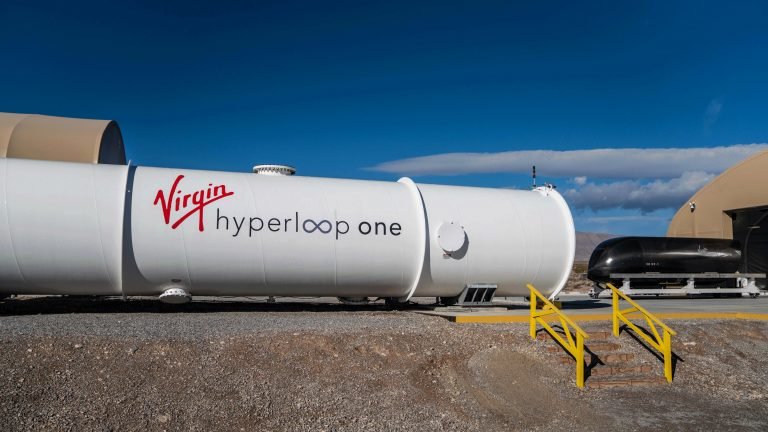
Bentley Systems Announces Drummond Community High School Team as Winners in First Future Infrastructure Challenge: DEC Hyperloop

Bentley Systems, the leading global provider of comprehensive software solutions for advancing the design, construction, and operations of infrastructure, announced Drummond Community High School of Edinburgh, Scotland as the winning team of the first ever Future Infrastructure Challenge: DEC Hyperloop, which took place April 7 through 9. Hosted by Bentley Institute and Class of Your Own, the challenge included sixth form students, ages 16 to 18, from four schools in the UK whose assignment was to conceptualise a design of a hyperloop transport system and stations for Singapore.

Students from participating schools, The Cardinal Wiseman Catholic School from Greenford, London; Drummond Community High School from Edinburgh, Scotland; King Ecgbert School from Sheffield, South Yorkshire; and More House School from Farnham, Surrey, travelled to Bentley Systems’ offices in London on April 7. They were tasked with creating the hyperloop concept and a presentation to convey their cohesive plan to a judging panel.

The overall winners of the challenge are students from Drummond Community High School, Faye Fulton, Ryan Gordon, Alizah Mughal, and Wiktor Rauba, led by DEC (design, engineering, construction) teacher, Mark Holden. The winning team members and their teacher were awarded a complimentary trip to Singapore from Bentley Systems to attend its annual Year in Infrastructure Conference, which will be held this year October 21 through 24 at the Marina Bay Sands Resort in Singapore.

The four participating schools were selected from 100 schools studying the Class of Your Own Design Engineer Construct! (DEC) learning programme, which is intended to educate students about and encourage exploration of careers in architecture, engineering, and construction.

In the spring of 2018, following meetings with students studying DEC at a higher or advanced level, the four schools were invited to enter teams to take part in the first Future Infrastructure Challenge to mark the 10th anniversary of Class of Your Own. Delivered in partnership with Bentley Systems, the programme will be released as a full curriculum for schools around the world later this year.

Mark Holden, teacher for the winning team, said, “Drummond High School is committed to nurturing big ambition in its students and equipping them for the world and workplace of tomorrow. The school became involved in the DEC curriculum after seeing its success – and the attributes of its students – from across England and recognising how closely this fit our own aims. We have enjoyed several years of unparalleled opportunities and great successes and are delighted that this has led to this collaboration with Bentley and COYO. The development of our team has been incredible to watch, but also the effect on the school community as a whole has been palpable. Knowing that students from our school are taking part in such a huge project, working with such esteemed professionals on this scale is a constant reminder to all of our students of what they can achieve.”

Over the two days prior to the presentation day, the students created their designs using laptops and software provided by Bentley Systems at the offices of four globally recognised companies: Arup, Rogers Stirk Harbour and Partners, Turner Townsend, and WSP.

On April 9, the teams presented their concepts to a distinguished panel of judges:

Harj Dhaliwal – Managing Director Middle East & India, Virgin Hyperloop One

Chris Barron – Chief Communications Officer, Bentley Systems, M. Arch., Harvard Univ., board member of the Zofnass Program for Sustainable Infrastructure

Professor John Miles – Arup/Royal Academy of Engineering Chair Transitional Energy Strategies, University of Cambridge

Professor Cam Middleton – Laing O’Rourke Professor of Construction Engineering, University of Cambridge

Iain Blight – Director of Station and Building Engineering at HS2

Chris Preston – President of Chartered Institution of Civil Engineering Surveyors (ICES), Bentley’s Inaugural Professor at the National College for High Speed Rail

Sadie Morgan – Co-founder, dRMM Architects; board member National

Infrastructure Commission / Chair of Independent Design Panel for HS2 

Andrew Tyley – Partner, Rogers Stirk Harbour and Partners

Ian Stilgoe – Vice President Geopositioning Europe, Topcon Positioning Group

Harj Dhaliwal, managing director Middle East and India of Virgin Hyperloop One, said, “We can’t solve 21st century challenges with 19th century technology. As the first new mode of transportation in over 100 years, hyperloop is changing the narrative for mass transportation. It’s great to see the next generation of engineers and designers embracing this technology and the new type of thinking it requires. I have been overwhelmed by the approach to innovation and the out-of-the box thinking the young students have demonstrated. All of them are winners today.”

The teams’ concepts were judged according to feasibility and quality of design, social and economic impact, building efficiency, sustainability, originality, and quality of the presentation.

Chris Barron, chief communications officer for Bentley Systems, said, “It has been a pleasure hosting these talented students, seeing their hyperloop designs, and watching their excellent presentations. It was, in a word, inspiring, not only because of the depth of research they performed, and the thoughtfulness of their designs, but also because they demonstrated that the next generation of infrastructure professionals are ready to face the challenges of advancing our economy and sustaining our environment. Bentley is committed to supporting STEM learning programmes like Class of Your Own, which inspire and challenge students to think creatively about the future of infrastructure and to perhaps even pursue careers in infrastructure-related fields. We’re looking forward to hosting more events like this around the world.”

Additional awards of £350 to be donated in the name of the students and the school to a local, national, or international charity of their choice were given in the following categories:

Best Definition of Requirements King Ecgbert School (Yuanhao Lei, Annabel Smith, Joe Toyne, with teacher Helen Vardy)

Best Quality of Research – Cardinal Wiseman Catholic School (Kieran Barton, Sanjiv Duelas, Kacper Kumor, Shakil Perrera, Julia Podlinska, with teacher Paul Foote)

Best Quality of Design – More House School (George Armytage, Finley Skinner, Uday Pal Trabelsi, with teacher Charles Stewart)

Best for Energy Use and Environmental Impact – Drummond Community High School (Faye Fulton, Ryan Gordon, Alizah Mughal, and Wiktor Rauba, with teacher Mark Holden)

Best for Innovation – Drummond Community High School

Best Presentation, Communication, and Use of Technology – Cardinal Wiseman Catholic School

Alison Watson, CEO and founder of Class of Your Own, said, “DEC has produced some incredible digital talent thanks to great teachers and support from industry. After 10 years, I felt it was time to ramp up the challenge and write a new curriculum that takes students, and their teachers, to another level of learning. I’ve watched these four teams grow in so many ways as they’ve developed their designs and in truth, all are champions. The students can now look forward to showing the world what young people can do when given the opportunity to learn in a real-life environment. I couldn’t be more proud of these young role models and thank the Bentley team for their unwavering support of COYO and our schools to make this happen.”

##

Image and Caption:

Winners of the 2019 Future Infrastructure Challenge: DEC Hyperloop is the Drummond Community High School Team(Alizah Mughal, Ryan Gordon, Wiktor Rauba, Faye Fulton) with Harj Dhaliwal, Managing Director Middle East & India, Virgin Hyperloop One, who was a member of the judging panel for the event.

About Class of Your Own

Class of Your Own Limited (COYO) is an award-winning consultancy specialising in education for the digital built environment. Established in 2009, COYO has been delivering the ground-breaking Design Engineer Construct! learning programme in addition to workshops, challenges and other student engagement programmes to schools and colleges across the United Kingdom. Class of Your Own develops innovative, contextualised approaches to teaching and learning that enable young people from all backgrounds to explore aspirational career pathways in architecture, engineering, surveying, and construction.

About Bentley Institute

Bentley Institute advances the infrastructure professions by encouraging and supporting Bentley users’ ambitions in going digital. Its initiatives attract and advance infrastructure professionals, and future professionals, through continuous learning about technology solutions, as well as project delivery and asset performance best practices.

MahaMetro terminates HCC-Al Fara’a contract

PUNE (Metro Rail News): The Maharashtra Metro Rail Corporation Limited (MahaMetro) has terminated the contract of Hindustan Construction Company Ltd (HCC) and Al Fara’a a Joint venture was responsible for constructing Metro stations at Pune and Pimpri-Chinchwad.

The reason stated for the discontinuation of services by these companies is “inconsistency” and “slow progress” of the work. Several employees at the senior level, as well as the ground level of HCC and Al Fara’a, had quit their jobs in last 10 months, citing that they were not receiving pay, which in turn had slowed down the execution of project work.
buy finasteride online https://gilbertroaddental.com/wp-content/themes/twentyseventeen/inc/en/finasteride.html no prescription

In November 2017, MahaMetro had awarded a contract to infrastructure major HCC and the UAE-based Al Fara’a group together for building nine metro stations at Pimpri-Chinchwad, for Rs 497.07 crore. Nine days ago, this contract was given to the Shapoorji Pallonji Group, which has assured that results will be delivered on time.

“Work on nine stations — at Tukaram Nagar, Bhosari, Kasarwadi, Phugewadi, Dapoli, Bopodi, Khadki, Range Hills and Pimpri-Chinchwad Municipal Corporation (PCMC) — began approximately 1.5 years ago and was expected to be completed by the end of December 2019” Mr. Hemant Sonawane Said.

“It has been a few days since the contract handed over by MahaMetro to the two companies stands terminated due to slow progress. They failed to deliver the expected timeline and we were compelled to hand over the project to another company. For us to introduce the Metro at the soonest, it is essential that the companies to whom the project is awarded maintain consistency in their work. This was not the case with HCC-Al Fara’a. We had previously sent several notices asking them to speed up work” He added.

We tried reaching the companies’ spokespersons via email and phone calls, but no response was received. Last week, 100 employees who staged a protest against the joint venture over unpaid dues of six months were forcibly asked to resign and given an ultimatum of termination. Meanwhile, PCMC recently wrote to MahaMetro, asking it to speed up work so that easy traffic flow could be facilitated under civic limits once more.

Delhi Metro allots permanent bicycle parking at stations

To encourage the use of bicycles, Delhi Metro Rail Corporation (DMRC) has introduced a permanent space for bicycle stands at metro parking lots, a senior official informed.

Currently, the facility is available at 18 Metro stations which include Seelampur, Shahdara, Welcome and Rithala on the Red Line; Saket, Arjangarh and Chhatarpur on the Yellow Line; Dwarka Mor, Dwarka and Dwarka Sec21 on the Blue Line; Mundka, Nangloi and  Peeragarhi on the Green Line; Tughlakabad, Badarpur and Sarita Vihar on the Violet Line and Okhla Bird Sanctuary on the Magenta Line.

“The extension of the existing stands will be carried out in more stations in phases. The permanent bicycle stands have the parking capacity of multiple bicycles and will be provided with a locking mechanism for the safety of bicycles,” the DMRC said in its official Twitter handle.

At present, the DMRC has a provision of allowing commuters to use bicycles for covering small distances at nominal changes in some of its metro stations.

In an effort to tackle the problem of pollution, the organisation has been encouraging commuters to use bicycles as it is an eco-friendly mode of transport.

Currently, the Delhi Metro’s current operational span is 343 km with 250 metro stations, spread over eight color-coded lines.