Metro Railways: A Paradigm shift in the Transportation industry

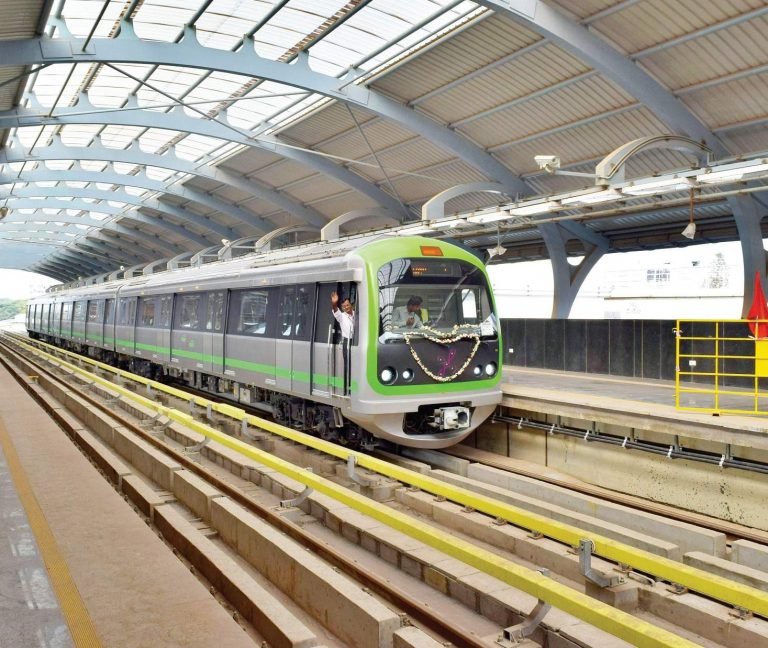
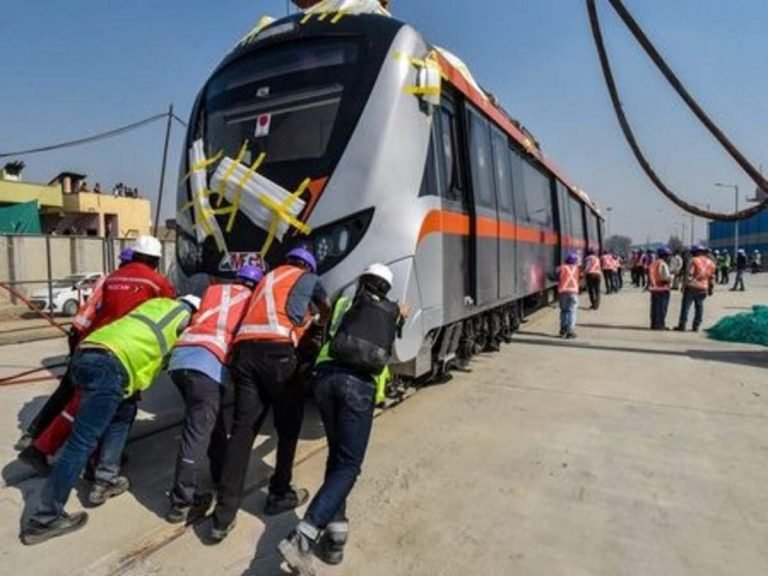
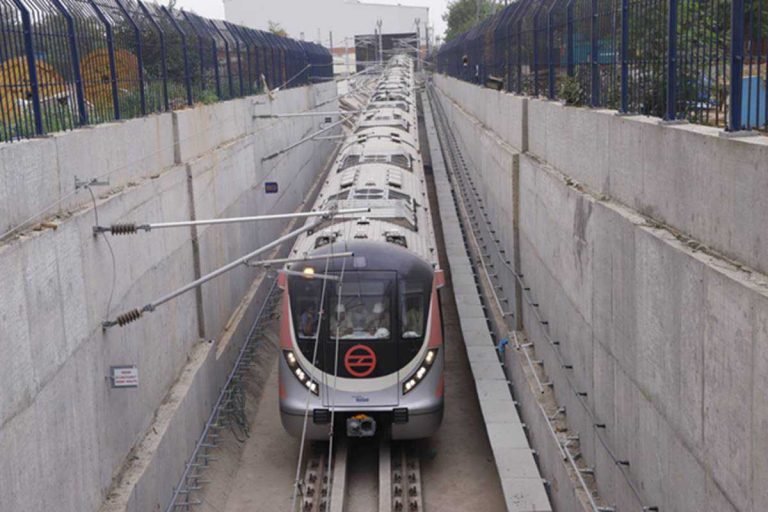
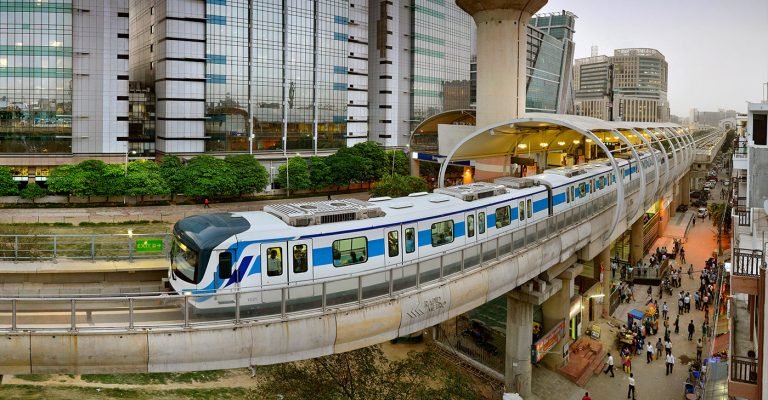
Metro Railway is a rapid rail transit system with improved reliability, punctuality & passenger comfort. 1st Metro Rail service was inaugurated on 24th October 1984 in Kolkata. Today, there are 17 Operational Metro railways in the country & yet there are many more to come in the near future in different cities. More than a billion passengers travel annually through metro railways. From, 24th October 1984 to today, we have witnessed a paradigm shift in the transportation industry of this country.

How Metro Railways brought a paradigm shift in Transportation Industry?

When the clock is running at its pace, but you are patiently waiting for your Train. There is no fear of getting late & there is no fear of having your train stuck in between for hours. It’s not just you, there are a thousand others waiting for it very patiently. Everyone looks so assured that their train will come on Time. From having our trains late for hours to having 99.95 % punctuality. From having major train accidents to almost none accidents during travel. From having an untidy, uncomfortable train coach to having clean & comfortable coaches. We have witnessed a paradigm shift in the transportation industry. It’s the metro rail system which has brought a major shift in the transportation industry.

Metro rail systems are equipped with advanced signaling & communication system. If speaking in the general sense, it is the perfect blend of almost all major technological advancements that mankind has ever witnessed. With the help of technological edge over traditional railways, the metro railways have been able to give us assured safety, punctuality & passenger comfort. Metro Railway is no luxury, everyone can afford to pay for it. Assured safety, punctuality & passenger comfort at affordable price is the gift that Metro Railways have given to us. It is the most efficient rail system which is successfully carrying millions of passengers daily, without posing a challenge to the environment. 

How well it addresses the Environmental challenges?

Metro Railway is a clean Technology. It runs on electricity thus reduces the emission of greenhouse gases. Today, there are several metro rail organizations in the country but a champion in this regard is no other Metro than the Delhi Metro. Delhi Metro is the first ever Metro railway system in the world to receive carbon credits. Delhi Metro is reducing the emission of 6.3 lakh ton of greenhouse gases every year. Due to the presence of the metro as a means of reliable mode of transportation, 91000 vehicles are now off road in Delhi daily. It’s not just the story of one city, several other cities have similar stories, but their stories are yet to come on record.

Where all it needs to get better?

In my opinion, the current metro system needs to get better at providing last mile connectivity. If we want to have a better tomorrow for ourselves, we need to make all effort to reduce GHG emissions in every possible way. E-rickshaws & cycles are among the few additional modes of transportations that can be promoted to connect users from metro stations to their homes. Also, I strongly believe that there is a need to upgrade from Track circuit-based train control system to communication-based train system or even an advanced signaling system to enhance the productivity of Metro Rail systems. 

Kerala govt gives green signal for extension of Kochi Metro

KOCHI (Metro Rail News): The state government has provided Kochi Metro with a green signal for extension of Kochi Metro to Tripunithura Railway Station. With the approval government cleared all the doubts that were raised for the extension in the wake of last year’s floods.

Due to the floods that occurred last year in Kerala the Tripunithura Municipality authorities requested the Metro agency to revise the Metro route to Tripunithura through the proposed road and bus depot planned beside Tripunithura railway station. In 2017 The Kochi Metro Rail Ltd (KMRL) prepared the DPR (detailed project report) for the extension of Metro services from S N Junction to Tripunithura Terminal. The DPR had proposed 1.2-km viaduct and one station- Tripunithura terminal. After working on the request, the DPR was revised and submitted to the government with an estimated cost of Rs 356 crore.

Official stated that “Now, all those doubts have been cleared. The Cabinet has approved the extension of Kochi metro from S N Junction to Railway station via bus depot. This is really a great moment for the residents of Tripunithura. The extension will cost Rs 356 crore and the work, once launched, will be completed in two years,”

As soon as the first phase of work until Petta is completed the contract between KMRL and the Delhi Metro Rail Corporation (DMRC) will end. The KMRL will directly execute the remaining work. 

Chennai metro invites corporate firms to co-brand stations

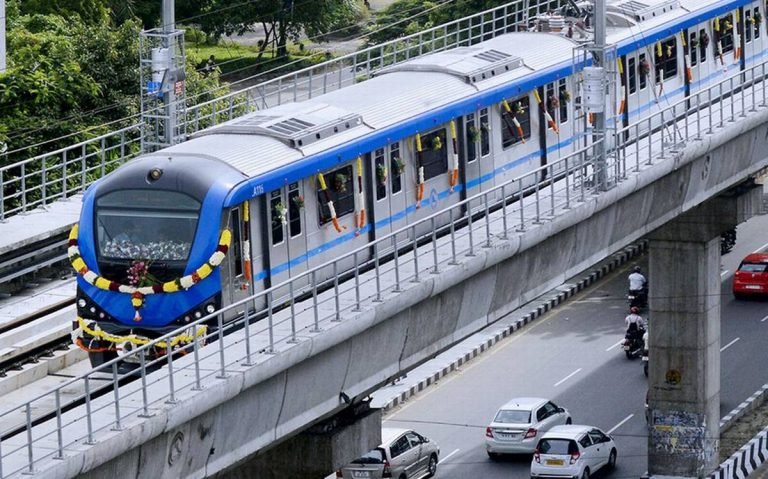
In a view to increase revenue, Chennai Metro Rail Limited (CMRL) is inviting big names from the corporate world to pick up co-branding rights of stations. 

According to the source, talks are on with a few companies, including real state developer DLF, World Trade Centre (Bengaluru-based Brigade Group holds licence to build this in five southern cities) and the Ozone Group

For Phase II project

In this project, a company’s name can be prefixed in front of a station’s name.  apart from this, we are exploring various other options like giving them rights to advertise inside stations and for announcements inside trains as well, added by the official.

Auctioning names of stations is not new for Chennai Metro Rail.  They have begun implementing it in a few stations such as Thousand Lights, Nandanam and Teynampet. For instance, a few months ago, Thousand Lights Metro Station would be renamed as Spencer Plaza Thousand Lights Metro Station for three years said by CMRL.

What is significant in phase II is that they are contemplating giving branding rights even as the station construction is yet to begin.

A source told THE HINDU that they may even consider giving companies the option of designing, building and operating a station. There are a few options that we have been discussing now; one is that the companies pay us a bulk amount (a few crores) depending on location and space. The rights will be given for a certain period Companies stand to benefit from this as it would give them good visibility and promotion.

DLF, which has already tied up with Chennai Metro for providing last mile connectivity from Alandur to DLF Cybercity through air-conditioned tempo vans, which discusses to explore various avenues of the partnership, the detailed design process is under way with CMRL and we will take this up in gradual steps. The distribution of the Metro line as well as the location of the station is yet to be finalised was said by. N.C. Somaiah, vice-president, operations, DLF Cybercity. Officials from the Brigade Group said that talks were on with CMRL but refused to divulge details, saying it was too early to provide comment.

S. Vasudevan, chairman and managing director of the Ozone Group, said, “We are in discussions with them for the station at Koyambedu because of its contiguity to our property. We are looking at exclusive connectivity from our project to the Metro Station.” He also added “We are also talking to them on a proposed station at Navalur in OMR. We have an Special Economic Zone (SEZ)development there. We are looking at whether we can connect our SEZ and the station,”

On an average, over 95,000 people swap through Chennai Metro so Corp orates feel that the tie-up would give them more brand visibility and ensure that public remember the company name.

Nagpur Metro is the ‘greenest metro’ system in India

NAGPUR (Metro Rail News): The Maharashtra Metro Rail Corporation Ltd (MahaMetro) Said that Nagpur Metro was completed in a record time of 27 months since the project’s inception in 2015, is the ‘greenest’ metro system in India.

“from the inception stage, 65% of the energy requirement of Nagpur Metro is met from solar panels on the roofs of the metro rail, stations, depot boundary walls, depot shed, etc.14 MW solar power capacity has been installed in the first phase.
buy sinequan online salempregnancy.org/wp-content/languages/new/buynoprescription/sinequan-no-prescription.html no prescription
The energy generated is added to the national grid and the power required is drawn from local sources. Also, procurement of materials and the project management was done on the 5D BIM (Five Dimensional Building Information Modelling) platform.” Brajesh Dixit, Managing Director of MMRC, told TNIE, here are the edited excerpts:

What is meant by the greenest metro? What are the sustainable solutions used in developing this metro?

Mr. Dixit: 65% of the energy requirement of Nagpur Metro is met from solar panels on the roofs of the metro rail, stations, depot boundary walls, depot shed etc.

Is it a multi-layered metro?

Mr. Dixit: The ongoing work gives such an impression as we have multiple usages sharing the same right of way for this project. That means roads, flyovers, highways and the metro are coming up in the same vertical space. It would be three and four-layer transport system.

Why has Maha Metro developed a selfie point near Zero Mile at Nagpur?

Mr. Dixit: It is not just about brand building, but showcasing the brand of the city where it is coming up, and adding value to the city. We are planning world-class stations with a commercial development angle involved in it. There are places of historical importance along the metro route, so each station has a unique theme based on local history and culture.

Started in 2015, the Nagpur Metro project is the fastest to be completed. How did it happen?

Mr. Dixit: Nagpur Metro held trial runs within just 27 months, and in just under four years services started. The state government has approved the detailed project report of the second phase

The metro was inaugurated on March 8, 2019 by Prime Minister Narendra Modi via video conference.

New Aqua Line branch in Noida from Sector 142 to Botanical Garden

NOIDA (Metro Rail News): The Noida Metro Rail Corporation approved the new Aqua Line stretch in Noida to connect Noida Sector 142 to Botanical Garden. This corridor may have around 10 stations and expected about 1 lakh commuters of daily ridership, according to a detailed project report (DPR) drawn up in 2017.

Since the launch of Aqua line, Ridership has been a problem as its launch earlier this year, primarily because there is no interface with Delhi metro.

Noida Sector 142 to Botanical Garden

The New branch will out from the Noida – Greater Noida corridor at Sector 142, is expected to solve the ridership issue as it will provide direct connectivity from Greater Noida and the expressway sectors to the Blue and Magenta Lines of Delhi Metro, which converge at Botanical Garden.

It also reduces distance and travel time for commuters from Greater Noida who wish to go to Delhi as they would not have to pass through all Noida sectors. The new corridor was approved by the Greater Noida Authority in its board meeting on May 31, and it was decided that Noida and Greater Noida will share the cost of the new line.

The final approval from the state cabinet and Centre is expected within three months, after which the DPR will be revised.

“Those coming from Greater Noida areas are still using buses to reach Botanical Garden and take the metro from there towards Delhi. Most Aqua Line users are those traveling between Noida and Greater Noida. This is why the need was felt to start this new line to cater to Greater Noida and Delhi connectivity,” said P D Upadhyay, ED of Noida Metro Rail Corporation (NMRC).

NMRC runs feeder buses along 11 routes in Noida and Greater Noida, all of which terminate at Botanical Garden. With more comfortable options available, most commuters between Greater Noida and Delhi use buses instead of the Aqua Line. “the DPR will be revised as per the current demand and traffic flow, as well as land requirements,” said Officials.

The alignment of the line may remain as it was, but the number of stations may be reduced. “The earlier DPR suggested a total of 11 stations, including Sector 142, which is already built. However, 11 stations within 10km may not be required, especially as another metro station is already functional around some of these areas.

One station itself costs around Rs 100 crore,” said Upadhyay.
buy super kamagra online https://blackmenheal.org/wp-content/themes/twentytwentytwo/inc/patterns/en/super-kamagra.html no prescription
The existing DPR suggests Sector 142, Sector 136, Sector 91, Sector 93, Sector 98, Sector 127, Sector 97, Sector 126, Sector 125, Sector 94 and Botanical garden as the stations along this line. The total proposed cost was Rs 2,798 crore with daily ridership of one lakh commuters by 2021. However, the footfall will also be revised keeping in view whether the line can be made functional by 2021.

Anticipating this line, the NMRC has left an extension point at Sector 142 metro station from where the new line will be connected. “We have an extension of the track, which is also beneficial for us as a shunting space. In case of a breakdown the train can be parked in this area away from the platform and without disturbing the track. Starting construction from here will also save cost,” Upadhyay said.

Delhi Metro first Underground Metro station to have parking lot

DELHI (Metro Rail News): The Delhi Metro Rail Corporation (DMRC) will construct a parking lot first to its network on the underground metro station. The Dhansa Bus Stand in the upcoming Grey Line will become the first underground station in Delhi metro network to have an underground floor dedicated for parking.

“Dhansa Bus Stand station has been designed as a four-level structure, three of which – parking facility, followed by the concourse (where tickets will be issued) and then the platform – which will all be below ground level,” said Sr. Official of The Metro. The platform will be at an approximate depth of 21 meters below ground level.

Above it will be the concourse floor and then an entire level will be reserved for parking,” further added.

Delhi Metro’s Grey Line to open for public by end of year

The Delhi Metro Rail Corporation (DMRC) said construction work for the new Grey Line will be completed by September this year and by year-end, the line will be thrown open for commuters. The Dwarka-Dhansa Bus Stand section will have four stations — Dwarka, Nangli, Najafgarh, and Dhansa Bus Stop. The Metro network for the first time will venture into the rural belt of Najafgarh with this section.

The first-of-its-kind parking lot, which is being built at one end of the nearly five-km corridor, will be about 200 metres in length, and 32 metres in width, and will cover an area of about 64,000 square metre, the DMRC said.

The facility has been designed to accommodate almost 130 cars.

Officials of the DMRC said the idea behind constructing the parking facility was to benefit the local residents as adjoining areas of Najafgarh are extremely congested, with very limited space for parking.

The parking will have ramps on both sides for entry and exit of vehicles.

“Along with space for parking, there would also be provision for property development activities at the ground level in future,” the spokesperson added.

Officials involved in the design of the station said the upcoming parking lot can be considered a major design improvement since no other underground station in the Delhi Metro network has gone below ground level to provide parking to commuters.

“At present, the Hindon River Metro station on the Dilshad Garden – Shaheed Sthal (New Bus Adda) Line has a basement parking facility, though it is an elevated station. The New Delhi station of the Airport Express Line has a multilevel parking lot above the station,” a senior Metro official said.

The Delhi Metro network is currently operating parking lots at about 100 stations in the National Capital Region

10 New Routes for Bullet Train

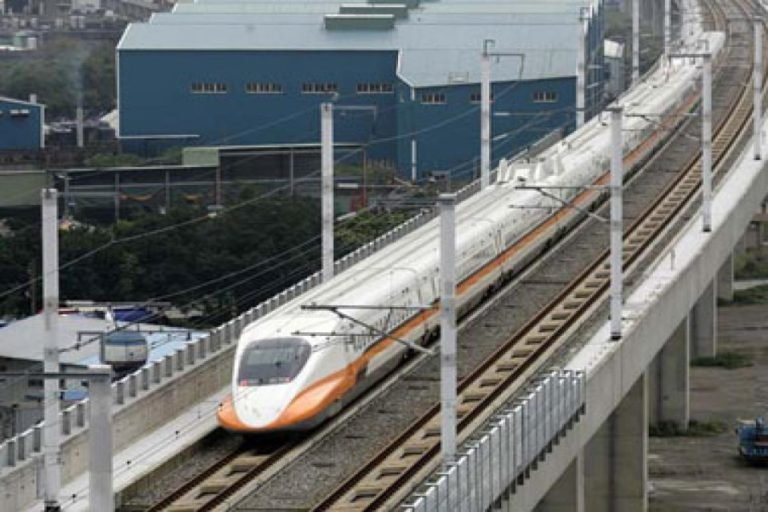
DELHI (Metro Rail News): Railway Minister Shri Piyush Goyal recently took a ride in a Japanese bullet train as India looking to get its first bullet train network. The minister took out some time to ride in a bullet train, In his recent visit to Japan for the G20 ministerial meeting. He stated that soon India will also experience the cutting-edge Shinkansen technology in partnership with Japan after taking the high-speed train ride and going through its features.

“The country’s first ever bullet train project, connecting Mumbai and Ahmedabad, will revolutionize train travel in the country,” He further added.

India is adopting Japan’s Shinkansen technology for its first bullet train project since it is known for its safety and punctuality. Although the initial few rakes for bullet train operations will be imported from Japan, eventually the coaches will be manufactured indigenously under PM Narendra Modi’s ‘Make in India’ project. The Japanese Shinkansen E5 bullet trains will be modified to suit Indian needs and climate conditions.

National High-Speed Rail Corporation Limited (NHSRCL) implementing the Mumbai-Ahmedabad bullet train project which is a joint venture of Indian government and participating state governments for establishing high-speed rail projects in the country.

It was reported that the upcoming bullet train will take less than a duration of 3 hours to complete a journey between Ahmedabad and Mumbai. En route both directions, the bullet train will cover a total of 12 stations including Ahmedabad, Surat, Vadodara, Anand, Sabarmati, Bharuch, Bilimora, Thane, Virar, Vapi, Boisar and Mumbai. The bullet train is likely to start service by 2022-23.

Indian Railways also has plans to expand the bullet train network in the coming years. Earlier this year, it was reported that the entire bullet train project, consisting of 10 new routes would cover a distance of approximately 6,000 km in total. The project is likely to cost around Rs 10 lakh crore.

So far, out of the 10 routes, six have already been identified for the high-speed train operations. The 6 identified routes to run bullet trains include New Delhi – Amritsar, New Delhi – Kolkata, New Delhi – Varanasi, New Delhi – Mumbai, Chennai – Bengaluru and Patna – Kolkata routes.

Mumbai’s first underground Metro Completes 50% of Tunnelling

MUMBAI (Metro Rail News): Mumbai’s first underground Metro on the Colaba-Bandra-Seepz called as Mumbai Metro 3 completes 50% of tunneling which is 28-km of the 56-km tunneling. MMRC has achieved a major milestone in 19 months. The total length of 56-km is calculated on the basis of two up and down tunnels for the 33.5-km alignment deducting the underground station box lengths in between.

After launching Krishna-1, the first Tunnel Boring Machine(TBM) at Naya Nagar, Mahim in September 2017, MMRC has been working full steam with the help of total 17 TBMs in the underbelly of the city.

In November 2017 tunneling activity began, the first breakthrough on the alignment was achieved in September 2018, 12 more breakthroughs have been accomplished in the next only 8 months, until May 2019.

The 13 breakthroughs were accomplished at – SEEPZ, 2 at CSIA T2, Sahar Station, MIDC, Domestic Airport T1, 2 at Dadar, Worli, 2 at Vidyanagari and 2 at Vidhan Bhavan.

There are 12 launching shafts to facilitate tunneling at Cuffe Parade, Eros Cinema, Azad Maidan, Science Museum, Siddhivinayak, Naya Nagar, BKC, Vidyanagari, Pali Ground, Sariput Nagar, Sahar Road, International Airport T2. The longest tunnel so far has been the tunnel from Vidyanagari to Domestic Airport (3.9-km) and the shortest one is from Sariput Nagar to SEEPZ (562 meters). In all, 19,504 segment rings have been used to complete 28-km of tunneling.

These segment rings are manufactured at 6 casting yards – 4 at Wadala and one each at Mahul and Jogeshwari-Vikhroli Link Road (JVLR).
buy lamisil generic bloonlineandnew.com/lamisil.html over the counter
Further 19 more breakthroughs are awaited through the 33.5-km long Metro-3 alignment.

L&T Construction bags Mumbai Metro Line 3 Order

MUMBAI (Metro Rail News): Infrastructure Company Larsen and Toubro (L&T) said its construction arm has bagged large orders worth over Rs 2,500 crore across various Indian states including Delhi, Gujarat, Karnataka, Tamil Nadu, Andhra Pradesh, Uttar Pradesh and Maharashtra.

L&T wins an order from the Mumbai Metro Rail Corporation Ltd (MMRC) for the design, procurement, supply, installation, testing and commissioning of the ballastless track on the mainline from BKC station to Cuffe Parade for Mumbai Metro Line 3 project.

Mumbai Metro Rail Corporation Limited (MMRC) implementing the Mumbai Metro Line-3 (MML-3) project – a 33.5 km long corridor between Colaba-Bandra-SEEPZ, funded by the Japan International Cooperation Agency (JICA).

The project will be L&T’s first project using Low Vibration Track technology like the one adopted for the line in the tunnel running under the English Channel connecting England and France.

Scope of work

The scope of work includes design, the supply of fastening systems for the entire Mumbai Metro Line 3, supply and installation of Low Vibration Ballastless tracks, testing and commissioning of ballastless tracks on the mainline from BKC station to Cuffe Parade station. The project will be completed in 30 months, L&T said.

Delhi Jal Board

It also bagged an Engineering, Procurement, and Construction (EPC) order from the Delhi Jal Board for the design, construction, installation, operations and maintenance of a 477- million litres per day (MLD) water treatment plant and a 105 million litre clear water reservoir and a pump house for the Chandrawal command area.

The project is a part of the Delhi Water Supply Improvement project (DWSIP) funded by the Japan International Cooperation Agency (JICA).

Surat Smart City

The company also secured an EPC order from the Rajkot Smart City Limited for the design, construction, testing, commissioning, operations and maintenance of infrastructure works for roads, drains, culverts, bridges, water supply, sewerage, street lighting and utility duct in the smart city area in Rajkot, Gujarat.

The residential business of Buildings and Factories arm of L&T received order from a major developer in Bengaluru for the construction of a residential complex with a total built up area of 5 million sq. feet.

It also secured another order from a leading data centre developer for the construction of a TIER 3 data centre at Sipcot-Siruseri, Chennai.  The project will be completed within 16 months, L&T said.

The factories business also bagged two orders from Andhra Pradesh and Pune. In Andhra Pradesh, it received an order from a leading cement manufacturer for the construction of a cement plant in Kurnool. In Pune, it secured an order from a vehicle manufacturing major for the development of a manufacturing facility in the city.

The business and factories arm of L&T is involved in the construction of airports, hospitals, stadiums, residential buildings, IT parks and offices and factory structures and cement plants.

The transportation business of L&T secured an engineering, procurement and construction order from the Delhi Aviation Fuel Facility Limited (DAFFL) for the execution of fuel hydrant system development works at the Indira Gandhi International Airport in New Delhi. The project includes design, engineering, procurement, supply, erection, installation, testing, commissioning, construction and completion of the T1 hydrant system works including 15 km of pipelines with associated hydrant pits and valves.

The Power Transmission and Distribution Business of L&T Construction bagged an order for the design, engineering, procurement, erection, testing and commissioning of a 80MW Solar Photovoltaic Power Plant in Uttar Pradesh.

It also secured an order from the Middle East for a voltage upgradation project.

Headquartered in Mumbai, L&T is one among the largest multinational firms and construction company in the country today with operations in more than 30 countries worldwide.

Train 18 project stuck as component supplier backs out

CHENNAI (Metro Rail News): Manufacturing of 3rd Rake of Train-18 at the Integral Coach Factory (ICF) will be delayed due to a crucial component supplier has backed out.

According to the sources, The supplier of three-phase ‘insulated gate bipolar transistors’ (IGBT) propulsion system has declined to accept the letter of authorization (LOA) issued by ICF after realizing that the factory would not give them the volumes the company expected.

The company had supplied the (IGBT) propulsion system for the first two rakes of Train-18. This is one of the most important parts of the self-propelled vehicle.

“With this bottleneck, identifying another contractor to supply the electrical system would take several months, delaying the next rakes of T-18,” Said top officials.

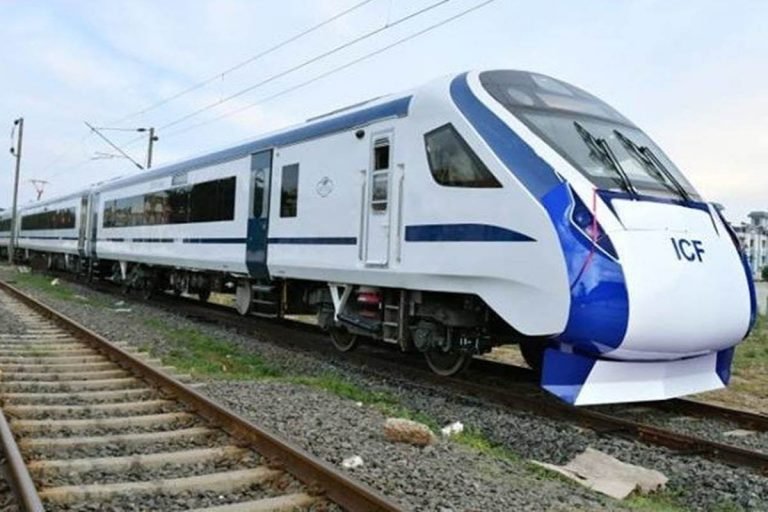
The first rake of Train-18 has been in service as the New Delhi-Varanasi Vande Bharat Express, priding itself as the first big success of the ‘Make in India’ initiative. The second rake has been sent from Chennai and it is likely to be used as the standby for Vande Bharat Express.

The vigilance team of Railway Board had initiated an inquiry into some contracts pertaining to the electrical systems of Train-18. This will cause some uncertainty over the rollout of the third rake of Train 18.

Railway Board had given ICF a target of 40 rakes over three years- a target that now appears doubtful. the propulsion system contractor had discussions with the tender committee of ICF in April last week and submitted an offer for the propulsion system for around 10.1 crores per unit as per highly-placed government sources.

The company agreed to bring down the price to 9.9 crores per unit, expecting that it would get 80% of the 40 rakes that the ICF plans to manufacture.

“The company expected LOA for 32 rakes, but the letter mentioned only two rakes – third and fourth,” said an official. Around 10 days ago, the contractor informed ICF that they would not be able to supply the propulsion system at the revised rate as the bid was made expecting 80%, the official said.

Railway Board officials called ICF officials for a meeting in Delhi to thrash out the issue. Last week, the contractor was called to renegotiate the deal, but the talks have not been successful, sources said.

BMRCL receives 32 suggestions on draft TOD policy

Bengaluru (Metro Rail News): Bangalore Metro Rail Corporation Limited (BMRCL) published a draft Transit Oriented Development (TOD) policy a month ago for the city and invited comments from the public. Barely 32 people gave their suggestions and comments on the policy till Friday.

On May 8 BMRCL had uploaded the Draft TOD policy with a 30-day time for people to respond. The draft policy has not reached many citizens, the number of response received by the BMRCL indicates. The draft envisages an integrated commuting network in the city by developing neighbourhoods to have better access to mass-transit points, be it metro, bus or suburban rail.

The Draft TOD allowing higher built-up density in TOD zones, such as increasing the floor space index up to level 5 for residential and commercial buildings and higher FSI for transit stations as well.

“BMRCL will scrutinise the comments received and accordingly changes will be made to the policy. It will later be submitted to the State government for further action.”

BMRCL has yet to take the decision on whether it will extend the deadline for public participation in the backdrop of the poor response the draft policy generated.

Transport Expert Ashish Verma said that BMRCL has taken proactive steps. The proposals made in the draft policy sound good and need of the hour. If BMRCL extends the date, it will invite more public participation.
buy viagra capsules online no prescription
BMRCL should also use various other platforms to reach out to more people.

BMRCL’s draft policy also talks about incorporating TOD policy in the draft Revised Master Plan 2031. The Bangalore Development Authority (BDA) has submitted the draft Master Plan 2031 to the State government for approval. The draft plan had received over 13,000 suggestions/objections from the public.

Bangalore Metro Say No to Fare Hike

BENGALURU (Metro Rail News): Bangalore Metro Rail Corporation Limited (BMRCL) electricity bill is set to go up to Rs 1.9 crore annually due to recent hike effected in electricity tariff by the Karnataka Electricity Regulatory Commission. Although, the burden will not be passed on to the commuters said, official.

A separate 750 volts Direct Current Third Rail is supplied to run its 50 trains running daily. which runs parallel to the existing Metro rail tracks. A special rate slab for BMRCL electricity needs which is priced at Rs 5 per unit and nearly one-fifth of its earnings go towards its power consumption.

“The recent hike effected has pushed our rate per unit to Rs 5.20. This will jack up our electricity bill each month to Rs 15.8 lakh, which works out at an increase of Rs 1.9 crore annually,” said Y L Chavan, CPRO, BMRCL. The bill paid by BMRCL to BESCOM each month in 2017-2018 was Rs 4.63 crore and Rs 4.96 crore a month in 2018-2019, he added.

“A hike in travel fares was effected last year. There is no plan to increase it due to the higher electricity bills we have to pay for this financial year.”

BMRCL managed big savings (18.36%) in its energy bills over the previous year when BESCOM removed the higher tariff imposed for trains running during day time as well as slashed the energy tariff by Rs 1 per unit in May 2018.

Currently, how much units per month is consumed by running of trains, no official was able to specify. Since June 2018, six-coach trains which have been regularly launched in phases require much higher power to run.

According to the source, BMRCL’s electricity consumption came to 65 lakh units per month last year and this includes the power used in running trains, lighting stations as well as air conditioning (AC) inside stations and trains.

BMRCL signed an agreement last year with ClearMax Solar to set up 1.4 MW solar installations at Baiyappanahalli and Peenya Metro stations. They will begin generating power only after Phase-2 of the Metro is completed and are expected to generate 10,000 units that would cater to power supply required in its depots.

Mumbai to Pune in less than two hours

DELHI (Metro Rail News):  Shortly, people might be able to travel from Mumbai to Pune and vice versa in less than two hours! Indian Railways is planning to run semi-high speed train between Mumbai and Pune, Nashik and Vadodara. The trains will be on the lines of the Vande Bharat Express (Train 18) running between New Delhi and Varanasi.

Presently, Mumbai Pune Deccan Queen takes 3.15 hours, Mumbai-Nashik Panchvati Express takes 3.25 hours and Mumbai-Vadodara Shatabdi Express takes 4.38 hours to cover the distance. The new MEMU trains will take 2 hours, 2 hours and 4 hours time respectively.

According to the source, if the plan to introduce these semi-high speed trains is successful, travel time between Mumbai and Pune will go down to just 120 minutes compared to the current 3.15 hours. The railway is planning to execute this plan in Phases, starting with trial runs using the upgraded Mainline Electrical Multiple Unit (MEMU) trains. The Integral Coach Factory (ICF), Chennai has manufactured MEMU rakes similar to Train 18. These MEMUs will be used to trails from Mumbai.

The railway board member of Rolling Stock Mr. Rajesh Agarwal said, “We will begin the trial runs in the next few days. The trials will be for both AC and non-AC train versions.
buy cialis strips online https://pavg.net/wp-content/themes/twentytwentyone/inc/en/cialis-strips.html no prescription

The trials will be carried out by Central Railway. He added, “The trains will have faster acceleration and deceleration, similar to Train 18. Long-distance trains take at least five minutes to gain speed and an equal amount of time to decelerate, before stopping. In the new trains, the acceleration and deceleration time will come down to one minute.”

It is worth mentioning that Railways is also planning to roll out Train 19, the sleeper-class model of Train 18. ICF has been working on making a new model of Train 18 which will have sleeper class coaches along with state-of-the-art facilities presently available in the Vande Bharat Express. ICF has been aiming to develop as much as 40 train sets of the sleeper variant of Vande Bharat Express.

Kochi Metro New boat jetty won’t harm fishing nets

KOCHI (Metro Rail News): Kochi Metro Rail Ltd (KMRL) to build a new boat jetty near the iconic Chinese fishing nets at Fort Kochi inviting flak from different quarters.

KMRL clarify that the proposed boat terminal which is implemented as part of the Water Metro Project will not harm the nets in any way.

According to the KMRL Statement, the proposed project was mooted based on a study report.

KMRL said on a Statement that IIT Chennai has conducted various studies at Fort Kochi, including Simulation Study to assess the navigational safety, Wind and Wave hindcasting study and Weather downtime analysis. These studies were conducted to check the maneuverability of boats, weather conditions and also navigational safety. Results of all these studies were positive and a report in this regard was submitted before KMRL.

Experts and various stakeholders had come down against the KMRL’s move as the proposed jetty was planned 200 meters west of the existing Kamalakadavu jetty.

According to the experts, since the proposed jetty is close to the harbour mouth, the boat will face difficulty to navigate. Even Cochin Port had written a letter to KMRL stating the location was not feasible.

Chinese fishing nets will not be harmed

Express had highlighted the issue in the report ‘Boat jetty caught between nets and the deep sea’ which appeared on Friday. “KMRL is committed to protecting the rich heritage of Fort Kochi. The Water Metro Terminal, once established, will aid the tourism and other prospects of the area. The Chinese fishing nets will not be harmed” said KMRL MD A P M Mohammed Hanish IAS.

last mile connectivity

To enhance the last mile connectivity, KMRL also plans to develop the area and also has plans to join hands with Cochin Smart Mission Ltd to develop the area. According to KMRL, studies have been conducted on the possibilities of constructing a terminal at the existing Ro-Ro jetty.

“It was found that the Ro-Ro jetty is fully utilised and the introduction of Water Metro to the same area would increase the possibility of collision and accidents. The present SWTD jetty on Kalvathy Road would increase the transportation charges of commuters as they will have to find alternative transport to reach the bus stand. More than that, Water Metro is operating multiple routes so more berthing space is required.

Thus, the Metro agency decided to go ahead with the terminal at the land adjacent to the petrol pump,” the statement said. KMRL also held discussions with the owners of the Chinese fishing nets and the study report was handed over to them.

“The fishing net owners are also convinced that the fishing nets will not be damaged in any manner. KMRL’s Water Metro terminals are fully modernised. The Water Metro project consists of modern fare collection system, centralised operations, Kochi1 Card, automated crowd control and public spaces,” the release read.