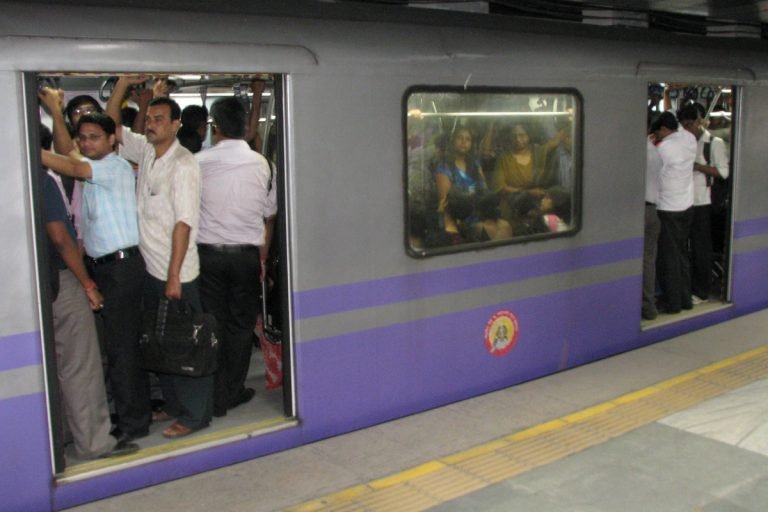
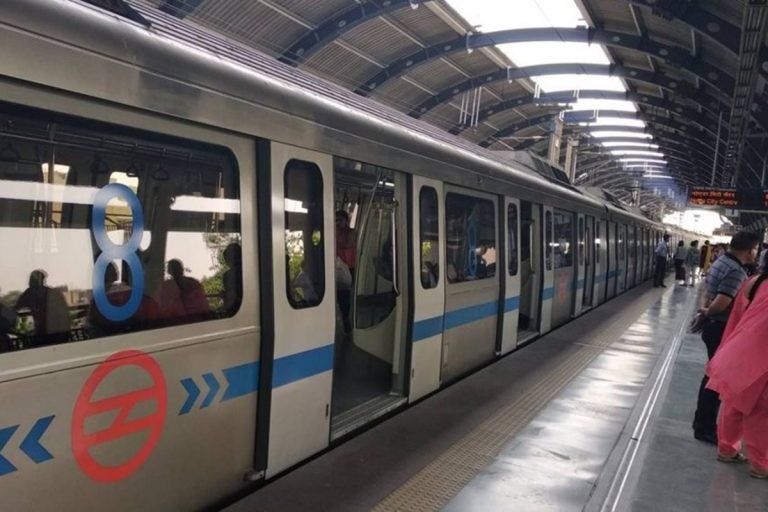
DELHI (Metro Rail News): The Central government to soon announce discounts in Delhi Metro fares for senior citizens & students as a technology-based solution has been found to implement the same. It is good news for Delhi Metro Commuters.
The Unions Housing & Urban Affairs Minister Hardeep Singh Puri said on Monday Interview, that the relief can also be extended to passenger of other categories, but it would be need-based. Recently no discount offered on fares for any category of Delhi Metro Commuters, we are ready for providing a technology-based solution it will relief to student & senior citizens traveling on Delhi Metro trains.
In June this year, Delhi CM Arvind Kejriwal government announced a free travel service for women Delhi Metro & buses in the National Capital Region.
The Union Housing & Urban Affairs Minister Hardeep Singh Puri said he was not against free travel for women in the Delhi Metro but this should be need-based. Our scheme will also provide security for most girl students and female senior citizens.
We want to implement it through the technology-based solution so that there is no misuse of the facility, A technology-based solution will assure that benefits reach the targeted group and is not misused.
According to the UnionHousing & Urban Minister Hardeep Singh Puri, the Central Government Arvind Kejriwal will extend the relief to passengers of other categories after public consultation.
The Delhi Metro Rail Corporation had announced fare-hike in two phases in 2017 after a gap of nine years, Countering the claim that metro ridership has dipped since the fare hike, Puri said the footfall has rather trebled.
MUMBAI (Metro Rail News): Mumbai Metro Rail Corporation Limited (MMRCL) has released a video capturing the Aerial view of the upcoming CST metro station on the Metro 3 line.
Mumbai Metro Rail Corporation Limited (MMRCL) shares the video from their official Twitter handle last Saturday, which is executing the 33.5 km Colaba-Bandra-SEEPZ line.
The 1.25-minute video captures the magnitude of the 250-meter long station, which will have 6 entry and exit points connecting major establishments in the vicinity like MCGM headquarters, CST station, Press Club, Sir JJ School of Arts, Metro Cinema.
Breathtaking visuals of our upcoming CST metro station. This is 250 m long station with 6 entry & exit points connecting major establishments in the vicinity like MCGM HQ, CST CR stn, Press Club, Sir JJ School of Arts, Metro Cinema,
This video has been viewed around 15,000 times as of publishing this report and garnered positive reviews from netizens.
Despite its significance, the Metro 3 has garnered a lot of negative publicity in recent times over its plan to construct a car shed in Aarey Colony.
The decision, which entails the felling or transplanting of nearly 2,700 trees, has been opposed by activists and citizens. However, MMRCL wasted little on felling a majority of trees after the Bombay High Court dismissed petitions opposing the move.
The case is currently in the Supreme Court, with the next hearing scheduled on October 21. However, MMRCL has already cut about 98 percent of trees required to construct the car shed.
Kolkata (Metro Rail News): Kolkata Metro Rail Corporation Limited (KMRCL) provided Metro service for Kolkata Metro Commuters, Metro service from Sector V to Howrah Maidan in last week of October. Commuting across the Salt Lake will soon see a seachange as the Metro authorities are putting their best foot forward to start the commercial services in the first phase of the East-West Corridor during this Month.
The first phase of Line-2, covering around 5.7 km, would serve as a vital link of transportation for the residents of Salt Lake. The service would connect Sector V to Howrah Maidan.
The final rounds of preparations by the engineers of Kolkata Metro Rail Corporation Limited (KMRCL) are being carried out in full swing. The authorities of the project’s implementing agency are now focussing on the grey areas as per the recommendations are given by the commissioner of railway safety after an inspection in July. The experts have asked the KMRCL to fix the defective bearings on the piers that hold the viaduct on which the rail tracks have been laid. Another recommendation of the CRS was for the up-gradation of the software of the Train Control and Management System (TCMS).
According to sources in Metro Railway, The KMRCL engineers were asked to complete the remaining work by 20 October. The Metro authorities had conducted a mock run for seven days in August to familiarise the team of about 150 officials who had received intense training in Hyderabad, Bangalore and Kolkata with the nuances and technicalities of the highly advanced East-West Corridor
According to Metro official, However, some areas, needed more emphasis even after the completion of the mock runs. The Metro authorities were considering starting the second round of independent mock runs but the idea had to be abandoned due to the Bowbazar disaster.
SECUNDERABAD (Metro Rail News): Additional City Commissioner of police Anil Kumar launched Smart bikesSecunderabad Parade Grounds Metro station.
The rental charge of Smart bikes Rs 1.5 paise per minute per km. Drivers of the bikes should possess licenses.
Those possessing licenses could show them and register in the app for the opening of the keys, According to D V S Raju arrangements were being made to protect the historic monuments in the Metro corridor.
Also, steps were being taken as part of the First Smile to Last Smile Connectivity for the benefit of the Metro passengers to reach their work spot and return home.
DELHI (Metro Rail News): The Union Urban Affairs Ministry & Delhi Metro rail corporation (DMRC) board approved Corridor Kirti Nagar-Dwarka, DMRC approving Metrolite 20-Km line from Kirti Nagar to Dwarka sector 25 currently. According to government official, Delhi could get its first stretch of metrolite, it is a cheaper, smaller & slower urban rail transit system compared to metro rail.
Union Housing & Urban Affairs Ministry Secretary Durga Shanker Mishra said on Friday, that the DMRC board had recently approved the stretch and send it to Delhi Government.
According to the Urban Affairs secretary Durga Shankar Mishra, the Metrolite trains which will have three-coach sets, is able to comfortably accommodate 300 passengers. “This will be sufficient to handle passenger traffic on the route. The Centre will provide financial assistance in the ratio of 50:50 on the lines of regular metro rail projects.
As far as possible, Metrolite trains should be on the ground level, not elevated, in order to keep the cost of construction down, the guidelines say.
Asked about the proposal, a senior DMRC official said: “Last week the proposal to construct a 20-km line from Kirti Nagar to the Exhibition Centre in Dwarka Sector 25 was approved by the DMRC Board. The proposal will now be forwarded to both the Delhi government and the Centre for their approval following which the implementation can take place.”
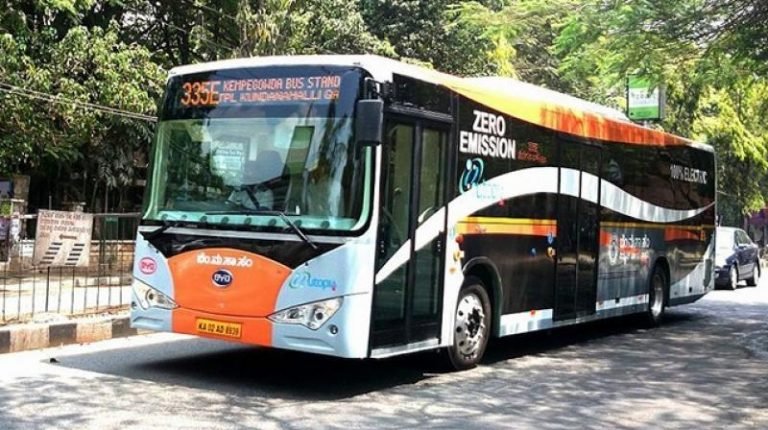
DELHI (Metro Rail News): The Delhi Metro Rail Corporation (DMRC) floats tender to run AC e-feeder buses service, The DMRC has decided to introduce Air-Conditioned (AC) electric midibuses for feeder service. The feeder bus services in the national Capital will get more comfortable soon.
Tender for procuring, operating and maintaining 100 AC e-feeder buses has been floated for North and East Delhi to provide better last-mile connectivity as well as to curb pollution. Also, the AC e-feeder buses will be coming for the first time under DMRC.
Recently DMRC has a fleet of around 269 buses (Non-Ac) to provide better last-mile connectivity. According to the sources, the Delhi Metro’s plan was to procure around 420 electric and CNG feeder buses, for which tender was also floated in 2018 but it did not receive much interests from the bidders.
According to the sources, The Delhi Metro Rail Corporation (DMRC) last year had a proposal to purchase 400 plus buses for feeder services. It has decided to procure low floor disabled-friendly buses in both electric and CNG mode and tender was also issued for all clusters such as North, East, West, South and Central Delhi, but somehow it could materialize. However, the proposal is to purchase 100 cluster buses for North and East clusters.
Delhi Metro will outsource a private company to procure, operate and maintain these buses, while it will provide space and facility in its depot to install, commission, operate maintain battery charging infrastructure for these ‘MIDI AC Electric Buses’. The depot for the North and East clusters will be created at Majlis Park and Shastri Park.
The midi AC buses will have a seating capacity of 23-34 passengers. The estimated cost of 50 buses under East Cluster is Rs 183.05 crores, while the budget for the North Cluster is Rs 179.62 crore.
The buses will be purchased by the DMRC, while the travel routes for these buses will be prepared and approved by the Delhi Transport department. Besides, the buses will also have CCTV cameras, GPS and panic buttons for the safety and security of passengers.
Recently, about two lakh people travel daily in the feeder buses. Apart from feeder buses, the DMRC provided various other modes of transport such as e-rickshaws, cycle sharing services, electric bikes, and online cab booking services in its metro stations for the last mile connectivity.
As a matter of fact, DMRC has a network metro route of 373 km with 271 metro stations. Providing last-mile connectivity is a critical component to an effective integrated public transport. Last-mile connectivity helps to promote the use of public transport and also provides speedy and easy access to metro stations and to transit point/destination.
According to a senior official, “DMRC is planning to introduce Air-conditioned Electric bus services on feeder routes to contribute to seamless travel and also reduce pollution level as less vehicles would be on the roads once a robust public transport system backed by last-mile connectivity is provided to the people.”
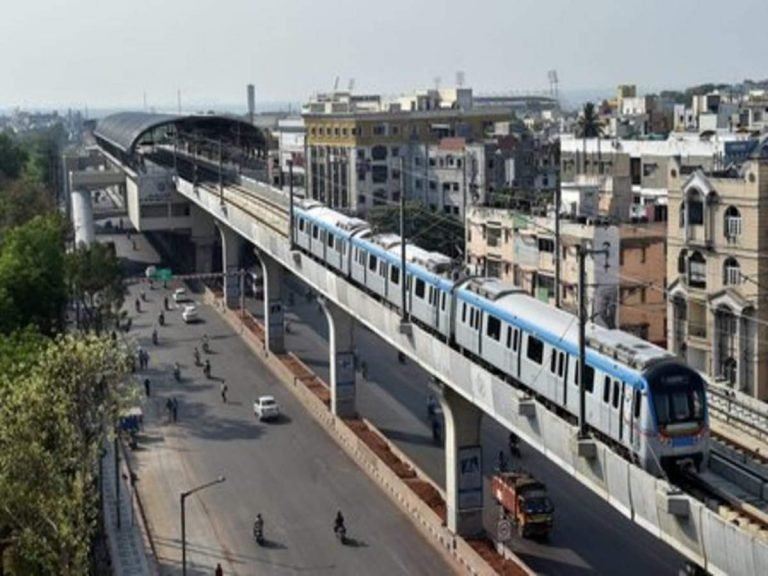
HYDERABAD (Metro Rail News): On Saturday morning Hyderabad Metro Rail service was interrupted for over an hour due to a technical glitch. The Hyderabad Metro Rail (HMR) officials said that a metro train developed a snag at around 10:30 am near the Paradise metro station.
The service was disrupted along the Blue line corridor with 24 stations that span 24 kilometers connecting Nagole to Raidurgam stations. The train developed technical difficulty shortly after crossing Parade grounds.
L&T Metro, overseeing the metro operations, had to dispatch another train to the location to push the halted train to Paradise station where the metro passengers were made to disembark the faulty train, and continue their commute on another train.
The halted train in the meantime was pushed to a pocket track at Prakash Nagar metro station and is now under repair. The cause of the technical snag was being attributed to a “failed electrical part” by the HMR Managing Director NVS Reddy.
Earlier in April, the HMR service was disrupted twice in the same day along the Red line connecting LB Nagar to Miyapur stations. The first delay was attributed to technical snag developed in the Hyderabad Metros signaling system. This delay lasted for over half an hour. The second time, the delay was due to an advertisement banner falling over the metro rail electric posts that led to a 15 minutes delay.
When a Metro
train has mid-journey due to a technical snag, it often ends up having a ripple
effect of delays in other metro trains. In June this year, a metro train along
with its passengers had to wait for over 45 minutes on the Red line between LB
Nagar and Miyapur due delay caused by another train that developed a technical
snag.
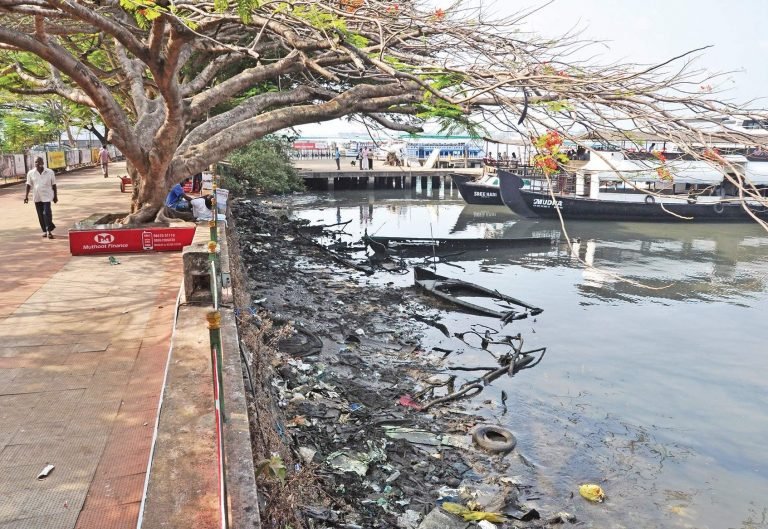
KOCHI (Metro Rail News): The Ministry of Environment & Forests on Friday granted Environmental and Coastal Regulation Zone (CRZ) approved to the Kochi Water Metro Project. It is after going through the compliance report submitted by Kochi Metro Rail Limited (KMRL) that the Centre gave the go-ahead for the work on the Water Metro.
This is a major boost to the much-awaited Kochi Water Metro Project. According to Alkesh Kumar Sharma, The managing director of KMRL, We are committed to protecting the environment and all the construction activities of KMRL will be done as per the norms.
While giving the green light, the Centre has asked KMRL not to block creeks or rivers and ensure smooth flow of water in the project area. The authorities concerned have been instructed to devise a disaster management plan and frame safety guidelines. “A detailed traffic management plan should be drawn up,” the ministry said in its order.
The KMRL in its project proposal clarified that Water Metro intends to introduce modern, energy-efficient, fast environment-friendly and safe boats with low wake and draft characteristics to increase ridership.
KMRL has already awarded the tender for construction of boats to Cochin Shipyard Limited.
The project includes 15 different routes and 38 stations, covers a total length of 78 km in the Kochi backwaters.
The project’s total outlay is Rs 747.28 cr. KMRL authorities said the vessels of Water Metro will comply with emission norms as prescribed by the government from time to time.
The Kerala Coastal Zone Management Authority had approved the project on February 25, 2019.
NEW DELHI (Metro Rail News): Union & Housing Development Minister Hardeep Singh Puri said on Friday, October 11. Panel prepared outline standard, specification for “Metro on Tyres” which runs on rubber tyres instead of steel wheels like Metro Rail or Metrolite.
According to officials, the per kilometre cost of Metro Rail is 300 crore & 200 crores for Metrolite but “Metro on Tyres ” will cost 60 crores ”Metro on tyres” is much cheaper than both the Metro Rail and Metrolite.
The Minister told reporters, We have formed a committee to finalise a set of standards and specifications for the metro on tyres. When they come out with their report there will be a process of approval and then will be presented in the public domain for states to adopt. We have not frozen on the standards and specifications for it yet.
He also said that the Metrolite has been approved by the ministry and the Board of the Delhi Metro has also given its nod for its use in a 20 km stretch from Dwarka sector 25 to Kirtinagar. Now, the ministry will await the proposal to come from the Delhi government to use it.
A similar process, he said will be followed in case of ”metro on tyres”.
In August this year, the Maharashtra cabinet cleared the mass transport system ‘Metro Neo’ for better connectivity across Nashik.
However, Nashik will have to wait for the report of the committee and the final approval from the union ministry before it begins building, the Union Housing and Urban Affairs Secretary Durga Shankar Mishra said.
According to the Nashik model, its ”metro on tyres” will have an elevated corridor and its coaches will operate on electricity and battery and ply on elevated viaducts with state-of-the-art terminals.
“Nashik are the prime movers in this case and its from there that we got the idea. However, they have to wait for the standards and specifications,” said Mishra.
New Delhi (Metro Rail News): SC seeks DMRC reply on lack of parking for 3-wheelers vehicle at metro stations, According to Environment Pollution Control Authority (EPCA) “para-transit vehicles” like taxis, auto-rickshaws, and cycle-rickshaws need free parking spaces at metro stations. they have discussed this issue with DMRC and other concerned officials.
A bench of Justices Arun Mishra and Deepak Gupta has issued a notice to DMRC on EPCA report which also said that lack of demarcated parking for taxis, three-wheelers, and cycle-rickshaws at places like metro stations and interstate bus terminals “greatly add to congestion and problems for commuters”.
The report, which was filed in the top court, said that last mile connectivity is a “critical agenda” for Delhi as connectivity, particularly from metro stations and other multi-transport points, would greatly reduce the need for private transport in the city.
It is a Today fact, multi-modal integration (MMI) is inadequate and so without parking spaces at the metro, inter-state bus stations, the para-transit vehicles – taxis, three-wheelers and cycle-rickshaws – greatly add to congestion and problems for commuters.
It said that the design of metro stations has to incorporate the need for parking of these vehicles but this has not been done as design and control of road space over and above the station infrastructure is not within the purview of DMRC. EPCA said they have discussed this issue with DMRC and other concerned officials.
It said DMRC has made plans for all its 78 stations in phase III for MMI and it is working to provide lanes for auto-rickshaws, buses, car parking and for drop-off. “During the meeting, it was discussed that these plans are also in various stages of design, approval, and implementation. However, it was clear that there is a need to expedite this work, including the approvals for design and finance, ” the report said.
The EPCA urged the court to direct DMRC to submit a time schedule for implementation of MMI plans for 38 stations of phase one and two and 78 stations in phase three. The issue has cropped up before the top court which is hearing a matter relating to air pollution in the Delhi-national capital region.
HYDERABAD(Metro Rail News): Experts call for Inspection of Hyderabad Metro pillars, one day when a woman stands on Metro station a piece of concrete fell on her and after some time her death.
On Thursday called for a thorough inspection of Metro pillars after photographs of cracks in Prakash Nagar Metro station went viral. Photographs of a long surface crack were being circulated in WhatsApp groups on Thursday creating panic among Metro commuters.
some photos were taken with a date and times stamp on its are being shared on WhatsApp.
Photos show a long crack on the surface of the metro station wall. According to M Adarsh (civil engineer), Metro officials should check taken with such problems and repair them at the earliest.
Managing Director of Hyderabad Metro Rail Limited (HMRL) NVS Reddy said, “Some people are posting old pictures or those of surface cracks rectification works in social media and making them viral to perhaps create doubts about metro rail safety”. Rectification works are going on and during these works, where the thick or loose plaster needs to be removed first. The surface cracks need to be widened first before refilling, he added.
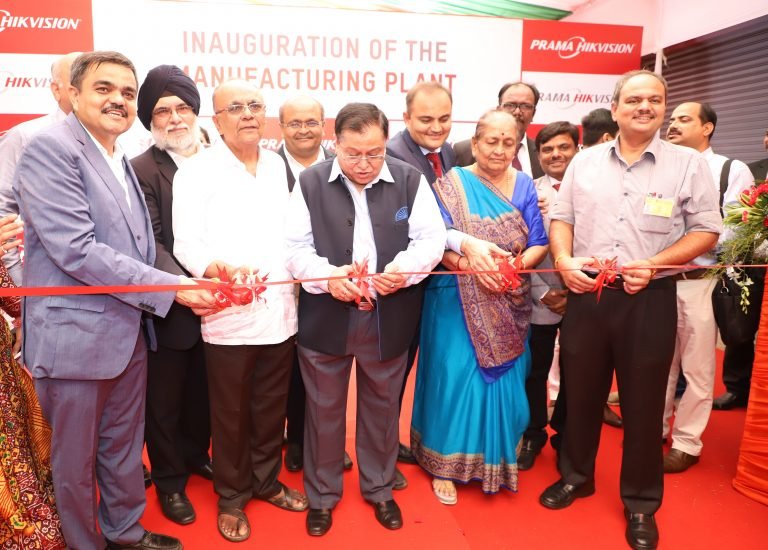
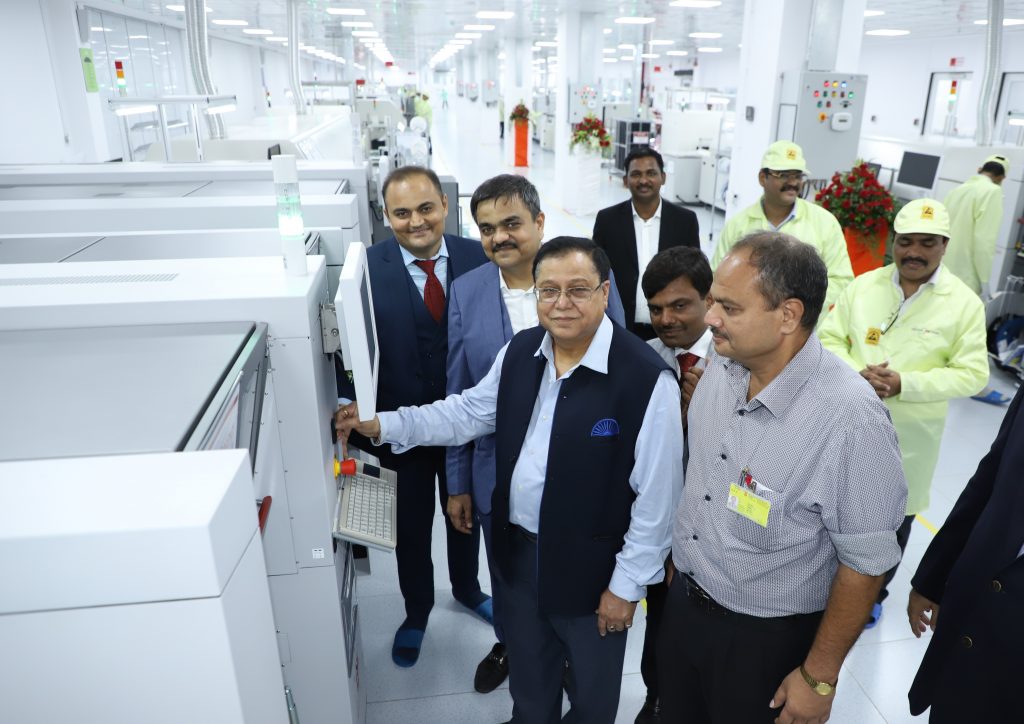
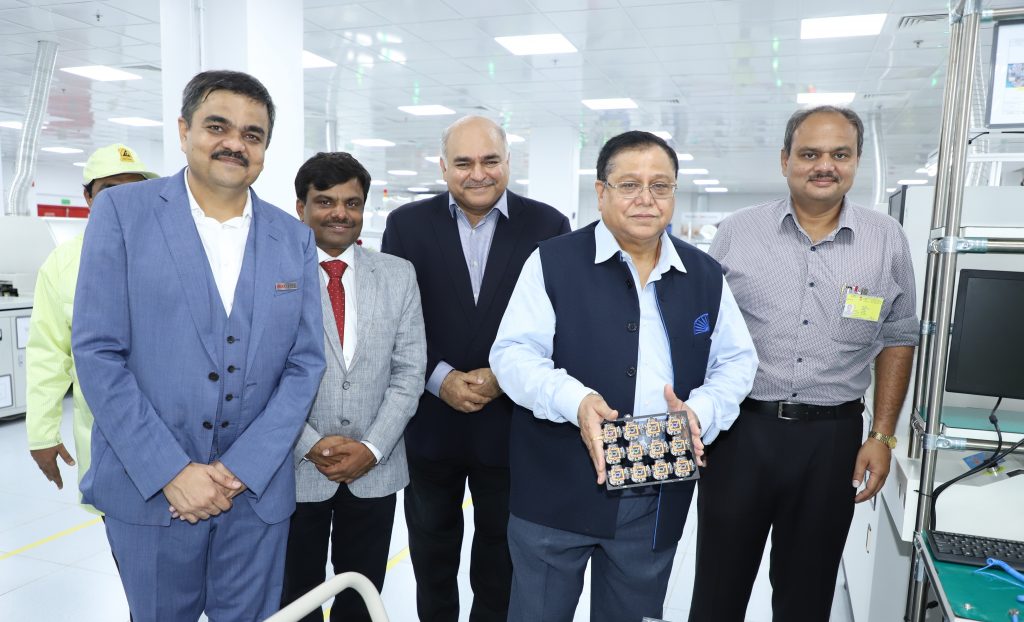
MUMBAI (Metro Rail News): Prama Hikvision, India’s market leader in video surveillance products and solutions, today inaugurated India’s largest and first world-class manufacturing facility located at Vasai near Mumbai. Dr. V.K. Saraswat (Member, Niti Aayog and former Director General of the Defence Research and Development Organisation (DRDO) and former Chief Scientific Advisor to the Indian Minister of Defence) and Dr Neeraj Sinha (Adviser, Science & Technology) inaugurated the new facility.
Dr V.K. Saraswat (Member, Niti Aayog) and Dr. Neeraj Sinha (Adviser, Science & Technology) during the inaugural function at the Prama Hikvision’s Manufacturing Facility in Vasai with Ashish P. Dhakan, MD & CEO, Prama Hikvision India, Hemal P.Dhakan, COO, Prama Hikvision India
In
continuation of the company’s firm commitment to “Make in India for a Safer
India”
With a total investment commitment of 500
crores, the plant will fulfill over 35% of the domestic market demand on a
monthly basis
Dr V.K. Saraswat (Member, Niti Aayog) and Dr.
Neeraj Sinha (Adviser, Science & Technology) inaugurated the facility
With this new facility, which is part of an investment commitment of
INR 500 crores, Prama Hikvision will not only be able to cater to a fast
expanding domestic market but also overseas market in a phased manner. Employing
over 2000 skilled and semi-skilled employees, the brown-field facility is
spread over 12 acres of land comprising end-to-end production capabilities,
which will also support a localization target of 50% initially and gradually
transitioning to 100% localization in the next 18 months. An ISO 9001:2015
certified facility, the new factory has the capability to manufacture over 850
product models.
Ashish P. Dhakan, MD and CEO,
Prama Hikvision India Pvt. Ltd., said, “This new integrated state-of-the-art manufacturing
facility is an expression of our full commitment to the Government of India’s
flagship ‘Make in India’ program. We remain committed as a long-term partner of
the country and continue to pursue our vision of ‘Make in India for a Safer
India’ with manifold commitments. We have so far invested Rs 500 Cr in this new
plant with further investment commitments in the pipeline to ramp up
productions, local R&D, skilling and giving back to the communities. This
new unit has an installed capacity to make 1.5 million cameras per month. It
has nine lines that does surface mount technology level manufacturing and
enables us to make electronic chips and cameras locally instead of importing
them. To upskill a significant part of the workers in this factory, many of
them being unemployed before joining us, we have developed in-house training
programs comprising world-class modules thus bringing them into the mainstream socio-economic
fold”.
A first-generation entrepreneur and having built Prama
Hikvision from a humble start since its inception in 2005, Ashish P. Dhakan is
today a leader of the Indian security and surveillance industry and is credited
for setting gold standards now acknowledged the world over.
The new facility will make Prama Hikvision the only video surveillance
products and solutions brand that is truly made in India. Prama Hikvision has
been progressively using printed circuit boards (PCBs) at this new facility to
ensure full alignment with the Government of India’s Phased Manufacturing Program
(PMP) goals.
With an installed capacity of 1.5 million cameras per month, the
facility has a potential to grow at 30% year-on-year. With this kind of a
capacity, Prama Hikvision is already enjoying a market penetration above 35% in
India.
L-R , Ashish P. Dhakan, MD & CEO, Prama Hikvision India, Dr V.K. Saraswat (Member, Niti Aayog) and Dr. Neeraj Sinha (Adviser, Science & Technology) inaugurated the Prama Hikvision’s Manufacturing Facility on Tuesday in Vasai.
Driving the future of surveillance in India with an
intuitive integration of Artificial Intelligence (AI) into its cutting-edge
products and solutions, Prama Hikvision has established itself as a market
leader by setting new benchmarks in the security and surveillance industry. As
a true market leader, the company also
has a call center for technical support, R&D center and 17 RMA centers.
About
Prama Hikvision India
Prama
Hikvision India is a joint venture with the world’s leading security and
surveillance product manufacturer, Hangzhou Hikvision Digital Technology. The
endeavor is to provide superior pre-sales and post-sales service through
collaboration with local distributors and its allied partners.
Building
on a growing global footprint, Prama Hikvision India is committed to provide
high quality products with agile technical support serving a large network of
dealers and system integrators across India, through its 51+ branches and a
motivated workforce of 2000 employees. It has a ‘Make in India’ manufacturing
facility near Mumbai. For more information, please visit us at www.hikvisionindia.com.
Bhopal (Metro Rail News): The Delhi Metro Rail Corporation (DMRC) has decided advisor Indore and Bhopal Metro Rail Project, just like ones at Lucknow and Kochi Metro Rail Project.
For that matter on Thursday, managing director of Delhi Metro rail corporation (DMRC) Mangu Singh met chief minister Kamal Nath, urban development minister Jaivardhan Singh & top government officers. After the meeting, managing director of DMRC Mangu Singh said, “Let’s see how can engage with DMRC”, leaving the options open for a larger role for DMRC.
The corporation has already earned laurels for the development of Delhi Metro and set industry standards for metro development in India. Madhya Pradesh Metro Rail Corporation Limited (MPMRCL) said that Thursday’s meeting with DMRC officials was ‘informal’ and a way to understand how things work out.
The meeting with DMRC came in the backdrop of delay in Metro construction as 10 months, out of 27 months, for completion of basic infra development for Metro rail in the state capital has already elapsed. There is not much progress to show so far.
In a bid to ensure that Metro rail construction work gathers pace, DMRC officials reviewed the progress in Bhopal and Indore metro rail projects. Sharing best practices, organization setup and improvements needed in moving forward were discussed during the meeting with DMRC MD Mangu Singh and others. The construction of two phases of Bhopal and Indore projects is pegged at around Rs 7,700 crore.
Recently CM Kamal Nath laid the foundation for two Metro rail networks. Mangu Singh shared experiences about Delhi Metro development. DMRC is expected to cooperate in making DPR for the next phase of the project.
MPMRCL officials will visit Delhi for a detailed study regarding the Delhi Metro. DMRC MD Mangu Singh also informed on the time-bound work completion process adopted by Delhi Metro, the organizational setup, tendering process and other aspects. MP Urban Development, secretary Sanjay Dubey, additional commissioner Swatantra Singh and other officers were present in the meeting.
Delhi-Meerut RRTS (Metro Rail News): Delhi-Meerut RRTS Rapid Rail Transit System Train coaches to make under ‘Make in India’ initiative. The RRTS trains will have an operational speed of 160 Kmph, an average speed of 100 Kmph will be available at a frequency of every 5-10 minutes on the RRTS network.
The rapid rail trains which will operate on the Delhi-Meerut regional rapid transit system (RRTS), will boast of semi-high speed ‘Make In India’ coaches. and will be The National Capital Region Transport Corporation (NCRTC), which is the executing agency of the RRTS project across Delhi-NCR, has stated in its global tenders that the rapid rail coaches will have ‘Make In India’ symbol mark.
The RRTS project is cost Rs 30,274 crore and will be implemented in phases, based upon its corridors and sections. The country’s first regional rapid rail corridor will come upon the Delhi-Ghaziabad-Meerut route, which will eventually bring down the travel time between Delhi and Meerut to just 55 minutes.
The RRTS train coaches Features :
The RRTS trains will have an operational speed of 160 kmph, an average speed of 100 kmph and will be available at a frequency of every 5-10 minutes on the RRTS network.
The RRTS trains will be equipped with modern features such as CCTV surveillance, mobile/laptop charging points as well as overhead luggage space.
There will be a total of nine coaches in one RRTS train and one of the coaches will be the ‘business class’ coach which will be available for passengers who are willing to pay for the extra facilities.
The air-conditioned ‘business coach’ will have an overhead cabin for keeping the luggage. It will also have a WiFi connection, luxury seats and refreshments will also be provided to passengers for a comfortable journey.
The business class coach will have separate entry and exit gates. The fare will be collected through an automatic fare collection (AFC) system such as QR code-based tickets and the near field communication (NFC) enabled phones. The AFC gates will be installed on the platform of the RRTS stations and will provide direct access to the executive lounge area.
The RRTS trains and stations will have universal accessibility as there would be priority seating arrangements for the differently-abled, along with a business class coach and ladies coach in every train.
NCRTC will adopt the European Rail Traffic Management System (ERTMS) Level 2 system in order to make RRTS trains interoperable. This will enable commuters to travel from one RRTS corridor to another without changing the train or station.
Ghaziabad-Meerut RRTS corridor, the 164 km long Delhi-Gurugram-Rewari-Alwar RRTS corridor and the 103 km long Delhi-Sonipat-Panipat RRTS corridor.