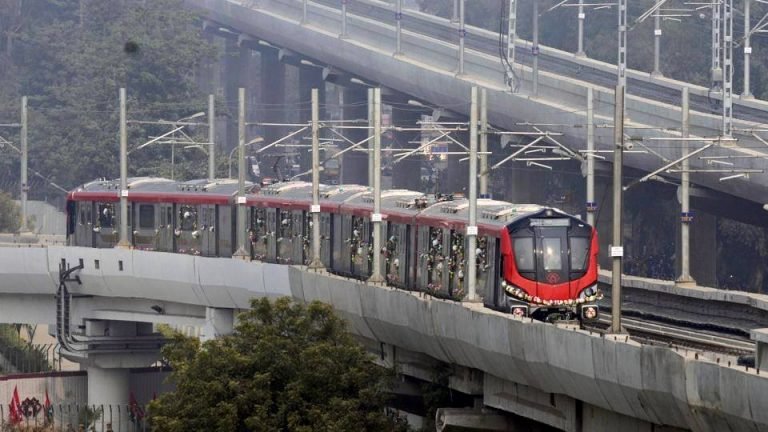
Lucknow, India (Metro Rail News): The Uttar Pradesh Metro Rail Corporation Limited (UPMRC) invited request for proposal (RFP) from the eligible and experienced bidders for providing general consultancy services (GCS) for Kanpur and Agra Metro Rail projects in Uttar Pradesh State
Important information
Tender Notice No.: UPMRC/KNPAGGC-01
Date of Issue: December 12, 2019,
Scope of work: General Consultancy services for Kanpur and Agra Metro Rail projects.
Contract Period: 5 years
Estimated Cost of Work: Refer tender document
Security Money Deposit: INR 2,00,00,000.00
Tender Document Cost: INR 100,000 or USD 1450
Sale of Tender Documents: 13.12.2019 to 23.01.2020
Pre-bid Meeting: 03.02.2020 at 11.00 hrs
Last date for submission of Bids: 02.03.2020 till 15.00 hrs
Opening date of Technical Bids: 02.03.2020 at 15.30 hrs
Eligibility Criteria
Work Experience:
The Applicants must be having prior experience of working as General Consultant/Project Management Consultant/Detailed Design and Construction Supervision Consultant for an MRTS/High-Speed Rail Projects involving the work of framing specifications, drawing up contract documents, checking designs, Project management and Supervision including inspection, safety, quality, testing & commissioning.
The Bidder should have completed during the last 07 (seven) years:-
Single similar work costing not less than INR 3000 million (USD 42 million) or
Two similar works costing not less than INR 1850 million (USD 26 million) each.
Three similar works costing not less than INR 1500 (USD 21 million) each.
Financial Eligibility Criteria
Average Annual Turnover: Minimum average annual turnover of INR 1600 million (USD 2.23 million)
Net Worth: Net Worth of minimum INR 160 million (USD 0.23 million) in the last audited Financial year.
Pre-Bid Meeting Venue/Contact Point
The Chief Engineer/Contract Uttar Pradesh Metro Rail Corporation Limited, Administrative Building, Vipin Khand, Gomtinagar, Lucknow, Uttar Pradesh 226010, India E-mail: cecontractlmrc@gmail.com Office No.: 0522-2304014
MUMBAI (Metro Rail News): Mumbai Metro Rail Corporation (MMRC) Limited intends to appoint qualified and experienced professionals for the following posts on Contract / Deputation basis:
Eligible candidates may apply online on prescribed format at MMRC website from 10/12/2019 to 24/01/2020 only for Government Job Vacancy Recruitment in MMRCL 2019.
Detailed information and online application format
Please visit the Career section of MMRCL website at https://www.mmrcl.com/en/careers for details of Government Job Vacancy Recruitment in MMRCL 2019 and online application format.
DMRC Recruitment 2019: The Delhi Metro Rail Corporation Limited (DMRC), a joint venture of Government of India and Government of Delhi has started the registration process, today i.e. on 14 December 2019, for the recruitment of 1492 regular and contractual Executive and Non-Executive Posts.
DMRC Recruitment 2019-20 Notification for has been also released by Delhi Metro Rail Corporation (DMRC) in the employment newspaper dated 14 to 20 December 2019. Out of total posts, 929 posts are for Regular Non-Executive Posts, 398 Contractual Non-Executive Posts, 105 Contractual Executive Posts and 60 Regular Executive Posts.
DMRC Recruitment 2019: Job Summary
Notification
DMRC Recruitment 2019-20, 1492 Vacancies for Customer Relation Assistant, Steno, JE, Office Assistant and Other Posts in Delhi Metro
Last Date of Submission
Jan 13, 2020
Official URL
www.delhimetrorail.com
City
New Delhi
State
Delhi
Country
India
All the details regarding the DMRC Recruitment for 1492 Posts such as eligibility criteria, salary, selection process, the application process will be available in the detailed notification given below. Candidates should keep visiting this page for DMRC Recruitment Latest Updates.
DMRC Recruitment 2019 Vacancy Details: Total Posts – 1492
Regular Non-Executive – 929 Posts
Customer Relations Assistant (CRA) – 386 posts [Rs 35,000–1,10,000] – Graduate (BA, B. Sc., B. Com.)
Stenographer – 9 posts [Rs 35,000–1,10,000] – Bachelor Degree (BA, B. Sc., or B. Com.)
The selection for all executive both regular and contractual will be done on the basis of two Computer Based Tests and Group Discussion/Interview. For non-executive posts, two computer based test will be conducted. There will no Group Discussion/Interview round for C non-executive posts.
DMRC Recruitment 2019: How to Apply
Candidates can apply for the posts on DMRC official website www.delhimetrorail.com. The last date for submitting DMRC online applications is 13 January 2020. Candidates have a month time period to apply for DMRC Executive and Non-Executive Jobs. Candidates may also register for Delhi Metro Jobs directly through the link given below.
Step 1: Log on to the official website of Delhi Metro Rail Corporation (DMRC)
Step 3: Open link of Recruitment Notification titled “DMRC/HR/RECTT./I/2019” and go through the complete notification including age, eligibility, experience, reservation etc.
Step 4: Fill the Registration Form (user name and password shall be mailed to phone and e-mail Id)
Step 5: Login and Complete the Online Application Form
DMRC Recruitment 2019: Important Dates
Online Registration: Start from 14.12.2019
Online Application Fee to be paid: from 14.12.2019 to 13.01.2020
Last date for Online Application: 13.01.2020
DMRC Recruitment 2019: Application Fee
Rs. 500/- for UR, EWS & OBC (including Ex-Serviceman).
HSVP officials said that the land, which falls under the jurisdiction of the HSVP estate office, Rewari, was allotted to the private company for setting up large manufacturing units, but those became defunct many years ago and the land is vacant at present. The company has filed cases in court.
They added that these plots have neither been resumed by the authority nor surrendered by the allotted.
A detailed
letter in this regard has already been sent to authorities in Chandigarh. “We
are working to resolve this matter on priority and it will be resolved to
ensure that the critical infrastructure project is not affected, said by Chander
Shekhar Khare, administrator, HSVP, Gurugram.
On December 10, Haryana Mass Rapid Transport Corporation (HMRTC), which is a coordinating agency for the project in Haryana, wrote to HSVP, Gurugram, seeking information on the legal status of the land after it came to know that it was under litigation.
The letter by advisor planning, HMRTC, stated, “It has been apprised by EO, HSVP, Rewari that there are encumbrances/court case on part of the land. However, the details of the court case are not mentioned. The exact area details of vacant available land free from all encumbrances with its location marked on the map be sent to this office immediately.”
A spokesperson for NCRTC, which is developing the project, said that this issue will not impact the project as the land in question would not affect the rail alignment. “We are working with the Haryana government on this and a solution would be found soon. There is still time for work to start on the depot.”
MUMBAI (Metro Rail News): On Thursday, Mumbai Metro Rail Corporation Limited (MMRC) said that it’s 7th package completed 100% tunneling as the alignment achieved its 24th TBM breakthrough at SEEPZ station. MMRC also said that TBM Wainganga-2 completed the final drive of 1.67 km using 1196 rings.
MMRC tweeted saying, “A double milestone for #Metro3. MMRC’s PKG 7 completes 100% tunneling as the alignment achieves its 24th TBM breakthrough at SEEPZ station. TBM Wainganga-2 completed the final drive of 1.67 Kms using 1196 rings. With this tunneling been #MarolNaka #MIDC & #SEEPZ stands completed.”
Last month, Mumbai Metro Rail Corporation Limited (MMRC) achieved 70 percent of tunneling work for the Mumbai Metro-3 (Colaba-Bandra-SEEPZ) corridor of the Mumbai Metro Rail project.
This has been completed within 24 months, despite innumerable challenges faced during the construction, according to the Metro Line—III authority. Metro 3 project is a 33.5 KMs long underground corridor running along Colaba-Bandra-SEEPZ. The length of the corridor is marked with 27 key stations out of which 26 will be underground and 1 in grade.
MUMBAI (Metro Rail News): On Thursday, Maharashtra Chief Minister Uddhav Thackeray on Thursday told British billionaire Richard Branson that he would study the Mumbai-Pune ultrafast Hyperloop transport project and take further decisions.
Branson met Thackeray here to clear “misunderstandings” and gauge the new administration’s interest in the USD 10 billion projects, which promises to cut the travel time between Mumbai and Pune to less than half an hour.
The meeting took place at ‘Matoshree’, the Thackeray family residence in suburban Bandra. A senior government official told that Branson, promoter of Virgin Group, sought the chief minister’s cooperation for the project.
“The chief minister told Branson that he would study the project and make a decision,” the official added. The Original Project Proponent (OPP) agreement of the project is ready, the official said.
At an event here on Wednesday, Branson had said the entire cost of the project will be borne by the private sector and it will not depend on any funding from the state. “We just need to see whether the new government is so keen as the old government (on the project),” he had added. In July, the then state cabinet, headed by Devendra Fadnavis, had accorded the status of ‘infrastructure’ to the project.
It had also approved the formation of a consortium of DP World FZE and Hyperloop Technologies as “proponents” of the project.
Hyperloop train, the government had said then, will run from BKCin Mumbai to Wakadin Pune, covering a distance of 117.5 km in just 23 minutes. Ordinary trains take over three hours for traveling between the two cities.
Hyperloop is the name given to a technology originally conceived by Tesla Inc boss Elon Musk, wherein a vacuum is used to transport ‘pods’ carrying people. The technology is yet to be commercially launched.
NEW DELHI (Metro Rail News): On Wednesday, the Union Cabinet, chaired by Prime Minister Narendra Modi approved a decision of sharing 50 percent of the land cost with the Delhi government for three priority corridors of Phase-IV of Delhi Metro.
The three approved corridors of Delhi Metro Phase-IV projects are Aerocity to Tughlakabad, R.K Ashram to Janakpuri and Mukundpur to Maujpur.
A cabinet statement said that as per the revision in funding pattern, both the Centre and Delhi government will share the land cost of Metro Phase-IV in the ratio of 50:50. This is in pursuance of the amendments to Metro Rail Policy, 2017 applicable only for Delhi in compliance with the Supreme Court order dated September 6, 2019.
The Supreme
Court, in its order, had upheld the provisions of Metro Rail Policy, 2017,
regarding bearing of operational losses and repayment of the external loan and
currency fluctuation cost by the State in case the special purpose vehicle
(DMRC in this case) fails.
The apex
court had directed to depart from the policy to be applicable only in the case
of Delhi and to share land cost in the ratio of 50:50 between the Centre and
the Delhi government.
According to
the Cabinet statement, the total cost of the project, which is Rs 24,948.65
crore, remains unchanged. The contribution from the Centre increases from the
existing Rs 4,154.20 crore to Rs 4,643.64 crore, resulting in a net increase of
Rs 489.44 crore.
The cabinet said in a statement “The amount of external loan from bilateral/multilateral agencies which Delhi Metro Rail Corporation (DMRC) has to repay increases from the existing Rs 11,462.60 crore to Rs 12,930.91 crore with a net increase of Rs. 1,468.31 crore”.
Earlier in March 2019, the government of India had approved these three corridors of the Delhi Metro Phase-IV project at a completion cost of Rs 24,948.65 crore. The funding pattern was kept in line with provisions of Metro rail policy, 2017.
In April 2019, the Delhi government, however, directed DMRC not to start work on the sanctioned corridors unless ministry of housing and urban affairs revises the cost-sharing pattern in tune with approval concurred by them. After the intervention of the Supreme Court, the work was started in July 2019.
BANGALORE (Metro Rail News): Two more six-car trains will be introduced on Namma Metro’s Green Line starting from Thursday (Nagasandra to Yelachenahalli), taking the total number of such trains to 10 on the crowded line.
Bangalore Metro Rail Corporation Limited (BMRCL) has added intermediate cars to two more three-car trains. With this, the total number of six-car trains on the Green Line will go up to 10 and the number of trips by the bigger trains will go up from 53 to 78.
It should be
noted that some six-car trains may origin/terminate at the Peenya Industry. The
decision comes 10 days after the corporation introduced two six-car trains.
GreenLine Commuters traveling after 10 am or 8.30 pm, who are still waiting to experience the comfort of the bigger trains, may find luck in the coming days.
Officials
said that over the next two months, most of the trains will have six cars in
the next two months.
An official said, “We have set March 2020 as the deadline for conversion of all the trains into six-car trains”.
DHAKA (Metro Rail News): A press release said that Manmohan Parkash, country director of ADB and Monowar Ahmed, secretary to Economic Relations Division signed the agreements on behalf of Bangladesh and ADB respectively at a ceremony in Dhaka.
The
assistance for financing project readiness will carry out detailed feasibility
studies, engineering design, and procurement documentation in preparation for
the 17.4-kilometer (km) line, which will be constructed between Gabtoli and
Dasherkandi in Dhaka.
Line 5 is one of three high-priority lines in the capital planned for completion by 2030. The planned MRT Line 5 will serve as one of the city’s few east-west corridors and provide connections with other MRT and bus rapid transit lines going north-south.
Construction
would require almost 13 km underground with 12 stations, while the remaining
section will be elevated with 4 stations.
The release said the project will also design measures for climate and natural disaster resilience, and integrate features for women, children, the elderly, and people with disabilities into the design.
The design
will also include advanced technology such as automated ticketing and a fare
collection system with an integrated database for operations management.
The actual
Line 5 project is estimated to cost about $2.5 billion and will be considered
for subsequent ADB financing.
The Bangladesh government is contributing $11.32 million toward the total cost of the project readiness financing of .
58 million, which is due for completion at the end of 2023.
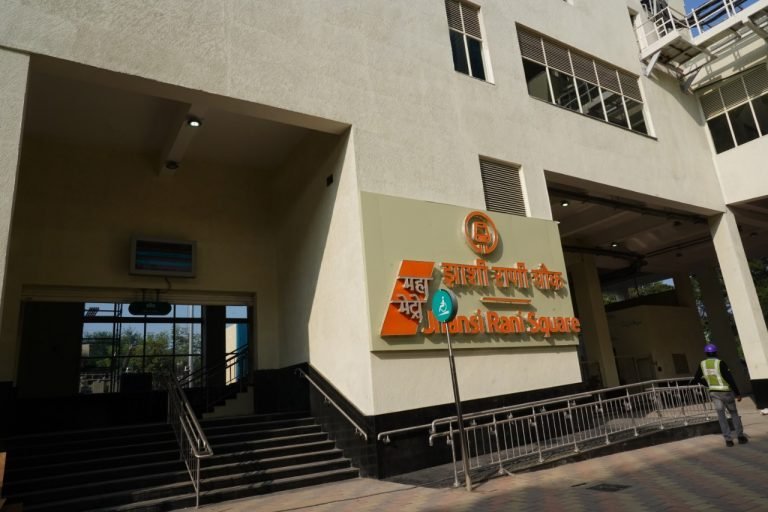
NAGPUR (Metro Rail News): The Commissioner of Metro Rail Safety (CMRS) conducted inspection of Jhansi Rani Metro Station today during the day-long visit to Nagpur Metro Project. The 2-member team, including CMRS Shri Janak Kumar Garg, inspected the public amenities and other facilities provided at the metro station. A mock fire drill was also conducted during the officials’ visit to the station. The CMRS team expressed satisfaction at the facilities provided at the metro station.
The CMRS officials headed to Jhansi Rani Metro Station, one of the prominent Metro Stations of Reach-III of Aqua Line. The two officials started their inspection with the escalators located on the station. Various safety norms of the escalators were tested on the occasion. Emergencies arising out of unforeseen circumstances during the use of escalators, were also thought of and accordingly tested.
Shri Garg and Shri Rishabh Dwivedi, other officials, also visited Station Control Room (SCR) and inspected facilities there. They also interacted with the officials and employees posted there. The two officials also examined the signage put up at various locations of the Metro Station. The security gadgets at the station were also reviewed by the CMRS team.
A mock fire drill was also conducted in front of the officials. The fire drill was held to test the readiness of the officials to deal with emergencies like fire. The fire brigade and an ambulance was summoned as part of the exercise, which reached the `accident venue’ within the stipulated period of 10 minutes. The CMRS officials also examined pump room and fire hydrant as part of the drill.
The CMRS conveyed its sincere appreciation for the prompt response of Nagpur Municipal Corporation (NMC) officials for sending fire brigade and Lata Mangeshkar Hospital for deputing ambulance. He also acknowledged competence and knowledge of Operation and Maintenance (O&M) Staff of Maha Metro.
Maha Metro officials including Director (Project) Shri Mahesh Kumar, Director (Rolling Stock & Systems) Shri Sunil Mathur, ED (Reach-I) Shri Devendra Ramtetkkar, ED (Electrical) Shri Giridhari Paunikar, ED (Signal) Shri JP Deharia, ED (Track) Shri Naresh Gurbani, ED (Admin) Shri Anil Kokate, GM (O&M) Shri Sudhakar Urade, CPM (Reach-III) Shri Rajdeep Bhattacharya and others were part of the Maha Metro team.
CHENNAI (Metro Rail News): On Wednesday, the tussle between Southern Railway and Chennai Metro Rail came to light on when the railways threatened to stop vehicles from entering the parking lot of Egmore metro station. They accused Metro Rail of taking over railway land without proper documents and using it as a parking space.
On Tuesday,
the Chennai Division office of Southern Railway sent a letter to Metro Rail
asking them to stop parking vehicles in this space. Sources said Metro Rail has
no proper documents to prove ownership for this land.
A notice sent by Southern Railway was also stuck at the entrance of the station on Wednesday. Metro Rail has been asked to meet with Railways on December 26, to clarify this issue.
An employee said, around 700 scooters and 40 plus cars are parked here every day and generate a revenue of 20,000 to Metro Rail.”Though the number of passengers who use this station is not relatively less, many utilize the parking space like a suburban station, bus stop, and central station is close by”.
An official said, Metro Rail officials said negotiations are on with Southern Railway and denied that the land is being used illegally. “We had a similar issue with the Airport Authority too but came to a consensus later. We have all the necessary documents that will be submitted to the railways soon. Parking will continue as usual”.
NAGPUR (Metro Rail News):Maha Metro Nagpur has been awarded consultancy for the Metro Neo project in Warangal, State of Telangana. This was announced after a high-power meeting held at Hyderabad by the Government of Telangana, yesterday (9th December).
Thus Maha Metro’s capability, experience and innovative solution in providing economical, safe, reliable rubber-tire Metro have been recognized not only within Maharashtra but also in other parts of India.
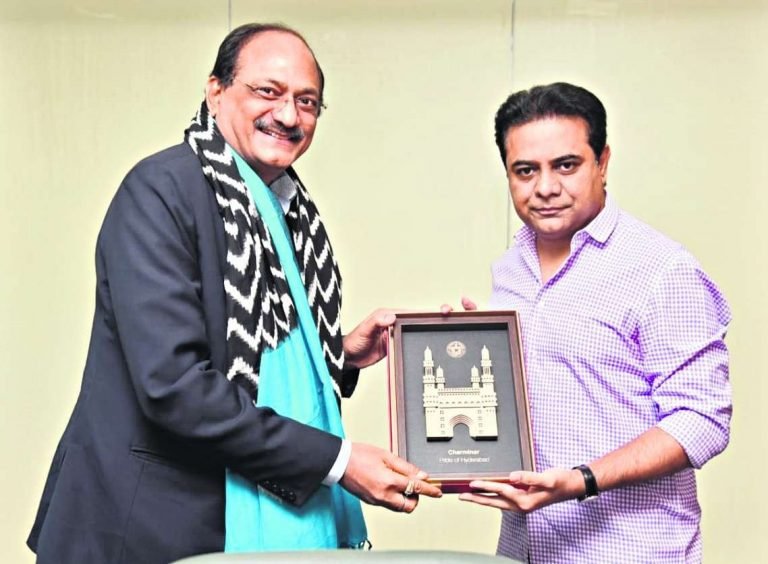
The first state other than Maharashtra, to recognize Maha Metro expertise in finding cost-effective solution for Metro services, thus, is Telangana State where presentation was made by Maha Metro team consisting of MD Dr. Brijesh Dixit and Director (Project) Shri Mahesh Kumar yesterday in presence of Hon Minister for Municipal Administration & Urban Development Hon Shri KT Rama Rao, elected representatives, Principal Secretary, Shri Arvind Kumar and other senior IAS officials of State of Telangana.
Thereafter Hon Minister requested Maha Metro to take up the assignment of preparation of Detail Project Report (DPR) for rubber tire metro for Warangal district for a length of 10-15 km. It’s a matter of great satisfaction that a cost-effective solution which is at a one-third cost as compared to the conventional system is being planned in Warangal district, other than Nasik district of Maharashtra state. The cost of the conventional Metro project being executed by other states is Rs.250 crore per km, while Maha Metro is executing the same project at Rs.180 crore per km. Metro Neo will cost just Rs.72 crore per km.
It may be recalled that a high-level delegation of elected representatives and officials from Telangana had visited the Nagpur Metro project last month (19th November) for the study of the Double Decker system and overall Metro Project work. The team held extensive discussions with Maha Metro officials, where the presentation was given followed by site visits. The team was quite impressed with the project and had sought Maha Metro help in building similar infrastructure work in Telangana state. Soon after Nagpur’s visit, Maha Metro team was invited by Telangana Chief Minister Shri K Chandrashekar Rao for a detail presentation on the innovative solution prepared by Maha Metro.
In a recent meeting held at Delhi by the Ministry of Housing and Urban Affairs (MoHUA), this cost-effective solution named `Metro Neo’ was accepted for Tier-II and Tier-III cities of India. Even for Tier-I cities, it can be adopted as a feeder service. The model developed for Nasik was discussed on various forums and Government of India on 21st August 2019, constituted a committee under the chairmanship of Dr. Brijesh Dixit for standardization of detail specifications for Rubber-Tyre Mass Rapid Transportation System (MRTS) with a view to implementing this across India. It may be recalled that the Government of Maharashtra has already entrusted the task of providing Metro Neo transport system for Nasik to Maha Metro.
Thus after successfully concluding DPR work for Thane and Metro Neo project for Nasik, Maha Metro has bagged yet another prestigious work in Telangana State. As part of the Metro Neo project, the length of Bus Coaches will be 25/18 meter with carrying capacity of 200/300 passengers. The buses run on rubber-tire and draw power from overhead electric wire having 600-750 V DC supply. The buses take power from overhead electric wire similar to the railway system.
With Warangal, Telangana Maha Metro has yet another feather in its cap. With the Nagpur project being executed successfully, this development is a big milestone for Maha Metro.
GANDHINAGAR (Metro Rail News): Rs 12,020.32 crore has been approved by the Government of India for the Surat metro rail project and has asked the state government to complete the work in five years.
MD S S Rathore Gujarat Metro Rail Corporation (GMRC) said this at a meeting on Sunday held in Gandhinagar to review the progress of metro rail projects in the state. CM Vijay Rupani chaired the meeting.
In June 2020 work for the Surat metro rail project will commence with a target to complete the project by June 2024.
Tendering and detailed designing work for the project has been initiated, a government statement said. There will be 14 elevated stations between Sarthana and Dream City, which will be a 21.61km route.
Last month, GMRC announced that the construction of phase II of the metro rail project between Motera in Ahmedabad and Mahatma Mandir in Gandhinagar, covering a distance of 28.2km, is expected to begin in June 2020 and get over by March 2024. In February this year, the central government had approved the project to connect Ahmedabad with Gandhinagar by metro rail.
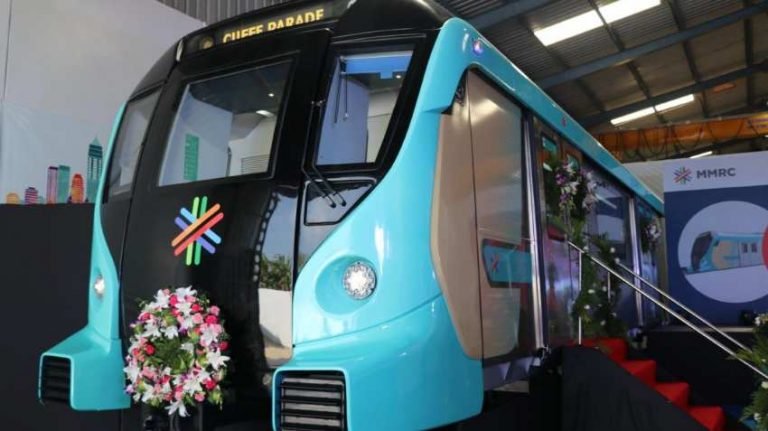
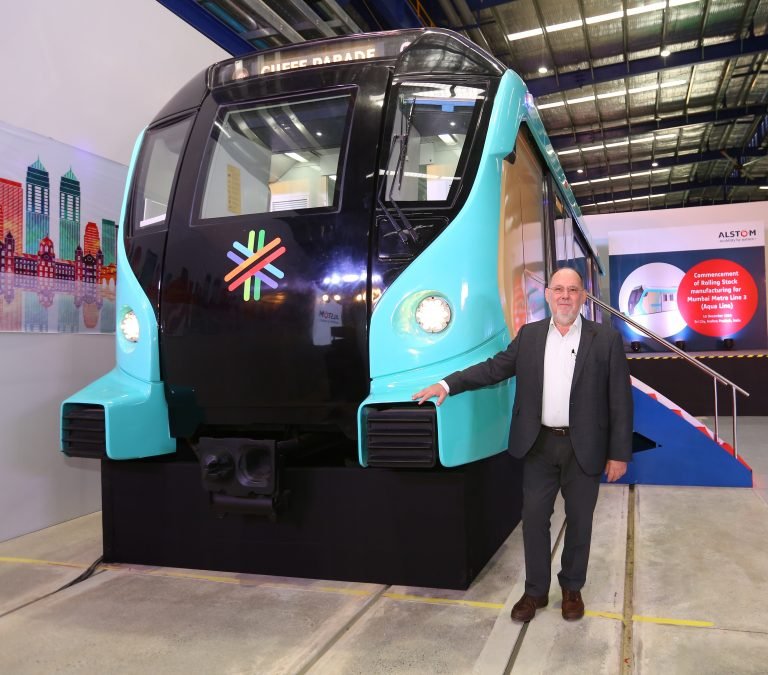
MUMBAI (Metro Rail News): On 10th December 2019 Alstom, the leader in sustainable and smart mobility, today commenced the manufacturing of metro trainsets for Mumbai Metro Rail Corporation (MMRC) at its factory in SriCity, Andhra Pradesh. The ceremony was preceded by Mr. Alain Spohr MD, Alstom India & South Asia. The first metro train after testing will be delivered by November 2020.
Alstom’s overall contract with MMRC for Line 3 is worth €452 million. The order includes manufacturing of 31 lightweight, fully-furnished modern metro trains of 8 cars each. Along with rolling stock, Alstom will also execute the power supply contract and equip Line 3 with Urbalis 400, its latest generation of CBTC signaling technology. The scope of the signaling contract includes unattended train operation (UTO), computer-based interlocking and centralized train supervision an integrated telecom solution comprising of CCTV, passenger information, passenger announcement, and Gigabit network platform screen doors, as well as the electrical and mechanical supervisory control and data acquisition system (E&M SCADA).
Speaking on the occasion, Alain Spohr, Managing Director of Alstom India and South Asia said, “This will be the new face of transportation for the commercial capital of India. Mumbai is a global city and it is set to get a world-class metro experience. The trainsets are custom-designed for Mumbai. Themed on Dynamic Fluidism that takes inspiration from the city, the train prioritizes high interior density layout to maximize space efficiency. The trainsets will be able to at least 3000 people on a single trip, easing the daily commute for Mumbaikars.”
KEY figures
€452 million worth of order from Mumbai Metro Line3
248 Metro cars to be delivered for Aqua Line, Mumbai
33.5 km is the total length of Aqua Line
27 stations (26 underground & 1 at-grade)
He further added, “As announced earlier, we are on track to double our manufacturing capacity at SriCity from 240 to 480 trainsets per annum. The factory is currently executing orders for Chennai Metro, Montreal Metro (Réseau Express Métropolitain) and Mumbai Metro Line 3. Alstom recently won a contract with Sydney’s NRT to supply the rolling stock and signaling system for the next stage of Sydney Metro. 23 six-car fully-automated Metropolis trains for the project will be manufactured at our SriCity facility.”
The Aqua Line trainsets will feature a host of safety elements including CCTV cameras, smoke detectors, emergency intercoms, fire extinguishers with wider detrainment doors to quickly evacuate passengers in case of an emergency. The inclusive design of trainsets will serve to the differently-abled individuals with ease of travel and includes dedicated space for a wheelchair in every car. The overall exterior and interiors of the trainset are inspired by the undying energy of Mumbai and its people who are always on the move and hustle all day long.
Alstom will also train maintenance and operations staff for the project. It is also the first time that any metro train in India will have 75% motorization, enabling quick acceleration and deceleration thereby bringing about greater efficiency in operations. The trains will also be equipped with a regenerative braking system aiding a significant reduction in carbon emissions. In addition to the above features, it is the first UTO (Unattended Train Operation) project in Mumbai.
About Alstom
Leading the way to a greener and smarter mobility worldwide, Alstom develops and markets integrated systems that provide sustainable foundations for the future of transportation. Alstom offers a complete range of equipment and services, from high-speed trains, metros, trams, and e-buses to integrated systems, customized services, infrastructure, signaling, and digital mobility solutions. Alstom recorded sales of €8.1 billion and booked orders of €12.1 billion in the 2018/19 fiscal year. Headquartered in France, Alstom is present in over 60 countries and employs 36,300 people.
Alstom
in India
Alstom has
established a strong presence
in India. Currently, the company is executing metro projects in several Indian
cities including Mumbai, Chennai, Kochi and Lucknow where it is supplying
Rolling Stock manufactured out its state-of-the-art facility at SriCity in
Andhra Pradesh. In the Mainline space, Alstom is executing Signalling &
Power Supply Systems for the 343 Km section on World Bank funded Eastern
Dedicated Freight Corridor. Phase 1 in the construction of the new electric
locomotive factory for manufacturing and supply of 800 units of 12000HP
locomotives is also complete at Madhepura, Bihar while the depot at Saharanpur,
Uttar Pradesh is ready to commence operations. Alstom has set up an Engineering
Centre of Excellence in Bengaluru, and this coupled with a strong manufacturing
base as well as localized supply chains,