NHSRCL provides skills training to the youth of Anand, Kheda

VADODARA (Metro Rail News): The National High-Speed Rail Corporation Limited (NHSRCL) which is implementing the bullet train project between Ahmedabad and Mumbai has started efforts to train youth from project affected families to make them self employed.

Recently, NHSRCL in association with the Rural Development and Self Employment Training Institute (RUDSET) completed a 45 days skill development training program for the youth of Anand and Kheda.

The skill development program is meant to restore income and generate activities for the project affected individuals or families. Under the program, computer hardware and networking program for prospective youth were started by Nadiad-based RUDSET on June 26.

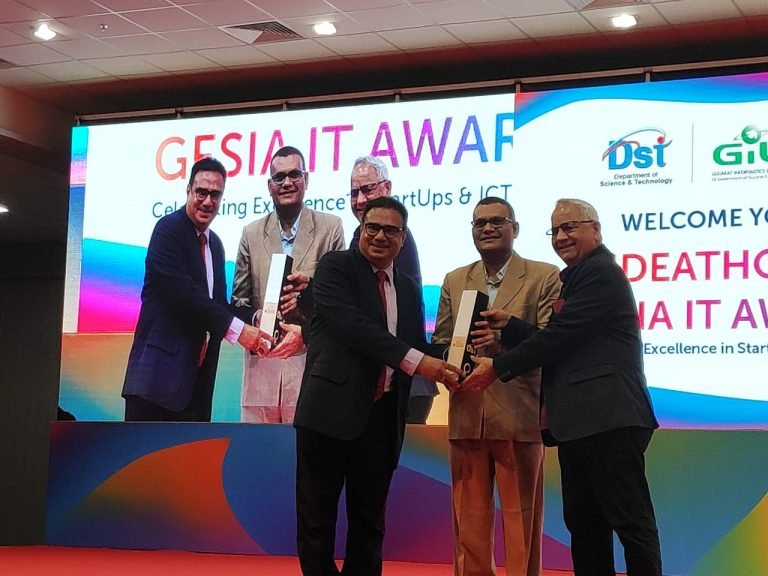
Twenty-six youth from six villages of Kheda and five villages of Anand benefitted from the skill development training program. The youth who underwent training received certificates for future entrepreneur training programme during a ceremony at Nadiad which witnessed presence of Kheda district collector Sudhir Patel, NHSRCL’s managing director Achal Khare, Kheda’s district superintendent of police Divya Mishra, NHSRCL, Vadodara’s chief project manager Pradeep Ahirkar, RUDSET’s director Arvind Mothaliya and more than 400 project affected persons and their families.

“This relationship is not just given and take but of growing together. NHSRCL will follow up with all training participants in future and will try to help in whatever way we can in the years to come,” said Khare.

He also announced that if the youth are ready to join hands to make a cooperative like Amul, NHSRCL will provide all its assistance to such an initiative. Similar training programs including those on mobile repairing, beauty parlor, bike repairing among others have been planned in various villages along the high-speed rail corridor.

After training, RUDSET will ensure that trained youth develop their own enterprises. “Since RUDSET is sponsored by two banks, they will also help the youth in getting loans. The institute will be providing handholding for at least two years till the candidates get established,” said Sushma Gaur, spokesperson of NHSRCL.

Chandigarh-New Delhi train journey time will get shorter soon

CHANDIGARH (Metro Rail News): Travel time between Chandigarh and New Delhi will come down soon, as the railways are going to increase the speed of trains on Ambala-New Delhi stretch, according to Dinesh C Sharma, divisional railway manager (DRM) – Ambala division. Interacting with reporters, the DRM also discusses issues like passenger amenities, punctuality and other operation related challenges in the Ambala division and spells out possible solutions for the same.

The railways are working to increase speed on prominent routes like New Delhi-Mumbai. The work is going on for Chandigarh-New Delhi section also.
buy cialis oral jelly online https://pridedentaloffice.com/wp-content/themes/twentytwentyone/inc/en/cialis-oral-jelly.html no prescription
But, we are not aware of what shape it will finally take, as the ministry has to take a final call on it. The work on the construction of walls along the tracks in this section is on. It will help with this project also.

Chandigarh is still ahead in most of the areas. The Indian Railway Stations Development Corporation (IRSDC) has been given the responsibility of planning in this regard and they are doing the facility management. We look after the core railway operations. As upgradation is a constant process, in the coming days, you will see better facilities at the Chandigarh railway station.

Intercity bullet trains start operation in Xinjiang

XINJIANG (Metro Rail News): Bullet trains that can run at 160 km per hour have been put into operation to replace the older and slower models in northwest China’s Xinjiang Uygur Autonomous Region.

The electric multiple units (EMU) train is named Fuxing, the same as the 350 km/h model that runs between Beijing and Shanghai. It can run on the existing rails in the region but has sealed compartments, internal temperature control, and lower noise.
buy xifaxan online www.blendedentalgroup.com/wp-content/languages/new/xifaxan.html no prescription

The first such trains started operation on Aug. 8 from Urumqi to Korla, with a total of three pairs of trains running daily. The train can cut the intercity travel time from 5 hours to 3 hours.

In the future, there will be 20 more sets of Fuxing trains linking multiple cities in the region, according to China Railway Urumqi Group Co., Ltd.

“Now that Fuxing trains have been put into operation, more people can experience the convenience and improved service of bullet trains,” said Song Qiang, deputy director of the passenger transport department of China Railway Urumqi Group Co., Ltd.

The region received about 75.9 million visitors in the first half of this year, up 46 percent compared with the same period last year, according to regional officials.

Virgin Hyperloop One could build the world’s first hyperloop in India

MAHARASHTRA (Metro Rail News): The first “hyperloop,” a concept for an ultra-fast underground transportation system, popularized by Elon Musk, is closer than you think and it may not be coming from Elon Musk’s Boring company.

Officials in the Indian state of Maharastra announced last month that they will be taking bids for what could be the first hyperloop project. Sir Richard Branson-backed Virgin Hyperloop One could win the contract and has been named the Original Project Proponent by the state.

“This is history in the making. The race is on to host the first hyperloop transportation system in the world, and today’s announcement puts India firmly in the lead,” Virgin Hyperloop One CEO Jay Walder said in a statement.

Virgin Hyperloop One and Musk’s Boring Company are both developing hyperloop transportation.

Interest in ultra-fast underground transportation piqued when Tesla’s Elon Musk published a concept in 2013. Musk outlines a system that involves a magnetically-propelled pod that carries passengers through a low-pressure tube at up to 700 miles per hour.

Despite the similarities, Walder says the two companies are like apples and oranges.

“Boring Company is really focused on carrying a few people in a vehicle. We see our vehicle as a vehicle for the masses,” Walder says. “We want to carry many, many people in what we’re doing. Maybe they integrate at some point, but we’re completely separate.”

The Virgin Hyperloop is taking its test pods stateside as well. Virgin will show off its XP-1 pods on a roadshow that will hit Ohio, Kansas, and Texas over the next few months.

“We’re bringing Hyperloop to America. It’s a great opportunity for people to be able to get a sense of what hyperloop could be, to be able to talk about what it means,” Walder says. “So it allows us to completely reimagine the way that we knit cities together, the way we knit places together.”

Delhi Metro services on Independence Day

NEW DELHI (Metro Rail News): Delhi Metro will run as usual on Independence Day (15 August) across the entire network, according to advisory issues for Independence Day by Delhi Metro Rail Corporation (DMRC).

All the Metro stations will remain open, However, the entry and exit at four stations will remain closed owing to security reasons during the Independence Day programme. The entry and exit at Lal Quila, Jama Masjid, Delhi Gate and ITO stations of Violet Line will be permitted from select entry/exit Gates during the ceremony time.

DMRC has announced that as part of heightened security, all parkings will be closed with effect from 14 th August morning till 15th August afternoon. “Parking at Metro stations will be closed from 6 am on 14th August (Wednesday) till 2 pm on 15th August 2019 (Thursday),” The DMRC circular read. This security measure comes into effect every year in order to avoid any untoward incident.

To facilitate people at Lal Quila station on Independence Day, additional ticket counters will be opened at Lal Quila and Jama Masjid Metro stations. apart from that additional staff will be deployed to guide people and cater to the rush after the ceremony.

Security has been beefed at all major airports and railway stations ahead of the Independence Day. All airlines have asked their flyers to reach airport early, at least three hours in advance.

The Delhi Traffic Police has also issued an advisory for the function. According to the traffic advisory, seven roads—Netaji Subhash Marg, Lothian Road, S.P Mukherjee Marg, Chandni Chowk Road, Nishad Raj Marg, Esplanade Road, its Link Road, and Ring Road from Rajghat to Y-Point-Hanuman Setu will be closed for general public from 4 am to 10 am. Routes of buses terminating at Red Fort, Jama Masjid and Delhi main railway station will be curtailed or diverted.

Prime Minister Narendra Modi will unfurl the national flag from the ramparts of the historic Red Fort on Thursday morning to a 21-gun salute, and then address the nation on the 73rd anniversary of independence from British rule.

Regional Rail stations to have platform screen doors

NEW DELHI (Metro Rail News): The National Capital Region Transport Corporation (NCRTC) plans to install platform screen doors (PDS) at all upcoming stations of rapid rail transit corridors so that suicides and other incidents prevented.

The NCRTC is executing agency of the Rail Rapid Transit System (RRTS) would facilitate safe boarding and deboarding from the train which will have an operational speed of 160 kmph.

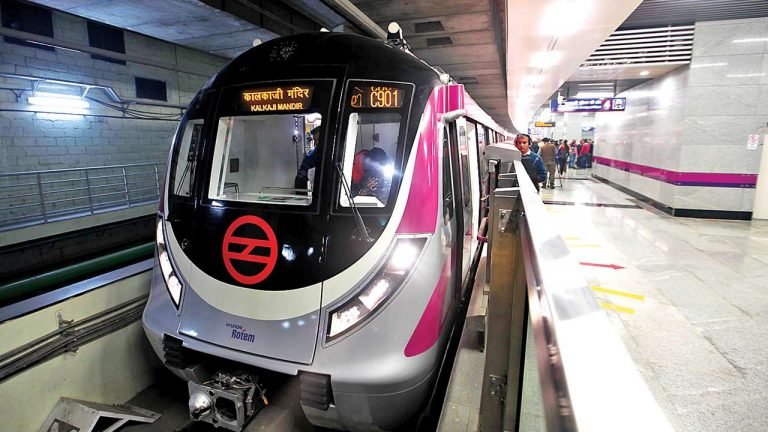
The Delhi Metro Rail Corporation (DMRC) has installed platform screen doors at its several stations owing to instances of people jumping on metro tracks to commit suicide and crowd management.

The National Capital Region Transport Corporation (NCRTC) is executing three proposed RRTS corridors – Delhi-Ghaziabad-Meerut, Delhi-Gurugram-Alwar and Delhi-Sonipat-Panipat.

“In recent times, we have seen untoward incidents like commuters on railway track by accident, trespassing on track and suicide cases.

“The installation of PDS at all RRTS stations will increase safety measures,” Said Mr.
buy sildalis online https://herbalshifa.co.uk/wp-content/themes/twentytwentytwo/inc/patterns/en/sildalis.html no prescription
Sudhir Sharma, Chief Public Relation officer, NCRTC.

He said the PSDs would act as a barrier between the platform and the tracks besides helping in better crowd management at the stations.

According to the NCRTC, installation of PDS will also enable trains to arrive and leave the station at greater speed besides reducing the time it takes to pick up and drop passengers.

NCRTC said that the RRTS trains will be three times faster than the Delhi Metro trains in terms of operational speed

Commuters will be able to travel on the country”s first rail rapid transit corridor in over three years from now as its 17-km-long Duhai-Sahibabad section in Uttar Pradesh”s Ghaziabad is expected to be operational by early 2023.

The entire Delhi-Ghaziabad-Meerut RRTS corridor, spanning 82 km, will be operational by 2025.

Shri D.K. Sharma takes charge as MD of Maha Mumbai Metro Operation Corporation Ltd

MUMBAI (Metro Rail News): Shri Devendra Kumar Sharma, an officer of Indian Railway Service of Electrical Engineers (IRSEE) of 1980 batch, has taken over the charge of first Managing Director of Maha Mumbai Metro Operation Corporation Limited (MMMOCL) on August 10, 2019

The Mumbai Metropolitan Region Development Authority (MMRDA) has shared this information though its official twitter handle. “We’re extremely glad to have him on board to guide ambitious metro projects across Mumbai & Maharashtra”, said in the statement.

Prior to this he was General Manager, Central Railway and  prior to that he was Chief Electrical Engineer on Western Railway.

After Graduating in Electrical Engineering, he joined Indian Railways as an Indian Railway Service of Electrical Engineers (IRSEE) officer in 1980 and has held various important posts during his past tenure on Central, Western, South Central and Konkan Railway i.e. Chief Electrical Engineer/Western Railway, Chief Electrical Engineer/Central Railway, Chief Electrical Engineer (Project)/Konkan Railway, Divisional Railway Manager/Nagpur, Additional Divisional Railway Manager/Mumbai Division of Central Railway etc.

He has wide experience of management and construction of the Electrical assets besides General Administration on Indian Railways.

Central Government has approved the formation of a new special purpose vehicle (SPV) – Maha Mumbai Metro Operation Corporation Limited (MMMOCL) on June 10, 2019, to carry out the “business and operation” of the upcoming 13 Metro corridors in the Mumbai Metropolitan Region. The MMMOCL will operate all Metros and Monorail corridors in the city.

The idea is to integrate the operations and maintenance of all Metro corridors under one authority was introduced in last year by the Maharashtra Government.

DMRC floats tenders for second corridor of Delhi Metro Phase IV

NEW DELHI (Metro Rail News): The Delhi Metro Rail Corporation (DMRC) has floated tenders for the 12.58-kilometre long Majlis Park-Maujpur corridor, the second of the three corridors approved under Delhi Metro Phase IV.

The other two corridors of the Delhi Metro Phase are the Janakpuri West-RK Ashram corridor and the Tughlakabad-Aerocity corridor. “The civil tenders for the entire 12.58 km long Majlis Park-Maujpur metro corridor have been floated. The section comprises eight elevated stations. They are Yamuna Vihar, Bhajanpura, Khajuri Khas, Sonia Vihar, Soorghat, Jagatpur Village, Jharoda Majraa and Burari stations,” Said Mr. Anuj Dayal, ED (Corporate Communication), DMRC.

This corridor will join the two remaining dots of the Pink Line, completing the full circle of its route. Adding that work was on for the third corridor and tenders would soon be floated for it. The Majlis Park-Maujpur corridor will have a double-decker viaduct between the Bhajanpura and Yamuna Vihar metro stations. The metro viaduct will be on the upper deck, at an elevation of 18.5 metres, while the road flyover will be on the lower deck, at a height of 9.5 metres.

“The length of the double-decker viaduct will be about 1.4 kilometres. It will be on the central verge of the road. Development of the Public Works Department road is also being done by DMRC between Yamuna Vihar and Bhajanpura,” he added.

A new feature in fourth phase
Two of the three corridors in the fourth phase of Delhi Metro will have double-decker viaducts. The Majlis Park-Maujpur corridor will have a double-decker viaduct between the Bhajanpura and Yamuna Vihar metro stations. In the Tughlakabad-Aerocity corridor, there will be a double-decker viaduct between Ambedkar Nagar and Saket G Block.

India to get second Hyperloop project in Punjab

CHANDIGARH (Metro Rail News): The Punjab will be the second state in the country to get the Hyperloop mass transit system after Maharashtra, which is a pod-like vehicle travelling through a tunnel at a speed higher than that of an aircraft.

It is proposed to be set up between Amritsar and Chandigarh at a cost of Rs 56,000 crore, reducing the travel time between both cities to just 35 to 40 minutes.

The state government is likely to sign a Memorandum of Understanding (MoU) shortly with US-based company Virgin Hyperloop One. The US company has tied up with a leading UAE-based company to bring this ultra-modern and untested technology to India. “The prototypes of the pods to be used here are being tested in Nevada in the US and in the future they are likely to run in Toronto and Dubai also,’’ said an official.

Each pod has a seating capacity of 28 people and will travel at a speed of 1,100 to 1,300 kilometres per hour in a tunnel-like structure with almost no resistance and very low atmospheric pressure. This tunnel can be underground or overground depending on the availability of land and other factors. Thus the distance between Chandigarh and Amritsar can be covered in a time span of 35 to 40 minutes compared to the present travel time of five hours by road.

Amritsar – Chandigarh Hyperloop Project Route Map

It will run from Amritsar with stops at Jalandhar and Ludhiana and final destination at Chandigarh and vice versa. Two solar-powered pods can travel at a time carrying 46 people followed by other pod pairs after short intervals. After the pre-feasibility study, work on the project is expected to start by the end of 2021 and finish in 2029.

“After the MoU is signed and a pre-feasibility study is carried out by the company, it will then be decided how to go about the project in a Public Private Partnership (PPP) mode, private mode or any other way. The total project cost is estimated to be around Rs 56,000 crore,” said an official.

Speaking to this correspondent, Additional Chief Secretary (Investment Promotion and Industry and Commerce, Punjab) Vinni Mahajan said, “The state government is proposing to sign an MoU with this company for bringing this new technology, which will be beneficial in the long run, to the state. Then a
pre-feasibility study will be carried out. The Maharashtra government has already signed an MoU with them.”

It is learnt that this hyperloop is an open-source design of mass transportation system technology built around the tube and capsule concept in which a pod-like vehicle travels through a tunnel at very high speed and carries people and freight.

The Maharashtra government has already signed an MoU with the company for this technology so that the pods can run between Mumbai and Pune, reducing the travel time between both cities to 23 minutes

Mumbai-Ahmedabad bullet train work to start in Mar-Apr next year

MUMBAI (Metro Rail News): The land acquisition for the bullet train is in final phases and physical works on the 508-km-long route between Mumbai and Ahmedabad would commence by March-April next year.

The National High-Speed Rail Corp Ltd (NHSRCL), which is implementing the 1,00,000 crore dream project of prime minister Narendra Modi, intends to complete the land acquisition before the Assembly elections in Maharashtra.

The 12 stations in the Mumbai-Ahmedabad bullet train project are Bandra-Kurla Complex, Thane, Virar, Boisar, Vapi, Billimora, Surat, Bharuch, Baroda, Anand/Nandiya, Ahmedabad and Sabarmati.

The 508.17 km bullet train route will cover a distance of 155.64 km in Maharashtra, 2 km in Dadra & Nagar Haveli and 350.53 km in Gujarat.

The project involving the two states of Gujarat and Maharashtra and Union Territory of Dadra & Nagar Haveli, involves the acquisition of 1,379.59 hectares of land. While 998.78 hectares is privately owned, 154.63 hectares by government, 127.50 hectares by Indian Railways and 98.68 hectares of forest land.

In Gujarat, of the 742.13 hectares, consent agreement has been signed for 325.9 hectares, disbursement has started for 7 hectares acquired in Dadra & Nagar Haveli. In Maharashtra of the 274.6 hectares, consent agreement for 10 hectares has been signed.

“We will acquire 60 to 70 per cent of the land before the Maharashtra Legislative Assembly elections,”said a top official of NHSRCL on Friday.

Joint measurement survey (JMS) is also going on at fast pace. “Of the 198 villages, JMS in 183 is complete in Gujarat, two in Dadra & Nagar Haveli and 72 of the 97 villages in Maharashtra,” the official said.

In Maharashtra, the train passes through two districts of Thane and Palghar. “Initially there were protests in Dahanu and Talasari tehsils but now people are coming forward. There were some issues in Vasai which is being addressed,” the official said.

The construction work is being done in eight packages. “Tenders for three packages have been issued,” the official said, adding that while the full construction is likely to be completed by 2023, efforts are being made to ensure that the bullet train starts running in a segment in 2022 coinciding with 75 years of Independence.

  • The technology is inspired by Shinkansen, the Japanese bullet train.
  • The bullet train will have 10 cars with a capacity of over 1,300
  • The bullet train will run at a speed of 320 kmph
  • It will have two seating arrangements – 2×2 (business class) and 2×3 (standard class)
  • 70 services day has been planned
  • While some trains will gallop, some will stop at all stations
  • Minimum journey time would be around 2 hrs (and maximum 2 hrs 50 mins) depending on stoppages
  • Estimated Mumbai-Ahmedabad fare is Rs 3,000
  • Lowest ticket fare Rs 250 (like between BKC & Thane)

MMRDA plans to Purchase Monorail spares from local vendor

MUMBAI (Metro Rail News): The Mumbai Metropolitan Region Development Authority (MMRDA) has commence a local vendor development policy to promote Indian companies to make spare parts for the Mumbai Monorail.

Due to lack of parts, Monorail operations in the city have been routinely affected. Recently, operations were suspended for a few days on account of non-availability of a key spare part called current collector shoes (CCS), which collects electricity from the third rail on the guide-way and gives power to the train. The CCS was being procured from a United Kingdom-based company, Faiveley Brecknell Willis. MMRDA will now be procuring the CCS from a Pune-based manufacturer.
buy viagra soft online no prescription

“A key issue with the procurement of spare parts is that we are completely reliant on foreign companies. Even if the parts are to be repaired, we need to send them abroad. It was decided to identify a few companies who had the competence to develop these parts,” a senior MMRDA official said.

Under the local vendor policy, the vendor will bear the cost of development and manufacturing of the parts and in return, MMRDA will pay it once the parts are found to be satisfactory. Sources said MMRDA was in talks with other companies for the CCS and for other critical spare parts. “This does not mean we will not be procuring from global companies. For instance, we will be getting the next shipment of CCS from Faiveley Brecknell Willis by September,” an MMRDA official said.

MMRDA officials also said vendors globally had lost faith with the Monorail project largely because the previous operator, Scomi BHD Engg, had not paid its dues. “At present, they (vendors) start manufacturing only after receiving payment from MMRDA. This leads to delays. Moreover, since we have made more rakes functional after taking over the operations, the requirement of spares has increased,” a senior official said.

Ever since it took over operations in December 2018, MMRDA has repaired two rakes, and is running operations with five rakes. It is in the process of repairing two more and aims to have seven rakes running by September. “We have finalised tenders to procure 10 new monorail rakes, which will be finalised by September 15 and will be delivered in 21 months,” an MMRDA spokesperson said.

Monorail operations were badly hit in July when the monthly ridership fell to 2.13 lakh from around 4 lakh in June. MMRDA officials said with their efforts to regularise the supply of spare parts, services should improve in future.

Hyundai Rotem bags Cairo metro train contract

Greater Cairo, Egypt (Metro Rail News): A delegation of Hyundai Rotem headed by vice chairman, Mr Yoon Yeocheol signed the contract with al-Wazir, South Korean ambassador on August 7, 2019.

The contract to supply 48 metro trains for Line 2, which Hyundai Rotem was awarded in June. Egypt’s National Authority for Tunnels (NAT), a division of the ministry of transport, selected Hyundai Rotem to supply 256 metro cars for the phase three extension of Cairo metro Line 3 in 2017.

“The delegation there were other upcoming metro investment opportunities, including upgrading the existing Alexandria – Abu Qir branch line to electrified metro, which is due to be tendered internationally” said Minister.

The delegation also discussed the possibility of cooperating on a number of railway projects such as the construction of the Manashy – 6th of October City line, which would ease freight transport between the Port of Alexandria and the dry port at 6th of October City, and a feasibility study into the Hurghada – Safaga – Qena – Luxor line.  

Other proposed projects discussed include track doubling of the Mansoura – Damietta line, resignalling the Tanta – Mansoura – Damietta line to improve safety, increasing rail freight between Damietta Port and the Red Sea as well as the possibility of manufacturing locomotives.

Cash-strapped GDA hopes to raise Rs 300 crore by selling land for RRTS station

GHAZIABAD (Metro Rail News): The Ghaziabad Development Authority (GDA) plans to sell 24,017 sqm, or nearly 6 acres, of land for Rs 328 crore near New Bus Stand to the National Capital Region Transport Corporation (NCRTC) for construction of a station under the Delhi-Meerut Regional Rapid Transit System (RRTS) project.

The move is expected to give a big boost to GDA, which is facing a financial crunch and hasn’t been able to pay the salaries of the previous month until now to nearly 900 employees.

Officials said the state government has given the go-ahead to GDA for the plan and a proposal in this regard will be sent to NCRTC for consideration.

Along with the station, space will also be used for commercial development. The rate has been fixed at Rs 1.10 lakh per sqm in accordance with the district administration’s circle rate. Besides that, an additional charge at the rate of 22% under the head of the corner charge, lease rent and freehold will be imposed.

At present, a tourism department-run Hindon Motel is present at the site. GDA chief engineer VN Singh said altogether 31,000 sqm of land was given to the tourism department on lease for 30 years in 1981, but the contract lapsed in 2011 and was not renewed.

Of 31,000 sqm, 7,000 sqm was earlier used for the construction of a road and a roundabout. Apart from the land where Hindon Motel exists, a request for 8.5 acres near the elevated road at Vasundhara has also been made by NCRTC.

A segment of the RRTS corridor, from Sahibabad to Duhai, is set to become operational by March 2023. The deadline for the entire corridor — Sarai Kale Khan in Delhi to Modipuram in Meerut — is March 2024.

Booking an e-ticket will soon cost more

MUMBAI (Metro Rail News): Get ready to pay more for making an online reservation for train journeys. Service charge, which was earlier withdrawn to promote digital transactions, will soon be reintroduced for e-tickets. Earlier, service charge for sleeper class was Rs 20 and Rs 40 for AC compartment seats.

A Railway Ministry letter dated August 3, of which Mirror has a copy, has announced restoration of this operation cost which includes marketing and after-sales service. The service charge for e-tickets had existed until November 2016, just before demonetization.

This money was used by the Indian Railway Catering and Tourism Corporation (IRCTC) to fund its e-ticketing system. According to sources, the Ministry of Finance (MoF) advised the railways to discontinue the charge with the promise that the department’s operating costs will be reimbursed. On July 19 this year, the MoF informed the railways in writing that the reimbursement of operation costs for e-ticketing to IRCTC was a “temporary arrangement in special context for a limited period of time”.

Initially, the directive was to not levy service charge till June 2017, but later the timeline was extended multiple times and no service charge is levied until now. During this period, IRCTC’s revenues took a big hit as a service charge was a major source of revenue for the railway arm.

According to sources, IRCTC was to be reimbursed around Rs 88 crore by MoF but even this wasn’t sufficient.

The letter, written by BS Kiran, who is joint director traffic commercial (general) of the Railway Board, further empowers railways to restore the service charge and the quantum to be levied.

According to sources, the matter will be taken up by the directors of IRCTC and the amount will in all probability be the same as before. The passengers Mumbai Mirror spoke to are not happy with this move. “It’s totally against the interest of passengers. Railways should bear the service charge as online booking reduced their expenses,” said Subhash Gupta, member of Zonal Railway Users’ Consultative Council, Central Railway.

Gupta added that online booking reduces the number of windows, booking clerks and other expenses required for the department to function.
buy vega extra cobra online https://blackmenheal.org/wp-content/themes/twentytwentytwo/inc/patterns/en/vega-extra-cobra.html no prescription
Shailesh Goyal, the former member of the council, also opposed this decision and said the sale of tickets is the responsibility of railways.

“Imposing service charge on the passengers is not a fair decision. It’s for the railways to bear the cost,” he said. According to railway officials, it has been incurring losses despite the MoF reimbursing a certain amount in lieu of the exemption.

They told Mirror that restoration of the charge will generate at least Rs 200 crore for railways and the amount is essential in meeting the escalating costs of maintaining the IRCTC website and keeping all safeguards in place to dissuade the touts from booking tickets illegally.