Hyderabad metro sees the highest footfall on Wednesday

HYDERABAD (Metro Rail News): The Hyderabad Metro Rail on Wednesday set a new record in patronage with nearly 3.06 lakh passengers taking the Metro ride in a day. HMRL managing director NVS Reddy said the number of passengers using the service created a new record and Metro stations had registered a record 3.23 lakh footfall (3.06 lakh ridership) on Wednesday.
buy forzest online https://nouvita.co.uk/wp-content/themes/twentynineteen/fonts/en/forzest.html no prescription

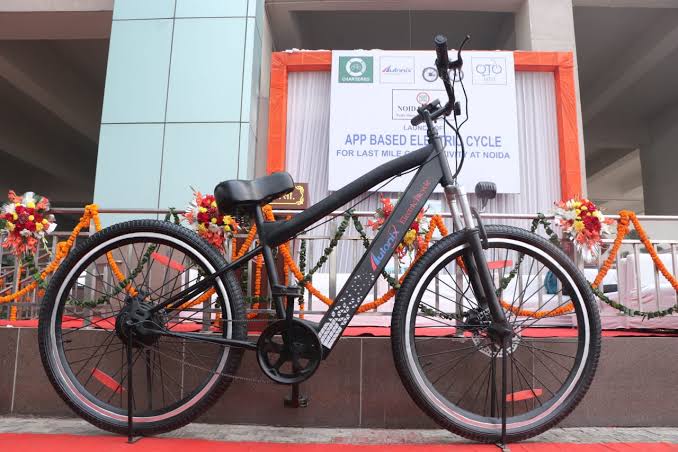
The Metro Rail authorities attributed the increase in ridership to the holiday rush, better connectivity to Metro stations, availability of rent-a-bicycle or a two-wheeler services at some stations. After unfurling the national flag at Metro Rail Bhavan here on Thursday, Reddy informed that the reversal work at the Hi-Tec City Metro station has been completed as well.

“The Hi-Tec City reversal works were completed in all respects and normal train services will be introduced between Jubilee Hills check post and Hi-Tec City in the next few days after mandatory safety clearances are obtained,” Reddy said, adding that the frequency of the trains would also be increased to five or even three minutes during peak hours.

“The frequency of trains will be increased to and from Hi-Tec City in all directions in a few days from now,” the HMRL MD said. The work up to Raidurg (Mindspace Junction) station was also nearing completion and trial runs would start on the Hi-Tec City-Raidurg section soon.

Free rides for women on Metro to take a while

NEW DELHI (Metro Rail News): On Thursday, Delhi chief minister Arvind Kejriwal announced free rides for women on Delhi Transport Corporation (DTC) and Cluster buses starting October 29, Delhiites will have to wait a while longer before the free rides are implemented on the Delhi Metro as well.

Delhi’s transport minister Kailash Gahlot said that the implementation of the free ride for women passengers on the Metro has stuck because of a tussle with the Centre regarding nominations of non-bureaucrats to the Delhi Metro Rail Corporation’s (DMRC’s) board of directors.

“There is no clarity on when we will be able to implement free rides for women the Metro. The matter has been stuck with the union government on the nominations of the board of directors. They (center) have not been supportive of our plan,” Gahlot said on Thursday.

The Delhi government had last month proposed the nominations of non-bureaucrats including Aam Aadmi Party (AAP) leaders Raghav Chadha and Atishi to the DMRC’s board of directors. Union minister of housing and urban affairs (MoHUA) Hardeep Singh Puri had said, “I have a situation where the Board is handled with great competence by the serving secretary in the Ministry.
buy amoxicillin online https://gilbertroaddental.com/wp-content/themes/twentyseventeen/inc/en/amoxicillin.html no prescription
There is no scope in that Board for non-official people.”

Senior officials of the Delhi Metro Rail Corporation (DMRC) said that after the Delhi CM announced free rides for women in public buses and the Metro in June, an official presentation was made giving options on the ways in which the free rides can be implemented on the Metro. There has not been any progress in the matter since then, officials said.

“The implementation of free rides on the Metro will not be as easy. The primary problem is that the Delhi government holds only 50% stake in the DMRC. It will depend on how the union government reacts to the implementation model,” said a senior DMRC official.

The Delhi Metro in its report before the state government representatives gave two options for the implementation of the scheme. The first option proposed giving pink tokens to women passengers, and in the other dedicated cards and tokens be provided to the beneficiaries. In either of the two implementation models, the DMRC had asked for at least eight months to prepare their system.

Another reason for the delay of the scheme on the Metro is the multiple layers of assessment and approval required. Once an implementation model is finalized between the DMRC and the Delhi government, the proposal will require a nod from the Delhi Metro’s Fare Fixation Committee (FFC) and by the central government.

PM props Vande Bharat train as a symbol of people’s aspirations

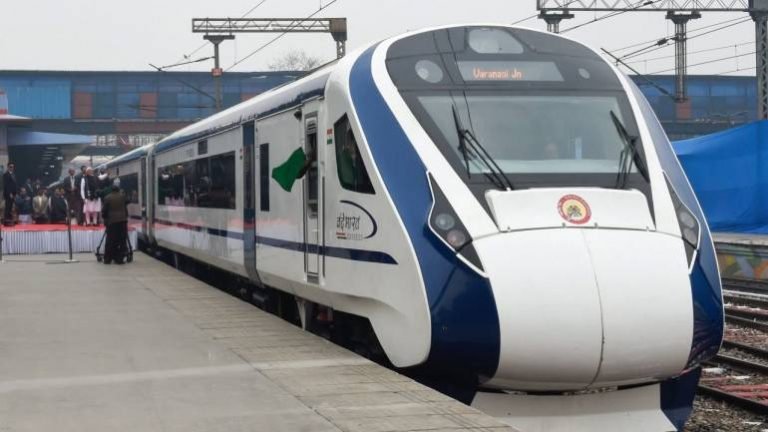
NEW DELHI (Metro Rail News): With Prime Minister Narendra Modi propping the Vande Bharat Express as a symbol of people’s aspirations in his Independence Day speech on Thursday, the railways’ ambitious project, which has been in limbo, is likely to get a boost.

The railways recently said that it has decided to float fresh tenders for components for the third edition of the country’s first indigenous train, Vande Bharat Express or Train 18 after allegations of favoritism had cropped up during the manufacturing of the first trainset. “People of India are no longer happy with merely any proposal for a new railway station, they want to know when the state-of-the-art Vande Bharat Express will come to their area,” PM Modi said, speaking of the changing aspirations of the people.
buy levitra super force online https://pridedentaloffice.com/wp-content/themes/twentytwentyone/inc/en/levitra-super-force.html no prescription

The Chennai-based Integral Coach Factory, which manufactured these state-of-the-art trains, has also become the largest rail coach-maker in the world with 2,919 coaches being produced in a 12-month period till February this year, beating top Chinese manufacturers that annually produce around 2,600 coaches. In his Independence Day address, Modi said that the government has decided to invest Rs 100 lakh crore in infrastructure development.

“People’s thinking has changed. Earlier, people were happy with merely a plan to set up a railway station. Now people ask when will Vande Bharat Express come to my area. People do not want only good railway stations or bus stations, they ask when is a good airport is coming,” he said.

Currently, only one Vande Bahrat Express is operational between Delhi and Varanasi, while another between Delhi and Katra is in the pipeline.

All tendering process for the train was suspended and a vigilance case initiated in the matter. “The PM speaks about Train 18/Vande Bharat Express with affection…a glimmer of new hope?” asked Sudhanshu Mani, the former general manager of ICF who was instrumental in rolling out the first Train 18, tweeted minutes after the PM mentioned the train in his speech.

Bengaluru airport to be connected by suburban rail by end of this year

BENGALURU (Metro Rail News): Your chances of reaching the Bengaluru airport from the city without negotiating traffic snarls, thanks to the suburban train, maybe materializing quite soon. According to a statement by the Bangalore International Airport, the operator of Kempegowda International Airport, the suburban rail on this route may be ready by as soon as the year-end. 

The introduction of suburban rail services will help hundreds of workers employed at the airport to travel long distances, and cost-sensitive passengers to commute to the airport as well.

Currently, those relying on public transport to go the airport from Bengaluru have to avail cabs or BMTC airport shuttles that cost a minimum of Rs 150 from Hebbal to Rs 320 from Chandapura in Electronic City. Cab rides from the city can cost more than Rs 900.

In a statement, BIAL said that it wants to utilize the existing Chikkaballapur-Yelahanka railway line that passes through the north-west boundary of the airport compound to start the initial round of services by building a railway station.

“BIAL intends to make use of this existing infrastructure by constructing a station that would cater to the travel needs of people. The proposed station will be a Halt Station with all basic passenger amenities,” the airport management said.  

The statement added, “The facility will be designed and built by BIAL and is expected to be operational by the end of 2019. BIAL is working closely with railway authorities on technical specifications of the station. From the station, passengers and visitors will be connected to different areas of the airport by a shuttle bus service that BIAL will operate.”

BIAL added that with the suburban rail system catering to Bengaluru city and its suburbs taking shape, there will be further upgradation of services.

“Overall if you consider the accessibility of the suburban rail link to the airport is much cheaper and faster, given it only needs an extension of 5 kilometers of tracks to reach the terminal,” says Sanjeev Dhyamanar, a public transport policy expert.

“But this facility cannot cater to airport passengers singularly. The airport has been commissioned for more than a decade now and handles 25 million passengers in a year. It is high time for metro connectivity to the airport.

The suburban rail, for now, will primarily help the airport workers, and cost-sensitive passengers who might choose to use it.”

He added, “If a station inside the airport terminal can be readied in another four years, it will actually help passengers more. Gradually services from Baiyappanahalli, Whitefiled, and Yeshwantapur can be added. But the metro is also needed.”

A route for the metro connectivity to the airport is yet to be approved by Centre after a round of changes to the existing plan. And given the history of delays and hiccups in the Bangalore Metro Rail Corporation Limited’s (BMRCL) execution, many are skeptical about metro connectivity to the airport becoming a reality any time soon.

Sound barriers to be installed in East-West Metro

KOLKATA (Metro Rail News): The Metro authorities are gearing up to install sound absorbents on the Salt Lake stretch of East-West Metro, which once operational, will run past schools, hospitals, and residential areas.

The installation of sound absorbents will reduce noise levels considerably and ensure quieter train movements.
buy cialis pack online https://gilbertroaddental.com/wp-content/themes/twentyseventeen/inc/en/cialis-pack.html no prescription
The East-West Metro, also called Line-2, will link Salt Lake Sector V at one end, to Howrah Maidan at the other end, covering a stretch of 16.6km.

Like the north-south Metro, the East-West corridor is also set to create history in Indian civil engineering as it includes the country’s first under-water Metro project running below the river Hooghly.

Special coaches for Airport Express Line in Delhi

NEW DELHI (Metro Rail News): Delhi Metro Rail Corporation (DMRC) is going to procure 24 special coaches that will run as four-six- coach trains on Airport Express Line. The extra trains will help DMRC maintain adequate frequency on the highspeed corridor when it is extended to Dwarka Sector 25.

The extension work on the corridor is in full swing and 40% of the civil work has been completed. It is expected to get fully completed by 2021 and operationalized by March 2022, a DMRC source said. The total cost will be around Rs 310 crore, the source added.

The new coaches will be different from the usual ones as the existing ones on the DMRC network cannot be used on the Airport line.

The trains will be standard gauge with a top speed of 132 kmph, the source said, adding that once the extension work is completed, DMRC will construct three additional stabling lines at the Dwarka depot.

Last year, Delhi Metro had started the construction of the underground stretch, which will extend the corridor from New Delhi Metro Station-Dwarka Sector 21 to Dwarka Sector 25 and connect it to the upcoming exhibition- cumconvention center (ECC).

DMRC has also engaged a firm to provide train control and signaling system for the stretch.
buy filitra professional online https://nouvita.co.uk/wp-content/themes/twentynineteen/fonts/en/filitra-professional.html no prescription
An underground station will also come up inside the ECC complex through subways, which will be constructed using the “cut and cover” method.

CM Fadnavis unveils the rolling stock model for Mumbai Metro Line 3

MUMBAI (Metro Rail News): Maharashtra Chief Minister Devendra Fadnavis has today unveiled the Rolling Stock (Coaches) model for Mumbai Metro line 3 in presence of Mrs. Ashwini Bhinde, Managing Director and other senior officials of Mumbai Metro Rail Corporation. This line will be called Aqua line and the exterior & interior of the trains suits the theme.

MMRC will procure total 31 trains of eight coaches to be manufactured by Joint Venture of Alstom India and Alstom SA under the “Make in India” initiative at Alstom’s facility located in Sri City, Andhra Pradesh.

The MMRC (Mumbai Metro Rail Corporation) has awarded the contract for designing and manufacturing of rolling stock to Alstom Transport India Limited. The design is inspired by the vital flow of water, as the sea captures a special place in the city. This line will offer a fast, efficient and sustainable mode of travel for the citizens of Mumbai.

The Aqua green colour of Mumbai Metro line 3 rolling stock represents water & the sea waves which are an integral part of Mumbai & further signifies the freshness and speed of the waves as well as of this city which never sleeps and is always on move. The soothing beige color signifies comfort.

Speaking on the occasion Ashwini Bhide, Managing Director, MMRC said, “We are happy Maharashtra CM Devendra Fadnavis unveiled the design and model of the trains for Mumbai Metro 3 today. The manufacturing of trains would begin at Sri City factory of Alstom Transport India in November this year and the arrival of the first train is expected within a year.”

Key features of Mumbai Metro Line 3 (Aqua Line) rolling stock:

  1. Completely AC coaches with humidity control safe and comfortable atmosphere inside coach.
  2. LCD screens for information, advertisement and entertainment.
  3. Programmable digital route map indicator.
  4. Passenger announcement system for easy passenger disembark.
  5. Aesthetically pleasing longitudinal seating arrangement comfortable with lumber support, grab poles and rails for standing passengers.
  6. Dedicated space to accommodate wheel-chair for differently-abled persons.
  7. Anti-slip and non-skid floor.
  8. Advanced air suspension for better ride comfort.
  9. CCTV surveillance in each coach for passenger safety.
  10. Fire detector, smoke detector and fire extinguishers in each coach for protection against fire.
  11. Voice communication facility between passenger and controller in case of emergency.

Telangana govt approves Mindspace-Shamshabad Metro Corridor in Hyderabad

HYDERABAD (Metro Rail News): The proposal for a metro rail between Mindspace and Shamshabad gets nod from the State Cabinet and construction works on this corridor will begin soon, said KT Rama Rao, TRS working president and former Industries Minister.

The 30-km long Mindspace-Shamshabad Metro route has been proposed to ease traffic snarls in the IT hubs of Hitec City, Financial District all the way up to the international airport.

Speaking at the launch of JLL India’s new office in Hitec City, Rao said the key challenges before the Government are the rising congestion on the city roads and crumbling infrastructure.
buy silvitra online https://pavg.net/wp-content/themes/twentytwentyone/inc/en/silvitra.html no prescription

He said work is being done to manage the situation and a few more segments under the Strategic Road Development Programme will become operational shortly and that will help in easy movement.

He also said that the proposed elevated bus rapid transit system will also prove handy in dealing with the congestion. It will connect Kukatpally and Wipro Junctions.

It may be recalled that work on the proposed Mindspace-Shamshabad Metro rail project is already on and RV Associates, one of the two bidders, had been selected as its DPR consultants.

In July 2019, the officials had announced that the DPR was to be ready in three months and the project work would start in six months. Electric buses would be used and the project was expected to take about two-and-half years for completion. It would connect key nodes in the western part of the city, which had a high concentration of office clusters.

The ORR already has a dedicated 25 m right of way for the proposed high speed metro rail, which can touch speeds up to 120 kmph. It will have limited stops and the design will allow adequate space for luggage as well, he said. Officials had earlier said that a PPP model for this would not work for this. To make the project financially viable, there were plans to develop a few townships along the ORR. This would encourage reverse travel, he said adding the high speed rail project would be executed by HAML.

Rao further said that the use of public transport in Hyderabad was only 36 per cent compared to cities like Mumbai, where the usage was about 75 per cent. Also, carpooling was yet to catch up in a big way in the city, he pointed out urging the corporate to join hands with Government in last mile connectivity solutions. Many companies were already ferrying their staff from metro and MMTS railway stations to their campuses back and forth. The companies can pair up with Government by planning to use the fleet effectively during non-peak hours for last mile connectivity.

In terms of water availability, Rao said that Hyderabad will never run out of water as Chennai did. He admitted there was water shortage for some time but the Government will in about one-and-half years ensure that there is no shortage of water.

Titagarh Wagons Ltd consortium bags Rs. 1125 Cr Rolling Stock order for Pune Metro

NEW DELHI (Metro Rail News): In a big boost to PM Narendra Modi’s ‘Make In India’ initiative, an Indian multinational firm Titagarh Wagons has won an international bid from Pune Metro for the supply of 102 Aluminium bodied Metro Rail coaches. The Consortium formed by Titagarh Wagons Limited with its wholly owned subsidiary: Titagarh Firema SPA (‘TFA’) has emerged as the lowest bidder in the tender issued by Maharashtra Metro Rail Corporation Limited (MAHA-METRO) for ‘Design, Manufacture, Supply, Testing, Commissioning Of Passenger Rolling Stock (Electrical Multiple Units) And Training Of Personnel’ for Pune Metro Rail Project.

According to reports, the bid has been won by Titagarh Firema S P A, which is the wholly-owned Italian subsidiary of Titagarh Wagons Ltd.

Titagarh Wagons Ltd is an Indian multinational company based near Kolkata.
As per the contract, the ultra-modern Aluminium coaches will be manufactured for the first time in India.

The joint bidding by the Consortium consisting of the Company as Lead Member along with it’s wholly owned subsidiary was made in the said tender for design, manufacture and supply of 102 Metro Coaches for Pune Metro Rail.

According to tender documents first 3 Car Prototype Metro Trainset is required to be supplied in 78 weeks and the balance 33 train sets in several phases over 160 weeks.

The order valued at approximately Rs. 1125 crore, Titagarh Wagons Ltd had announced sometimes back that its wholly-owned Italian subsidiary has been awarded the ‘Letter of Acceptance’ for design, manufacture and supply of 54 units of Metro for Ferrovia Circumetnea, Italy.
buy paxil online medstaff.englewoodhealth.org/wp-content/languages/new/paxil.html no prescription

Shri Piyush Goyal launches CORAS (Commandos For Railway Security) of Indian Railways

NEW DELHI (Metro Rail News): Union Minister of Railways and Commerce & Industry Shri Piyush Goyal launched CORAS (Commando for Railway Security) of Indian Railways and new establishment manual for Railway Protection Force today. Chairman, Railway Board, Shri Vinod Kumar Yadav, other Railway Board Members,DG, RPF, Shri Arun Kumar, General Manager, Northern Railway, Shri T. P. Singh, along with senior Railway officials were present on the occasion.

Speaking on the occasion Shri Piyush Goyal said, “Today we are committed to develop India as a Clean India, Healthy India, Prosperous and Secure India. Keeping in mind the threat from disruptive forces, induction of CORAS was planned in Railway Protection Force. CORAS team will be provided best, most modern equipment and world class training. Lauding the efforts of RPF soldier Shivcharan Gurjar, who rescued eight lives in flood stricken areas of Gujarat, Shri Goyal appreciated the commendable work of RPF soldiers. Shri Goyal urged the people to crack down on touts and immediately inform the authorities so the menace of ticket touting may be eliminated permanently.”

Shri Goyal announced that a new state of the art commando training centre to beestablished in Jagadhri, Haryana. Shri Goyaladded that a new network of CCTV cameras at every station will be set up to enhance the security of Railway passengers. The link of these cameras will be given to the local stations, GRP, RPF, Divisional office and to the Minister’s office. Shri Goyal also congratulated RPF officers and each soldier for extending security to passengers and Railway property in far-flung areas round the clock. Shri Goyal thanked Hon’ble Prime Minister, Shri Narendra Modi for taking the concern about the safety of train passengers. Launch of CORAS is an important step in this direction. Shri Goyalalso conveyed his greetings to the Nation on Independence Day and Rakshabandhan.

Speaking on the occasion, Chairman, Railway Board,Shri Vinod Kumar Yadav said, “CORAS, a special Railway Unit is a result of detailed policy formulation. Railway Protection Force is always involved in protecting Railway passengers and Railway property in far and inaccessible threat prone areas. To meet the challenges to Railway security, CORAS, a separate Commando Unit of RPF hasbeen established. This special unit is given world class training and best facilities. This special unit will be able to meet any challenging situation.”

Speaking on the occasion, Director General, Railway Protection Force, Shri Arun Kumar said, “Railway plays an important role in connecting nook and corner of the country. To tackle the threats to Railway passengers or establishments, a special task force having trained manpower was required. Railway is currently carrying out projects, which are strategically and economically important. Commissioning of CORAS will address challenges to these ongoing projects as well as any challenging situation for Railway travellers. The commandos in CORAS are well trained in reputed institutions and are capable of meeting any precarious situation. This new unit will strengthen the Railway security.”

BACKGROUND OF CORAS (Commandos for Railway Security)

VISION STATEMENT

  • To develop world level capabilities of specialized responder for any situation pertaining to damage, disturbance, disruption of train operations, attack/hostage/hijack, disaster situations in railway areas.
  • Following the doctrine of graded response, minimum effective force shall be used for providing fool proof security to Indian Railways and its users.

SALIENT FEATURES

  • Carved out from motivated and willing young staff of RPF/RPSF.
  • With an average age between 30-35 years, CORAS will always be young and motivated staff.
  • Very high physical standards to join CORAS.
  • Commando Coys shall be deployed in Left Wing Extremism (LWE)/Insurgency/Terrorism affected Railway areas.

(With Inputs from PIB)

Centre and states not on same page on Metro train plans

NEW DELHI (Metro Rail News):  Even as the Centre’s new policy on metro rail says this mode of public transport should be the last option in any city because it is very capital intensive, there a rising demand from various cities across the country seeking metro corridors. The Centre has received proposals of construction of 834 km of metro corridors from 20 cities. The estimated cost of all these corridors comes to over Rs 3 lakh crore.  

Cities like Mumbai, Chennai and Delhi lead in demanding more corridors. For Mumbai, multiple corridors of a total length of nearly 130 km have been proposed at an estimated budget of Rs 53,242 crore. For Chennai, the Tamil Nadu government submitted a revised proposal in January for implementation of Phase-II of Chennai Metro for a total route length of 118.9 km at an estimated cost of Rs 69,180 crore.

Delhi has also proposed multiple corridors of a total length of 104 km with an estimated budget of Rs 46,845 crore. The Centre issued the Metro Rail Policy in August 2017, which focuses on systematic planning and implementation of metro rail systems in a more comprehensive and sustainable manner. 

Officials said in the past, a few proposals have been sent back to the states for review due to various reasons. For instance, Jharkhand had submitted a proposal for a 16.25-km corridor in Ranchi.

The proposal was returned in April 2018 with a request to consider the strengthening of the existing bus fleet with other short and medium-term measures, as suggested under various studies, before embarking upon the Mass Rapid Transit System.

The policy also says the states desirous of availing central financial assistance for upcoming metro rail projects should mandatorily explore the possibility of having a public-private partnership arrangement.

28 interchange stations to help commuters to travel across the Chennai Metro

CHENNAI (Metro Rail News): In a few years, metro rail commuters would only need a mobile app and a smartcard to seamlessly switch between different modes of local transport as metro rail’s interchange stations will link metro, MRTS, suburban rail and MTC depots at 28 different locations in the city and the suburbs. These stations are coming up in the 118.9km phase-2.

People will be able to plan their commute well ahead through the app, which will have information on the routes, modes of transport, timetable, and duration of commute. Commuters will be able to move from metro stations to bus depots to MRTS stations through exclusive walkways, skywalks or subways.

A metro rail official said these stations are being designed to run one above the other in the elevated corridors to minimize land acquisition. In the case of underground interchanges, a smaller station packing all the commuter facilities will come up closer to the existing underground stations.

These stations will be linked either through long winding subways underground or skywalks in the elevated corridors. Wherever metros would link bus services, the station entry points are designed to lead commuters directly to the depots and terminuses. “The interchanges are being designed in such a way that commuters would be automatically directed to other modes of transport whether it is MTC or MRTS or suburban.

In most of these stations, they would not step out to the main road,” an official said. Construction for phase-2 is likely to begin early 2020 and a 52km stretch is expected to be ready by 2024-25. In phase-2, the stations have been planned in such a way that it would make commuting to the suburbs easier.

There will be 11 interchange stations linking MRTS, suburban and MTC between Madhavaram and Sholinganallur. Commuters at Perambur and Chetpet suburban stations or Greenways Road and Thiruvanmiyur MRTS or MTC depots at Aynavaram, Mandaveli or Adyar could easily board a metro train, as stations will be built nearby.

A smaller station has been planned on the road opposite Kilpauk Medical College near the existing underground station. These stations would be linked through the subway. But stations like Thirumangalam, which is underground now, will be linked to a new smaller elevated station on 100 Feet Road through a ramp or a skywalk.

Alandur will have another corridor and a station at 40m height and will be connected through skywalks or walkways. The corridor between Lighthouse and Poonamallee will have interchanges at Nandanam and Vadapalani, which are already connected through metro rail. For instance, Nandanam is along Anna Salai line while in phase-2, a new station will be on a line that goes from west to east.

“At Nandanam, we may have a pedestrian subway to link the two underground stations,” an official said. Similarly, commuters boarding metro trains in Madhavaram could switch between two metro stations at Thirumangalam to proceed to the airport or to Central.

There will be interchanges in suburbs like Alwarthirunagar, Valsaravakkam, Karambakkam, Alapakkam, Porur and Poonamallee as they have high interchange stations to help commuters to travel across the Chennai in phase 2 metro.

Matrix is participating in the RAIL INDIA CONFERENCE & EXPO 2019, held at The Lalit in New Delhi from 29 th  to 30 th  August 2019

Matrix will be participating in the RAIL INDIA CONFERENCE & EXPO 2019 to be held at The Lalit in New Delhi on 29th – 30th August 2019. 

Unified Communication Solutions

From Telecom domain, Matrix will be showcasing Enterprise Meeting Solution – PARISAT Meeting Server at the event. The conferencing server is engineered for 10 video and 100 audio participants enabling police force to collaborate from different locations and solve critical situations at the earliest. At the event, Matrix will exhibit pure IP solution – PRASAR UCS that enables armed forces’ personnel to connect wirelessly from remote locations. Matrix Unified Communication Server – SARVAM UCS will also be highlighted at the event. Equipped to support radio ports and in-skin GSM connectivity, the solution enhances connectivity between field personnel, helping them manage emergency situations effectively in less time. Matrix will also showcase its GSM and VoIP Gateways that allows police and defense forces to make an easy switch to the modern network while retaining their existing infrastructure.

People Mobility Management

Matrix, from the portfolio of People Mobility Management solutions, will be presenting its Aadhaar enabled biometric attendance system at the event. This device allows secured attendance marking through dual authentication – biometric/RFID card and Aadhaar number. We will also be presenting our other Time-Attendance and Access Control solutions at the event.

Matrix will showcase its Aadhaar Enabled Biometric Device. It is the only Linux based device available in Indian market with card and finger authentication. The device comes with multiple connectivity options like Wi-Fi, PoE, Ethernet. This Aadhaar based authentication device is purposely designed for marking attendance of government employees and is the only embedded device available in Indian market currently.

We will be showcasing enterprise grade Access Control and Time-Attendance solutions engineered with features such as Auto Push Events to server, Automatic Fingerprint distribution, Instant Notification, 300+ Customized Reports Generation, Scheduler services including backup and more. Furthermore, Access Control being the prime requirement in terms of security, Matrix will present its Standalone Access Control solution with License Free Environment, whereby a single panel can handle up to 255 doors and 25,000 users. At Rail India, get a glimpse into the cutting-edge Matrix biometric solutions with multiple credentials such as Face, Fingerprint, Palm Vein, RFID Card and PIN options at the Expo.

IP Video Surveillance

Matrix will also be showcasing an enterprise-grade Video Management System designed, engineered and built specifically for growing multi-location organizations. The entire solution focuses on automating processes and enhancing efficiency of organizations. We will also be showcasing a new range of Audio compatible and compact Professional Series IP Cameras powered by Sony STARVIS series sensors with Exmor technology. This gives the cameras an edge over others in terms of exceptional low light performance, consistent image quality during varying light conditions (True WDR), better bandwidth optimization, video analytics such as Intrusion Detection, Perimeter Security, Loitering Detection and many other features. Furthermore, we will be showcasing our new Extreme series of Network Video Recorder (NVRX) at the event. These NVRs are equipped with 4K Decoding capacity and characteristics like Cascading (up to 20 NVRs), Camera-wise Recording Retention, TCP notifications for remote locations and Database Level Integration. Moreover, these latest NVRs are also backed with an intelligent software that helps detect threats and send instant notifications for real-time security.

“We look forward to meeting system integrators and other business associates who can help us expand our business footprints at the event. We aim at using the event as a platform for hosting numerous meetings in the future and get a clear understanding of current market trends and needs”, commented Jatin Desai, Marketing Manager.

Visit Matrix at Stand Number 6, at The Lalit in New Delhi on 29th to 30th August 2019 and learn how our enterprise grade solutions can assist in resolving your communication and security issues.

About Matrix

Established in 1991, Matrix is a leader in Security and Telecom solutions for modern businesses and enterprises. As an innovative, technology driven and customer focused organization, the company is committed to keep pace with the revolutions in the Security and Telecom industries. With around 40% of its human resources dedicated to the development of new products, Matrix has launched cutting-edge products like Video Surveillance Systems – Video Management System, Network Video Recorder and IP Camera, Access Control and Time-Attendance Systems as well as Telecom Solutions such as Unified Communications, IP-PBX, Universal Gateways, VoIP and GSM Gateways and Communication Endpoints. These solutions are feature-rich, reliable and conform to the international standards. Having global footprints in Asia, Europe, North America, South America and Africa through an extensive network of more than 2,500 channel partners, Matrix ensures that the products serve the needs of its customers faster and longer. Matrix has gained trust and admiration of customers representing the entire spectrum of industries. Matrix has won many international awards for its innovative products.

For further information, please contact:
394-GIDC, Makarpura, Vadodara-390010, India
Toll Free – +91 1800-258-7747
E-Mail: inquiry@matrixcomsec.com
Website: www.MatrixComSec.com

India’s deepest Metro station comes up 30m below Howrah railway station

HOWRAH (Metro Rail News): India’s deepest Metro station is now structurally complete. The base slab of the Howrah Metro station, 30m equivalent to a 10-story building below platforms 14 and 17 of the rail station, was cast over the weekend, marking a milestone for the East-West Metro project.

The 16km Metro will link Howrah Maidan with Sector V, passing under the Hooghly. “Constructing the multi-level Metro hub below an active railway yard the country’s busiest railway terminus was quite a challenge, especially when we have to ensure train services are not interrupted,” said an official of Afcons, the construction major contracted to build the Metro station between two active railway platforms.

“It runs so deep because it had to be aligned with the two East-West tunnels running 26m below the Hooghly riverbed,” he said.

While in the eastern part of Kolkata, services along a 5km elevated stretch from Sector V to Salt Lake Stadium of East-West Metro, the city’s most ambitious infrastructure bet so far, is about the start, on the west, at Howrah, workers of Afcons had good reason to celebrate on Saturday.

They had managed to finish structural work of the country’s deepest Metro hub in a record 17 months’ time.

“Like any underground station, the Howrah Metro station was also built topside down. The station has five slabs and four levels. It was a momentous occasion to complete the fifth and the last slab on Saturday,” said an official.

It took them 13 months to excavate below platforms 14 and 17 of the Howrah station’s new complex from February 2016 to create space for the 34m deep Metro station. The digging generated 2,65,000 cubic meter soil. “We had to dig till we reached 34m because the width of the base slab was supposed to be around 4m. The station’s ground-level would start at 30m or 105ft, where the tracks would be laid,” explained an engineer.

While the base of the station is at a depth of 105ft, the platforms are 100ft below the surface. The station has five levels upper concourse, mechanical level, lower concourse and base or platform level spread across 40,000sqm. The multi-level sprawl will have interconnected facilities spread over five lakh square feet of interior space.

Walking 143 steps into the Metro station, opposite the divisional railway manager (DRM’s) office, one finds quite a bit of the civil construction, including the platforms, is now complete. There are three platforms, so that doors of the trains can open on both sides. The roof is waterproof and the premises greener and more energy-friendly.

East-West’s Esplanade Metro station is the next deepest — at 29m. Delhi’s Hauz Khas Metro station is also 29m below the surface. “It’s not so difficult building the Esplanade station because it’s coming up at a greenfield site because the Esplanade tram depot next to Curzon Park has been shifted out. East-West’s Sealdah Metro station is also easy compared to the construction of the Howrah Metro station, where the railway platform is barely 5m away from the station box, that too at such depth.

At Sealdah, the East-West Metro station is not all that near the railway station complex or the platforms,” said an official. Initially, there were four platforms above the Howrah Metro station. Now, platform number 16, which was only used for goods trains, has been abandoned. And platform number 15 has been shifted.