BMRCL expecting central nod on ORR Metro Corridor in Next 3 months

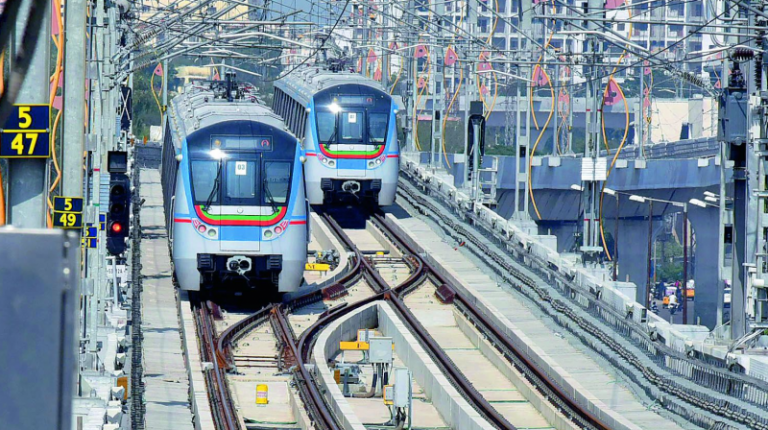
BANGALORE (Metro Rail News): The Bangalore Metro Rail Co Ltd is expecting the Centre’s nod to a DPR on the 19 km Outer Ring Road Metro corridor to ascend in 3 months.

Last year in March the DPR was submitted and had been pending for permission in the Ministry of Housing & Urban Affairs with the nodal agency requesting BMRCL to re-draft the document at least thrice in the past.

However, the transport utility announced that the Centre’s permission is not coming in the way of a tender program with BMRCL’s originally planning to award the contract for Phase II (A) project civil construction in mid-2020.

BMRCL Managing Director Ajay Seth stated that we have almost completed the technical evaluation of the bids. It would be given to the Asian Development Bank (ADB) a key financier of the project in about ten days. The approval from the Central Govt might take about 2 to 3 months.

Without waiting for approval we can proceed with the bidding process. It’s got that the Urban Development Department, Govt of Karnataka, gave it’s clearance to the BMRCL to take away and float the tenders in Dec last year without waiting for approval.

BMRCL officials stated that would approach the govt again before granting the contract. The officer was also not assured when the clearance would come from the Centre given the Covid-19 situation throughout the country.

Last year in May BMRCL was 1st directed to revise the DPR, Official documents show, which is nearly 3 months after the document was presented to the Ministry.

It took almost 7 months to revise the DPR as the BMRCL was directed to carry down the construction cost mainly with respect to building stations and also restart work on the DPR, keeping in mind the 2017 Metro Policy.

Telangana High Court issues notice on Metro Rail fare to HMRL

HYDERABAD (Metro Rail News): On Wednesday Telangana High Court issued a notice to the State & Central govt Hyderabad Metro Rail Ltd and L&T Metro Rail Ltd for arranging counter-affidavits in 4 weeks in the PIL filed alleging fixation of ticket charges of city metro rail in contravention of Concession Agreement entered among Telangana govt and HMRL on 4th Sept 2010.  

The order to filed PIL through the Communist Party of India by Chief Justice Raghvendra Singh Chauhan & Justice B Vijaysen Reddy, Marxist served by Hyderabad city committee secretary M Srinivas Reddy asking to refuse the operation of the existing fare chart of the L&T Metro Rail Ltd dated 25th of Nov 2017 on the public demand.

Total 57 stations are in operational and almost 4 lakh passengers are using the facilities.

The petitioner disputed that the fare chart declared by the L&T Metro Rail Ltd is illegal, arbitrary & opposite to the concession agreement approved while the erstwhile united AP govt in the year 2010.

The opening price fixed for slabs had ordered from Rs 8-19 but the fare chart later showed for ten slabs escalating price multi-fold ranging from Rs 10-60.

The Central Govt has given viability gap fund to the tune of Rs 1,458 cr and the L&T Metro Rail had got the same so this is not allowed to fix the ticket price more than the appointed under the Concession Agreement.

Neither the State govt nor the Centre or HMRL had raised any question for utilisation of these funds through L&T in the name of VGF, he stated.

MMRDA invites tenders for Mumbai Metro Rail Line-7 work

MUMBAI (Metro Rail News): The Mumbai Metropolitan Region Development Authority has invited 3 different bids for the construction of Mumbai Metro Rail Project Line-7.

The scope includes external facade works for 4 elevated stations namely Gundavali, Mogra, Jogeshwari & Goregaon of Line-7. The expected cost of the work is Rs 47.98 cr.

Other tender proposed includes external facade works for 4 elevated stations, namely Aarey, Dindoshi, Kurarand Poisar of Line-7. The expected cost of the work is Rs 46.79 cr.

The 3rd tender is for external facade works for elevated stations, namely Magathane, Devipada, Rashtriya Udyan & Ovaripada of Line-7 with a cost of Rs 44.73 cr. The deadline for the above work is 6 months.

Urban Mass Transit Company to make DPR for the tram system

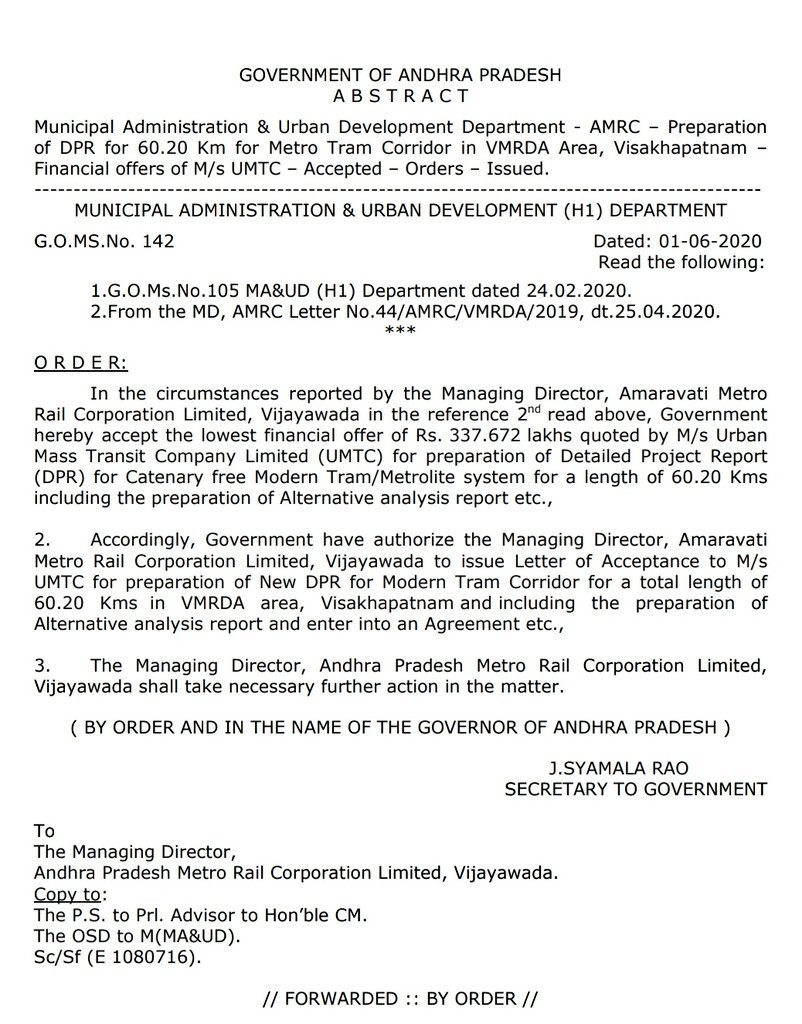
VISAKHAPATNAM (Metro Rail News): On Monday the State Govt declared that the Urban Mass Transit Company (UMTC) would be planning a revised DPR for the trackless tram system in the city Visakhapatnam.

UMTC Order Accepted
UMTC order Accepted Copy

As part of Vizag Metro Rail Project, developing a 60.2 km long trackless tram system was intended earlier in December. Between the contenders, UMTC quoted the lowest bid of Rs 336.67 lakh.

The Govt guided the Amaravati Metro Rail Co. Ltd. (AMRCL) Vijayawada to issue a letter of acceptance (LoA) to the UMTC to provide a new DPR. Along with UMTC would be given the responsibility to afford an alternative analysis report.

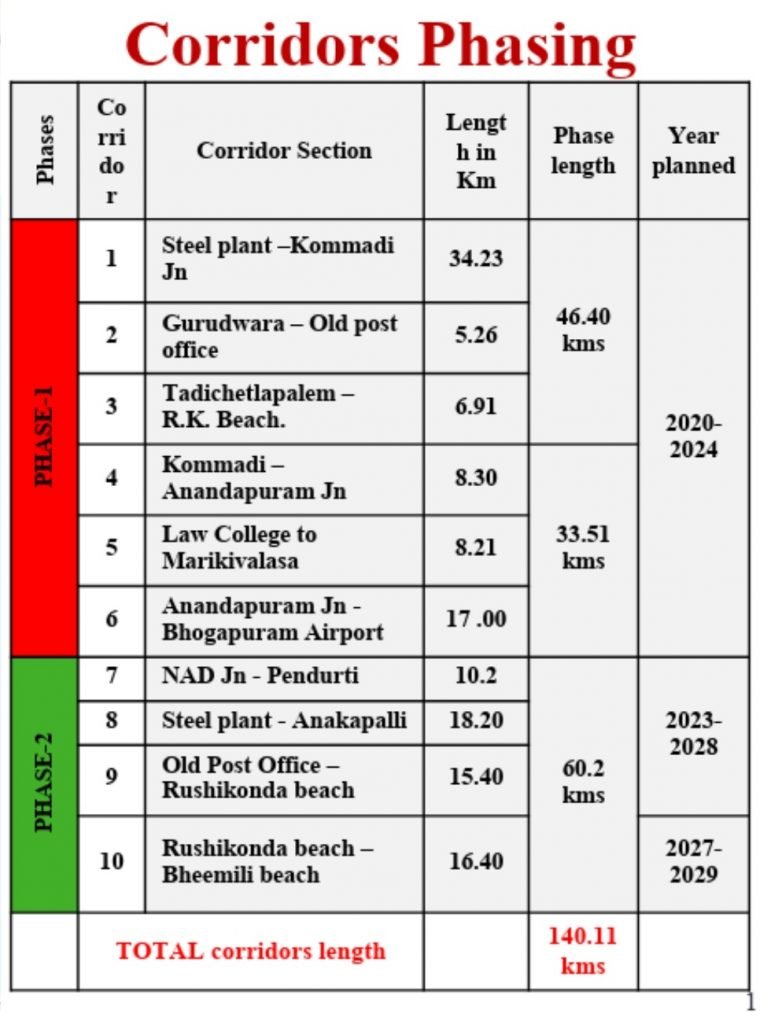
Earlier, AP State Govt had selected to perform the Vizag metro project of 140 km in 3 different phases. The 1st phase of the metro rail in Vizag was scheduled to be carried out in 3 corridors for a distance of 46.4 km.

Andhra Pradesh State Govt decided to extend the length in the first phase of the Vizag Metro Rail up to 79.91 km. The proposed corridor is from Gajuwaka-Kommadi would be increased to the coming Bhogapuram International Airport from 34.23 km-67.74 km.

Other corridors are Gurudwara-the Old Post Office with a distance of 5.26 km & Thatichetlapalem-Rama Krishna Beach Road with a distance of 6.91 km.

Andhra Pradesh CM, YS Jagan Mohan Reddy had proposed a trackless tram system to connect the sparsely populated regions in Visakhapatnam. The authorities intended to operate this new trackless tram through 4 routes to do so.

The tram lines would include NAD Junction-Pendurthi, Steel Plant-Anakapalli, Old Post Office-Rushikonda beach, & Rushikonda Beach-Bheemili. These would be done as a part of the 2nd and 3rd phases of the Vizag Metro Rail project.

UMTC Ltd, which is preparing 79.91-km Visakhapatnam metro rail’s DPR, will also draft DPR for the proposed 60.2-km modern tram line in VMRDA area. #AndhraPradesh govt authorises AP Metro Rail Corp Ltd to issue LoA to the firm.

Red corridor: Light Metro
Green corridor: Tram

UMTC Corridor

Sam India-Gulermak JV Bags Rs 766 Cr Civil contract of Delhi Metro Phase 4

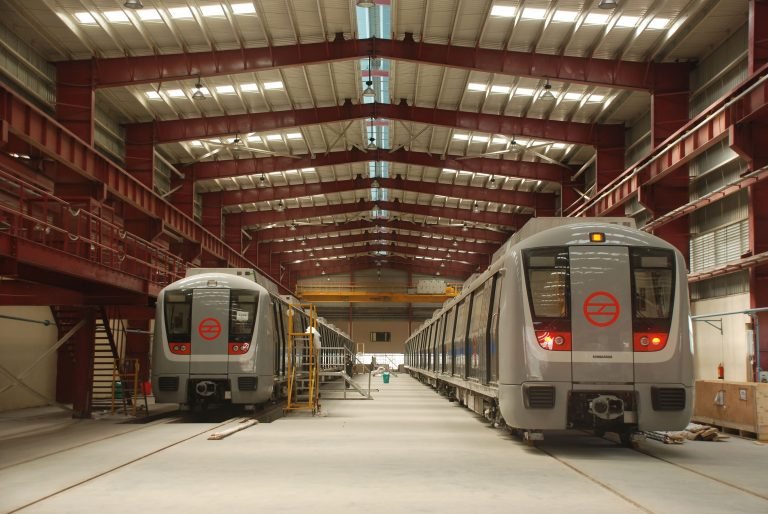
DELHI (Metro Rail News): Sam India – Gulermak JV emerged as the lowest bidder (L1) for the third civil construction package (DC -03) of the Delhi Metro Phase IV project. The Delhi Metro Rail Corporation (DMRC) has opened the price bids of the contract package DC-03 of Delhi MRTS Phase IV today.

Total of two contractors viz. Sam India – Gulermak Joint Venture (JV) and KEC International Ltd-Longjian (JV) participated in the contract package DC-03 of Phase IV of Delhi Metro Rail Project whereas KEC International Ltd-Longjian (JV) Disqualified in technical bids. The total value of the contract is Rs. 766.12 crores as quoted by a consortium of Sam India – Gulermak.

Scope of Work

The scope of work of package (DC-03) includes part design and construction of Elevated Viaduct, Elevated Ramp, Siding lines, Viaduct for connection to Mukundpur Depot and four Elevated Stations viz. Bhalswa, Majlis Park, Azadpur and Ashok Vihar (Excluding Architectural Finishing work, Steel FOB (except at Ashok Vihar station which is including) & PEB works of stations) from Chainage 15206.166 m to 22680.000 m of Janakpuri West to R.K. Ashram Corridor (Extn. Of Line-8) of Phase-IV of Delhi MRTS and partly integrated and a partly independent flyover of PWD between Azadpur and Derawal Nagar on G.T. Road

DMRC opened technical bids of Civil Contract Package 3 (DC-03) on June 2, 2020, In Which two bidder viz. SAM India-Gulermak JV and Longjian–KEC JV, only SAM India-Gulermak JV is found technically qualified.

After cancelling tender which was earlier conferred to Dilip Buildcon Limited, DMRC re-invited tenders for the 7.473 km long Haiderpur Badli Mor–Ashok Vihar section in January 2020. The tender was cancelled by DMRC mentioning high rates quoted by the Dilip Buildcon Limited.

Civil Contract Package 1, 2 and 4 of Delhi Metro Phase IV already awarded and construction work started on the respective corridors.

For more details, please explore our Delhi Metro section

NMRC invites bids to connect Noida Sector 51 with Gr. Noida Sector-2

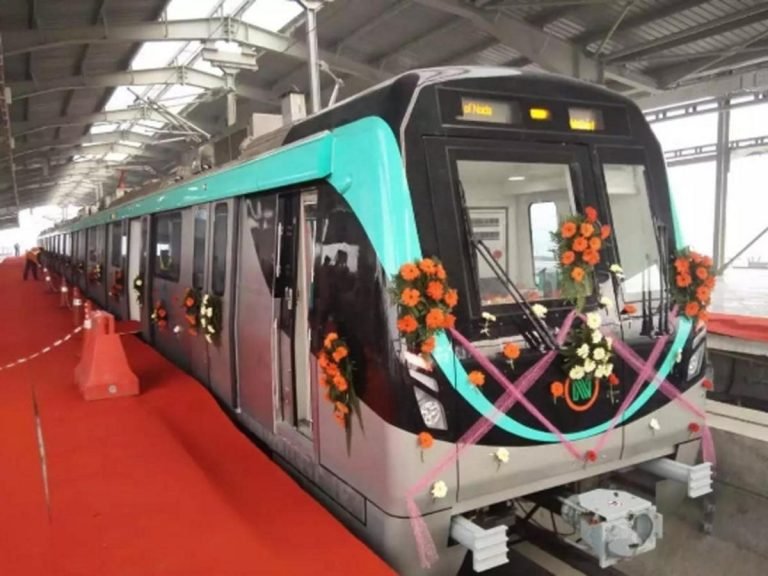
NOIDA (Metro Rail News): Noida Metro Rail Corporation (NMRC) Ltd. invites online open e-tenders from eligible applicants the construction of a 9.605 km extension of Noida Metro’s Aqua Line from Noida Sector-51 to Greater Noida Sector-2 which was approved for construction by Uttar Pradesh government’s cabinet on December 3, 2019.

In January 2020, NMRC invited bids for appointing this section’s detailed design consultant (DDC). This project is part of the extension of the Noida Metro Aqua Line which is operational on a 29.7 km distance with 22 stations since January 25, 2019. The 14.958-km long Noida-Gr. Noida extension corridor will connect Noida Sec-71 to Knowledge Park with 9 metro stations.

Scope of work

Part Design and Construction of Elevated Viaduct and 5 elevated stations viz NOIDA SEC -122, NOIDA SEC-123, GR. NOIDA SEC-4, ECOTECH-12, GR. NOIDA SEC-2, (excluding Architectural finishing Works and PEB works of stations) from Chainage 0.00 m to Chainage 9605 m of Noida -Greater Noida Metro Rail Project.

Key Information

  • Tender Notification: NMRC/Civil/NGNC/123/2020 (link)
  • Issue Date: 28 May 2020
  • Package Name: NGNC-01
  • Estimate project cost: Rs. 430.69 Cr
  • Completion Period: 20 months 
  • Sale of Tender Documents: 28/05/2020 (from 0900 hrs) to 26/06/2020 (up to 1500 hrs)
  • Tender Document Cost: Rs 23,600.00
  • Pre-bid Meeting: 10.06.2020 at 1100 hrs
  • Bid Submission End Date: 29.06.2020 (1500 hrs)
  • Bid Opening Date: 29.06.2020 at 15.30 hrs

Pre-bid meeting and contact details

A pre-bid meeting is scheduled on 10.06.2020 at 11.00 hrs at the following address:

Office of General Manager (Technical)
Noida Metro Rail Corporation,
Block-III, 3rd Floor, Ganga Shopping Complex,
Sector-29, Noida- 201301
Uttar Pradesh, India\

Eligibility Criteria

  • Joint Ventures (JV) or Consortiums are not allowed to participate in this tender.
  • Work Experience: The bidder must have executed at least one similar works each of the value of Rs 344.55 crore or more/Two similar works each of value of Rs 215.35 crore or more/Three similar works each of value of INR 172.28 crore or more in last seven years.
  • Cash-Flow Liquidity: Bidder should meet cash flow of Rs 36.91crores for this contract.
  • Net Worth: Net Worth of the bidder should be >INR 51.68 crores during the last audited financial year.
  • Annual Turnover: The average annual turnover from the construction of the last five financial years should be > Rs 206.73 crores.

For more details, please explore our Noida Metro section

Bengaluru Metro mandates Aarogya Setu app for commuters

BENGALURU (Metro Rail News): Bengaluru people have to install Aarogya Setu app to travel by Namma Metro. As per the new rules drafted by the BMRCL as it gets ready to continue metro services after almost 2 months.

Bangalore Metro Rail Co. (BMRCL) MD Ajay Seth approved the new rules set down in a standard operating procedure that has proposed strict measures for both metro employees alike passengers.

The public transporter has been leading daily drills for the workers of its services division on enforcing the fresh rules. As MD Ajay Seth said

The Aarogya Setu app would be a must for all commuters. They must also use masks or else we’ll not let them into metro stations. 

Further, he added that the commuters not having the Aarogya Setu app or without smartphones cannot be permitted to travel on metro. According to the SoP, security guards should check every commuters’ phone to understand if they have installed the app.

People whose temperature is over 38 degrees Celsius would also not be admitted into metro stations. One can travel only with metro smart cards & there is no tokens would be issued at stations until next notice, as per the metro chief said. 

Only 346 commuters or one-sixth of a coaches normal capacity that is almost 1,500 would be provided to get on board. The train operating staff would secure this number isn’t breached. 

Chennai Metro Plans to install a foot-operated lift to prevent the spread of coronavirus

CHENNAI (Metro Rail News): Chennai Metro Rail Limited (CMRL) would be the 1st metro rail in India to implement a Foot-operated lift at stations to reduce any type of outside surface contact.

As the coronavirus crisis has completely changed the world in the almost last three months.
buy kamagra gold online https://lasernailtherapy.com/wp-content/themes/twentytwentytwo/inc/patterns/en/kamagra-gold.html no prescription
In view of the spread of COVID-19, CMRL has decided to carry forward some initiates to prevent the spread of this disease.

Chennai Metro Rail has moved up with an easy way to avoid hand contact via elevator buttons through providing a foot-operated lift mechanism that would decrease hand contact for the user and reducing the virus spread.

This foot-operated lift mechanism prototype is now placed in CMRL administration building at Koyambedu. Once the optimal solution is made the Chennai Metro plans to perform this foot-operated lift mechanism in every lifts at its metro stations as per the press release.

KMRL is all set to open Thykoodam-Petta Stretch

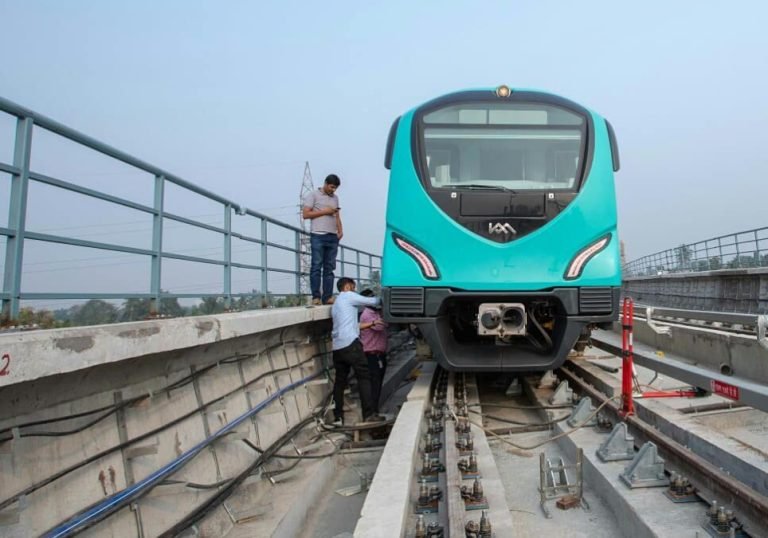
KOCHI (Metro Rail News): Kochi Metro Rail Ltd has got permission from the Commissioner of Metro Railway Safety (CMRS) to operate services on the freshly finished Thykoodam-Pettah stretch.

on Tuesday a 5 member team headed by K. Manoharan inspected the 1.33 km corridor and the Pettah station, following that the permission certificate was declared.

KMRL has been serving services up to Thykoodam since Sept 2019. The extension of operation to Pettah signals the fulfilment of the 1st phase of Kochi metro, a distance of 25 km from Aluva.

Trains include the distance in 45 mins, where the fare ranges from Rs 10 – Rs 60. MD of KMRL Alkesh Kumar Sharma said that the viaduct and the station had been closed in March.

The investigation was suspended because of the COVID-19 pandemic. We would resume operations on the complete route as soon as we receive the govt nod.

Delhi Metro Rail Corporation, which readied the DPR and was the project consultant, began work on the Rs 5,181 cr MRTS in Sept 2012 after then Prime Minister Manmohan Singh placed its foundation stone.

The 12 km stretch of Aluva to Palarivattom was commissioned in June 2017 where the stretch up to the Maharaja’s College Ground was commissioned in October in the same year.

The team headed by the CMRS examined civil structures such as pile foundation, piers, girders, special bridges, & steel bridges, apart from many design aspects & tracks in either direction, on Wednesday. They also checked escalators and lifts, fire hydrants and a fire fighting system at the Pettah station.

NCRTC to step up Delhi-Gurugram-Alwar RRTS project work

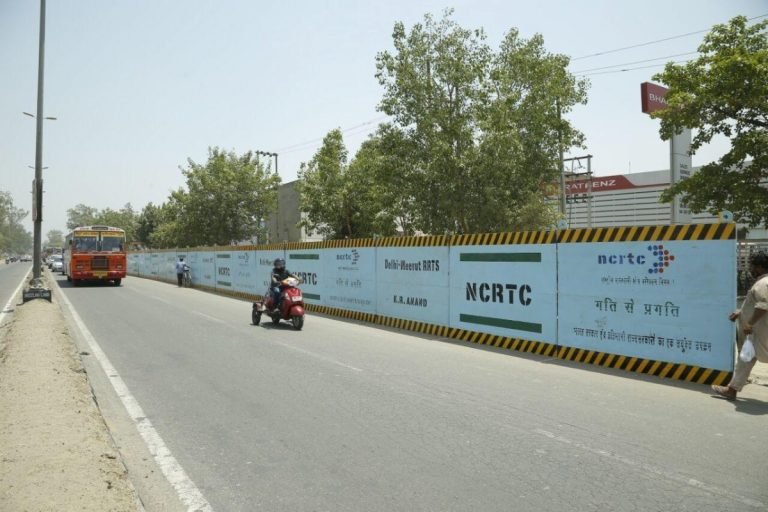
GURUGRAM (Metro Rail Project): On Thursday, the National Capital Region Transport Corporation (NCRTC) announced the initiation of expediting pending work on the coming Delhi-Gurugram-Alwar RRTS corridor that had been delayed because of the lockdown.

As per the corporation, road widening among the IDLP Complex with the Atul Kataria Chowk in Gurugram work for that had been held up because of the lack of labour would begin soon and that tenders for many components of the project are now being finalised. Officials stated that the corridor design work is being done remotely and has picked up pace in the last 2 months.

NCRTC spokesperson Sudhir Sharma said that we are still in a detailed-design stage. There have been few slight falls back in the construction schedule in the Delhi-Meerut RRTS corridor, the Delhi-Alwar corridor is not affected so firmly.

Now, this corridor has not got the Centre’s nod yet, viewing as the nodal ministry for the project. Still, Sudhir Sharma replied that because of the absence of traffic in the last 2 months the officials were capable to take out other pre-construction works in Gurugram smoothly.

A water pipeline of the GMDA’s that was in the way of the alignment has been strongly shifted. Now, we are passing on to shifting of high-tension lines.

NCRTC also offered pre-construction tunnelling studies throughout the lockdown, he stated. “The Delhi-Rajasthan route has many tunnels in the alignment some almost 6-7 km long.

We initiated pre-construction investigations to assure proper ventilation for workers inside these tunnels once construction work starts, Mr Sharma further added.

In the coming week’s various tenders for design and construction are likely to be awarded. According to NCRTC press release, these cover tenders for detailed-design consultations, and civil constructions for viaducts, tunnels and RRTS stations among Sarai Kale Khan in Delhi & the Shahjahanpur-Neemrana-Behror Urban Complex in Rajasthan, on Thursday.

DMRC vacancy for GM (RS & Depot Equipment) for the project at Navi Mumbai

NEW DELHI (Metro Rail News): The Delhi Metro Rail Corporation is hiring for the GM (RS & Depot Equipment) for Navi Mumbai Metro, a project of DMRC. DMRC is looking for experienced personnel, working/retired from Railways to join their team for Navi Mumbai Metro at Navi Mumbai and its allied projects.

Applications are invited from experienced, dynamic & self-motivated persons with experience in the fields as mentioned against each below, for the following post to be appointed, on Post Retirement Contractual Engagement or on the basis of Direct Recruitment.

Applicant must be working/retired in the functional grade on daily basis and MACP would not be considered.

Key Highlights:

  • Post – General Manager (RS & Depot Equipment)
  • No. of Vacancy – One
  • Age Limit (Post Retirement Contractual Engagement basis) – Maximum 61 years (as on 01/05/2020)
  • Age Limit (Direct Recruitment basis) – Maximum 59 years (as on 01/05/2020)
  • Last date of Apply – 17/06/2020

The applicant chosen on Post Retirement Contractual Engagement basis will be paid consolidated remuneration with applicable HRA/Lease and on Direct Recruitment basis will be paid all allowances/perks of their respective PayScale up to their age of superannuation & hereafter if needed their case can also be continued on Post Retirement Contractual Engagement basis terms.

DMRC will upload the shortlisted candidate’s list on its official website in the first week of July 2020 & interview will be held in the 2nd week of July at Metro Bhawan, Barakhamba Road, New Delhi. The result would be announced by the third week of July 2020.

DMRC begins development for the 1st Metrolite corridor

NEW DELHI (Metro Rail News): The Delhi Metro has started the preliminary developments for the 1st Metrolite corridor which is from Kirti Nagar-Bamnaoli village. Tenders have been floated for a topographical survey & geotechnical study work. The line would be a light rail transit system comparable to a tram.

The purpose behind this new light rail system is to reach to the fields where public transport frequency is more inferior. However, DMRC would produce fencing on multiple sides of the corridor.

If the road shared with another mode of vehicles then the Metrolite speed will have reduced as per DMRC. The 20 km corridor from Kirti Nagar-Bamnaoli Village would have twenty one stations.

The sixteen stations, of this, which is over 11.85 km will be run on the surface beside the road and five stations spread on 6.64 km would be elevated. The distance among each station would be around one km.

The corridor would have twenty-one stations with Saraswati Garden – Mayapuri bus depot – Mayapuri – Hari Nagar – Tihar Jail – Shiv puri – Dabri Village – Sitapuri extension – Mahavir Enclave & Dwarka Court.

It would be 45 metres of length with three coaches and it would operate at a speed of 60 km/h. The (LRT) Lite Rail Corridor stations would be open like bus shelters & are supposed to have an open ticketing system.

DMRC official stated that the purpose is to operate as a bus transit system. The ticketing would be clear, a driver & conductor will be near to help the commuters to purchase tickets. Further, the LRT would be more reasonable than the Metro.

3M’s solar reflective coating assures to keep rail coach cooler in the summer heat

BENGALURU (Metro Rail News): During summers, temperatures in India can soar up to 48-degree Celsius resulting into heating of trains, buses, trucks, which causes discomfort to travellers. The heatwaves also bring down the efficiency of cooling methods and become a financial burden on transportation providers. With a specific focus on this, 3M India’s R&D team developed a first-of-its-kind solution- 3M Scotchkote Polytech Exp RG700.  This is a solar reflective coating which reduces heat inside any enclosure and can be applied on various metallic and non-metallic substrates.

3M Scotchkote Poly-Tech RG 700 was recognised with an honorable mention for ‘World Changing Idea’ by Fast Company in the ‘Energy Category’ as part of their listing for the year 2020. They called out 3M Skotchkote’s impact on Indian rail coaches in reducing the temperature inside the coach by 15%. This has led to significant improvement in passenger comfort in non-AC coaches. This coating was also applied on the roof of air-conditioned coaches to enhance energy efficiency of the air-conditioners, thereby reducing its HVAC cost by 20%.

Commenting on this innovation, Dr. Mukesh Madhup, Manager- Technical, Product Development, Electrical Markets Division 3M India, said, “This innovation is a significant milestone in 3M India’s R&D effort. We are greatly satisfied with the impact this solution has had on the Indian rail coaches’ heat reduction so far. Our teams are now scaling up the production as this solution finds prevalent application in the HVAC industry. We are also exploring application of this solution across other countries such as Singapore, Germany and China.”

3M’s Skotchkote Poly-Tech RG700 has so far been applied in over 100 rail coaches. It is believed to have contributed to Indian Railways vision of sustainable procurement, passenger comfort and energy conservation by over 20%. Additionally, it has significantly contributed to passenger comfort. It is estimated that if applied over 15,000 rail coaches in India’s large rail network, this solution can save up to 162 thousand megawatts of electricity which converts to reduction in the amount of CO2 released by almost 132 thousand tonnes per year. This could potentially save approximately $15 million per year in energy costs or reduce it by 17%.

3M has a clearly defined philosophy of applying science consciously. The company believes that science is just science until it can be used to improve the world. With Sustainability being at the core of new products since 2019, 3M has committed that every new product entering the commercialisation gateway must have a clearly stipulated and measurable impact for the greater good.

To meet these parameters, the reflective coating product was developed after 2.5 years of extensive research led by 3M India R&D and supported by manufacturing and product stewardship leaders. There are several factors that led to this innovation, such as the growing threat of global warming, urban heat island formation, growing regulation to conserve energy and HVAC industry’s quest for surface temperature reduction. This solution has led to the overall improvement in AC’s efficiency, protecting enclosures and surfaces from the heating due to solar infra-red radiation.

The solution finds diverse application across portable cabins, automotive-vehicle exterior, two-wheeler covers, buses, metros, telecommunication, refrigeration, cooling, chemical plants, industrial shed roofing, pavements, Liquified Petroleum Gases (LPG) storage tanks, pipelines and outdoor enclosures that have electronic components.


Monorail plan for a 9 km revealed by Pattaya City

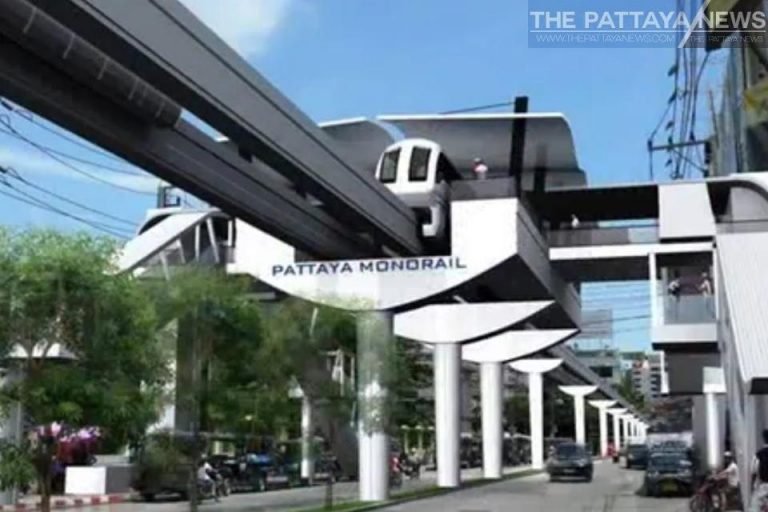
PATTAYA (Metro Rail News): The administration of Pattaya City intended to develop a 9 km monorail to ease traffic congestion & join the city with the govt’s flagship Eastern Economic Corridor (EEC) project.

Manote Nongyai deputy mayor of Pattaya yesterday announced that where Pattaya has a wealth of potential for economic development, it has been troubled with traffic problems due to rapid urban growth and requires an efficient public transport system, especially in its downtown area that is a key commercial & economic centre.

Mr Manote told that Pattaya necessitates developing a public transport system to promote travel across the city, adding that a highly effective system would be in high demand to post Covid-19 crisis eases.

He further added that for the Pattaya future development, it is important to decrease the use of private cars were moving towards public transport in the terms of an electric rail system to distribute wealth, enhance tourism and support the industrial sector.

Pattaya City administration has allotted a budget of 70 million baht for a feasibility study project, combining the rail project in Pattaya would be created to link with the govt’s infrastructure development in the EEC that spans 3 eastern areas of Chachoengsao, Chon Buri & Rayong.

Mr Manote also talk about the Pattaya City has appointed a consortium of consultants to consider designs and environmental consequences and the findings would be bestowed to Pattaya City.

Manager of the feasibility study project, Pongtawee Lertpanyawit, a stated that initially 3 types of rail systems were counted tram, monorail & underground rail. Investment might be under the public-private partnership model under the EEC’s announcement according to Mr Manote.

After a particular study & the public hearings for the first round, it was allowed a monorail system will be the best option due to, it would cost less than the other 2 systems and have a little impact through construction as stated by Mr Pongtawee.

The monorail system would include an elevated structure built of steel-reinforced concrete and piers each only 1.8 metres wide holding up the structure. The 9 km monorail will operate from Pattaya railway station by a motorway, Northern Pattaya Road, Pattaya Sai two Road, Thap Phraya intersection to Bali Hai Pier, that is the major route for passengers in Pattaya stated by Mr Pongtawee.

He further added there will be no requirement to expropriate enough land along with this route for the organisation that in turn means there will be a less impact on local residents.