DMRC services remain shutdown till 24th May 2021

DELHI (Metro Rail News): On Sunday, Delhi chief minister Shri Arvind Kejriwal extended the lockdown by one more week. Announcing the decision, Kejriwal said that Delhi has been recovering at a good speed, and the number of cases is on a steady decline. “But I do not want to lose the gains that we have achieved in the last few days. That is why we are extending the lockdown till 5 AM following Monday instead of ending it by Monday, May 17, 2021, the chief minister said.

Delhi has been under lockdown since April 19. All the restrictions will remain, including Delhi Metro operation, which will remain suspended until next Monday, i.e, 24th May 2021.

On Saturday, Delhi recorded 6430 cases with an 11 per cent positivity rate. The recovery was 11591, but the daily death number was still very high at

337. Till yesterday, the national capital had over 66000 active cases. So far, the national capital has recorded 21,244 deaths with a cumulative fatality rate of 1.53 per cent.

In Delhi, the cases started rising from the last week of March. By 5th April 2021, the daily infection breached the 5000-mark, and in the next two weeks, the daily tally was over 20000.
This prompted the government to press immediate restrictions to break the rapid transmission in the national capital.

The chief minister first announced a weekend curfew, but later it went for a week-long lockdown. On 19th April 2021, Shri Arvind Kejriwal said that the lockdown would be effective till April However, the restrictions were further extended as the case positivity rate was still very high. Delhi is among the ten worst-hit states in India. Maharashtra tops the list followed by Karnataka, Kerala, Uttar Pradesh, Tamil Nadu, Andhra Pradesh, Delhi, West Bengal, Chhattisgarh and Rajasthan.

6000 Railway Stations in India now has Wi-Fi facility

NEW DELHI (Metro Rail News): Indian Railways on 15th May commissioned Wi-Fi facility at Hazaribagh Town falling under Hazaribagh district of Jharkhand state in Dhanbad Division of East Central Railway.

With this development, a total of 6000 Railway Stations in India now has facility of Wi-Fi, as per Ministry of Railways. Indian Railway is continuing to extend the Wi-Fi facility at far flanged stations to connect the passengers and the general public with digital systems.

Indian Railways have started its journey by providing Wi-Fi facility at 1st Railway station in Mumbai in January 2016. Thereafter, provided 5000th Railway station, at Midanpore in West Bengal and reached the 6000th Railway station i.e. Hazaribagh on 15th May 2021. Also, on the same day, Jarapada station in the Angul District of state of Odisha was also provided with Wi-Fi.

According to Ministry of Railways, the Wi-Fi facility at Railway Stations meets the objectives of the aspiring Digital India Program of Government of India. This will bridge the digital divide between the rural and urban citizens thereby increasing the digital footprint in the rural villages and also enhance the user experience. Wi-Fi facility is being provided by Indian railways at 6000 stations now.

Provision of Wi-Fi facilities at Railway stations on self-sustainable basis with no cost to the Railways. This facility was provided with the help of RailTel, a PSU under Ministry of Railways. This task was carried out in partnership with Google, DOT (under USOF), PGCIL and Tata Trust.

Evolution of Mumbai Commuter Rail System

The Mumbai Suburban Railway is an offshoot of the first passenger railway built by the British East India Company and is also the oldest railway system in Asia. The first train was run by the Great Indian Peninsula Railway (now Central Railway) between Bori Bunder (now Chhatrapati Shivaji Maharaj Terminus) and Thane, a distance of 34 km. The 14-coach train took 1.25 h to complete the 34 km journey, with a halt at Sion to refill the train’s water tanks.

I was born with the desire to develop Mumbai’s transportation options. I am 168 years old and was born and raised in Bombay. I’m riding the Mumbai Suburban local line. The first passenger train ran between Bori Bunder (Bombay) and Thane, a distance of 34 kilometres, on April 16, 1853. I had thirteen carriages and was pulled by three locomotives called Sahib, Sultan, and Sindh. In the last 20 to 30 years, the population of Mumbai has exploded. As a consequence, there is a lane conjunction.

In 1964, city trams were also phased out, and the local train became the primary mode of transportation. I’ve earned the reputation of being the world’s busiest train. This station’s web of coloured network lines may seem perplexing to you, but I’ve been following this trend for over a decade. I’m sure you’re curious why I’m reintroducing myself and what my agenda is after all these years. The answer is simple: 9 people are killed every day on the Mumbai suburban network as they fall off trains during rush hour.

The passenger has 15 to 35 seconds to board or disembark when the train is stopped. There are doors, but they are never locked. It’s scary to watch, but I think they realize how valuable fresh air is. I’m here to tell you about the Mumbai train journey so far, and how our rail transportation has changed dramatically after I made some new friends, such as metro and monorail, which I’m sure some of my passengers are unaware of.

After the shutdown of trams, there was no rapid transit system left in the city. I was a local train was there but not meant for a rapid transport system. There was an urgent need for a fast mode of transport.

So in 1975 (Mumbai Metropolitan Region Development Authority) MMRDA established for a reason to make plans and policies, Implement the project so that Mumbai housing, transport, and the environment get improve.

Evolution of Mumbai Metro Rail

Metro and BRT (Bus Rapid Transit) and Monorail were planned to add to the Mumbai transport system. The construction has started in 2008 for Metro and 2009 for Monorail. Monorail started in Feb 2014 from Chembur to Wadala and also connected to us in harbour line. It was a total of 8.9km in length connecting 7 stations which cost nearly 1,100 crores.

The same year in June 2014 Metro line 1 also started which is 11.4km in length connecting 12 stations from Versova to Ghatkopar which cost 4,300 crores and operated by MMOPL (Mumbai Metro One Private Limited) which is a joint venture of MMRDA (26%), Reliance Infrastructure (69%), and RATP Transdev, France(5%) Mumbai Metro is the first rapid transit system serving the Mumbai Metropolitan region in Maharashtra.Its purpose is to improve connectivity in the Mumbai Metro region.

Presently it is India’s 12th longest and Maharashtra’s 2nd longest metro network after Nagpur metro. Right now 180 km length is under construction which shall complete by 2022.

In March 2019 Monorail extended from Wadala to Jacob circle which is 11.2 km in length. It cost 1900 crores to build by MMRDA. This is the present operational Network of Metro and Monorail. But Metro Line 2,3,4,5,7,&9 is under construction and line 8,10,11,12,13 & 14 is planned in which some lines are already approved. Apart from this Navi Mumbai metro is being planned. Every line in Mumbai metro is color-coded represented in numbers and color.

Metro line 1 is BLUE. Line 2 is yellow which is under construction. It is separated in the 2nd phase which is 2A and 2B. 2A is
18.6 km long from Dahisar to D.N Nagar including 17 stations. Construction started in 2016 and the estimated date to open is May 2021. It cost lumpsum 6400 crores. 2B will be 23.6km in length from D.N Nagar to Mandala. Construction started in 2018 and the estimated date to open is 2022.it will cost approx. 11000crores.

Mumbai Metro Line 3 (Aqua) – Underground metro network Length- 33.5km
27 Station- Cuffe Parade to Aarey colony. Link- Monorail and Metrorail.
Estimated cost- 26,000 crore Deadline-2022

Mumbai Metro Line 4 (Green)
Elevated line separated in two-phase 4&4A. Length- 35km
34 Station – Wadala to Gaimukh
Estimated cost 16,000 crores Deadline-2022

Mumbai Metro Line 5 (Orange) Length- 24.9km
17 stations – Kapurbawdi to Bhiwandi and end at Kalyan (APMC) Estimated cost -8,400 crore
Deadline 2022

Mumbai Metro Line 6 (Pink) Length- 14.5km
13 stations – Lokhandwala (SS Nagar) to Virkhroli Estimated cost – 6,700 crore
Deadline 2022

Mumbai Metro Line 7 (Red)
Separated in two phases 7 & 7A Length- 16.5km
14 stations – Dahisar (East) to Mumbai International Airport. Estimated cost – 7,000 crore
Deadline -2022

Mumbai Metro Line 8 (Gold)

This is a proposed metro line between the Chhatrapati Shivaji Maharaj International Airport and the proposed Navi Mumbai International Airport.[74] It will connect Mumbai airport to upcoming Navi Mumbai airport • and its length would be approx 32 km.

Expected Cost: ₹15,000 crore approx.

Expected time of completion: October 2026

Expected Daily Ridership: 3 Lakh

Mumbai Metro Line 9 (Red)
Is the extension of line 7 & Length- 10.3km. There will be 8 stations – Dahisar to SCB Stadium ends at Indralok. Estimated cost – 6,500 crore
Deadline 2024

Navi Mumbai Metro
Come under- CIDCO (City & Industrial Development Corporation) Length-11.1 km
11 stations – CBD Belapur to Pendhar Estimated cost – 2000 crore
Deadline 2021

This was the Mumbai Metro Network (operational and under construction), which would have a total length of 193 kilometre’s until completed. After Delhi metro, it will become India’s second-largest metro network. And the overall cost will be 90,000 crores, making it one of India’s largest construction projects. My friend metro and monorail, some of which are now operating and others which are in the works, have come to take away my dark tag as the world’s busiest and packed local train, and I’m hoping that this will fix the traffic issue as well as the overcrowding local train problem.

Toh Ye Mai Tha (Suburban Local train), Aur Ye Hamare Friend the (Metro and Mono Rail), Aur yaha Hamari aur transportation system ki rescues ho Rahi h.


Mexico City confirms to construct Chalco-Santa Marta Suburban Train

MEXICO (Metro Rail News): Mexico City’s mayor Claudia Sheinbaum has confirmed the construction of the 17.2 bn-peso (US1mn) Chalco-Santa Marta suburban train, which starts from the extension of metro line A.

Works will start in 2022 and extend line A from Santa Marta station almost 16 km to Chalco municipality in Mexico.

“A very important investment will be made in line A as part of this administration, which the president will announce,” she said at a press conference.

“The Chalco-Mexico City link will also include the levelling of roads and additional support for improving the subway line. It is an investment that will probably start this year as an executive project and will probably be developed next year,” Sheinbaum said.

The confirmation follows the metro accident in Tláhuac district on May 3, which left 26 dead and many injured and sparked public complaints about metro failures and damage.

President Andrés Manuel López Obrador promised in November to finish the Chalco-Santa Marta rail link before the end of his term in 2024. But the recent accident at line No. 12 created uncertainty for the government’s portfolio of more than ten railway projects.

Line A also serves the densely populated and low-income areas of Mexico City’s southeast.

Project status

Mazatlán-based firm Senermex Ingeniería y Sistemas won in December the contract to carry out the advanced studies for the project, which should be completed during the first half of 2022 the tender specifications.

The plan involves five new stations – Los Reyes, Eje 10, José Guadalupe Posada, Emiliano Zapata and 12 de Octubre – and two terminals in Santa Marta and Chalco.

Communications and transportation ministry SCT is also carrying out pre-investment studies for a new trolleybus system in Chalco to complement the suburban train once it is completed.

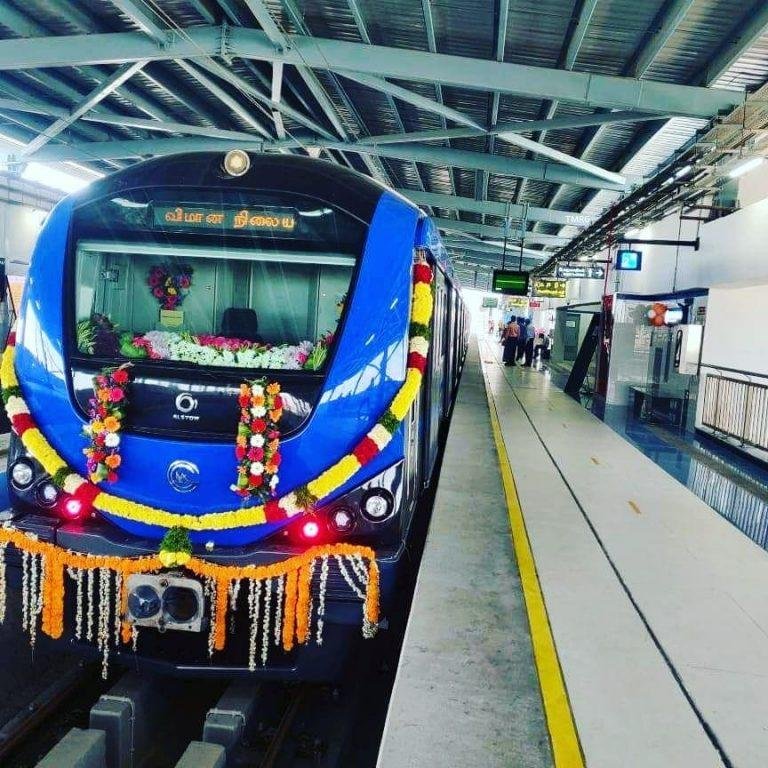
HCC-KEC JV wins Rs. 1147 cr contract for Corridor 4 of Chennai Metro Phase 2

CHENNAI (Metro Rail News): Hindustan Construction Company (HCC), in a joint venture with KEC International (KEC), has been awarded Rs.1,147 crore contract by Chennai Metro Rail to construct a 7.95 km elevated viaduct section and nine elevated stations on Corridor 4 of phase II of the  Chennai Metro. HCC share in the Joint Venture is 51% (i.e. Rs 585 crore).

The scope of work involves civil works, architectural works, plumbing & drainage and temporary services as per the client’s drawings.

The nine elevated stations include Chennai Bypass Crossing, Rarriacharidra Hospital, lyyaparithangal Bus Depot, Katupakkam, Kumanan Chavadi, Karayan Chavadi, Mullai Thottam, Poonamallee Bus Terminus, Poonamallee Bypass. The work is to be completed in 36 months that means approximately 1.5 years.

Currently, HCC is executing a section of Mumbai Metro Line III, involving 3,115 m long twin bored tunnels including 4 underground stations; a section of Delhi metro involving, 4051 m underground twin tunnels and an underground station; two contracts for Pune Metro involving 17 elevated stations and a section of Bangalore Metro Rail Project involving 6,340 m long elevated corridor including a road-cum- rail flyover and 5 metro stations.

In the past, HCC has been associated with 6 packages of Delhi Metro totalling 18.14 krn of tunnels and 13 underground stations. In Kolkata Metro, HCC has constructed 6.47 km tunnels in 6 packages that include 4 underground stations. In Mumbai Metro I, the company has built 8 elevated stations.

L&T bags contract to build 3rd & 4th corridor of Chennai Metro Phase 2 project

CHENNAI (Metro Rail News): Tenders are being finalized for the third and fourth corridor of the Chennai Metro Rail Phase 2 Project. Larsen and Toubro plan to complete the 12 km underground stretch from Kellys Station to Taramani Road junction in approximately 52 months. Both the tenders are worth between Rs 2,500 to Rs 5,000 crore, said Chennai Metro Officials.

According to an L&T release, the tender to construct 12 km twin bored tunnels from Kellys to Taramani Road Junction also involves the construction of diaphragm walls of station box and entry and exit structures of Chetpet Metro, Royapettah Govt Hospital, Thiruvanmiyur Metro Stations and part diaphragm wall of Green-ways Road Metro Station, including launching and retrieval shafts in these stations.

This underground Metro Rail tunnel package is a part of Corridor-III of CMRL Phase-II Metro Rail Project.

Similarly, L&T has bagged the order to construct approximately 8 km of the elevated viaduct with nine elevated Metro Stations starting from  Power House to Porur Junction. The elevated corridor includes 4 km of double-deck construction. This elevated Metro Rail package is a part of Corridor 4 of CMRL Phase-II Metro Rail Project.

Interestingly, this comes in the wake of Chennai  Metro  Rail awarding  Rs 1,147 crore contract for the construction of 7.95 km elevated viaduct section and nine elevated stations on Corridor 4 of phase II of the  Chennai Metro to a joint venture between Hindustan Construction Company Ltd. (HCC) and KEC International Limited (KEC).

The cost of the phase-2 project was reduced from Rs 89,000 crore to Rs 61,843 crore after CMRL made many cost-cutting measures. Union Home Minister Shri Amit Shah launched construction of the 118.9-km phase-2 in November 2020.

During the launch, former Chief Minister Shri Edappadi K Palaniswami requested Shah to intervene for early approval and the Centre’s participation in the project with a 50:50 equity sharing model.

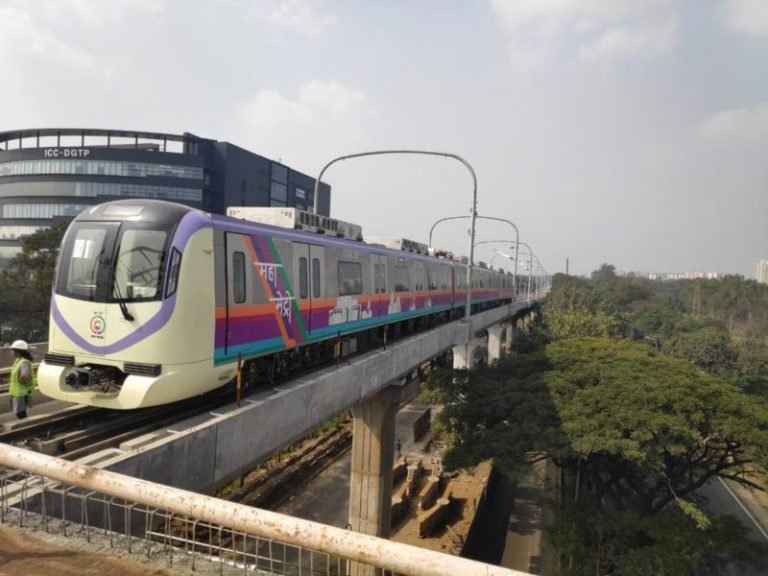
Maha Metro completes 50% Bridge work along the Deccan Gymkhana – Balgandharva Rangmandir

PUNE (Metro Rail News): On Thursday, Maha Metro announces that around 50% of the work on the Metro bridge, coming up on the Mutha riverbed along the Deccan Gymkhana-Balgandharva Rangmandir-Pune Municipal Corporation stretch, has been completed said Maha Metro Officials.

This portion is part of the fully elevated second line of the Pune Metro rail project, connecting Vanaz on Paud Road to Ramwadi. Maha Metro said it aims to complete the other half of the work finish before the onset of the monsoon.

According to official conversation they said that they have hastened work near the rivers, as these sites would be among the first to get affected when monsoon arrives. Two launching girders have been installed near Deccan Gymkhana to fix the viaduct segments, while the entire viaduct stretch that crosses the Mula-Mutha — connecting Bund Garden and Yerawada — was completed recently.

“We have pressed additional manpower and machinery to achieve this objective,” Hemant Sonawane, MahaMetro’s general manager (public relations) told that MahaMetro  had initially planned to complete the riverside work in the Deccan Gymkhana area by June.

An official said it was now difficult to meet that deadline, and that they were giving it a shot. “Ideally, it will be good if the launching of segments is finished before the monsoon,” said Maha Metro Officials.

MahaMetro has also initiated the construction of two stations — Deccan Gymkhana and Sambhaji Garden — on the stretch. The work on the stations is expected to continue after the monsoon, Said Maha Metro Officials.

Cabinet nod to lease out 4.75 hectares for project. The state cabinet on Wednesday approved a proposal to lease out 4.75 hectares of government land in Balewadi to the concessionaire for comercial use for a 35-year period.

The PMRDA (Pune Metropolitan Region Development Authority) — developing the third line of the Metro from Hinjewadi to Shivajinagar has 95% of the land and could start work in a month.

Larsen & Toubro, Tata Projects & HCC-KEC JV bags Civil contract of Chennai Metro Phase-2

CHENNAI (Metro Rail News): On Monday, Chennai Metro Rail Limited (CMRL) issued work orders to Larsen & Toubro, Tata Projects and HCC-KEC JV for civil construction on 4 major underground and elevated packages of the 118.9KM Chennai Metro Phase 2 project. 

This exciting development comes just days after the completion of Tamil Nadu’s state election process. Two contracts are for tunnelling work of the 45.813 km Line-3 (Madhavaram – SIPCOT), while two contracts are for the elevated viaduct & station work of the 26.09 km Line-4 (Light House – Poonamallee Bus Depot). Final contract values for all four are unknown at this time. 

Line-3 Underground Package TU-01 (9 km) 

Awarded to: Tata Projects Ltd. (TPL) 

CMRL’s Estimate: Approx. RS. 1800 crore 

Tata Project’s Bid: RS. 1999.00 crore (3 bids opened January 2021) 

Note – Larsen & Toubro emerged as the lowest bidder, but tender rules stipulated that one contractor can win only one tunnelling package on Line-3. 

Scope of TU01: Construction of approximately 9 km twin bored tunnels (total = 18 km) fromtheTBMRetrieval Shaft near Venugopal Nagar (of Line-5) to Kellys Station, and the construction of diaphragm walls, entry/exit structures of Madhavaram Milk Colony Station, Murari Hospital Station, AyanavaramStation and Purasaiwakkam High Road Station, including launching and retrieval shafts at the above stations. 

Line-3 Underground Package TU-02 (12 km) 

Awarded to: Larsen & Toubro (L&T) 

CMRL’s Estimate: Approx Rs. 2550 crore 

L&T’s Bid: Rs. 2385.00 crore (3 bids opened in January) 

Scope of TU02: Construction of approximately 12 km twin bored tunnels (total = 24 km) from Kellys Station to Taramani Road Junction and the construction of diaphragm walls, entry/exit structures of Chetpet station, Royapettah Government Hospital Station, Thiruvanmiyu Station, and part diaphragmwall of Greenways Road Station, including launching and retrieval shafts at the above stations. 

CMRL requires Tata to deploy 7 Tunnel Boring Machines (TBMs) on TU-01 and L&T to deploy 8 TBMs. Here’s the Chennai metro rail corporation limited official map for Phase 2 with the edits that emphasizing the start/endpoints of each package. 

Line-4’s Elevated Package C4-ECV-02 (7.945 km) 

Awarded to: HCC – KEC JV (Hindustan Construction Company Ltd. – KEC International Consortium)

CMRL’s Estimate: unknown

HCC – KEC’s Bid: Rs. 1147 crore (3 bids opened in January 2021) 

Note – Larsen & Toubro emerged as the lowest bidder, but tender rules stipulated that one contractor can win only one elevated package on Line-4. 

Scope: Construction of Elevated Metro Stations at Construction of Elevated Metro Stations at Chennai bypass crossing, Ramachandra Hospital, Iyyapanthangal Bus Depot, Katupakkam, Kumanan Chavadi, Karayan Chavadi, Mullai Thottam, Poonamallee Bus Terminus, Poonamallee Bypass & associatedviaductfrom chainage 17982.240 to chainage 25928.186 and approach to depot at Poonamallee &all associatedworks. Route of Line-4 between Porur and Poonamallee Bypass with the indicative location of stationsen-route.

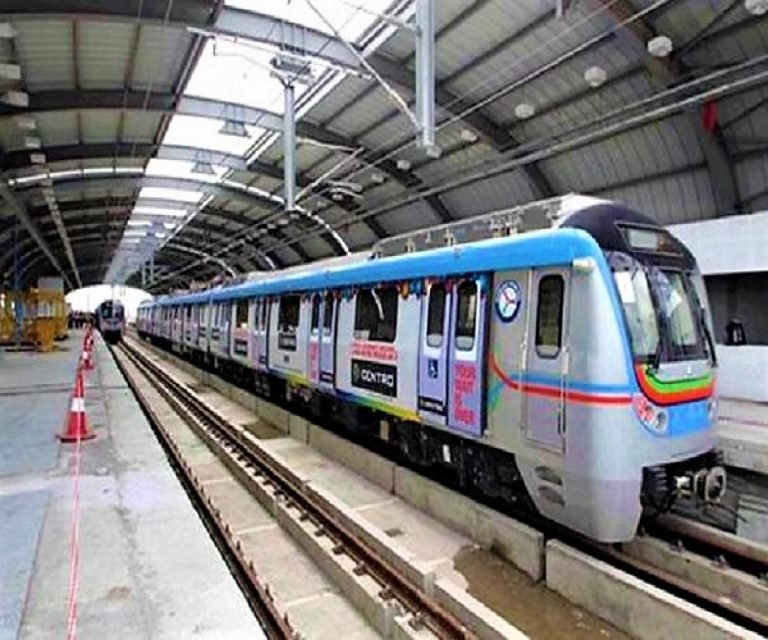
Hyderabad Metro rescheduled its services from Wednesday

On Tuesday, Hyderabad Metro Rail has rescheduled its services from Wednesday that means from 12th May 2021 onwards to follow the lockdown orders. The first train from respective terminal stations will start at 07:00 AM and the last train will start at 08:45 AM and end at the respective terminating stations by 09:45 AM. Passengers are advised to strictly follow all COVID-19 guidelines, including social distancing, wearing of face masks, regular hand sanitization and thermal screening, seating gaps, and other important precautions among others. People are also requested to cooperate with security personnel and staff in their efforts towards keeping their journey safe, said L&T Metro Rail Hyderabad CEO & MD KVB Reddy.

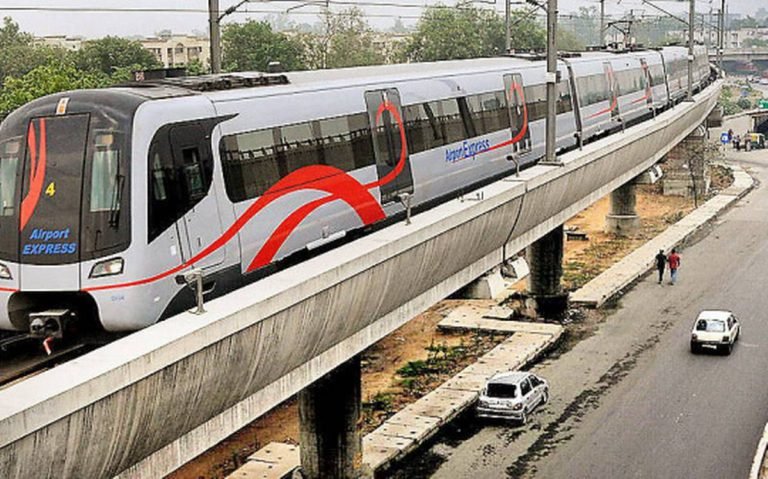
DMRC to upgrade Baggage and Container Handling System of Airport Metro

NEW DELHI (Metro Rail News): Delhi Metro Rail Corporation Ltd. (DMRC) invites open e-tender from eligible applicants for the work of upgradation of Baggage and Container Handling System at Airport Metro Express Line.

The work includes Supply, Installation, Testing and Commissioning of Software and related Hardware to Upgrade the Baggage Handling System. Updating Reporting Application with new servers and upgrading Database Servers to new IT peripherals. Up gradation of Network systems to latest compatible communication topologies. Up gradation of suitable hardware considering obsolescence of Drives, SCADA, ATR, HMI’s, VFD’s along with compatible Microsoft Licenses. Up gradation/Programming of PLC Logic for Modification of Loading/ Unloading Container at Shivaji Stadium.

Comprehensive Annual Maintenance Contract of Baggage and Container Handling System including BHS Tunnel equipments at BHS stations (NDRU, SJSU, APOT including BHS SCADA cum Servers and BHS in 8 nos. Metro train of Airport Express Line) of DMRC Airport Express Line for 09 months.

Comprehensive Annual Maintenance Contract of Baggage and Container Handling System including BHS Tunnel equipments (excluding all upgraded equipments under DLP for two years) at BHS stations (NDRU, SJSU, APOT including BHS SCADA cum Servers and BHS in 8 nos. Metro train of Airport Express Line) of DMRC Airport Express Line for two years.

Important Details

Contract No. – APL/BHS-01

Approximate cost of work – INR 14.54 Crore

Period of Completion – 33 Months

Pre Bid Meeting Date – 24.05.2021 at 11:00 Hrs

Tender documents on sale – From 10.05.2021 at 09:00 Hrs to 09.06.2021 up to 15:00 Hrs

Tender submission start date – 02.06.2021 at 09:00 Hrs

Tender submission end date – 09.06.2021 till 15:00 Hrs

Bid Opening Date – 10.06.2021 at 15:00 Hrs

Further Details

The tender documents describing the Scope of Work and Terms and Conditions for the Contract are available on the website – https://eprocure.gov.in/eprocure/app.

Karnataka Govt sets 2025 deadline for Bengaluru Airport Metro project

Bangalore (Metro Rail News): In a statement, BMRCL said they have completed a major part of land acquisition and utility relocation and are ready to commence work. If all goes well, people in Bengaluru can reach the Kempegowda International Airport via metro rail from June 2025. The airport line includes two phases — Central Silk Board to KR Puram (Phase 2A) and KR Puram to Kempegowda International Airport (Phase 2B).

This deadline of June 2025 has been given as Chief Minister Shri BS Yeddyurappa-led Metropolitan Planning Committee set a timeline for the Phase 2A and 2B of the metro project on May 10. These developments come after the Union Cabinet led by Prime Minister Shri Narendra Modi, on April 20, finally approved the long pending project. However, existing ongoing metro work has been suffering years of delay, which has been aggravated by the first COVID-19 lockdown.

As earlier reported, the total length of the project is 58.19 km. TNM had also reported how the line was first proposed in 2017 and in January 2021, the project plan of the two phases was  sent to the Public Investment Board (PIB) for clearance by the Ministry of Urban Affairs. In December 2020, the Asian Development Bank (ADB) had approved a $500 million loan to BMRCL for this project even before the approval.

Bangladesh conducts first trial run for Dhaka Metro

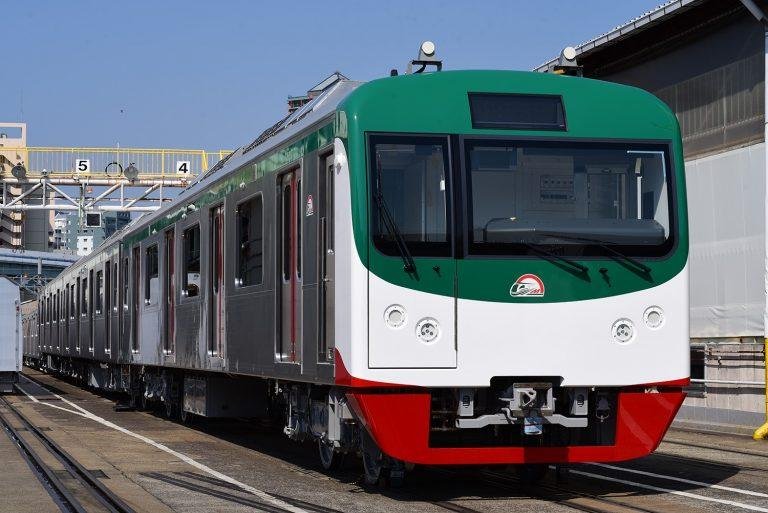
DHAKA (Metro Rail News): On Tuesday, the test run of the first electrical metro train in Bangladesh was conducted in Dhaka. Road Transport and Bridges Minister Shri Obaidul Quader inaugurated the metro rail test run virtually. Six coaches of the metro train imported from Japan left the workshop inside the metro rail workshop in Diabari in Dhaka to travel about 500 meters at slow speed.

Speaking on the occasion, Minister Obaidul Quader said that metro rail is no more a dream. It is a reality now. Japanese Ambassador to Bangladesh Naoki Ito was also present on the occasion at the test site. He said in a tweet that the first metro and electrified train in Bangladesh will be a symbol of the changing face of Dhaka.

After the ‘receiving inspection’, the trains will go through a functional test followed by a performance test in August. However, the start of the metro services in Dhaka may take another six months to a year to complete all the required tests and trial runs.

Bangladesh is building a 21 km long Mass Rapid Transit system from the capital’s Uttara to Motijheel at a cost of Taka (Bangladeshi Currency) 22,000 crores. The metro line MRTS 6 will have 16 stations. It will substantially reduce the travel time between the two destinations.

KMRC to complete Tunnelling Work of Kolkata East-West Metro

KOLKATA (Metro Rail News): Tunnel borer Urvi is likely to achieve its breakthrough by Thursday of this week, hitting the diaphragm wall below Bowbazar’s Durga Pithuri Lane and crossing the biggest milestone for the project. Engineers of Kolkata Metro Rail Corporation (KMRC), implementing the city’s most ambitious infrastructure project, said tunnel boring machine (TBM S-616) might punch the diaphragm wall below Durga Pituri Lane by Thursday evening of this week

Thus would end the most tedious journey of the Metro corridor project. For it was here at Durga Pituri Lane off Bowbazar that many buildings were razed — after some of them either collapsed or were critically damaged on 31 August 2019 and around 700 residents evacuated as water gushed into a under-construction tunnel. The giant machine digging the westward tunnel ran into an aquifer resulting in water seepage and large scale subsidence.

Tunnelling was stopped as Chundi, the TBM digging the westbound tunnel, became defunct. In February 2020, Urvi, the twin TBM digging the east-bound tunnel, restarted and continued till its destination Sealdah station. On 4th January 2021, a recommissioned Urvi started its journey to bridge the last 800M gap of the westward tunnel started. Urvi’s breakthrough will finally mark the completion of the TBM-driven tunnels of the RS. 8,575.98 crores of East-West Metro project.

A diaphragm wall is built to integrate the tunnel with the station. In this case, the diaphragm will bridge the two portions. Had it not been for the second wave of the pandemic, KMRC and contractors ITD ITD-Cementation would have celebrated the breakthrough with much fanfare. At end of April, many ITD’s staff members got infected. The front office had to be kept shut from 2nd May 2021 due to the break of the contagion chain.

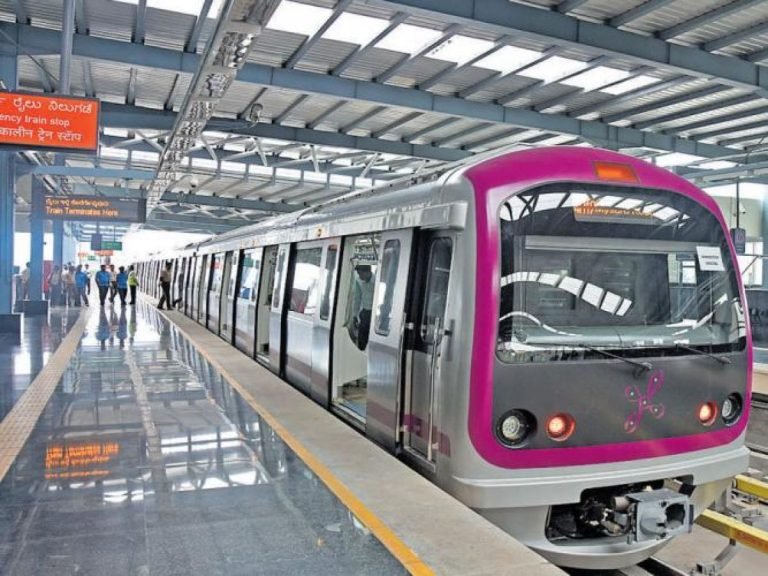
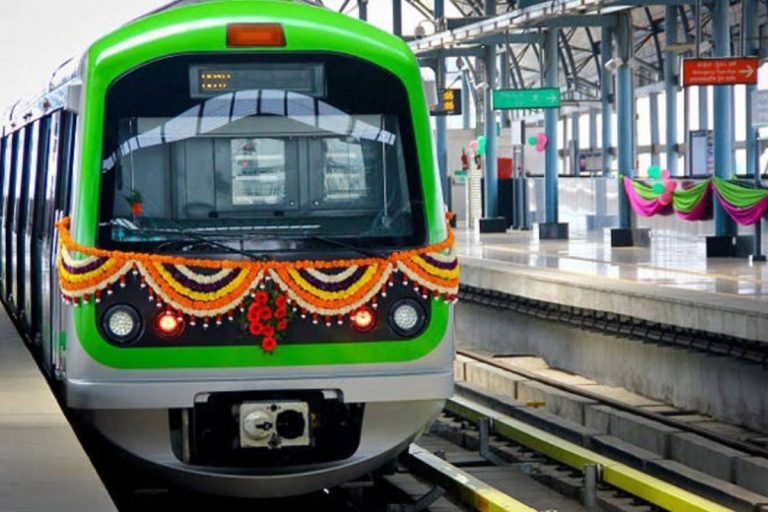
Namma Metro Purple line’s Mysore Road-Challaghatta stretch train services to begin by June 21

BANGALORE (Metro Rail News): The Purple Line of Namma Metro from Mysore Road – Challaghatta sation of 8.82 KM along with 7 stations is ready for operation in the mouth of June 2021. The Seven Metro Stations along the route are Nayandahalli Metro Station, Rajarajeshwar Nagara, Jnanabharathi, Pattangere, Mailasandra, Kengri, Challaghatta. Lying across NICE Road, Challaghatta station is likely to be operational by March 2022. Seth said all stations will have bus bays and crossover through the unpaid concourse area

Deport to come up on challaghatta near NICE Road would take another year to complete till than Baiyappanahalli Depot will be be used. Road works pending at few meteres last year covered in by heavy rains works still going on, we will try our best to complete this before rain season- said BMRCL Authority.

According to officials Namma Metro’s 6-km western extension from Mysuru Road to Kengeri (Purple Line) is on track. BMRCL managing director Ajay Seth said trial runs on the section will begin from March-end and commercial operations will start in June as per schedule.

He said the travel time between Mysuru Road and Kengeri will be around 15 minutes. Asked about the projected ridership of this section, he said: “It’s difficult to say due to pandemic impact.”

“We are planning foot overbridges at two locations by March 2022. Solar panels will also be installed in these stations in due course; tender is being called,” he said.

While BMRCL awarded the contract for Mysuru Road and Pattanagere sections to IL&FS Engineering in April 2015, Soma Enterprises received one for Pattanagere to Challaghatta depot in March 2016. Statistics show 96% of civil work between Mysuru Road and Pattanagere has been completed, while 94% between Pattanagere and Challaghatta depot is over. The expected cost of this Namma Metro is Rs. 14,788 Crores.