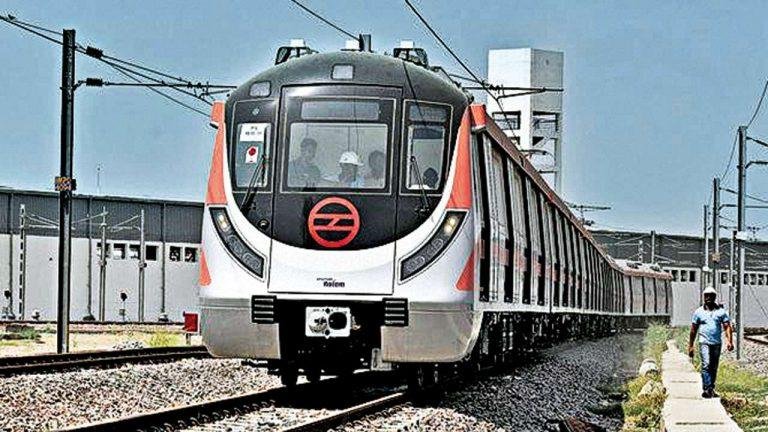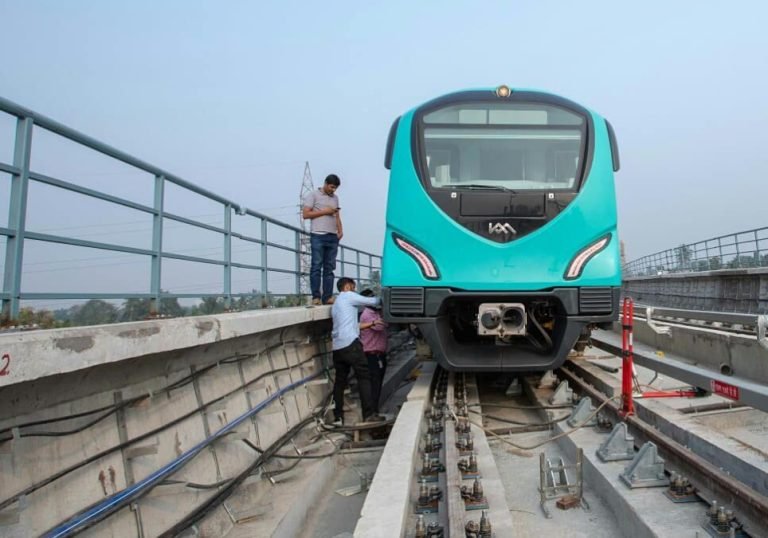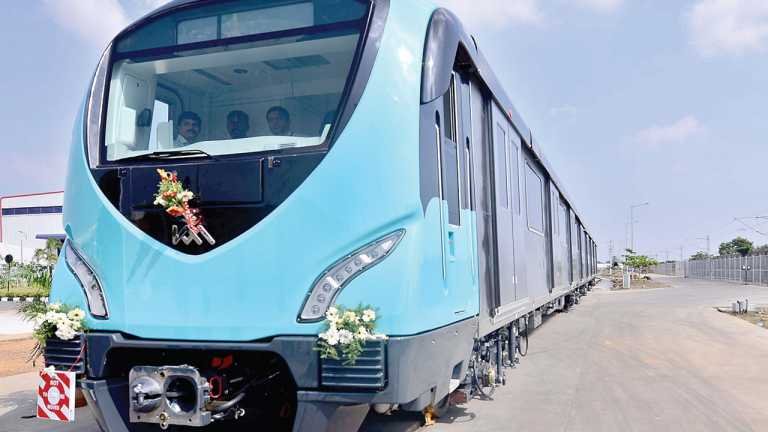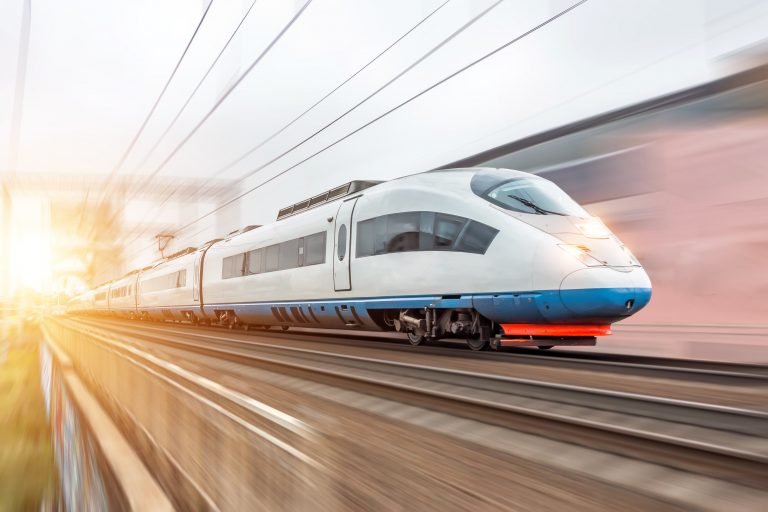
Semi-high-speed rail is getting closer to being a reality, and land acquisition will begin shortly.

KERALA (Metro Rail News): The ambitious Silverline, the Semi high-speed rail project described as the game-changer in Kerala’s infrastructure as well as economic growth, has moved an inch closer to reality with Railway Ministry and NITI Aayog – the government’s highest think tank – providing approval to the project. The project has obtained recommendations from organisations relevant, including the Department of Expenditure under the Ministry of Finance.

The proposal is currently being considered by the Union Finance Ministry’s Department of Economic Affairs, which will transmit it to international institutions such as Japan International Cooperation Agency (JICA), Asian Development Bank, Asian Infrastructure Investment Bank, and German Development Bank (KfW).

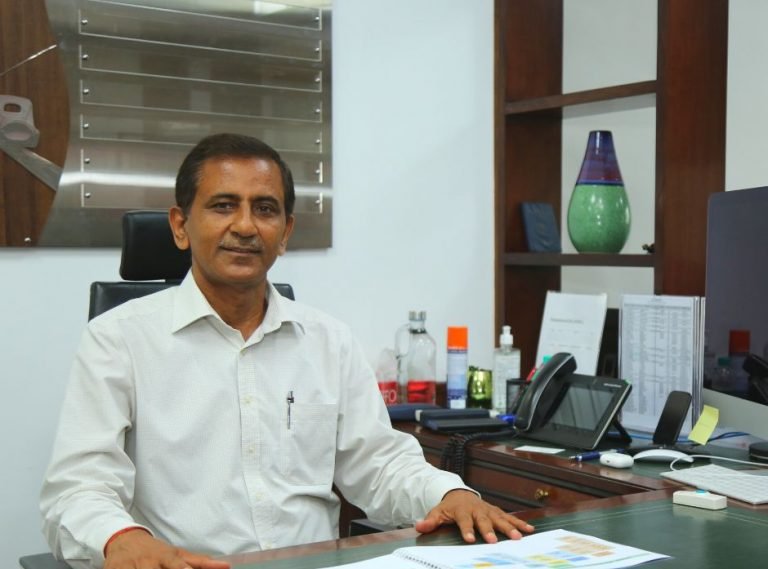
Foreign banks would need the consent of the Department of Economic Affairs to fund the project, which is projected to cost Rs 63,941 crore. V Ajith Kumar, managing director of Kerala Rail Development Corporation Limited (K-Rail), a joint venture of the Indian Railways and the state government, told TNIE that “in order to obtain the foreign financing, around 70-80 percent of the land designated for the project must be acquired.” “Once the new cabinet is constituted, the state administration will expedite land acquisitions that require cabinet approval,” he stated.

A total of 1,383 hectares of land must be purchased for the project, which would cost around Rs 13,000 crore. Kerala Infrastructure Investment Fund Board (KIIFB) and Housing and Urban Development Corporation Ltd (Hudco) have made bids for the project of Rs3,000 crore and Rs 2,100 crore, respectively. As a result, K-Rail is hopeful of obtaining the land using these money in addition to international bank loans. The state administration expects to raise around Rs33,000 crore from overseas banks.

“The project was delayed by three to four months due to lengthy correspondences with central agencies and the state government about the project’s sustainability. We were able to persuade them on every issue they presented. “It’s only a matter of time before we obtain the go-ahead from the Department of Economic Affairs,” he added. “Because the semi-high-speed train and west coast canal are the LDF government’s hallmark projects, the state is keen to move on with these,” he continued.

The previous state cabinet approved the project’s Detailed Project Report (DPR), which is projected to be finished within five years of work beginning. The rail line will be routed through the least populous areas, with a width of 15-25 metres, in order to keep property acquisition to a bare minimum. The requisite land will be bought at market value in accordance with the RFCTLARR Act 2013. The Centre would be required to bear only 3% of the project cost, which will amount to roughly 3,000 crore in equity and railway land rate.

The Silverline corridor, which would connect Thiruvananthapuram to Kasaragod in four hours, will allow semi-high-speed trains to travel at an operating speed of 200 km/h on the 529.45km route. These trains will go from Thiruvananthapuram to Ernakulam in one and a half hours.

Semi High-Speed Rail: A cost effective sustainable transportation model

In 2019, A 531-kilometer semi-high-speed railway line from Thiruvananthapuram to Kasaragod has been deemed ‘feasible and financially viable’ in order to increase connectivity, alleviate congestion on the State’s road network, and make travel more affordable.

Dedicated railway lines to Thiruvananthapuram International Airport and Cochin International Airport, as well as railway stations for inter-modal transportation, have also been discovered to be possible.

Semi-high-speed trains will travel at speeds ranging from 130 to 180 km/h, covering the north-south rail track from Kochuveli to Kasaragod in four hours. air-conditioned train sets along the lines of the recently inaugurated Train 18 have been suggested.

Stations

Kochuveli, Kollam, Chengannur, Kottayam, Ernakulam, Thrissur, Tirur, Kozhikode, Kannur, and Kasaragod would be among the ten stations served by the semi-high-speed trains.

Except for Alappuzha, Idukki, and Wayanad, the third and fourth railway lines in the 300-km Thiruvananthapuram-Shoranur segment would be separate from the present railway line. It would run parallel to the current rail line from Thirunavaya to Kasaragod, including railway bypasses at Vadakara and Thalaserry.

Estimated Cost

In its feasibility report, Paris-based engineering and consulting group Systra, the general consultant of Kerala Railway Development Corporation Limited (KRDCL), the special purpose vehicle set up to execute ‘viable’ projects on a cost-sharing basis between the State and Railways, estimated the cost at 56,000 crore, including land acquisition costs.

Speed

Despite the fact that the projected rail route has a top speed of 200 km/h, the trains will only be able to travel at a maximum speed of 180 km/h. Train sets with nine cars will be launched first, followed by sets with 12 and 15 vehicles. The coaches will be constructed of aluminium.

India’s first semi high speed train (History)

The Vande Bharat Express, popularly known as Train 18, is a high-speed intercity electric multiple unit in India. It was developed and produced during an 18-month period by Integral Coach Factory (ICF) in Perambur, Chennai, as part of the Indian government’s Make in India programme. The unit cost of the first rake was stated to be 1 billion (US$14 million), however this figure is projected to decrease when more rakes are produced. It is believed that at the initial pricing, it is 40% less expensive than a similar train purchased from Europe. The train debuted on February 15, 2019, and by that time, a second unit will have been manufactured The Indian Railways operates two Vande Bharat trains as of July 2020.  In January 2021, Indian Railways granted a contract to Medha Servo Drives, located in Hyderabad, for the provision of propulsion and control systems for 44 rakes. 

The Vande Bharat Express is capable of reaching speeds of up to 200 km/h, however the actual max speed is only 130 km/h due to the speed restrictions of the railway track on which the Vande Bharat Express operates and ready for operation. On January 27, 2019, the service was renamed ‘Vande Bharat Express.’

Innovation and Development

Train 18’s external design features aerodynamic narrowing at both ends of the train. It features a driver coach at either end of the train, which allows for a speedier turnaround at either end of the railway. The train has 16 passenger carriages with a total seating capacity of 1,128. Two of the middle compartments are first class, with 52 seats apiece, while the remainder are coach, with 78 seats apiece.

The train’s seats, braking system, doors, and transformers are the only components that have been outsourced, with hopes to manufacture them locally on the next unit. Train 18 is equipped with a regenerative braking system.

Another unit is scheduled for production in 2020, followed by four more in 2021, for a total of six. The Railway Board has asked ICF to finish two of the new units by May 2019. “According to the Railway Board’s production schedule, the second train will arrive after the elections, and the third will arrive by October of this year. After October, ICF will run one train every other month until March 2020, and one rake every month beginning in April 2020.” According to the Ministry of Railways, Modern Coach Factory (MCF), Raebareli, which has been a shining example of ‘Make in India,’ would also produce additional Vande Bharat Express train sets in the coming months.

Train 19 was a projected higher-speed, long-distance electric multiple unit developed by ICF that was based on the Vande Bharat Express. Unlike Train 18, it was meant to contain sleeping carriages instead of seats. Train 20, another semi-high-speed train that will replace the Rajdhani Express, is also being developed by Indian Railways and ICF. The line is scheduled to debut in 2020. Indian Railways intends to buy 40 Train 18 train sets by 2022, each having a redesigned cabin crash guard composed of aluminium and a lithium-ion battery pack.
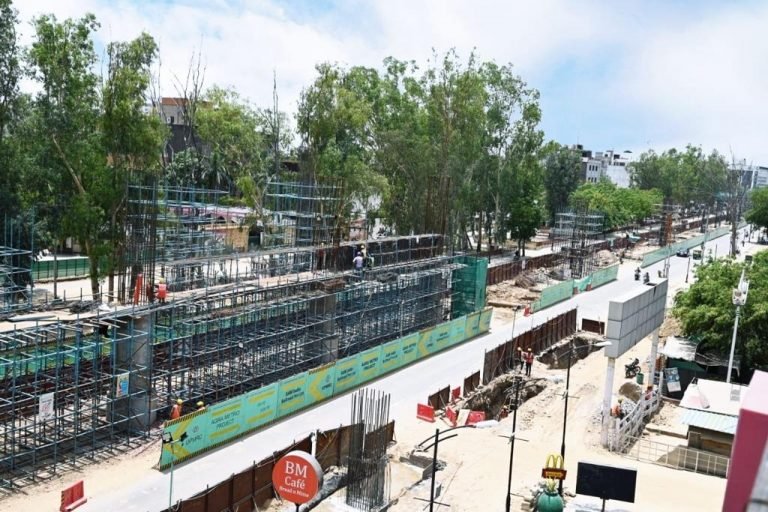
Construction Strategy during Covid-19 in India: Challenges & Solutions

Covid 19 has had a significant and detrimental effect on India’s infrastructure and construction sectors. The restrictions implemented by the Government of India, State Governments, and Union Territories to contain the virus’s spread and effects have stymied project development, negatively affecting supply chains, plant, equipment, materials, and manpower. Delays and delays to project completion are unavoidable, as are associated losses, costs, and expenses.

Individuals working in the construction business must be vigilant of contractual and other rules governing entitlements to eventual recovery of these exposures. All of these rights are likely to be subject to time-sensitive notice requirements, and while some may be familiar with the idea of “force majeure” as contained in many contracts, asserting force majeure may have unforeseen implications. Contractors and Employers alike must be aware of the presence of specific contractual entitlements to time extensions and payment of additional costs associated with their projects.

Such clauses are almost certainly subject to specific circumstances that regulate their functioning. Because no two contracts are identical and may address similar issues in materially different ways, it is impossible to give a generic contractual panacea for individuals working in the construction sector. However, because many EPC and other contracts in India are based on the FIDIC contract forms, particularly the “Silver Book,” this Note will concentrate on the rights and obligations stipulated by that Form in light of the Covid issues.

Contracts with unique modifications to the FIDIC Form will unavoidably exist, and this Note can only serve as a starting point for thinking about the procedures that should be taken to mitigate the impact of Covid 19 and to preserve and implement contractual rights and safeguards.

COVID-19 and Extenuating Circumstances

Under Force Majeure clauses, if one party is unable to perform its obligations due to certain stated exceptional or unusual circumstances beyond its control, it may be excused from performing those duties, subject to notice. Force Majeure clauses vary by contract but generally provide for time extensions and, in certain situations, financial reimbursement. Clause 19 of FIDIC defines force majeure as I a “exceptional event or circumstance” (ii) “that is beyond a Party’s control”, (iii) “that such Party could not reasonably have provided against prior to entering the contract”, (iv) “that such Party could not reasonably avoid or overcome” and (v) “that is not substantially attributable to the other Party”.

Employers who are prevented from providing access to or possession of the Site or from supplying Employer supplied material may bring a claim for Force Majeure. Employers who are prevented from providing access to or possession of the Site or from supplying Employer supplied material may bring a claim for Force Majeure.

The first point to make for Contractors is the requirement to establish causation – that is, that Covid and the restrictions caused the problems complained about. The pandemic may be viewed as a convenient smokescreen by the Contract Administrator to conceal an inherent problem that is the Contractor’s responsibility, such as a pre-pandemic failure to mobilise adequately.

Second, contractors should be aware that, while Covid is likely (but not guaranteed) to be a Force Majeure event, the FIDIC contract, while providing an entitlement to an extension of time, does not provide an entitlement to cost recovery. This is because cost recovery is permitted only for the very specific events listed in sub-clauses I t.

Thirdly, the FIDIC contract needs periodic updates on the impact of Force Majeure as events unfold; in many contracts, these updates, along with the original Notice, will be a prerequisite to the right of recovery. No notice – no right to claim!

Fourthly, Employers and Contractors alike must be aware that issuing a Force Majeure Notice to avoid non-performance constituting a breach of contract, it will amount to an admission that they are unable to perform their obligations and should be issued only if they are satisfied they can discharge the burden of proof of causation referred to above. This is especially true in the.

Fifthly, it is important to remember that each party to a FIDIC-style contract is contractually obligated to “make all reasonable efforts to minimise any delay in performing the Contract caused by Force Majeure.” This is a continuing commitment.

Thus, what additional options does the Contractor have for recouping the expenses and losses sustained as a result of the Covid 19 issues?

Changes to the Law

Subject to giving Notice, the Contractor may be entitled to an extension of time and additional cost if the delay and cost are caused by a Change in Law or a change in the interpretation of such laws. Under FIDIC, “Change in Law” is broadly defined and includes actions by State Governments and Union Territories to invoke the Epidemic Diseases Act 1897 and other similar Acts to issue Regulations.

Authorities-caused delays

Again, subject to providing a Notice, the Contractor may be entitled to an extension of time (but at no cost) if it has “diligently followed” procedures laid down by public authorities but those authorities delay or disrupt the Contractor’s work, as is likely to be the case with the measures enacted to contain the spread of Covid19 through lockdown and suspension of works, among other things.

Employer-Specific Delays

If, as is likely, the pandemic prevents the Employer from providing access to or possession of the Site at any time, or delays approvals, the release of design information, or the provision of Employer-supplied materials, these would constitute Employer breaches of contract, entitling the Contractor to recover costs and extensions of time.

Adaptations and Modifications to the Works

Numerous terms of FIDIC-style contracts may be applicable to items covered by Covid 19 and may result in increased expense and effort.

A modification to the Works required to account for adjustments required as a result of the pandemic’s influence on the Permanent Works or their means of delivery.

A change in applicable technical standards, environmental regulations, product standards, or other specifications provided by the Employer that is caused or needed by the epidemic may entitle the Contractor to a Variation, with associated time and cost reimbursement.

Changes required by the Employer to the Contractor’s Health and Safety Procedures pursuant to Clause 6.7 may be argued to necessitate a Variation with the associated rights.

Considerations for the Future

Contractors must be vigilant to ensure that their contractual rights to protect themselves from the dire consequences of Covid 19 are maintained and implemented, taking into account the strategic implications of a Force Majeure claim and the need to provide Notice, establish causation, maintain meticulous records and evidence, and provide updates as required. They must carefully evaluate whether the incidents and the Employer’s response offer grounds for claiming breach of contract or requesting a Variation. Ignoring the situation is not an option.

Finally, it should be noted that in the event that contracts are entered into following the WHO’s declaration of a pandemic (and possibly earlier), the protection of a Force Majeure claim is unlikely to be available, as the requirement of foreseeability will be absent, and parties could and should have made appropriate provisions in their contracts.

Contractors will be recommended to include clear terms in all current and future contracts that address the danger of Covid 19 and its implications. Employers may choose to have Covid 19 clearly excluded from Force Majeure, Suspension, and Termination terms, whilst contractors are urged to need a specific extension of time clauses at the very least. Contractors should also request more cost provisions during current talks.

While Employers are unlikely to accept a generic entitlement, Contractors should seek very specific events of relief for costs associated with material availability and supply chain difficulties in general. As the construction sector continues to open up, there is a risk of diminished supply chain capacity as a result of insolvencies and overall financial uncertainty; this risk must be appraised and assigned fairly.

Cash flow enhancements such as shorter payment periods, more advance payments, enhanced price indexation, and lower retentions could also be considered. There is plenty that all sectors of the business can do to guarantee that construction remains India’s economic engine.

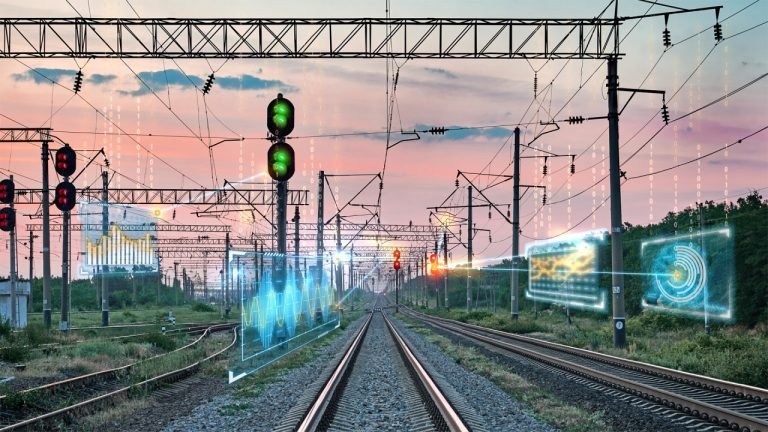
New Developments in Railway Signalling system: The future ahead

The Vande Bharat Express is India’s first semi-high-speed train. It connects New Delhi to Varanasi, a city located around 760 kilometres from the capital. The voyage of the Vande Bharat Express, which began in February 2019, is not only about creating India’s first world-class, semi-high-speed intercity train – entirely planned, developed, and produced in India. Additionally, it signals the beginning of the process of modernising the railroad’s historical signalling system by transitioning to locally designed, digital Automatic Train Protection (ATP) and Train Collision Avoidance systems (TCAS). In the long run, the concept involves the introduction of entirely digital railway operations and passenger services based on mobile broadband.

As is the case with many European nations, India is pursuing 3GPP Long Term Evolution (LTE) and New Radio as a future-proof foundation technology for railway applications. Additionally, this would enable Indian Railways to implement a large number of the features planned for the Future Railway Mobile Communications System (FRMCS), the worldwide standard for railway communications and a critical facilitator of global railway digitization.

FRMCS is the International Union of Railways’ (UIR) future global telecommunications system, developed in collaboration with the rail sector’s many stakeholders.

To begin, let us examine how 3GPP technologies aid in the adoption of FRMCS features

Automatic train protection and collision avoidance are two examples of railway innovation. The ATP and TCAS technologies improve safety and enable trains to move at extremely high speeds safely.

ATP averts collisions, dangerous signal passing, and overspeeding. ATP continuously monitors a train’s speed against the allowed speed provided by train signalling and initiates emergency braking if the train exceeds the speed restriction.

TCAS analyses location and sensory data in order to identify potentially harmful circumstances caused by human mistake or equipment malfunction. Without TCAS, trains are unable to run safely at speeds more than 160kph due to the driver’s inability to react quickly enough to line side signals. TCAS enables the Vanda Bharat Express to travel more quickly and safely.

ATP and TCAS, like the Vanda Bharat Express, are created and produced domestically, in this instance by Indian research groups and suppliers, and work similarly to the European Train Control System (ETCS). While they perform similarly, the Indian design is less expensive for Indian Railways.

Digitization of the railway

The Vande Bharat Express is the first step toward modernising India’s ageing railway signalling system.

TCAS is completely integrated into the railway signalling system, relying on communication between trains and a regional, central control system. TCAS incorporates trackside equipment, sensors, Internet of Things (IoT) devices, and locomotive-based control equipment. All line side information, such as ‘track work ahead’ or ‘stopped train ahead,’ is electronically transmitted to the locomotive, eliminating the need for the driver to monitor these signals.

Long-term vision: Gigabit trains and digital railway operations

Global digital train operations’ long-term aim is to minimise railway congestion, boost punctuality, improve safety, and expand line capacity. When trains are controlled as moving blocks, they may travel closer together while still maintaining needed safety margins, therefore increasing the line’s overall capacity. With digital train operations and wireless train-to-train communication, computers identify blocks surrounding each train in real time as safe zones.

Additionally, staff employees have access to connectivity on the train, service support, onboard monitoring for passenger safety, and high-quality mobile broadband and voice services.

FRMCS architecture and services can be deployed later in India, while retaining ATP and TCAS as railway applications connected via the FRMCS network.

The incorporation of 3GPP technology into TCAS will increase line capacity and enable TCAS to grow into a network management system capable of managing the railway network from central locations spanning vast sections of track. 3GPP LTE and New Radio for railway signalling applications, including ATP and TCAS

In later versions of the standard, LTE provides ultra-reliable, low-latency communication that is appropriate for supporting ATP and TCAS and providing passenger connectivity. 5G-NR offers enhanced performance and network topology flexibility, which will enable more sophisticated use cases in the long run. Due to the widespread deployment of LTE and 5G-NR in combination with public mobile networks and the evolution of the smartphone market from LTE to 5G, mixed deployments and gradual migrations are already highly efficient.

FRMCS and 3GPP LTE and 5G-NR are a great fit, since FRMCS maintains all railway-specific functionality at the application layer, while LTE and subsequently 5G-NR can act as the high-bit-rate, ultra-reliable, and low-latency transport bearer. This design is future-proof, since new applications can be added incrementally, while the physical layer can be moved and improved to take use of the latest 3GPP release capabilities.

This layered design also takes use of network slicing, allowing public mobile network service providers and/or public safety organisations to share portions of the train signalling system. Additionally, FRMCS over 5G-NR can be introduced smoothly in both lower and higher frequency bands, as NR is frequency band-agnostic, including micro- and millimeter-wave bands, and is designed with flexibility in mind, including physical layer numerology, advanced antenna system support, and deployment options.

For ATP and TCAS, the railway need 5MHz of spectrum in the prime 700MHz band. India’s Department of Telecommunications is nearing completion of the allocation of the needed 5 MHz premium spectrum. Once spectrum is acquired, ATP and TCAS can be operational and provide safety functions comparable to ETCS in Europe.

For passenger comfort and mobile broadband services, FRMCS over 5G is being used.

Apart from rail signalling, FRMCS provides a variety of useful applications for train operators and passengers. Notably, using 5G as a solution for onboard video surveillance for passenger safety, railway health monitoring, and freight tracking. These applications place significant demands on the physical layer’s capabilities and the end-to-end service quality in terms of bit rate, latency, and dependability. LTE and 5G-ability NR’s to meet these standards is their strength.

As mobile network providers build dense 5G networks along railway corridors to service their passengers, they may also use this connectivity to provide the essential connectivity required by FRMCS. FRMCS features like as video surveillance demand a massive amount of bandwidth that cannot be given by a specialised railway FRMCS spectrum. In this case, network slicing ensures the separation of passenger services from essential train operating services and enables the mobile network service provider to augment capacity as required by the FRMCS feature.

Migration and heterogeneous deployments

LTE and 5G-NR are quite similar in terms of how communication services are utilised and how those services interact with the network for setup and provisioning purposes. When moving a service from LTE to 5G, only modest changes are required. Both the LTE and 5G core networks are generally installed as virtualized network services on general purpose hardware, which enables the reuse of the same hardware and flexible resource allocation for both technologies.

Additionally, dual-core methods exist in which all 4G and 5G core network operations are merged into a single core network deployment, enabling a seamless transition from 4G to 5G, as depicted in Figure 1 and discussed further in this article on 5G core.

Finally, the same radio hardware may be utilised for both 5G-NR and LTE radio access networks, with the radio access network dynamically switching between the two access types with millisecond granularity in response to user demand. This technique, dubbed dynamic spectrum sharing, permits the coexistence of 4G and 5G technologies in the same spectrum while avoiding complex spectrum re-farming strategies. As a result, for rail and mobile network service providers, deploying 4G to enable FRMCS and Gbit train services is a viable option, as it enables a seamless transition to 5G as the market for more advanced FRMCS services matures.

Digitalization of railways

Combining tight integration of 4G and 5G components with dynamic spectrum sharing enables highly efficient coexistence of 4G and 5G-connected trains during a transition period. The FRMCS application function manages ATP and TCAS’s interactions with the mobile network, therefore facilitating the coexistence of clients connected via various networks.

By 2025, 50% of Indian rail tracks will be equipped with an LTE-based High-Speed Communications Network capable of providing TCAS, ATP voice, and IoT-based telemetry services. This will enable Indian trains to reach speeds of up to 200 kph with the addition of appropriate high-speed rail alignments.

Digitalisation in Railways: Role of Multidimensional BIM Technology

Introduction

In India, a huge metro-rail building initiative is underway, with the goal of modernising public transportation networks to provide quick transit to millions of people in major Indian cities. Because of the magnitude of this development, it is critical to innovate, as changes in design, construction, and operations can have a substantial impact on the long-term viability of constructed assets. As integrated digital delivery systems become more widely employed in infrastructure projects around the world, new challenges concerning their use and suitability in these Indian metro-rail projects arise.

This article is the result of research cooperation that included desk-based research, site visits, and a hosted workshop with 40 participants, including client representatives from six major Indian metro-rail projects, as well as technology providers and delivery teams. While the Nagpur Metro project is the most advanced in terms of implementing Building Information Modelling (BIM) in its planning and design phase, translating practices from Cross rail in London into the Indian context, the findings show that there are significant challenges in adopting digital practices in the delivery of new transportation schemes in Indian cities. Stakeholder awareness and education, integration and interoperability, standardization, financial implications, and BIM strategy are among the issues. The report finishes with several potential future research directions and examines India’s ability to “leapfrog” a generation of technology in order to adopt low-cost effective digital solutions.

SUSTAINABILITY OF BIM, LEAN, AND BUILT ASSETS

The construction industry has actively worked to lower its carbon footprint by reducing significant sources such as construction waste and process inefficiencies. This has been accomplished through the use of lean building concepts, the transition to mechanise off-site manufacturing, and the utilisation of modern IT trends such as Building Information Modelling. In the United Kingdom, for example, BIM is widely used and is predicted to reach 95 percent by 2018. Many governments around the world (for example, Germany, the United Kingdom, Singapore, Korea, and China) advocate for the use of BIM and comparable forms of integrated digital delivery in building and infrastructure projects. A new suite of standards (ISO 19650) is being produced, and there is a lot of effort being done on standard development.

The World Economic Forum has released its own plan to accelerate BIM (World Economic Forum and the Boston Consulting Group, 2018), which builds on recent work on the future of construction and articulates the various digital technologies that are accessible across the lifespan. In the United Kingdom, projects such as Cross rail and High Speed 2 have invested heavily in establishing information management strategies for use during construction.

India has yet to make considerable progress in lean adoption and off-site manufacturing, and it lags far behind in capitalising on recent IT waves. For example, just 22% of construction professionals in India adopt BIM (Sawhney, 2014). As a result, construction operations in India account for the most direct and indirect CO2 emissions among all Indian businesses, accounting for 266 MT/year (24 percent of total), with Delhi alone producing 5,000 tonnes of construction material waste per day. This carbon footprint is set to worsen, as the Indian government is planning and constructing metros and trains for 50 cities over the next 10-15 years, which is 20 times the capacity added in the previous decade. Existing IT tools and adoption processes in India are unlikely to modify this trend and significantly help to lowering the carbon footprint anytime soon: what would make a significant enough difference?

Indian Metro projects

Digital efforts have yet to be widely adopted in the Indian metros. The majority of the construction projects underway are without any digital efforts in place. But, the upcoming projects seek to incorporate digital activities on their agenda. It is important to note that the government does not have a mandatory policy or legislation requiring use of BIM or digital technologies at any point of a construction project. Most often, project clients or general contractors drive initiatives to apply these processes. Nonetheless, there are isolated digital efforts implemented in metros that are dedicated to automating workflow processes. The digital workflow developed by the Kochi Metro includes, for example, the handling of papers in a digital system. Larsen and Toubro are responsible for developing 3D models for metros when they are the contractor, and they use clash detection to uncover clashes in multiple technical disciplines at an early stage. Other important developments include the work by Larsen and Toubro, who provided mobile platforms for on-site inspections.

So far, only one project in India has undertaken major strides toward using BIM in the planning and design phases: the Nagpur Metro. In spite of the client – Nagpur Metro Rail Corporation Limited (NMRCL) not specifying a digitalization requirement, private technology suppliers and the general contractor formed a group of project delivery leadership, leading to BIM being used for all aspects of the project.

In the 3rd party BIM development realm, planning and design process modelling and supply chain management implementations are handled by third-party BIM developers. To oversee the status of component tracking and installation, RFID tags were used. Digital information management systems are implemented across the project life cycle in the Nagpur Metro Project. The BIM plan was designed based on the guidelines from PAS1192 standards, which may be found here. The places where digital platforms are most commonly used for information management include:

To promote transparency and facilitate tracking, the design review and approval process takes place in a single data environment. Placeholders will be used for the sake of designs. The document will be handed off to the document controller. Lead Reviewer receives the transmittal, and initiates the approval process by assigning it to an approver. Reports are generated to track the status of the review process, and the system flags issues that need to be addressed.

2D drawings and accompanying data are used to build a Building Information Model (BIM). Information to be included in every component, no exceptions (e.g. Geometric data, material definitions, quantity take off, asset tags, links to related documents etc.). It is used to plan as well as to find clashes in BIM models. To cross-check the work order amounts supplied by the contractor with the BIM models, the work order amounts from the BIM models were used.

When creating a workflow and enabling visual progress monitoring and integrated cash flow management, SAP software for billing and finance is linked to building information for billing and finance. Oracle Primavera P6 is also connected to the building information model to integrate the schedule. A 5D visualisation platform for combining information for cost and planning is constructed on top of the RIB platform. In addition, they’ve been able to visualise the project’s progress and spot problems earlier because of this.

Many of the problems encountered with Nagpur’s metro project stemmed from the fact that BIM wasn’t used beyond the project’s second two stages.

Information encoded in BIM was not used to ease the downstream phases such as operation and maintenance because it was difficult to translate the data into a useable format. Verification is necessary to ensure the validity of Building Information Models across subsequent metro expansions.

Conclusion

Digital technology have had very little impact on India’s metro train projects today. Although the Nagpur metro has been halted, all of the other current and upcoming metro rail projects in India have barely begun to use digital technology. However, the various groups’ conversations show that projects such as these can succeed by way of digitization. 3D and 4D models can help facilitate time-saving development on the sites and, in some cases, even allow for automated or generative design. Finally, the numerous metro rail projects’ discussants recognised digital technology and were ready to use them for their respective demands. But it was evident that, for these particular problems, a single solution such as BIM might not be a silver bullet. In order to meet project team expectations and to help the project, it will be important to design a holistic Digital System, integrating technologies such as BIM with GIS and other project workflows. Systems that will not only be functional but will also be used may necessitate approaches that put more emphasis on design thinking.

In the future, these might be paths to follow for R&D. Digital technology is riding high thanks to the ambitious metro rail development in India. Although these technologies and challenges to adoption are considerable, practitioners know about them and believe that they can be overcome. Until now, the task of making best use of the multitude of technological tools has fallen to academics, consultants, and tool vendors, who are each vying to get in on the first floor of new context-based digital adoption and project performance solutions.

Sam India lowest bidder for 2nd Architectural finishing contract on Delhi Metro’s Magenta Extension Line

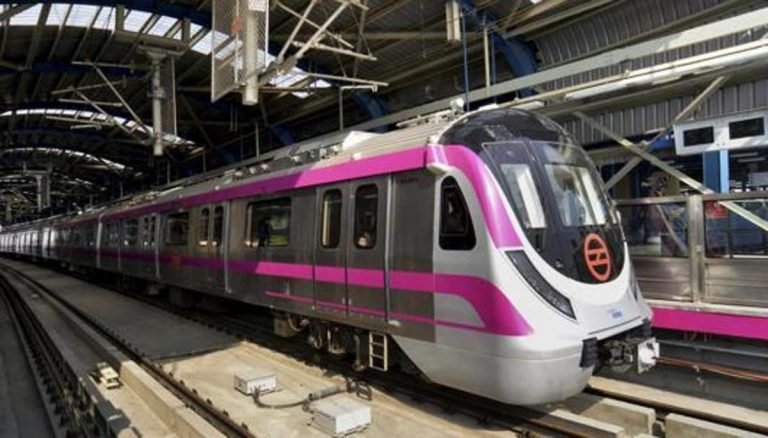
NEW DELHI (Metro Rail News): Sam India Builtwell Pvt. Ltd. emerged the lowest bidder for Architectural finishing work on eight stations of Delhi Metro Magenta Extension Line under Phase-4 as Delhi Metro Rail Corporation (DMRC) opened financial bids for this contract.

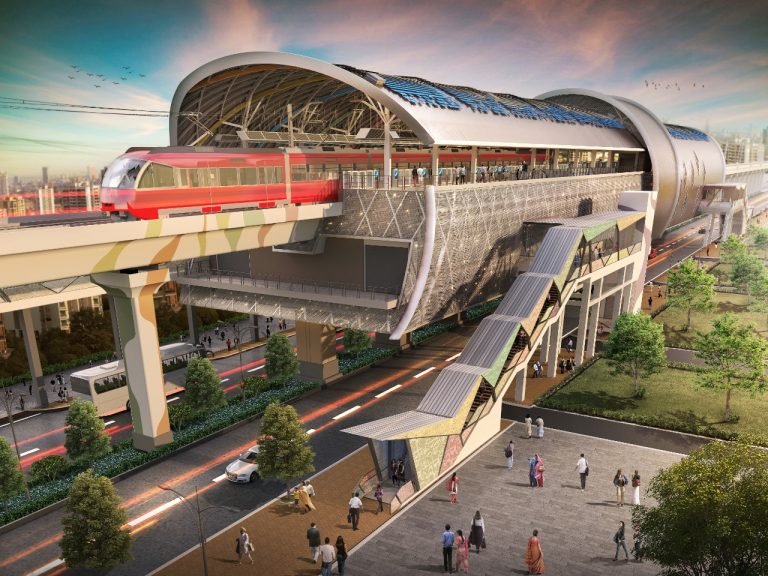
These eight stations are Madhuban Chowk, Prashant Vihar, North Pitampura, Haiderpur Badli Mor , Bhalaswa, Majlis Park, Azadpur and  Ashok Vihar. The work also includes installation of prefabricated steel roof structures at these eight stations.

DMRC invited bids for this work in December 2020 with an estimated cost of INR 93.96 Crores and completion period of 24 months. Technical bids for the same were opened in February which revealed name of 13 bidders. Later, 11 bidders were disqualified based on bid evaluation process. The bid values of technically qualified bidders are –

  • Sam India Builtwell Pvt. Ltd. – INR 100.29 Crores
  • JRC Grid Engineers Pvt. Ltd. –  INR 121.67 Crores

Package Number: DC-10B-R

Brief Scope: Architectural Finishing Works Including Design, Fabrication, Supply, Erection & Roof sheeting of Prefabricated Steel Roof Portal Pre- Engineered Building (PEB) Structures & Foot Over Bridge (FOB) including Design & Construction (Substructure & Superstructure) & necessary changes in existing station for connection of FOB, External facade, Water Supply, Sanitary Installation, Drainage, Site development works at Eight Elevated Stations namely Madhuban Chowk, Prashant Vihar, North Pitampura, Haiderpur Badli Mor (over existing Line-2 station), Bhalaswa, Majlis Park, Azadpur & Ashok Vihar on Janakpuri West to R.K.Ashram Corridor (Extn. of Line-8) of Phase-IV of Delhi MRTS.

This is the 2nd Architectural finishing work contract for Magenta Extension Line under Phase-4, with 1st contract won on Tuesday by URC Construction.

As the bid value by Sam India Builtwell is slightly on higher side against DMRC estimate, it is still likely that DMRC will award the contract to Sam India Builtwell in coming weeks.

This Architectural finishing work will be carried on total 15 stations of Delhi Metro Magenta Extension Line under these 2 packages with Lisha Engineers to carry out work of similar nature on eight stations of Line-7 Extension (Pink Line) of Delhi Metro.

Noida Metro now receives bids from 3 firms for Phase-2 Aqua-Line extension

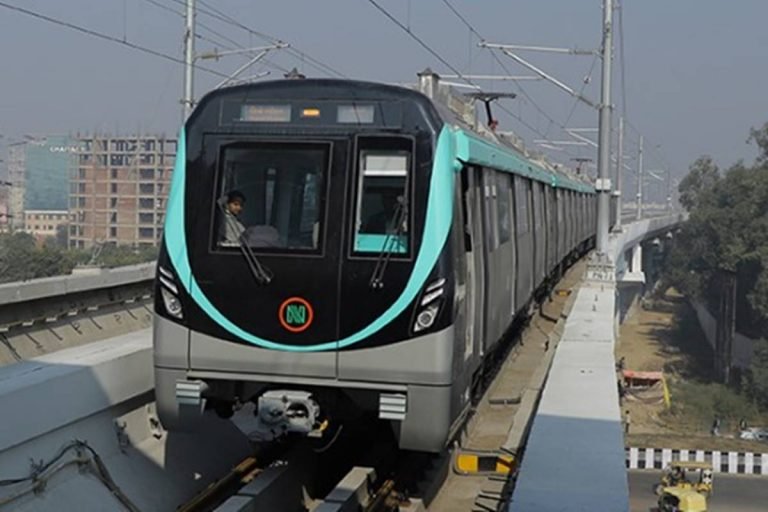
NOIDA (Metro Rail News): Noida Metro Rail Corporation (NMRC) opened technical bids on Wednesday for the construction of an elevated viaduct and five elevated stations for the 9.6 km long extension of Aqua Line from Noida Sector 51 to Greater Noida Sector 2 under Phase-2 and this time, it received bids from three companies which are –

  • Ashoka Buildcon
  • GR Infraprojects
  • Sam India Builtwell

NMRC invited tenders for this work on 31st May this year with approximate cost of work to be INR 563.04 Crores and completion period of two years.

Tender Number: NMRC/Civil/NGNC/149/2021

Name of Work: Part Design and Construction of Elevated Viaduct and 5 elevated stations viz NOIDA SEC -122, NOIDA SEC-123, GR. NOIDA SEC-4, ECOTECH-12, GR. NOIDA SEC-2, (excluding Architectural finishing Works and PEB works of stations) from Chainage 0.00 m to Chainage 9605 m of Noida -Greater Noida Metro Rail Project.

This was the fourth time tenders are invited for this work with the previous three cancelled due to a lack of extensive participation in this tender from the construction companies.

The Uttar Pradesh cabinet in December 2019 approved the construction of 14.95 km long extension of Aqua Line from Noida Sector 51 to Knowledge Park V in Greater Noida with nine stations on the route at an estimated cost of INR 2,602 Crore.

The extension corridor is to be built in two phases. The first phase would be between Noida Sector 51 and Greater Noida Sector 2 (9.6 km). There will be five stations in the first phase, they are Noida Sector 122, Noida Sector 123, Greater Noida Sector 4, Eco Tech 12, and Greater Noida Sector 2 for which this tender was reinvited while the second phase would be between Greater Noida Sector 2 and Knowledge Park V (5.8 km) which will have four stations, they are Greater Noida Sector 3, Sector 10, Sector 12 and Knowledge Park V.

Hope this time the tender process culminate in awarding of this contract and subsequent initiation of civil construction works, as this time NMRC has received bids from three firms.

Bids opened for two sections on Line-3 of Indore Metro

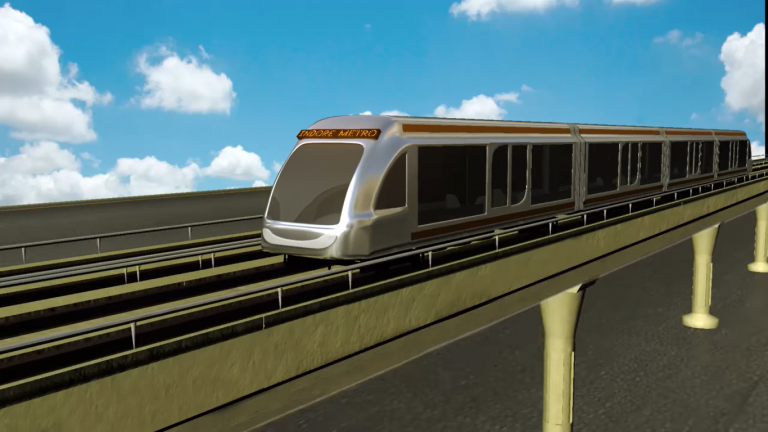
INDORE (Metro Rail News): Madhya Pradesh Metro Rail Corporation Limited (MPMRCL) on 2nd July opened technical bids for two packages for the 33.53 Km long Line-3 (Yellow Line) of Indore Metro Rail Project.

Routes of Indore Metro
Indore Metro Map

PACKAGE -1

Tender Number – 200/MPMRCL/2021/Package IN-02

Name of Work – Design and Construction of Seven (7) Elevated Metro Rail Stations including Viaduct portion within the stations and Transition spans on either side of the stations, Entry-Exit Structures, Architectural Finishes, E&M Works etc. (ISBT/MR10 Flyover, Chandragupta Square, Hira Nagar, Bapat Square, Meghdoot Garden, Vijay Nagar Square & Radisson Square)” of Indore Metro Rail Project.

Tenders for this package were invited on 27th February by MPMRCL at an estimated cost of INR 369 Crores and completion period of 847 days. For this package, MPMRCL received bids from three firms –

  • Rail Vikas Nigam Limited (RVNL)
  • URC Construction Pvt. Ltd.
  • YFC Projects Private Limited

The bids for this package will now undergo technical evaluation which can take couple of months. After that, financial bids will be opened of the technically qualified bidders which will reveal the name of the lowest bidder and the most likely winner of this contract.

PACKAGE -2

Tender Number – 273/MPMRCL/2021/Package IN-03

Name of Work – Design and Construction of Elevated Viaduct between Ch.14+488 & Ch.25+415, viaduct connecting Depot leading upto interface location, Nine (9) Elevated Metro Rail Stations including all Civil, Structural, Roof structure, Mechanical, Electrical and Plumbing (MEP) works, Architectural finishes, Façade, Entry/Exits, FOB, Viaduct within the stations including Transition spans” for Indore Metro Rail Project Yellow Line.

This package includes construction of elevated viaduct and nine stations on the upcoming Super Corridor zone in Indore. These nine stations are Gandhi Nagar, Super Corridor 6, Super Corridor 5, Super Corridor 4, Super Corridor 3, Super Corridor 2 and Super Corridor 1, Bhawarsala Square and MR 10 Road. 

Tenders for this package were invited on 10th March by MPMRCL at an estimated cost of INR 1000 Crores and a completion period of 847 days. Surprisingly for this package, MPMRCL received bid from only one firm –

  • Rail Vikas Nigam Limited (RVNL)

Now it will be important to know whether MPMRCL will go ahead with this one bid and carry out technical bid evaluation and subsequent process.

It seems that with just one bid for this section, MPMRCL may cancel this tender and re-invite bids for this important corridor. The project is already facing lot of delays due to multiple reasons. With just one bidder for this section, things will only get delayed further.

Indore metro has set a deadline of 2023 to start operation which at present looks unlikely. Hope that construction activities for the project get accelerated along with inviting of tenders and awarding of contracts which also requires extensive participation in tenders from construction companies.

Phase-1 of Indore Metro comprises construction of 33.53 km long corridor as Line-3 (Yellow Line) which will form a ring around the city connecting Palasia – Railway Station – Rajwada – Airport – Bhawarsala through 29 stations. The corridor will have 6 underground stations from Kothari market to Airport and all other 23 stations will be elevated.

URC Construction lowest bidder for Architectural finishing works on Delhi Metro’s Magenta Extension Line

NEW DELHI (Metro Rail News): Delhi Metro Rail Corporation (DMRC) opened the financial bids for Architectural finishing works on seven stations of Delhi Metro’s Magenta Extension Line under Phase-4 in which URC Construction Pvt. Ltd. emerge lowest bidder among the two bidders by quoting bid value of INR 97.50 Crores while the other bidder i.e. Sam India Builtwell Pvt. Ltd. quoted bid value of INR 97.53 Crores.

DMRC invited bids for this work in December 2020 with an estimated cost of INR 89.76 Crores and completion period of 24 months. Technical bids for the same were opened in February which revealed names of 12 bidders. Later, 10 bidders were disqualified based on bid evaluation.

The work under this contract also includes installation of prefabricated steel roof structures at seven stations namely Keshopur, Paschim Vihar, Peeragarhi, Mangol Puri, West Enclave, Pushpanjali and Deepali Chowk.

Contract No. – DC-10A-R

Name of Work – Architectural Finishing Works Including Design, Fabrication, Supply, Erection & Roof sheeting of Prefabricated Steel Roof Portal Pre- Engineered Building (PEB) Structures & Foot Over Bridge (FOB) including Design & Construction (Substructure & Superstructure) & necessary changes in existing station for connection of FOB, External facade, Water Supply, Sanitary Installation, Drainage, Site development works at Seven Elevated Stations namely Keshopur, Paschim Vihar, Peeragarhi, Mangol Puri, West Enclave, Pushpanjali & Deepali Chowk on Janakpuri West to R.K.Ashram Corridor (Extn. of Line-8) of Phase-IV of Delhi MRTS.

Although URC Construction bid is slightly on the higher side in comparison to DMRC estimate, it is still likely that DMRC will award this contract to URC Construction in the coming weeks.

This section is a part of Magenta Extension corridor (Line-8) which will run from Janakpuri West to R.K. Ashram (28.92 km with 22 stations) under Phase-4 and is expected to become operational by June, 2024. This corridor will have elevated section of 21.18 km and underground section of 7.74 km.

Last month, Lisha Engineers won the similar contract of Architectural finishing works on eight stations namely Yamuna Vihar, Bhajanpura, Khajuri Khas, Sonia Vihar, Soorghat, Jagatpur Village, Jharoda Majraa and Burari of Maujpur-Majlis Park for Line-7 Extension (Pink Line) under Phase-4 of Delhi Metro

3 Companies in a race to construct Chennai Metro Line-5 Southern Section

NEW DELHI (Metro Rail News): Chennai Metro Rail Limited (CMRL) opened technical bids on Wednesday for the construction of 11.61 km long elevated viaduct for Puzhuthivakkam – Sholinganallur section including construction of 11 stations for Line-5 of Chennai Metro.

Name of three bidders were revealed for construction of this section of Line-5 including one submitted bid in joint venture. They are –

  • Hindustan Construction Company Ltd. – KEC International (HCC-KEC) JV
  • Larsen & Toubro Ltd. (L&T)
  • NCC Ltd.

Tender No: CMRL/PHASE II/CORRIDOR 5/C5-ECV-03

Name of Work: Construction of Elevated Viaduct of Approximately 11.61 km length from Ch: 33710 m to 45320 m between Puzhuthivakkam Metro Station (excluding) and beyond Elcot Metro station including Construction of 11 Nos(Eleven Numbers) of Elevated Stations at Madipakkam, Kilkattalai, Echangadu, Kovilambakkam, Vellakkal, Medavakkam Koot Road, Kamaraj Garden Street, Medavakkam Junction, Perumbakkam, Global Hospital and Elcot and all associated works in Corridor-5 of Chennai Metro Rail Project- Phase-2.

CMRL invited tenders for this work on 11th November 2020 with a completion period of 36 months. However, CMRL did not disclose the estimated value of the tender. This elevated section with 11 stations is a part of 47 km long Line-5 from Madhavaram to Sholinganallur with 46 stations under Phase-2 of Chennai Metro Rail Project.

The bids will now be sent for technical evaluation which can take a couple of months. After that, financial bids of the technically qualified bidders will be opened which will reveal the name of the lowest bidder and most likely winner of this contract.

Kochi Metro to start operating from today from 8 AM to 8 PM

KOCHI (Metro Rail News): Kochi Metro will resume its services from today after a gap of 53 days. The metro trains will operate from 8 AM to 8 PM with the headway of 10 minutes during peak hours and 15 minutes during non-peak hours, as announced by KMRL (Kochi Metro Rail Limited).

Operation of Kochi Metro services comes to a halt after the surge in Covid-19 cases and the imposition of lockdowns in the city. As the State Government eases lockdown restrictions, KMRL decided to resume operation of Kochi Metro.

KMRL is taking all measures to contain Covid-19 in Metro premises which includes cleaning and sanitization of all Metro stations, thermal scanning to check body temperatures of commuters before they are allowed to enter the station, sitting at alternate seats to maintain social distancing, contactless ticket system at all stations etc.

KMRL has also urged passengers to strictly follow COVID-19 appropriate behaviour which includes compulsory wearing of masks, maintain social distancing, use of sanitizers provided at entrance of stations, usage of Kochi 1 Smart card for contactless commuting, installation of Arogya Setu app by all commuters and carrying minimum luggage to make the security checking process hassle-free.

In related news, Bangalore Metro operation timings has been extended and from today it will operation from 7 AM to 6 PM with a frequency of five minutes in peak hours and 15 minutes in non-peak hours from Monday to Friday, as announced by Bangalore Metro Rail Corporation Limited (BMRCL).

Metro train will services will not be available on Saturday and Sunday due Covid-19 induced curfew and trains will continue to operate at 50% capacity. However, depending on the patronage, the trains would be operated with increased or decreased frequency, BMRCL said in a statement.

Bangalore Metro Airport Line bidders name revealed

BENGALURU (Metro Rail News): Bangalore Metro Rail Corporation Limited (BMRCL) is constructing 38.44 long corridors connecting K R Puram to the Kempegowda International Airport via Hebbal Junction under Phase-2B of Bangalore Metro. This corridor will have 17 stations on the route.

Recently, Phase-2B along with Phase-2A got approval from Central Government. The total length of both these sections is 58.19 km from Central Silkboard to Kempegowda International Airport with 30 stations on the route. The total cost of the project is expected to be INR 14,788.101 Crores.

Tenders for construction of 38.44 long Phase-2B of Bangalore Metro are invited in three packages. The names of the bidders have been revealed as reported by Bangalore Mirror.

Contract No: PHASE 2B /P1/69 (a)

Estimated Cost of Work: INR 639.95 Crores
Completion Period: 27 months
Name of Work: “Construction of elevated structures (Viaduct & Stations) of length 11.003 km (including 281.00 m of Viaduct beyond Phase 2A) from Chainage 0.000 m to 10072.000 m and eight elevated metro stations viz, Kasturi Nagar, Horamavu, HRBR Layout, Kalyan Nagar, HBR Layout, Nagawara, Veerannapalya and Kempapura, including 650.00 m link line connectivity to Baiyappanahalli, Road widening, Utility diversion and allied works of Bengaluru Metro Rail Project Phase-2B.

Bidders Name: Afcons InfrastructureLtd., Shankara Narayana Constructions-Cherian Varkey Construction Company (JV) and NCC Limited

Contract No: PHASE 2B /P2/69(b)

Estimated Cost of Work: INR 645.30 Crores
Completion Period: 24 months
Name of Work: Construction of elevated structures (Viaduct & Stations) of length 11.678 km from Chainage 10072.00 m to 21500.000 m and five elevated metro stations viz, Hebbal, Kodigehalli, Jakkur Cross, Yelahanka and Bagalur Cross, including 250 m Pocket track, Road widening, Utility diversion and allied works of Bengaluru Metro Rail Project Phase2B.

Bidders Name: GR Infra Projects and Gulermak (JV), Afcons InfrastructureLtd., Shankara Narayana Constructions-Cherian Varkey Construction Company (JV) and NCC Limited

Contract No:
 PHASE 2B /P3/69(c)

Estimated Cost of Work: INR 620.88 Crores
Completion Period: 24 months
Name of Work: Construction of elevated structures (Viaduct & Stations) of length 15.011 km from chainage 21500.000 m to 36511.000 m and two elevated metro stations viz, Bettahalasuru and Doddajala, including Road widening, Utility diversion and allied works of Bengaluru Metro Rail Project Phase-2B. This length includes approx. 718.18 m cut & cover portion in front of Yelahanka Air Force Station.

Bidders Name: GR Infra Projects and Gulermak (JV), Afcons InfrastructureLtd., ITD Cementation India, Shankara Narayana Constructions-Cherian Varkey Construction Company (JV) and NCC Limited.

Indore Metro Rail Project: Resumption of work and all other updates

INDORE (Metro Rail News): Indore Metro Rail Project which was facing stagnation for months due to multiple reasons including the Covid-19 pandemic is finally moving on track as work will resume on the project and will be carried out at rapid pace from now on.

Recently, a meeting was conducted to review the Indore Metro project which was chaired by Indore Divisional Commissioner Dr. Pawan Kumar Sharma who said that work on the metro projects in the city has lagged behind due to Covid-19 and other reasons but now work on this need to be accelerated. In the meeting, Collector Manish Singh, Executive Director of Indore Metro Rail Project Gautam Singh, CEO of IDA Vivek Shrotriya were also present.

The Commissioner instructed the officers of Indore Metro Rail Project to update and inform about the progress on the metro project every 15 days to the Indore Collector. All other obstacles including land acquisition will be removed with cooperation from the Collector. He also said that every station of the metro train should have proper facilities for the movement of passengers without any obstructions.

The Commissioner also advocated better connectivity of the metro stations with the airport and railway station so that passengers can catch the metro train without any hindrance. Outside every metro station, there should be an efficient system for the entry and exit of bus and other vehicles. He also praised Delhi Metro project as a model for mass transit system in the country and wants Indore Metro to follow the same path of Delhi metro in terms of work execution and planning.

Collector Manish Singh expressed displeasure over the irregular way of working of Metro Rail office in Indore and instructed the officials to open the office on a regular basis. He also advocated constitution of a dedicated team for the metro project which should remain in constant touch with the district administration.

During the meeting, Additional Director (Technical) of Indore Metro Rail Project, Shobhit Tandon said that the process of floating tenders in five packages has been completed. Soon the company will be given the operational right so that construction work begins as early as possible.

Routes of Indore Metro
Indore Metro Rail Project

Phase-1 of Indore Metro comprises construction of 33.53 km long corridor as Line-3 (Yellow Line) which will form a ring around the city connecting Palasia – Railway Station – Rajwada – Airport – Bhawarsala through 29 stations. The corridor will have 6 underground stations from Kothari market to Airport and all other 23 stations will be elevated.

These stations are Bhawarsala Square, MR 10 Road, ISBT / MR 10 Flyover, Chandragupta Square, Hira Nagar, Bapat Square, Meghdoot Garden, Vijay Nagar Square, Radisson Square, Mumtaj Bag Colony, Bengali Square, Patrakar Colony, Palasia Square, High Court, Indore Railway Station, Rajwada Palace, Maulana Azad Marg, Bada Ganpati, Ramchandra Nagar Square, Kalani Nagar, BSF, Airport, Gandhi Nagar, Super Corridor 6, Super Corridor 5, Super Corridor 4, Super Corridor 3, Super Corridor 2 and Super Corridor 1.

Indore Metro trains will have six coaches each with each train to have capacity of 1950 passengers. Metro Stations will have Automatic Fare Collection system along with advanced escalators.

In February 2019, civil construction work was started on Line-3 for an elevated viaduct of length 5.29 km from ISBT/MR10 to Mumtaj Bagh Colony. However, construction activities later start facing issues and delays due to disputes between General Consultant and the Contractor Dilip Buildcon. The metro project also got affected due to Covid-19 and the resultant lockdowns in the city.

At present, efforts are being made to resolve disputes between the GC and the Contractor at the administrative level and hope that it get resolved at the earliest so that construction activities again speed up for the project.

In February this year, Madhya Pradesh Metro Rail Corporation Limited (MPMRCL) floated tenders for the construction of seven elevated stations between ISBT/MR10 Flyover and Radisson Square for Line-3 of Indore Metro. However, bid submission end date has been extended twice for this tender due to the Covid-19 second wave and now extended to 1st July 2021.

Recently, MPMRCL in March also floated tenders for the construction of elevated viaduct and 9 elevated metro stations for the same line from MR10 Road Station to Gandhi Nagar Station (10.9 km). However, here also bid submission end date extended to 1st July 2021 due to Covid-19 second wave.

Indore metro has set a deadline of 2023 to start operation which at present looks unlikely. Hope that construction activities for the project get accelerated along with inviting of tenders and awarding of contracts for Line-3 so that this line becomes operational as early as possible.

Satish Agnihotri is the new Managing Director of National High-Speed Rail Corporation Limited

NEW DELHI (Metro Rail News): National High-Speed Rail Corporation Limited (NHSRCL) has appointed 1982 Batch IRSE officer (Retired) Satish Agnihotri as the new Managing Director on 1st July 2021. Previously, he had worked as Chairman & Managing Director, Rail Vikas Nigam Limited (RVNL), a schedule ‘A’ CPSE under the Ministry of Railways for close to 9 years.

As per NHSRCL, he also held the position of Chairman, High Speed Rail Corporation Ltd (HSRC), a fully owned subsidiary of RVNL since its inception in July 2012 till August 2018. HSRC was the Indian-side counterpart agency for carrying out various high-speed studies which were undertaken on Government-to-Government basis with China, Spain etc. and completed feasibility studies of 5 high speed rail corridors.

During his tenure as CMD of RVNL, RVNL completed 7000 km of project length including 3000 km doubling/3rd line, 880 km conversion of metre gauge track to broad gauge, 3000 km railway electrification, 85 km new line, 6 factories and many important bridges. A 7 km long tunnel was also completed in a record time of 25 months in a new line project in Andhra Pradesh.

According to NHSRCL Spokesperson Sushma Gaur, Satish Agnihotri comes with more than 19 years of experience in the implementation of mega rail infrastructure projects. He has taken charge from Achal Khare who was the first Managing Director of NHSRCL. He was appointed on 18th April 2017 and retired on Wednesday.

NHSRCL said on Twitter that as we bid farewell to our first Managing Director Achal Khare, on his superannuation, NHSRCL family takes this opportunity to thank him for his inspiring leadership and trailblazing spirit towards the dream of India’s first high-speed rail corridor.

Land acquisition for Phase-2 of Kochi Metro to be completed by December

KOCHI (Metro Rail News): Land acquisition process for Phase-2 of Kochi Metro from Jawaharlal Nehru International (JLN) Stadium to Infopark 2 is currently underway on a stretch of 11.2 km and is expected to be completed by December this year.

According to District Collector S Suhas, “A total of 386 parcels of land need to be acquired. Most of them are situated on the 10km reach between Palarivattom and Infopark. The 286 parcels of land will be handed over by August. The remaining ones on the 1.2 km between Jawaharlal Nehru Stadium and Palarivattom will be completed by December.  Kochi Metro Rail Limited (KMRL) had started preparatory works on land already handed over.”

Approval for Phase-2 of Kochi Metro is expected soon from Central Government, the proposal for which is already submitted by KMRL and at present, it is under consideration.

Kochi Metro Phase-2 comprises construction of 11.2 km long elevated corridor from JLN stadium to Infopark 2 via Kakkanad with eleven stations on the route. These stations are Jawaharlal Nehru Stadium, Palarivattom Junction, Palarivattom Bypass, Chembumukku, Vazhakkala, Kunnumpuram, Kakkanad Junction, Cochin SEZ, Chittethukara, KINFRA (Rajagiri), Infopark 1 and Infopark 2.

Regarding land acquisition for Phase-1B (1.163 km) of Kochi Metro between SN Junction and Tripunithura, the same will be completed in four months, the Collector said.