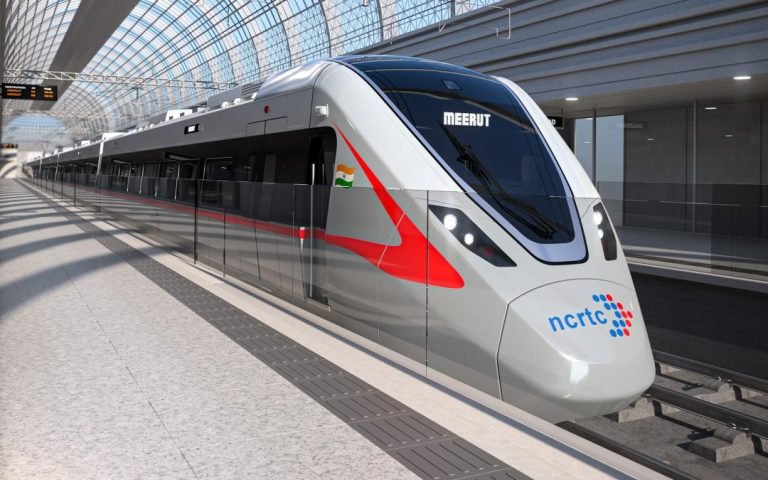
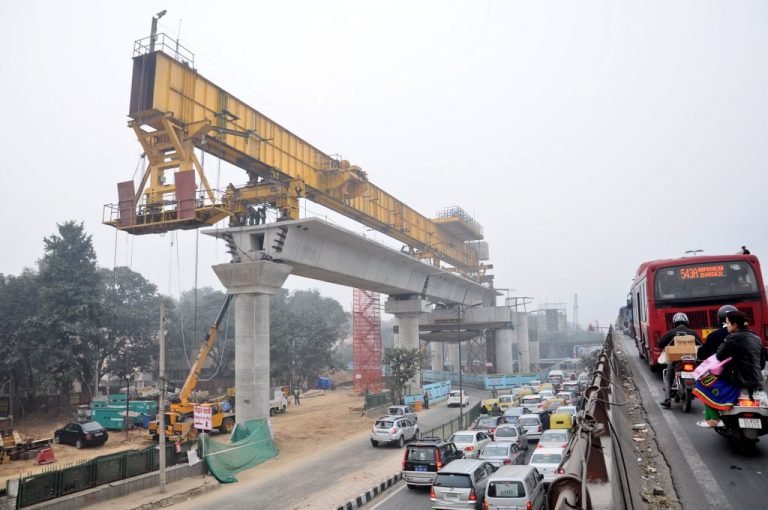
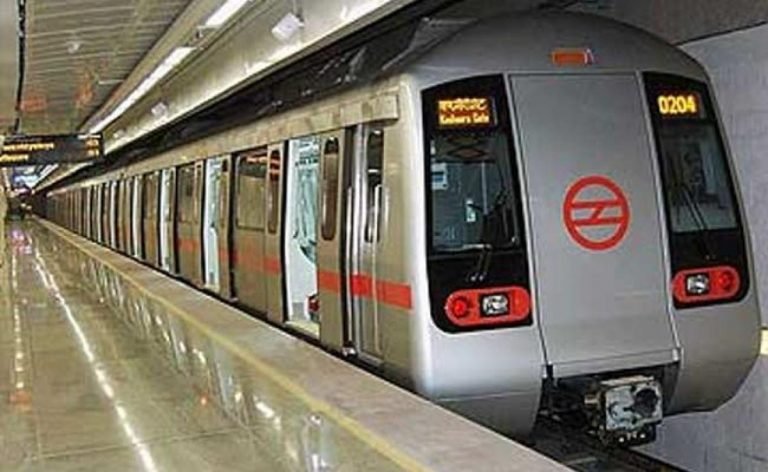
NEW DELHI, INDIA (Metro Rail News): On Tuesday, NCRTC announced that to reduce traffic congestion, the NCRTC is constructing dedicated 4 stations on its priority section and extending the facility to all the stations along the 82.15 KMs under construction Delhi-Meerut RRTS. All priority section stations of the RRTS corridor will have dedicated driveways for commuters.
The semi-HSR project connecting Delhi, Ghaziabad and Meerut is one of the three rapid rail projects planned under phase-01 of the RRTS, and it’s being developed at Rs.30,724 Crores. Ghaziabad alone will have 8 RRTS stations, i.e., Sahibabad, New Bus Adda, Guldhar, Modinagar (South & North) etc.
Image Reprsentation Only
The RRTS project passes through busy stretches and offers hassle-free commuting up to its stations; dedicated driveways have been planned based on experiences at metro stations. Officials have started working on dedicated driveways at stations on a 17 KMs priority section.
The concept is like the airports where vehicles stop and drop or pick up passengers’ mergers with the main road with regular traffic. The arrangement is expected to allow commuters to avoid traffic jams at RRTS stations, said, officials.
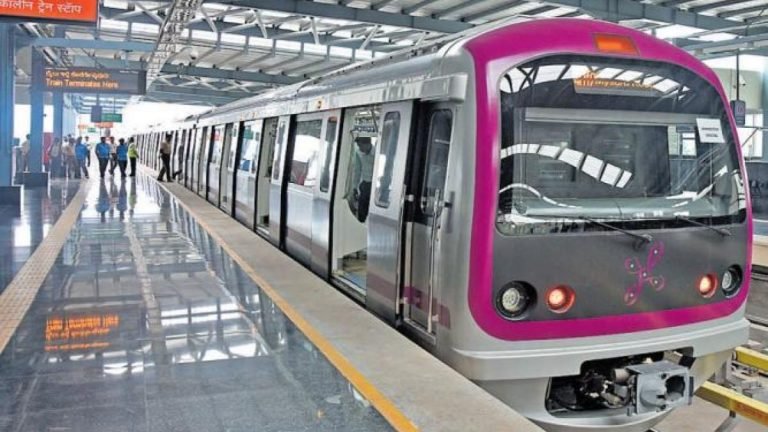
BANGALORE, INDIA (Metro Rail News): On Wednesday, Karnataka Chief Minister Shri Basavaraj Bommai said that the BMRCL phase-02 project completion deadline is 2024 instead of 2025.
The early completion of the project will help people reach their destination faster and reduce traffic congestion. I personally monitor this project till its completion. At any cost, the phase-02 project should be finished by 2024, said CM Karnataka.
According to BMRCL officials, the 21.26 KMs new line from Gottigere to Nagwara is part of phase-02 of the project. This line consists of 7.5 KMs of the elevated corridor with 6 elevated stations and 13.76 KMs underground corridor from the south ramp near Jayanagar fire station to the north ramp at Nagawara with 12 underground stations.
The tunnelling from Cantonment to Shivaji Nagar station commenced on 30th July 2020. The total length of this tunnel is 21.246 KMs. Till now, 3.842 KMs of tunnelling has been completed. The total cost of this project is approximately Rs. 30,695 crores.
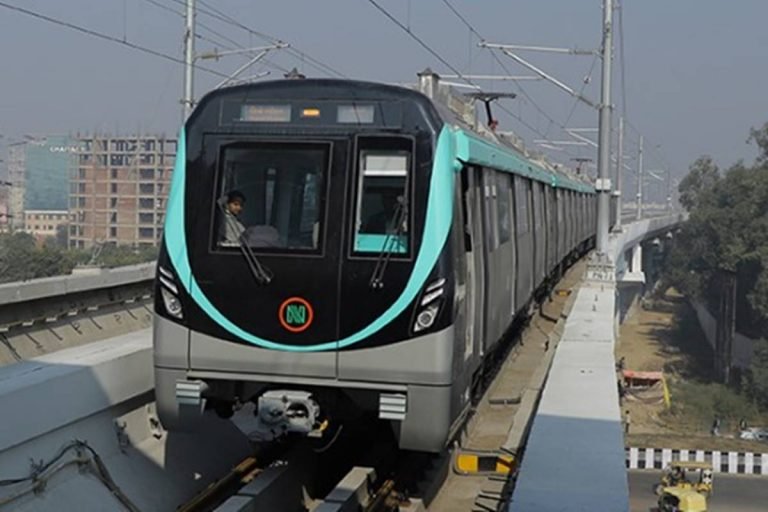
GREATER NOIDA, INDIA (Metro Rail News): On Wednesday, Metro officials announced that the Greno West metro work would start from December 2021. The tender has also been issued to select the operating company. The DPR of the project has already been prepared and sent to the Central Government. With the start of the metro train, Greno West will also connect Delhi-NCR. As of now, there is no public transport facility on this route. Hence, UP CM Shri Yogi Adityanath can lay its foundation stone.
The new route will be about 15 KMs. In the first phase, five metro rail stations work will be started. This metro train work started from Diwali earlier, but due to Corona-Lockdown, this plan got delayed. As a result, this route will be fully elevated.
It is worth noting that the metro route from Noida Sector-51 to Greater Noida West is 15 KMs but will start from only 5 metro stations. All the 5 stations will connect Sector-122, Sector-123, Greater Noida Sector-4, Greater Noida Sector-2, and Ecotech-12 Greater Noida West. However, 9 stations are to be completed on this entire route. With the commencement of the Greater Noida West Metro Line, the West sectors will connect the Aqua Line of Greater Noida and the Blue Line of the Delhi Metro.
According to the given information, the cost of this entire project is approximately Rs. 1100 crores. The entire route of Metro Rail starting from Noida Sector-51 to Greater Noida West Knowledge Park-5 will be elevated. But Rs. 492 crores will already be spent on civil work.
This project was approved in 2019, but it was delayed due to the COVID-19 pandemic and lockdowns.
NEW DELHI, INDIA (Metro rail News): On Tuesday, the National Capital Region Transport Corporation (NCRTC) is notified vacancy for the recruitment of 226 technical engineering positions for operations and maintenance for (Delhi-Meerut RRTS corridor). The last date to apply for these posts is 06th October 2021.
Vacancy & Posts Details:
Maintenance Associate (Mechanical): 2 Posts
Maintenance Associate (Electrical): 36 Posts
Programming Associate: 04 Posts
Maintenance Associate (Electronics): 22 Posts
Technical (Fitter): 18 Posts
Technical (Welder): 02 Posts
Maintenance Associate (Civil): 02 Posts
Traffic Controller: 67 Posts
Technician (A/C, Refrigerator): 03 Posts
Technician (Electronic Mechanic): 27 Posts
Eligibility Criteria:
Maintenance Associates: Diploma in respective discipline
Programming Associates: 3 years Diploma in Computer Science/BCA
Traffic Controller: 3 years Diploma in Electrical/Mechanical/BSC/BSC Hons.
Technician: ITI certificate
Age Criteria:
Maintenance Associates: 18-28 years
Programming Associates: 18-28 years
Traffic Controller: 18-28 years
Technician: 18-25 years
The Application fee is Rs. 500 for unreserved candidates, and for SC/ST fee, relaxation is available. Interested candidates can apply from the official website of NCRTC, i.e., www.ncrtc.in
NEW DELHI, INDIA (Metro Rail News):Indian Railway Recruitment (IRR) 2021 notification has been released for Apprentice posts in Chittaranjan Locomotive Works. The total number of vacancies for the posts is 492. The last date to apply on the above posts is 03rd October 2021. Candidates can find more information about the posts on: apprenticeshipindia.org
According to the given information, the recruitment posts are Machinist, Electrician, Welder, Fitter, Turner, Painter, A.C Mechanic etc. The age criteria for these posts should be at least 15 years and less than 24 years by 15th September 2021. However, few age relaxations are allowed as per the norms.
Further, candidates should have passed their class 10 board exam or any other equivalent exam from a recognized board. The board should be recognized by the Council of Board of School Education in India (COBSE). Candidates should also have passed their ITI exam and have the provisional or final certificate for the same. In addition, applicants should have the trade certificate for the respective trade for which they are applying.
SRINAGAR, INDIA (Metro Rail News): On Saturday, Jammu and Kashmir (J&K) government has submitted the revised Detailed Project Report (DPR) of metro lite rail for Srinagar and Jammu cities to the Ministry of Housing and Urban Affairs (MOHUA) for approval and funding purposes.
However, according to the given information, MOHUA asked the J&K government to rework the project and suggested some inputs be incorporated in the revised DPR.
On 12th June 2021, the railway consultancy firm RITES submitted a revised detailed project of Rs. 9846 crores for metro lite rail in Srinagar and Jammu.
“The revised DPR was submitted in July, whereafter it had been again posed to MOHUA for approval and funding. Inter-ministerial consultation and PIB approval will take about three (3) months, while the construction period is 54 months. The elevated metro lite proposed for Srinagar is 25 KMs at Rs. 5733 crore and for Jammu is 23 KMs at Rs. 4113 crores. As a result, the cities are going to be given the ‘best in class” mobility in terms of safe, reliable, convenient, and sustainable conveyance,” said officials.
“J&K administration awaited the union cabinet’s nod for the project. We have submitted the proposal for the metro rail, and therefore the Housing and concrete Development Ministry has circulated the cupboard note during this regard,” on the sidelines of a function held here about making Srinagar polythene-free, said Lieutenant Governor Manoj Sinha.
“Once all the departments comment on it, it will be sent to the PMO, and the cabinet will approve it. After it’s approved, we’ll start the tendering process,” he added.
According to the project report, the metro rail projects in these Twin Cities, i.e., Srinagar and Jammu, are pegged to cost over Rs. Nine thousand (9000) crores and are expected to finish by 2024 once approved by the concerned bodies.
“The railway consultancy firm RITES has submitted the ultimate detailed project reports for the projects expected to be completed by the top of 2024. Once the projects are completed, Srinagar and Jammu will become the first two non-major cities in the country to have the rapid transport network functional,” said officials.
In DPR, a low-cost, elevated light rail transit system is proposed to run 17 Hours. A day around the year in Jammu, whereas in Srinagar, it will run 17 hours. Daily during summers. And 14 hours. For winters. However, due to the hilly area, only an elevated light rail system is feasible. Hence, no underground tunnels would be built.
According to J&K government officials, Jammu Metro lite Rail will be 23-kilometre long with 22 stations between Bantalab and Bari Brahmana. In contrast, Srinagar light rail system will have a 25 KMs length which incorporates 12.5 KMs length from Indira Nagar to HMT junction and 12.5 KMs length from Hazuri Bagh to Osmanabad with 24 stations.
The elevated metro system would facilitate people and positively impact the economy and the quality of life. The metro coaches would be modern, lightweight, and made of chrome steel and aluminium, with an air-conditioning system.
INDORE (Metro Rail News): Madhya Pradesh Metro Rail Corporation Limited (MPMRCL) has awarded a contract worth INR 1034.90 Crores to Rail Vikas Nigam Limited (RVNL) for the Indore Metro Rail Project.
This contract includes the construction of an elevated viaduct and nine stations on the upcoming Super Corridor zone in Indore. These nine stations are Gandhi Nagar, Super Corridor 6, Super Corridor 5, Super Corridor 4, Super Corridor 3, Super Corridor 2 and Super Corridor 1, Bhawarsala Square and MR 10 Road.
Tenders for this package were invited on 10th March this year by MPMRCL at an estimated cost of INR 1000 Crores and completion period of 847 days. Surprisingly for this package, RVNL was the only bidder when technical bids opened in July.
Tender Number – 273/MPMRCL/2021/Package IN-03
Name of Work – Design and Construction of Elevated Viaduct between Ch.14+488 & Ch.25+415, viaduct connecting Depot leading upto interface location, Nine (9) Elevated Metro Rail Stations including all Civil, Structural, Roof structure, Mechanical, Electrical and Plumbing (MEP) works, Architectural finishes, Façade, Entry/Exits, FOB, Viaduct within the stations including Transition spans” for Indore Metro Rail Project Yellow Line.
Phase-1 of Indore Metro comprises construction of 33.53 km long corridor as Line-3 (Yellow Line) which will form a ring around the city connecting Palasia – Railway Station – Rajwada – Airport – Bhawarsala through 29 stations. The corridor will have 6 underground stations from Kothari market to Airport and all other 23 stations will be elevated.
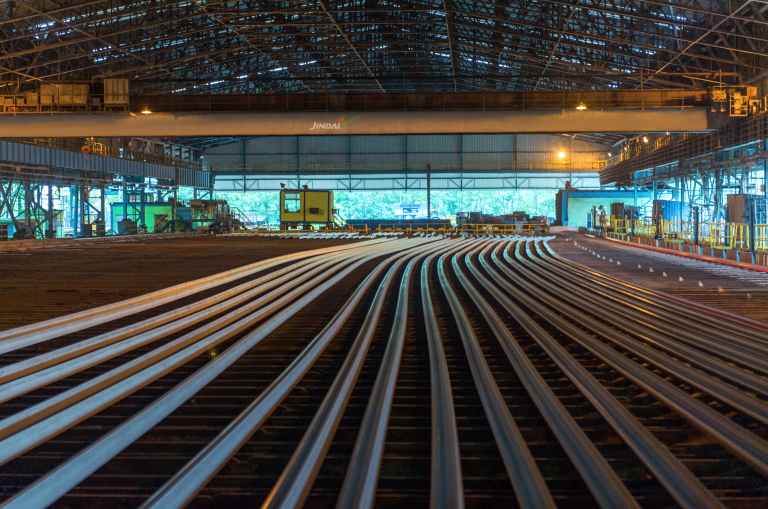
NEW DELHI, INDIA (Metro Rail News): India’s first and only private sector Rail producer JSPL upgraded its Rails inspection line to ensure defect-free speciality Rails for its customers like Indian Railway, Metro Rail Services across India, IRCON and other subsidiaries of Indian Railways.
The complete set of equipment for this line is equipped with 5th Generation cutting edge automation technology. This includes an Online Profile cum surface inspection system from M/s. Next-sense of Austria, New Ultrasonic Testing Machine & 360-degree Brushing Machine from M/s Alpine Metal-Tech of Austria.
“We are continuously upgrading our facilities to eliminate human dependence in Rails inspection. The new line will enable JSPL to enhance the production and inspection capacity of Rails up to One million tons per year”, Said Mr V R Sharma, Managing Director, JSPL in a statement.
JSPL is the only producer of Head Hardened Rail grades 1080 HH & 1175HT for a heavy axle load of more than 25 Ton & high-speed application in the country. JSPL also produces Rails in grades R 260 and 880 for 60E1, ZU 1-60 & 60E1A1 profiles. JSPL has also supplied R350 HT Grade Rails for its overseas customers.
About JSPL: JSPL is a leading Indian Infrastructure conglomerate with a presence in the steel, power and mining sectors. With an investment of approximately 12 billion USD (90,000 Crore Rupees), the Company is continuously scaling its capacity utilization and efficiencies to contribute towards building a Self-Reliant India
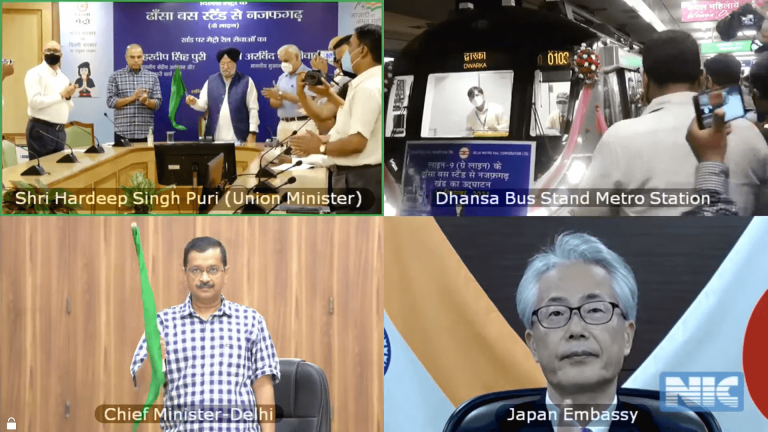
DELHI, INDIA (Metro Rail News): On Saturday, Union Minister for Housing and Urban Affairs (MOHUA) Shri Hardeep Singh Puri and Chief Minister Shri Arvind Kejriwal inaugurates the Najafgarh-Dhansa Bus Stand extension of the Delhi Metro’s Grey Line section via video conferencing.
The commuter’s services on this line will start from today at 05:00 PM. With the opening of this line, the Delhi Metro network span will become 390 KMs with 286 stations.
Photo Copyrighted: DMRC
The Najafgarh-Dhansa Bus Stand stretch, about one kilometre long (891 M), will extend the metro farther into Najafgarh’s interior. The people of the interior villages of Najafgarh, which is steeped in history, would greatly benefit from this expansion of the nearly 4.2 KM Grey Line (Dwarka to Najafgarh corridor).
In October 2019, the Dwarka-Najafgarh corridor opened, connecting the urban village region of Najafgarh to the rapid transit network for the first time. The future Dhansa Bus Stand Station has been decorated with appealing artworks and pictures that depict this national capital neighbourhood’s rich legacy, culture, flora, and biodiversity.
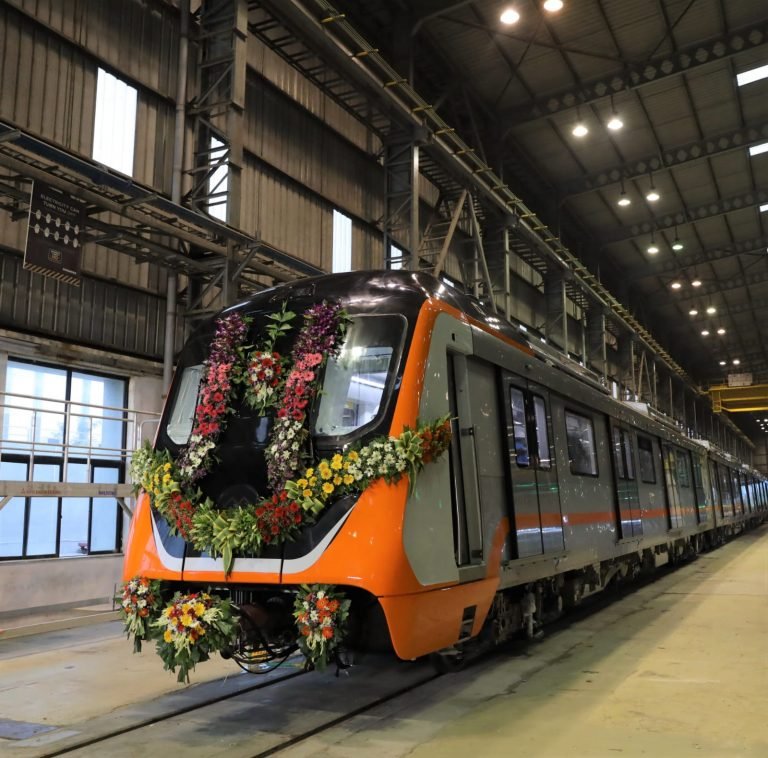
KANPUR, INDIA (Metro Rail News): Alstom completes handover of the first trainset for the Kanpur metro, to Uttar Pradesh Metro Rail Corporation (UPMRC). The unveiling was done at Alstom’s rolling stock manufacturing facility in Savli, Gujarat by the Chief Minister of Uttar Pradesh, Shri Yogi Adityanath in the presence of Shri Kumar Keshav – MD, UPMRC, and Alain SPOHR – MD, Alstom. These metro trains are 100% indigenously manufactured at the facility in Savli, Gujarat.
Alstom completed the acquisition of Bombardier Transportation (BT) on 29 January 2021 and going forward, Alstom will be responsible for the delivery of Kanpur & Agra metro rolling stock and signalling, including the scope of all BT technologies.
Valued at approximately INR 2051 crore (245 Mn EUR), Alstom’s scope on the Agra-Kanpur metro project includes – design, build and delivery of 201 metro cars (67 MOVIA metro three-car trainsets) and an advanced signalling solution (CITYFLO 650). The customer also has a provision to exercise an option for an additional 51 metro cars.
The new metro trains will benefit around 5 million citizens of both cities. Additionally, the overall project will significantly contribute to the socio-economic development of the region.
“We are proud to deliver the first metro trains, for Kanpur Metro in record time. After successfully delivering Rolling Stock & Signalling solution for the state’s capital Lucknow, we are happy to strengthen this partnership with UPMRC and redefine the mobility needs of Kanpur & Agra” said Alain SPOHR, Managing Director, Alstom India. “Our MOVIA metros are world renowned for their operational reliability, appealing design and enhanced safety features – everything that makes metro an attractive mode of transport,” he added.
“As I virtually unveil the first metro train for Kanpur, I would like to congratulate Alstom and UPMRC for the fast paced execution of the ongoing metro project”, said the Chief Minister of Uttar Pradesh, Shri Yogi Adityanath. “In addition to Kanpur & Agra, we are looking forward to bringing advanced metro service for enhanced public transportation in cities like Gorakhpur, Varanasi, Prayagraj, Jhansi and Meerut, and improving connectivity in the near future”, he added.
Photo Copyrighted: UPMRC
Speaking at the unveiling ceremony,KumarKeshav, Managing Director, Uttar Pradesh Metro Rail Corporation (UPMRC)said, “It is a proud moment for Alstom, which is indigenously manufacturing the rolling stock for some of the most prestigious metro projects in the country. With an illustrious track record of successfully delivering the trains for Lucknow metro in record time, we are happy to have Alstom as our partner in this journey towards transforming the face of urban mobility in Uttar Pradesh. These world-class trainsets for Kanpur & Agra will breathe life into the metro project. We are looking forward to the speedy execution of this project and catering to the transport infrastructure needs in growing cities.”
Inspiration from Uttar Pradesh’s rich cultural heritage combined with best-in-class design has resulted in an attractive look for India’s latest metro fleet. The aerodynamic modular design of the new MOVIA metros will offer a host of safety, security and environmental benefits along with a great passenger experience. Built with stainless-steel car bodies, the air-conditioned cars will have automated sliding doors, comfortable seating & standing spaces, dedicated areas for entry of specially-abled, who use wheelchairs and modern passenger information systems, combining to provide an accessible and welcoming environment for passengers.
The trains will be equipped with FLEXX metro bogies and MITRACpropulsion system to increase energy efficiency, reduce operating costs, and ensure the new trains meet the highest environmental standards. Each train will accommodate approximately 960 passengers in the three-car configuration.
DELHI, INDIA (Metro Rail News): The Delhi Metro Rail Corporation said that two Delhi Metro stations near the Tikri border with Haryana, one of the sites of the ongoing farmers’ protests, were closed on Friday due to security reasons. The two stations in Haryana Pandit Shree Ram Sharma and Bahadurgarh City fall on the Green Line of the network.
“Security Update Entry/exit for Pandit Shree Ram Sharma and Bahadurgarh City have been closed”. Farmers from various states have been protesting at Singhu and Tikri on the Delhi-Haryana border and Ghazipur along the Delhi-UP border, where they have camped since 25th November 2021 seeking repeal of the three new agricultural laws”, said DMRC on Twitter.
Members of Shiromani Akali Dal have gathered at Gurudwara Rakab Ganj on Friday morning in view of a protest march organized by them against the farm laws”, said Police Officials.
MAHARASHTRA, INDIA (Metro Rail News):Maha Metro has redesigned its plan for doing commercial development of its land in Dhantoli, opposite Yeshwant Stadium. Instead of one tower, there will be two and both will be built on a public-private partnership (PPP) basis. The project has been redesigned to get a better response from local bidders.
The areas of two land parcels opposite Yeshwant Stadium are 77,751 square feet and 75,696 sq ft. The land use is commercial. The floor space index (FSI) of these plots considering the Transit-Oriented Development (TOD) policy of the Maharashtra Government is 4.0. The permitted height by the Airport Authority of India (AAI) is about 289 feet. The two towers will be connected to Sitabuldi Interchange metro station with a foot over bridge (FOB).
The total allowable construction on each land parcel will be maximum of about 5 lakh square feet. The two towers will be multistoried with ample parking space.
The concessionaires will have to provide parking space for two-wheelers and four-wheelers as per Development Control Rules (DCR) of Nagpur Municipal Corporation (NMC). In addition, they will have to provide a parking space for 50 cars in each tower to Maha Metro. As Maha Metro is a planning authority, there will be single window clearance regarding the sanction of building plans on these two land parcels.
The project will not only change the skyline of Nagpur but create a lot of parking space in the congested Sitabuldi area. The concessionaires can build offices, restaurants, banquet halls, hotels, etc in the building. They are free to decide the commercial use of the towers.
The successful bidder will have to pay a minimum upfront premium of Rs. 10 crores and an annual concession fee to Maha Metro payable after the construction period. This will be a bidding parameter. The concession period is 60 years for both towers. This includes a construction period of 3 years from the date of signing of the letter of acceptance (LoA).
The tenders for the two projects are live on Maha Metro’s e-tender portal www.mahametrorail.etenders.in at serial numbers 263 and 264. The last dates for submission of bids are October 13 and October 14, 2021.
KANPUR, INDIA (Metro Rail News):Kanpur Metro train will come here from Sanwali Gujarat next week. The three coaches of the train will be brought by road from different trailers. Metro trials will be conducted in early November 2021 by equipping them in the depot built in the polytechnic.
After this, the metro will start running between IIT and Motijheel in January. The Uttar Pradesh Metro Rail Corporation (UPMRC) prepares coaches for Metro trains at its factory in Sanwali. A coach is 23 M long. Thus, the first train will be 69 M long. According to officials, three state-of-the-art coaches of Metro Rail have been ready.
According to the given information, the front and rear coaches will also have engines. All three coaches will relate to each other from the inside. The coach will have an announcer key as well as an emergency button. In case of emergency, by pressing this button, the train driver can report the problem. The driver will inform the control room so that proper arrangements can be made at the next station.
Kanpur Metro Rail will be more modern than Delhi and Lucknow Metro. There will be more facilities in the metro train, said Shri Kumar Keshav, Managing Director UPMRC.
DELHI, INDIA (Metro Rail News): On Thursday, Delhi Metro rail Corporation Ltd (DMRC) announced that the Najafgarh-Dhansa Bus Stand extension of the Delhi Metro’s Grey Line would be thrown open to the public from 18th September 2021. Union Minister for Housing and Urban Affairs (MOHUA) Shri Hardeep Singh Puri and Chief Minister Shri Arvind Kejriwal will inaugurate the section via video conferencing.
The passenger services on this line will start at 5:00 PM on the same day,” said DMRC officials. With the opening of this line, the Delhi Metro network span will become 390 KMs with 286 stations.
The Najafgarh-Dhansa Bus Stand stretch, which is about one kilometre long (891 metres), will extend the metro farther into Najafgarh’s interior.
The people of the interior villages of Najafgarh, which is steeped in history, would greatly benefit from this expansion of the nearly 4.2-kilometer Grey Line (Dwarka-Najafgarh corridor).
In October 2019, the Dwarka-Najafgarh corridor opened, connecting the urban village region of Najafgarh to the rapid transit network for the first time.
The future Dhansa Bus Stand Station has been decorated with appealing artworks and pictures that depict the rich legacy, culture, flora, and biodiversity of this national capital neighbourhood.