Cruising for Speed: High-Speed Rail Projects in India

High-speed Rail (HSR) in India is currently under construction and the country does not have high-speed rail corridors, or lines operating at over 200 km/h (120 mph) presently under UIC definition. A total of twelve corridors are planned and one of the corridor which links Mumbai and Ahmedabad is under construction. As of 2021, the fastest train of India is Vande Bharat Express with a top speed of 180 km/h (110 mph) which it attained during a trial run.

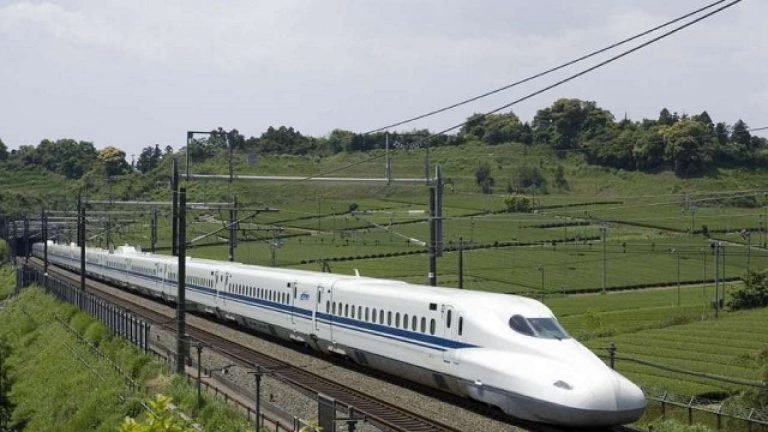
While the fastest operating train is Gatimaan Express with a top operating speed of 160 km/h (99 mph). The first high-speed railway corridor of length 508 km is currently under construction between Mumbai and Ahmedabad which would have a top operational speed of 320 km/h (200 mph) along the western coast. The corridor will use Standard gauge line and will be built with Shinkansen technology. It is expected to carry passengers between the two cities in just three hours and the ticket prices are expected to be cheaper than aeroplanes i.e. Rs. 2,500 – Rs.3,000. This project which was initially targeted for completion by December 2023, is now expected to be completed by 2028, owing to COVID Pandemic and land acquisition concerns for the section which falls in Maharashtra. However, a portion of this line is planned to be opened by 2026.

image 3

History

India made its tryst with high-speed rail by inaugurating the Howrah Rajdhani Express back in March 1969, five years after Japan inaugurated Shinkansen, the world’s first high-speed rail which was running at twice the speed of Rajdhani Express. With the initiation of various electrification projects in the 1970s on the trunk routes, the electric locomotives soon began to replace their Diesel counterparts. The WAP-1 electric locomotive broke the record to be the fastest locomotive in India during the 1980s, touching a maximum speed of 160 km/h during the trial runs and was certified for commercial operations at 140 km/h. The first service to reach a maximum speed of 140 km/h was WAP-1 hauled Shatabdi Express from New Delhi to Jhansi in 1989.

After Indian railways realised that the DC powered locomotives would soon be overtaken by AC ones, they introduced the AC powered WAP-5 class locomotives, a first of its kind in India. These locomotives were imported to serve the purpose of services on fast, short trains like the Shatabdi Express. They also featured fully suspended traction motors reducing the impact on tracks and allowing faster speeds. The first batch of these locomotives arrived in India in 1995 and was set to operate at speeds of 130 km/h. During the trial runs, this locomotive reached a record speed of 184 km/h which made it the fastest locomotive in India.

Indian railways achieved the next breakthrough in the late 2010s when the WAP-5 hauled Gatimaan Express became the fastest commercially operated semi-high-speed train in India, in April 2016, with a maximum operational speed of 160 km/h. Two years later, Indian railways saw another breakthrough as they successfully developed the first indigenously built, semi-high-speed, EMU train, the Vande Bharat Express. This train attained a speed of 180 km/h during the trial run and was designed to run at a maximum speed of 200 km/h, but due to the speed limitations on old tracks, the train’s operational speed is restricted to 130 km/h.

Initial Proposals

One of the first proposals to introduce high-speed trains in India was mooted in the mid-1980s by then Railway Minister Madhavrao Scindia. A high-speed rail line between Delhi and Kanpur via Agra was proposed. An internal study found the proposal to not be viable at that time due to the high cost of construction and the inability of passengers to bear much higher fares than those for normal trains. In a feasibility study published in 1987, RDSO and JICA estimated the construction costs to be Rs.4.9 crore per km, for a line dedicated to 250–300 km/h trains. In 2010, the 1987-estimated cost, inflated at 10% a year, would be Rs.43.9 crore per km (US$9.5 million/km). The railways instead introduced Shatabdi trains which ran at 140 km/h.

Further Developments

The Indian Ministry of Railways‘ white-paper “Vision 2020”, submitted to The Parliament of India on 18 December 2009, envisaged the implementation of regional high-speed rail projects to provide services at 250–350 km/h, and planning for corridors connecting commercial, tourist, and pilgrimage hubs. Six corridors were identified for technical studies on setting up of high-speed rail corridors: DelhiChandigarhAmritsarPuneMumbaiAhmedabadHyderabadWarangalVijayawadaChennaiHowrahHaldiaChennaiBengaluruCoimbatoreKochiThiruvananthapuramDelhiAgraKanpurLucknowVaranasiPatna. These high-speed rail corridors were planned to be built as elevated corridors.

Feasibility studies

Multiple pre-feasibility and feasibility studies have been done or are in progress.

The consultants for pre-feasibility study for four corridors are:

In September 2013, an agreement was signed in New Delhi to complete a feasibility study of high-speed rail between Ahmedabad and Mumbai, within 18 months. The study estimated a total project cost of 500 million Yen with the cost to be shared 50:50 by Japan and India.

The feasibility study for the Chennai-Bengaluru high-speed rail corridor was completed by Germany in November 2018. The study found that the route was feasible. The proposed corridor would be 435 km long and would have an end-to-end travel time of 2 hours and 25 minutes with trains operating at a speed of 320 km/h. The study proposed constructing 84% of the track on viaducts, 11% underground and the remaining 4% at-grade. The current fastest train on the Chennai-Bengaluru route, the Shatabdi Express, completes the journey in 7 hours.

Different Countries

France : In February 2014, Henri Poupart-Lafarge of Alstom, manufacturer of trains used on TGV in France, stated that India is at least 5–10 years away from high-speed trains. He suggested that the country should first upgrade the infrastructure to handle trains travelling at speeds of 100–120 km/h (62–75 mph).

In 2017, the French National Railways (or SNCF) proposed to upgrade the Shatabdi train track between Delhi and Chandigarh to run the trains at a maximum speed of 220 km/h. This was expected provide hands-on expertise for Indian Railways to implement Semi-High speed trains across India, specifically running Rajdhani and Shatabdi trains at maximum speed 220+ km/h with average speed of 150 km/h.

China : Feasibility study of running semi-high-speed trains on the 500 km Chennai–Mysore section was submitted by the China Railway Group Limited (CREEC) to the Indian Railway Board. It envisions reducing travel time from the existing 7 hours to 4 hours and 45 minutes.

Germany : The German finance ministry had agreed to finance a government feasibility study into a high-speed rail link between Chennai and Mysore. It had also discussed a project to modernise the Chennai–Hyderabad route.

Germany is also conducting a feasibility study for running trains at a speed of about 300 km/h on the 450 km long Chennai–Mysuru route. A pre-feasibility study was already completed in 2016 by the consortium of consultants comprising DB E&C, Intraplan Consult and Ingenieurburo Vossing.

Spain : In 2016, there were plans to run Spain’s Talgo trains in Delhi–Mumbai route. During trial run, these trains reached the Talgo train reached a peak speed of 150 km/h (93 mph), observing laid-down speed cautions and halting at the usual stoppages as the Mumbai RajdhaniTalgo clocked an average speed of 117.5 km/h (73.0 mph). The Mumbai Rajdhani took 15 hours and 50 minutes at an average speed of 87.7 km/h (54.5 mph). This was later rejected by the Indian government since the trains were not suited for Indian tracks and since they could not reach their maximum speed. Instead, the government indigenously manufactured the Vande Bharat Express or Train 18 as a part of its Make in India campaign. It achieved a top speed of 180 km/h (110 mph) during trial runs.

High Speed Rail Project

Since the 1980s, India has proposed high-speed rail lines with train speeds surpassing 250 km/h. Multinational engineering corporations and countries (e.g., Japan, Spain, France, etc.) have developed numerous pre-feasibility studies, project reports, and pre-design documents since then in order to finalise cost, select the proper technology, and begin building work.

The National High-Speed Rail Corporation Limited (NHSRCL) was established in February 2016 with the mission of financing, constructing, maintaining, and managing all high-speed rail tracks in India.

The Mumbai – Ahmedabad route is the first to be chosen for implementation (with Japanese assistance via Shinkansen (bullet train) technology), so NHSRCL was formed with equity participation by the Central Government through the Ministry of Railways and the state governments of Gujarat and Maharashtra.

The following is a detailed summary of all Indian high-speed rail systems that are now under construction (ongoing), approved (coming), or proposed (planned).

image 4

Key Figures

·         Operational Routes: 0 km

·         Under Construction Routes: 324.67 km

·         Approved Routes: 183.50 km

·         Proposed Routes: 6668 km

List of High Speed Rail Projects in India

Sr. No.Route (City & State)Route LengthUnder ConstructionStations PlannedStatusDeadline
1.Mumbai – Ahmedabad (Maharashtra & Gujrat)508.17 Km327.67 Km12Under ConstructionDec 2023
2.Delhi – Varanasi (Uttar Pradesh)865 Km0 Km12DPR PreparationTBD
3.Delhi – Ahmedabad (Haryana, Rajasthan, Gujrat)886 Km0 Km12DPR PreparationTBD
4.Mumbai – Nagpur (Maharashtra)741 Km0 Km12DPR PreparationTBD
5.Delhi – Amritsar (Haryana, Punjab)465 Km0 Km13DPR PreparationTBD
6.Mumbai – Hyderabad (Maharashtra, Telangana)711 Km0 Km11DPR PreparationTBD
7.Channai – Mysore (Tamil Nadu, Karnataka)435 Km0 Km9DPR PreparationTBD
8.Varanasi – Howrah (Kolkata) (Uttar Pradesh, Bihar, West Bengal)760 Km0 Km10DPR PreparationTBD
9.Hyderabad – Bangalore (Telangana – Karnataka)618 Km0 KmTBDProposed Under National Rail PlanTBD
10.Nagpur – Varanasi (Maharashtra, Madhya Pradesh, Uttar Pradesh)855 Km0 KmTBDProposed Under National Rail PlanTBD
11.Patna – Guwahati (Bihar, West Bengal, Assam)850 Km0 KmTBDProposed Under National Rail PlanTBD
12.Amritsar – Pathankot – Jammu (Punjab, Jammu UT)190 Km0 KmTBDProposed Under National Rail PlanTBD

India’s high speed rail corridors are planned to run along major expressways, national highways, greenfield areas, and may pass through arterial roads of the intermediate city road network for high speed rail connectivity between different cities along the corridor.

Details about first under construction Indian Bullet Train Project

The Mumbai-Ahmedabad High-Speed Rail (MAHSR Bullet Train) project is a 508.17-kilometer High-Speed Rail line that will connect Mumbai, Maharashtra, and Ahmedabad, Gujarat, via 12 stops, at a cost of Rs. 1.1 lakh crore (US$15 billion).

The National High Speed Rail Corporation Ltd. (NHSRCL) is carrying out the project with a 50-year Rs.88,087 crore (US$12 billion) loan from Japan at a 0.1 percent interest rate, with repayments beginning 15 years after the line is operational. The current deadline for the project is December 2023.

Except in Mumbai, where the line will be built underground using three giant Tunnel Boring Machines, trains on the line will travel at a speed of 320 km/h on an elevated bridge 10-15 metres above the ground (TBM). The line will travel for around 2 kilometres under the sea at Thane Creek between Mumbai and Thane stations.

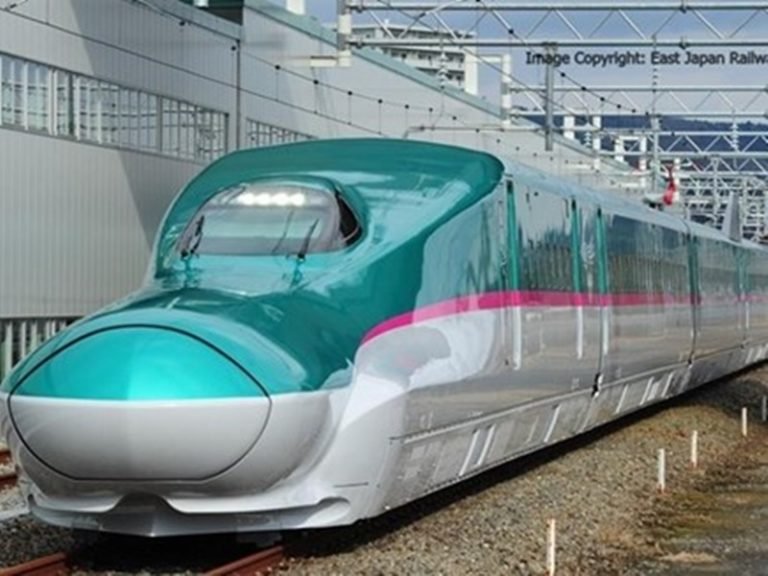
The line’s rolling stock will be Shinkansen E5 trains, which can travel at a top speed of 350 km/h (220 mph) and have a maximum operational speed of 320 km/h (200 mph).

On September 14, 2017, the prime ministers of India and Japan laid the foundation stone for the project, after which work on a 4000-employee training centre in Vadodara began. The Indian government set an August 15, 2022 deadline, but it will not be met due to land acquisition concerns (825 hectares are required), mostly in Maharashtra.

Construction on the housing structures at the Vadodara Training Centre is complete as of May 2020, while work on the Sabarmati HSR Terminal Station is begun. On February 10, 2021, work on the main-foundation line’s began with the pouring of concrete.

Key Figures

Operational: 0 km

Under Construction: 324.67 km 

Approved: 183.501 km

Elevated: 468 km

Underground: 27 km (2 km under sea at Thane Creek) | At-Grade: 13 km

System Specifications

·         Maximum Speed: 350 kmph

·         Operational Speed: 320 kmph

·         Average Speed: 250 kmph

·         Track Gauge: Standard Gauge – 1435mm

·         Signalling: ETCS Level-2 of ERTMS

·         Rolling Stock: 24 trains x 10 coaches

·         Train Capacity: 750 passengers

·         Traction: 25 KV AC overhead catenary (OHE)

·         Safety: Urgent Earthquake Detection and Alarm System (UrEDAS) for automatic breaking in case of an earthquake

Project Cost: Rs. 1.1 lakh crore

Funding Pattern / Sources

  • Government. of Japan (JICA): Rs. 88000 crore
  • Government of India: Rs. 17,000 crore
  • Governments of Maharashtra & Gujarat: Rs. 5000 crore

 Mumbai – Ahmedabad HSR Route Information

·         Length: 508.17 km

·         Type: Elevated, Underground & At-Grade

·         Depots: Sabarmati Rail Depot, Surat Rail Depot and Thane Rail Depot

·         Number of Stations: 12

·         Station Names: Mumbai (Bandra Kurla Complex), Thane, Virar, Boisar, Vapi, Bilimora, Surat, Bharuch, Vadodara, Anand/Nadiad, Ahmedabad, and Sabarmati

Mumbai – Ahmedabad HSR Operational Plan

The line’s Operational Control Centre (OCC) will be located at Sabarmati. Trains will be operated with 2 types of services for riders –

  • High Speed (2.58 hour journey): Ahmedabad (Sabarmati) – Ahmedabad (Kalupur) – Anand – Vadodara – Bharuch – Surat – Bilimora – Vapi – Boisar – Virar – Thane – Mumbai (Bandra Kurla Complex)
  • Rapid High Speed (2.07 hour journey): Ahmedabad (Sabarmati) – Vadodara – Surat – Mumbai (Bandra Kurla Complex)

Mumbai – Ahmedabad HSR Fares (Prices)

The fare structure is yet to be finalized but is expected to be 1.5 times the existing first class AC fare on the Indian Railways’ current service. The line’s official fare structure, prices and rules are expected to be finalized closer to the start of commercial operations.

Mumbai – Ahmedabad HSR Major Contractors

Sr. No.ContractContractor
1.Feasibility StudyJICA – Ministry of Railways (RVNL) JV
2.General ConsultantJapan International Consultants for Transportation Co., Ltd. (JIC) – Nippon Koei Co., Ltd. – Oriental Consultants Global Co., Ltd. JV
3.Project Management Consultant (PMC)Tata Consulting Engineers – Consulting Engineers Group – Aarvee Associates – PADECO Co. JV
4.Geotechnical Investigations by Borehole Drilling & Plate Load TestK.C.T. Consultancy Services
5.Geotechnical Investigation of 2 km undersea section at Thane CreekKawasaki Geological Engineering – RITES
6.Design and Build Works for Construction of Lodging (Phase – I) of Training InstituteCube Construction Engineering Limited
7.Construction of Quarters, Offices, Out house Garages and otherJ.R. Construction
8.Miscellaneous works in National Academy of Indian Railway Campus Lalbaug Vadodara
9.Construction of Various Building Structures in Vadodara Yard and nearby areasVijay Agarwal & Associates
10.Design and Build Works for Construction of Sabarmati HSR TerminalB.L.Kashyap & Sons Ltd.
11.Package C1: 1.028 km Underground Station at BKC, MumbaiBids Invited in November 2019 ; Current Submission Deadline: December 7, 2021
12.Package C2: 20.377 km underground tunnel between BKC Station to Shilphata, Thane ( 3 Mega TBMs to be used)Bids Reinvited October 2021
13.Package C3: 135.450 km elevated line between Shilphata, Thane and Zaroli Village (MH/GJ Border)Tender Notice Pending
14.Package C4: 237.1 km elevated line between Zaroli Village (MH/GJ Border) and VadodaraLarsen & Toubro
15.Package C5: 8.198 km elevated viaduct and station within Vadodara3 bids received
16.Package C6: 87.569 km elevated viaduct between Vadodara and AhmedabadLarsen & Toubro
17.Package C7: 18.133 km elevated viaduct and station within AhmedabadIRCON – DRA JV is lowest bidder
18.Package C8: 2.126 km viaduct, building works at Sabarmati DepotSCC – VRS JV is lowest bidder
19.Package P1(a): Construction of 1 PSC Bridge & 10 Steel Truss Bridges between Shilphata and ZaroliTender Notice Pending
20.Package P1(b): Construction of 4 PSC Bridges & 7 Steel Truss Bridges between Zaroli and Vadodara.MG Contractors is lowest bidder
21.Package P1(c): Construction of 1 PSC Bridge & 4 Steel Truss Bridges between Vadodara and Ahmedabad.MG Contractors is lowest bidder
22.Package P2: Construction of PSC Bridge No. GAD 10 over NH48, Navsari District.Bids Invited August 2019
23.Package P3: Construction of PSC Bridge No. GAD 11 over NH48, Navsari District.Bids Invited August 2019
24.Package P4: Procurement of Structural Steel, Fabricating & Supplying Steel Structures (Truss) of various sizes at workshops, to be erected by Special Bridges packages P-1(A), P-1(B), P-1(C).Larsen & Toubro – IHI Infrastructure Consortium
25.Package T1: Design, Supply & Construction of Track & Track related works between HSR station at BKC/ Mumbai and Zaroli Village on MH/GJ border (156.855 km)Tender Notice Pending
26.Package T2: Design, Supply & Construction of Track and Track related works between Zaroli Village and Vadodara (237.10 km)IRCON International is lowest bidder
27.Package T3: Design, Supply & Construction of Track and Track related works between Vadodara and Sabarmati Depot and workshops (114.60 km)Bidding Underway; Bids to be opened Dec 23, 2021

Other Major Developments in High Speed Rail Network in the Country

Diamond Quadrilateral project

The Diamond Quadrilateral high-speed rail network project is set to connect the four major metro cities of India namely: ChennaiDelhiKolkata and Mumbai. President of India mentioned in his address to the joint session of Parliament on 9 June 2014 that the new Government was committing to build the dream project. Although the route is not yet planned, the alignment could follow the existing Golden Quadrilateral railway line which links other major cities.

Diamond Quadrilateral project’s proposed and probable lines 

High-speed CorridorSpeed (Km/Hr)Length (Km)ViaStatusPlanned opening (According to NRP)
Delhi-Kolkata3201576VaranasiDPR under Preparation2031
Kolkata – Chennai3201500VishakhapatnamTBDTBD
Mumbai – Chennai3201200HubliTBDTBD
Delhi – Mumbai3201394Ahmedabad and JaipurOne section under construction2031
Delhi – Bengaluru3201900Bhopal and HyderabadTBDTBD
Mumbai – Kolkata3201800NagpurTBDTBD

Semi-High-Speed Rail

The various Semi-High-Speed Rail Services is also under progress in India. The details as under:

Gatimaan Express: In 2016, the Gatimaan Express was built between Delhi and Agra with a speed of 160 km/h (99 mph). This became India’s first Semi-high-speed train.[51] Due to low occupancy, Indian Railways first extended this train from Agra to Gwalior on 19 February 2018 and then to Jhansi on 1 April 2018. With the great success of Gatimaan Express, the Indian Railways plans to start additional semi-high speed services along with the Delhi – Bhopal / Chandigarh / Kanpur routes shortly.

image 5

Tejas Express: On 22 May 2017, the Tejas Express was built, featuring modern onboard facilities with doors which are operated automatically. On 24 May 2017, The first line was opened from Mumbai to Goa. On 1 March 2019, second Tejas Express of the country was flagged off between Chennai and Madurai by the Prime minister. A third route from Lucknow to Delhi was inaugurated on 4 October 2019. This became the India’s first train which was operated by private operators, IRCTC, a subsidiary of Indian Railways. A fourth line from Mumbai and Ahmedabad is also operated by IRCTC was inaugurated on the 17 January 2020.
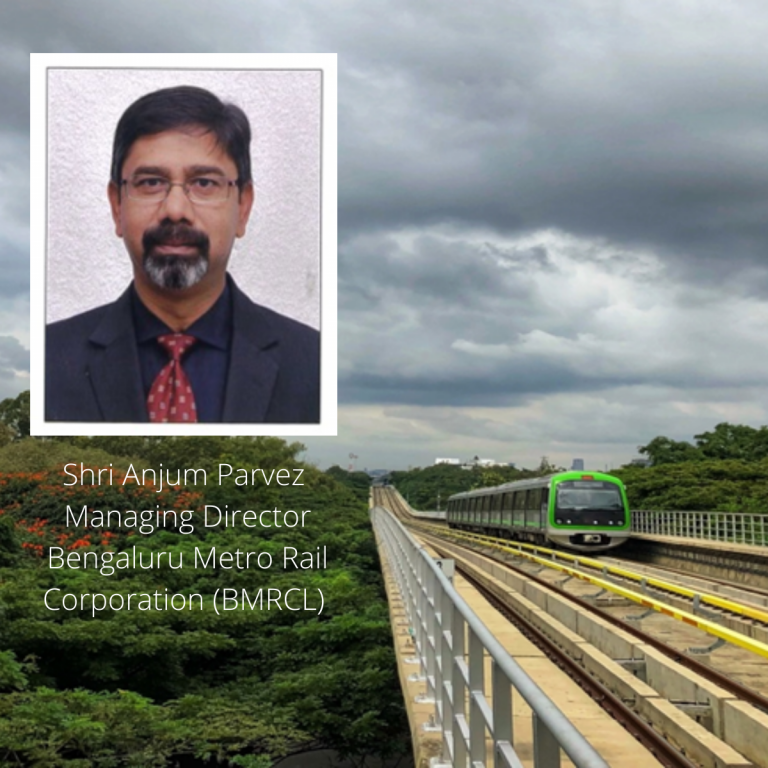
Exclusive Interview with Shri Anjum Parvez, Managing Director, Bengaluru Metro Rail Corporation (BMRCL)

Metro Rail News Managing Editor Mr. Narendra Shah conducted an email interview with Shri Anjum Parvez, MD, BMRCL, In Which Mr. Parvez shared his views on the role of metros in a high-tech city like Bangalore. He threw light on the reasons behind the delay of Namma metro and asked for all stakeholders’ proper coordination and cooperation for the project’s timely completion.

He also highlighted the other intelligent strategies to implement the projects better shortly. Moreover, he also added that the passenger boarding has increased post lockdown. Finally, he summed up by recognizing the metro as the city’s lifeline. Here are edited excerpts:

Narendra Shah (NS): Congratulations on being appointed as the new MD of Bangalore Metro Rail Corporation Limited. What are your immediate plans and goals for Namma Metro to accomplish holding the coveted position?

Anjum Parvez (AP): Immediate plans are to monitor, improve wherever necessary, and the goal is to deliver the project on the scheduled timelines. 

NS: You are a senior IAS officer and have served on a number of important positions including Principal Secretary, Transport Dept. Karnataka Govt. before being transferred to this position. In what ways do you think BMRCL is going to be benefitted from your vast administrative experience especially being a principal secretary for transport department?

AP: Metros do provide an alternative to other modes of mass public transport. With coordination with authorities and the stakeholders alike, is to bring in improvements to accessibility, connectivity, reliability of the city’s public transport systems with first and last mile connectivity, so as to increase the combined share pattern of the public transport systems, to support efficient economies.

NS: Namma Metro is getting increasingly infamous for its project delays. What do you think is the main reason for the same? Is there any preparedness to tackle this problem creating huge cost overrun and inefficiency in terms of timely deliverance of project benefits? Apart from project delays BMRCL is also criticized for poor planning and executions. A number of project shortcomings have been reported in first phase of Namma project. What is your say in this regard? Are you going to work on it and have any plans for the rectification?

AP: Implementation of metro systems in urban built infrastructure is complex and challenging to position its full benefits, looking at the technologies adopted, land issues, environmental issues, traffic conditions, geological conditions, people’s perspective etc. Lessons learnt in the earlier phase is helping us for timely deliverance of the project through rigorous monitor on regular intervals.

NS: Metro is like a saviour for a congested city like Bangaluru. Do you agree with the statement? Do you think there is an urgent need of an inter-modal transport plan to be developed in the metropolitan city especially integrating it with all metro stations?  

AP: To decongest any city, a good and reliable mass public transport systems like metro are very much required with multimodal integration along with transit oriented development for a wider external economic benefits.

NS: How friendly would be the first metro system of south India for commuters? Do you have any plans for integrating the metros with the city railway station, KSRTC and BMTC bus stations, Yeshwantpur Railway station etc.? Do you think it is a required and needful step to be complied with? 

AP: Namma metro is already a part of the lifeline of the lively city, as it is commuter-friendly to all sections of the society.  Namma metro system has already integrated with Indian Railway, KSRTC and BMTC city bus stations and Yeshwantpur Railway Station etc., with good foot connectivity, feeder bus connectivity, bike hiring at stations and easy interchanges for different lines of Metro systems and planned for other phases of the project.

NS: ‘It took Namma Metro 7 Years to complete 6 Km line.’ Namma Metro is also considered to be the slowest after Kolkata Metro. The first phase also took 10 years to complete. The 72 Km Phase 2 is already delayed by more than 07 years. Our straight question to you – What is your new deadline of completion of Phase II? Are you meeting the deadline?

AP: Namma metro was the first to adopt the standard gauge and the third rail technologies for the city. Being complex in nature and to build in an already built urban infra having high traffic corridors, challenges of land acquisition, environmental issues, limited working periods for movement of men and materials, minimum inconvenience and safety of the citizens, our first section of 6.7 km of Phase-I was opened for public carriage in less than 4 ½ Years for the start of the construction. The complex geological strata for underground tunnelling and technical glitches, did create some unexpected problems for execution in time for Phase-I. Out of the 72 km of Phase-II, more than 13 km is already opened for public carriage and is operational. We have already geared up to meet the deadline of 2024 for Phase-II of the project.  

NS: Does Namma Metro suffer with poor planning at the concept stage of preparing the detailed project report (DPR)? Is there’s any issue Namma Metro is facing today is due to poor planning at initial levels. If so, how are you going to rectify it?

AP:  DPRs are prepared after many surveys and traffic study. We do have not any poor planning, except for the ridership ship projection challenge, which again depends on many other factors, including citizens’ perspective towards public transport systems. 

NS: What is your expected daily ridership for Namma Metro? Are you ready to confirm that Namma Metro would neither suffer from congestion nor face problems related to lack of ridership? Can commuters expect Namma Metro service hours to extend beyond 10 P.M?

AP: Pre COVID periods have seen recorded passengers boarding of more than 6 lakhs per day with congestion during peak hours with three car train sets. For passenger convenience, all the train sets of three cars have been converted to six cars and was operating from 05.00 am to 11.00pm. Operations after the lock downs is seeing a steady growth increase in passengers boarding and with steady increase, passengers boarding have records of 3.1 lakh per day and presently operations are from 06.00 am to 11.00 pm. 

NS: Reports say that BMRCL is also facing operating losses – around 300 crore – during last five years. What, according to you has been the major reason for the same? Do you agree that lack of one mobility card between BMTC, metro, and the railways along with lacking facilities on passenger information system, ticketing, intermodal connectivity, are a few issues to be worked upon that can help reduce losses?

AP: Pre COVID periods, Namma metro was operationally profitable. The revenues from operations were able to meet the operational cost and able to cover 70% of the interest on borrowings of phase-1. Except for a few, all metros worldwide are facing operational losses. One mobility card between public transit systems, passenger information systems, intermodal connectivity are a few issues for implementation and improvements are being worked upon. Other strategies like smart pricing strategies, discounts, advertising, co-branding, rentals, land value capture etc., are being studied for implementation. This has to be seen in a holistic manner comparing the external benefits the cities derive from these transport systems.  

NS: Sir, we shall like to know about a few of your important endeavours that you recognize as challenging and consider an achievement for yourself looking at your long professional and administrative career?

AP: Construction of new metro infrastructure in a developed environment needs proper coordination and cooperation from all the stakeholders for timely completion and to obtain its external benefits for the betterment of the society.  

NS: Please share your views about Metro Rail News. Any message for our readers? AP: Metro Rail News is a Collective and an Informative Magazine. Urban Rail Transport Systems should be seen as a supporter of efficient economi

Exclusive Interview with Mr. Syed Sajjadh Ali, Managing Director – Electrical Sector (India) at Eaton

Metro Rail News Managing Editor Mr. Narendra Shah conducted an email interview with Mr. Syed Sajjadh Ali, MD – Electrical Sector (India) at Eaton, In Which Mr. Ali, shared the journey of Eaton so far and its prospects. He stated that Eaton’s goal is to enhance people’s standard of living with the help of improved technologies. He added that Eaton’s product aims to provide safe, reliable, high-performance solutions. Finally, he emphasized that consumer’s satisfaction is the primary goal of the company. Here is the edited excerpt:

Narendra Shah (NS): Eaton is a global power management company operating and doing business in more than 175 nations. How does it feel to be on a lead role for India region and what does it mean to you in terms of your goals and career prospects?

Syed Sajjadh Ali (SSA): I have been with Eaton now for over a decade. When I look back at my journey, it gives me immense satisfaction as to how the Eaton Electrical sector has progressed in India and has gone stronger by each year. Eaton is dedicated to improving people’s lives and the environment with power management technologies that are more reliable, efficient, safe, and sustainable, and Eaton India is well aligned with this goal. I am grateful to our customers and partners who have trusted the Eaton brand and made us a success.

NS: What are your immediate plans and strategy to leverage and execute company’s goals and vision in India in terms of electrical sector specifically which you are heading presently in the country for the company?

SSA: Electrical sector comprises power quality (UPS and IT Infrastructure solutions) and power distribution (MV & LV switchgear, Fusegear, and control gear solutions). All our product ranges focus on providing safe, reliable, and high-performance electrical solutions to our customers. These solutions fit very well for Indian customers who are seeking clean and green global standard solutions suitable for Indian conditions. Digitalization and Energy Transition are our new two key focus areas, and we in India are working on some very interesting products and solutions to support the organization’s objectives.

NS: In what ways do you think your skill and expertise will help company’s profile and network in India. India is a big market in terms of energy and infrastructure. What according to you can be an appropriate strategy to meet business goals of the company and India’s energy needs at the same time?

SSA: As a technology leader, Eaton constantly endeavors to ensure that its products and solutions meet the precise needs of the customers. Eaton in India continues to expand its capabilities in both power quality and power distribution by introducing new products and solutions that address specific electrical power management needs of the country.

NS: Rapid urbanization, huge investment by government for infrastructural development, urban transportation etc. Don’t you think Indian companies have failed to capitalize on this part in terms of providing better quality of life and environment through power management solutions as companies like Eaton is doing?

SSA: I don’t think organizations have not taken into cognizance the fact of the development happening in the country. Yes, there is always room for improvement, and I think companies are delivering some excellent solutions to the customers today including Eaton which is serving customers across the segments – Data centers, Govt., Residential, Commercial and Industrial and Infrastructure.

NS: Which Indian company do you think meets and matches the quality and standard of product and services that of Eaton?

SSA: I would not like to pick anyone or two names. I think all the organizations are meeting their customer demands with the right products and solutions and growing the overall market.

NS: Which is the most popular product and service of Eaton globally? Which product and service does Eaton boasts of and is considered unmatched in its segment?

SSA: Eaton is dedicated to ensuring that reliable, efficient, and safe power is available when it’s needed most. With unparalleled knowledge of electrical power management across industries, experts at Eaton deliver customized, integrated solutions to solve our customers’ most critical challenges. Our focus has always been to deliver the right solution for the application. But decision-makers demand more than just innovative products. They turn to Eaton for an unwavering commitment to personal support that makes customer success a top priority. Some of the innovative solutions that Eaton offers are as below:
• 12kV Ring Main Units (RMUs) for utilities, industries, renewable and infrastructure
• 36kV RMUs for utilities, industries, renewable and infrastructure
• Clean and green solid insulated units made exclusively of environmentally-friendly
materials
• Lithium-ion Batteries: Efficient Energy Storage Solution
• Micro Data Center – Suitable for Edge computing

NS: India being the second most populous country has a huge consumer and customer base. Do you think Indian companies are doing good and competent enough to draw the benefit of an exponentially large and untapped consumer market?

SSA: Yes, I think everyone is doing their fair bit of contribution for it and today’s consumer is quite literally spoilt with choices and can get customized solutions to suit their needs.

NS: Please tell us something about your future goals and career plans?

SSA: Business Growth with a positive impact to people’s lives and the environment is our only focus.

NS: You already have a very successful career in a very short period. What would be your message to youth in this regard?

SSA: I think there are no short-cuts or magic mantras to success. Each one has to work towards their goals and objectives passionately with a never-give-up spirit.

NS: We would like to know your views about Metro Rail News and your message for our readers?

SSA: I feel Metro Rail News is doing a great job by putting all the relevant content about Metro Rail work happening in India, which is very useful for companies like us and also for people involved in developing metro projects. I wish all the best to your team.

GR Infra bags a contract for Noida Metro Aqua Line Extension’s Work

NOIDA (Metro Rail News): GR Infraprojects Ltd. (GRIL) was awarded the contract to build a 9.605-kilometre expansion of the Noida Metro’s Aqua Line from Noida Sector-51 to Greater Noida West’s Sector-2 on December 28, 2021.

This is the fourth time of bidding for this segment (Package NGNC-01) of the 14.95 km eastern expansion of the Aqua Line (Sector 51 to Knowledge Park V), which the Uttar Pradesh government approved for construction in December 2019.

The Noida Metro Rail Corporation (NMRC) re-invited proposals in May, with a budget of Rs. 563.04 crore and a deadline of 24 months. In June, technical bids were opened, revealing three bidders.

Financial Bid Values

CompanyBid Amount (Rs. Crore)
GR Infraprojects592.99
Ashoka Buildcon646.97
Sam India BuiltwellDisqualified

This Contract includes the construction of an Elevated Viaduct and 5 elevated stations viz NOIDA SEC -122, NOIDA SEC-123 GR. NOIDA SEC-4 ECOTECH-12 GR NOIDA SEC-2 (excluding Architectural finishing Works and PEB works of stations) from Chainage 0.00 m to Chainage 9605 m of Noida -Greater Noida Metro Rail Project are some of the brief scopes.

This package consists of 5 elevated stations at Noida Sector 122, Noida Sector 123, Greater Noida Sector 4, Ecotech 12 (Tech Zone) and Greater Noida Sector 2. Although GR Infra’s bid was just 5.32 per cent higher than NMRC’s estimate, a contract should be given in 2022, assuming no unexpected problems arise. However, because NMRC has taken a haphazard approach to create this extension, it may be some time before it happens.

When that happens, the Delhi Metro Rail Corporation (DMRC), which serves as the project’s General Consultant (GC) and Project Management Consultant, will help GR Infra (PMC).

CMRS Inspection of Pune Metro for PCMC to Phugewadi Section

PUNE, INDIA (Metro Rail News): Commissioner of Metro Rail Safety (CMRS), New Delhi, Shri Janak Kumar Garg, (Statutory Independent Authority) conducted inspection and testing of PCMC-Phugewadi section and 5 stations of Priority Section of Pune Metro, between 26th -28th Dec 2021. During his inspection he carried out safety check following checks/testing: –

  1. Inspected all 5 metro stations-Phugewadi, Kasarwadi, Bhosari, Sant Tukaram, and PCMC and inspected all the passenger amenities provided by Maha-Metro
  2. (A) Checked provision of staircases, conducted test on lifts and escalators for proper functioning as per codal standards/NBC (B) Facilities provided in metro station for convenience of differently abled and normal passengers eg toilets, ramps, signages (C) Fire prevention system -conducted mock drill of smoke detection and fire alarm and readiness of metro station control staff to handle emergency situations/evacuation of passengers in case of emergency (D) AFC gates, ticketing facilities (E)Auxiliary Sub Stations/Telcom/ communication/signaling facilities at stations.
  3. Motor trolly Inspection of entire 7km section in both the directions during which he conducted intensive quality checks of track, rail welding, curves, drainage from Viaduct, Points and crossing, critical track components, Buffer stops, Platform clearances on all the station, checked overhead electrical traction system, signaling system,
  4. Conducted confirmatory train testing on entire 7km section by metro train in both the direction and turn back arrangements for train at PCMC and Phugewadi.
  5. Inspected elevated viaduct and Conducted NDT (Non-Destructive Testing) to check quality of concrete, steel girders with regards to codal provision.
  6. Conducted intensive quality audit of Maha-Metro works of all the departments.
  7. Inspection of overhead maintenance facility for coaches at PCMC end at sunken pit.
  8. CMRS also accompanied trial running and testing of newly arrived coaches from Hill View Car Depot at Vanaz to Garware.
    buy udenafil online https://www.adentalcare.com/wp-content/themes/medicare/editor-buttons/images/en/udenafil.html no prescription
    These train set are undergoing intensive trial testing before their induction into regular services.

All the testing has been successful and CMRS expressed his satisfaction and appreciated the quality of work by Maha-Metro. Authorization of CMRS for the PS1 section of Maha-Metro is expected shortly.

Joint Venture of Tata-Siemens will develop the metro corridor for Pune Metro

PUNE, INDIA (Metro Rail News): The metro corridor from Hinjewadi to Shivajinagar will be developed by two companies in a joint venture named TRIL Urban Transport Private Limited (a Tata Group Company) and Siemens Project Ventures GmbH (a subsidiary of Siemens Financial Services) under Public Private Partnership Route (PPP). The joint venture has formed a particular purpose company named Pune IT City Metro Rail Limited.

The proposed elevated metro line will connect Hinjewadi Rajiv Gandhi Infotech Park to Shivajinagar via Balewadi.
buy super kamagra online https://blackmenheal.org/wp-content/themes/twentytwentytwo/inc/patterns/en/super-kamagra.html no prescription
The proposed route of 23.3 kms with 23 stations will be the first metro project in India under the New Metro Rail Policy.

The contract for the project’s electrical and mechanical system works by Pune IT City Metro Rail Limited has been bagged by A consortium between Siemens AG, Siemens Mobility GmbH, Siemens Limited and Alstom Transport India Limited. The project is to be completed in 39 months.

As a part of the Consortium, Siemens Limited will provide project management, signalling, turnkey electrification, communications and depot works (equipment) for the upcoming project. The order size of Siemens Limited is to the extent of Rs. 900 crores.

Sunil Mathur, Managing Director and Chief Executive Officer, Siemens Limited, expressed their happiness in joining Tatas for this prestigious project. He added that the new metro line would play a significant role in positively impacting the quality of life of Pune’s citizens to transform their everyday.

Siemens Financial Services (SFS) are known for investing in infrastructure projects worldwide. Through PPPs, SFS can help cities meet their intelligent infrastructure solutions and enable more innovative transportation networks.

BMRCL has reduced the frequency of metro trains due to tonight curfew imposed by State Government

BANGALORE, INDIA (Metro Rail News): Bangalore Metro Rail Corporation Limited (BMRCL) has reduced the frequency of metro trains because of the night curfew imposed by the Government. As a result, the number of metro trains will be reduced after 10 pm.
buy kamagra soft online https://www.facebeautyscience.com/wp-content/themes/twentyseventeen/inc/en/kamagra-soft.html no prescription
As per the government order, the curfew will remain from 10 pm to 5 am for ten days. However, public transport will be allowed during this period.

The timings of the last train are 11 pm. Officials from the Bangalore Metro Rail Corporation Limited (BMRCL) said the frequency of the trains had been reduced, anticipating a fall in ridership due to the restrictions.

Jammu and Kashmir metro projects are likely to start soon

SRINAGAR, INDIA (Metro Rail News): Hardeep Singh Puri, Union Minister for Housing and Urban Affairs (MoHUA), stated that the proposals related to metro rail projects in Jammu and Srinagar cities would get approval from the Public Investment Board.

In the Jammu and Kashmir Real Estate Summit, Puri urged the UT government to organise an annual summit in J&K just like World Economic Forum at Davos and assured full support from the Centre. The minister proclaimed that metro projects in UT will soon become a dream come true. He added that the Centre would consider the demand to extend metro projects to the proposed AIIMS hospital outside Jammu. He also advised the J&K government to implement the Real Estate Regulatory Authority (RERA) law and Model Tenancy Act which the Centre has circulated to all states and UTs. He appreciated the Jammu and Kashmir government for implementing Prime Minister Awas Yojana (PMAY), making nearly 13,000 houses.

Puri exclaimed that real estate is the second-largest employment creator in the country, increasing the country’s overall productivity. Moreover, those states performing well at real estate are on the top of the economic index. Puri referred to the statement that investment in J&K will lead to unemployment as a ‘nonsensical argument’ wondered how someone can get away with such false logic instead; it will create employment.

According to Puri, real estate is in great demand in UT; there is a demand of up to 3 lakh units in housing and hotel segments. The need of the hour is the creation of single-window clearance for approving the real estate projects. The hurdles like the updation of land records are responsible for delaying the potential.

Union Minister Jitendra Singh at the investor’s summit stressed that investors had come here not to earn profits but to teach a business culture. He added that it is essential to change the mindset of business culture.  He said that the north-eastern developmental model could be a role model for Jammu and Kashmir.

PM Modi inaugurates Kanpur Metro with CM Yogi Adityanath & Minister of MoHUA Hardeep Singh Puri

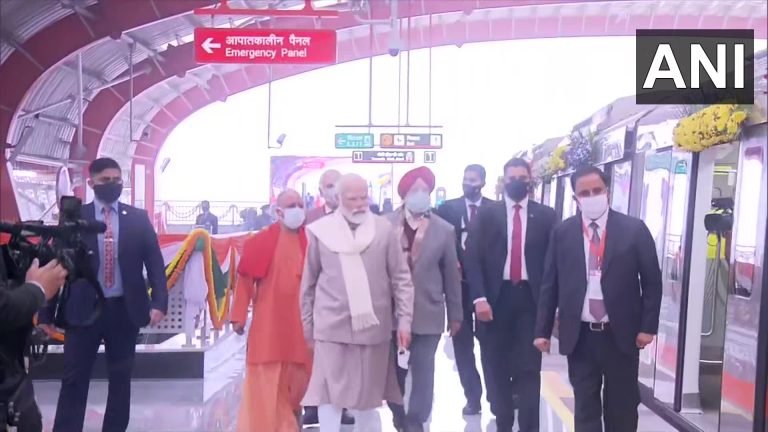
KANPUR, INDIA (Metro Rail News): Prime Minister Narendra Modi today inaugurates the entire developed part of the Kanpur Metro Rail Project. The launch comes ahead of the Council elections in Uttar Pradesh. UP CM Yogi Adityanath and the Ministry of MoHUA Hardeep Singh Puri was also part of this inauguration.

The completed 9-km extended Kanpur Metro Rail Project from IIT Kanpur to Moti Jheel. The total length of the project is 32 km, and it is built at an estimated cost. Rs. 11,000 crores.

PM Modi also inspected the Metro Rail Project and took a metro ride from the IIT municipal station to Geeta Nagar.

Addressing the gathering on this auspicious occasion, Hon’ble Prime Minister, Shri Narendra Modi said, “The government is committed to bring the much needed change in Uttar Pradesh. It has already inaugurated many infrastructure projects in the state and the onset of metro services in Kanpur has been one of them in the league. Today Uttar Pradesh is amongst the fastest developing states in India having maximum number of operational metros.
buy viagra professional online no prescription
 Metro is becoming the lifeline of cities in the country. In the past few years, the government has extended this network to several cities and even more cities will be connected in the time to come”.

158
Image Source: Twitter

In addition to the Metro Rail Project, the Premier will also launch the Bina-Panki Multi-Product Pipeline Project. According to the PMO, the 356-kilometer-long pipeline project has an estimated capacity of 3.45 million metric tonnes per year.

However, PM Modi attended the 54th Indian Institute of Technology (IIT) conference in Kanpur and congratulated the graduating students.

Speaking on this occasion, Hon’ble Chief Minister, Yogi Adityanath said, “As a result of the efforts made by Hon’ble Prime Minister, Shri Narendra Modi in the last 6 years, today Metro network is expanding rapidly in Uttar Pradesh.  Presently in Uttar Pradesh, Metro is successfully operating in Noida, Greater Noida, Ghaziabad and Lucknow. The construction work of Kanpur and Agra Metro Projects inaugurated by Hon’ble Prime Minister is progressing in full swing. On behalf of the people of the state, I thank the Hon’ble Prime Minister for his immense contribution in the development and progress of Uttar Pradesh.”

Shri Hardeep Singh Puri, Union Minister of Housing and Urban Affairs said “This double engine government is fulfilling its commitment of providing a world class mode of transport to the people. We stand by our resolution of providing a comfortable and smart mode of transport to the people and Kanpur Metro in this line is just a one step – we have taken in this direction.” In the coming days Gorakhpur, Meerut, Agra, Prayagraj, and Varanasi will also witness the upsurge of similar infrastructural development. The cities will soon be blessed with a world class mobility system.”

Earlier, it was decided to set a date for the inauguration on December 25 on the birthday of the prime minister, Atal Bihari Vajpayee. Then, however, new dates were set, keeping in mind that the PM could also attend the IIT-K conference and the opening ceremony.

Let’s have a look at the few points related to Kanpur Metro:

  1. It has 2 lines and 30 stations in the city 
  2. Kanpur Metro Phase-1 has 32.385 km of routes
  3. Prime Minister Narendra Modi laid the project’s foundation stone on 8th March 2021
  4. Kanpur Metro is an urban Mass Rapid Transit System (MRTS)
  5. Kanpur Metro’s 8.7 km Priority Corridor (IIT Kanpur – Moti Jheel)
  6. Phase-1 will be completed by December 2024
  7. The top speed of the Metro is 80 kmph

Pune Metro rail services to start from the third week of January

PUNE, INDIA (Metro Rail News): In Pune, the metro rail services are likely to open in two stretches in Pune and Pimpri-Chinchwad by the end of January. Mayor, Murlidhar Mohol held a meeting with the officials of Pune Metro Rail and then proclaimed that metro services are expected to start from the third week of January 2022.

He also stated the 5 Km stretch between Vanaz to Garware College is a part of the elevated metro route from Vanaz to Ramwadi, and that’s why it will get opened by the end of January.

Janak Garg, Commissioner of the Metro Railway Safety, inspected the priority section of the metro route from PCMC to Phugewadi on the PCMC to Swargate route. Moreover, the inspections are crucial before opening the metros for Commercial Passengers Operators.

Hemant Sonawane, Head of Public Relations of Pune Metro Rail, said that it’s the responsibility of the CMRS to check the passenger safety and technical and commercial aspect of the metro operations.

According to Mohol, Union Government has recently approved 1,430 crore funds which will fasten the pace of construction of the Metro Route from Hinjewadi to Shivajinagar.

Four bidders have submitted their bids for Mumbai-Ahmedabad HSR Project

NEW DELHI, INDIA (Metro Rail News): National High-Speed Rail Corporation (NHSRCL) has opened technical bids for the designing, manufacturing and installing tracks on the 508.17 Km of MAHSR. Four bidders have submitted their bids for the same. The package T-3 in Gujarat is the second of three-track related packages of the newly constructed HSR line. This line will connect both cities through 12 stations at an estimated cost of Rs.1.1 lakh crores. It will run from South of Vadodara to Sabarmati Depot, covering a total distance of 116.175 Km through Civil Packages.

Following are the lowest bidders:

  1. C5: L&T is the lowest bidder
  2. C6: Under Construction by L&T
  3. C7: Awarded to IRCON-DRA
  4. C8: SCC-VRSJV is the lowest bidder

Lead bidders are: 

  1. IRCON International
  2. Larsen and Toubro
  3. NCC
  4. Tata Projects Ltd. (TPL)

Scope of the work: Scope involves the design and construction of the track and other track-related works, including testing and commissioning design on the double line High-Speed Railway between Vadodara and Sabarmati.

After the technical evaluation of the bids, which will take a couple of months, the selected bidders’ financial bids will be revealed to find the lowest bidder.

CMRL invites fresh tenders for its Phase-two project

CHENNAI, INDIA (Metro Rail News): Chennai Metro rail Ltd. (CMRL) has invited fresh bids nearly after two weeks of cancelling the six tenders for the construction of Phase-2 of the Metro Project to get new contractors. The earlier bidding was cancelled because the lowest bidders gave quite exorbitant quotes for carrying out the work. The new contractors will construct the two corridors from Madhavaram to SIPCOT and Madhavaram to Sholinganallur. Earlier, the tenders got cancelled because the quote submitted was 40-50% higher than the estimate made by the Chennai Metro Rail. Now, CMRL has rolled out fresh tenders to complete the process in the next 3-4 months. Moreover, the CMRL has also posted the cost estimation so that contractors can know the amount beforehand. The estimated value for constructing five underground stations from Kilpauk Medical College to Thousands of Lights is 1,176 crores.

Revised deadlines for the completion of the project are still in process because there will be delays because of the cancellation of these tenders. The two contractors already engaged in building tunnels are also carrying out the excavation work now. The immediate priority is to construct the diaphragm wall at some specific locations between the Madhavaram to Taramani, after which the tunnelling process can start smoothly.

MAHSR Project: 98.5% of Land Acquisition process completed in Gujarat whereas Maharashtra lags behind

NEW DELHI, INDIA (Metro Rail News): As per the National High-Speed Rail Corporation Limited (NHSRCL), the deadline for the trial on the 50km stretch of Bilimora to Surat of the Mumbai-Ahmedabad High-Speed Rail Corridor is 2026, but it may get extended to 2027 also. The land acquisition work is also carried out at an incredible pace as 98.5 % of land in Gujarat has been procured, whereas, in Maharashtra, it’s only 44% and that too in the Palghar district. On the other hand, not much progress is witnessed on the land acquisition in Mumbai and Thane region.

Moreover, the officials of NHSRCL also proclaimed that until and unless the land acquisition process is not completed, there cannot be any clear deadline for starting the bullet train on the entire route of 508km Mumbai-Ahmedabad route.

Satish Agnihotri, MD, NHSRCL, stated that they are still waiting for the land acquisition process to get over in Maharashtra. They are continuously in talks with the State Government about this. As per the recent updates, 44% of the land has been acquired in three districts of Maharashtra- Thane, Palghar and Mumbai, for ex: In Palghar, from 287 hectares of land, 116 hectares of land remains to be acquired. The land required in Mumbai and Thane districts is around 432 hectares comprising of the forest, private and government land, whereas, in Gujarat, the NHSRCL has already acquired the 98% of the 352 Km of land needed for the project.

On 26 December, CM of Gujarat, Bhupendra Patel, visited the casting yard at Surat to get the project’s updates. Presently, 950 girders are being cast at the yard, which will take 15 days to complete the project. The next batch of 1500 girders will establish the most robust pillars and rail girders to accommodate bullet trains running at 350 kmph. The project’s total estimated cost is Rs.1.08 Lakh crores, out of which Rs. 72,000 crores will be spent in Gujarat only. NHSRCL also exclaimed about the cost going up.

A contract for the Agra Metro Rail project has been signed between India and EIB

AGRA, INDIA (Metro Rail News): On Thursday, India and the European Investment Bank (EIB) inked a finance deal for the Agra Metro Rail Project’s first tranche loan of Euro 250 million. According to a press release from the Ministry of Finance, Rajat Kumar Mishra, Additional Secretary, Department of Economic Affairs, signed the loan document on behalf of the Government of India, and Edvardas Bumsteinas, Head of Divisions, signed the loan document on behalf of the European Investment Bank (EIB) in New Delhi and Brussels, respectively.

The Agra Metro project in Agra, Uttar Pradesh, was inaugrated by Prime Minister Narendra Modi via video conference last year, according to the press release. EIB had approved a total loan of Euro 450 million to fund the Agra Metro Rail Project. 

According to the statement, the project intends to offer a safe, dependable, cheap, and environmentally friendly public Mass Rapid Transit System for Agra city, which will boost mobility and assist efforts for planned urban expansion in Agra.

The EIB loan would assist fund the building of a 29.4-kilometer metro line in Agra City, which will include Corridor-1 from Sikandara to Taj East Gate (14 km) and Corridor-2 from Agra Cantt to Kalindi Vihar (15.4 km). According to the statement, the initiative will also boost the city’s economic output and help create jobs.

Ministry of Housing and Urban Affairs is the Government of India’s line ministry for this project and Uttar Pradesh Metro Rail Corporation Ltd. (UPMRCL) is the implementing agency.