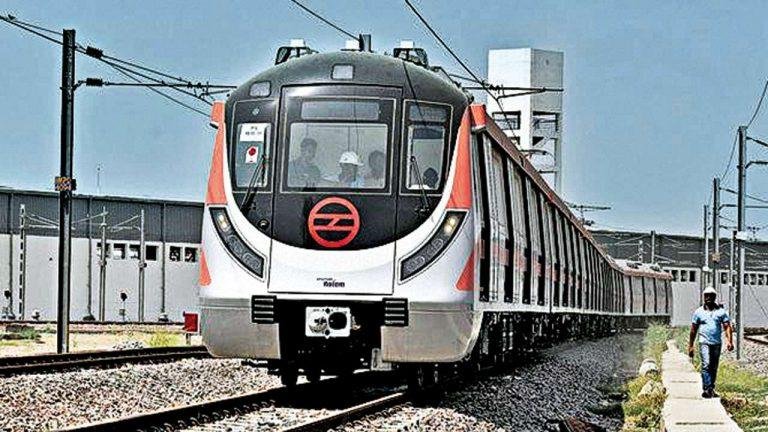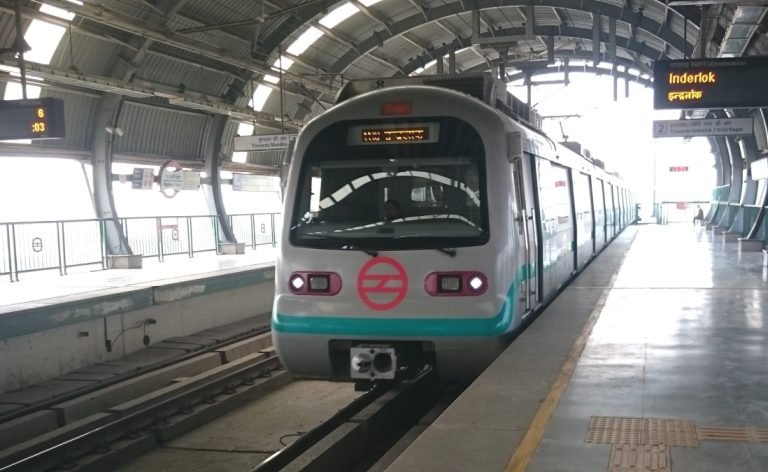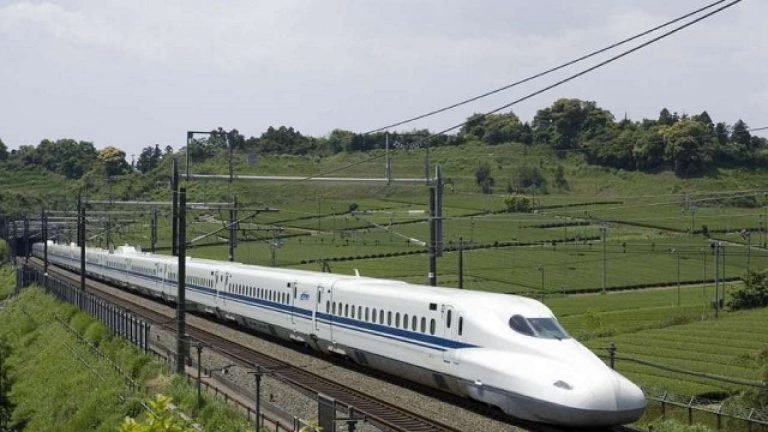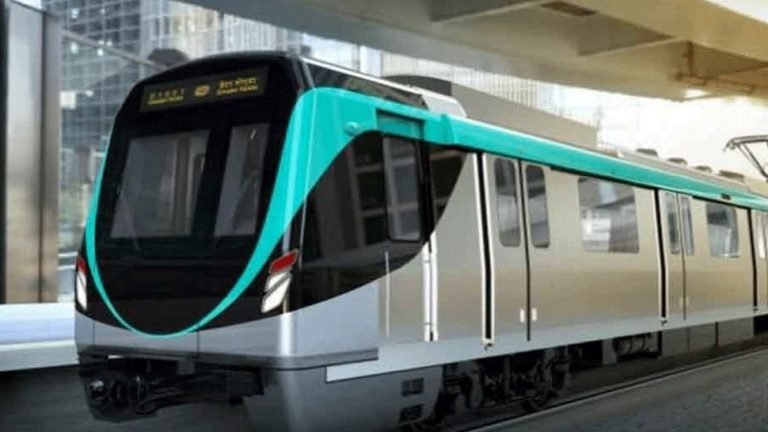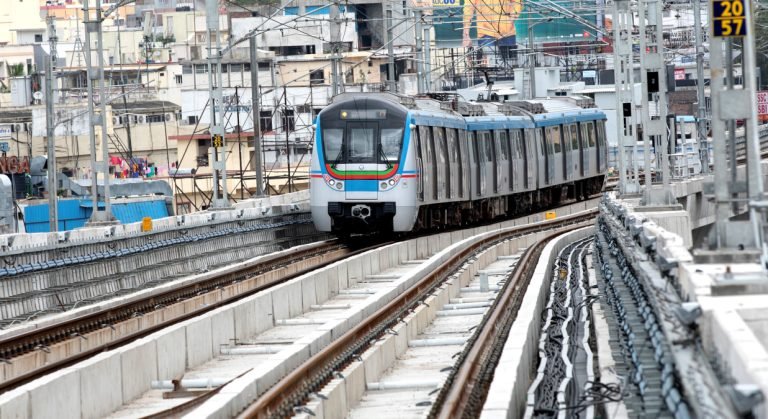
New Delhi: Prime Minister Narendra Modi has flagged-off the Delhi-Faridabad Metro Line that would allow hassle free travel for around two lakh daily commuters between the national capital and the industrial hub in Haryana.The extension of the Delhi Metro connects Badarpur to Escorts Mujesar in Faridabad.The total cost of the project from Badarpur to Escorts Mujesar is nearly Rs. 2,500 crore. Out of this, Rs. 1,557 crore was borne by the Haryana Government, the Centre contributed Rs. 537 crore, while the Delhi Metro provided Rs. 400 crore.The nine stations in this section include, Sarai, NHPC Chowk, Mewala Maharajpur, Sector 28, Badkal Mor, Old Faridabad, Neelam Chowk Ajronda, Bata Chowk and Escorts Mujesar. buy kamagra polo online https://lasernailtherapy.com/wp-content/themes/twentytwentytwo/inc/patterns/en/kamagra-polo.html no prescription
All these are elevated and located on either side of the Delhi-Mathura Road (NH-2).“The nine-station metro corridor which was 95 per cent indigenously built will provide people a safe, affordable, quick, comfortable, reliable, environment-friendly and sustainable transport facility,” a Haryana government spokesperson said.Haryana Chief Minister ML Khattar, addressing a press conference on Saturday, had thanked the Prime Minister for “gifting” the Metro service which would take the city to “another level of progress” with better connectivity with other NCR towns.He had also said that the Prime Minister would be announcing the go-ahead for connecting Gurgaon with Faridabad by Metro.
NEW DELHI (Metro Rail News): The Smart Card usage among Delhi Metro commuters for their daily travel has witnessed a significant surge in the year 2022 so far, the Delhi Metro Rail Corporation said in a statement. Since January 2022, around 78% of the Metro commuters are using the Smart Cards for Metro travel on regular basis which used to be around 70% in the Pre-Covid days. Currently, about 2.5 crore Metro smart cards are in circulation.
In 2002, Delhi Metro became the first Metro rail in the world to introduce Contactless Smart Tokens (CST) and Contactless Smart Cards (CSC) in place of paper tickets to travel in the Metro. Earlier, these smart cards had to be procured from foreign vendors but now these are completely manufactured in India as a major initiative towards the Government of India’s ‘AatmNirbhar Bharat’ mission.
A significant surge has been witnessed in usage of 'The Smart Card' services among Delhi Metro commuters for their daily travel in year 2022 so far. Around 78% of the travelers are using Smart Cards on a regular basis post covid. To read more, visit https://t.co/y4jyyaUZHG
— Delhi Metro Rail Corporation (@OfficialDMRC) May 15, 2022
Around 10-12 thousand Metro Smart cards are being sold each day from the Metro stations and DMRC is also providing dedicated exit gates for Smart Card users only at most of its stations. In addition, a flat 10% discount is provided on each journey and additional 10% discount is also provided if the journey is performed by entering the Metro system during defined off-peak hours.
DMRC in the recent past has also launched various initiatives to facilitate easy top-up of smart cards to avoid queues and save time at stations. This includes the option of Smart Card Top up through TVMs, the launch of Metro Combo cards with various banks, Credit/Debit card transaction facility at stations, net banking using dmrcsmartcard.com, mobile wallets etc.
DMRC intends to increase this figure substantially to a level similar to that of the other Metro systems like Singapore and Hong Kong where almost 100% of Metro users are relying on Smart Cards for their smooth and comfortable daily journey.
NEW DELHI (Metro Rail News): Jindal Stainless said in a statement on Wednesday,11 May said that they will supply 2,000 metric tonnes of stainless steel to Alstom which is going to be used for the development of the first regional rapid transit system’s (RRTS) train sets. Alstom will be developing 210 train sets for NCRTC under this project.
”Jindal Stainless is supplying stainless steel to Alstom for developing technologically-advanced and state-of-the-art train sets for this project,” the company said in a statement.
Several components, including sidewall skins, brackets, end walls, solebars, cantrails, roofs, and under-frames are being developed using stainless steel as it provides light weight and high crash resistance to these trains.
Jindal Stainless said that its products have been approved by major metro coach manufacturers like Alstom, Bombardier and BEML. The company is also supplying stainless steel for Uttar Pradesh Metro Rail Corporation’s (UPMRC) Kanpur Metro Project. buy eriacta online https://www.mydentalplace.com/wp-content/themes/twentytwelve/inc/en/eriacta.html no prescription
GUJARAT (Metro Rail News): SYSTRA is going to prepare a Detailed Project Report (DPR) for the construction of mass rapid transit systems (MRTS) in 4 cities of Gujarat that are Vadodara, Rajkot, Bhavnagar and Jamnagar which is expected to get ready by end of this year.
According to the officials, the feasibility studies are being conducted for the construction of either Metro Neo or Metro Lite projects in these four cities which will be cheaper in comparison to the conventional metro-rail projects.
SYSTRA will identify the feasible corridors for operating the metros and will conduct a traffic demand analysis and identify growth centres in each of these cities along with preparing the DPR.
The plan to run Metro Neo and Metro Lite in these cities is being implemented because these types of metros will fit in medium or small cities and therefore are more efficient. Whereas conventional metros have high capacities and incur huge costs because of which they are not feasible for small cities. buy intagra online https://myhst.com/wp-content/themes/twentytwentytwo/inc/patterns/en/intagra.html no prescription
According to the officials, GMRC has been entrusted with implementing these projects.
As per the official of GMRC, these new projects will have metros with two or three coaches instead of six like in Ahmedabad Metro. So when the length of the train reduces as well as the width of stations reduces the costs of the entire project comes down as a result. Therefore, the Metro Lite will cost approximately Rs 150 crore in comparison to Rs 300 cr which was spent on building one kilometre of phase-1 of Ahmedabad metro.
Gujarat Metro Rail Corporation (GMRC) is a 50:50 joint venture between the Gujarat government and the Government of India and is already implementing the metro projects in Ahmedabad and Surat.
KOLKATA (Metro Rail News): Cracks have appeared in some buildings of Bowbazar in Kolkata on Wednesday, 11 May due to the movement of Tunnel Boring Machine (TBM) underneath the soil. Currently, the work on the line of Kolkata Metro is ongoing in the area and during the construction, the incident happened.
People from around five houses were evacuated late on Wednesday after major cracks appeared on the walls which are most probably due to metro rail construction in the area. Some people have refused to leave their houses while some will be staying with their neighbours.
A large team of Kolkata Police’s disaster management team accompanied by senior police officers and metro rail officials visited the spot at Durga Pithuri Lane and accessed the situation.
Adhir Ranjan Chowdhary, MP, Lok Sabha has addressed a letter to Ashwini Vaishnaw, Minister of Railways and has asked him to look into the matter.
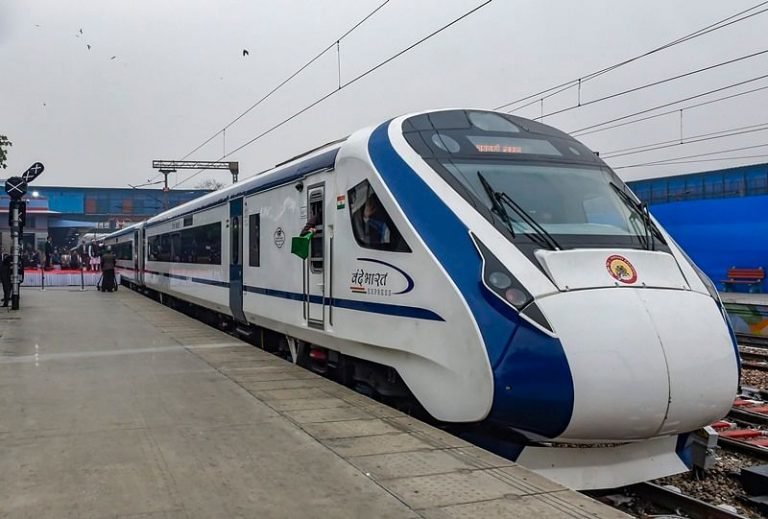
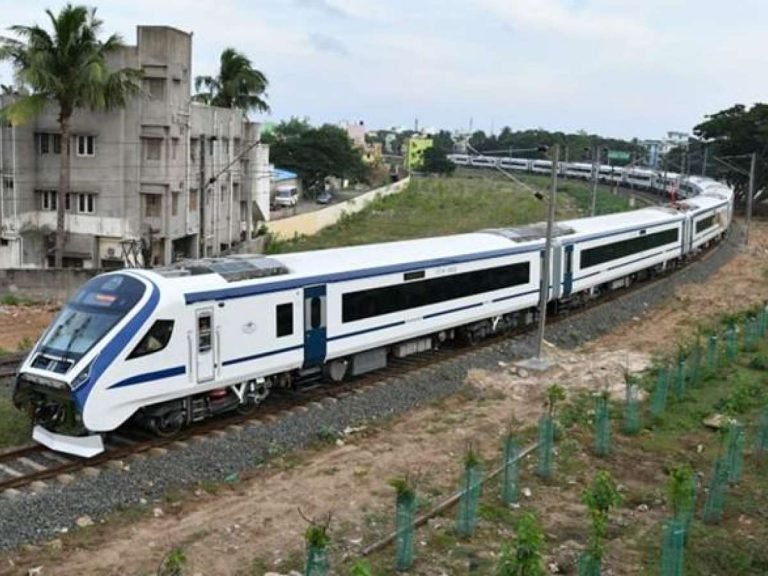
NEW DELHI (Metro Rail News): The first batch of 42 wheels out of 128 wheels of Vande Bharat train wheels has been airlifted to India from Romania, according to the sources. The trial run of the train has been delayed due to the wheels that were stuck in war stricken Ukraine and it will now be conducted in August.
128 Wheels of Vande Bharat trains which were manufactured in Ukraine but were stuck there due to the war were transported to Romania and are now being airlifted to India. The wheels will reach Chennai airport in three consignments. The first batch of 42 wheels, arrived on Wednesday and the other two batches will reach Chennai on May 13 and May 14, as per the sources. buy female viagra online no prescription
To complete its target of launching 75 semi-high speed trains on prominent routes across the country by the end of this year, India has now placed orders for wheels with Czech Republic, Poland and US. The sources also said that India may consider China too as the country supplies wheels.
The 128 wheels which are currently being airlifted from Romania are required for the trial of two Vande Bharat trains. These wheels were sent to Romania by road from the wheel factory in Dniepropetrovsk, Ukraine, whereas the axles needed for the wheels have been manufactured at the Railway Wheel Factory in Bengaluru.
PATNA (Metro Rail News): Japan International Cooperation Agency (JICA) delegation has arrived in Patna on Thursday, 12 May to review the Patna Metro Rail Project. JICA is expected to provide financial assistance to the Patna Metro rail project.
According to the officials of the State Urban Development and Housing Department (UDHD), the JICA delegation has come for a week and will inspect the construction of the priority corridor and other initial works on networks and metro stations on the ground from today. The team will also review the DPR of the project. buy wellbutrin online https://blackmenheal.org/wp-content/themes/twentytwentytwo/inc/patterns/en/wellbutrin.html no prescription
JICA is expected to give Rs 5520.9 crore to the Bihar government for this project according to the loan agreement. The total cost of the Metro rail project is Rs 13,365.77 crore, of which the central government has to give Rs 1840.31 crore. Out of this, the centre has released Rs 262.50 crore while the state government share is Rs 5,908.17 crore, out of which 1070.59 crore has been released. Until now Rs 615.72 crore has been spent on the construction work on the priority corridor between Malahi Pakri and Patliputra Bus Terminal, which is a part of the 14.5 km-long Corridor II.
NEW DELHI (Metro Rail News): The Delhi Metro Rail Corporation (DMRC) is planning to develop a Multi-Modal Integration Hub (MMI) at 10 metro stations of Phase-1 and Phase-2 corridors.
DMRC aims to improve the walking space as well as ensure seamless integration of Metro stations with all the public transport within a 300m distance from the Metro station, to introduce pick-up and drop-off facilities, pedestrian pathways/plazas and separate lanes for cycle tracks for safe and easy movement of people.
Charging points will also be available at every station and footpaths will be widened by 2 metres and will be disabled-friendly.
The 10 stations that will become MMI Hubs are Janakpuri East, Uttam Nagar West, Dwarka More, Nehru Place, Nawada, Shahdara, Shastri Park, Shastri Nagar, Jahangirpuri and Karol bagh Metro station. The estimated cost for the development of multi-modal integration at these 10 Metro stations is Rs 24.28 crore.
According to the officials presently 96 Metro stations of Delhi Metro are to be developed for MMI whereas the work has been completed at 61 stations, out of which 59 are Phase-3 stations while the other two are Kashmere Gate and Chhatarpur.
CHENNAI (Metro Rail News): Indian Institute of Technology (IIT) Madras Students’ Team Avishkar Hyperloop has received investment from L&T Technology Services Limited (LTTS) to develop innovations in the Hyperloop landscape. LTTS will provide funding and technical support to Team Avishkar on their Hyperloop project.
The Hyperloop model proposed by @avishkar_loop can achieve a top speed of over 1,200 kilometres per hour. It is completely autonomous, safe, and clean. The team is spearheading Hyperloop Tube research in India and has already patented a novel and cost-effective tube design.
LTTS will enable Team Avishkar to further gain traction on its breakthrough disruptions in the emerging domain of Hyperloop-based transportation as stated in a tweet by IIT Madras.
The Hyperloop model proposed by Avishkar team can achieve a top speed of over 1,200 kilometres per hour. The team is spearheading Hyperloop Tube research in India and has already patented a novel and cost-effective tube design.
Avishkar Hyperloop is a student team from the Centre for Innovation, IIT Madras, that focuses on revolutionizing transportation with Hyperloop technologies.
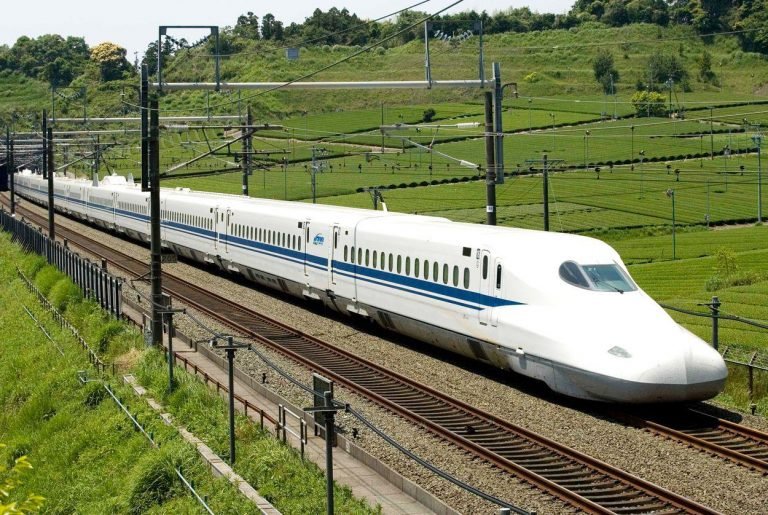
GUJARAT (Metro Rail News): The Multimodal Transit Hub named The Sabarmati Passenger Hub which is constructed on the upcoming Mumbai – Ahmedabad Rail Corridor is designed taking inspiration from the Dandi March. According to a tweet by Railway Ministry, it will provide seamless connectivity as well as transportation to inter and intra-city networks.
A Multimodal Transit Hub!
Mumbai-Ahmedabad High Speed Rail, Sabarmati Passenger Hub, is designed taking inspiration from the Dandi March. It will provide seamless connectivity & transportation to inter & intra-city networks.#BulletTrainpic.twitter.com/Qawk4maQXk
— Ministry of Railways (@RailMinIndia) May 10, 2022
The cost of developing this station is around Rs 250 crore. The station area will have 3-level parking that can put up with around 1,500 vehicles. The levels will cater to different types of vehicles such as one level will be for cars, one for buses and the last one for autos. While people from two metro stations as well as stations on the Indian Railway network can arrive at Sabarmati passenger terminal hub, they can move to Sabarmati Station by a foot over bridge (FOB), linking the two buildings, which are 400 metres away from each other, and board the Mumbai – Ahmedabad bullet train from there.
GHAZIABAD (Metro Rail News): A 50-tonne concrete slab which was being lifted into place using a high-capacity crane, fell off the under-construction Modinagar site of the Regional Rapid Transit System (RRTS) project on the Delhi-Meerut Road in Ghaziabad on May 10 Tuesday. Nobody was injured in the incident, the officials informed.
According to the NCRTC officials, who are associated with the project, an inquiry will be initiated to know the cause of this accident.
The incident happened on the day when UP chief minister Yogi Adityanath visited Meerut and inspected the project site at Bhainsali along with Shri Vinay Kumar Singh, MD, NCRTC and other officials. As per the sources, the accident happened because of a cable that snapped during the load testing but no damage happened as it was inside a barricaded area.
The 82km long RRTS project construction is going on at full speed and it is expected to be completed in March 2025.
LUCKNOW (Metro RailNews): Uttar Pradesh is going to get a Metro rail network in 12 cities soon. The UP government is aiming to expand the Metro services to Gorakhpur, Varanasi, Meerut, Bareilly, Jhansi and Prayagraj after the successful implementation of metro rail in Lucknow, Ghaziabad, Noida, Greater Noida and Kanpur.
CM Yogi Adityanath has issued directives to start work on the Gorakhpur Metro project within six months giving pace to the project. In its first phase, the 15.14-km-long network which is being built at a cost of Rs 2,670 crore will connect major centres of the city, including Gorakhnath Mandir, Gorakhpur Railway Station, Gorakhpur university and the newly built AIIMS.
As per Kumar Keshav, MD, Uttar Pradesh Metro Rail Corporation (UPMRC), the UP government is aiming to provide eco-friendly and feasible commuting options to make the lives of people residing in urban areas easier as the urban population constitutes 24% of the total population of Uttar Pradesh, which contributes to 65% of the state’s GDP.
To realise the above objectives, the detailed project reports (DPR) for Varanasi, Prayagraj, Jhansi and Meerut are in their final stages.
Some of the Metro Projects in Uttar Pradesh are most likely to be funded by EIB as the team visited the state this month and reviewed the ongoing projects.
MEERUT (Metro Rail News): Uttar Pradesh, Chief Minister, Yogi Adityanath, inspected the construction of the Delhi–Ghaziabad–Meerut RRTS corridor at Bhaisali, Meerut on May 10. He took stock of the ongoing construction activities being carried out on the entire corridor and inspected tunnelling activities at Bhaisali, Meerut.
NCRTC had set up a photo exhibition at the venue showcasing the pace of the project implementation of India’s first RRTS corridor. The photo exhibition depicted the three-year journey of the Delhi-Ghaziabad-Meerut RRTS corridor right from the foundation stone laying by the PM Narendra Modi to the recent rolling out of the first trainsets from Savli, Gujrat.
It also showcased the significant progress made on the 17 KM priority section in a short span and various milestones achieved by NCRTC in the past three years.
Vinay Kumar Singh, Managing Director, NCRTC in a walkthrough of the photo exhibition, apprised the CM on various aspects of the project including the accomplishments made during the project execution and how NCRTC is leveraging various technologies in project implementation.
The CM acknowledged the way NCRTC is implementing this transformational project with diligence and by adopting new edge technologies. He was also contented to note the pace of construction of the Delhi-Ghaziabad-Meerut RRTS corridor despite the three waves of COVID.
Chief Minister during his visit to the Bhaisali station keenly observed the tunnelling work being undertaken at the station.
Four Tunnel Boring Machines (TBMs – Sudarshan) are to be lowered at Bhaishali for making tunnels in the both directions of Meerut South and Begumpul stations. In these, one TBM has already started working for making of longest tunnel of Meerut of around 2 km from Bhainsali to Meerut Central. The second TBM is also being assembled at this location for making the second tunnel from Bhansali to Meerut Central.
The Bhaishali is the only station in Meerut where four tunnel boring machines will simultaneously work to make tunnels.
The 82km long Delhi-Ghaziabad-Meerut RRTS corridor will have 25 stations including two depot stations on the Delhi-Ghaziabad-Meerut RRTS corridor. Local transit services will be provided on the RRTS network in Meerut. With 13 stations in the span of 21 km for the local transit needs.
The construction work on the 17 km priority section between Sahibabad to Duhai is progressing at a rapid speed. The construction of the viaduct of the priority section is nearing completion and the installation of signalling and telecom systems is also being undertaken.
The priority section will have a total of 5 stations, Sahibabad, Ghaziabad, Guldhar, Duhai and Duhai Depot, and their construction work is in progress. The road ahead for the implementation of Over Head Electrical wires is now clear and the track laying work is being carried out within its stipulated time frame. buy viagra black online no prescription
The construction work of stabilizing and inspection lines and rolling stock maintenance yard for maintenance of RRTS trains at Duhai Depot is also on track.
The construction of the administrative building of RRTS equipped with various labs, simulation rooms and different types of classrooms being built for training is also underway.
At present 23 launching gantries (Tarini) have been installed on the 82 km long Delhi-Ghaziabad-Meerut corridor and the speed with which this project is being carried out is exemplary for the construction of any urban transport infrastructure project in the country. NCRTC is targeting to start the operation on the priority section by early next year and commission the entire corridor by 2025.
THIRUVANANTHAPURAM (Metro Rail News): The Railway Board has given K-Rail the approval for the construction of 27 Railway over Bridges (ROB) which will help in tackling the traffic in the state. The construction of overbridges will be a major development initiative which will be executed by K-Rail, which is also implementing the SilverLine semi-high-speed rail project.
Previously permission for 5 ROB was given last September. These are the Palli gate between Puthukkad and Irinjalakkuda stations; Thrippakkudam between Ambalappuzha and Harippad; Pattikkad between Angadippuram and Vaniyambalam; and the Nilamboor yard and Ezhimala gates between Payangadi and Payyannoor stations. Now, permission has been given for the remaining ROBs.
The social impact assessment, ahead of land acquisition, for 7 ROBs has already been completed for which reports were submitted to the respective district collectors as well. Other than 5 ROBs in the starting phase, SIA for the Uppala and Vellayil gates have also been completed. Tender proceedings are progressing for the Palli and Nilamboor yard gates. The ROBs’ construction is being carried out as per the MoU signed between the state government and the railway ministry last July. The construction cost of these ROBs will be handled equally by the state government and the Railways.
CHENNAI (Metro Rail News): The Tamil Nadu government together with Southern Railways, will conduct a feasibility study to introduce air-conditioned coaches and coaches with facilities which are preferred by commuters, in Chennai suburban trains, mainly those trains which run from the Beach to Chengalpattu.
Finance Minister Palanivel Thiaga Rajan, announced this in the assembly and said that the government would continue to take steps for securing the Union government’s approval for the proposal of Chennai Metro Rail Limited (CMRL) to take over the operation and maintenance of the Mass Rapid Transit System (MRTS) from Southern Railway.
A feasibility study would be conducted for the extension of Corridor 3, to be formed under Phase II of the Chennai Metro Rail Project, from Siruseri to Kelambakkam and from Kelambakkam to the Kilambakkam bus terminus through Mambakkam and Vandalur which would link the National Highways 45 with the Old Mamallapuram Road. Similar exercises will be carried out to cover the Poonnamallee bypass-Sriperumpudur stretch (as part of the extension of Corridor 4) and Thirumangalam-Avadi (Corridor 5).
The detailed project report (DPR) for the first phase of the Coimbatore MRTS would be presented to the government soon. The feasibility report for the Madurai MRTS was expected by the end of this month. The preliminary work was underway for the 11th Agriculture Census with 2020-21 as the reference period, and phase I of the census would be taken up in July, the Minister added.