


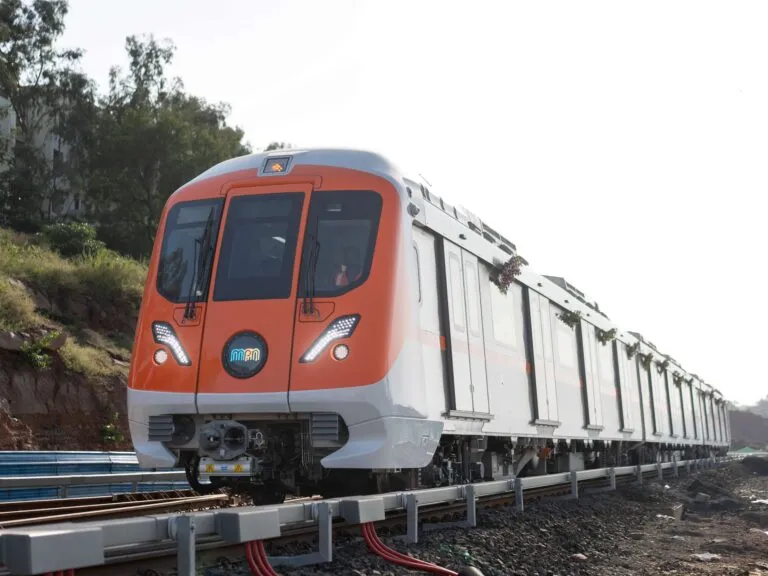
BHOPAL (Metro Rail news): Bhopal Metro’s Bhadbhada-New Market corridor is facing a difficult traffic situation as Blue Line’s metro construction moves ahead and the festive season brings more vehicles to the area.
The problem is not only the metro work. E-rickshaws, roadside parking and encroachments are also taking up valuable road space on a stretch that already sees heavy traffic.
Bhopal Metro stretch faces traffic pressure
The traffic situation is particularly difficult between Jawahar Chowk and New Market. Private vehicles already create regular traffic jams on this road. The large number of e-rickshaws parked along the stretch is making things worse. At different points, nearly 100 e-rickshaws can be seen parked or waiting on the road.
When these vehicles stop along busy roads, they leave less space for other vehicles to move. During peak hours, even a small reduction in road space can slow traffic across the area. An urban development expert said the e-rickshaw issue needs to form part of the wider traffic plan for the Bhopal Metro work. The expert said the number of e-rickshaws is high enough to need proper planning. Their movement and roadside stopping can further slow traffic, the expert added.
The weekly brief metro & rail professionals read.
Metro agency and traffic police have different roles
The question now is who should deal with the problem. MPMRCL officials said the metro contractor must take the required permissions before starting construction and follow the conditions attached to those permissions. However, traffic control is the responsibility of the traffic police, according to MPMRCL officials.
This creates a problem when several issues come together on the same road. Metro work reduces the space available for vehicles. E-rickshaws occupy more of that space. Encroachments reduce it further. Traffic police then have to manage the vehicles that remain on the road. For commuters, these are not separate problems. They all contribute to the same traffic jam.
E-rickshaw restrictions need stronger enforcement
The traffic police have recently banned e-rickshaw movement on 12 routes. The restricted routes include the Katju Hospital-Rangmahal route and Roshanpura. The move shows that the traffic police have identified e-rickshaws as a problem on busy roads. But simply announcing restrictions will not solve the issue.
Officials also need to ensure that e-rickshaws follow these rules on the ground. If drivers continue to enter restricted roads or park at busy points, the restrictions will have limited effect. Bhopal Metro’s Jawahar Chowk-New Market stretch will be an important test of how well these rules work during the festive rush.
Encroachments add another problem
Roadside encroachments are also taking away space from traffic. A BMC official said the civic body carries out removal drives from time to time. Last week, BMC removed some street vendors from Boulevard Street. But some vendors returned soon after the drive. This raises a simple question: what is the point of removing encroachments if the same problem returns within days?
The situation around the Rang Mahal intersection is also a concern, where no similar action has been clearly visible. The problem becomes more serious when road space is already limited because of metro construction.
Authorities need one traffic plan
The biggest weakness here is the lack of a visible joint approach. MPMRCL, the traffic police and BMC each have different responsibilities. But the road does not work in separate parts.
A metro barricade, an illegally parked e-rickshaw and a roadside stall all create the same problem for a driver, less space to move. That’s why authorities need to work from one common traffic plan.
What should be done?
The steps do not need to be complicated:
- Keep metro work areas as small as possible: Contractors should use only the road space they actually need.
- Create proper e-rickshaw stands: Drivers should have fixed places to pick up and drop off passengers.
- Keep busy junctions clear: E-rickshaws, cars and vendors should not be allowed to occupy key turning points.
- Increase traffic police presence: Officers should focus on the busiest points during morning and evening peak hours.
- Stop encroachments from returning: BMC should monitor cleared areas instead of relying only on occasional drives.
- Plan construction work around peak traffic: Activities that block more road space should happen during less busy hours wherever possible.
- Give commuters clear information: Authorities should clearly mark diversions and changes in traffic movement.
This problem is common during metro construction
Bhopal is not the only city facing this issue. Metro projects across India often have to use existing roads while construction continues. This can reduce road space for several months or even years. The same pattern can be seen in many cities. Roads already face heavy traffic, metro work takes away some space, and then parking, e-rickshaws and roadside businesses use more of the remaining space.
This does not mean metro construction should stop. Cities need public transport and large projects will always cause some temporary disruption. But authorities need to plan for that disruption before construction begins. A proper traffic plan should come with every major metro project. Authorities should identify busy roads, alternate routes, parking areas, e-rickshaw stands and pedestrian paths before putting up barricades.
They should also review the plan regularly as construction moves from one section to another. Most importantly, the metro agency, traffic police and municipal body should not wait for traffic jams to become a daily problem before acting.
The festive season will be the real test
Bhopal Metro’s Bhadbhada-New Market stretch is now heading into a period when traffic will naturally increase. That makes the current situation more important. If authorities cannot control roadside parking, e-rickshaw movement and encroachments now, congestion could become much worse during the festive rush. Metro construction will continue, but the traffic problems around it do not have to become unmanageable.
Also Read: Bhopal Metro gains traction as Afcons erected Blue Line’s first segment