



Translation temporarily unavailable — showing the original English article.
DELHI (Metro Rail News): The Mumbai-Ahmedabad High-Speed Rail Corridor will use movable-crossing turnouts for the first time on the Indian railway network. The technology is designed to provide a continuous rail path through turnouts, which helps bullet trains operate safely at speeds of up to 320 km/h.
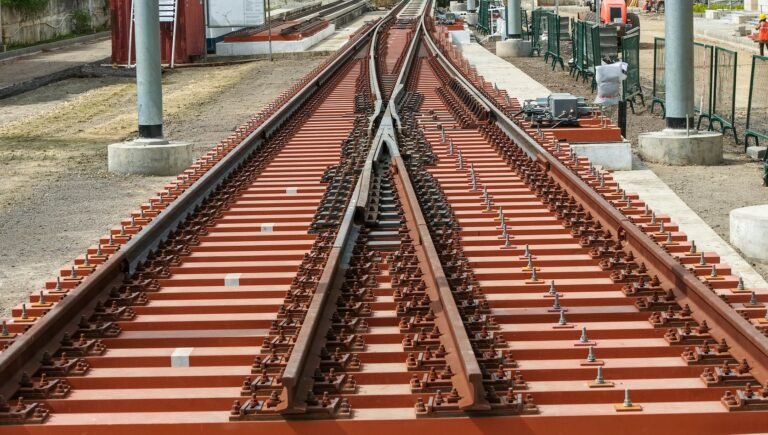
According to NHSRCL, The Mumbai-Ahmedabad High-Speed Rail (MAHSR) project will use movable crossings, also known as swing-nose crossings, as part of its high-speed track system. Unlike fixed crossings, these crossings move along with the switch rails. This design removes the gap found in fixed crossings and gives bullet train wheels a continuous rail surface to run over.
This difference becomes important on a bullet train corridor designed for commercial speeds of up to 320 km/h because higher speeds increase the forces between the wheels and rails.
The weekly brief metro & rail professionals read.
Why fixed crossings are a challenge for the bullet train at high speed
A conventional turnout has a fixed crossing nose with a gap that the wheel has to cross. At high speeds, this interruption can increase the forces generated between the wheel and rail. It can lead to:
- Higher dynamic impact on the track
- More vibration and structure-borne noise
- Faster wear of rails, crossings and wheel flanges
- Greater demands on track maintenance
- Increased risk of irregular wheel movement when combined with existing track irregularities
The movable crossing addresses the gap by moving the crossing nose into position along with the switch rails. This creates a continuous running surface through the turnout. The arrangement is expected to reduce wheel-rail impact and vibration while lowering wear on both the track and rolling stock.
Two point machines control each turnout
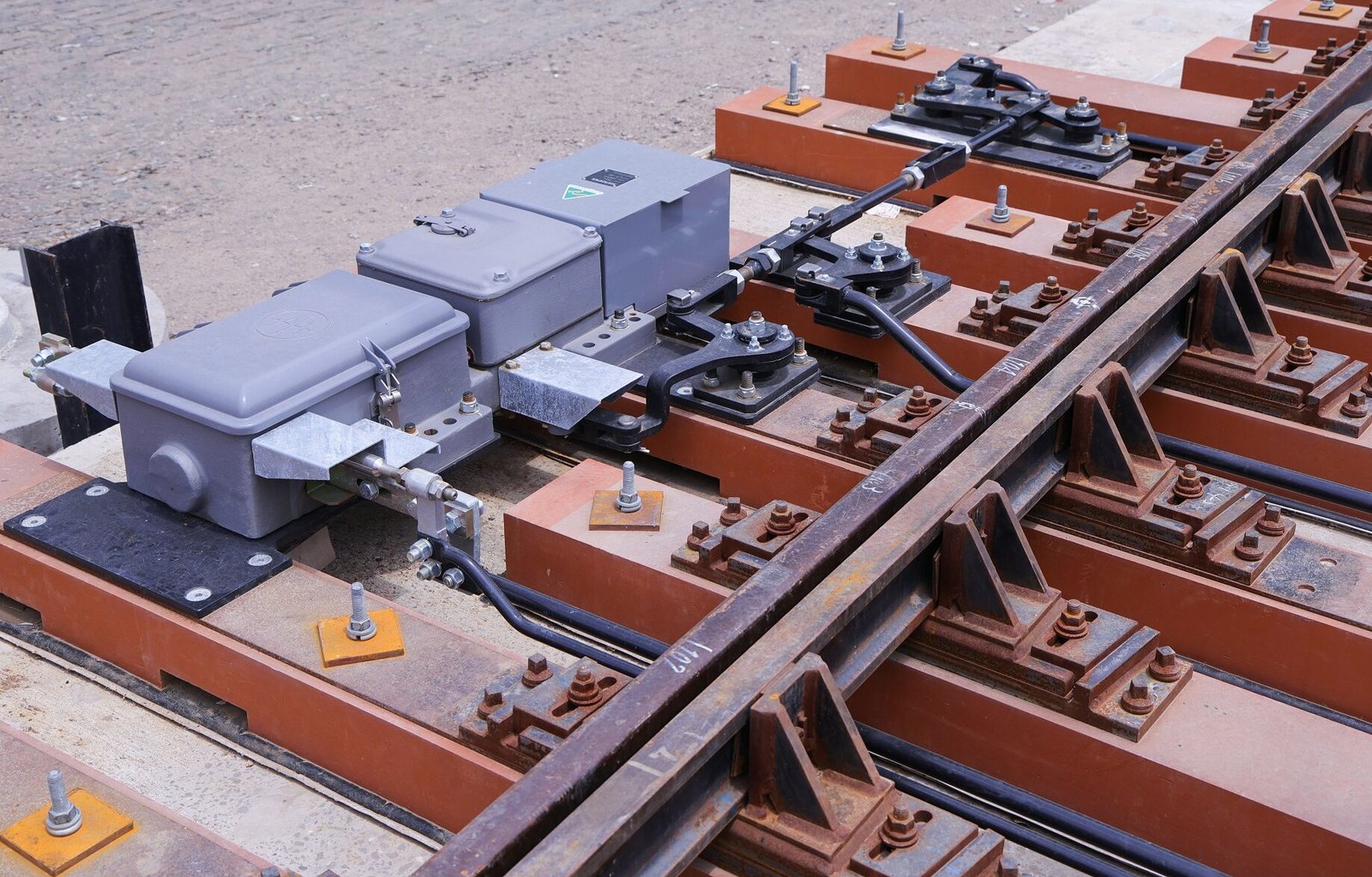
The high-speed turnout uses two separate point machines rather than relying on a single drive system. One machine operates the switch rails at the switch end. The second controls and locks the movable crossing nose. Both systems work together through the signalling and interlocking system. When a route is set, the interlocking sends a coordinated command to both machines. A train cannot be cleared over the turnout until the system receives confirmation that both components have reached their required positions and are securely locked. This creates two critical control points within the same turnout:
1. Switch rails: Positioned and locked by the first point machine.
2. Movable crossing: Positioned and locked by the second point machine.
Millimetre-level accuracy required for the bullet train
High-speed turnouts face greater mechanical and operational demands than those used on conventional lines. The point machines need to handle the higher forces and larger components used in high-speed turnouts. They must also maintain very precise positioning to keep the wheel continuously guided through the turnout. The locking arrangements must withstand the lateral forces generated when bullet trains pass at high speeds. The equipment also needs to perform reliably under Indian climatic, vibration and electromagnetic conditions.
The safety system does not depend only on the two point machines. Independent detection and verification systems monitor the turnout before the route is released. These checks cover:
- Final position of the switch rails
- Final position of the movable crossing nose
- Mechanical locking of both components
- Confirmation that the complete turnout is correctly set
Only after the required conditions are confirmed does the signalling interlocking permit a train movement through the turnout. This layered approach is particularly important for high-speed rail, where a failure at a turnout could have serious consequences.
A first for India’s railway network
The adoption of movable crossings marks a significant change from the fixed-crossing turnouts commonly used on conventional Indian railway routes. For the MAHSR project, the technology is closely linked to the bullet train corridor’s planned 320 km/h design speed. Maintaining a smooth wheel-rail interface through turnouts is essential not only for safety but also for controlling vibration, wear and maintenance requirements.
The system is therefore not just a track component upgrade. It forms part of the wider signalling, track and safety architecture needed to operate a high-speed railway at sustained speeds.
Also Read: India Moves Towards 350 Kmph Bullet Train With B35, B28 Trial Set For 2027
Project Overview