Home Blog Page 892

Delhi Metro | DMRC Customer Relationship Assistant (CRA) Recruitment Examination Success Kit

CRA

This Success Kit has been designed for the aspirants preparing for the written recruitment examination for the posts of Customer Relation Assistant in the Delhi Metro Rail Corporation. DMRC is conducting recruitment examination for recruiting young, dynamic and motivated Indian nationals to non-executive posts.

The present pattern for DMRC Customer Relation Assistant Recruitment Examination has been divided into two parts Paper I and Paper II, sub-divided into five parts namely Computer Knowledge, General Awareness, Logical Ability, Quantitative Aptitude and English Language. The logical ability section covers both Verbal and Non-Verbal Reasoning, whereas the Computer Knowledge section covers the basic knowledge of computers. Each books in the Success Kit contains ample number of solved problems which have been designed on the lines of questions asked in previous years’ DMRC Customer Relation Assistant Recruitment Examination. Also practice exercises have been covered at the end of the chapters to ensure revision of the concepts covered in each chapter. All the questions covered in the books have been designed according to the latest test pattern and the syllabi of the recruitment examination.

This Success Kit also contains model test papers for DMRC Customer Relation Assistant Recruitment Examination along with its solutions. Previous year solved paper has also been provided to help aspirants get an insight into the recent examination pattern and the types of questions asked therein.

As the book contains ample study as well as practice material, it for sure will help aspirants score high in the upcoming DMRC Customer Relation Assistant Recruitment Examination.

The Success Kit is available in both language Hindi & English.

Click here to know price and buy the Success Kit online 

Delhi Metro | DMRC Station Controller/Train Operator (SC/TO) Examination Success Kit

SC_TO

This Success Kit has been designed for the aspirants preparing for the written recruitment examination for the posts of Station Controller/ Train Operator (SC/TO) in the Delhi Metro Rail Corporation (DMRC). DMRC is conducting recruitment examination for recruiting young, dynamic and motivated Indian nationals to non-executive posts.

The present study package for DMRC Station Controller/ Train Operator Recruitment Examination has been divided into two parts Paper I and Paper II, sub-divided into six sections namely General Awareness, Logical Ability, Quantitative Aptitude, Electrical Trade, Electronics Trade and English Language. Each books in the Success Kit contains ample number of solved problems which have been designed on the lines of questions asked in previous years’ DMRC Station Controller/ Train Operator Recruitment Examination. Also practice exercises have been covered at the end of the chapters to ensure revision of the concepts covered in each chapter. All the questions covered in the Success Kit have been designed according to the latest test pattern and the syllabi of the recruitment examination.

The Success Kit also contains model test papers for DMRC Station Controller/ Train Operator Recruitment Examination along with its solutions. Previous year solved paper has also been provided to help aspirants get an insight into the recent examination pattern and the types of questions asked therein.

As the Success Kit contains ample preparation material as well as model test papers for thorough practice, it for sure will help the aspirants score high in the upcoming DMRC Station Controller/ Train Operator Recruitment Examination with flying colors.

Click here to know the price of the Success Kit & Buy Online

Delhi Metro | Train and parking services to be curtailed on 26th January 2016

The services of Delhi Metro will be partially curtailed on the 26th of January, 2016 (Republic Day) as part of the security arrangements for the Republic Day celebrations as per the instructions of Delhi Police.


Metro schedules of Line – 2 (HUDA City Centre – Jahangirpuri), Line – 3 (Noida City Centre – Dwarka Sector 21), Line -4 (Yamuna Bank to Vaishali) have been partially modified for 26th January 2016 (Tuesday). The changes are as follows:


Metro CorridorModified Schedule


Line 2 (HUDA City Centre – Jahangirpuri)

i) Entry & Exit at Central Secretariat and Udyog Bhawan Metro stations will remain closed from 06:00 AM up to12:00 Noon.


ii) Patel Chowk and Race Course Metro stations entry & exit will remain closed from 08:45 AM to 12:00 Noon.


iii) Central Secretariat station will only be used for interchange of passengers between Line 2 and Line 6.


Line 3 (Dwarka Sector 21 – Noida City Centre) and Line 4 (Vaishali to Yamuna Bank)


i) Train services will be stopped at Mandi House and Pragati Maidan Metro stations during the period when parade passes under Tilak Bridge (tentatively from 10: 45 AM to 11: 45 AM). However, actual time of stoppage of train movement will be on receipt of directions from New Delhi Police Control Room.


ii)  During this period (train stoppage), trains will be run in three short loops on this corridor:


a.   NOIDA City Centre to Indraprastha


b.   Vaishali to Yamuna Bank


c.    Dwarka Sector 21 to Barakhamba Road


PARKING: In addition, all Metro parking lots will remain closed from 06.00 AM on the 25th of January to 2.00 PM on the 26th of January, 2016. This step has also been taken as part of the security arrangements.


AD/ED (CC)/DMRC

Lucknow Metro| Recruitment of Dy.GM, Managers, Sr. Section Engineers & Supervisors etc.

Applications are invited from dynamic, experienced and highly motivated professionals having related work experiences on permanent basis for following post of Dy.GM(IT)/Manager/ Assistant Manager/Senior Section Engineer/ Senior Supervisor for Operation and Maintenance (O&M) in LMRC. The candidate shall be initially on probation for a period of one year from the date of initial appointment & depending upon their satisfactory performance after probation period, they will be confirmed in LMRC on permanent basis. Pay scale, age limit, educational qualification, experience and job description are as per details mentioned below:-

  1. Dy. General Manager (IT) : 01 post (Pay Scale: Rs.29100-54500/-)
  2. Manager/Asstt. Manager (Operations): 02 posts (Pay Scale: Rs.24900-50500/-)
  3. Manager (Electrical) : 08 posts (Pay Scale: Rs.24900-50500/-)
  4. Manager (Signal & Telecom) : 06 posts (Pay Scale: Rs.24900-50500/-)
  5. Manager (Civil): 04 posts (Pay Scale: Rs.24900-50500/-)
  6. Senior Supervisor (Operations) : 02 posts (Pay Scale: Rs.18500-35600/-)
  7. Senior Section Engineer (Electrical) : 10 posts (Pay Scale: Rs.18500-35600/-)
  8. Senior Section Engineer (S&T) : 06 posts (Pay Scale: Rs.18500-35600/-)
  9. Senior Section Engineer (Civil) : 04 posts (Pay Scale: Rs.18500-35600/-)

Eligible and willing candidates who fulfill mentioned eligibility criteria may apply along with their particulars in the prescribed application format to Company Secretary, LMRC by 5.00 P.M on 15.02.2016 positively by hand/Courier/Speed post.

Mode of Selection: Short listed candidates will be called for interview at Lucknow. The date of interview will be informed to the shortlisted candidates by post /fax/email. Persons employed with Government/PSU shall apply through proper channel and shall produce ‘No objection certificate’ from their employers at the time of interview. The Lucknow Metro Corporation reserves the right of the short listed candidates for interview. No correspondence in this connection shall be entertained.

For details about educational/technical qualification, age, eligibility etc. please visit LMRC’s Official Recruitment Notice

Click here to buy “Examination Success Kit” online for the aforesaid posts.

Kochi Metro | Kochi Metro to launch first ‘made in India’ train coaches

Kochi Metro is built at a cost of Rs 5,181 crores and will span 25 kilometres across 22 stations

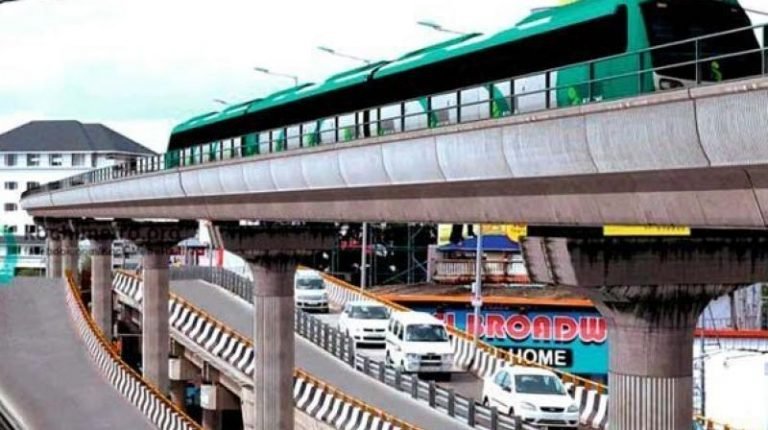
Kochi: Decks are being cleared for the launch of India’s eighth and Kerala’s first metro rail network in the state’s financial capital and nerve centre of Kochi. The first set of coaches arrived in the city last week and a test run will be conducted in the presence of Chief Minister Oommen Chandy on January 23, top officials at Kochi Metro Rail Limited (KMRL) told. “We will take the train on the viaduct next month.

The operational date, depending on clearance from safety commissioners, will be sometime in August-September. We hope to make at least the stretch between Aluva and Edapally operational by then,” said Reshmi CR, head of corporate communications at KMRL.

Built at a staggering cost of Rs 5,181 crore, the metro line will span 25 km from Aluva to Pettah across 22 stations, coursing through some of the busiest roads in the city. The metro is proposed to cut the average travel time for a commuter from nearly 2 hours now to just 40 minutes. The initial ridership is estimated to be 1.5 lakh passengers a day which will reportedly soar to 6 lakh by 2030.

Kochi was the first Tier-II city to be sanctioned a metro rail project by the Centre during the previous Manmohan Singh regime. After being elected to power in 2011, the Congress government in the state led by Ooommen Chandy has touted the completion of the project a prestige issue and as a testament to its commitment to build much-needed infrastructure in the state. Battled by graft and allegations of inefficiency, the Congress government would find the completion of the project heartening as the state goes for polls later this year.

The metro project, built on a PPP model between the Centre and state governments, has DMRC (Delhi Metro Rail Corporation) as the implementing agency and E Sreedharan, the man who single-handedly conceived the Delhi metro, as the principal advisor to the DMRC. Although initial stages of the project involved intense wrangling between the state and DMRC, the issues were resolved after a change in management.

Officials at KMRL insisted that the role of Sreedharan, who hails from Kerala, managed to assuage the feelings of the people about the project. “Land acquisition was fast and smooth. People were happy that Sreedharan was on board. With him in the saddle, they knew the project would happen,” said Reshmi.

The coaches for the train were ‘made in India’ by Alstom, a French company, at the Sri City facility in Andhra Pradesh. The company is contracted to supply KMRL 25 standard gauge trains with three cars each with a capacity to carry 975 passengers. The trains are also equipped to be driver-less in future if required. KMRL’s consultant department worked in close tandem with Alstom India on the design of the coaches to give it a traditional and authentic look.

Officials said the coaches would be designed in light blue livery with depictions of Kerala’s art and culture on its sides. Six major stations will adopt themes that will incorporate the cultural imprints of the city as well as the state as it went through decades of colonial rule before Indian independence. For example, the station near Edapally will focus on the work and contributions of legendary Malayalam poet Changampuzha, who was born and raised here. In addition, the KMRL will also play out a running theme based on the preservation of Western Ghats, the mountain range critical to Kerala’s natural bounty.

As for the ticketing system, KMRL has entered into a PPP deal with Axis Bank Limited with a stipulation that the latter will undertake the entire investment for the Automatic Fare Collection system. Axis Bank will also pay an additional royalty of Rs 209 crore over the next ten years in this partnership. In return, the smart cards issued by KMRL will be co-branded with Axis Bank and can be used for cash-less transaction along with ticketing purposes.

“This smart card can be linked with any bank account of the user, in any Bank, including the Jan-Dhan Yojana,” said, Elias George, MD, KMRL in a statement.

But more than anything, KMRL hopes to use the metro project not just in solving the city’s traffic woes, but also as a grander platform for an integrated public transportation system that will link the city’s famed ferries and bus services.

“The integrated system will allow us to not be Delhi, where you have to resort to an odd-even rule. Within the system, we will have the Metro, KURTC buses and ferries all running on similar timetables so that traffic will be seamless across the city,” added Reshmi.

Ferries have long been a part of Kochi’s transportation grid with frequent services to nearby islands of Vypeen, Mattanchery, Bolghatty and Fort Kochi. The integration project, that got the sanction of the Centre, is ambitious in nature and aims to introduce air-conditioned and WiFi enabled modern ferries on popular routes. Estimated at a cost of Rs 741 crores, this project is proposed to get operationalised in 2019.

At a time when public transportation models are being overhauled to check for pollution norms, if governments can complete infrastructure projects such as these in time with minimum cost overload, it will go a long way in making our cities greener and healthy in the long term.

Delhi Metro | Thales to supply Delhi Metro ticketing equipment

New Delhi: Delhi Metro Rail Corp has awarded Thales a contract to supply ticket vending machines and ticket gates for around 100 stations on phases I and II of the Delhi Metro.

Thales is to supply 240 additional ticket gates between February and September.

It is also supplying 300 ticket vending machines and 150 automatic vending machines (AVMs) that enable top-up of contactless smart cards.

Thales has supplied TVMs for stations on Phase III, which has been opening in stages over the past two years.

The new automatic vending machines have already been installed at two recently-opened Phase 3 stations, Badli on the northern extension of the Yellow Line and Faridabad on the Violet Line extension.

Thales has supplied 1130 ticket barriers, 800 TVMs and 600 AVMs for the Delhi metro network over the last 13 years.

Delhi Metro | Delhi Metro is building a Safe & Pollution Free Delhi

New Delhi : Delhi’s rising air pollution levels have scared all.

While the state government tried to curb it a bit by running a trial phase of the odd-even rule along with several other measures, but we all know that is not enough. Every individual and organization have to do their bit to preserve the city environment.

They can seek inspiration from Delhi Metro Rail Corporation (DMRC), which has recycled about 8.80 tonnes of waste paper over a period of five months in order to contribute its bit to preserving the environment.

“In August 2015, a decision was taken to recycle e-waste paper generated from the offices of the Delhi Metro,” a DMRC statement said here.

A specialised agency was roped in for the purpose and waste paper baskets were installed at all offices requesting the employees to dump waste paper in those baskets, it said.

The agency then collected the waste paper, recycled it for use again and delivered it back to the Delhi Metro authorities, said the statement.

With this initiative, the DMRC has been able to substantially reduce the consumption of fresh paper since a bulk of its paper requirements are now fulfilled by recycled waste paper.

The DMRC has also taken other recycling initiatives under which many other waste materials generated by it, such as horticultural waste, wooden materials, SS steel sheets etc. are being reused after recycling.

The Delhi Metro has also been constructing all its upcoming stations as green buildings with provisions for solar power. A number of DMRC stations, depots and residential premises already have solar power facilities.

DMRC recycles 9 tonne unusable waste paper

In an attempt towards green initiative and environment conservation, Delhi Metro Rail Corporation (DMRC) has recycled nine tonne trash paper into usable paper from its offices in the past five months. Last August, Delhi Metro had decided to use unused paper in its offices and make them usable through recycling. For this, they collaborated with an agency and just within five months recycled 8.

The DMRC on Sunday claimed that in the past five months, since the project took off, it has so far recycled over 8.80 tonnes of waste paper, which has resulted in saving considerable amount of power and water along with curtailing carbon emissions.

“We had conducted a survey to gauge the results of this drive and it revealed that as much as 15.84 MW electricity was saved during this period. Similarly, water consumption avoided was 2200 KLD (kilo litres per day) while waste water generation resulted in savings of about 61.60 KLD,” said a DMRC official. Apart from this, adequate reduction in coal consumption, bamboo consumption was also recorded, he added.

The DMRC had decided to recycle and re-use waste paper generated from the offices of the Delhi Metro in August last year.

Noida Metro | Noida Metro on track, DMRC Chief reviews progress of works

Delhi Metro Managing Director Mangu Singh

Delhi Metro Managing Director Mangu Singh reviewed the progress of construction of the Noida-Greater Noida Metro on Saturday. Expressing satisfaction on the progress of the 29.9 km track connecting the twin cities, Singh directed officials to adopt several measures to further expedite work along the corridor. Singh’s directions came after a presentation on the progress was made by project director Pramit Garg in Noida.

According to Delhi Metro Rail Corporation (DMRC) officials, Singh also assured mobilisation of three new sets of cranes to work along the corridor. “With these new cranes, we will be able to start laying the U-girders from the first week of March,” said a DMRC official. “Our MD has further said tenders in the pipeline for the route, including for signalling, telecom, automatic fare collection and rolling stock track, will also be expedited,” he said.

During the meeting, Singh emphasised the need for environmental control measures. “Dust control measures are already being adopted. Our chief also reiterated the need for sprinkling water on aggregates and following National Green Tribunal directions,” the DMRC official said. “Singh has also expressed satisfaction with the progress of work on the depot in Greater Noida. We should be able to receive trains for the track as per schedule, by April/May 2017,” he added.

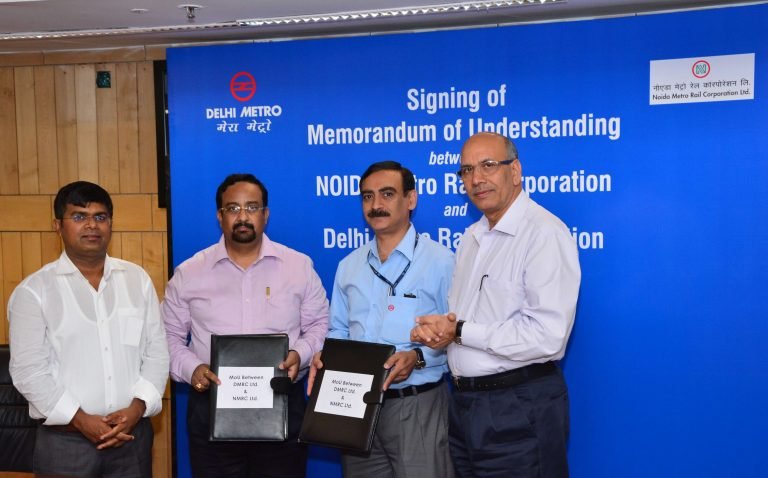
Third-party surveillance for quality control on the corridor will also start soon. A draft memorandum of understanding (MoU) for monitoring of the track has been readied, with the final MoU to be completed within a week, and work begun thereafter.

According to Noida Metro Rail Corporation (NMRC) officials, a request for proposal for an independent quality monitoring agency (IQMA) had been initiated in July last year. The government-run engineering consultancy company Rail India Technical and Economic Service (RITES) has been appointed in the role, and will oversee all civil works for the corridor. “RITES will be also responsible for a range of tasks, which include supervising works of the project, besides evaluating quality and environmental aspects. The agency will assist in monitoring quality for all civil works,” said an NMRC official.

The agency’s work also includes evaluation of bids for civil work of the Metro project. It will be expected to assist in appointing contractors, reviewing and proof-checking detailed designs, and preparing of the design and documents of the tender, for procurement of track work, system components, supply supervision and other duties.

As per officials, t all civil works for the track will be completed by June 2017. The Metro, which is estimated to cost Rs 5,526 crore, is expected be launched by December 2017.

Delhi Metro| Faiveley to provide train systems for Delhi Metro’s Movia cars

New Delhi: Faiveley Transport has secured a €20m contract from Bombardier Transportation to supply a complete range of railway systems for 162 new Movia cars for the New Delhi metro in India.

The contracts are part of rail operator Delhi Metro Rail Corporation’s (DMRC) fleet extension programme.

As part of the deal, Faiveley will deliver a wide range of railway systems, including braking systems, compact saloon heating, ventilation and air-conditioning (HVAC) systems, pantographs, and access and cabin door systems for the new Movia metro train sets.

The braking systems include brake control devices, air generation and treatment units, brake disc units and other auxiliary equipment.

Faiveley will be responsible for the design, manufacture, and supply of the equipment and the delivery is expected to begin later this year.

Bombardier was awarded the contract last summer, taking the total number of Movia trains ordered by DMRC from 614 to 776 vehicles.

Faiveley’s Indian facility in Hosur, Tamil Nadu, will develop the braking systems, HVAC and pantographs, while the door systems will be manufactured in Shanghai, China.

Faiveley transport sales and marketing vice-president Simon Charlesworth said: “Faiveley Transport is a key player in the promising railway industry in India, one of the key strategic markets for our group.

“In that sense, and as part of its Creating Value 2018 Strategic Plan, Faiveley Transport plans to develop its industrial presence in India, with the dual objective of supporting the growth of the local market and supporting our major car builder customers in their Indian export hubs.”

Delhi Metro| Metro ridership above 27.5 lakh during odd-even trial

New Delhi: The average daily ridership, between January 1 and January 13, stood at 27.5 lakh as opposed to the usual 26 lakh, indicating a marginal impact of the scheme that took thousands of cars off the city’s roads.

At 29,74,304, January 11 (last Monday) saw the highest ridership during this period, according to official data released by the Delhi Metro Rail Corporation (DMRC). The lowest ridership was on January 2 (Saturday), a day after the scheme kicked in, when 24,27,909 commuters took the metro.

The two Sundays, exempted from the scheme, in the intervening period had ridership figures of 18.7 lakh and 21.2 lakh respectively.

Delhi Metro breached the 30 lakh ridership barrier in May last year and which further rose to 32 lakh mark on August 28, the highest ever ridership recorded so far.