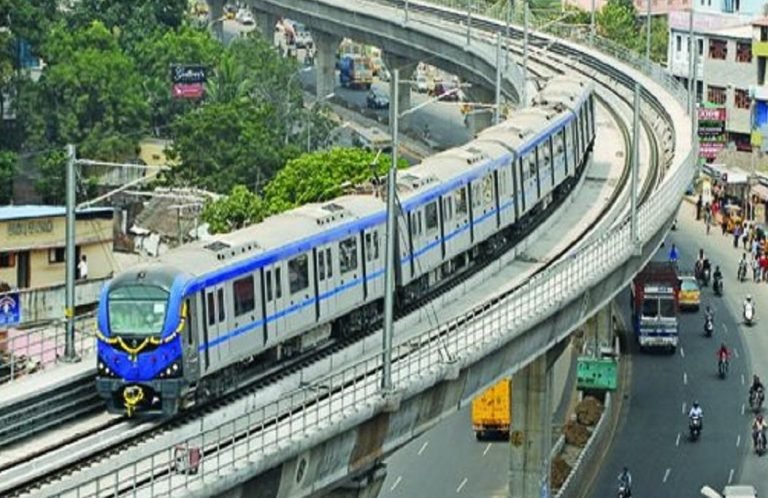

Lucknow: With metro commencing commercial operations in Lucknow for over a month now, the major concern of Lucknow Metro Rail Corporation (LMRC) to earn revenue which can manage its operation and maintenance (O&M) cost . Since the initial ridership number has not been very encouraging on metro’s priority section on Kanpur Road because of limited catchment area, the team is now eyeing at earning revenue through property development.
Accordingly LMRC planning to develop commercial spaces for cafes, book-stores, shops, ATM centres inside metro stations as the corridor extends and operations expand.
“We are focusing on property development big time to increase our revenue to meet our O&M costs. Though this will contribute only 15% of our revenue in long run, at this time it is crucial as the fare box revenue is still less considering that metro service has just begin.”, said LMRC Chief Kumar Keshav.
According to DPR (Detailed Project Report) of Lucknow Metro Rail Project, its O&M cost will be derived up to 85% from the fares and 15% from property development. Since the metro is still new, team is mostly dependent on rent it would get from commercial properties inside stations and advertisements both in trains and stations. LMRC has recently awarded the contract for advertisements too and one can see panels being displayed in a few trains.
“The properties will develop over a period of time as the corridor from the Airport to Munshipulia gets completed in phases. We aim to repay our loan to European Investment Bank in next 20 years.”, said Kumar Keshav.
Vijayawada: The Amaravati Metro Rail Corporation Limited (AMRCL) Managing Director NP Ramakrishna Reddy on Friday said that the state had decided to go with a Light Metro in Vijayawada, that would extend up to the Gannavaram airport and Krishna Canal junction.
Reddy stated that the DMRC prepared a Detailed Project Report (DPR) which pointed out that a Light Metro was adequate for Vijayawada, but recommended a Medium Metro, as the capital city of Amaravati was being developed nearby.
As per the DPR, the expected Peak Hour Passenger Per Direction (PHPD) was projected as 6,366 by 2021-22 and the Financial Internal Rate of Return (FIRR) was 3.47%, which did not meet the Centre’s requirements for setting up a medium metro rail in Vijayawada.
The press release said that the MoU between the AMRC and DMRC had been mutually cancelled on October 4, after the project made no progress.
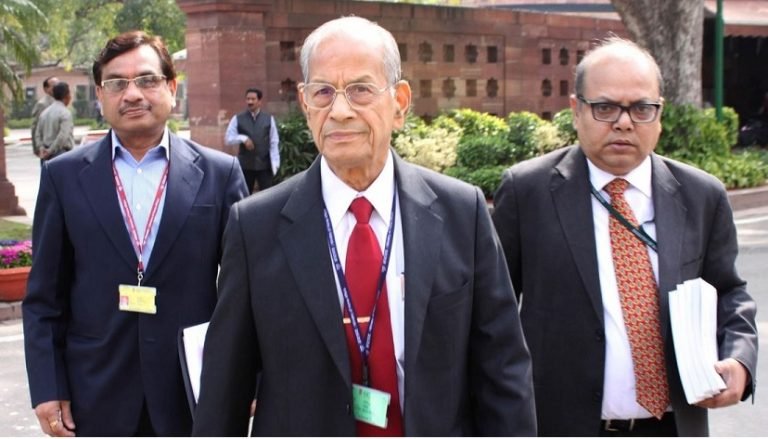
This also comes two months after India’s ‘Metro Man’ E Sreedharan, who was working as an advisor to the Andhra Pradesh government on metro rail projects, had submitted his resignation to Chief Minister N Chandrababu Naidu.
Confirming the same to Media, 85-year-old Sreedharan had earlier said, “I tendered the resignation because of my old age, which has made it difficult for me to travel to Andhra Pradesh frequently. Besides that, the work pressure was also more.”
Sreedharan, who was Principal Advisor, Delhi Metro Rail Corporation (DMRC), was in 2015 called in to oversee the Visakhapatnam and Vijayawada metro rail projects.
Experts saying that Sreedharan resigned due to differences with the state government choosing the light metro rail project. However, he denied it.
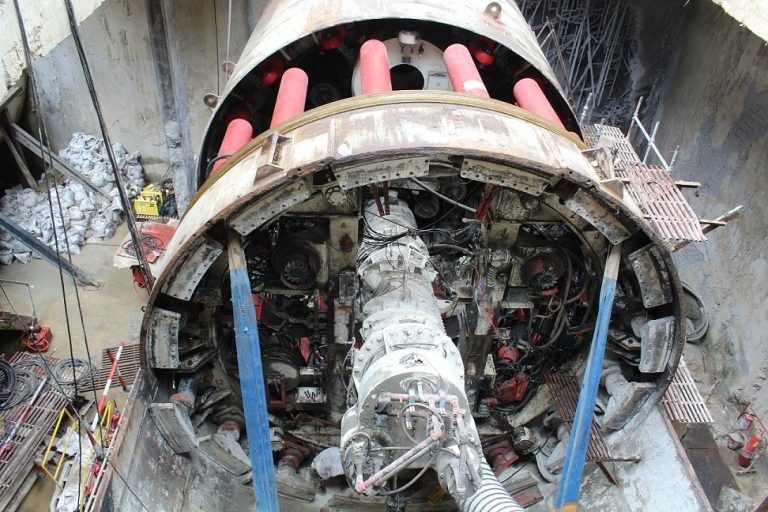
Chennai: It was to be yet another milestone for Chennai metro rail, the completion of one of the tunnels under Anna Salaibegun about six years. But after a long wait and a few tense moments on Tuesday, the boring machine literally hit a wall and was unable to break through the 3.7km long tunnel connecting AG-DMS with May Park Day station.
The cutters in the boring machine that drilled through the rocky soil wore out and could not break through the 10cm concrete wall. The giant machine had to be restarted several times before engineers decided to change the cutters. The machine had already bored through one of the toughest layers amid several such hiccups over the last 17 months.
Chennai Metro Rail Underground Project
“Tunnel building is actually complete. The machine had to just break through the concrete wall and enter the station before we conclude tunneling,” said a Chennai Metro Rail Limited (CMRL) official. “The wall the machine had to break is a metre thick. We changed the cutters on the head before it started boring but they wore out before it could breach the final 10cm. The cutters will be changed and we hope to achieve the breakthrough in a couple of days.”
Industries minister M C Sampath and principal secretary (planning, development and special initiatives) S Krishnan joined around 300 CMRL engineers and workers in safety gear to watch the operation at AG-DMS. In the afternoon, a few minutes after it began boring with a squealing noise, the machine stopped.
For the next couple of hours, loud noises interspersed with periods of long silence filled the air.
Every time the machine was restarted, thick foam squirted out and all eyes were on the wall. After around three hours, the invitees began to get anxious. “The wall seems to be tough and the machine cutters have become blunt,” a senior CMRL official said.
By 4.30pm, engineers used a hydraulic breaking machine from the station side to expose the cutter head of the boring machine, but the wall was too strong. They then decided to replace the cutter head and make an attempt on or before Thursday. “We have around 450m left to build in the other tunnel. We expect to finish by next month,” an official said.
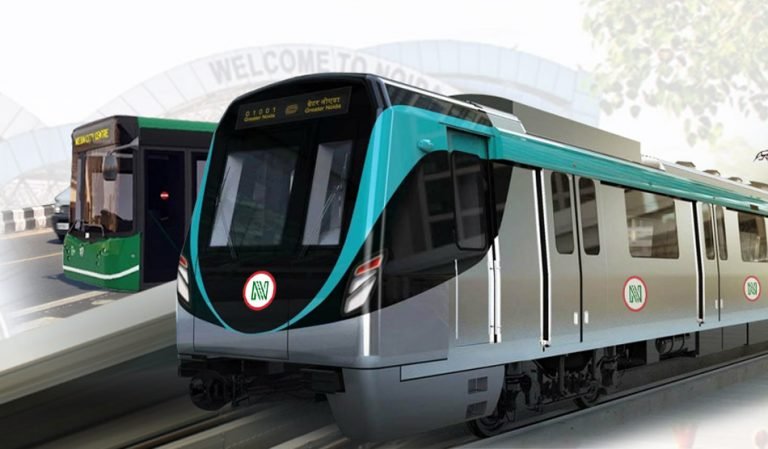
Noida: The first train of the 29.7km Noida-Greater Noida Aqua Line Metro corridor will arrive in early December. The officials of Noida Metro Rail Corporation (NMRC) said this will be a demo train and the rest of the four-coach trains for the track will start arriving every fortnight thereafter.
The trial train is likely to be dispatched from China on October 25. CRRC Nanjing Corporation Limited, a Chinese state-owned rolling stock manufacturer, is supplying the trains to Delhi Metro Rail Corporation (DMRC) for the corridor. A Memorandum of Understanding (MoU) was inked between the two companies in March this year.
The Metro is likely to roll by April 2018. According to NMRC officials, the Aqua Line will support 76 coaches. Each Metro coach will come at a cost of nearly Rs 4 crore. A total of 19 trains will run between Noida and Greater Noida at a speed of 35 km/hour, and at an initial frequency of every five minutes in peak hours and and ten minutes at other times. The frequency will be tweaked to address commuter traffic, officials said.
Initially, NMRC will operate 11 trains along the corridor. While the seating capacity of each train will be 186, the standing capacity will be 848 passengers.
Hence, the total capacity of each train will be 1,034 passengers. There will also be special seats of dark Aqua colour for women, seniors and specially-abled persons. These will number 16 in each coach, with a total of 64 in each train.
The coaches are lightweight and made of stainless steel and aluminium. Each train will be equipped with a passenger information system, a passenger announcement system and an emergency announcement system from the operation control centre of the train. The trains will also have a radio for communication between drivers and an operation control centre.
Trains will also be fitted with a continuous automatic train control system.
According to officials, presently, civil work on the under-construction Metro track between the twin cities is nearly 97% complete. Nearly 29 km of viaduct out of the 29.7km of the corridor has already been put in place by the Delhi Metro Rail Corporation. The DMRC has also started erecting Over Head Electrical (OHE) lines with about 1,100 electrical poles in place, out of the total 1,400. Nearly 30km of rail track of the total 60km has also been laid till now along the route. The structural work of all 21 stations along the corridor, including platforms, has been completed in a record time of 20 months. All stations along the corridor are likely to be ready by October 31. The finishing work of all Metro stations is presently under way.
Pune: The Maharashtra Metro Rail Corporation (Maha Metro) is seeking the latest tunnel-boring technology for the 5 km underground route of the Pune Metro rail project to drill through the hard ground under a river bed, a top company official has said.
Making a presentation of the Rs 11,420-crore project, which is expected to be completed by 2021, Brijesh Dixit, Managing Director of the Maharashtra Metro Rail Corp. Ltd, expressed confidence of using latest technologies in metro projects in India.
The tunnel will be drilled 30m under the Mula Mutha riverbed, through which a section of the project will pass, Dixit said yesterday at the ‘Year in Infrastructure 2017’ conference here, which was held for the first time in Asia.
A part of the 5-km underground stretch, will be bored through the Deccan plateau basalt strata, which is hard ground and good for drilling tunnels, the Maha-Metro MD said.
“We have learned from more than 200 metro systems operating in global cities as well as in India,” he said citing the technologies used in Nagpur metro, which has helped to significantly reduce construction cost and time significantly.
He said more than 50 per cent of the 38-km Nagpur metro, work on which started in 2015, has been completed and is set to meet its December-2019 deadline.
New Delhi: An ambitious high speed train project in south India has been delayed after Chinese railways, that completed a feasibility study a year ago, did not respond, railway officials have said, suggesting that the “lack of response” may be due to the Doklam standoff.
An internal brief of the mobility directorate on the status of nine high-speed projects of the railways, accessed by PTI, shows that the Chennai-Bangalore-Mysore corridor, a 492km stretch, lies in limbo because the Chinese railways has failed to respond to the ministry’s communiques.
“The Chinese company submitted the final report in November 2016 and after that the Chinese team has suggested for a face to face interaction. No date has been fixed from their side,” said the note prepared by the mobility directorate.
On the reason for the delay, the brief states — “lack of response” from Chinese railways. The brief also states that the feasibility study by the China Railway Eryuan Engineering Group Co. Ltd (CREEC) was submitted to the Railway Board in November 2016 and after that the Chinese company had sought meetings with officials of the board.
However, officials say that the board has been unable to get in touch with officials of CREEC despite repeated communications sent to them via mails in the last six months. “We have even tried to get in touch with them through their embassy here, but we are yet to hear from them,” said an official.
The ministry officials said that it was the standoff between the two countries in Bhutan’s Doklam area between 16 June and 28 August this year that seems to have derailed the project. “The study began in 2014 and they submitted the report in 2016. The entire cost was borne by them. In fact they have shown so much interest in collaborating with us for other projects as well, so we think that it was the standoff that must have raised doubts,” said a senior rail official.
RailPictures Net (Image Credit: Georg)
An email to the Chinese embassy by PTI on the issue did not elicit any response. Troops of India and China were locked in a 73-day-long standoff in Doklam since 16 June after the Indian side stopped the building of a road in the disputed area by the Chinese army.
Bhutan and China have a dispute over Doklam. The brief, prepared by the department in-charge of all the high speed corridors, also states that except the Chinese roadblock, work on the eight other projects was on track. China had in fact not only pitched for the Mumbai-Ahmedabad high speed network, which was finally bagged by Japan, but also for the bullet project in the Mumbai-Delhi sector, which is yet to be finalised.
China is also training railway engineers in heavy hauling and it is with Chinese collaboration that India is setting up its first railway university. The Chennai-Bangalore-Mysore corridor is one of nine such high speed corridors being developed by the ministry. The aim was to increase the speed from the present 80kmph to 160kmph.
While the Delhi-Agra route was made operational in 2016 with the country’s fastest train Gatimaan Express running between the two cities, the work on rest seven of eight is going at a fast pace, the brief indicated.
New Delhi: After inspection of Hyderabad Metro Rail Project, Union Urban Development Ministry confirmed that Prime Minister Narendra Modi has agreed to inaugurate the 30 km stretch of first phase of the metro project on November 28.
According to the sources, the official letter in this regard is going to reach the Telangana government on Monday.
The Hyderabad Metro Rail project is one of the biggest public-private partnership project in the country is being constructed on a 72-km stretch encompassing three corridors spread across Hyderabad.
PM Modi will flag off a 30 km stretch of the metro rail project extending from Nagole to Miyapur on November 28.
Officials are making test run between Mettuguda-Begumpet and sources say that the complete test run will be completed in 15 days.
Siemens and Alstom have signed a memorandum of understanding (MoU) to combine Siemens’ mobility business including its rail traction drives business, with Alstom. The transaction brings together two innovative players of the railway market with unique customer value and operational potential.
The two businesses are largely complementary in terms of activities and geographies. Siemens will receive newly issued shares in the combined company representing 50 percent of Alstom’s share capital on a fully diluted basis and warrants allowing it to acquire Alstom shares representing two percent points of its share capital.
“This Franco-German merger of equals sends a strong signal in many ways. We put the European idea to work and together with our friends at Alstom, we are creating a new European champion in the rail industry for the long term. This will give our customers around the world a more innovative and more competitive portfolio,” said Joe Kaeser, president and CEO of Siemens AG.
“The global market-place has changed significantly over the last few years. A dominant player in Asia has changed global market dynamics and digitalization will impact the future of mobility. Together, we can offer more choices and will be driving this transformation for our customers, employees and shareholders in a responsible and sustainable way.”, he further added.
Henri Poupart-Lafarge, chairman and chief executive of Alstom SA, said: “Today is a key moment in Alstom’s history, confirming its position as the platform for the rail sector consolidation. Mobility is at the heart of today’s world challenges. Future modes of transportation are bound to be clean and competitive. Thanks to its global reach across all continents, its scale, its technological know-how and its unique positioning on digital transportation, the combination of Alstom and Siemens Mobility will bring to its customers and ultimately to all citizens smarter and more efficient systems to meet mobility challenges of cities and countries. By combining Siemens Mobility’s experienced teams, complementary geographies and innovative expertise with ours, the new entity will create value for customers, employees and shareholders.”
In a combined setup, Siemens and Alstom expect to generate annual synergies of €470 million ($682 million) latest in year four post-closing and targets net-cash at closing between €0.5 — €1.0 billion.
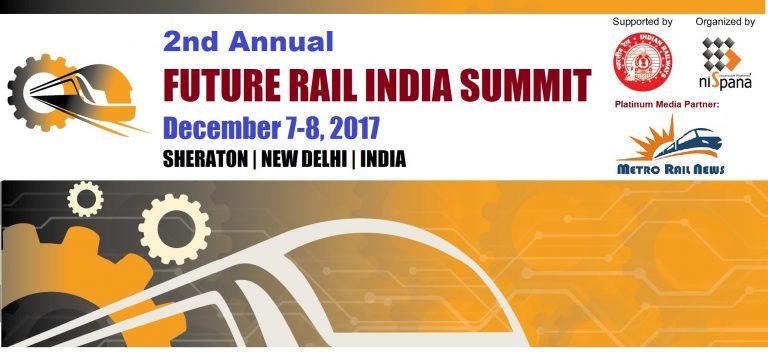
The Second Annual Future Rail India Summit was conceptualized by Nispana Innovative Platforms, committed with the objective of bringing together the National Rail Plan of Metro & Indian Railways, in order to supplement its future development.
The First Annual Future Rail India Conference in Feb 2017 constituted excellent speakers from premier railway organizations across several counties, who offered presentations and contributed to the creation of a new level of quality in the Indian Railways sector.
In summary, we can state that this thought provoking event achieved its objective and created a veritable forum for an exchange of views between different professional fields of railway sector, for the discussion of practical issues and for presenting novel innovative solutions, tools and methods.
The recent safety concerns have shaken the image of the railway sector safety. So Indian Railways is search of innovative measures to ensure the safety of passengers and cargo alike.
With the Second Annual Future Rail India Summit, we have tried our level best to up the quality of how a conference on railways needs to be addressed.
The key areas to be addressed include:
Safety of Indian Railways
Station redevelopment
Infrastructure up gradation
Involvement of IT in Railways.
Customer Satisfaction Index
Innovative financing Structure of Indian Railways and a lot more
The conference will indeed bring up a lot of business opportunities which would help the Indian Railways to overcome the hurdles in operation, with an eye to competition, innovation and provide for the implementation of various structural and technical reforms.
We whole heartedly invite you to be a part of the Second Annual Future Rail India Summit, to showcase state of the art solution technologies and to fraternize with the key decision makers in Indian Railways to bring back the image of Indian Railways as a safe, reliable and a robust organization.
Click here to know more details about detailed agenda, entree fee, sponsorship, and other opportunities.
Indian Port Rail Corporation Ltd. (IPRCL), a joint venture of Govt. of India and Rail Vikas Nigam Ltd. (RVNL) invites applications for recruitment of following positions:-