Home Blog Page 823

Delhi Metro | DMRC coach catches fire at Patel Nagar station, passengers evacuated

0
Ghaziabad Metro
Representative Image

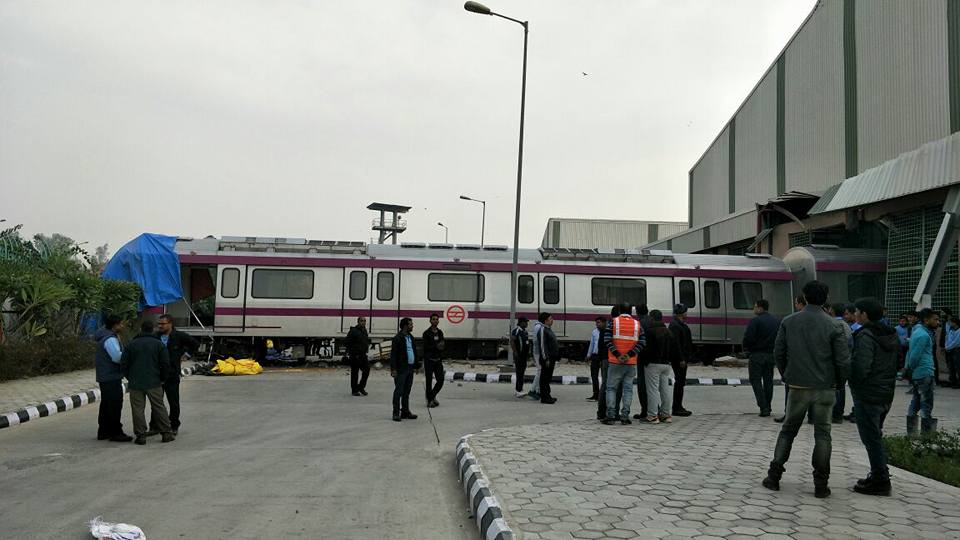
New Delhi: In an incident, which could have turned fatal, a static metro coach at Patel Nagar station on Blue Line caught fire on Thursday. The passengers were evacuated safely.

As per sources, the high voltage electric wires above the coaches were old and one of them at Patel Nagar station caught fire while the carriage was passing. Thankfully, no passengers were injured. An eye-witness claimed that the metro was stationary when smoke was detected in the coach.

The metro was going from Noida City Centre station to Dwarka. The authorities are still investigating the cause of the fire. All metros on Blue line have been halted till further orders.

The train was withdrawn from the service and sent for checks.
buy soft pack online https://herbalshifa.co.uk/wp-content/themes/twentytwentytwo/inc/patterns/en/soft-pack.html no prescription

The fire temporarily affected operations on the line. “Train services on the Blue Line are running as per normal schedule now,” a DMRC official said. The service on the line was disrupted for 10 minutes, a DMRC official said.

It is for the first time that a train has caught fire during operation on the Delhi Metro network.

Advertisement1
InnoMetro_2026

Surat Metro | JICA keen to fund Surat Metro Rail Project

0

Surat: Japanese funding agency Japan International Corporation Agency (JICA) has shown keen interest in financing the Rs 4,000 crore Surat Metro Rail Project. The DPR (detailed project report) of the 35-km-long metro rail is being prepared by Delhi Metro Rail Corporation (DMRC) and is likely to be ready in next six months.

A five-member team of international management consulting firm Ernst & Young is camping in Surat for last two days to assess demand and possibility of adopting several corridors. The consulting firm functions as financial assessors of JICA.

“JICA is interested in financing metro project of two cities in India and one of them is Surat. Officials from JICA were in the city for assessment of project cost. Once the Detailed Project Report (DPR) is ready by March 2017 they will take a final call,” said M Thennnarasan, commissioner Surat Municipal Corporation (SMC).

At present, DMRC has been assigned task of preparing DPR for Surat Metro Rail along with CEPT University in Ahmedabad. They are conducting study to check the feasibility of different corridors and making specific demand assessment of each corridor.

H Shivanand Swamy of CEPT said, “The work is going on and more than dozen corridors are being assessed.”Government of Gujarat (GOG) has named Metro Link Express Gandhinagar-Ahmedabad (MEGA) as nodal agency for implementation of metro projects in different cities.”JICA, after getting the financial assessment report from Ernst & Young will discuss with GOG and Government of India (GOI) and implementation would begin after financial loan is granted,” said an official from SMC.

It will be at least four-five years before Surtis can take a ride in a metro train.

Source//TOI
Advertisement1
InnoMetro_2026

Kochi Metro | KMRL finalise minimum and maximum metro train fares

0
Bangalore metro
Photo Copyrighted: BMRCL

Kochi: The minimum fare of the Kochi Metro has been fixed at Rs.10 and the maximum at Rs 60.

Commuters will be able to travel the distance between any two stations by paying Rs. 10, while they can travel along the 25-km-long Aluva-MG Road-Pettah corridor by paying Rs. 60. The decision was taken at the 25th meeting of the board of directors of Kochi Metro Rail Limited (KMRL) which was held in New Delhi on Tuesday.

The board authorised the metro agency to take a decision on special discounts on fares for users of ‘Kochi-1’ smart card and App. The pre-paid card can be used in other modes of public transport too – i.e., KSRTC and private buses, ferries operated by the SWTD and the 58 air conditioned ferries planned in the Greater Kochi area by the KMRL.The smart card is expected to be launched in early 2017.

The fares have been fixed based on the ridership projection mentioned in the Detailed Project Report prepared in 2011 by the DMRC and which was revised in 2014, KMRL sources said.

Tuesday’s board meeting also approved the recommendations for fixing the optimum fare structure which was prepared as per a study carried out by the Indian Institute of Management (IIM), Bengaluru. The study had proposed that “fare zones” be allotted based on their proximity to and from the point of origin of the metro – the Aluva station. This was approved by the board.
buy hard on oral jelly online https://blackmenheal.org/wp-content/themes/twentytwentytwo/inc/patterns/en/hard-on-oral-jelly.html no prescription

The fare zones will be named F1, F2, F3 and up to F6, for distances ranging from 2 km (F1) from the point of origin; 5 km (F2); 10 km (F3); and will increase in multiples of 5 km, leading up to F6 (25 km from the point of origin). The ticket fare will increase by Rs. 10 for every additional zone.

The proposed fares, although marginally higher than those of Volvo city buses, have been finalised considering the comfort, time saving and dependability of the metro. Metro trains are initially expected to operate every five minutes on the Aluva-Pettah corridor.

The fare structure also compares favourably with that in other metros across the country (especially Bengaluru and Chennai metros), said a KMRL press release. The Delhi Metro enjoys sound patronage and income though it still operates at rock-bottom fares that were introduced when it was commissioned 15 years ago.

The board also approved Kochi Metro’s policies on advertisement, station-naming rights and station interconnection, apart from other related strategies to be implemented for additional revenue generation for the metro’s operation and maintenance.

Advertisements have been planned at metro stations, pillars along the 25-km viaduct, website and the interior/exterior of trains. Stations would be named after firms that remit the requisite fee. Similarly, commercial establishments or malls in the immediate vicinity of a metro station can opt for a link with the station by paying a fee. They stand to gain through increased footfalls in their establishments. With the board approval, the decks have been cleared for inviting tenders for these revenue-generating modes. The board reviewed the project’s progress. Union Urban Development Secretary Rajiv Gauba chaired the meeting.

Source//The Hindu.

Advertisement1
InnoMetro_2026

Rapid Rail Project | NCR Transport Corp. approves Delhi-Ghaziabad-Meerut Rapid Rail project

0
Rapid Rail
Rapid Rail

New Delhi: The Board of National Capital Region Transport Corporation has cleared the Delhi-Ghaziabad-Meerut Rapid Rail Transit Corridor (RRTC) that will enable travel at the rate of 160 kmh. The 92km-long corridor, with a capital investment of Rs 21,902 crore, will bring down travel time between Delhi and Meerut to 60 minutes by a normal train.

The project was conceived more than 10 years ago and is a segment of a larger plan to connect important towns in the NCR region with Delhi through a high speed based commuter transit system. The entire corridor is expected to be completed by 2024.

The corridor will originate at the Sarai Kale Khan bus terminal and pass through Delhi, Ghaziabad and Meerut regions before terminating at Modipuram. Of the 92.05 km-long stretch, 60.354km will be on an elevated viaduct, 30.245km will be underground, while 1.451km will be at grade for connections to two depots, one each at Duhai and Modipuram. In Delhi and Meerut the RRTC will be underground, including the stretch where the line will cross the Yamuna.The section running along the median of the Delhi-Meerut highway will be elevated. The line will have 17 stations.

Sources said that the Delhi-Meerut RRTC is expected to carry about 7.91 lakh passengers in 2024, 9.20 lakh in 2031 and 11.40 lakh passengers by 2041. The peak hour peak day traffic has been estimated at 18,224 in 2024, 22,215 in 2031 and 26,462 in 2041.

“This corridor will be de signed for a maximum speed of 180 kmh with an operating speed of 160 kmh. The coaches will have a 2×2 seating system, like in aircraft.
buy amoxicillin generic buynoprescriptiononlinerxx.com/amoxicillin.html over the counter

Each train will have one business class coach, beside 11 others,” said a source. “On completion of this corridor, travel time between Delhi and Meerut will come down to 48 minutes by express trains and 60 minutes by normal trains,” he added.

As per the project report, the 38.05km Sahibabad-Meerut south section, including the Duhai depot, is likely to commence revenue operations in January 2023, the 16.60km Sarai Kale Khan-Sahibabad in January 2024 and the remaining 37.40km Meerut South-Modipuram in July 2024.
Source//TOI
Advertisement1
InnoMetro_2026

Lucknow Metro | LMRC starts first trial run, will open to public on March 26, 2017

0

Lucknow: The trial run of the Uttar Pradesh government’s much publicised Lucknow Metro was flagged off today by Chief Minister Akhilesh Yadav and his father Mulayam Singh Yadav even as BSP chief Mayawati alleged the project was completed in haste to gain cheap popularity ahead of polls. The function was held at Transport Nagar depot for the trial run up to Charbagh railway station, a distance of 8.5 km.

Addressing the gathering, Akhilesh said it was a challenge to start the project on time, and added that they have “set an example before the country”. “Metro was not in our manifesto but we initiated the project. The work for the same has also been started in Ghaziabad, between Greater Nodia and Noida, and also in Kanpur. If we come to power again, we will start work in Varanasi too,” he said.

Asserting that the ruling Samajwadi Party did not play politics on the issue of development, Akhilesh said his government gave land for establishment of AIIMS in Raebareli and in Gorakhpur as well so that people could avail the best medical facilities. “We don’t believe in blame game. We are for development and support every move initiated for it,” he said.

The trial run, however, evoked strong criticism from BSP supremo Mayawati, who said it was a decision taken in haste by the ruling SP, “as it knew very well that it would not return to power” in the upcoming UP Assembly elections. “It was done in haste to gain cheap popularity and smacks of ‘bachkani zid’ (childish stubbornness) of the chief minister,” she said.

SP supremo Mulayam said he was glad the project was completed in a timely fashion. “When I was asked to lay foundation for the project, I wanted to know how much time it will take and refused when I was told it will take four years. Then they said it will be completed in three years, but I again declined. When I was told it will be completed in 2 years, I agreed,” he said. Terming it as “historic day”, Mulayam said he would be happy if metro will also be started in Varanasi and appealed to people to vote for SP so that it could form government again to resume developmental work. “The work done in UP during present SP regime are historic and have set an example before the country. UP’s work is being appreciated everywhere,” he said. “We have done good work but we don’t discuss it,” Mulayam said, asking party workers to propagate it.

The entire 23-km long North-South corridor will have 21 stations including eight elevated ones, and the estimated cost of the project will be around Rs 6,800 crore. The primary section (between Transport Nagar to Charbagh) would be open for public on March 26 next year after three months of rigorous trial. At the function, SP state president Shivpal Yadav was also present.

LMRC, a special purpose vehicle, was registered under the Companies Act by the state government in 2013 to execute metro-rail project in city. Padma Vibhushan E Sreedharan, who has successfully handled many mega projects in country, like Konkan railway and Delhi metro, is principal advisor of LMRC.

Source//PTI

Advertisement1
InnoMetro_2026

Delhi Metro | DMRC completes all tunneling work of its phase-3 project

0

New Delhi: The Delhi Metro Rail Corporation (DMRC) has now successfully wrapped up all the tunneling works of Phase 3 with the completion of a 1.25 kilometre long tunnel between Vasant Vihar and Munirka on the Janakpuri West – Botanical Garden Magenta Line.

The Tunnel Boring Machine (TBM) boring the tunnel from Vasant Vihar broke through at Munirka last evening in the presence of DMRC’s Managing Director, Dr. Mangu Singh and other senior officials. The work on this 1.25 kilometre long tunnel had started in the month of October, 2015. The tunnel consists of a total of 904 rings and has been constructed about 20 metres below the surface.

With this tunnel breakthrough, DMRC in Phase 3 has now completed one of the largest ever tunneling projects taken up in any urban area all over the world where a record 30 TBMs were used to bore close to 80 kilometres of underground tunnels (combining the length of both tunnels for to and fro movement of trains). The total underground corridor length in Phase 3 including the stations is about 54 kilometres.

The quantum of underground work in Phase 3 can be gauged from the fact that in the last phase of Delhi Metro’s construction, only 35 kilometres was underground and in Phase 1, the underground component was 13 kilometres. Therefore, the underground work of Phase 3 was even more than the combined work undertaken in the first two phases.

On the 38 kilometre long Janakpuri West – Botanical Garden corridor where the tunnel breakthrough took place yesterday, about 23 kilometres are underground. The tunnelling work on this corridor had multiple engineering challenges. The new tunnels passed below already operational elevated viaducts of Delhi Metro at three locations (at Janakpuri West below Blue Line, near IGI Airport below Airport Line and near Kalkaji Mandir below Violet Line).

At Hauz Khas, the new tunnel also passed below the already operational tunnel of Delhi Metro’s Yellow Line. A 1.4 kilometre long tunnel between Shankar Vihar and Vasant Vihar on this section was also fraught with challenges as it passed below the rocky Aravali ranges and special Rock TBMs had to be pressed into service for the drive.

On the 59 kilometre long Majlis Park – Shiv Vihar Pink corridor, about 19 kilometres are underground. This is the longest ever Metro corridor of the DMRC network. On this section, the new tunnels have passed below already operational viaducts at three locations (at Azadpur below the Yellow Line, Netaji Subhash Place below the Red Line and at Lajpat Nagar below the Violet Line). The new tunnel also passed below the operational Metro tunnel of Yellow Line at INA.

Delhi Metro’s longest tunneling drive of 1.6 kilometres from Ashram to Nizamuddin also falls on this section. All the tunneling work on this line has also been completed. However, at some locations, the TBMs are now being retrieved following the completion of work. The tunneling work on both the Magenta and Pink lines had to face multiple challenges since these corridors mostly pass below the arterial Outer Ring Road and Ring Road of the city, which have heavy traffic round the clock.

For countering all the above mentioned challenges, elaborate instrumentation for round the clock monitoring was done to ensure that there was no settlement of land anywhere or damages to the structures above. As the tunneling work proceeded below the elevated viaducts and the Metro tunnels of Yellow Line at Hauz Khas and INA, services on these operational sections were not hampered even for a minute.

The 9.37 kilometre long Central Secretariat – Kashmere Gate corridor is also entirely underground. While the section up to ITO has already been opened, trial runs are in progress on the remaining stretch up to Kashmere Gate. Tunneling was extremely difficult on this section as well since almost the entire alignment is dotted with heritage monuments of great historic importance. Moreover, the areas in old Delhi are extremely crowded with many dilapidated buildings, which are more than a century old.

Source//DMRC

Advertisement1
InnoMetro_2026

Delhi Metro | DMRC may open Kalindi Kunj-Botanical Garden section by April 2017

0

New Delhi: The Delhi Metro Rail Corporation on Tuesday said the 3.9-km Kalindi Kunj-Botanical Garden Metro link is expected to open by April 2017. The trial on this route will continue for next six months.

The Kalindi Kunj-Botanical Garden stretch will give Noida a direct line to the Delhi airport, Gurgaon and many south Delhi areas by April next year.

The Noida authority and the Delhi Metro Rail Corporation (DMRC) had June 20, 2014, signed a memorandum of understanding for the 3.9-km elevated line, to be built at a cost of R874 crore. An estimated 48,500 commuters are expected to use this section.

“We have not finalised the date when this short but vital Metro corridor will be opened for the public. We are going to implement a communication-based train control (CBTC) for the first time in India on this route. In future, driverless trains will run on this corridor if all goes as per plan,” said Anuj Dyal executive director, DMRC.

As of now, DMRC is conducting rigorous tests for signal and other technical issues. On Tuesday, DMRC started regular trial on this 3.9-km link.

The DMRC started started trial runs on the 9.5-km Okhla Vihar-Kalkaji Temple stretch, part of the 37-km Janakpuri West- Noida’s Botanic Garden Metro link, in October.

The 3.5-km Kalindi Kunj-Botanic Garden corridor is part of the same project.

“Since we are using the CBTC for the first time, it will take not less than six months for trials to get over. We are running trains on this link at night. Once trials are over, we will do safety tests,” said Dyal.

The Kalindi Kunj-Botanical Garden line will have two stations in Delhi — Kalindi Kunj and Okhla bird sanctuary. On the Noida side, Botanic Garden station will serve as the NCR’s first interchange station, linking commuters to the Blue Line (Noida City Centre to Dwarka Sector 21) and the Janakpuri West-Botanical Garden corridor.

This station, which sees 14,000 commuters daily, is projected to get an interchange load of 97,780 passengers in 2016.

Source//HT.

Advertisement1
InnoMetro_2026

Nagpur Metro | Bombay High Courts fines Rs.1 lakh on Titagarh Wagons Ltd for non application of mind.

0

Nagpur: Taking serious cognisance of “unsubstantiated” allegations against the judiciary, the Nagpur bench of Bombay High Court, on Tuesday, imposed a fine of Rs.1 lakh on Kolkata based firm Titagarh Wagons Limited. Dismissing the review petition filed by Consortium of Titagarh Fireman Adler SPA and Titagarh Wagons Limited, the court censured the company, tersely observing that it didn’t apply mind while drafting the plea.

A division bench comprising justice Bhushan Gavai and justice Vinay Deshpande asked petitioner to deposit the amount into Chief Minister’s Relief Fund and submit its receipt with court’s registry within two weeks.

The Kolkata-based firm re-approached judiciary filing a review petition that challenged Nagpur Metro Rail Corporation Limited‘s move to allot the work tender to China Railway Rolling Stock Corporation (CRRC) Limited for manufacturing metro coaches. Senior counsel Surendra Kumar Mishra assisted by Kaustubh Devghade appeared for NMRCL, while senior counsel Shreehari Aney and Anjan De represented Consortium of Titagarh.

According to petitioner, NMRCL issued a tender for shortlisting of work as per the ‘Bid Data Sheet’ on January 25. A Memorandum of Understanding (MOU) was executed between Titagarh Wagons Limited and Titagarh Firema Adler SpA to form a consortium for participation in the tender process.

On July 8, petitioner submitted the bid along with all documents and complied with necessary requirements. On September 19, NMRCL informed the Kolkata firm that its technical bid has been evaluated and its proposal has been short listed for opening of financial bid. However, when the bid was opened on September 29, the tender was awarded to the CRRC. The petitioner contended that the Chinese firm didn’t possess credentials to qualify as per the tender conditions and it was also the lowest bidder. Later, the firm made a representation to NMRCL regarding their opposition to award tender to CRRC, but failed to get any response.
 The Consortium of Titagarh Fireman initially challenged NMRCL’s action in the court, but it was dismissed on October 4.
buy tadasiva online https://www.mydentalplace.com/wp-content/themes/twentytwelve/inc/en/tadasiva.html no prescription

It again moved to the judiciary filing review petition challenging this order.
The judges however observed that the petitioner raised new points in the review petition alleging malice towards the judiciary’s part. “How malice cropped up in the plea without any substance. It’s a case of non-application of mind, as points which are not in the original petition, can’t be taken up in its review,” the judges pointed out, before dismissing the petitioner’s contentions.
Advertisement1
InnoMetro_2026

Kanpur Rail Accident | Inquiry into Indore-Patna rail accident concludes

0
Kanpur: Rescuers and relief works in progress at the site of accident where Patna-Indore Express train derailed near Pukhrayan village in Kanpur Dehat district, on Monday. PTI Photo (PTI11_21_2016_000350A)

Kanpur: The spot inquiry into the Indore-Patna Express accident by Railway Safety Commissioner (Eastern Circle) P K Acharya concluded today even as he inspected the wrecked coaches of the ill-fated train at Pukhrayan in Kanpur Dehat district. Acharya, who is conducting the overall probe, has examined three dozen rail employees and recorded statements of around 110 people in connection with the derailment. On the third and final day of the inquiry, Acharya left for the accident site in Pukhrayan along with engineers, technical staff and officers and inspected the wrecked coaches this morning, North Central Railway Chief Public Relations Officer Vijay Kumar said.

He talked to the engineers and technical staff and then came back to deputy chief traffic manager’s office for questioning of railway officials, he said. He has so far questioned about three dozen officials and employees, including the train’s driver and travel ticket examiner. He has also recorded the written statements of about 110 people in connection with the accident, Kumar added.

Acharya had initiated the probe into the train mishap on November 22. The inquiry was supposed to be completed yesterday but was extended by one more day. Acharya had earlier said he would submit the inquiry report to the civil aviation and the rail ministries within a month. Action against those guilty would be taken by the railways ministry.

The commissioner of railway safety comes under the Civil Aviation ministry. Meanwhile, now there are only 40 victims of derailment left in the hospital who are undergoing treatment in the district. Chief Medical Officer Ramayan Prasad said no other deaths were reported today and the toll remains at 150. 35 of the injured are admitted in Hallet hospital here and five others are admitted in a private hospital.

Two serious patients were referred to Lucknow and another victim was referred to New Delhi by the hospital. The condition of those injured is improving and arrangements are being made for patients who want to go home, he said.

147 bodies have been identified and their post-mortem has also been conducted.
buy nexium generic noprescriptionbuyonlinerxx.net/nexium.html over the counter

Out of the three bodies which remain unidentified one belongs to a woman whose only legs were found, Prasad added.

Advertisement1
InnoMetro_2026

Delhi Metro | DMRC signs deal with J Kumar Infraprojects worth Rs 1,344.9 crore

0
Representation image

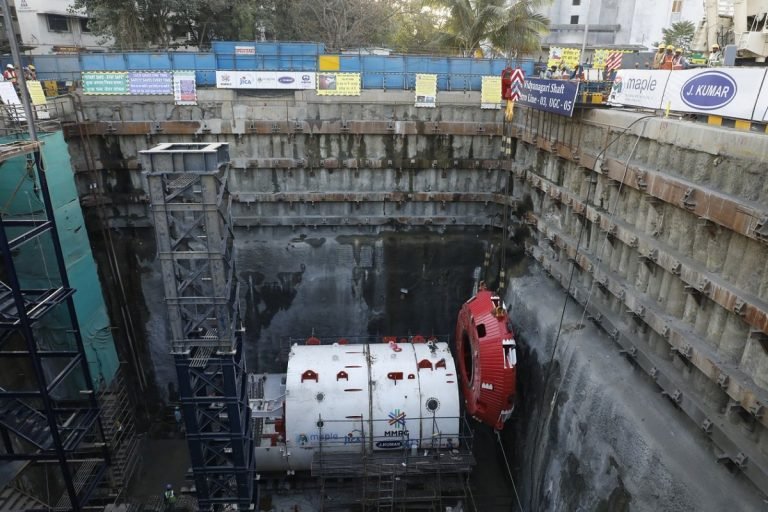
New Delhi: Mumbai-based leading infrastructure company J Kumar Infraprojects Ltd. on behalf of the “J. Kumar Infra – CRTG JV signed an agreement with the Delhi Metro Rail Corporation Ltd (DMRC) worth of Rs. 1,344.93 crore on Thursday, November 24, 2016 for Phase-2 of the Mumbai Metro Rail project and Others of Rs 449.2 crore.

Details of the Projects includes; part design and construction ·of viaduct and 9 elevated stations viz., Dahisar East Anand Nagar, Rushi Sankul, I C Colony, Eksar, Don Bosco, Shimpoli, Mahavir Nagar and Kamraj Nagar (excluding architectural finishing and pre-engineered steel roof structure of stations) from chainage -414.53m to 8283.501m including third track at Dahisar station East and “Viaduct and ramp for depot entry of Dahisar (East) – D N Nagar Corridor of Mumbai Metro Rail Project” (PKG-01) MML-02 Rs 680.
buy cialis strips online https://www.mydentalplace.com/wp-content/themes/twentytwelve/inc/en/cialis-strips.html no prescription

87 Crore and part design and construction of elevated viaduct and 8 elevated stations viz., Charkop, Malad Metro, Kasturi Park, Bangur Nagar, Goregaon Metro, Adarsha Nagar, Shastri Nagar and DN Nagar (excluding architectural finishing and pre-engineered steel roof structure)  from chainage  8283.5O1m  ((i.e.  end of Kamraj Nagar station, DN Nagar end) to 18181.43m including third track at shastri Nagar station and viaduct and ramp for depot entry of Dahisar (East) – D N Nagar Rs 704.06 crore.

“We are delighted to have bagged the contract for the Metro 2 project for Mumbai city. Over the years, JKIL has endeavored to build quality projects to serve the citizens of India. The Metro 2 project is another great opportunity to ease the congestion Mumbaikars currently facing. We consider the Metro 2 project another interesting challenge and we are confident that it will add to the pride of Mumbai city.” Jagdishkumar M Gupta, Executive Chairman, J. Kumar lnfraprojects Ltd said to media.

Advertisement1
InnoMetro_2026