Home Blog Page 22

MMRDA awards Rs 40.99 cr FOB contract linking Bandra Metro Station & Bandra Suburban Railway Station

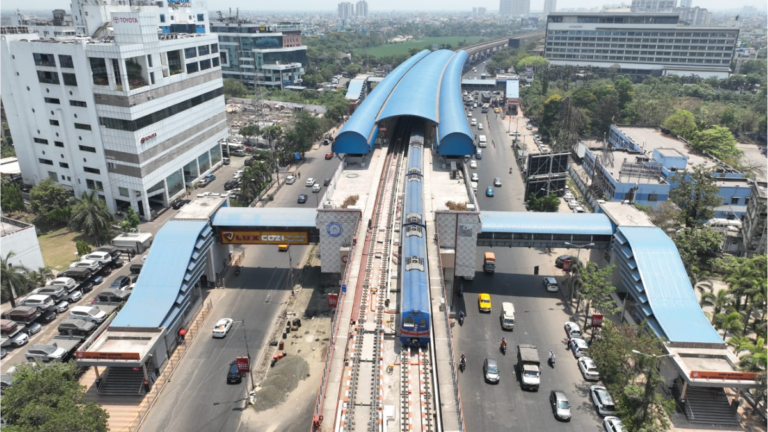
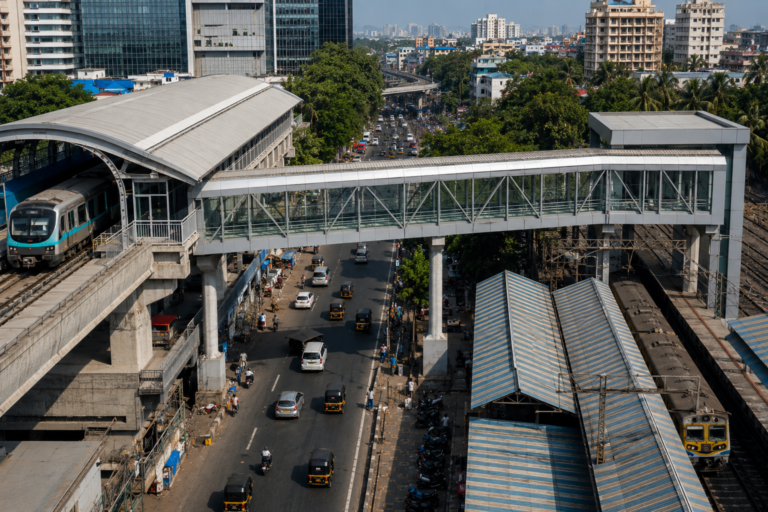
MUMBAI (Metro Rail News): The Mumbai Metropolitan Region Development Authority (MMRDA) has awarded a Rs 40.99 crore contract to RK Madhani & Co. for the construction of a new foot over bridge (FOB) connecting the Bandra Metro Station on Metro Line 2B with Bandra Suburban Railway Station. MMRDA has issued the Letter of Acceptance (LoA) for the project. 

Contract details

InformationDetails
ProjectFoot Over Bridge connecting Bandra Metro Station (Metro Line 2B) and Bandra Railway Station
Awarded ToRK Madhani & Co.
Contract ValueRs 40.99 cr
Construction Period18 months
Defect Liability & Maintenance Period5 years

Bidding details

BidderBid AmountStatus
RK Madhani & Co. (L1)Rs 40.99 croreAwarded
AB Infrabuild Private Limited (L2)Rs 42.60 croreRejected (Financial)
SPECO Infrastructure (L3)Rs 43.50 croreRejected (Financial)
A.P.I. Civilcon Private LimitedRejected (Technical)
RE Infra Pvt. Ltd.Rejected (Technical)
Sai Projects (Mumbai) Private LimitedRejected (Technical)
Shree Manglam Buildcon (I) Pvt. Ltd.Rejected (Technical)

Scope of work

The selected contractor will construct a 278-metre-long foot over bridge connecting the Bandra Metro Station on Metro Line 2B with Bandra Suburban Railway Station. The project aims to provide a safe and convenient interchange for passengers travelling between the metro and Mumbai’s suburban rail network.

About the project

A skywalk earlier connected Bandra Railway Station (West) with the Lucky Hotel junction on SV Road. MMRDA later removed the structure to make way for the construction of Metro Line 2B.

The new foot over bridge will replace the old skywalk and restore pedestrian connectivity in the area. At the same time, it will create a direct link between the upcoming Bandra Metro Station and Bandra Railway Station, making transfers easier for thousands of daily commuters.

Also Read: Locals demand Kochi Metro Link for Angamaly Railway station: Action council files petition
Locals demand Kochi Metro Link for Angamaly Railway station: Action council files petition
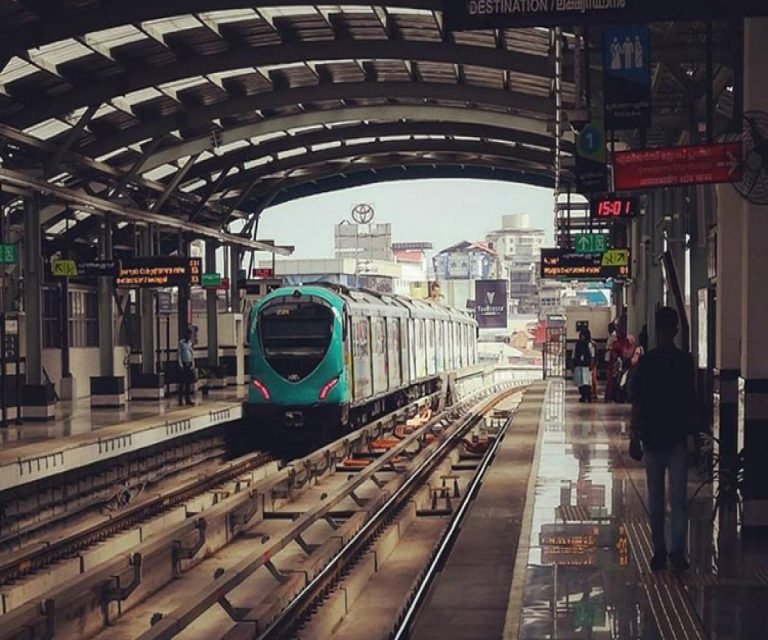
Kochi (Metro Rail News): The Angamaly Metro Action Council has submitted a petition to Chief Minister V. D. Satheesan urged the state government to revise the Kochi Metro Phase 3 route. They want the metro line to directly connect with Angamaly Railway Station along the NH 544 corridor.

The council is asking for a revised alignment from Aluva to Angamaly that passes through Cochin International Airport and includes Angamaly Railway Station. All four currently proposed routes focus mainly on airport access but skip the busy railway station.

Massive Public support

A survey run by the Angamaly Metro Action Council showed massive community support, with over 90% of respondents favoring the metro extension along the NH 544 corridor to directly connect with the Angamaly railway station.

Locals want Angamaly to become a full multimodal transit hub connecting metro, railway, buses, and national highways.

Action Council President Seby Varghese has called on local MLA and Minister Roji M. John to intervene and get the route changed before the final design is approved.

Why Connecting Angamaly Railway Station Matters?

Angamaly Railway Station is a busy transport hub that handles nearly 50 express and passenger trains daily and serves over 8,000 to 10,000 commuters every day. Connecting it directly with the Kochi Metro will create a seamless integrated transfer point where passengers can easily switch between trains, metro, local buses, and national highway traffic.

Gateway to North Kerala and Sabarimala

Angamaly serves as the main gateway to North Kerala and is the starting point for the upcoming Angamaly–Sabari rail line. It also acts as a key transit point for millions of Sabarimala pilgrims every year. Linking the station with the Metro will greatly reduce traffic congestion on the overcrowded NH 544 corridor.

The planned ~30 km hybrid extension from Aluva to Karayamparambu (Angamaly) via the airport includes these 15 stations: Thottakkattukara, Kunnampuram, Parambayam, Nedumbassery, Athani, Kariyad, Airport Railway Station, Cochin International Airport, Nayathode, Kavarapparambu, Arikkal Junction, Little Flower (LF) Hospital, Angamaly Town, Kothakulangara, and Karayamparambu.

Integrating the railway station will transform Angamaly into a true integrated transport hub, ease road traffic, and ensure steady ridership for the Kochi Metro.

Also Read: Bengaluru Metro: Bannerghatta Corridor likely to miss August 15 launch as Pink Line faces fresh delay 

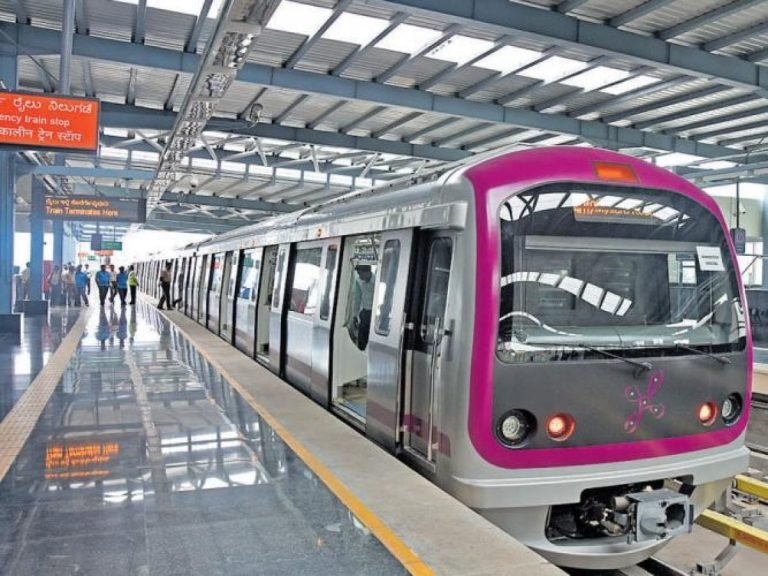
Bengaluru Metro: Bannerghatta Corridor likely to miss August 15 launch as Pink Line faces fresh delay 

BENGALURU (Metro Rail News): BMRCL (Bengaluru Metro Rail Corporation Limited) much awaited metro link to Bannerghatta Road has faced another delay. The elevated section of the Pink Line is now expected to open in late August or early September. This pushes back the August 15 target set by Greater Bengaluru Development Minister Krishna Byre Gowda. The delay is due to the signalling system, which still needs to finish its final testing and certification before the required safety inspection can take place.

Project overview

Details Information
ProjectBengaluru Metro Pink Line (Elevated Section)
Route Kalena Agrahara to Tavarekere
Length 7.5 km
Stations 6
Key InterchangeJayadeva Hospital (Yellow Line)

Reasons for the delay

According to the Deccan Herald report, the main reason for the delay is the pending validation of the signaling system. The Research Designs and Standards Organisation (RDSO) is expected to issue the Interim Speed Certificate (ISC) in the next few days. Still, the Independent Safety Assessment (ISA) certificate for the signaling system will take a few more weeks, which will delay the next stage of approvals. Without these certifications, BMRCL cannot apply for the required safety inspection by the Commissioner of Metro Railway Safety (CMRS).  

Most construction work already complete  

The elevated corridor runs from Kalena Agrahara to Tavarekere and includes six stations, such as Jayadeva Hospital, where passengers will be able to switch to the Yellow Line. Once operational, this section will expand Bengaluru Metro’s network to 103.6 km. Civil construction, track laying, and most station finishing work have already been completed. Six trains for the corridor have also been delivered.  

Testing enters final stage  

The trains have successfully finished oscillation trials and Emergency Braking Distance (EBD) tests conducted by the RDSO between April 28 and May 9. These tests establish the maximum safe operating speed and confirm the braking performance of the trains before commercial operations. The remaining work focuses on validating the signaling system. According to sources:  

  • Automatic Train Protection (ATP) testing is complete.  
  • Automatic Train Operation (ATO) validation is still ongoing.  
  • The signaling software is being upgraded before installation on the trains.  

Further testing is scheduled for August 3 and August 5. The Independent Safety Assessment is expected on August 5 and 6.  

CMRS inspection to follow

After receiving the ISA certificate, BMRCL will submit its application to the Commissioner of Metro Railway Safety for the required inspection of the corridor. The inspection will examine the railway systems, rolling stock, and facilities at the Kothanur depot, including the washing plant, underframe water-jet cleaning system, train-lifting pit jacks, and other maintenance infrastructure. Officials anticipate the CMRS inspection will occur during the third week of August. BMRCL will also need to address any observations made during the inspection before opening the line to passengers.

While the elevated section is nearing completion, work is ongoing on the 13.75 km underground stretch between Dairy Circle and Nagawara. According to the current timeline, this section is expected to open in March 2027.

Also Read: TÜV SÜD & MEDHA collaborate with Indian Railways for Hydrogen Train

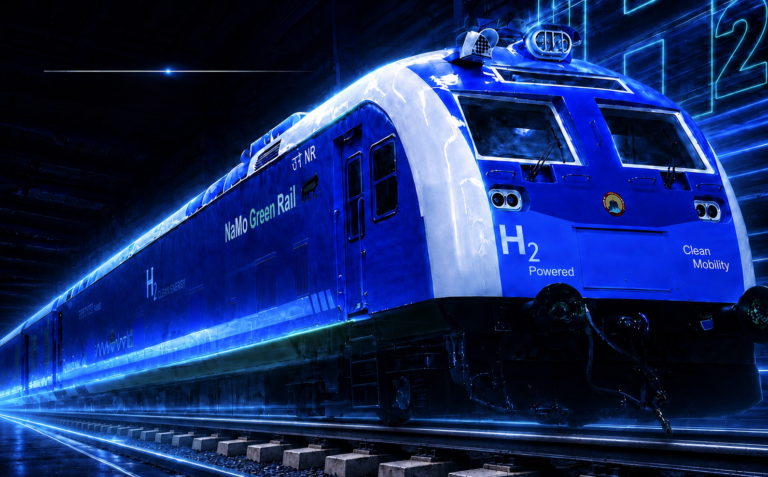
TÜV SÜD & MEDHA collaborate with Indian Railways for Hydrogen Train

NEW DELHI (Metro Rail News): TÜV SÜD and MEDHA have signed a Memorandum of Understanding (MoU) with Indian Railways to extend their partnership in the hydrogen powered rail vehicles project and Independent Safety Assessments for the Indian railway sector.

Earlier, the companies worked together for India’s first hydrogen-electric multiple unit and an associated hydrogen production and refueling station which is approved for operation by Indian Railways. MEDHA integrated the fuel cell-based drive system into a Diesel Electric Multiple Unit- vehicle platform. Additionally, it conducted static and dynamic tests, and the oscillation and performance trials.

TÜV SÜD executed the Independent Safety Assessments (ISA) of the hydrogen and the traction battery systems of the hydrogen-electric multiple unit system and the associated hydrogen production and refueling station.

Simon Lemin, Chief Executive Officer (CEO) of TÜV SÜD, South Asia expressed confidence in their collaboration with MEDHA and the Indian Railways to develop a sustainable mobility source. He further showed interest in continuing the collaboration as hydrogen technology is getting more important in the country.

Sumit Sehgal, Senior VP of TÜV SÜD, said that the safety requirements for the use of hydrogen in railway are extremely complex and challenging. Further, he said that the company felt honoured for being trusted by the Indian Railways for such challenging work.

Also Read: Mumbai local trains get Longer: 10 services upgraded to 15 coaches from July 20

Mumbai local trains get Longer: 10 services upgraded to 15 coaches from July 20

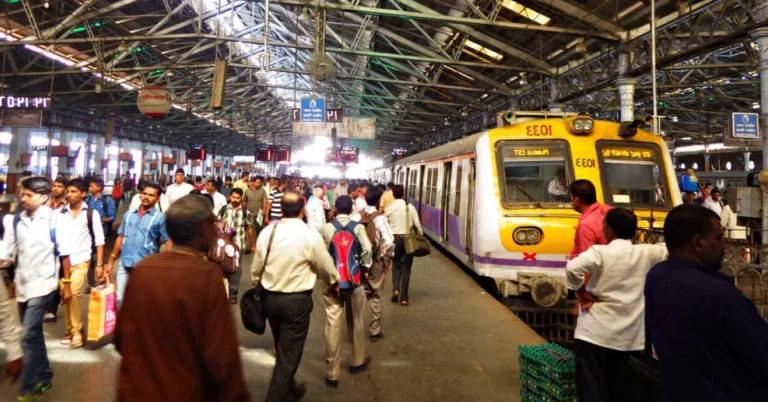
Mumbai (Metro Rail News): In a welcome move to ease overcrowding during peak hours, Central Railway has extended 10 suburban local trains from 12 coaches to 15 coaches, effective from Monday, July 20, 2026.

This upgrade increases each train’s passenger capacity by 25%, offering much-needed relief and greater comfort to thousands of daily commuters on the busy Mumbai suburban network.

Routes and Timings of the Upgraded 15-Coach Trains

The 10 extended services are evenly split between down line, leaving Chhatrapati Shivaji Maharaj Terminus (CSMT) and Up line,heading towards Chhatrapati Shivaji Maharaj Terminus (CSMT) directions:

Down Trains (From CSMT to Suburbs)

  • CSMT to Ambarnath – 9:15 AM
  • CSMT to Kalyan – 12:26 AM
  • CSMT to Badlapur – 3:03 PM
  • CSMT to Karjat – 6:21 PM
  • CSMT to Ambarnath – 11:08 PM

Up Trains (From Suburbs to CSMT)

  • Ambarnath to CSMT – 7:51 AM
  • Ambarnath to CSMT – 11:03 AM
  • Kalyan to CSMT – 1:36 AM
  • Badlapur to CSMT – 4:47 AM
  • Karjat to CSMT – 8:38 PM

Why Mumbai Needs These Longer Local Trains

By converting existing 12-coach trains into longer 15-coach ones, Central Railway is smartly utilizing current tracks and infrastructure to provide immediate relief without changing the overall timetable. Commuters traveling on critical routes between CSMT, Kalyan, Ambarnath, Badlapur, and Karjat will now enjoy safer and less crowded journeys, especially during rush hours.

This is a practical and quick step by Indian Railways to improve daily travel experience for Mumbai’s suburban passengers.

Also Read: Mumbai Metro: MMRDA plans FOBs to boost last mile connectivity

Patna Metro Line 2: DMRC floats tender for Track Fastening System

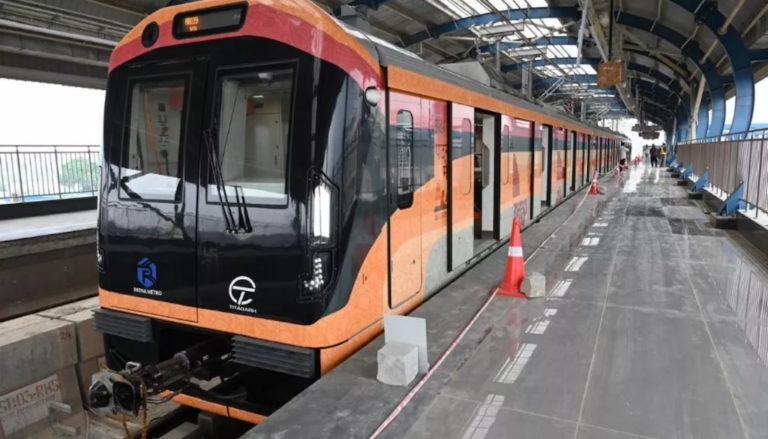
PATNA (Metro rail News): Patna Metro Rail Project has invited bids for the manufacturing and supply of the track fastening system for a section of its Line-2 corridor. The package covers the stretch between Patna Station and Malahi Pakri Ramp. Delhi Metro Rail Corporation (DMRC), acting on behalf of Patna Metro Rail Corporation Limited (PMRCL), has issued the online tender for Contract PT-03R. The procurement will follow JICA’s Single-Stage Two-Envelope Local Competitive Bidding process.

Tender details

InformationDetails
Contract NamePT-03R
Tender FeeRs 23,600 (including 18% GST)
Bid SecurityRs 19.1 Lakhs
Pre-bid meeting24 July, 2026, at 11:00 AM
Bid Submission Deadline17 August, 2026, at 3:00 PM
Completion Period12 Months

Scope of work

The contract includes manufacture & Supply of Track Fastening System for Line-02 Corridor (Patna Station to Malahi Pakri Ramp) for Patna Metro Rail Project. 

About the Patna Metro Rail Project

The Patna Metro Rail Project is being developed with financial support from the Japan International Cooperation Agency (JICA). The Government of India is using part of the JICA loan to finance this contract. Line-2 is one of the key corridors of the Patna Metro network. The latest tender marks another step in the project’s construction as work moves towards track.

Also Read: Asansol-Durgapur Aerial Metro: West Bengal Government Appoints RITES for Feasibility Study

RITES & MECON partner to explore opportunities in Rail, Metro & other infra projects

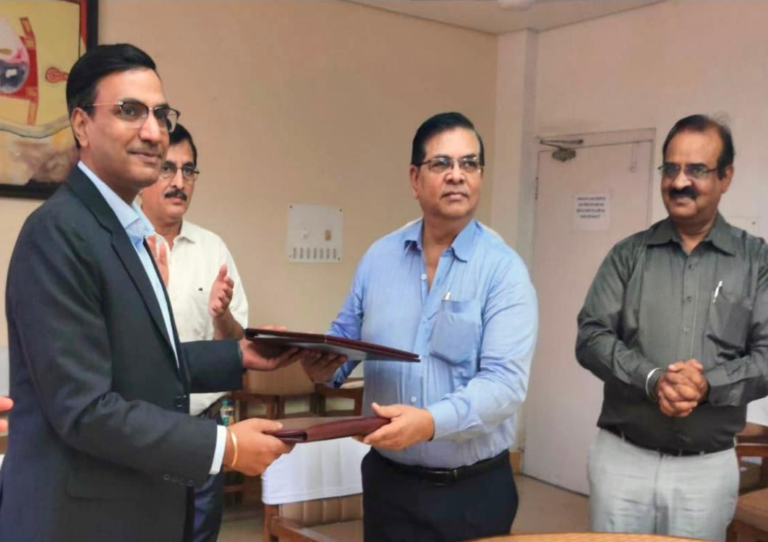
Gurugram (Metro Rail News): Rail India Technical and Economic Service (RITES) Limited, the leading transport consultancy organization, announced on July 20, 2026 that they have signed a Memorandum of Understanding (MoU) with Metallurgical & Engineering Consultants (India) Limited (MECON) Limited, a PSU of Ministry of Steel, to collaborate on the consultancy and infrastructure opportunities across the Indian and International markets for exploring opportunities in Rail, Metro and other infrastructure projects. 

RITES has a proficiency in transport infrastructure and engineering consultancy while MECON is commendable in the metal, mining, energy and allied sector. As both the companies excel in their domain their collaboration is sought to bring the strengths of both for unlocking different opportunities across various industries.

Exploring Opportunities in Rail, Metro & other Infra Projects

The MoU emphasizes that both the organizations will partner for exploring consultancy assignments and infrastructure opportunities across various sectors including railways, metro rail, highways, expressways, airports, ports, ropeways, bridges, tunnels, urban transport, energy, water resources, hydropower, wastewater management, and industrial infrastructure.

Significance of the Collaboration

Under the collaboration, both the parties will explore business avenues across a larger domain comprising the expertise of both. It will strengthen their position in seeking opportunities in the Indian market as well as the International market. By merging their experience and technical expertise, both the organizations will be able to provide integrated infrastructural solutions.

Also Read: RITES awarded Patna Metro’s consultancy contract

Asansol-Durgapur Aerial Metro: West Bengal Government Appoints RITES for Feasibility Study

West Bengal (Metro Rail News): In a major step towards modernizing urban transport in West Bengal, the state government has appointed RITES (Rail India Technical and Economic Service) to conduct a comprehensive feasibility study for a proposed Aerial Metro connecting Asansol and Durgapur.

The initiative is being led by Urban Development & Municipal Affairs Minister Agnimitra Paul in collaboration with the Asansol Durgapur Development Authority (ADDA). The decision was officially announced after an administrative review meeting held on Saturday, July 18, 2026.

RITES will carry out detailed technical, spatial, traffic, and demographic studies to finalize the elevated metro alignment. Actual construction work will begin only after the state government reviews and approves the final feasibility report.

Proposed Features of the Asansol-Durgapur Aerial Metro

The proposed Asansol-Durgapur Aerial metro is a major 40 to 45 km elevated transit system designed to completely transform travel across West Bengal’s industrial heartland. 

Metro will run along the region’s main commercial belt, linking crucial hubs like Asansol, Raniganj, Durgapur, and the Kazi Nazrul Islam Airport in Andal. 

Its main goal is to give commuters a fast, smooth alternative to the heavily crowded National Highway 19 (NH 19), effectively cutting down massive traffic jams, clearing up highway bottlenecks, and providing seamless last-mile connectivity for everyday travelers. 

Why do Asansol and Durgapur need this Aerial Metro?

The proposed Asansol-Durgapur Aerial Metro is expected to become the backbone of Asansol’s transformation into a modern smart city. With high-capacity public transport, the region aims to attract greater investments in technology, real estate, and retail sectors.

Both Asansol and Durgapur are major industrial and commercial hubs with heavy daily commuter and freight traffic. An aerial metro will significantly reduce road congestion, cut travel time between the two cities, and lower vehicular pollution.

This metro project is not an isolated initiative. It forms part of a larger infrastructure push by ADDA, which also includes a new logistics hub and a recently surveyed bridge over the Damodar River.

Also Read: Ashwini Vaishnaw & Uttarakhand CM flags Off new Ramnagar Dehradun Express to improve rail connectivity

Ashwini Vaishnaw & Uttarakhand CM flag Off new Ramnagar Dehradun Express to improve rail connectivity

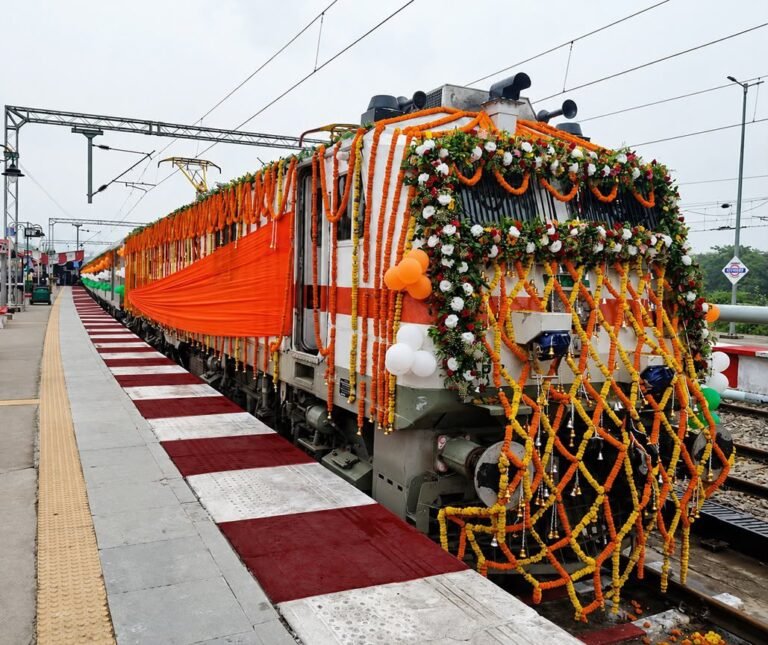
UTTARAKHAND (Metro Rail News): Traveling between Kumaon and Garhwal will soon be easier with a new direct train. Union Railway Minister Ashwini Vaishnaw and Uttarakhand Chief Minister Pushkar Singh Dhami virtually launched the Ramnagar Dehradun Express Train. This train will run twice a week and increase connectivity in Uttarakhand and neighboring Uttar Pradesh.

First direct express between Ramnagar and Dehradun  

Speaking through video conferencing from New Delhi, Ashwini Vaishnaw mentioned that this new train is a key step in improving rail connectivity in Uttarakhand. He called it the first direct Express service between Ramnagar and Dehradun, which will provide a faster and more convenient travel option for the Kumaon and Garhwal regions. The minister also mentioned that the train will run twice a week, making travel easier for residents, tourists, and business travelers. The new service will stop at:

  1. Kashipur  
  2. Roshanpur  
  3. Pipalsana  
  4. Moradabad  
  5. Najibabad  
  6. Haridwar  

Boost for Tourism and Pilgrimage  

The new train is expected to increase tourism in this area. Visitors who are traveling to Jim Corbett National Park will have a direct rail option. On the other hand, devotees who are going to temples near Ramnagar and Haridwar will benefit from better connectivity. Officials believe this service will make travel more comfortable and attract more visitors to the region.

Indian Railways expansion plans continue

Vaishnaw also said that work on the Rishikesh Karnaprayag rail project is progressing rapidly and described it as one of Uttarakhand’s major railway projects. He also announced that Indian Railways is creating a master plan to improve rail connectivity to Haridwar and Rishikesh. According to the minister, this plan aims to address the growing demand from passengers traveling to these important locations. He added that he recently discussed the proposal with Chief Minister Pushkar Singh Dhami during his visit to Delhi.

Station redevelopment underway  

The minister said that Indian Railways will undertake the redevelopment of 11 railway stations in Uttarakhand as a part of its station modernization plan. The works will start in Dehradun, Haridwar, Ramnagar, and Kathgodam. It will involve upgradation of the facilities, development of the infrastructure, and better management of the large number of passengers. Vaishnaw added that the newly started Tanakpur Nanded Express has gotten good response from the passengers.

Also Read: Goa Infrastructure Boost: RVNL signed MoU as Project Executing Agency

Goa Infrastructure Boost: RVNL signed MoU as Project Executing Agency

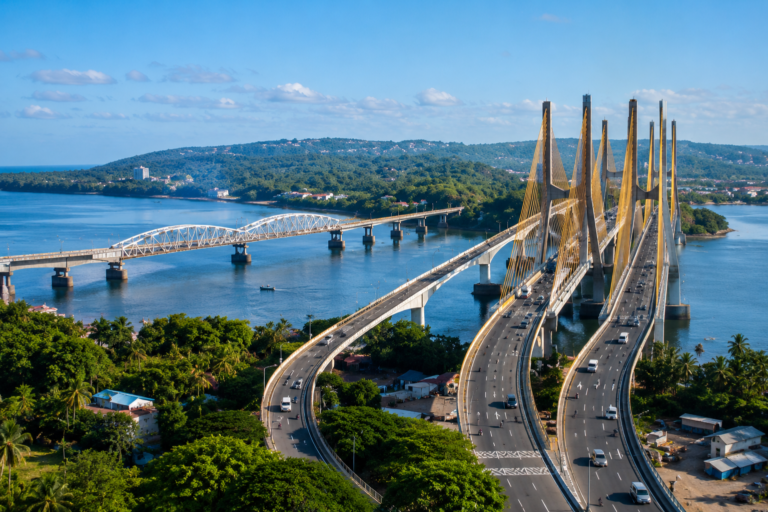
Goa (Metro Rail News): In a significant boost to Goa’s infrastructure push, Rail Vikas Nigam Limited (RVNL) has signed a Memorandum of Understanding (MoU) with the Goa government to jointly execute multiple infrastructure projects across the state.

Announced on July 17, 2026, the railway ministry’s Navratna PSU will act as the primary Project Executing Agency (PEA) for various state-level initiatives. The partnership aims to modernize Goa’s transport networks, roads, ports, and public utilities by leveraging RVNL’s proven engineering and project execution expertise.

Significance of MoU

Goa, one of India’s top tourism destinations and a rapidly growing commercial hub, has been facing increasing pressure on its infrastructure due to rising tourist footfalls and economic expansion. This collaboration is expected to accelerate the development of critical projects potentially integrating roads, railways, ports, and urban infrastructure to improve connectivity, ease traffic congestion, and enhance the quality of life for locals.

RVNL, traditionally known for railway projects, is now expanding its role as a multi-sector infrastructure developer. This marks a strategic shift for the company into broader state-level partnerships beyond pure rail works.

If successful, this model could become a blueprint for other smaller Indian states looking to fast-track infrastructure growth by partnering with experienced central PSUs instead of depending only on local contractors.

While the MoU sets up a strong framework for project identification and execution, details regarding specific projects, total financial value, and timelines are yet to be disclosed.

Also Read: Mumbai Metro: MMRDA plans FOBs to boost last mile connectivity