Home Blog Page 12

Vande Bharat Express Train: Driving Rail Modernization Through Make in India

Introduction 

Indian Railways, one of the largest rail networks globally with over 68,000 kilometers of route, has served as the foundation of India’s transportation system for decades. It supports economic development by enabling efficient movement of goods and passengers while promoting social and cultural integration across diverse regions of the country. As passenger demand evolved toward faster, safer, and more comfortable travel, Indian Railways recognized the need to modernize its rolling stock and adopt advanced, indigenous technologies to sustain its role as the backbone of national transportation.

In response, Indian Railways introduced the Vande Bharat Express, India’s first indigenously designed and manufactured semi-high-speed train, developed entirely under the Make in India initiative. The launch of Vande Bharat marked a major milestone in India’s journey toward self-reliance in advanced railway technology, setting new benchmarks in speed, safety, energy efficiency, and passenger-focused design while showcasing the nation’s growing engineering and manufacturing capabilities.

India’s Journey Toward High-Speed Rail Development

In 1960, the Railway Board of India initiated detailed studies to improve train speeds, which at the time were restricted to about 96 km/h on broad gauge routes. A phased speed enhancement program was introduced, with an initial target of 120 km/h and a long-term objective of reaching 160 km/h.
 

In 1969, the Rajdhani Express was introduced with diesel locomotives, marking India’s first premium high-speed train service and operating at speeds of up to 120 km/h.

Further progress was made in 1988 with the launch of the Shatabdi Express, hauled by WAP-1 electric locomotives, which increased operational speeds to around 130 km/h. 

The evolution culminated on 15 February 2019 with the launch of the Vande Bharat Express, India’s first indigenous semi-high-speed train, operating on the New Delhi-Kanpur-Allahabad-Varanasi route.

image 21

Vande Bharat Express : A New Era in Indian Railways

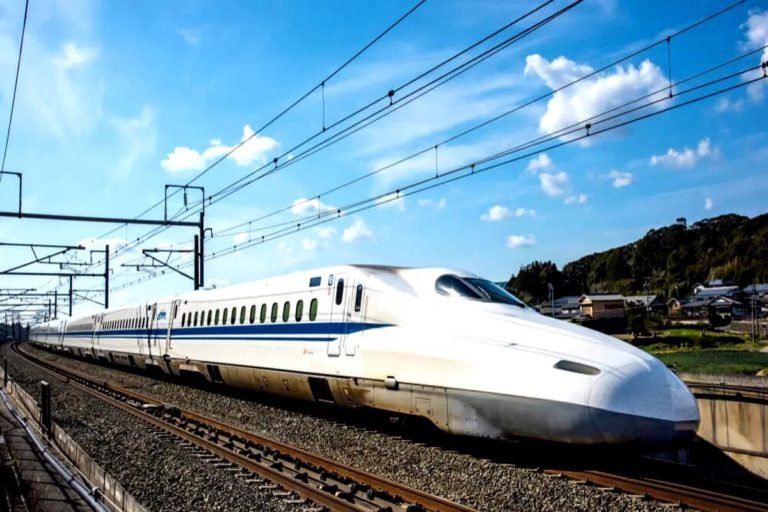
The Vande Bharat Express, earlier known as Train 18, is India’s first indigenous semi-high-speed train and a major milestone in the history of Indian Railways. The Vande Bharat Express is designed for a maximum operational speed of 160 kmph and tested up to 180 kmph, representing a substantial step toward modernizing the nation’s rail network.The train offers Shatabdi-like travel classes with improved passenger amenities, delivering a superior travel experience focused on speed, safety, and service.

The Vande Bharat Express, India’s first indigenous semi-high-speed train, was entirely designed and manufactured at the Integral Coach Factory (ICF) in Chennai within just 18 months, showcasing the nation’s advanced engineering capabilities. This landmark project reflects the Government of India’s strong commitment to the ‘Make in India’ campaign.

image 23

Features and Amenities of Vande Bharat Express

1. Passenger Comfort and Convenience: Vande Bharat Express ensures a smooth and enjoyable journey with multiple passenger-centric features which have been mentioned below: 

  • Bio-vacuum toilets for high hygiene standards.
  • Dual-mode lighting: general diffused illumination and personal lighting for each seat.
  • Pantry services in every coach offering hot meals, hot and cold beverages.
  • High insulation to minimize noise and maintain a comfortable temperature inside the coaches.
  • Fully sealed gangways and sensor-controlled interconnecting doors to provide a dust-free environment.
  • An improved air-conditioning system ensures comfortable travel in all weather conditions.

2. Modern Coaches: The train features 16 air-conditioned coaches, including 2 executive class coaches, accommodating a total of 1,128 passengers. The design shifts all electrical equipment below the coaches, increasing seating capacity compared to conventional trains. Furthermore, All coaches have automatic doors for enhanced safety and convenience.

3. Advanced Technology: The Vande Bharat Express integrates cutting-edge technology to provide a smarter and more convenient travel experience. It features a GPS-based audio-visual passenger information system that keeps travelers updated throughout the journey, while the onboard Wi-Fi hotspot allows passengers to stay connected and entertained. 

4. Safety Features: Passenger safety is a top priority on the Vande Bharat Express. The train is equipped with a regenerative braking system that ensures precise acceleration and deceleration for smooth and safe travel. Additionally, fire survival cable indoor circuits are installed to provide extra protection during emergencies, ensuring a secure journey for all passengers.

5. Accessibility for All:  The train is designed with Divyang-friendly facilities, ensuring accessibility and convenience for differently-abled passengers.

Vande Bharat 2.0: India’s High-Speed Rail Revolution

image 19

Building on the success of the Vande Bharat Express, Indian Railways unveiled the next-generation version, Vande Bharat 2.0, designed to deliver faster, safer, and more comfortable rail travel across India. The Vande Bharat 2.0 was developed during the challenging period of the COVID-19 pandemic.This upgraded train incorporates advanced technologies and enhanced passenger amenities to further strengthen India’s semi-high-speed rail capabilities.

Development and Production

  • On 21 January 2021, M/s Medha Servo Drives Ltd. received a contract worth ₹2,211 crore from Indian Railways to manufacture 44 Vande Bharat 2.0 trains, each comprising 16 coaches. This marked a substantial step in India’s “Make in India” initiative, emphasizing domestic engineering excellence and self-reliance in railway manufacturing.

First Vande Bharat 2.0 

  • The first Vande Bharat 2.0 trainset was flagged off by Prime Minister Shri Narendra Modi on 30 September 2022, traveling from Gandhinagar to Mumbai, signifying a major milestone in India’s rail modernization journey.

Vande Bharat 3.0 : A New Definition of Comfort, Safety & Speed

image 20

The Vande Bharat Sleeper Trains 3.0, the sleeper version of Vande Bharat, have been specifically developed to cater to long-haul overnight journeys. The Indian Railways aims to revolutionize overnight rail travel for millions of passengers across the country by the sleeper variant of the Vande Bharat series,   Developed under the Make in India initiative, Vande Bharat 3.0 reflects India’s ambition to offer world-class overnight rail services. 

First Contract for Vande Bharat Sleeper Trainsets

  • On 23 May 2023, BEML secured a ₹675-crore contract from the Integral Coach Factory (ICF), Chennai, for the manufacture of the first 10 Vande Bharat Sleeper trainsets.

Flag-Off of India’s First Vande Bharat Sleeper Trainset

  • On 1 September 2024, the Hon’ble Union Minister for Railways, Shri Ashwini Vaishnaw, flagged off India’s first Vande Bharat Sleeper trainset at BEML’s Bangalore rail complex. The sleeper version was designed by a dedicated team of engineers at ICF, while manufacturing was undertaken by BEML, a public sector enterprise formerly known as Bharat Earth Movers Limited.

Prototype Unveiling and Manufacturing Completion

  • In October 2024, the Integral Coach Factory (ICF) unveiled the prototype of the Vande Bharat Sleeper rake in Chennai. Subsequently, ICF completed the manufacturing of India’s first Vande Bharat Sleeper trainset on 17 December 2024.
image 22

Indian Railways to Launch First Vande Bharat Sleeper on Patna-Delhi Route

Indian Railways is preparing to introduce the country’s first Vande Bharat Sleeper train on the Patna-New Delhi corridor, marking a major step forward in modern overnight rail services. Designed for long-distance travel, the new sleeper variant is expected to complete the nearly 1,000-kilometre journey in around eight hours, with a maximum operating speed of 160 kmph.

Trial operations for the train are in their final stages, and the official launch is likely before the New Year. The Patna-Delhi Vande Bharat Sleeper is planned to run six days a week and will feature 16 coaches equipped with a large number of berths. By deploying this train on one of the busiest rail routes in the country, Indian Railways aims to ease congestion while providing a premium travel option.

Prime Minister Flags Off Four New Vande Bharat Express Trains 

In November 2025, Prime Minister Shri Narendra Modi inaugurated four new Vande Bharat Express services from Varanasi, Uttar Pradesh, further strengthening India’s modern rail network. This launch represents a significant step toward the Prime Minister’s vision of delivering faster, safer, and more comfortable travel through world-class railway infrastructure.

The newly introduced Vande Bharat Express trains will connect Banaras-Khajuraho, Lucknow-Saharanpur, Firozpur-Delhi, and Ernakulam-Bengaluru, offering passengers a swift and premium travel experience.

cbc27c69 2bf7 445e 8877 77c82f145064

Expansion of Vande Bharat Express Services Across India

  • As of December 2025, Indian Railways has operationalized 164 world-class Vande Bharat Express train services, connecting major cities across the nation. These semi-high-speed trains have substantially enhanced intercity connectivity and passenger comfort. Of the total services currently in operation, 24 Vande Bharat Express trains serve stations in the state of Maharashtra, highlighting the state’s important role in India’s modern rail network.

Government of India’s Vision for 400 Vande Bharat Trainsets

  • In the Union Budget 2022- 23, Hon’ble Finance Minister Smt. Nirmala Sitharaman announced an ambitious plan to develop and manufacture 400 new-generation Vande Bharat trains within three years. These trains are designed to offer improved energy efficiency, advanced technology, and a superior riding experience, reinforcing the Government of India’s commitment to transforming railway infrastructure and passenger services nationwide. 

Conclusion 

The Vande Bharat Express has emerged as a cornerstone of India’s railway modernization, reflecting a clear shift from conventional rail operations to advanced, indigenous technology. Developed under the Make in India initiative, the Vande Bharat Express has set new standards in speed, safety, energy efficiency, and passenger comfort on key intercity routes. The steady progression from the Vande Bharat Express to Vande Bharat 2.0 and the sleeper variant of Vande Bharat highlights Indian Railways’commitment to continuous improvement and innovation. Each generation of Vande Bharat has addressed evolving passenger needs, ranging from faster daytime travel to efficient overnight long-distance journeys. With more than 160 Vande Bharat services already in operation and a national vision to introduce 400 next-generation trainsets, the Vande Bharat Express has become a key instrument in transforming India’s rail infrastructure.


Discover how AI is bringing the next phase of sustainable urban rail mobility for Viksit Bharat at InnoMetro 2026, India’s prime exhibition and conference for metro & railways which is going to held on 21-22 May 2026 at Bharat Mandapam, New Delhi

Register now: https://innometro.com/visitor-registration/

Kochi Metro Floats Tender for Telecommunication System in Phase-II 

KOCHI (Metro Rail News): Kochi Metro Rail Limited has invited bids for the design, manufacture, supply, installation, testing, and commissioning of a comprehensive telecommunication system for Phase-II of the Kochi Metro Rail Project. 

Tender Overview

Tender NumberKBTL1/2026
Tender Issue DateMarch 9, 2026
KMRL Reference NumberKMRL/PROC/TENDER/2025-26/103
Scope of WorkDesign, Manufacture, Supply, Installation, Testing & Commissioning of Telecommunication System
Completion Period21 months from date of LOA issuance
Document DownloadFrom March 9, 2026 
Document Cost₹23,600 (including GST + processing fee, non-refundable)
Pre-Bid MeetingMarch 17, 2026 at 11:00 hrs (physical + video conference)
Query DeadlineMarch 23, 2026 by 17:00 hrs (Format per Form 11)
EMD₹86,50,000 (no MSE exemption)
Clarification Reply DateOn or before March 27, 2026
Bid Submission DeadlineApril 6, 2026 @ 15:00 hrs
Technical Bid OpeningApril 7, 2026 at 15:30 hrs

Scope of work: Design, Manufacture, Supply, Installation, Testing, and Commissioning of Telecommunication System for Phase-II of Kochi Metro Rail Project.

Kochi Metro Phase 2 (Pink Line) is an 11.2 km, 11-station elevated corridor connecting JLN Stadium to Infopark via Kakkanad. As of March 2026, construction is nearing 50% completion with viaduct installation underway. 

Also Read: Kochi Metro Invites Bids for Heavy-Duty Escalators for Phase-II


Discover how AI is bringing the next phase of sustainable urban rail mobility for Viksit Bharat at InnoMetro 2026, India’s prime exhibition and conference for metro & railways, which is going to be held on 21-22 May 2026 at Bharat Mandapam, New Delhi.Register Now: https://zma.page/ek9

Kochi Metro Invites Bids for Heavy-Duty Escalators for Phase-II 

KOCHI (Metro Rail News): Kochi Metro Rail Limited has issued an invitation for bids for the design, manufacturing, supply, installation, testing, and commissioning of heavy-duty escalators for Phase-II of the Kochi Metro Rail Project. 

The comprehensive package encompasses complete end-to-end responsibility from conceptual design through final commissioning, ensuring seamless integration of escalator systems with Phase-II stations. 

Tender Overview

Tender NumberKBE-03/2026
Tender Issue DateMarch 9, 2026
KMRL Reference NumberKMRL/PROC/TENDER/2025-26/105
Scope of WorkDesign, Manufacturing, Supply, Installation, Testing & Commissioning of Heavy-Duty Escalators
EMD₹ 45,26,000
Completion Period18 months from date of LOA issuance
Tender Document Cost₹23,600 (including GST + processing fee, non-refundable)
Pre-Bid MeetingMarch 19, 2026 at 11:00 hrs (physical + video conference)
Tender Security₹45,26,000 (no MSE exemption)
Addendum DeadlineMarch 27, 2026
Bid Submission DeadlineApril 6, 2026 @ 15:00 hrs
Technical Bid OpeningApril 7, 2026 at 15:30 hrs

Contract Scope

Design, Manufacturing, Supply, Installation, Testing & Commissioning of Heavy Duty Escalators for Phase II of The Kochi Metro Rail Project.

Kochi Metro Phase-II Context

Kochi Metro Phase 2 (Pink Line) is an 11.2 km, 11-station elevated corridor connecting JLN Stadium to Infopark via Kakkanad. As of March 2026, construction is nearing 50% completion with viaduct installation underway. Phase-II of the Kochi Metro Rail Project represents a significant expansion of Kerala’s first operational metro system, extending rapid transit connectivity to additional neighborhoods and activity centers across Greater Kochi. 


Discover how AI is bringing the next phase of sustainable urban rail mobility for Viksit Bharat at InnoMetro 2026, India’s prime exhibition and conference for metro & railways, which is going to be held on 21-22 May 2026 at Bharat Mandapam, New Delhi.

Register Now: https://zma.page/ek9

Chennai Metro Phase 2: TDC Contracting Wins ₹92.10 Cr E&M Contract for Nine Stations on Line 3

CHENNAI (Metro Rail News): Chennai Metro Rail Limited (CMRL) has announced the TDC Contracting Private Limited as the lowest bidder for a contract which involves the supply, installation, testing, commissioning, and training of electrical, fire alarm and detection, fire fighting, ventilation and air conditioning (VAC), and building management system (BMS) works at nine elevated stations from Sholinganallur Lake to SIPCOT 2 Station, including stabling lines, on Corridor-3 of Chennai Metro Rail Project Phase-II.

Bidder Details

RankBidderEvaluated Bid (incl. GST)
L1TDC Contracting Private Limited₹92,10,45,357.44
L2Toyota Tsusho India Pvt. Ltd.₹1,04,66,43,000.96
L3Universal MEP Projects & Engineering Services Ltd.₹1,18,24,86,604.66
L4Jakson Limited₹1,32,05,83,919.13

Notably, Universal MEP offered an 8.94% discount on their quoted price and Toyota Tsusho a 2% discount, yet TDC Contracting’s base quote of ₹74,66,48,608 (ex-GST) remained the lowest across all evaluated bids. The three competing bidders were rejected at the financial evaluation stage. The award was signed by the Director (Systems and Operation), CMRL.

Project Context

The nine-station stretch from Sholinganallur Lake to SIPCOT 2 covers a high-density commuter corridor along Chennai’s OMR (Old Mahabalipuram Road) a major IT and industrial spine. The E&M systems package is critical to making the stations operationally ready, covering passenger safety systems (fire detection and fighting), environmental control (VAC), and integrated building management. The stabling lines at this location will support rolling stock maintenance and berthing for this section of Corridor-3.


Discover how AI is bringing the next phase of sustainable urban rail mobility for Viksit Bharat at InnoMetro 2026, India’s prime exhibition and conference for metro & railways, which is going to be held on 21-22 May 2026 at Bharat Mandapam, New Delhi.

Register Now: https://zma.page/ek9

Delhi Metro Line 7 and Line 8 Extension Commences Revenue Service with Alstom’s Trains and Signalling System

DELHI (METRO RAIL NEWS): Alstom, global leader in smart and sustainable mobility, joined Delhi Metro Rail Corporation (DMRC)  in celebrating the commencement of revenue service on Delhi Metro Line 7 and Line 8 extensions, with the opening of Majlis Park to Maujpur (Line 7 – Pink line) and Majlis Park to Deepali Chowk which in future will be extended up to RK Ashram and Janakpuri (Line 8 – Magenta line).

Alstom is supplying modern Metropolis metro trainsets for both Lines’ extensions along with signalling system for Line 7 extension which will contribute to further enhance seamless, sustainable connectivity for commuters across the National Capital Territory. The current section of Line-8 extension is strategically important as this provides interchangeability to three lines of Delhi Metro Network Yellow line (at Badli), Red Line (at Madhuban Chowk) and Pink Line (at Majlis Park).

Commenting on this milestone, Olivier Loison, Managing Director, Alstom India said, “We are honoured and proud to be a long-standing partner of DMRC through its journey of becoming one of the world’s largest metro networks today. Together, we are committed to providing a safe, efficient, and environmentally friendly travel experience to commuters and the Magenta and Pink line extension will truly enhance DMRC’s neural metro network connectivity in the region”.

As a part of a larger €312 million contract Alstom is currently supplying 312 cars for Delhi Metro Phase IV. These 100% made-in-India driverless (trains are designed for a 95 kph safe speed and 85 kph operational speed. Alstom’s long-standing partnership with DMRC has seen the delivery of more than 800 metro cars already in service across the Delhi Metro network. The comfortable Metropolis trainsets enabling this new service are entirely manufactured at Alstom’s state-of-the-art facility in Sricity, Andhra Pradesh, its largest urban rolling stock manufacturing site in Asia. The metro trains are designed for high recyclability and low energy consumption, supporting sustainable urban mobility.

Alstom has also deployed Urbalis Flo, signalling system, a Communications Based Train Control (CBTC) system for Line 7 extension. This state-of-the-art technology is designed to operate the trains in the future with Grade of Automation (GOA) 4 driverless features. With the operation of the extension to existing Line 7, also called the Pink Line, will become the first circular line in the Delhi Metro Network and also the longest metro line with the highest Unattended Train Operation level (GoA4) in India.

Recently, Alstom has strengthened its collaboration with Delhi Metro Rail Corporation (DMRC) by securing a 10-year maintenance contract for Lines 1 & 2, encompassing comprehensive annual maintenance of trains, machinery, plant systems, and housekeeping at DMRC’s Badli depot. 

Alstom has also partnered with DMRC for several other projects, including successful implementation of supply and commissioning of train control and signalling system for DMRC’s Red line(L1), (Yellow Line (L2), Green Line (L5), Violet Line (L6), Pink Line (L7) during Phase I, II & III. Alstom has also delivered metro trains and rail solutions for other Indian cities such as Chennai, Mumbai, Lucknow, Kochi, Agra, Kanpur, Bhopal and Indore. Recently, Alstom has also delivered world-class trains and signalling solutions for India’s first semi-high-speed regional rail network, NCRTC-RRTS, connecting Delhi – Ghaziabad – Meerut.

About Alstom in India

Alstom is the only multinational sustainable mobility provider in India, to have a comprehensive portfolio of offerings to meet customer specific needs and continues to be a strategic partner in supporting India’s rail revolution. With 6 industrial sites and 5 major engineering centres, the company caters to domestic as well as international project needs with its world class rolling stock, components, signalling and services solutions. Fully aligned with the country’s vision of Make-in-India and Atmanirbhar Bharat, Alstom remains deeply committed to strengthening its local sourcing and supply chain ecosystem.

Bids Invited for Rolling Stock  Maintenance Contract for Navi Mumbai Metro Line 1

NAVI MUMBAI (Metro Rail News): Maharashtra Metro Rail Corporation Limited has issued an e-tender notice for providing preventive and corrective maintenance as well as intermediate overhauling for Navi Mumbai Metro Line 1’s rolling stock and depot equipment. 

Tender Overview

Tender Notice NumberNM1-O&M-25/2026
Tender Issue DateMarch 6, 2026
Contract Period5 years commencing from November 1, 2026
Document Cost₹35,400 (inclusive of GST, non-refundable)
Pre-Bid MeetingMarch 18, 2026 at 11:00 hrs (video conference)
Bid Security (EMD)₹7,71,000 (MSE exemption available as per GFR-2017)
Bid Submission PeriodApril 13, 2026 (11:00 hrs) to April 20, 2026 (16:00 hrs)
Technical Bid OpeningApril 21, 2026 after 16:30 hrs

Scope of Work

Providing Preventive & Corrective Maintenance And Intermediate Overhauling (IOH) for Navi Mumbai Metro Line 1: Rolling Stock & Depot Equipment.

Navi Mumbai Metro Line 1

Currently, Line 1 of the Navi Mumbai Metro Rail Project is operational, spanning 11.1 km between CBD Belapur and Pendhar. The corridor comprises 11 stations and serves as the first operational metro line in Navi Mumbai.

PM Modi Inaugurates Pink and Magenta Line Extensions of Delhi Metro Phase 4

DELHI (Metro Rail News): Prime Minister Narendra Modi inaugurated 2 new sections of the Delhi Metro on Sunday, March 8, 2026, under Phase 4. The inauguration of the Majlis Park-Maujpur Babarpur section of the Pink Line and the Deepali Chowk-Majlis Park stretch of the Magenta Line represents a historic milestone in Delhi’s public transportation infrastructure.

The Prime Minister also laid foundation stones for development projects worth approximately ₹33,500 crore, including three new metro routes under Phase-V(A).

Inaugurated Corridors Overview

Inauguration DateMarch 8, 2026
Pink Line ExtensionMajlis Park-Maujpur Babarpur (12.3 km, 8 stations)
Magenta Line ExtensionDeepali Chowk-Majlis Park (9.9 km, 7 stations)
Total Pink Line Length71.56 km (India’s first complete ring metro)
Total Magenta Line LengthApproximately 49 km

Pink Line: India’s First Ring Metro

The Majlis Park-Maujpur Babarpur corridor spans 12.3 kilometres and includes eight elevated stations, completing the Pink Line’s circular configuration. With this addition, the Pink Line extends to approximately 71.56 kilometres, establishing India’s first fully operational ‘ring metro’ that encircles large parts of Delhi without requiring passengers to change lines for circular travel.

Magenta Line Extension

The Deepali Chowk-Majlis Park corridor extends the Magenta Line by 9.9 kilometres, increasing its total length to approximately 49 kilometres. This elevated extension of the Botanical Garden-Krishna Park Extension Magenta Line integrates several residential and commercial areas in northwest Delhi into the metro network.

Phase-V(A) Foundation Stones

PM Modi laid foundation stones for three new corridors under Delhi Metro Phase-V(A), covering approximately 16.1 kilometres of route length:

  • Central Vista Corridor: RK Ashram Marg to Indraprastha (9.9 km underground)
  • Aerocity to Indira Gandhi Airport Terminal-1 (2.26 km underground, Golden Line extension)
  • Tughlakabad to Kalindi Kunj (3.9 km elevated, Golden Line extension)

These corridors will provide direct connectivity to Delhi’s administrative hub (Central Vista), improve airport access, and enhance connections between Noida, south Delhi, and the airport. The Central Vista corridor will serve government offices and cultural institutions in the redeveloped zone, while the airport extensions facilitate seamless multimodal transportation.

Connectivity Impact

The new metro corridors benefit residents across multiple Delhi neighbourhoods, ending the long-standing transportation isolation of northeast Delhi areas. The comprehensive connectivity improvements address decades of inadequate public transportation access in rapidly growing residential zones.


Discover how AI is bringing the next phase of sustainable urban rail mobility for Viksit Bharat at InnoMetro 2026, India’s prime exhibition and conference for metro & railways, which is going to be held on 21-22 May 2026 at Bharat Mandapam, New Delhi.

Register Now: https://zma.page/ek9

Chennai Metro: United Rail Becomes L1 for Track Maintenance Contract for Phase 1 and Its Extension

CHENNAI (Metro Rail News): United Rail has emerged as the lowest bidder (L1) for the ballastless track maintenance contract covering elevated, underground, and depot sections across the Phase 1 and Phase 1 Extension of Chennai Metro Rail Project.

Tender and Bidder Details

FieldDetails
Award No.CMRL/Track/O_M/2025
Tender ID2025_CMRL_891275_1
Contract Date6 March 2026
Tender AuthorityChennai Metro Rail Limited
Number of Bids2
L1 BidderUnited Rail Road Consultants Private Limited
L1 Bid Value₹11 crore
L2 BidderPEMS Engineering Consultants Pvt. Ltd.
L2 Bid Value₹11.7 crore
Technical Bid Opening6 February 2026
Financial Bid Opening6 March 2026

Scope of Work

The contract covers the comprehensive operations and maintenance of ballastless track infrastructure across CMRL’s Phase 1 and Phase 1 Extension networks, encompassing elevated, underground, and depot sections.

Background

Chennai Metro Rail’s operational network currently spans 54.1 km across 2 lines, the Blue Line (Wimco Nagar to Chennai International Airport, including the Phase 1 Extension commissioned in February 2021) and the Green Line (Chennai Central to St. Thomas Mount). The Phase 1 Extension added 9.05 km of elevated track in the city’s northern zone, enhancing metro connectivity to high-density residential areas.


Explore how AI-integrated systems are improving comfort, connectivity, and accessibility for passengers across metro and rail networks at the 6th edition of InnoMetro, India’s leading expo for the Metro & Railway industry, which is going to be held on 21-22 May 2026 at Bharat Mandapam, New Delhi

Register Now: https://zma.page/ek9

Bids Invited for General Consultancy Work of Mumbai Metro Line 5A

MUMBAI (Metro Rail News): The Mumbai Metropolitan Region Development Authority has floated a tender to appoint a general consultant for the civil works of Mumbai Metro Line 5A. The proposed 11.829 km elevated line will branch into two spurs. One spur will connect to Kalyan, while the other will terminate at Ulhasnagar. 

Tender Details: 

Tender AuthorityMMRDA
Tender ID2026_MMRDA_1283742_1
Tender NoMMRDA/MMRP/L-5A/GC/CA293
EMDRs  37,00,000/- 
Contract Period48 (Months) 
Pre-Bid Meeting11/03/2026 

Scope of Work: Appointment of General Consultant (GC) for Civil Works of Metro Line-5A (Durgadi to Kalyan with spur to Ulhasnagar).

Progress on Mumbai Metro Line 5A

The proposal for the project is expected to be submitted to the Maharashtra government for approval in April. According to the Detailed Project Report (DPR), the total cost of the project is estimated at ₹4,063.08 crore. However, certain procedural and administrative factors could affect the pace of its implementation.

One of the key challenges relates to land acquisition, which is often a time-consuming process in large infrastructure projects. The proposed corridor will require the acquisition of approximately 16,268 square metres of government land and around 1,738 square metres of private land. In addition to land acquisition, the project will also need to go through environmental impact assessments and various statutory clearances, which may further influence the overall timeline of construction.


Explore how AI-integrated systems are improving comfort, connectivity, and accessibility for passengers across metro and rail networks at the 6th edition of InnoMetro, India’s leading expo for the Metro & Railway industry, which is going to be held on 21-22 May 2026 at Bharat Mandapam, New Delhi

Register Now: https://zma.page/ek9

PM Modi to Commission 2 New Sections of Delhi Metro Phase 4 on 8 March

DELHI (Metro Rail News): In a move to streamline connectivity in the NCR region, Prime Minister Narendra Modi is going to inaugurate two new sections of Delhi Metro Phase 4 on 8 March. In addition to that, the PM will lay the foundation stone for three new metro routes under Delhi Metro Phase 5A. This inauguration programme will take place at DDA Utsav Sthal-3.

The PM will inaugurate the following section:

Majlis Park-Maujpur-Babarpur section of the Delhi Metro’s Pink Line

With the opening of the 12.3 km Majlis Park-Maujpur-Babarpur section, the Pink Line will become Delhi’s first circular metro line. The integration of this section will extend the corridor’s total length to 71.56 km. This section will have eight new stations, including Burari, Jharoda Majra, Jagatpur-Wazirabad, Soorghat, Nanaksar-Sonia Vihar, Khajuri Khas, Bhajanpura, and Yamuna Vihar, before Maujpur-Babarpur.

Deepali Chowk-Majlis Park Section of Magenta Line

In addition to the extension of the Pink Line, the PM will also commission the Magenta Line extension spanning 9.92 km from Deepali Chowk to Majlis Park. This section will feature a total of seven stations, including Madhuban Chowk, Uttar Pitampura-Prashant Vihar, Haiderpur Village, Haiderpur Badli Mor, and Bhalswa.

Foundation Stone for 3 New Metro Routes

To further support the expansion of metro services in the NCR, the PM will lay the foundation stone for three new routes, which will be implemented under Delhi Metro’s Phase 5A.

The 3 new routes include: 

LineRouteLength
Central Vista corridorRamakrishna Ashram Marg – Indraprastha9.913km
Golden LineAerocity – Indira Gandhi Airport Terminal-12.263km
Golden LineTughlakabad – Kalindi Kunj3.9km

As per the Government of Delhi, these metro initiatives involve a combined investment of more than ₹18,300 crore, and are intended to broaden the reach of the metro rail connectivity and strengthen transport links across Delhi as well as adjoining areas of the National Capital Region. 


Explore how AI-integrated systems are improving comfort, connectivity, and accessibility for passengers across metro and rail networks at the 6th edition of InnoMetro, India’s leading expo for the Metro & Railway industry, which is going to be held on 21-22 May 2026 at Bharat Mandapam, New Delhi

Register Now: https://zma.page/ek9