Chennai Metro | Chennai’s first underground metro rail line may open soon

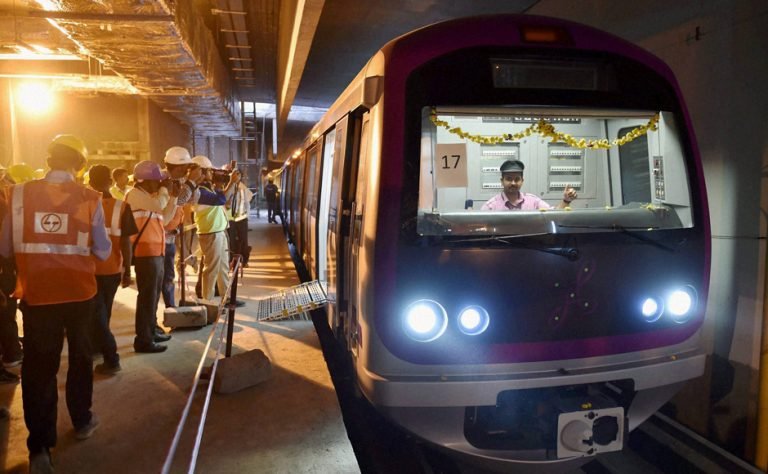
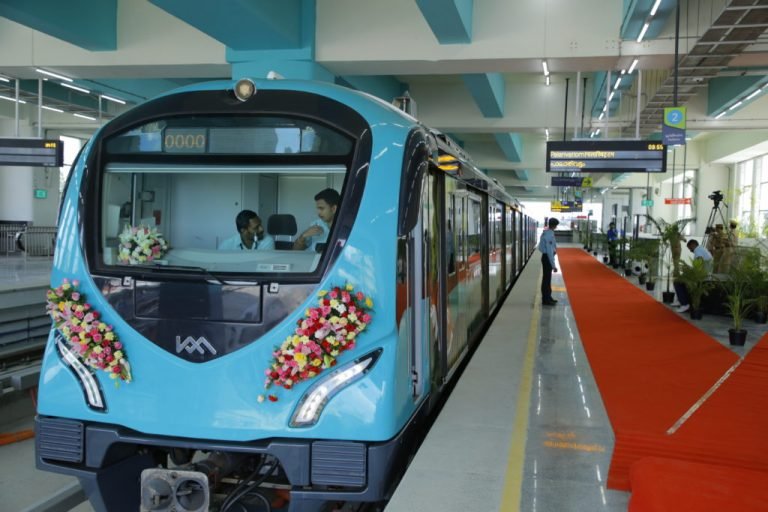
Chennai: Chennai’s first underground metro rail line between Koyambedu and Nehru Park may soon be opened to the public, as a team led by commissioner of metro rail safety K A Manohar began final round of inspections in the stretch on Wednesday.“Chennai Metro Rail Ltd (CMRL) has submitted documents related to the stretch. We will conduct inspections for two days,” said Manohar before heading for the inspections.The team comprising the commissioner, three deputy commissioners and supporting staff will inspect around 7.63km downline between Nehru Park to Koyambedu and around 4.54km upline between Koyambedu and Shenoy Nagar.
They will inspect tracks, tunnels, air-conditioning systems, fire prevention mechanisms, knowledge of staff, ticketing and passenger amenities.
Trains will be run on the stretch and tested for its safety. They will also check functioning of the platform screen doors.
Once the underground line gets operational, residents from areas like Kilpauk, Shenoy Nagar, Aminjikarai, Anna Nagar, Thirumangalam and Koyambedu can take a ride in the train all the way up to the airport with a single ticket.

Lucknow Metro | ALSTOM delivers third set of metro coaches to LMRC

Lucknow: The Lucknow Metro Rail Corporation (LMRC) today received the third set of Metro train at the Transport Nagar Metro Depot. The trains which are being manufactured  by Alstom Transport at their manufacturing plant at  Sri City (Andhra Pradesh) are transported through special trailers by road with pilot vehicles in the front  & the rear.This set of Metro train was dispatched for Lucknow on 31 st March, 2017 from Sri City. Each coach (car) is loaded on a special trailer having  64 wheels. A 180 tonne crane is used to unload  40 tonne car using a special spreader. A specialised safety team  also supervises for  safe unloading of trains. It takes about 6 hours to unload all four cars.This set of Metro train will also be used for testing of signalling system with multiple trains running in sections. On 25 th March, 2017, LMRC had received the second train set and just after 17 days of its arrival, LMRC has now received the third set of its Metro train.Source: LMRC Press Release.

Metro car market primed for further growth says report

According to a study by SCI Verkehr, Germany, the world market for metro cars is set to grow at an annual rate of 1-2% from what it describes as a very high current market volume of more than €8bn.
However, the overall rate of growth is slower than in previous years. “Very high growth rates in Europe and Africa/Middle East are offset by low growth or slightly decreasing rates in Asia, North America and the CIS,” SCI explains.“Global urbanisation is the decisive driver of demand,” SCI says. “The number of cities and their average size are constantly increasing. Besides this, metro systems have constantly grown to be become the backbone of secure mobility.”In 2016, 159 metro systems totalling 12,300 route-km were in operation worldwide compared with 152 in 2013, 107 in 2000, and only 84 in 1990. “The potential for the development of new metro systems is enormous and will remain so in the future,” SCI says. “Approximately 140 cities with more than 1 million inhabitants have no metro system. These metropolises are mainly located in Asia and Africa/Middle East.”SCI expects a further 6600km of additional metro lines to be put into operation by 2022, and another 4400 km by 2026, which SCI attributes mainly to dynamic expansion plans in China and India.According to SCI, CRRC Corporation, China, already has a world market share of almost 60%. “Between 2012 and 2016, CRRC dominated the world market for new metro vehicles,” SCI explains. “Besides continuing high deliveries in its home country China and its leading position in Asia, CRRC holds the Number 1 position in Eastern Europe and Africa/Middle East.
buy silvitra online https://gilbertroaddental.com/wp-content/themes/twentyseventeen/inc/en/silvitra.html no prescription
”SCI expects CRRC to continue to increase its market penetration outside China for two reasons: first, the Chinese market remains at a very high level, and secondly, CRRC is becoming increasingly active internationally. CRRC has large order backlogs from the United States and India, and new contracts in Turkey and countries in Africa and the Middle East. Following data shows global metro car market share by manufacture:-
  • CRRC – 57%
  • Bombardier Transportation – 7%
  • Alstom – 7%
  • Transmashholding – 6%
  • CAF – 4%
  • Hyundai Rotem – 4%
  • Kawasaki – 4%
  • Others – 11%
Source: RailJournal

Transport for London are seeking a long term partner

Transport for London are seeking “a long term partner” to restore the iconic South Kensington tube station.

South Kensington is one of London’s most prestigious and recognised locations in the Royal Borough of Kensington and Chelsea. The station was originally opened in 1868 and welcomes over 34 million customers every year as people flock to London’s museum quarter. This impressive footfall has led to some degree of deterioration on the line which has now prompted Transport for London (TfL) to begin its upgrade project. The transport operator is welcoming bids from the open market to create a joint venture partnership to tastefully restore and develop the iconic gateway station. This scheme will provide vital funds to create step-free access to the District and Circle lines via a new station entrance on Thurloe Street. Subject to planning, the development including step-free access to the District and Circle line and the pedestrian subway could be complete in 2022.The site also includes the main station entrances through the Grade II listed shopping arcade, which will be restored to its original state, and a second entrance via a Grade II listed pedestrian subway. TfL (@TfLRail ) is aiming to identify a partner later this year. TfL and the chosen partner will then form a joint venture to develop proposals for the site in consultation with the local community and seek planning permission to develop the site.Separately, TfL is continuing to progress plans to rebuild a disused platform for eastbound District and Circle line services. The ticket hall and gate line will be expanded and a new emergency exit to the road bridge leading onto Thurloe Square bridge will be opened. Subject to planning permission, works could start early next year.Graeme Craig, Director of Commercial Development Director at Transport for London said: “South Kensington Tube station is one of our busiest stations and also the gateway to some of the most important and treasured cultural institutions anywhere in the world. We want to find a long-term partner with whom we can work to create a station that reflects its historic legacy and unique setting, whilst generating vital revenue to reinvest in transport and provide step-free access for millions of journeys.”These plans come after the major of London’s announcement to install step-free access in 30 stations across the network costing £200 million. This will be of particular use to the area to make local attractions like the Science Museum, Imperial College and the Natural History Museum more accessible to the public from underground.

Hyderabad Metro | State Govt. wants metro rail services by June 2, 2017

Hyderabad: The Telangana government has asked Hyderabad Metro Rail to start services on one stretch by June. June 2 is Telangana state formation day, and the government is keen that the project gets going so that people can see tangible benefits.HMR sources said the stretch from SR Nagar to Miyapur was ready and the safety clearance certificate had been obtained. In March, HMR managing director N.V.S. Reddy stated that this stretch would be operational in June.
Mr Reddy said, “Starting services on that stretch will help us understand the travel pattern of people. Various studies have shown the people’s inclination towards travelling by the Metro Rail. This stretch will have maximum traffic and the last mile connectivity is being put in place.”
The Nagole to Mettuguda stretch is ready for operation but starting of services will not be feasible till the Secunderabad rail over bridge section is complete.A senior official said, “Apart from ROBs, works near Iskcon temple have just started; connecting that stretch will take time. The stretch from Nagole to Begumpet will be operational before December.”

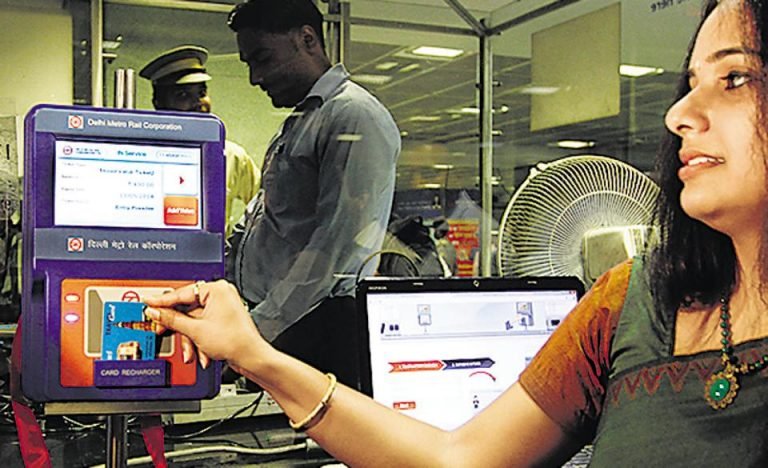
PM Narendra Modi and Australian PM Malcolm Turnbull takes Delhi Metro ride

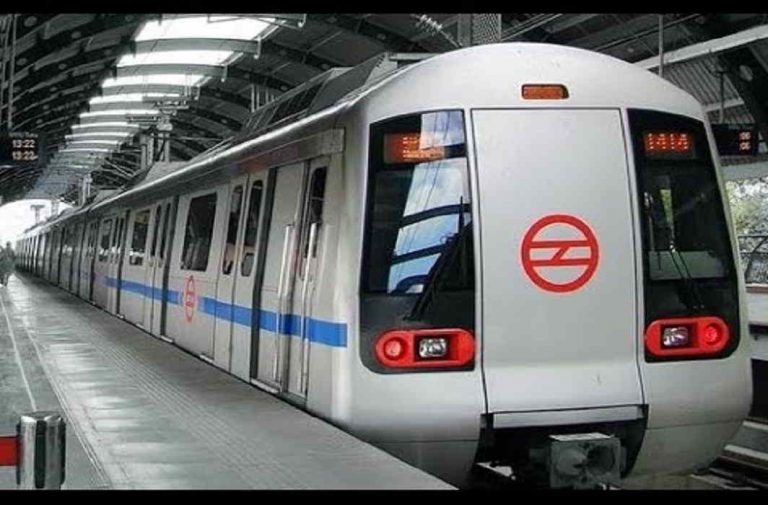
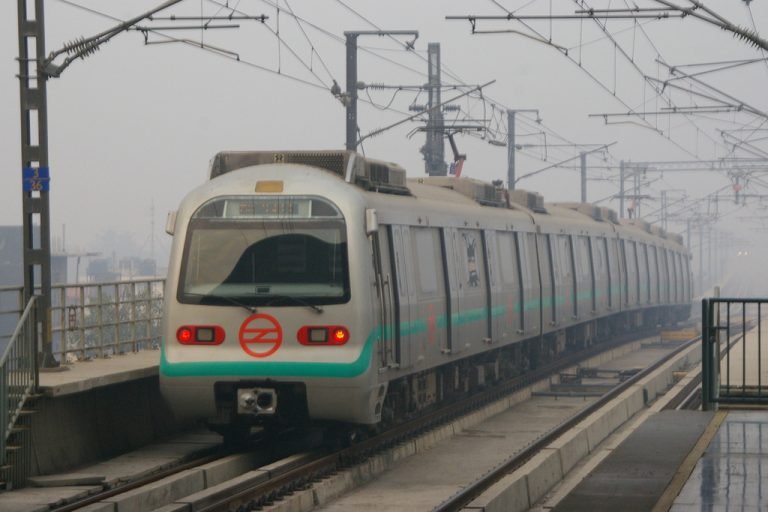
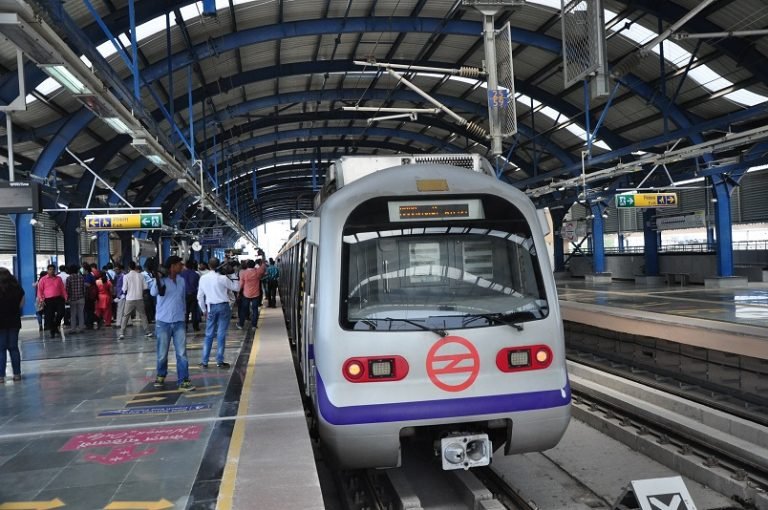
New Delhi: Visiting Australian Prime Minister Malcolm Turnbull today accompanied Prime Minister Narendra Modi on a metro ride in the national capital.The two heads of state arrived at the Mandi House metro station today afternoon and, after greeting the people at the station, proceeded to a board a Metro to the Akshardham Temple.Chants of ‘Modi, Modi’ were heard at the metro station when the two leaders reached Mandi House, news agency ANI reported.
PM Modi tweeted a photo of the two leaders taking a selfie, saying, “On board the Delhi Metro with PM @TurnbullMalcolm. We are heading to the Akshardham Temple”, while Turnbull posted the duo’s selfie.
At the Akshardam Temple, Turnbull and Modi were greeted with garlands and were taken on a tour of the iconic Hindu mandir complex. The two leaders first toured the temple on foot and then in a golf cart.

Chennai Metro | Chennai’s arterial Anna Salai caves in trapping bus and car

Chennai: In a shocking incident, Chennai’s arterial Anna Salai caved in near Thousand Lights bus stop on Sunday afternoon, trapping a Metropolitan Transport Corporation bus and a car.Luckily none of the thirty-five passengers were injured. the bus driver and conductor and also car driver escaped without any injuries.The cave in took place in front of the Church Park School in one of the busiest stretch of the arterial road. Being a Sunday, the traffic was very less on the road thereby preventing a major accident. According to the bus driver, he had stopped the bus at a stopping when it started to sink as if the tyre burst suddenly. As the bus started sinking slowly, the alert driver and conductor asked the passengers to get down immediately.The cave in happened because of the ongoing tunnel boring work for Chennai Metro Rail that is being carried out between Thousand Lights and Directorate of Medical Services (DMS) along the Anna Salai. The incident site is very close to the place where the tunnelling works caused a foam leakage a few weeks ago. A CMR official said that the road caved in when they were carrying out tunnelling work. All the tunnelling works have been stopped following the incident as a precautionary measure, the official said.
buy cialis oral jelly online https://pridedentaloffice.com/wp-content/themes/twentytwentyone/inc/en/cialis-oral-jelly.html no prescription
He added that the work would commence only after a detailed survey and inspected was done by their team.Tamil Nadu finance minister D Jayakumar, who visited the spot, attributed the road cave in to the loose soil. “This is the first time such an accident has happened during the metro rail work since 2009 when the work started. We will use this as a learning experience and all precautions will be taken to prevent such incidents,” he told reporters.The minister said work was progressing on a war footing to remove the trapped vehicles and repair the road so that traffic could be restored by Monday evening.Chennai police have cordoned off one side of the Anna Salai connecting Thousand Lights with DMS and traffic has been diverted. Both the bus and the car has been removed with the help of a crane by 4 pm.This is the second such incident of a vehicle getting trapped in a road cave-in caused by the metro rail tunnelling work. The first such incident took place in June 2015 on EVR Periyar Salai opposite Madras Medical College, when a car got trapped in it.Source: DNA

Bhopal Metro | EIB officials study technicalities of metro rail project in City

Bhopal: On Thursday, a three-member team of European Investment Bank (EIB) concluded their two-day survey of the ambitious Bhopal metro rail project by discussing the technical aspects of the project with the officials of the administration.The team was here to study the aspects of the metro rail project before providing funds for its first phase having an estimated cost of about Rs 7,000 crore. Earlier on Wednesday, the EIB team headed by its country head Sunita Lakkhoo visited the proposed routes of the project including the main depot at Stud Farms in Arera Hills.“On Thursday, the EIB officials discussed every possible technical aspect including depot, elevators, tracks and others with the officials. During the meeting we provided all the necessary documents and papers mentioning the technical features to the EIB team,” said officer on special duty, Bhopal Metro Rail Project, Kamal Nagar adding the EIB officials had assured them of giving a reply after one or two months after thoroughly studying the project.If approved, EIB would be funding the first phase of the project comprising two routes of about 27 kms which includes a line from Karond to AIIMS (14.34 kms) and Bhadbhada to Anand Nagar (12.34 kms). As per the new proposal, the state government would have an equity stake of 20 per cent, the Centre would also have 20 per cent while the remaining 60 per cent would be raised from the financial assistance received from EIB.The ambitious project of the government has failed to take off due to lack of funds. Last year, a team of Japan International Co-operation Agency (JICA) visited the capital to discuss the possibilities of funding the project but it failed to materialise.

Surat Metro | DMRC visits Surat to finalise blue print of metro rail project

Surat: A team from Delhi Metro Rail Corporation(DMRC), arrived in the city on Wednesday on a two-day visit in connection with the 40-km-long Surat metro rail project. The team visited probable places from where metro is likely to ply and made spot inspection.Surat municipal commissioner M Thennarasan said, “The team is here essentially to finalize the detailed project report (DPR) for the Surat metro rail project. The DPR is likely to be ready in next 15-20 days.”The Rs 12,800 crore project is divided into two corridors. One will be from Chara to Dream City and other from Bhesan to Saroli.
The route from Chara to Dream City is likely to cover both Varachha and old city, whereas the Bhesan to Saroli route would cover Palanpur and areas on other side of Tapi river. Chara to Dream City route will be about 22 km, while the other route would be 18 km long.
“We expect the project to be completed by 2021-22 from the day it starts. It is expected that about three lakh passengers will used the service looking at the present situation,” claimed Thennnarasan.
Under project, 7 km of rail line will be underground whereas rest 33 km portion will be elevated.
Sources said that once the DPR is complete it would go to central cabinet for approval. Work will begin after cabinet nod.

Kochi Metro | Recruitment of Dy. General Manager (Water Transport)

Kochi Metro Rail Ltd. (KMRL) inviting online applications for recruitment of Dy. General Manager (Water Transport – General) for Kochi Metro Water Transport project as the details given below:-Name of Post: Dy. General Manager (Water Transport) No. of Post: One Grade & Pay Scale: E4, Rs.29100-54500(IDA)Qualification: Graduate in Marine/Civil Engineering  Candidates with specialization in Environmental Engineering will be preferable.Experience: Minimum 8 years post qualification experience out of which at least 6 years in an executive/managerial cadre in the field of Marine Environment Management, Dredging, Hydro Graphic Survey, Coastal or Water Transport Infrastructure in a Govt./PSU/Large Private Sector organization of repute.Maximum Age Limit(as on 01.04.2017): 45 yearsHow to apply:-
  • Applicants should read the instructions in the website thoroughly before applying.
  • Application form may be filled online by selecting the link in KMRL website. The scan copy of the supporting documents should be uploaded, failing which the application will be treated as incomplete.
  • Applications forwarded through any other means including fax or e-mail will not be entertained.
  • The application fee of Rs.500.00 should be paid online through the payment gateway of Kochi Metro Rail website. No other mode of payment will be entertained. This is non-refundable under any circumstances.
  • The last date of submission of on-line application is 17.04.2017.
Click here to APPLY ONLINE. For more details please visit the KMRL’s official recruitment notice.

Delhi Metro: DJB tells NGT that No permission to DMRC for groundwater extraction

New Delhi: The Delhi Jal Board (DJB) has told the National Green Tribunal that it has not granted permission to the Delhi Metro Rail Corporation (DMRC) for extraction of ground water.The submission was made before a bench headed by Justice Jawad Rahim by the counsel appearing for DJB in response to a plea alleging that Delhi Metro was extracting ground water instead of using waste water to wash its trains.DJB, in an affidavit filed before the NGT, told the bench that Delhi Metro has installed 276 borewells across the national capital for which it had no permission.The tribunal has now posted the matter for final hearing on April 28.The NGT was hearing a plea filed by Delhi resident Kush Kalra, who had alleged that DMRC was extracting groundwater instead of using waste water to wash its trains, resulting in depletion of water table.Advocate Kush Sharma, appearing for Kalra, contended that if any individual installs a borewell without permission in his house, the authorities seal it within no time and slap fine while the DMRC has installed 276 borewells right under the nose of authorities but no action has been taken till date.Referring to a RTI reply, the plea had said DMRCs water requirement was met through borewells and DJB connection. It also said that in order to draw water from the borewell, 3 to 5 HP pumps were used.“No bottled water is used, groundwater after treatment as per requirement is used for train washing…Borewells have been provided in the depots from where water is sourced.“Around 400 to 500 litres of groundwater is used for washing one metro train. The water, after washing of metro train, is sent to Effluent Treatment Plant (ETP). The treated water is then used for gardening and the excess sent to drains,” the RTI reply had revealed.Further, another RTI response received from Delhi Jal Board said no permission had been granted to DMRC for digging borewells.In another response, a list of metro stations that had been granted such permissions was provided to the DMRC, the plea had said while referring to the contradiction between the responses.(Except the headline, this article has not been edited by Metro Rail News editorial team and is auto-generated from an agency feed.)

Nagpur Metro | Chines firm CRRC bags order for supply of metro train coaches

Beijing, China: China’s largest high speed train maker CRRC Corporation has acquired an order to supply coaches to Nagpur Metro, the company said today.A total of 69 train coaches will be produced by state-run CRRC Dalian for subway operations in Nagpur, according to an agreement signed by the company and a local subway company.The trains are for two urban rails in the city with a total length of 38 km.
 The agreement, signed on March 27, also includes a 10-year train maintenance project, state-run Xinhua news agency said quoting the company’s statement.
CRRC Dalian received its first train order in May 2015, providing 112 train coaches for Kolkata metro.With more cities planning to build urban rail systems, India has become an important potential market for Chinese train makers, the Xinhua report said.The order is expected to be completed this year, the statement said.China has been getting orders for metro rail rakes from India but it is not successful in its campaign to market its high-speed train technology.Japan has bagged the first bullet train project to build a high speed rail line between Ahmedabad and Mumbai.China is conducting a feasibility study to build a high speed railway line between Chennai and New Delhi.India and China have worked out a number of cooperative agreements for the development of railways under which Indian Railway engineers are getting trained in China in heavy hauling.China is also cooperating with India to set up a railway university similar to the one it developed.(Except for the headline, this story has not been edited by Metro Rail News editorial team and is published from a syndicated feed.
buy nolvadex online https://www.ecladent.co.uk/wp-content/themes/twentyseventeen/inc/en/nolvadex.html no prescription
)

Nepal needs metro rail in Kathmandu city

Kathmandu, Nepal: ‘Kathmandu is choking and the government is joking!’ A popular slogan going viral on social media, it is a fair description of the state of the Capital at present. Latest studies show that pollutants in Kathmandu’s air are five times more than the World Health Organisation’s guidelines. The latest pollution index by city ranked Kathmandu sixth globally. These data reflect the present situation; the Valley is rapidly becoming a bowl of dust and smoke. The unprecedented increase in the number of two- and four-wheelers, narrow roads, poor engineering practice during road widening schemes or road works are some of the main factors turning Kathmandu into ‘Dustmandu’. Time is running out to tackle the problems of traffic congestion and air pollution. The capital will grind to a standstill in the next few years if immediate action is not taken. An ultimate solution to these problems is the introduction of a mass rapid transit line through an electrified metro rail system in the Valley.Recently, the Kathmandu Metropolitan City (KMC) signed a Memorandum of Understanding on conducting a technical and financial feasibility study for an elevated monorail system in the city. This indicates that the KMC is gradually realising the need for a new mode of transport. However, it is doubtful if it has fully comprehended the nature and size of the transport problem the city is facing.A monorail system has a slim and light body structure, and so the authority could argue that it would be more feasible for Kathmandu’s narrow roads. However, it is necessary to understand that the capacity of a monorail system is very limited, catering to only 3,000 to 4,000 passengers per direction per hour. For Kathmandu, a densely populated and rapidly growing city, a metro rail system should be provided instead.The proposed monorail system is a short-sighted vision, as the limited capacity would not solve the major transportation problem the city is facing. A monorail system could be appropriate for subsidiary lines serving short distance feeder travel with low passenger volume. Such a system would be more appropriate for developing urban areas outside the core urban zone.Three linesKathmandu is in need of a mass rapid transit system covering a wide part of the city, which can operate efficiently at a much greater capacity. A metro rail with a transport capacity of 20,000 to 50,000 passengers per direction per hour is required to meet present and future traffic needs. This applies particularly to the major transport arteries that will be built through and around the central areas of the Valley. The area within the Ring Road is the central zone of activity with major businesses and government administrative centres; it is also home to approximately 2 million people. For such a congested and densely populated region, a monorail system would not be adequate. To deal with Kathmandu’s current and future transport chaos, immediate development of a metro system is essential.The Kathmandu, Patan and Chakrapath lines are proposed as the principal rail transport routes.  The Kathmandu line will connect the eastern and western parts of the Valley through central Kathmandu. This 54km-long line will connect Thankot with Sankhu and Banepa via Bhrikuti Mandap. Likewise, the Patan line will connect the southern and northern parts of the Valley through the city centre. This 25km-long line will connect Chapagaun with Budhanilkantha via Bhrikuti Mandap. The Chakrapath line—about 30km long—is proposed as an orbital line.These three lines will serve as the Valley’s major transport arteries. Details will only be ascertained after a proper study; however, a capacity ranging from 20,000 to 50,000 passengers per direction per hour would not be an unrealistic estimate. International standard track gauges or equivalents should be adopted; if the civil structures are built robustly, the capacity could be enhanced by simply increasing the number of coaches.A societal assetLessons can be learned from metro development in other Asian cities such as Bangkok and Delhi. Bangkok has operated the BTS sky train system since 1999; it has a capacity of up to 25,000 passengers per hour per direction, and daily ridership is about 600,000. Likewise, Delhi’s metro, operational since 2002, has a capacity of about 50,000 passengers per hour per direction.A monorail system could be built with limited investment.
buy propecia online https://herbalshifa.co.uk/wp-content/themes/twentytwentytwo/inc/patterns/en/propecia.html no prescription
A cheaper solution is clearly very attractive. Some claim that a monorail system could cost at least 80 percent less than a metro rail system. However, the city should not build infrastructure that will be outdated in a few years. Lack of timely and proper investment could potentially have huge consequences.A metro rail system is essential for the regeneration of our city. Once built, such transport infrastructure will become a societal asset for generations. Such assets should be sufficiently resilient and their planning should be relevant for at least the next 20 years. A cheaper solution such as monorail is attractive and may work in the short-term, but our city needs a sustainable transportation system. The benefits of an effective rail transportation infrastructure is clear—it will boost economic growth, create jobs, regenerate communities, connect people and places, enhance the quality of life and foster environmental sustainability.Building Kathmandu’s first metro railway will present many engineering challenges. Some 60km of tunnels and 45km of viaducts will be required for the proposed three principal train lines. The capital city will only be able to carry out this bold mission with proper vision, policy, planning, strategy and investment.All residents and businesses of the Kathmandu Valley should oppose narrow visions, unsustainable policies and inappropriate planning, and support the implementation of robust city infrastructure such as the metro rail. The introduction of a metro system is vital for environmental sustainability, economic prosperity and an improved quality of life in Kathmandu.(This article was written by Mr. Amatya and first published in Kathmandupost. Amatya is a chartered civil engineer and ground-engineering specialist currently practising in the UK.)

Ahmedabad Metro | MEGA to start trial test of run of metro trains in September 2017

Ahmedabad: Gujarat chief Minister Vijay Rupani today personally visited and observed the east-west corridor functioning of Vastral to Apparel Park route of Ahmedabad Metro Rail Project phase-I, and expressed his commitment to begin 6.5 km long route in forthcoming September-2017. The Metro Rail Project will be useful medium to make people divert towards mass transportation to resolve traffic problems of Ahmedabad Municipal Corporation as BRTS project, he added.CM Rupani observed the presentation of the whole project at the Apparel Park Depot and gave suggestions to the officials as well. Briefing about the details of the project with the media persons, Rupani said that the significant project worth Rs. 10273 crore has been in functioning with central-state financial aid with a view to facilitate travellers along with their security up to upcoming 200 years. Elaborating advanced features of Ahmedabad Metro Rail Project to media, he said that as per instructions from Modi, the track of this project will be parallel to railway track and surrounding land of Railway. Hence, Gandhigram Railway Station track parallel work would take place in dense area such as Ashram Road. Most of the work of land requisition has been completed and the work of the project takes momentum. 32 railway stations to be built on this route including underground and overhead stations, he added.Rupani clearly said that this multifarious developmental project has come on fast track after Narendra Modi take charge as Prime Minister of India. We are getting green signals from railway authority and finance ministry on prior basis.Rupani said that second phase of 39.259 km long Metro Rail will be commenced in 2018-19. DPR for Metro Rail in Surat is under progress to finalize and work will begin in near future.Source: TNN