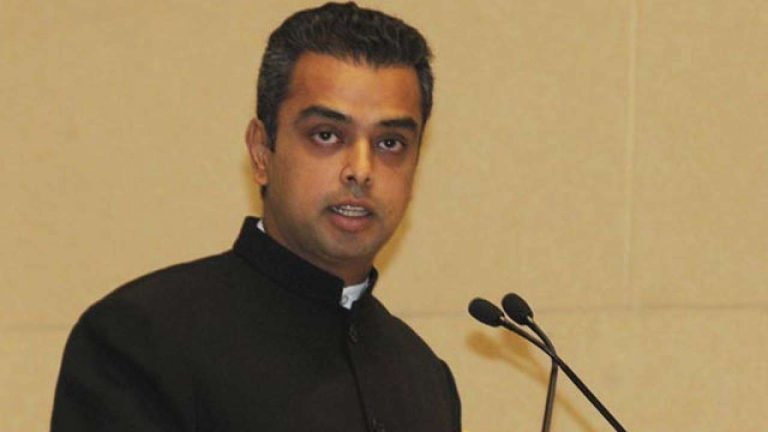
MUMBAI (Metro Rail News): On Wednesday Former Union minister and Mumbai Congress President Milind M. Deora warned that the government’s plans to chop off mangroves for the Bullet Train project could be disastrous for Mumbai’s survival.
First, there were serious questions raised on the financial viability of the project and now the state government says 54,000 mangroves will be razed for the Bullet Train route, he said in a statement.
Deora said “We
are all for development, but not indiscriminate development that puts Mumbai
and Mumbaikars at grave risk. Coastal Road, salt pan lands and now the Bullet
Train, in all three cases, the government seems to be perilously and recklessly
permitting development at the cost of the environment.
His reaction came in response to Maharashtra Transport Minister Diwakar Raote’s statement in the legislature on Tuesday (June 25) that the state could soon lose 54,000 mangroves for the upcoming Ahmedabad-Mumbai Bullet Train project.
Accusing the
government of “forgetting the lessons of the 2005 deluge”, the
Congress leader said it is a well-documented fact that mangroves help prevent
flooding, especially in the low-lying areas, and given the impact of climate
change and rising sea levels, Mumbai could get submerged in case of heavy rains
like in July 2005.
Over 500
people had been killed at that time, besides losses of Rs.28 billion and Mumbai
Airport remaining submerged and shut for three days together, he said.
Deora said, “I urge the Chief Minister Devendra Fadnavis to intervene immediately and find solutions so that natural buffers like mangroves and salt pan lands are protected since development cannot be at the cost of another deluge-like situation for Mumbai”.
He cited a 2014 study, ‘Mangroves For Coastal Defence’ which says that the dense roots of mangrove trees help bind and build soils, and they are an essential natural defense to flooding apart from curbing pollution levels.
Speaking in the legislature, Raote had said that around 54,000 mangroves spread over 13.36 hectares would be hit, but the government plans to plant five mangroves for each one that is cut for the Bullet Train project.
The proposed
requirement of land for the project is 1,379 hectares, including 270.65
hectares in Maharashtra and the rest in Gujarat, he said.
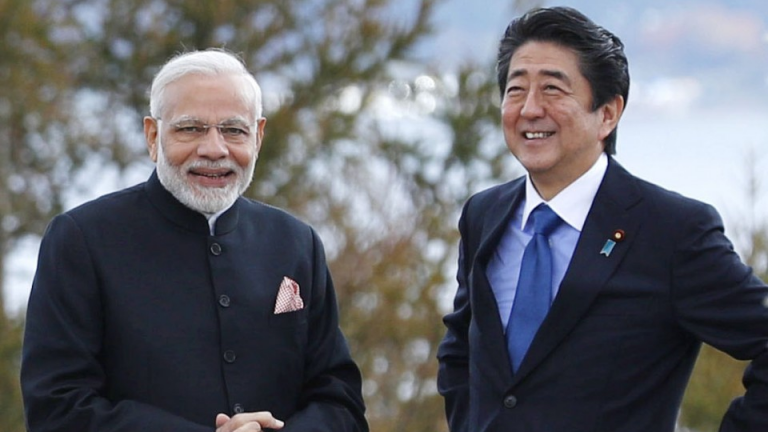
VARANASI (Metro Rail News): Prime Minister Narendra Modi started his G20 visit with wide-ranging discussions on bilateral matters – including the Mumbai-Ahmedabad bullet train project and the Varanasi convention center being built with Japanese cooperation– with ‘old friend’ Japanese PM Shinzo Abe.
Japan has
granted India a soft loan of Rs 79,000 crore for India’s first bullet train
modeled on Japan’s Shinkansen trains. One of the most ambitious infrastructure
projects carried out with Japanese cooperation is due for 2022 launch.
The
bilateral meeting also discussed other important issues of mutual concern and
was described as “very constructive and detailed” between ‘old friends’ by
Foreign Secretary Vijay Gokhale.
He said
Japan PM Abe had specifically suggested that the G20 should take up PM
Modi’s initiative on the issue of fugitive economic offenders as part of
its anti-corruption measures.
He added, both
PMs would meet again tomorrow for a trilateral meeting between Japan, India
& US” for further discussions on the Indo-Pacific initiative that all three
countries are separately pursuing and discussing together.
PM’s meeting
with Abe is the first of many he will hold with top global leaders outside and
inside the ambit of the summit.
Prime Minister said that at the start of the meeting, Shinzo Abe congratulated PM Modi for his stellar poll victory and said that it was ‘his turn’ to visit India and he was ‘looking forward’ to it.
Prime Minister Modi acknowledged that Abe was the first to call after his victory. “…you were the first friend of India who congratulated me, on phone. I also express my gratitude for the warm welcome you and Japan Government have accorded to us.
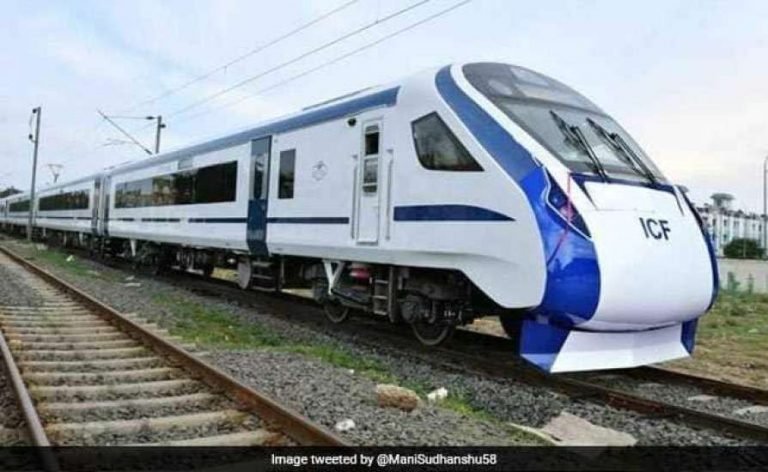
DELHI (Metro Rail News): There is great news for worshippers, you can go to Vaishno Devi taking the luxurious and fast Vande Bharat Express from New Delhi. The long-awaited trial of Train 18 would be done on the Delhi-Katra route likely by next month.
Train 18 is a big win for the government’s push for Make in India. It is a 100% ‘Make in India’ project implemented at ICF (Integral Coach Factory) in Chennai. Already Vande Bharat has gained massive popularity in the Delhi-Varanasi route and it is expected to grow as more and more cities get to experience this engineering marvel.
Official confirmition
Delhi to Katra in 8 hours
Currently,
it takes around 12 hours to go from Delhi to Katra and once Vande Bharat
Express starts, it will take eight hours only. The Train 18 has been in Delhi
for around a month which has been manufactured by the Integral Coach Factory,
Chennai.
Train Timing
Vande Bharat express expected timing- According to trial run, the train will depart from New Delhi at 6 am, reach Ambala at 8 am where it will stop for two minutes before leaving for Ludhiana where it will reach at 9:22 am. After a two-minute stop at the Ludhiana Station, it would then make way for Jammu Tawi and reach at 12:20 pm and before eventually terminating at Katra station at 2 pm, the train will pass through Sanehwal station without halting.
Return Journey
On its
return journey, the train will depart from Katra at 3 pm, reach Jammu Tawi at
4.18 pm, stop at Ludhiana at 7.36 pm, reach Ambala at 8.56 pm and eventually
reach New Delhi at 11 pm.
Train18
will run at 130 Kmph between New Delhi and Ludhiana. The stoppage at each of
the three stations would be for two minutes before New Delhi.
Brand new Train18 currently runs between Delhi and Varanasi is India’s fastest train. The last station of Train 18 is Katra in the way of Vaishno Devi Temple. Three stations in the route Ambala, Ludhiana, and Jammu Tawi are the stations were Vande Bharat express will stop in route Vaishno Devi. There are multiple ways to cover the rest of eighteen kilometers journey from Katra Station to Vaishno Devi Temple.
Sources say that while the route of the train has not been finalised yet, the railways board is discussing routes like Delhi-Amritsar, Delhi-Chandigarh, and even Delhi-Katra, among other short distances. The railways are also ready with the design of Train19- the sleeper version of Train18.
The train Vande Bharat Express on the Delhi-Varanasi route has reduced the travel time between the two cities to eight hours. Train18 is operating at a reduced speed of 160km/hr due to lack of infrastructural support at railway crossings and selected railway stations on the Delhi-Varanasi route.
Train18
has already been credited for impeccable on-time arrival, great speed and
highest average speed in the country.
GHAZIABAD (Metro Rail News): The National Capital Region Transport Corporation (NCRTC) is working on introducing of the latest European System which will enable in controlling trains more accurately than the present system on which the Indian railway system is running.
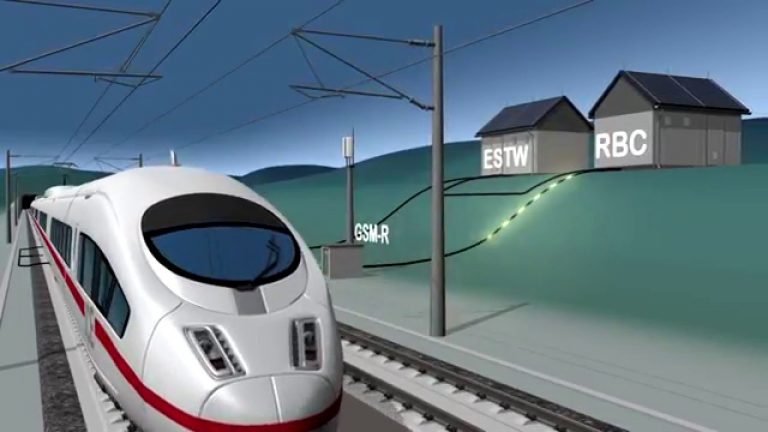
The implementing agency of Regional Rapid Transit System (RRTS) project, NCRTC has decided to equip the European Train Control System (ETCS) on its Sarai Kale Khan hub in Delhi-Meerut corridor.
“The existing system can track the train’s position when it is running on its top speed of 100 kilometers per hour. The latest European System is capable to reflect train’s accurate position up to 160 km per hour and even above per kilometer speed.” Said NCRTC Spokesperson Sudhir Sharma.
“Through this device, the NCRTC is capable of providing accurate movement position of the train in 90-second frequency on this corridor. However, the footfall of the passengers will decide on which frequency trains would run in the future. At present NCRTC has decided to run the train in five-minute frequency on Sahibabad to Duhai patch”, Sharma added.
Duhai onwards, the trains will run be at the 10-minute frequency as less footfall is expected in this corridor. NCRTC has the wherewithal to run trains in varied frequency from seconds to minutes without any error.
In the latest budget Rs. 30,270 Crore has been allocated for the ambitious Delhi-Meerut corridor of NCRTC which is expected to be operational in 2023. The NCRTC has made a plan, considering the growing population in the National Capital Region (NCR), by constructing three main corridors in three phases- Delhi-Meerut, Delhi- Alwar, and Delhi- Panipat corridors in coming 7 years with the estimated fund expenditure of an out a lakh Crore.
This NCRTC project is established by the Central Government with the equity participation of 50 percent of four states-Delhi, Haryana, Rajasthan and Uttar Pradesh with their 12.5 percent each which rest 50 percent shares are of Union Government. The first phase of Delhi-Meerut is progressing well and is expected to be operational first of the three corridors.
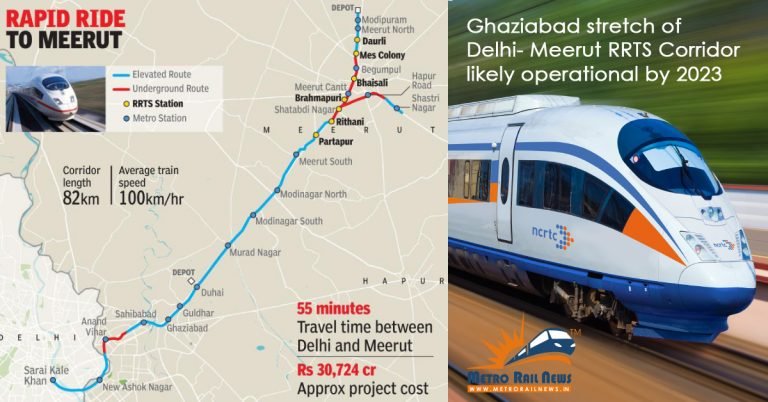
GHAZIABAD (Metro Rail News): Passengers in Ghaziabad will be getting an additional mode of transportation in the form of Delhi–Meerut RRTS by March 2023.
According to the source, The 20 km RRTS section from Sahibabad to Duhai will be opened for metro commuters by 2023 and it will be further extended to Meerut in a phased manner.
The first section Sahibabad to Duhai (Meerut Road) is a part of the 82km long Delhi – Meerut RRTS Corridorthat was taken up for construction. NCRTC is developing Regional Rapid Transit System project and has begun work on the 82 km phase 1 of RRTS, which will connect Delhi, Ghaziabad and Meerut.
Sudhir Sharma, the chief Public Relations officer, NCRTC said that we will be opening the Sahibabad to Duhai section in March 2023. Work on the stretch in Ghaziabad has already started and will be the first to be completed. This will be the first section under phase 1 to be opened. Simultaneously, work will also continue on the other sections and these will be joined with one another.
The NCRTC
has initiated RRTS stations at Sahibabad, New Bus Adda, Guldhar, Duhai, Murad
Nagar, Modi Nagar (south) and Modi Nagar (North) in Ghaziabad district. The
agency has initiated an integration with the Metro line, at Sahibabad and New
Bus Adda (NBA).
“The first
work that will be taken up is the work on the elevated corridor on the 82km
stretch while the work on the underground section will be scheduled late. The entire
82km stretch from Delhi to Meerut, 15km are underground,” said by the sources
in NCRTC.
In Delhi,
the phase 1 is going to have three stations, with Sarai Kale Khan and New Ashok
Nagar on elevated section, while the Anand Vihar station will have underground.
The official
of NCRTC added,” the elevated corridors will be completed first and the work on
the entire 82km will go continuously. the work will start soon in Delhi and
tenders are likely to be floated in another three months.”
The project was started by Prime Minister Narendra Modi in March during his visit to Ghaziabad and the RRTS project is fixed to cost Rs.30,274crore.
NCTRC
officer said, “The entire 82km section under phase 1 will going to open in
March 2025. Thereafter, we will be running trains alternatively from Delhi
(Sarai Kale Khan) to Duhai (at five-minute intervals) and Delhi to Meerut (at
10-minute intervals). As a large number of passengers commute daily between
Delhi and Ghaziabad, the frequency of trains between Delhi and Duhai will be
high.”
The officials
said they also plan to provide at least seven foot-overbridges for the local
population on the RRTS stretch in Ghaziabad. They added that talks are on with
the state administration for the purpose.
Mumbai (Metro Rail New): The passengers travelling from Mumbai to Shirdi soon will be able to travel through Train 18 and reach their destination in just three hours. Central Railway’s (CR) first Train 18 will ply between Mumbai and Shirdi. Currently, the trains which are operating on this route take up to nine hours to reach Shirdi.
Shirdi is a major pilgrimage site in Maharashtra and popular with domestic tourists.
A
senior Central Railway official said, “Mumbai-Shirdi route for Train18
operation on Central Railway was decided after consultation with the Railway
board officials. The final route decision will be taken soon.”
Vande Bharat Express also known as the semi high-speed train is expected to cover the 291-kilometer distance in three hours cutting travel time down by six hours. Currently, the journey takes an average of nine hours by train.
Train
18 will resemble Shatabdi trains and the routes under consideration are via
Pune/Daund or via Manmad railway stations.
The zonal railway will also finalise where Train
18’s maintenance will be carried out in the coming days. Earlier this month,
during a meeting of senior CR officials, it was proposed that the semi
high-speed train would leave Mumbai early in the morning, reach Shirdi in three
hours and then do a return journey from Shirdi on the same day.
A CR official said, “Presently, the rail route does not have much passenger traffic. One major reason is due to the time taken to reach by train. With Train 18, the travel period will be shorter.”
The ministry of Railways had held a meeting in May of all zonal railways in New Delhi to decide the routes on which Train 18 could operate. Western Railway is planning to introduce the train on the Mumbai-New Delhiroute.
Passenger
associations have welcomed the move.
Lata Argade, vice president, Mumbai Rail said, “Pilgrims who travel to Shirdi by road reach in three hours. It takes six hours to complete the Shirdi visit and then returns.”
“If
Train18 reaches in four hours and passengers can return to the city as well,
people will start preferring rail for travelling.”
Currently, Train 18 is operating between New Delhi and Varanasi, by completing the journey of 752 km in eight hours. It has a top speed of 180 kmph, but operates on a maximum speed of 160 kmph.
Integrated
Rail Factory, Chennai are going to produce a new batch of these trains.
NEW DELHI (Metro Rail News): The Centre has said it cannot accept AAP government’s conditions on the Metro Phase-4 and asked it review its decision to not start work on Metro Phase-4 project till the Union Ministry of Housing and Urban Affairs revises its approval for the same on May 26, 2019.
According to the sources, The AAP government had in April directed the Delhi Metro Rail Corporation (DMRC) not to start the work on Phase-4 project till the ministry revises its approval in tune with the AAP dispensation’s assent.
The Ministry of Housing and Urban Affairs Secretary Shri Durga Shanker Mishra has written to Delhi Chief Secretary Vijay Kumar Dev, asking him to review the decision of the Government of NCT of Delhi GNCTD) for stopping the work of Phase-IV and uplift this embargo at the earliest in public interest.
Delhi Government conditions on Metro Phase IV
While approving the Metro Phase-IV, the Delhi Cabinet had imposed two conditions
50-50 sharing of operational loss between the Delhi government and the Centre
The Delhi government will not bear any liability of repayment of loan given by the JICA, Japan International Cooperation Agency.
The Union cabinet had in March approved three of six corridors of the Metro Phase-4 approved by the AAP dispensation, sidelining the conditions imposed by the Delhi government while giving its nod to all six corridors. The three corridors approved by the Union Cabinet are Mukundpur-Maujpur (12.54 km), Janakpuri West-R K Ashram (28.92 km) and Tughlakabad-Aerocity (20.20 km).
The other three corridors of phase-4 which have not been approved by the Centre are Rithala-Bawana-Narela, Inderlok-Indraprastha, and Lajpat Nagar-Saket G Block.
The AAP government had objected it,
alleging that the Union government has made some “unilateral changes”
in the project, without communicating any reasons.
A good public transport system is often one of the defining features of a city, generating multiple far reached benefits, enhancing sustainable living, attracting residents, businesses, daily commuters, and tourists. Rail-based public transport projects such as LRTS/ MRTS/ RRTS generate large scale economic values for cities and are necessary for long term inclusive and sustainable development. However, in various transport systems across the world, fares that users pay do not fully help recover costs of the initial investment made. Substantial government monetary support, subsidies & loans are required to build, maintain and operate most of the rail-based transit systems. This traditional way of urban rail financing leads to a growing debt-subsidy cycle which undermines economic development.
At a time when urban rail investment appears to be a priority for the cities, governments face budgetary pressure leading to challenges in the financing of urban rail. The fiscal challenge for urban rail has prompted cities to find alternative funding and seek different governance frameworks to implement rail projects. Cities are recognizing the potential of urban rail in creating economic value, through its multiple non-transport benefits, especially its impact on land values and thus it’s potential to influence more intensive land development/ Transit Oriented Development (TOD) and hence urban regeneration with its associated agglomeration of benefits. Innovative financing through ‘beneficiary pay’ methods has emerged lately to cope up with the crunch of finances for building capital intensive public transport facilities such as Metro’s and Rapid Rails. Thus, it becomes essential for Indian cities to learn from the successful experiences of Innovative Financing for Mass Transit across the globe.
Impact of Rail
Transit on Land & Real Estate Developments
The LRTS/ MRTS/ RRTS provides fast, reliable, safe and comfortable connectivity solution to the expanding urban centers. It serves as an integral commuter transport backbone in the region. High speed, a significant reduction in travel time and wider reach, offers very different propositions to the spatial geographies. The hypothesis is that even incremental changes in transport infrastructure may encourage both land development and economic growth stems from the concept of the “accessibility” of locations. The more easily people and goods can access a given location, the more desirable that location is for both people to live and for businesses to establish themselves. This added increment of location desirability will lead to tremendous development in public transport station areas/ influence zones ‐ both physical land development and redevelopment as well as economic development. With the establishment of MRTS corridors, there is a sharp increase in valuations, as per various market studies. The enhanced real estate development due to building an MRTS corridor brings in:
Increase in catchment areas, due to which newer areas become accessible.
Increase in real estate valuations, due to increased accessibility, infrastructure development and economic development.
Transaction velocity increases with increase in number of real estate transactions. Till date. The rise in land & asset valuations due to public investments have usually been captured only by private players.
Understanding Land Value Capture (LVC)
Land Value Capture refers to a type of innovative public financing, in which increases in land values generated by a new public infrastructure investment are all or in part “captured” through a land-related tax or any other active or passive mechanisms, such as betterment charges, tax increment financing, air rights sale, property development, to pay back such an investment. In other words, Value Capture, in a broader sense, opposes the windfall gains derived out of public infrastructure creation accrued to a privileged few as unearned income but argues for redistribution of such gains fully or partially to fund public investment and also to compensate social-costs often resulting from these investment negativities. However, the LVC concept is still perceived as a work-in-progress with varied success. As evident from global experiences, this was primarily due to the fact that there is a notional misconception of the Value Capture mechanism as only a financing tool. Mostly they have overlooked the needed support investments for infrastructure integration and the sustainable community living aspects specifically in the case of using LVC for a mass transit project. Land Value Capture can be blended with the planning and development framework to bring in the realizations of Transit Oriented Development as well.
Development Based Land Value Capture
(DBLVC): Development based Land Value Capture (DBLVC) is the type of LVC
mechanism where transit agencies or transit investors are directly or
indirectly involved in the delivery of development on land around transit
stations (George Hazel Consultancy, 2013).
Examples: Direct Property Development, Joint Property Development, Land Sales/ Auction,
Air Rights Sale, Land Lease
Agreements, Land Readjustment, Urban Redevelopment Schemes
Taxation Based Land Value Capture (TBLVC): Taxation
based land value capture (TBLVC) is the type of LVC instrument that is used to
recover transit induced value gains by imposing taxes or fees on existing
developments located in ‘transit investment benefitting areas” established by the transit agency. (Medda & Modelewska,
2009; Walters, 2012).
Examples: Cess, Taxes, Levies like
Tax Increment Financing (TIF), Special Assessments, Land Value Taxes (LVT),
Betterment Charges, Impact Fees, Station Connection Fees etc
Applicability of Land Value Capture Tools
Overall, Land
Value Capture finance is rapidly acquiring global legitimacy as an ancillary
and innovative source of funding for expensive urban transport projects. The highlighted economic
impacts of public transit investments on surrounding properties make a strong
case for transit Value Capture Finance in emerging cities. However, Development
Based Land Value Capture type mechanisms have unique advantages over Taxation
Based Land Value Capture type mechanisms and vice versa. It is critical that
city leaders and transit executives consider the unique advantages of the two
types of LVC to ascertain which best fits their local context and funding
objective. Alternatively, DBLVC and TBLVC mechanisms can be consolidated to
meet a funding objective, while leveraging the strengths of each type.
Feasibility, Equity, Efficiency, and Revenue Capacity and their supporting
criteria must be adhered to maximize the utility of any type of LVC mechanism for
transit finance. Efficiency and Revenue Capacity especially underscore the
essence of evaluating the revenues LVC mechanisms relative to their costs. This
is a critical step towards thinking more economically about LVC finance tools
used for financing transit and sustainable urban development.
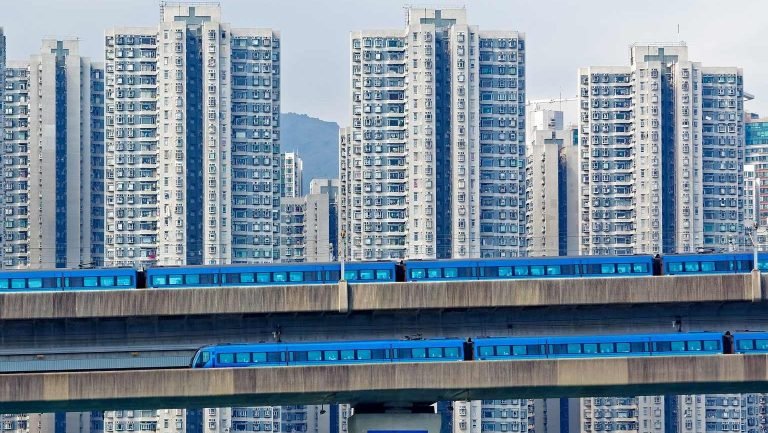
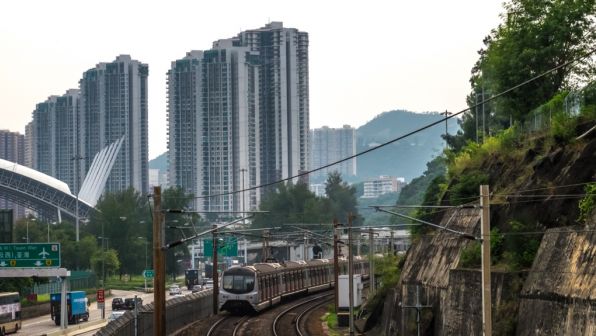
The ‘Rail plus Property’ model: Hong Kong’s
successful self-financing formula for MTR
‘Rail + Property’
model is one of the most successful examples of Development Based Land Value Capture
(DBLVC), which has been used for financing Mass Transit Railway
(MTR Hong Kong). The reason behind the model being able to perform so
well is that the government of Hong Kong has enabled MTR to capture value from
the property-value increases that typically follow the construction of rail
lines. The key is a business model called “Rail plus Property” (R+P). For new
rail lines, the government provides MTR with land “development rights” at
stations or depots along the route. To convert these development rights to land, MTR pays the government a land premium
based on the land’s market
value without the railway. Similar models have been developed
for Shenzhen, China, Sydney & London.
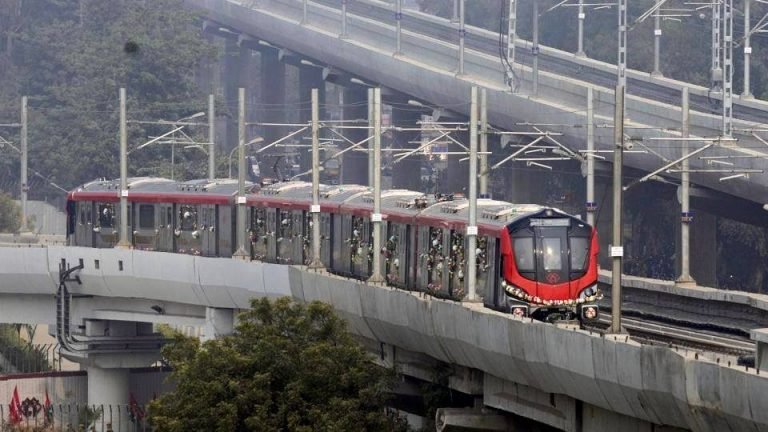
Lucknow (metro rail news): The Lucknow Metro has reached the ridership figure of 1.11 crore since it has started services in the state capital in 2017.
The Lucknow Metro Rail Corporation (LMRC) statement issued here commented, “LMRC thanks all passengers, who have showered such immense support and warmth ever since the commencement of commercial services in 2017. We touched the ridership figure of 1.
11 crore on Tuesday. Nearly 60,000 passengers travel by Lucknow Metro every day.”
It also
said, “nearly 60,000 passengers locomote daily by Lucknow Metro.”
According to the statement, “Lucknow Metro trains complete on an average 331 trips every day on the North-South corridor stretching from Chaudhary Charan Singh Airport to Munshipulia.”
The Lucknow Metro Rail Corporation said, “With time, Lucknow Metro has become synonymous with a world-class state-of-the-art public transport system that’s safe, energy-efficient, inclusive and has a dedicated human resource ready to serve the passengers with the simplest of their skills.”
Bhubaneswar (Metro Rail News): The Government of Odisha will aim to connect the heritage silver city of Cuttack with smart city Bhubaneswar by Metro train information shared by Ganeshi Lal Governor of Odisha.
“The government will provide interest-free crop loans to small and marginal farmers up to Rs 1 lakh,” said while addressing the inaugural session of the 16th Odisha Legislative Assembly.
He added further that the government will venture to create 30 lakh employment opportunities in six focus sectors and 75 percent of jobs will be reserved for qualified local youth in all upcoming industries in Odisha.
Women will now get Rs 10 lakh for their treatment instead of Rs 7 lakh under Biju Swasthya Kalyan Yojana. All the widow and destitute women will get social security pension.
Micro and Small Enterprises Welfare Board will be formed to work for the sustenance and growth of the MSME sector and a welfare board will be formed for those engaged in traditional livelihood earning means like priests, barbers, and washermen.
A suitable ‘interest subvention scheme’ will be introduced for the extension of credit at concessional rate to the eligible MSMEs.
The Governor said, “My government proposes to bring out a new industrial policy in line with the perspective plan with emphasis on the creation of job opportunities. Best-in-class industrial parks will be established for each of the focus sectors.”
He also informed that the government will complete the construction of 5 new ongoing medical colleges within the next 3 years, introduce a suitable interest subvention scheme for the extension of credit at concessional rate to MSMEs, and promulgate a new industrial policy in line with the perspective plan with emphasis on the creation of job opportunities.
The Governor announced that the
State government will lay Astro Turfs on all the 17 blocks of Sundergarh
district to prepare world class hockey players in the sports sector.
Odisha
Smart City Mission will try to develop five municipal corporations cities as
smart cities. Apart from Metro rail project, the government will attempt to
connect North to South and East to West through Biju Express Way.
Recently, Arvind Kejriwal, Chief Minister of Delhi has announced free ride to women in Metro rail and buses in the capital city for increasing their safety. Women have been demanding safe travel, but the free ride was never their call. A government can always give sops to its citizen, but linking it to safety enhancement is intriguing.
The Metro is safer; it is manned by the Central Industrial Security Force, has regulated the access and closed-circuit television (CCTV) monitors the entire premise. Perhaps the argument in favor could be that women commuting will shift to Metro. It assumes that they are on the Metro map but this may not be the reality.
The government feels that finances are not an issue and the free rides scheme will cost Rs. 800 crores in just six months. A plan has already been chalked out, and suggestions have been invited from the Public as well.
The Metro and Delhi Transport Corporation (DTC) will have to be financially supported as they do not have the money to absorb either the full or partial impact of the sop. This is going to be a continuous drain, not a one-off event. There will be serious challenges to its implementation, especially in the Metro. Will there be separate gates or separate cards? Is there a possibility of misuse through transferability of travel authority? How much will this infrastructure cost? And if the government decides to suspend this sop later, how will the reversal be handled? The Metro Automatic Fare Collection needs major alteration. That will be the likely reality of rolling it out in the Metro. Buses will be, of course, simpler.
A few cities outside India have experimented with the idea. Their beneficiaries have been senior citizens, children, and visitors. The ridership improved manifold; the shift happened from cycling, walking and driving cars. It was a welfare state gesture and the logic was not safety enhancement. But the scheme became unviable and was withdrawn at most places. The cities which adopted had much less population than Delhi. Average incomes also varied considerably. There is no certainty that the outcome will be different for Delhi.
But the basic question remains that If the government wants to allocate Rs 800 crore for the safety of women commuters — who constitute 30~33% of daily riders — how best to utilise it? A few suggestions.
First, introduce a highly upgraded version of electronic surveillance in the city. CCTV cameras have been with us for some time now. Their usefulness is well recognised. The fact of being captured on a camera is a deterrence to a criminal. All this needs an upgrade with the introduction of technologies such as facial recognition in the CCTV monitoring. The 1.5 lakh CCTV cameras that Delhi is likely to get should be able to spot criminals in advance. It may not be instantaneous but will still be of great use. This is not day dreaming, but with only a portion of Rs 800 crore, it can certainly be tried at vulnerable locations such as bus and railway stations. A few countries are using similar technology for issuing traffic violation tickets to erring car drivers.
Second, improve the last mile connectivity. Safety is the greatest casualty here because of lonely travels in dark corridors. Small buses may be introduced with better frequency. Efforts so far have been cosmetic as there is more emphasis at crowd control and traffic regulation at boarding points rather than the safety of women.
Third, the presence of marshals at sensitive bus stops and busy metro stations have a salutary impact. They should not be symbolic.
Fourth, the overcrowding in the Metro and buses must be controlled. The efforts of the Delhi Metro Rail Corporation and the DTC have been falling short. Just travel on the blue line to Noida during peak hours to understand what overcrowding means in the Metro. The peak hour frequency must improve. One may not get a seat but should be able to stand on both the feet. Bus infrastructure has to be improved and more new buses must be added. Open door drive in buses must be banned. Allocate more funds here. There should be an emphasis on travel delight.
Finally, an action plan to make auto rickshaws and cabs safer must find a place. Mobile apps have made a beginning but have a limitation as mobile phones are the first casualty when a crime is committed.
The announcement of freebies for commute in the national capital region has raised the issue of women’s safety again. There have been gruesome incidents in the past. It is open to question whether any of these incidents could have been avoided by free Metro or bus rides. For the Raksha Bandhan, freebies are acceptable but women safety in commuting is a far more serious matter. Let it not become another odd-even experiment.
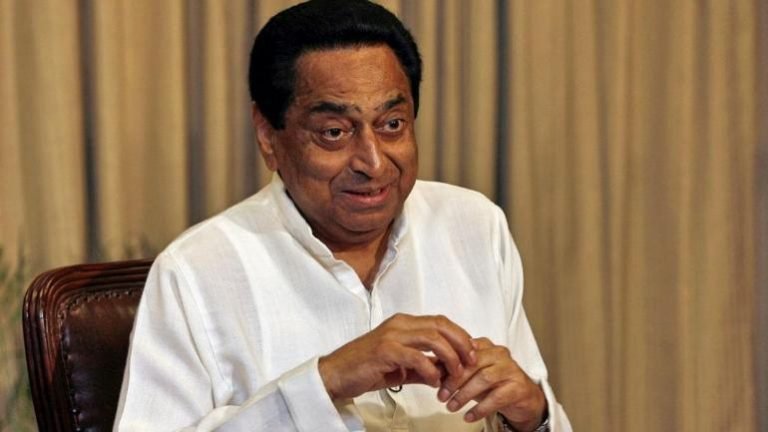
BHOPAL (Metro Rail News): Chief minister Kamal Nath has directed the concerning authorities to prepare a tripartite memorandum of understanding (MoU) for the metro projects in Bhopal and Indore and implement it at the earliest, according to a press release here on Tuesday.
Nath also reviewed
the progress of the metro projects along with the minister for urban
development Jaivardhan Singh.
On June 13, reported about an MoU between the European Investment Bank and the Union government, pertaining to the Bhopal Metro, which could be inked soon. Nath asked officials to complete all the formalities for seeking loans from the Asian Development Bank and New Development Bank for the Indore Metro project and from the European Investment Bank for Bhopal Metro.
Given the
intensive construction activities to be undertaken for the construction of both
the metros, Nath directed that all measures should be taken to ensure that
citizens do not face any inconvenience during the construction period and
traffic remains undisturbed.
A time-bound program so that the projects gain momentum is likely to be set in place.
The chief minister said that issues concerning land acquisition must be addressed during the construction phase of the metro project.
He said
information about the financial burden on the government must also be
addressed.
Nath said
that timelines for the construction work of different stages should be fixed
and they should be completed within the decided time limit.
He also
instructed that a report be prepared on underground and elevated sections of
the project.
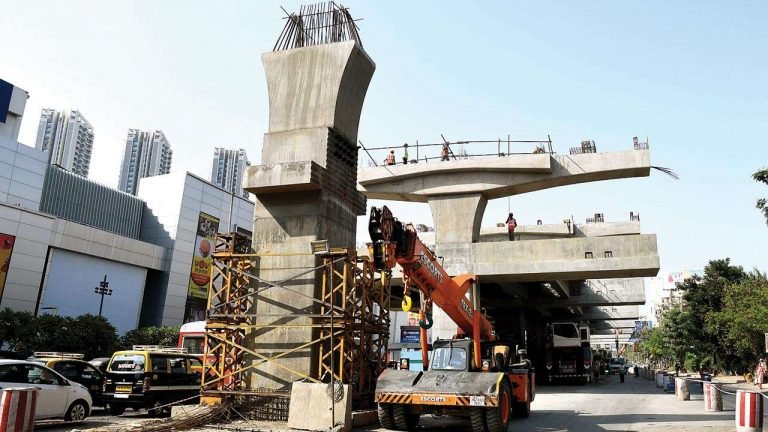
MUMBAI (Metro Rail News): The Maharashtra government has spent Rs. 12,940 crores on the on-going construction work of six metro corridors in the city from 2016 to the end of March 2019.
According to the state’s economic survey report 2018-19, the total expenditure amounts of 19% of Rs. 68,005 crores, the total cost of constructing the six metro lines.
While the Mumbai Metro Rail Corporation (MMRC) is building one, The Mumbai Metropolitan Region Development Authority (MMRDA) is currently working on constructing five Metro corridors in the city.
The largest chunk of the total expenditure was Rs. 9,402 crore- has already been spent on the fully – underground Metro-3 (Colaba-Seepz) corridor by the MMRC. The corporation recently has completed 50% of tunnelling works for the project. Which costs Rs. 23,136 crores.
The next big chunk was spent on lines 2A (Dahisar- DN Nagar) and 7 (Dahisar East-Andheri East), both of which are expected to be up and running by December 2020.
The MMRDA has spent ₹1,561 crore on Metro-7, wherein 67% of the civil works have been completed, and ₹1,351 crore on Metro-2A, wherein 63% of the civil works have been finished, according to the economic survey report.
RA Rajeev, the metropolitan commissioner, MMRDA, said that the next big expenditure will be on the systems. “We have a system order of more than ₹3,000 crore, which includes rolling stock, signalling, telecommunications, etc. This expenditure is due in the next year,”
The
Mumbai Metropolitan Rail Development Authority has also spent ₹201.30 crore on
Metro-6 (Swami Samarth Nagar-Vikhroli); ₹227.98 crore on Metro-4
(Wadala-Kasarvadavali); and ₹196.31 crore on Metro-2B (DN Nagar-Mandale).
However,
citizens, have been protesting against all the three routes.
Powai
residents have demanded rerouting Metro line 6, citizens have been demanding
underground routes for lines 2B and 4.
A
transport expert from Mumbai Vikas Samiti, AV Shenoy, said the MMRDA should
have conducted public consultations before starting work on these projects. He also
added, “This is a serious lacuna with the authority…there were no public
consultations or citizen committees set up to weigh the projects before they
spend such a huge amount on it.”
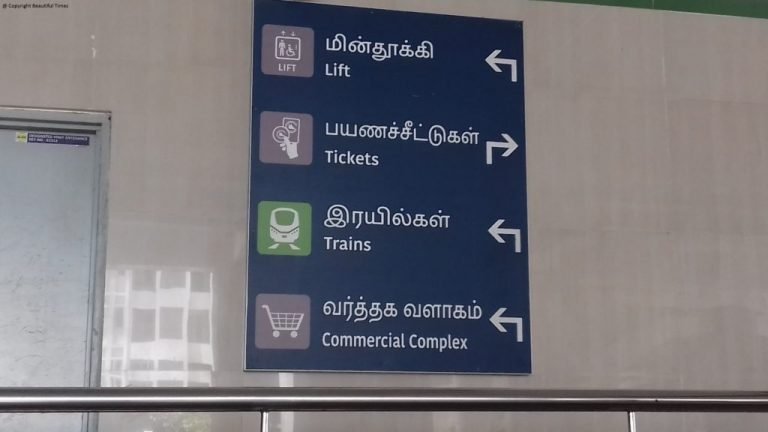
CHENNAI (Metro Rail News): To encourage more people to use the Metro Rail and guide them to the nearest station, Chennai Metro Rail plans to put up signages in areas near the stations.
According to officials of Chennai Metro Rail Limited (CMRL), they will start a survey to identify the spots where the signages have to be installed.
Stage by
stage
“We will fix the signage in about 500 meters around the stations, giving directions to the nearest station. For example, if one is standing at Vadapalani, there will be signage showing they are about 400 meters away from the station and as they move closer, it will show 300 meters and so on.
This will particularly help those who are new to the city and want to use public transport,” an official said.
At present, a handful of stations such as Koyambedu, Arumbakkam, and Ashok Nagar have signages near the stations but they are not well placed or clearly visible from a distance. The new ones may not be like the existing ones, the official said.
“We plan to put them up in all 32 stations in the 45-km network of phase I project. Also, the new signages will be more prominent and placed in such a way that any commuter will notice it. This is why, we are first carrying out a survey to see the location, instead of just fixing the signages,” the official added.
Inside
stations
Chennai
Metro Rail has begun putting up additional signages inside stations in the underground
network. In stations like the Government Estate, they have already installed
signages.
“In the other newly opened stations along Anna Salai and 19 other underground stations too, we are taking steps to put up signages,” he added.