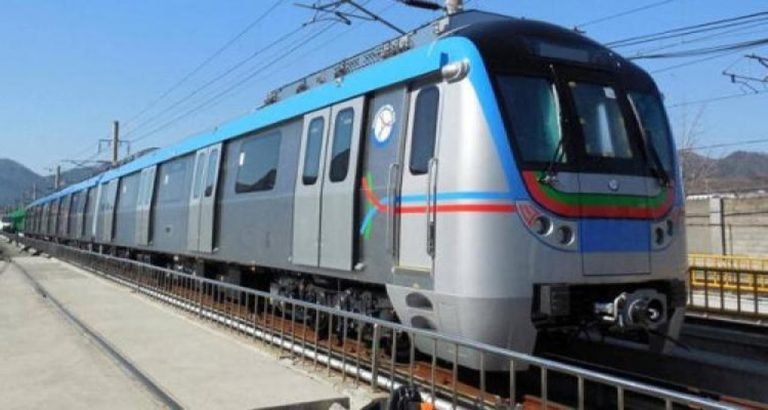
L&T Construction bags contract for Bangalore Metro Phase 2

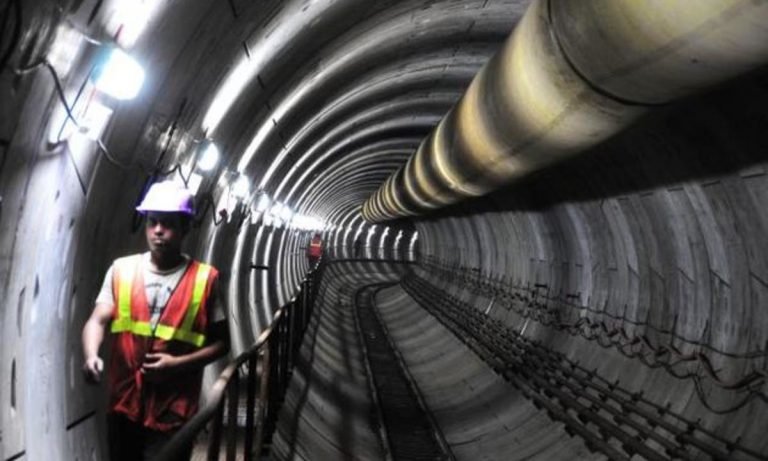
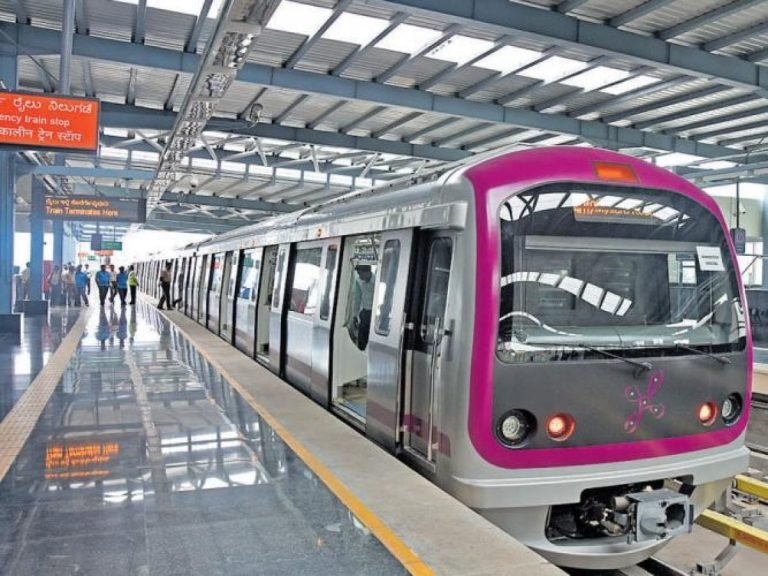
Bangalore, Metro Rail News: Heavy Civil Infrastructure Company, L&T Construction has secured orders from Banglore Metro Rail Corporation Ltd for the design and construction of the phase – 2 works. The project is to be completed in 42 months.

“The heavy civil infrastructure business of its construction arm has bagged “large” contracts from Bangalore Metro Rail Corporation Ltd”
said Larsen & Toubro (L&T) on March 6, 2019.

However, They did not provide the exact value of the contract; but as per its project classification, the value of the contracts was in “large” category which is in the range of Rs 2,500 to Rs 5,000 crore.

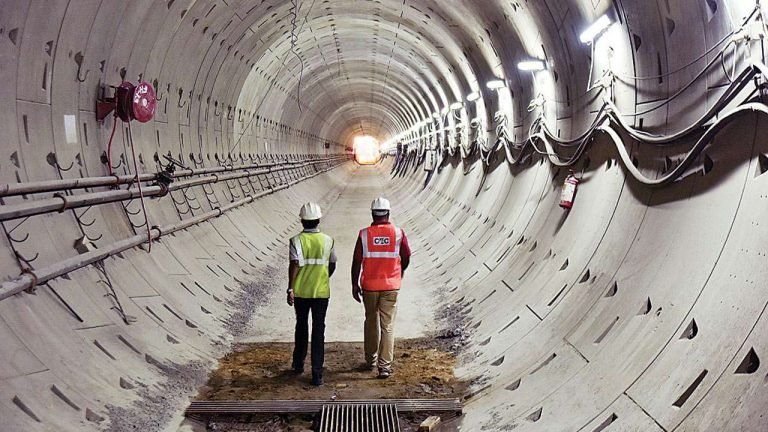
According to statement, The scope of second phase work includes construction of underground structures (tunnels and stations) 2.76 Km (approx) long from Vellara Junction station to Shivajinagar station and three underground metro stations at Vellara Junction, M G Road and Shivajinagar on the Reach-6 line .

The scope of work also includes design and construction of under-ground structures (tunnels and stations) 2.884 Km (approx) long from Shivajinagar Station to Tannery Road Station and two underground metro stations at Cantonment and Pottery Town on the same metro rail line.

The company added. Shares of L&T were trading 0.65 percent up at Rs 1,315.20 apiece on BSE.

Maharashtra Cabinet Approves Rs 13095 cr Thane Metro

Mumbai, Metro Rail News: The state cabinet approved Rs 13,095 -cr
Metro Rail Project to ease Thane city erratic traffic. Which will be implemented by the Maha Metro on behalf of the Thane Municipal Corporation.

The 29-km route will connect the congested areas of the old and new city, and will have two underground stations and rest will be elevated. The metro is part of a comprehensive mobility plan for Mumbai’s twin city. The Thane civic corporation approved it and sent it for Cabinet approval. The planners expect a daily ridership of about 6 lakh by 2025 and an increase to 9 lakh by 2045.
buy temovate online https://gilbertroaddental.com/wp-content/themes/twentyseventeen/inc/en/temovate.html no prescription

It will have 22 stations, The stations proposed for metro are: New Thane, Rayla Devi, Wagale Square, Lokmanya Nagar bus depot, Shivaji Nagar, Nilkanth Terminal, Gandhi Nagar, Ghanekar Theatre, Manpada (Ghodbunder road), Dongripada, Vijay Nagari, Waghbil, Water Front, Patlipada, Azadnagar bus station, Manoranjan Nagar, Kolshet, Balkum, Rabodi, Shivaji Chowk and Thane station.

The fare will be in tune with that of the Wadala-Kasarwadvali (Thane) metro.

Special status for Thane metro
The metro has been given a status of the essential public scheme and important urban project so that it isn’t stalled for approvals and financial assistance.
The intracity metro line is expected to not only help citizens travel to different ends of the city but also aid those travelling to the neighbouring cities through its inter modal system

PM Narendra Modi To Flag Off 13.5 Km Stretch Of Nagpur Metro: Know Route Map, Fare and other Details

Nagpur, Metro Rail News: The Dreams come true of orange city people to commute in Nagpur Metro!

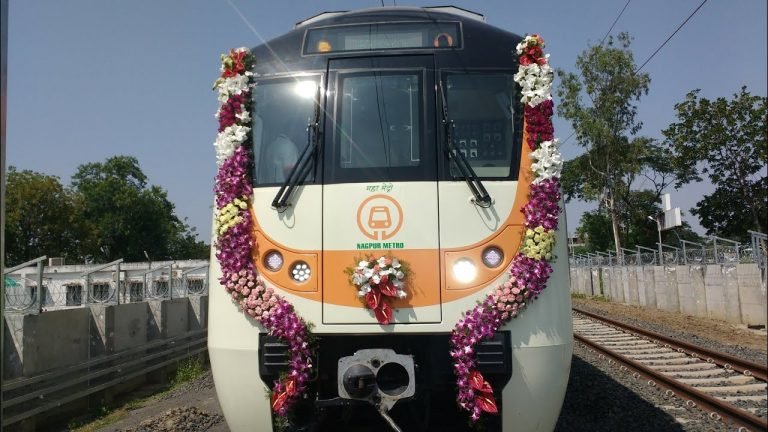
Prime Minister Narendra Modi will flag off The 13-km Sitabuldi-Khapri section of Nagpur Metro phase 1 on March 7, 2019, at 5 pm through video-conferencing from New Delhi. Union transport minister Nitin Gadkari and chief minister Devendra Fadnavis will then inaugurate the first train from Sitabuldi station.

With the inauguration, Nagpur will officially become the second city in Maharashtra and the tenth city in India to have Metro rail. Maha Metro was functional since April 2018, the commercial operations still hadn’t kicked off. In the meanwhile, joyrides were conducted from Khapri to Airport South station to give the riders a brief experience. 

Nagpur has set a record of being the fastest Metro to make the at-grade section operational. The 5.5 kilometres stretch was functional within just 30 months of the beginning of the construction work. It is the Lucknow Metro that holds the record of fastest Metro to begin commercial operations as it took merely 36 months to flag off. Nagpur Metro comes second in line with 41 months as the duration to achieve this feat

Nagpur Metro Map:

Nagpur Metro Map
Nagpur Metro Map

Nagpur Metro Fare

A journey between Sitabuldi Interchange and Khapri Metro Station – which covers a distance of 13 km – would cost a passenger just Rs 20 instead of regular fare of Rs 34. Similarly, short distance journey spanning up to 3 metro stations would be extremely cheap as the passenger would have to pay just Rs 10. The comparative fare for the similar distance as decided is Rs 23.

StationFare
Khapri to Airport Metro Station10
Airport to Sitabuldi Interchange10
Khapri to Sitabuldi Interchange20
Lokmanya nagar to Subhash Nagar Metro10

Nagpur Metro Time Table

Nagpur Metro Time Table for Reach 1

Nagpur Metro Time Table for Reach 1

Maha Metro MD Mr. Brijesh Dixit Tuesday informed that the route, comprising five stations from Khapri to Sitabuldi section are Khapri, New Airport, Airport South, Airport, Jaiprakash Nagar and Sitabuldi – will be operational initially for passengers on March 8.

“The ride on the metro on its first day of operation i.e. Friday will be free for commuters”, said Mr. Dixit.

The work on Nagpur Metro Project started in June, 2015, consists of two corridors with a total length of 38 kilometres. The two corridors will have 38 stations, two depots and a fleet of 69 metro cars, including a special “nari shakti” women’s coach in each train, He Added.

“It will be the greenest metro in the country with 65 per cent of its electricity consumption from solar energy,” he informed.

Dixit said that Nagpur Metro had earned Rs. 132.51 crore from stamp duty and Rs. 6.87 crore from Transfer of Development rights even before the start of passenger operations.

PM Modi launches ‘One Nation, One Card’ for Seamless Travel through different Metros & Other Transport Systems

Ahmedabad, Metro Rail News: On March 4, 2019, Prime Minister Narendra Modi launched a National Common Mobility Card ‘One Nation, One Card’ that can be used to make payments for public transport across the country, including bus, metro and rail services, and toll tax. it was launched while Modi inaugurated the first phase of Ahmedabad metro train service.

PM Modi Launches National Common Mobility Card

According to an official release by the Ministry of Housing and Urban Affairs, National Common Mobility Card (NCMC) is the first of its kind in India. The Indigenous Automatic Fare Collection System based on One Nation One Card Model. India’s First Indigenously Developed Payment system for transport consisting of NCMC Card, SWEEKAR (SwachalitKiraya: Automatic Fare Collection System) and SWAGAT (Swachalit Gate) is based on NCMC Standards.

How to get ‘One Nation One Card’

One Nation One Card
One Nation One Card

“These are bank issued Debit/Credit/Prepaid cards and the customer may use this single card for payments across all segments including metro, bus, suburban railways, toll, parking, smart city and retail,” said the ministry.. The stored value on card supports offline transaction across all travel needs with minimal financial risk to involved stakeholders. The service area feature of this card supports operator specific applications e.g. monthly passes, season tickets etc.

The National Common Mobility Card (NCMC) to enable seamless travel by different metros and other transport systems across the country besides retail shopping and purchases is an initiative of the Ministry of Housing & Urban Affairs.

“The card will address the challenges associated with the cash payment e.g. cash handling, revenue leakages, cash reconciliation etc. Various initiatives have been taken by transit operators to automate & digitize the fare collection using Automatic Fare Collection System (AFC)” Modi said

The introduction of closed loop cards issued by these operators helped to digitize the fare collection to a significant extent. However, the restricted usability of these payment instruments limits the digital adoption by customers.

The customers need not carry multiple cards for different usage. Further, the super quick contactless transactions will improve the seamless experience.This will also help in higher digital payments penetration, savings on closed loop card lifecycle management cost and reduced operating cost. The rich data insights may be used by operators for business intelligence leading to efficient operation.

PM is likely to inaugurate the 6.6-km Noida City Centre-Noida Electronic City Section on March 8

Noida, Metro Rail News: Prime Minister Narendra Modi is likely to inaugurate the Delhi Metro’s Blue line Extension, 6.6-km Noida City Centre-Noida Electronic City section on March 8, official sources said.

The Noida City Centre-Noida Electronic City is the fully-elevated section, consists of six stations Sector 34, Sector 52, Sector 61, Sector 59, Sector 62 and Noida Electronic City.

The prime minister is also likely to inaugurate the 9.4-km-long Dilshad Garden-New Bus Adda section, an extension of the Red Line on same day.

The Commissioner of Metro Rail Safety (CMRS) has already granted the approval and It will take the rapid transit network into the interiors of Ghaziabad for the first time.

On March 4, 2019, Delhi Metro’s Blue Line extension, Noida City Centre-Noida Electronic City section was inspected for safety.

“Prime Minister Modi will launch civilian flight operations at Hindon airbase and inaugurate the Dilshad Garden-New Bus Adda section of the Delhi Metro’s Red Line on Friday” Said officials.
buy wellbutrin online medstaff.englewoodhealth.org/wp-content/languages/new/wellbutrin.html no prescription

“PM Narendra Modi will arrive at the airbase from Kanpur around 4 pm and head to the New Bus Adda metro station by road,” Said Ritu Maheshwari, District Magistrate.

After inaugurating the metro corridor, the prime minister will return to the airbase, where he will launch the the civilian flight operations and will then address a public meeting at an adjacent ground, which falls under Sikanderpur village, she Added.

According to the source, the prime minister is likely to inaugurate the extension of the Blue Line during the public meeting, along with a few other projects.

After the opening of the two corridors, it will extend to over 342 km with 250 stations. Currently, The Delhi Metro’s operational network is 327 km with 236 stations.

The extended corridor will also bring the Blue Line close to the recently-opened Aqua Line, which connects Noida and Greater Noida after the Noida City Centre-Noida Electronic City section becomes operational,

The Sector-52 station of the DMRC’s Blue Line is very close to the Sector-51 station on the Aqua Line, operated by the Noida Metro Rail Corporation (NMRC), and its commuters are awaiting last-mile connectivity between the two lines.

Plans are afoot to connect the two lines through a dedicated pathway and a carriage-way for e-rickshaws, officials had said.

There is a distance of around 300 metres between the Sector-51 metro station, the terminus of the Aqua Line in Noida, and the upcoming Sector-52 metro station of the Blue Line.

PM Modi to inaugurate Delhi Metro’s Red line Dilshad Garden-New Bus Adda section on March 8

New Delhi, Metro Rail News: Prime Minister Shri Narendra Modi is
likely to inaugurate the 9.4 km-long Dilshad Garden-New Bus Adda section,
an extension of the Delhi Metro’s Red Line on March 8, official sources said.

The Dishad Garden-New Bus Adda section of the Red Line will further extend the 25.09-km Rithala to Dilshad Garden corridor. The line that already has 21 stations will add another 8, namely, Shahid Nagar, Raj Bagh, Rajendra Nagar, Shyam Park, Mohan Nagar, Arthala, Hindon River Station and New Bus Adda.
buy fildena online https://nouvita.co.uk/wp-content/themes/twentynineteen/fonts/en/fildena.html no prescription

This section will benefit to the resident of Ghaziabad and connect the satellite city with the national capital.

After the opening of this section, the Delhi Metro network will span 336.5 km with 244 metro stations.

*The Delhi Metro’s current operational span is 327 km with 236 stations.

However, the visit is yet to be confirmed by the prime minister’s office

PM Modi to inaugurate Ahmedabad Metro Rail Phase I today; Know route map, fare, other details

Ahmedabad, Metro Rail News: The Much awaited Phase one of Ahmedabad Metro Rail starts its commercial operations today. Hon’ble Prime Minister of India, Shri Narendra Modi dedicated Ahmedabad Metro RaiL Project Phase-1 to the Nation by inaugurating Metro Rail Services between Vastral Gam Station to Apparel Park Station.

Hon’ble Prime Minister took a train ride between Vastral Gam Station to Nirant Cross Road Station along with differently abled school children from Umang Deaf and Dumb School of AMC, thereafter he laid the foundation stone for the Ahmedabad Metro Rail Project Phase – II having two Metro Rail Corridors (from Motera to Mahatma Mandir via Akshardham and from GNLU to Gift City) with combined length of 28.2 km, at an estimated project cost of Rs. 5384.17 Cr. The Phase – II is an extension of North South Corridor of Phase-I from APMC to Motera.

Hon’ble Prime Minister was accompanied by Hon’ Governor, Hon’ble Chief Minister, Dy. Chief Minister, Secretary of MoHUA, Government of India, Chief Secretary of Gujarat, Union Minister of MoHUA, Mayor of Ahmedabad and Ambassador of Japan.

Union Cabinet approves the second phase of Ahmedabad Metro Rail Project in February 2019. The Second phase will comprise of two corridors of total length 28.254 kms. It will give access to comfortable and reliable public transport to the travellers, especially in Ahmedabad and Gandhinagar region.

The Ahmedabad Metro Rail phase 1 project is around 40.03 km in total, out of which 6.5 km is underground and the rest of the stretch is elevated.

The regular services of Metro Rail will begin from 10 AM, 6th March 2019. Initially, the fare structure is proposed to be minimum Rs. 5 for first 2.5 KM and Rs. 10 from 2.5 to 7.5 Kms. As per this formula, the fare from Vastral Gam Station to Apparel Park Station will be Rs.10/-. It is also proposed to be Rs.25 fare from Vastral Gam to Thaltej Gam Stations when it will be operational.

Ahmedabad Metro Rail Fare

The 6.5 km-long stretch connects Vastral Gam to Apparel Park. As per reports, the minimum fare may start from Rs 15 for a ride of up to 2 km and the maximum fare may be around Rs 51 for a ride of up to 31 km.

Minimum Fare up to 2 KmMaximum Fare up to 31 Km
Rs 15Rs 51

Ahmedabad Metro Rail Route map

Ahmedabad Metro Rail Route map

Ahmedabad Metro Station List

North-South line: Motera stadium, Sabarmati, AEC, Sabarmati railway station, Ranip, Vadaj, Vijay Nagar, Usmanpura, Old High Court Interchange, Gandhigram, Paldi, Shreyas, Rajiv Nagar, Jivraj Park, APMC, Gyaspur (Depot)

East-West line: Thaltej Gam, Thaltej, Doordarshan Kendra, Gurukul Road, Gujarat University, Commerce Six Roads, Stadium, Old High Court Interchange, Shahpur, Gheekanta, Kalupur railway station, Karwan Bazar, Kankaria East, Apparel Park (depot), Amraiwadi, Rabari Colony, Vastral, Nirant Cross Roads, Vastral Gam


The Ahmedabad Metro Rail Projects will not only add to connectivity but will also reduce the travel time and enhance the ease of living substantially in the urban areas. 

Ahmedabad Metro Rail Card

PM Modi unveil the Common Mobility Card ‘One Nation One Card ‘ in Ahmedabad Metro

One Nation, One Crad
One Nation One Card

PM Narendra Modi Monday launched the indigenously-developed National Common Mobility Card (NCMC) to enable people to pay multiple kinds of transport charges, including metro services and toll tax, across the country. Dubbed as ‘One Nation One Card’, the inter-operable transport card would allow the holders to pay for their bus travel, toll taxes, parking charges, retail shopping and even withdraw money

CMRS conducts Safety Inspection of Maha Metro Nagpur project

Nagpur, Metro Rail News: A 3-member team of Commissioner of Metro Rail Safety (CMRS) conducted an inspection of Maha Metro Nagpur project today. The inspection went on for the whole day and the team conducted inspection at Depot, Stations and other major project locations. The team was led by Arvind Kumar Jain, Commissioner of Metro Rail Safety (CMRS), Central Circle, Mumbai and a senior IRSE official. Maha Metro officials led by MD Dr Brijesh Dixit briefed the team about the project.

The other members of the team were G P Garg and E Srinivas, both Deputy CMRS. The team started inspection from MIHAN Depot and inspected all facilities provided there. The team inspected the Depot, rolling stock. The team checked various safety-related parameters, including front door evacuation, emergency and rescue mechanism. This was followed by inspection of the Depot Control Centre.

The emergency services like fire alarm, automatic gate closure were personally checked by the team. It was given a demonstration on safety aspects. The officials also talked to the officials and employees posted there about the facilities provide there. Apart from rescue machinery and alarm system installed at the station, it also checked the surveillance system installed there.
The team of officials conducted inspection at the Airport Metro Stations, Sitabuldi Interchange. During course of inspection, the CMRS team also checked track and traction system along the route. The two officials, accompanied by senior officials from Maha Metro Nagpur, also inspected track and traction between the three stations.

The officials moved on trolley from Airport Metro Station to Sitabuldi Interchange. During the station visit, the officials checked Automatic Fare Collection (AFC), Signaling & Telecom System and other major features. From Interchange Station, the CMRS team, along with Metro officials, boarded the Metro Train to travel to Airport South Station.

The three-member team was also given a detail presentation on the overall progress achieved by the Nagpur Metro Project. Maha Metro’s commitment to a green metro was reiterated today, when the CMRS team and Maha Metro officials planted sapling at MIHAN Car Depot. After its return, the team would submit its compliance report. The team expressed its satisfaction at the overall progress, achieved by the Nagpur Metro Project.

Today’s visit and the team’s compliance report holds significance as this would eventually pave way for launching of the passenger services. Senior Maha Metro Nagpur officials including Director (Project) Mahesh Kumar, Director (Rolling Stock and Systems) Sunil Mathur, Executive Directors (RS) Janak Kumar Garg, Executive Directors (Signaling & Telecom) V K Agrawal, Sr CPM (Reach-I) Devendra Ramtekkar, GM (Administration) Anil Kokate and other senior officials accompanied CMRS team during inspection.

CM Devendra Fadnavis to flag off Mumbai Monorail Phase 2 services today

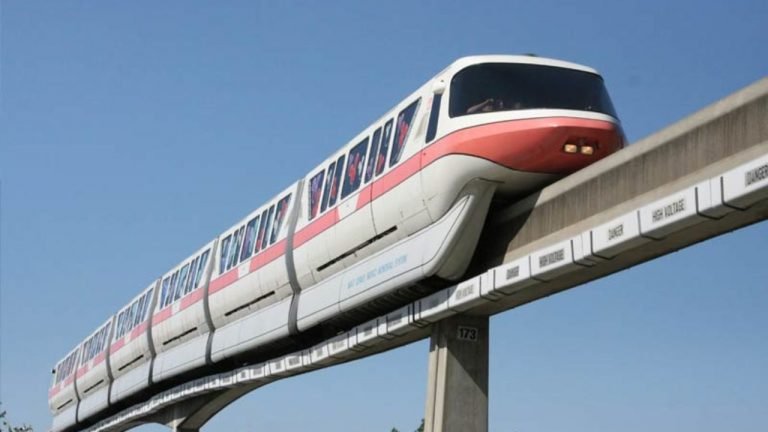
Mumbai, Metro Rail News: After missing more than dozens of deadlines since December 2015, the Mumbai Monorail second phase connecting Wadala to Jacob Circle is set to begin its services at 6 pm on March 3, 2019. Chief Minister Devendra Fadnavis will flag off the new phase of the Monorail.

The Second Phase of Monorail increase connectivity to railway stations, Officials of the Mumbai Metropolitan Region Development Authority feels that the Monorail Phase-2 may have better ridership compare to the first phase, which is from Chembur to Wadala. The new corridor of the project is expected to boost ridership on the entire Monorail corridor (Chembur-Wadala-Jacob Circle) which is built by the MMRDA at a cost of Rs 2,460 crore.

India’s first Monorail services started between Chembur and Wadala on February 2014, Although it had a good start with a daily ridership of 15,000 to 20,000 commuters, the numbers reduce steadily with the project running into losses that mounted over the years. The MMRDA had stated that the Monorail was incurring losses of Rs 6.40 lakh daily, In response to a Right To Information application filed by an activist,

CM Shri Devendra fadnavis Gifted and dedicated the second phase of Monorail to Mumbaikars. He also traveled up to Wadala after the inauguration along with Union Railway Minister Shri Piyush Goyal and other officials.

Two coaches of the Monorail were gutted in a fire at Mysore Colony Station On November 9, 2017, leading to the closure of the first phase of monorail services between Wadala and Chembur for 10 months.

A committee was set up to investigate the matter. In a report submitted to the MMRDA in January 2018 by thee committee, found that there were irregularities in the maintenance of the project. Also, the committee suggested that before restarting Monorail services, precautionary like emergency exits must be put in place. Services of the monorail were restored in September 2018.

Monorail Phase-2 has a connectivity to all three local railway lines — Central, Western and Harbour lines — so more commuters may be attracted to the Monorail in its second phase Said A senior officer from MMRDA. MMRDA has set itself a target of achieving a ridership of 1 lakh on the entire corridor from Chembur to Jacob Circle. The second phase will have Monorail services every 20 minutes and fares will range between Rs 20 and Rs 40 for a one-way ticket.

Glimpse of Inauguration

“Currently, we have a total of seven monorail trains. The trains will run at an interval of 20 minutes. Later, we are planning to purchase 10 more trains. We have Rs 200 crore to buy five rakes, while we will raise funds for five more. We will soon float a tender for the five new rakes and procure them by the year-end, and the services will be increased.” Said Dilip Kawathkar, Deputy Metropolitan Commissioner, MMRDA.

Jaipur Metro terminating the contract for detailed project report given to EGIS Rail S.A.

Jaipur, Metro Rail News: The Jaipur Metro Rail Corporation (JMRC) terminating the contract for detailed project report (DPR) given to EGIS Rail S.A. for The construction of the 23.8 Kilometre long metro track from Ambabadi to Sitapura Industrial area.

It has stalled again and Commuters will now have to wait longer for the Phase-II project of the metro proposed in 2011.
buy feldene generic bloinfobuy.com/feldene.html over the counter

According to the source, the project has been terminated due to the poor technical performance of the company.

Subir Kumar, Managing Director of the JMRC said “The technical performance of the company was not up to the mark. The JMRC, therefore, decided to terminate the contract in November 2018,”.

The JMRC will be able to give the new contract only after the court orders, EGIS Rail S.A. has approached the court against the termination  decision. said officials.

The Phase-II metro has been seen as the profit building project for loss Jaipur Metro Corporation. JMRC witnessed a loss of nearly Rs. 31 crore for the financial year 2017-2018. Thereafter, it started various non-fare revenue generation schemes such as advertisements, installing ATMs etc. to generate the revenue.

The Second Phase plan was first proposed when a revised DRP prepared by Delhi Metro Rail Corporation (DMRC) was approved by the state cabinet in a meeting held in November 2011. According to the plan proposed in the metro would be constructed joining Sitapura Industrial area and Ambabadi where the stretch of 23.1 Km was covered. The underground area to be covered amounted to 5.1 Km whereas the elevated area to be covered was 18 Km. The estimated cost for the project amounted to Rs. 6583 crore.

In a meeting held under chairmanship of the then Chief Minister Ashok Gehlot in November, 2012, DMRC was asked to examine the possibility of a revised route chart and design that connects the Jaipur International Airport terminal(s) to Jaipur Metro and work out the revised cost.

DMRC submitted updated DPR on July, 2014 connecting Airport and Collectorate circle increasing the total length to 23.8 Km and estimated cost to Rs. 10,394 crore.

In September 2017, EGIS Rail SA in collaboration with EGIS Rail India and Feedback Infra Limited were given the contract for preparing a detailed project report within six months. But the contract was terminated in December 2018 due to poor technical performance of the company.

According to the latest proposal of the phase-II, the metro would cover 20 stations. The stations of Sitapura, Airport, Gopalpura, Tonk Phatak, SMS Stadium, SMS Hospital, Ajmeri Gate, Sindhi Camp Station, Collectorate circle and Ambabari. The track will have seven underground stations and 13 elevated stations.

Maharashtra Metro focuses on generating 50% revenues through non-fare services says Dr. Brijesh Dixit, MD, MMRCL

The Nagpur Metro Rail Project which is set to go on stream in the first week of March has many firsts to its credit from solar-powered coaches to targeted over 50% revenue through non-fare revenues. Dr. Brijesh Dixit, Managing Director of Maharashtra Metro Rail Corporation (Maha-Metro), in an interview said, the company will likely break-even by 2021. Here are the edited excerpts:

Which are the routes you are planning to launch in the first phase?
Dr. Dixit: The stretch starting from Khapri Metro Station to Sitabuldi Interchange which is part of the north-south corridor along with Lokmanya Nagar and Subhash Nagar on the east-west corridor are proposed to be launched in the first phase. These routes will provide connectivity between industrial areas on the outskirts of the city (SEZ, cargo hub) to the Central Business District of Sitabuldi. It will also provide easy transportation for the workforce employed in the industrial area of Hingna. The proposed work on these two routes would cover a distance of 18.5 km and will be over by February 26.

What are the sizes of rakes that we are looking at?
Dr. Dixit: The Metro train would comprise three coaches against four coaches elsewhere. However, these coaches would have a higher powering capacity, which allows faster pick-up between stations. The other major highlight of the train would be a special coach for women called ‘Nari Shakti’. The special coach would not just ensure safety for women, but also promise a hassle-free journey.

By when can we expect both the corridors (east-west and north-south) to be ready?
Dr. Dixit: The entire Nagpur Metro project which covers a distance of 38.215 km and includes 38 stations is expected to be ready by the end of 2019. While the north-south corridor of this project stretches to a distance of 19.985 km and covers 18 stations, the east-west corridor covers a distance of 18.23 km and 20 stations. Sitabuldi Interchange would serve to be the meeting point for the train coming from all the four directions.

According to DPR, what is the ridership projected this year? And in the next five years?
Dr. Dixit: As per DPR, the proposed daily ridership in 2021 is expected to be 3.83 lakh. The ridership for the north-south corridor is expected to be 1.85 lakh, while the figure for the east-west corridor would be 1.97 lakh. Similarly, the ridership figures, as proposed in the DPR, would increase exponentially, and by 2041, the ridership is expected to be 5.63 lakh (north-south corridor 2.77 lakh and east-west corridor 2.86 lakh). The Detail Project Report (DPR) lists ridership figures for every five years.

How much of the total power requirement for the Metro will be met through solar energy?
Dr. Dixit: Solar power has been integrated right from the inception to meet 65% of the total requirement of the project. In Phase-I, 14 MW solar power was installed which will be upgraded to 25 MW later. The rooftops, depot boundary walls, and depot sheds will be mounted with solar PV panels which will be grid connected and net-metered.

What is the kind of investments we have seen till date for the Metro and what is the total project cost?
Dr. Dixit: The total project cost for the Nagpur Metro is Rs 8,680 crore. Till date, over Rs.5,000 crore has been invested in the project and 77 % of the total work has also been completed. Apart from the continuous financial support by the central and state governments, foreign funding agencies such as Kfw of Germany and Afd of France have also provided 630 million euros for the project.

In terms of revenues, what are your expectations and how soon can we expect the Nagpur Metro to break-even?
Dr. Dixit: Maha Metro has focussed on generating more than 50% of revenue through non-fare box sources. It will be highest-ever in the metro rail segment across the world. We aim to overtake Hong Kong Metro service which is around 42%. We have not waited for the launch of services but our earnings have already started. Maha Metro has already earned almost Rs 140 crore through property development initiatives. Metro has earned from the 1% additional surcharge on stamp duty levied by the state government and the earnings through transit-oriented development (TOD) policy. We expect the break-even to happen by 2021 when our traffic reaches 3.83 lakh.

Indian Railways Five Year Achievements & Initiatives

New Delhi, Metro Rail News: In the last five years (2014-19), the Government of India has made safety the foremost priority of Indian Railways. Indian Railways has achieved its best ever safety record in 2018-19 – there has been 81% drop in the number of deaths from 152 in 2013-14 to 29 this year (up to Jan 31, 2019). This is a result of holistic efforts. All Unmanned Level Crossings (UMLCs) on Broad Gauge network have been eliminated. Rashtriya Rail Sanraksha Kosh (RRSK) fund of Rs. 1 lakh cr has been created for safety expenditure.

Laying the foundations of infrastructure for a New India, there has been a quantum leap in capital expenditure. Total capital expenditure between 2014-19 is Rs. 5.1 lakh crore which is more than double of total expenditure during 2009-14. Railways is connecting India at a faster pace with a 59% increase in the average pace of commissioning New Line / Doubling / 3rd & 4th line projects from 4.1 Kms during 2009-14 per day to 6.53 Kms per day during 2014-18.

Aspirations of the people of North East were fulfilled with the completion of 4.94 Kms long Bogibeel Bridge, longest rail-cum-road bridge in India. Now, the journey from Itanagar to Dibrugarh is only 180 Kms, reducing the travel time from 24 hrs to only 5 hrs

Commuter travel in urban India has been given sufficient attention. Bangalore Suburban System is being developed with ongoing projects worth more than Rs. 15,700 cr. This will benefit about 15  lakh commuters. Mumbai Suburban Systems is also being modernized with ongoing projects worth more than Rs. 70,000 cr, which will benefit about 75 lakh commuters.

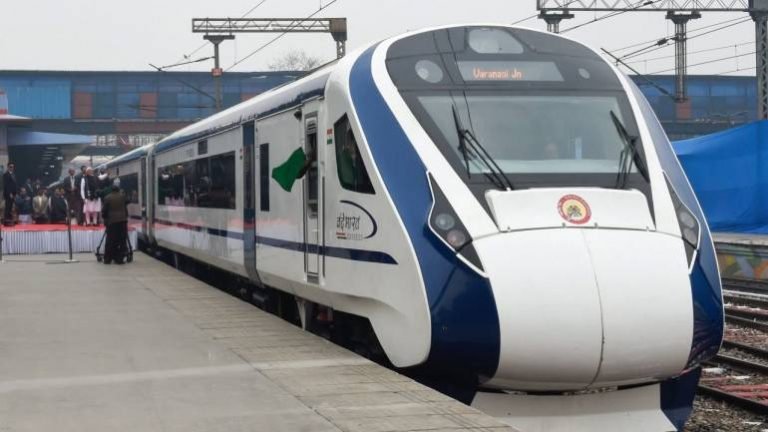
India entered a new era of mobility with Vande Bharat Express – India’s first high-tech, energy-efficient, self-propelled train. This is a prime example of the success of Make in India movement. This train will be proliferated across India and also exported globally.

The Ahmedabad-Mumbai High-Speed Rail (HSR) will revolutionize the transport sector in India through speed, safety, and service. Besides the Make in India benefits from the HSR project, Railways is creating large scale employment and economic development through sanctioned projects in Latur, Maharashtra; New Bongaigaon, Assam; Lumding, Assam;  Jhansi, Uttar Pradesh, and Sonipat, Haryana. Setting records for Indian Railways, Diesel Locomotive Works (DLW) in Varanasi, Uttar Pradesh has successfully executed world’s 1st ever conversion of diesel locos into electric loco to enable Mission Electrification.

Indian Railways has embarked on transitioning to sustainable rail transport with a six times increase in electrification from 610 RKM during 2013-14 to 4,087 RKM during 2017-18. 100% Electrification of Broad Gauge Routes of Indian Railways is targeted by 2021-22.

Indian Railways has achieved significant milestones in moving the country’s economy faster with the highest ever freight loading in 2018-19. Freight earnings have touched their highest level and is expected to be about Rs. 1.43 lakh cr in BE 2019-20.

Dedicated Freight Corridors (DFC) are gateways to India’s superfast growth and development. First sections of Eastern DFC (Bhadan to Khurja, 200 Kms) and Western DFC (Rewari to Madar, 200 Kms) have been completed.

Indian Railways is improving passenger services including a complete makeover of Stations by installing modern facilities including escalators, lifts, free wifi etc. and using local art in the design. 4 stations are undergoing redevelopment – Habibganj, Gandhinagar, Charbagh and Gomtinagar. Beautification of 65 stations has been completed using local art. Indian Railways has improved trains and coaches including launching the Tejas, Antyodaya and Humsafar trains and Deen Dayalu and Anubhuti coaches. Connecting passengers to the digital world, high-speed WiFi service has been provided at more than 800 stations. Pan India rollout of paperless Unreserved Ticketing (UTS) has been done to make ticketing convenient and hassle-free.

Catering has also been a focus area with compulsory printing of MRP on all food items and use of artificial intelligence to monitor food production in base kitchens for improving quality and hygiene.

Indian Railways is also playing its part in promoting tourism and providing a wonderful experience to tourists. It is also connecting Indias to their roots with the launch of Ramayan Express, Panj Takht Express, and Buddhist Circuit Train.

Rail Drishti dashboard has been launched, encompassing all the digitization efforts in Indian Railways and promoting transparency and accountability. It brings information from various sources on a single platform and gives access to key statistics and parameters to every citizen of the country. The available information has been categorized under 15 user-friendly sections on the Dashboard.

India’s first National Rail & Transportation Institute has been launched with 1st academic session started with two undergraduate programmes – B.Sc. in Transportation Technology & BBA in Transportation Management with 103 students. Rs. 421 crore has been sanctioned for the next 5 years.

Recognizing the significance of empowering and upskilling the Railways family, various steps have been taken including delegation of powers. The historic recruitment drive is being undertaken with 1.5 lakh vacancies being filled. 2.3 lakh individuals will be recruited over the next two years.

Indian Railways has also focused on digital initiatives for bringing transparency and accountability to its business practices. E- reverse auction policy has been issued. 100% e-Procurement is being done through a single web-portal. Simpler approval processes in Research Designs and Standards Organisation have reduced process time from 30 months to 6 months.

Click here to download Booklet: Indian Railways

Asian Development Bank Grant $926 million for Mumbai Metro Rail Project

The single largest infrastructure project loan ever, The Asian Development Bank (ADB) and the Government of India today signed a $926 million loan to operationalise two lines for the Mumbai Metro Rail System.

It aims to ease the distress of millions of commuters each day and help to provide a cleaner, less congested city.

“The single largest infrastructure project loan in ADB history—approved by the ADB Board on 26 February—will help fund lines 2A (Dahisar to D.N. Nagar), 2B (D.N. Nagar–Bandra–Mandale), and 7 (Dahisar [East] to Andheri [East]), totaling about 58 kilometers (km)” said Deol, Rajesh K. Senior External Relations Officer, India Resident Mission

The project will fund 63 six-car trains, signaling and safety systems, and help establish a new dedicated metro operations organization to manage the entire metro network in Mumbai.

The Mumbai Metropolitan Region Development Authority (MMRDA) will implement the project. an estimated 2 million passengers a day will use the two new lines, travelling in improved safety and comfort once operational by the end of 2022.

It will also reduce emissions from vehicles, with carbon dioxide emissions expected to fall by about 166,000 tons a year.

“ADB financing will ease travel for millions of commuters across Mumbai, help decongest heavily crowded suburban rail systems, and contribute to providing modern, clean, and livable urban environment to its citizens,” said Mr. Kenichi Yokoyama, Country Director of ADB’s India Resident Mission

Mr. Kenichi Yokoyama signed the loan agreement for Asian Development Bank and Mr. Sameer Kumar Khare, Additional Secretary (Fund Bank and ADB), Department of Economic Affairs, Ministry of Finance signed the loan on behalf of the Government of India.

“The New Mumbai Metro is an ambitious and truly transformative venture planned by the state government, which will contribute to enhance the efficiency of the urban transport network and productivity of India’s financial center,” said Mr. Sameer Kumar Khare, Additional Secretary (Fund Bank and ADB), Department of Economic Affairs, Ministry of Finance

Mumbai, with a population of about 12 million, is the capital of the state of Maharashtra and renowned as the financial capital of India. Maharashtra accounts for about 15% of India’s gross domestic product, about 40% of which is generated from the Mumbai metropolitan region. Rail is the primary means of transport in Mumbai, where the suburban network totals almost 400 km and carries more than 7.5 million passengers a day.

Recognizing the transportation challenges, the government has developed a plan for 12 metro lines with a total length of 276 km. Line 1, completed in 2014 on a public-private partnership model, carries about 400,000 passengers a day and has reduced travel time along its east-west route from 71 minutes to 21 minutes.

Other new metro lines will ease travel and make the city more livable and competitive. Since access to the stations is sometimes difficult, ADB is also assisting MMRDA to improve last mile connectivity by piloting electric vehicles and nonmotorized transport at select stations.

Carriages procured under this project will feature high-level safety features and automation, including surveillance systems, door closing, and train obstacle detectors. Platforms will have automatic doors, which will be synchronized with the trains, so there will no longer be a danger of surging crowds pushing passengers onto the tracks. The tracks will be elevated about 9 meters above road level, ensuring no nearby residents are put at risk.

Various features that will benefit women include women-only carriages, mobile applications for women’s security, separate ticket counters, and reporting desks to address incidents of harassment. It will ensure women have improved opportunities for employment along the new lines, including a station staffed only by women. There will be station and carriage facilities for elderly or differently-abled passengers including priority e-ticket counters.

The project marks ADB’s first cofinancing with the Shanghai-based New Development Bank, which will provide $260 million toward the metro systems project. The MMRDA will implement civil works and other related components for the lines 2A, 2B, and 7.

ADB is committed to achieving a prosperous, inclusive, resilient, and sustainable Asia and the Pacific, while sustaining its efforts to eradicate extreme poverty. In 2018, it made commitments of new loans and grants amounting to .
buy soft pack online https://pridedentaloffice.com/wp-content/themes/twentytwentyone/inc/en/soft-pack.html no prescription
5 billion. Established in 1966, it is owned by 67 members—48 from the region.

Hyderabad Metro works at Hitec City to end in 10 days

Hyderabad, Metro Rail News: Hyderabad Metro Rail (HMR) managing director NVS Reddy Said: “Metro works at Hitec City to be completed in 10 days”. On March 1, 2019, NVS Reddy inspected all the eight stations of Ameerpet – Hitec city stretch.

“Footpaths developed by HMRL on Road No. 36, Jubilee Hills and other places will be protected with bollards to prevent parking of the vehicles and the shop owners shall be warned not to misuse the footpaths and allow free pedestrian movement” He Added.
buy azithromycin online https://www.facebeautyscience.com/wp-content/themes/twentyseventeen/inc/en/azithromycin.html no prescription

Now the Electric charging facilities, bus bays, auto bays and e-vehicle bays will be created at all the metro stations and the two-acre space at Madhuranagar-Taruni station will be utilised for holding a temporary ‘Taruni Market’ on the lines of Numaish (Exhibition) with about 150 stalls, catering to the needs of women and children.