For easy travel, Telangana to introduce common mobility card

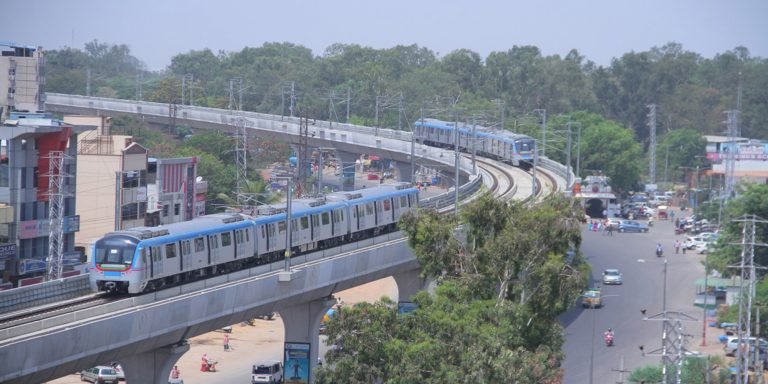
HYDERABAD (Metro Rail News): For the ease of the citizens, the Telangana government is planning to introduce a common mobility card which enables citizens to travel across multiple modes of both public and private transport systems, like rental cabs, for commuters in Hyderabad and across the state. This card concept comprises the usage of a contact and Quick Response (QR) code based card, which will allow people to use it on any mode of public transport.

A senior official from the Telangana Information Technology department, who did not want to be quoted said that “The Hyderabad metro rail already has a contact-based card which people can use. Our question was whether the Telangana State Road Transport Corporation (TSRTC) can accept that too. So then the government eventually thought that it should create a card that will work with all modes of transport and can also act as a payment card. As of now, we are in the process of issuing tenders. The project will materialize in a few months that is done”.

He further added that the concept is on the lines of the National Common Mobility Card (NCMC) idea with regard to public transport that the government of India (GOI) has been pushing from some years.

Common Mobility Card

“The National Payments Corporation of India (NPCI) allows for cards to be either stored value cards and debit/credit cards. For example, (Hyderabad) metro cards fall under the former category, but the GOI wanted these mobility cards to have both types of payment modes. Hence the concept we came up with is also future proof, the official explained.

The official mentioned under the Telangana’s proposed common mobility card, citizens will be able to use the card to travel in the Hyderabad metro rail, state buses and even private transportation (cabs) across the state. The TSRCT buses are expected to be equipped with point of service (PoS) machines to enable a tap-and-go method of payment as well, and the cards will also have two-factor authentication to go along with the QR code with respect to private players. “It will be done following the Reserve bank of India guidelines,”

He further added Moreover, the state government is also pushing for the cards to be issued at no cost to users, with the caveat that they top it up with a nominal minimum amount while acquiring it. The card, however, will not include the Multi-Modal Transport. System (MMTS) which is operated in and around Hyderabad by the South Central Railways (SCR), the official informed. “Once the tender is issued to a company, the project will be ready in 3 to 4 months. It should be ready by the end of this year.

A Hyderabad-based independent researcher who works on data and the internet says that activists, however, remained skeptical about the concept. The proposal for a national common mobility card has been around since 2005. But every time a standard is agreed upon, newer standards are explored. A common mobility card may not be a reality unless it becomes a full-time payment card for all purposes, which is unlikely with current RBI rules.

Delhi-Mumbai, Delhi-Howrah train travel to come down by 5 hours

 Delhi (Metro Rail News): Indian Railways will be going to reduce Delhi- Mumbai, Delhi-Howrah travel time by 5 hours. Indian Railways network have two of the busiest routes – Delhi-Howrah and Delhi- Mumbai.  These two routes are set for a massive infrastructure upgrade in the coming year, with the speed being raised to 160 kmph on the important routes. According to the PM Narendra Modi’s instructions, 100-day plan document of the Indian Railways, the train travel time on the above-mentioned routes will come down by 5 hours. The 100- day plan document of the Railway Board, seen by Metro Rail News, envisages an investment of around Rs. 14,000 crores for this massive project.

The Railway Minister, Piyush Goyal plans to send the proposal to upgrade infrastructure on New Delhi-Howrah and New Delhi – Mumbai routes to the Cabinet Committee of Economic Affairs for approval. Once the project will get complete, it will reduce the train travel time between New Delhi-Howrah to 12 hours from the existing 17 hours. The train journey time between New Delhi- Mumbai may come down to as low as 5 hours.

Delhi-Mumbai and Delhi- Howrah routes account for nearly 30% of passenger traffic and 20% of freight traffic. While the upgradation of railway infrastructure on the New Delhi- Howrah (1,525km) will require an expenditure of Rs 6,684 crore, the New Delhi- Mumbai project (1,483km) will entail Rs 6,806 crore,” according to the national transporter.

The document articulate that the ambitious project will be undertaken in a fixed time, fixed cost EPC contract basis over a time span of 4 years from the date of approval. The national transporter is of the view that this format will help in reducing delays and cost overrun while also ensuring better coordination and economics of scale.

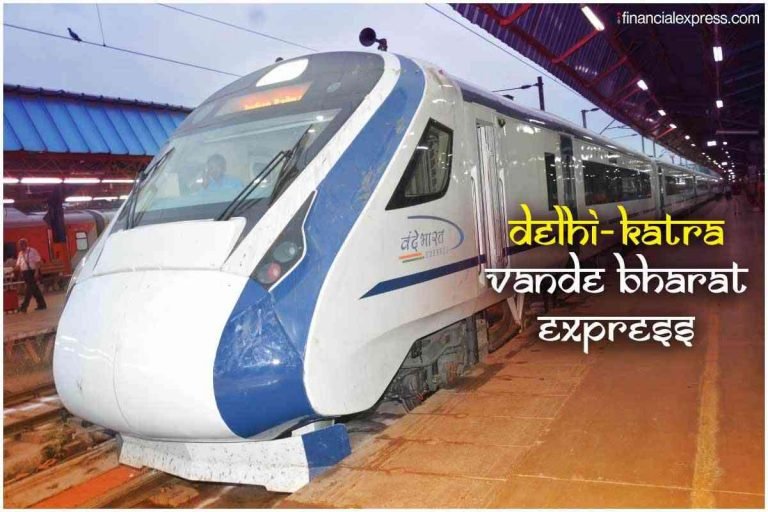
Train 19 is being planned for the Delhi-Mumbai route with the hope of bringing travel time down.  Indian Railways has been upgrading its rolling stock and one of the biggest technological leaps for it was the introduction of the self – propelled Vande Bharat Express on the Delhi- Varanasi route. Banking on the success of the Train 18 project, Indian Railways is now looking to manufacture Train 19, which will be Rajdhani Express – style sleeper variant of the Vande Bharat Express.

The identification of the Delhi-Mumbai, Delhi-Howrah routes for the 160 kmph upgrade is an important step in that direction as it brings its rolling stock up to world- standards, railway experts have time and again stressed on the need to invest in rail infrastructure such as tracks, signalling and fencing so that the average speed of the trains on the Golden Quadrilateral can be increased.

Delhi Metro’s Red Line services delayed from Shaheed Sthal Stn

Delhi (Metro Rail News): The services were delayed for a few minutes on Thursday, in Red Line from Shaheed Sthal towards Dilshad Garden, said the Delhi Metro Rail Corporation (DMRC).

Delhi Metro tweeted that, “Delay in service from Shaheed Sthal (New Bus Adda) towards Dilshad Garden (Red Line) normal service on all other lines.”

DMRC later tweeted to say that the services have resumed on the line and cause of the delay is not found yet as other lines of the Delhi Metro operated normally.

The Red Line, one of the six lines of the Delhi Metro, connects Rithala in Delhi to Ghaziabad’s Shahid Sthal. The entirely elevated line has 29 stations cover 34.4 kilometers.

The Red Line interchanges with the Yellow Line and Violet Line at Kashmere Gate and the Green Line at Inderlok. Red line is the most heavily used metro by the commuters, as it acts as a link for those, who reside in West and North Delhi, to travel towards East Delhi.

 Red Line was the first line of the Delhi Metro to be constructed and opened. First Segment of the red line  was constructed from Tis Hazari to Shahdara and opened on 25 December 2002. The Strategy worked in favour of DMRC. As part of Phase III plan, an eastward extension of 9.5  km from Dilshad Garden to Ghaziabad ISBT (New Bus Stand) which was approved by the DMRC and the government in January 2014.

Construction began in early 2015 and commercial operations started on 8 March 2019, thereby providing commuters another link to travel to Ghaziabad, as opposed to the Blue Line branch, that connects to Vaishali in Ghaziabad.

Delhi Metro keeps in mind the safety and security of Women Passengers. Delhi Metro has reserved a car, especially for lady passengers. In Yellow, Blue, Green, Violet, Pink & Magenta lines the first car of a train in moving direction is reserved for ladies and the common earmarked car in both direction movements in Redline. To indicate the area of the platform where the reserved car normally stops Signages have been provided.

Delhi Metro has made certain provisions for the safe and convenient travelling experience for Women Passengers,

  • Women only coach in every train.
  • Reserved seats for women in every coach.
  • Fine of Rs. 250/- for travelling in women coach for male passengers
  • Zero tolerance for drunkards and trouble makers.
  • CCTV surveillance at stations, platforms and in train coaches.
  • Patrolling of the platform after sunset hours have been intensified by security forces(CISF).
  • To nab the offenders, quick reaction teams have been deployed
  • For frisking of lady passengers, ladies CISF staff has been deployed.
  • To check male commuters travelling in Ladies Coach, teams are deployed 
  • In the first week of every month special drive has been launched.

Delhi metro has provided parking lots for the passengers travelling in metro to park their two wheeler or Four Wheeler at station and use metro service. The parking lots have been outsourced to the contractors who are solely responsible for the safety and security of all the vehicles parked in parking lot and is liable to pay compensation in case of theft of vehicles or damage to vehicles.

Metro harassment case filed based on the tweet on June 14, 2019

NEW DELHI (Metro Rail News): A day after a 29-year-old woman shared her ordeal on Twitter alleging that a man masturbated on her and flashed her when she was climbing down the escalator at the HUDA City Centre Metro station on the night of June 14, the police registered an FIR in the case.

On Tuesday, the police said they had taken cognizance of the matter and registered the case on the basis of the victim’s narration of the incident on social media.


On Tuesday, additional DGP law and order (Haryana) Navdeep Singh Virk replied on the thread shared by the victim on Twitter, saying, “The matter has been flagged with the police commissioner Gurugram and appropriate action will be taken at the earliest.”
The police said a team of senior police officers, including an assistant commissioner of police (ACP), a crime against women and station house officer of Sector 51 women’s police station, visited the crime spot on Tuesday and collected the CCTV footage.


A case was registered against the unidentified suspect, who can be seen in the footage, under sections 354-A (sexual harassment) and 509 (word, gesture or act intended to insult the modesty of a woman) of the Indian Penal Code at the Metro police station.
The incident took place on June 14 around 9.25 pm when the woman, an interior designer, had come out of a clothing store on the first floor of the Metro station. The woman had said that she was on the escalator when she felt something on her back.


“I turned and realized that a man had masturbated on me. I was shocked, scared and traumatized. I confronted him. He flashed me and said indecent words following which I slapped him.
buy actos generic myindianpharmacy.net/actos.html over the counter
The passersby stood still as he was hurling abuses at me. I shouted and called for help but there were no policemen around. He flashed me again before running away,” she had tweeted on Monday.


Metro station house officer Rajender Singh said the presence of the suspect could be established in the CCTV footage and efforts were on to identify him.
“We have contacted the victim and started a probe. We are coordinating with DMRC (Delhi Metro Rail Corporation) officials and collected the CCTV footage,” the SHO said.


On Tuesday, the woman said a senior police officer from the Metro police station had reached out to her, but she was yet to record her statement. “I am yet to decide about that (recording my statement). It was important for me to share the ordeal and to raise an alarm. There are many loopholes in our judicial system and it takes time and courage for a victim to come out and report. I feel scared,” she said.


The woman had earlier alleged that on June 14 night, shortly after the incident, she had reached out to Gurugram police on Facebook Messenger app, but did not receive a response.
She then reached out to the DMRC officials for assistance and received a response to identifying the culprit in the CCTV footage, which has now been shared with the Gurugram Police.

State Govt. to speed up Bengaluru metro project work

BENGALURU (Metro Rail News):  The State Government has formed a new high- power committee (HPC) of 10 IAS Officers to hasten the construction of metro projects in the city.  The committee will first meet now on June 21.

The HPC was approved between 2012 and 2019 will oversee phase II, phase II-A (KR Puram- Central Silk Board) and phase II-B (Airport link) metro projects. A High- power committee did not have a specific mandate to oversee the metro.

The cost of phase II project is over Rs. 26,000 crores. phase II was scheduled for completion by 2020-21 but it is seeing several hurdles and primarily related to land acquisition and shifting of utilities.

Managing director of Bangalore Metro rail Corporation Ajay Seth said that The process of getting government land from different departments has been simplified. The committee also has the scope of reviewing the metro project at a micro level.”


The chief secretary holds fortnightly meetings with different agencies to discuss issues and projects pertaining to Bengaluru. The new HPC was accorded administrative approval towards the end of May, and it will be held by the chief secretary.

10 IAS Officers from various agencies, including the Urban development department, finance, revenue, BBMP and the Directorate of urban land transport (DULT) will be part of the committee. They will meet once a month.

The High-Power Committee will have the instruction to sort out all the issues to metro projects, including the transfer of land, shifting of utilities and structures in the project alignment, rehabilitation of affected persons, coordinating with departments for smooth, efficient and expeditious shifting of various utilities simultaneously in one go and multimodal integration.


A senior official said,”. Be it land acquisition, shifting of utilities or even construction, we are always dependent on external factors. we, at times, have little say in the progress unless the government backs us in clearing hurdles. While the first phase was delayed for 4 years, the phase II is set to miss the 2021 deadline. It’s difficult to meet the target as the metro is being built in a living city and meeting the deadline requires cooperation from so many agencies.”


The project which completes on time has never been a forte of BMRCL ever since it was given the responsibilities to construct the 42- km phase.

FREELAND

A government order which was dated on may 25 stated that,” As the state government itself has to fund the cost of lands, no purpose will be served if the BMRCL is asked to pay the cost of the government land.” Different government department are entitled to give land free of cost to the Namma Metro.

Kejriwal tells DMRC, reconsider involving Metro fare panel in free ride move

NEW DELHI (Metro Rail News): On Tuesday, Chief Minister Arvind Kejriwal asked the Delhi Metro Rail Corporation (DMRC) to reconsider its view on involving the fare fixation committee (FFC) in its proposal to offer free rides to women in Delhi-NCR.

In a meeting held on Tuesday morning, The CM conveyed this to DMRC managing director Mangu Singh and other Metro officials. The Delhi government questioned why the DMRC did not recommend the FFC’s approval when the Centre had proposed concessions for senior citizens and students in the Metro last year. Reiterating its stand that the FFC’s approval was not necessary as the scheme does not require increasing or decreasing Metro fares.

A government official said on condition of anonymity “The DMRC will look into the matter now. It acknowledged that getting FFC’s approval was not recommended for the Centre’s proposal. The Metro has even started work towards Centre’s proposal and floated tenders for works amounting to about ₹20 crore”.
DMRC clarified that it started work on Centre’s proposal “in anticipation” of an approval. The DMRC had maintained the same in its proposal on the free-travel for women scheme said by another official.
buy lexapro Canada langleyrx.com/lexapro.html no prescription

DMRC’s report says that “Anticipating this requirement by the FFC in future, DMRC has already processed for modification/alteration and addition to the fare collection system where non-transferable smartcard shall be issued and the genuineness of the beneficiary while taking benefit shall be controlled by technology”.
Union minister for housing and urban affairs Hardeep Singh Puri, after following the steep hike in Metro fares in 2017, had last year asked the DMRC to introduce “a technology-based solution” to give fare concessions to senior citizens and students.
The Delhi metro rail corporation (DMRC) said that by the February this year it would install biometric-based ticketing system to offer such concessions. This system is to be integrated with the existing automatic fare collection (AFC) gates at the stations.

Blue Star bags order for VAC system from Mumbai Metro Rail

MUMBAI (Metro Rail News): Mumbai Metro Rail Corporation Limited (MMRCL) has issued a Letter of Intent to the Company for Design, Manufacture, Supply, Installation, Testing and Commissioning of Tunnel Ventilation and Air Conditioning System approximately valued at Rs253cr, subject to the definitive agreements to be executed between the Company and MMRCL.
Blue Star shares rallied 5.7 percent intraday on June 19 after receiving the order from Mumbai Metro Rail.

The order is valued approximately at Rs 253 crore, which is subject to the definitive agreements to be executed between the company and MMRCL, it said.

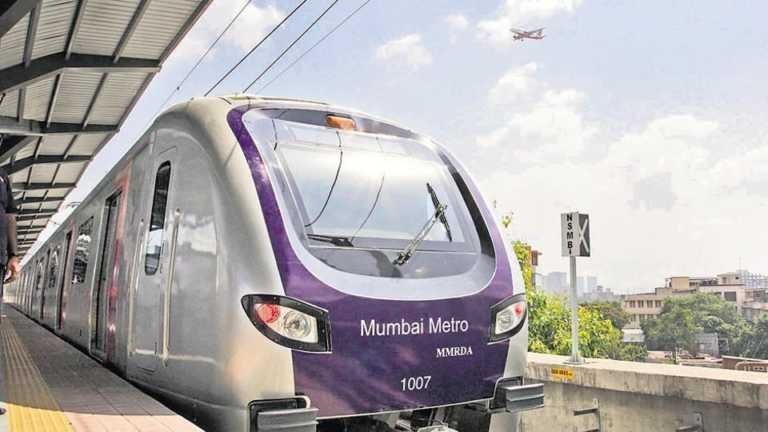
The Mumbai Metro is a rapid transit system serving the city of Mumbai, Maharashtra, and the wider metropolitan region. The system is designed to reduce traffic congestion in the city, and supplement the overcrowded Mumbai Suburban Railway (colloquially called local trains) network. It is being built in three phases over a 15-year period, with overall completion expected in 2025.

When completed, the core system will comprise eight high-capacity metro railway lines, spanning a total of 235 kilometers (146 mi) (24% underground, the rest elevated, with a minuscule portion built at-grade), and serviced by 200 stations.
As of August 2018, Mumbai metro consisted of 1 operational line (Line 1 – elevated metro from Versova to Ghatkopar), and 4 lines under various stages of construction

As of August 2018, Mumbai metro consisted of 1 operational line (Line 1 – elevated metro from Versova to Ghatkopar), and 4 lines under various stages of construction

Visakhapatnam Metro Rail Project delayed

Visakhapatnam (Metro Rail News): The Visakhapatnam Metro Rail Project is further delayed as it is yet to get the new government’s approval. Evaluation committee had shortlisted five bidders for RFP (request for Proposal) in March 2018, who submitted their bids last January.

Tenders were supposed to be finalised even before the general election, as per the earlier schedule. Officials are in no haste to take any decision as it may go against the policies and priorities of the new government as there has already been delay.

The estimated cost of the project is Rs. 8,300 crore and the decision is yet to come.
buy stromectol UK www.bodybuildingestore.com/wp-content/languages/new/engl/stromectol.html no prescription
The state government through external commercial borrowing, will have to shoulder about 52% cost of the project, that is more than half the expenditure, towards developing civil infrastructure and the successful bidder will have to contribute the remaining amount towards the development of non-civic infrastructure.

Now, there is no certainty that the new government will continue the talk with Korea EximBank or choose a new borrower. Earlier the government had initiated talks with the export import bank of Korea (Korea Eximbank) for loan.

The metro rail project revealed that officials have to first inform the state government about all the developments of the metro project and tendering process.

The source said that,” The project can be taken forward only after getting a nod from the state government. The global tendering process had taken about 18 months. It is hoped that the question of cancelling the tenders or re-examining the tendering process will not arise given the transparency with which it was conducted.”

The Amaravati Metro Rail Corporation was supposed to commercially develop the land and use the revenue from it to help the government repay the loan. The TDP government had not only sanctioned land for the metro rail project but also sanctioned 250 acres of land to AMRC within the city.

UPMRC seeks a map of water & Gas pipeline network to expedite Agra Metro work

Agra (Metro Rail News):  the Uttar Pradesh Metro Rail Corporation (UPMRC) has asked the district administration and the Agra Development Authority (ADA) to provide a map of water sewer and a gas pipeline network of the city within 15 days. The map would help in implementing the required arrangement of hassle-free construction of two corridor metro rail project in the city. The state government orders to expedite Agra metro rail project works.

The work on corridor 1 from Sikandra to Taj East Gate will be started by the UPMRC.

“Responsibility for the arrangement of required land for development of the metro rail infrastructure is of the ADA. Work has been initiated this regard. A citywide survey will be conducted, before starting the construction work. The district administration, municipal corporation, Jal Nigam, private power distribution company and other agencies have been asked to provide maps of their underground infrastructure in the city. This will help in sorting out hindrances in implementation of the metro rail project,” said an official of the UPMRC.

 The Union had Cabinet approved on February 28the Agra Metro Rail Project which is estimated to cost Rs. 8,379.62 crore and is planned to be completed in five years. A total of 27 stations will be developed along 29.4km of the rail corridor in the city.

 The Agra Metro Rail Project will have two corridor which will pass through  the heart of the city and will connect prominent tourist place including Taj Mahal, Agra Fort and Sikandra  as well as ISBT, Raja Ki Mandi railway station, medical college, Agra Cantt railway station, collectorate, Sanjay Place and other densely populated areas , according to Detailed Project Report (DPR) which was approved by the Union Cabinet .

23 year old died as he jumped before the Delhi metro

NEW DELHI (Metro Rail News): On Tuesday, at the Civil Lines station in the national capital a 23-year-old man, who was undergoing treatment for depression for the last two years, allegedly committed suicide by jumping in front of a moving train, said by the officials.

After being run over by the train the police said Nitin’s body was severed into two.

This was confirmed by the Delhi Metro Rail Corporation (DMRC) that the incident took place around 2 pm at the station that falls on the busy Yellow Line.

Following the incident, metro service on the Yellow Line was delayed for 15-20 minutes.

A senior DMRC official said, “The train bound for Huda City Centre station was approaching a platform at the Civil Lines station when the man jumped in front of it and was run over by it. We informed police immediately.

A senior police official said, the body has been removed from the tracks and sent to a mortuary in Sabzi Mandi area. He added, the victim was a resident of Jagatpur in Delhi.

The police also said that, his father said Nitin was undergoing treatment for depression for the last two years at a hospital.

They added the case is being investigated under Section 174 of the Code Of Criminal Procedure (CrPC).
buy viagra super fluox force online no prescription

India’s 1st Rapid Rail to be integrated with Metro & Railway stations

DELHI (Metro Rail News): Delhi Metro, Indian Railways stations to be linked with Rapid rail corridors. At various multimodal transport hubs in Delhi India’s first regional rapid transit system (RRTS) will be integrated with other modes of local transport systems.

Apart from several other towns in the national capital region (NCR) the three proposed corridors in phase-1 of RRTS will be integrated with as many as eight Delhi Metro stations, three inter-state bus terminals (ISBTs) as well as two Indian Railways stations in the national capital.

The multi-modal integration will be provided through elevators, walkways, escalators as well as underpasses, depending on the location, to ensure that commuters get seamless transit options, says Sudhir Kumar Sharma, Chief Public Relation Officer (CPRO). He adds, the three proposed RRTS corridors, namely Delhi-Ghaziabad-Meerut, Delhi-Gurugram-Alwar, and Delhi-Sonipat-Panipat will converge at Sarai Kale Khan, which will have an RRTS station, Delhi Metro station and an Indian Railway station at Hazrat Nizamuddin. The Hazrat Nizamuddin station will be a few meters away.

Besides this, the other integration points of the three RRTS corridors are as follows:

  • The Delhi Metro Blue Line stations New Ashok Nagar as well as Anand Vihar in the capital will be connected with the 82-km Delhi-Ghaziabad-Meerut corridor.
  •  The Delhi Metro Yellow Line station of Jorbagh, Delhi Metro Magenta Line station of Munirka as well as Delhi Metro Airport Express Line station of Aerocity will be connected with the 164-km Delhi-Gurugram-Alwar RRTS corridor.
  •  The Delhi Metro Blue Line station of Indraprastha as well as Delhi Metro Red Line station of Kashmere Gate will be connected with 103-km Delhi-Sonipat-Panipat RRTS corridor.

According to the National Capital Region Transport Corporation (NCRTC), which is the implementing organisation of the RRTS project once the Delhi-Ghaziabad-Meerut RRTS corridor will get operational, it will reduce the travel time between Delhi and Meerut to just 55 minutes.

The detailed project report of Delhi-Sonipat-Panipat RRTS corridor is being revised and further, more Indian Railways stations, ISBTs, and Delhi Metro stations may be added to the list of integrations with RRTS stations, according to NCRTC.

CMRL to conduct yoga camps at eight stations

CHENNAI (Metro Rail News): From June 20-23 Chennai Metro Rail Limited (CMRL) is organizing yoga camps at eight metro stations. Commuters before boarding the train can learn one or two yoga pose.

It will be held as part of the International Yoga Day. The camp organized in association with Suthaveli Sabhai, a Pollachi-based Yoga institution.

The camp will be held in two sessions morning sessions at 6.30am at Central, Tirumangalam, Mannadi and Vadapalani stations and the evening sessions will be at 5.30pm at Saidapet, Egmore, St Thomas Mount, and Ashok Nagar. 

Members of the public also can walk into the metro stations and participate in the camp. “They can bring their families too said by a CMRL official.

From the age of eight to eighty years all can attend the yoga camp.

These camp will be conducted by A N Dhanasekaran, who has 40 years’ experience in teaching yoga.

Pune Metro Rails arrives from Siberia

PUNE (Metro Rail News): The first freight carrying rails which were meant for Pune Metro arrived in the city today. The head – hardened rails of UIC60 E1, 1080 Grade with 25m and 18m are used. They were unloaded at kharalwadi.

the Pune Metro Rail Project requires (reach 1 & 2) is 9,000 metric tonnes. Process of laying the rails on the 4.5km elevated stretch that is ready and will now begin. The rail has arrived from the Siberia Workshop of Swiss-based East Metals AG.

 MAHA Metro, a SPV (Special Purpose Vehicle) of Government of India and Government of Maharashtra has undertaken the Pune Metro Rail project. Metro rail track will run from PCMC Building in Pimpri to Swargate. The 16.59-km line will be elevated till Range Hills with 9 stations and will further go underground up to Swargate with 5 stations.

Metro line track will run from Pimpri Chichwad Municipal Corporation (PCMC) Building in Pimpri to Swargate.  The 16.59- km line will be lifted up till Range Hills with 9 stations and will further go underground up to Swargate with 5 stations. The MAHA Metro, a Special Purpose Vehicle (SPV)of government of India and Government of Maharashtra has undertaken the Pune Metro project.

Mumbai Monorail Station to have seats For Commuters Convenience

MUMBAI (Metro Rail News): A tender has been issued by Mumbai Metropolitan Regional Development (MMRDA) to install seating arrangements on all 17 stations on the monorail for the convenience of the commuters. Rs.43.61 is the estimated costs to install the seats.

To increase the frequency of train the monorail will add more rakes. As the frequency is less the commuters have to wait for about 30 minutes for the next train to come. So for their convenience, the seats will be installed on the stations.

MMRDA official stated that the reason for not providing seating arrangements is that the passengers are expected to vacate the premise as soon as they de-board the trains. This will, in turn, reduce overcrowding at stations.

After taking over the operations from Scomi Engineering in last December, on March 3 they started implementing the entire phase from Jacob Circle–Wadala Depot–Chembur comprising of 19.54-kilometre-long corridor.

Soon after it was in operation the commuters mainly the senior citizens started complaining about the lack of seating arrangements at the stations while resulted in standing for half an hour for the metro.

According to the information within the three months after the contract is awarded, he appointed contractor has to supply and install the chairs.
buy levitra super force online https://calibudsman.com/wp-content/themes/twentytwentytwo/inc/patterns/en/levitra-super-force.html no prescription
The last date for suppliers to submit the bid is June 19, 2019. The MMRDA will hand over the work to the lowest bidder.