Kochi Metro completes its Phase 1 project

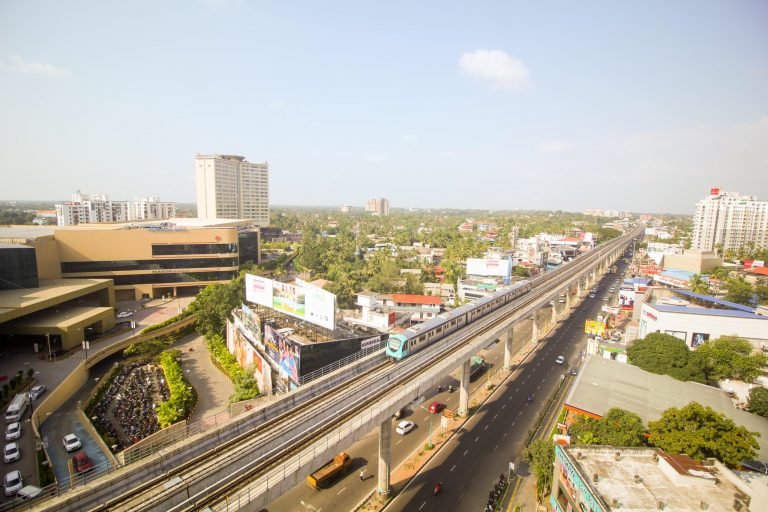
KOCHI (Metro Rail News) – In a big development amid the days of Pandemic, Kochi Metro has completed its phase 1 project. On this development, Durga Shankar Mishra, the Secretary of MoHUA took to Twitter to share the information. He wrote ” Kochi Metro’s 22nd station Petta is all set to open its door to the world. This station is a tribute to the fishermen community & designed on the theme of “fishing” narrating lesser-known stories of the community in Kerala. With this, Kochi Metro has completed it’s Phase 1.”

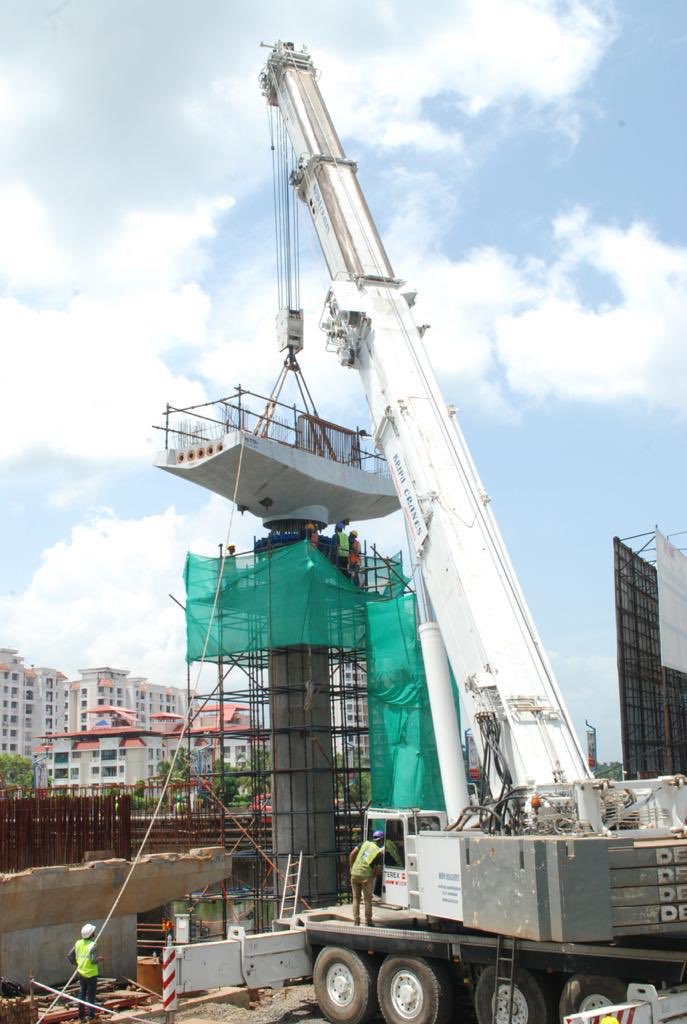
Precast Pier cap Launching

“Phase 1 Extension of Kochi Metro consists of two Stretches, first from Petta to SN Junction including 2 Stations viz Vadakkekotta and SN  Junction & Panamkutty Bridge. Second from Sn Junction to Thripunithura including one station of Thrippunithura Terminal.” said a statement released by Kochi Metro.

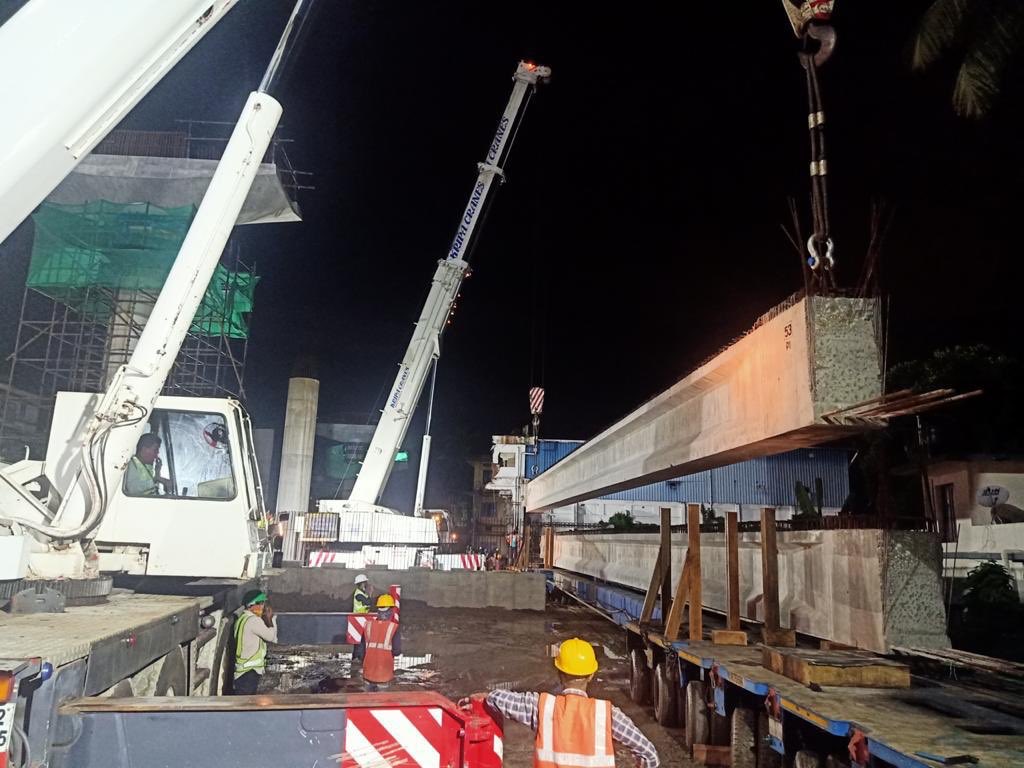
The First Stretch was awarded to KEC- CCECC JV and the work started on 16th October 2019. The work was carried out during the Covid 19 Pandemic period from 21st April 2020 also duly following the Covid Protocol & retaining the labour force. In spite of these challenges, the first Precast Piercap in the stretch was launched on 18/06/2020 (Figure 1) and the girders for Panamkutty Bridge launched on 30/06/2020.

Precast I Girder Launching for River Bridge

The tender for the second stretch from SN Junction to Thrippunithura Terminal was called on 18/05/2020. The tender was opened on 14/07/2020 and successfully awarded to M/s KEC – VNC JV within a period of 20 days ie. on 03/08/2020.

You will soon be able to pay through credit & debit card at AFC gates in Delhi Metro

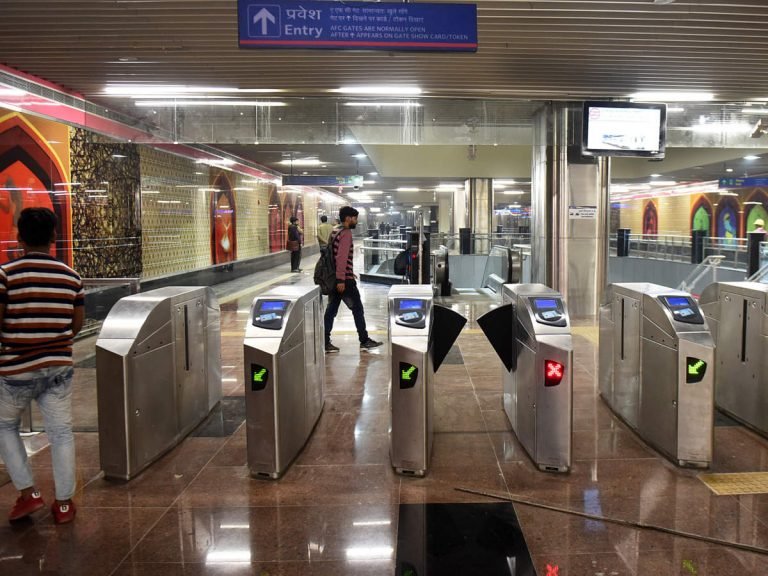
New Delhi ( Metro Rail News ) – Once you are back to Delhi Metro for a journey, you may have a different experience at Delhi Metro Rail Corporation’s (DMRC) Automatic Fare Collection System (AFC) gates.

With a few new features, travelling in Delhi Metro is soon going to be smoother than pre-COVID days for the commuters. According to different reports by media agencies, the passengers may be able to use their debit and credit cards to pay for their fare at AFC gates.

As per few news report, the DMRC is going to start the trial of collecting the fare directly from the debit and credit card of the users. This will decrease the total travel time of the passengers as they will not be required to recharge the smart card frequently.

In addition, keeping the current situation in view, this step will also promote contactless fare collection system. The trial is scheduled to start in December this year at the Airport Express line according to sources at DMRC.

The debit and credit card will act as smart card and the money will automatically get deducted as the passengers touch their cards at the Automatic Fare Collection(AFC) gate for exiting the metro station.

Any debit/credit card that is Rupay, Visa and Mastercard compliant will act as a smart card. And, it can be from any bank. DMRC has started to upgrade around 600 AFC gates for this purpose.

JSPL becomes the First firm to supply head hardened Rails to Indian Metros

Kolkata (Metro Rail News): Jindal Steel and Power Ltd (JSPL) on Thursday said it has started supplying head hardened (HH) rail to Rail Vikas Nigam Ltd (RVNL) for the Kolkata Metro’s Joka-Esplanade corridor. HH rails are used in high-speed freight corridors and metro rail projects. In a statement, JSPL said the company was selected by RVNL after a bidding process to supply 3,000 tonnes of HH rails for Kolkata metro rail tracks.

According to a statement issued by JSPL, it said that the company was selected by RVNL after a bidding process to supply 3,000 tonnes of HH rails for Kolkata metro rail tracks. It added that JSPL has started the supply of 1080 HH rails to RVNL for the completion of Kolkata Metro’s Joka-Esplanade corridor in West Bengal. So far, it has supplied 1,300 tonnes of 1080-grade HH rails to RVNL, and the remaining 1,700-tonne rail will be made available within a week, the company said.

The company’s Managing Director V R Sharma said, “We thank RVNL, IRCON, Indian Railways and RDSO for extending their cooperation and trust in JSPL’s quality.”JSPL is the only player India manufacturing HH rails.

The company’s rail mill at its Raigarh plant has a capacity to produce over 30,000 tonnes of such rails per month. The firm further said that “earlier, metro rail corporations and western dedicated freight corridors used to import head hardened rails for construction of high-speed tracks from Japan and Europe”. These trains can run on these tracks at a speed of up to 250 km per hour

KT Rama Rao asks centre to set up a rail coach factory in Kazipet

Hyderabad (Metro Rail News): Telangana’s Industries and Information Technology Minister K T Rama Rao has urged the union government to keep its word given to the newborn State of Telangana and set up a railway coach factory in the public sector at Kazipet. Speaking after laying the foundation stone for Medha Rail Coach factory at Kondakal village in Ranga Reddy district here on Thursday, the minister recalled that the State was assured of a railway coach factory in Kazipet in the bifurcation Act itself, but the promise was not honoured.

Telangana is a new and progressive State and the centre must assist this growth-oriented State by setting up the coach factory in the public sector,” he demanded. Lauding the Medha Servo Drives Pvt Ltd founded by the son of the soil Y Yugandhar Reddy for coming forward to set up the Rs 1000 crore factory, he said it was expected to provide direct employment to 1000 persons and indirectly employ 1500 more. The annual capacity of the factory would be 500 coaches and 50 locomotives.

Rama Rao pointed out that the new state had dispelled the initial apprehensions that investments in Telangana won’t be safe and that there would be a mass migration of industries and investments to other States. “During the past six years, several major industries have set shop in Telangana. Now we will be home for the largest coach factory in the private sector in the country,” he said. He attributed the stupendous growth of Medha, established in 2005 to sheer hard work, the minister pointed out that Medha had a turnover of Rs 25 crore, but now it had set up 12 factories in across five continents. “Medha being a homegrown company makes Telangana proud,” he added.

So far we have an aviation hub at Adibhatla that makes components for Boeing, Apache, Sikorsky, a tractor factory at Zaheerebad, bus building unit in Hyderabad and now even rail coaches will be manufactured in Telangana,” he said. He called upon Medhato explore the possibility of entering into the fray for the Rs 30,000 crore initiative of Union Government for the manufacture of Metro coaches. Medha already has experience in the manufacture of “Vandebharat” locomotives that run at 160 km speed linking Varanasi-New Delhi, propulsion systems and signalling. He asked Medha to participate in the monorail or metro rail projects in tier two cities like Warangal.

UP Govt. to expedite land acquisition for Kanpur & Agra metro rail projects

LUCKNOW (Metro Rail News): Uttar Pradesh Metro Rail Corporation (UPMRC), has started the civil work on the Kanpur metro, the work on the Agra Metro project is expected to start soon. Last month, the Supreme Court (SC) had, with certain riders, cleared the Rs 8,380 crore Agra project, thus paving way for the mass rapid transit system (MRTS) in the city.

Presiding over a meeting in Lucknow on Thursday, UP chief secretary R K Tiwari directed officials to speedily settle all issues pertaining to making the land available for the two flagship projects.

In Kanpur, Chandrashekhar Azad Agricultural and Technological University will hand over 3,000 sq mt of land to UPMRC for the metro project, so that the ongoing civil works progress unhindered.

In lieu of this land, the varsity would be provided land in Kanpur or in some other district. Similarly, 21 hectares of land in Agra, which is notified as the protected forest would be released for the metro project, while another piece of land would be notified as protected forest in the district to compensate for the green cover.

Besides, 8 hectares of land, under the possession of the 15th company of provincial armed constabulary (PAC) in Agra, would be provided for the metro project. The PAC would be offered another piece of land by the district administration after mutual consent.

Earlier, the SC had directed UPMRC to ensure plantation of 18,230 trees in Agra. The MRTS project in Agra, the third largest city of UP, is estimated to benefit nearly 2 million people.
buy cialis black online https://www.ecladent.co.uk/wp-content/themes/twentyseventeen/inc/en/cialis-black.html no prescription

The Detailed Project Report (DPR) for the Agra project was approved by the Union cabinet on February 28, 2019. On March 8, 2019, Prime Minister Narendra Modi had virtually laid the foundation of the project. The SC had appointed a Central Empowered Committee (CEC) to study the impact of the project from environmental consideration. A CEC team had visited Agra on January 15 and 16, 2020 for a detailed inspection of the alignment of the mega infra project.

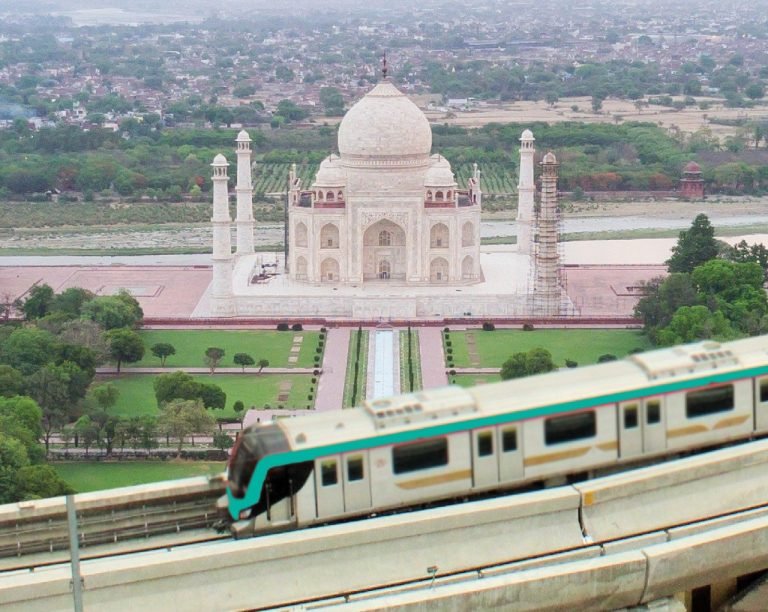
In its report dated February 10, 2020, submitted to the SC, the CEC had expressed satisfaction with the implementation strategy and measures undertaken by UPMRC in implementing the Agra Metro project. After considering the report and the petition filed by UPMRC, the SC in its recent order permitted the corporation to proceed with the Agra metro project. It will comprise 2 corridors – Sikandra to Taj East Gate  – a 14 km route with 13 metro stations.

While the sxith station will be elevated, the seventh station will be located underground. The second corridor of 15.4 km will run from Agra Cantonment to Kalindi Vihar.

Haryana govt clears final DPR of Metro Rail Extension in Gurugram

Chandigarh (Metro Rail News): In a move to provide Metro connectivity to the residents of old Gurugram, the Haryana cabinet on Thursday gave approval for final Detailed Project Report (DPR) of Metro Rail Connection from HUDA City Centre to various important locations in the city at a cost Rs. 6821.13 crore.

The total length of the corridor shall be about 28.80 km, consisting of 27 elevated stations with six interchange stations. This link would start at HUDA City Centre and move towards Sector 45, Cyber Park, district shopping centre, Sector 47, Subhash Chowk, Sector 48, Sector 72 A, Hero Honda Chowk, Udyog Vihar Phase 6, Sector 10, Sector 37, Basai village, Sector 9, Sector 7, Sector 4, Sector 5, Ashok Vihar, Sector 3, Bajghera Road, Palam Vihar Extension, Palam Vihar, Sector 23 A, Sector 22, Udyog Vihar Phase 4, Udyog Vihar Phase 5 and finally merge in existing Metro network of Rapid Metrorail Gurugram at Moulsar Avenue station near Cyber City.


This Mass Rapid Transit System (MRTS) project will facilitate maximum part of Gurugram city.
buy kamagra gold online https://blackmenheal.org/wp-content/themes/twentytwentytwo/inc/patterns/en/kamagra-gold.html no prescription
It will interchange with MRTS Corridor at Subhash Chowk, with bus stand at Sector 10, with a railway station at Sector 5 and with Rapid Metro at Moulsar Avenue Station.

MRTS Corridor at Subhash Chowk will interchange with the Yellow Line at HUDA City Centre and therefore, will provide direct connectivity to a large part of Gurugram with Delhi. It will also interchange with RRTS stations at Hero Honda Chowk and Sector -22 and will provide connectivity up to Sarai Kale Khan (SKK), New Delhi side and on one Shahjahanpur, Neemrana and Behror (SNB), Rajasthan on the other side. These linkages will enhance the efficiency of the transportation system in the National Capital Region (NCR).

GMRC invites Rs 929 cr bid for three underground stations works of Surat Metro

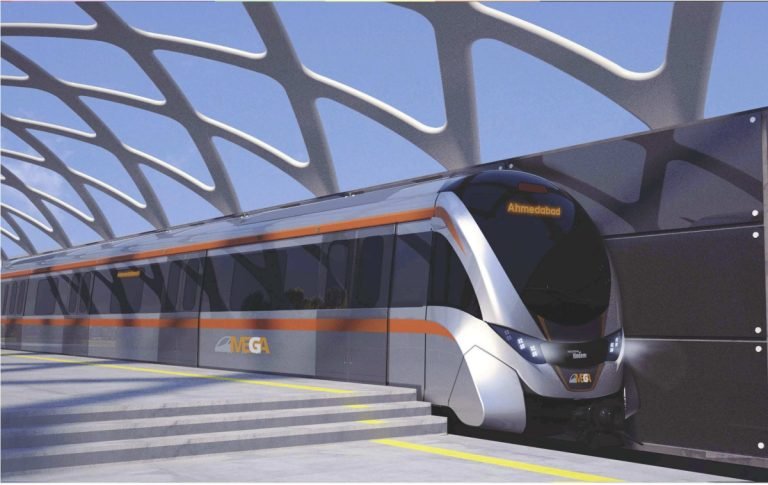
SURAT (Metro Rail News): Gujarat Metro Rail Corporation (GMRC) Limited (SPV of Govt. of Gujarat and Govt. of India) Formerly known as Metro Link Express for Gandhinagar and Ahmedabad (MEGA) Co. Ltd. has invited bid for three underground station works.

Scope of works

The contract includes the design, construction and completion of Underground stations and tunnel including Finishes from Kapodra Ramp to Surat Railway station from chainage 3700m to chainage 7160.6m, comprising twin bored underground tunnel between northern ramp and Surat Railway Metro station.

All cut and cover portion including Three underground stations viz. Kapodra, Labheshwar Chowk and Central Warehouse with entry/exits & connecting subway by Box pushing method and a portion of NATM and Launching and receiving chambers of TBM for Surat Metro Rail Project, Phase-I.

The approximate cost of the work is RS 929.46 Crore. The completion period of work as notified in the official tender documents shall be 40 months (3 years 4 months). The tender documents can be bought till 14-09-2020 (up to 12:00 hrs) on the official e-tendering website of the Corporation.

23 firms including Alstom & Bombardier attend Railway’s meet for running private trains

New Delhi (Metro Rail News): Twenty-three firms including Alstom Transport India, Bombardier Transportation India, Siemens, GMR Infrastructure and some PSUs have shown interest in operating private trains in the country, and they attended a pre-application meeting Wednesday as a first step, the Railways reportedly said.

Other companies whose members attended the meeting on running private trains in 12 clusters included defence PSU BEML, the railways’ IRCTC, BHEL, Spanish coach and component maker CAF India, Medha Group, which had also bid for the Train-18 project, Sterlite, Bharat Forge, JKB infrastructure and Titagarh Wagons.

During the meeting, the companies put forth several queries including on flexibility in clusters, eligibility criteria, bidding process, procurement of trains, fares, operations and maintenance, timing of trains and halts.

Officials of the Railways and the NITI Aayog provided clarifications on the queries, the national transporter said in a statement. The private entities will be selected through a two-stage competitive bidding process comprising Request for Qualification (RFQ) and Request for Proposal (RFP).

The due date for the opening of RFQ is September 8.

The pre-application meetings have been designed by the Railways to clarify any queries that prospective private train operators might have before they apply for ‘Request for Qualifications”.

The first pre-application meeting was held on July 21 which was attended by 16 players. The Railways has said that the private players will decide the fares on these trains and there will be no prescribed upper limit.

Responding to the queries, the Railways emphasized that a complete freedom will be given to private players in terms of procurement of trains which can either be purchased or taken on lease. The Railways also clarified that risks with regard to operation of trains shall be allocated to the parties best suited to manage them.

After the first pre-application conference, the Railways had reduced the RFQ fee by one-tenth for participating in more than one project, removed restriction of up to three projects per bidder and clarified that leasing of trains is allowed.

It had also shared traffic data, draft concession agreement, draft feasibility report and draft manual for standards and specifications of trains.

As part of the bidding process, the Railways conducted the second pre-application conference on Wednesday.

The other companies which attended the meeting are: Gateway Rail, Hind Rectifiers, Iboard India, ISQ ASIA Infrastructure investments, Jasan Infra, L&T Infrastructure Development Projects (L&T IDPL), Megha Engineering & Infrastructures (MEIL), National Investment and Infrastructure Fund, and PSGG Technologies.

The conference started with a discussion on the overview of the terms of the RFQs and contours of the project followed by a detailed exchange on the queries raised by the prospective applicants.

“Applicants queries with regard to the definition of gross revenue were also addressed. Regarding haulage charges, MoR (Ministry of Railways) informed the indicative haulage charges @ Rs 512.31 per train km for 2019-20 with indexation,” the statement said.

The Railways has invited 12 RFQs for private participation in operation of passenger trains over 109 origin-destination pair of routes through introduction of 151 modern trains (rakes).

These new trains will be in addition to the existing ones operated on the network.

This is the first initiative of private investment for running passenger trains on the Railways network. The project would entail a private sector investment of about Rs 30,000 crore.


TBM S71 Makes a Breakthrough for Ahmedabad Metro

Ahmedabad (Metro Rail News): Tunnel Boring Machine S-71 operated by Larsen & Toubro made a breakthrough at Shahpur Station from Gheekanta Station for Ahmedabad Metro Phase 1 project’s 20.737 km East-West Line-1.

This was S-71’s second and penultimate breakthrough, and Larsen & Toubro’s third of six breakthroughs planned on the line’s 4.378 km underground package-2, between Kalupur Railway Station – Ghee Kanta – Shahpur – West Ramp, which was awarded by the Gujarat Metro Rail Corporation (GMRC) in January 2016.

This Ø6.57 earth pressure balance machine was originally manufactured by Hubei Tiandi Heavy Industries (THI), and previously saw action in Delhi to build tunnels on the 6.3 km package CC-27 (Hauz Khas – Shankar Vihar) of Phase 3’s new Magenta Line.

Factory acceptance tests (FAT) were locally completed in February 2018 and the machine was first commissioned from Kalupur Station in July 2018 to build the roughly 1.75 km up-line tunnel to Gheekanta Station. After its breakthrough in July 2019, it was recommissioned to build the roughly 1.2 km up-line tunnel towards Shahpur Station.

Tunneling works on the 2.446 km package UG-1 (East Ramp – Kalupur) were completed by Afcons Infrastructure in February 2019 when a double breakthrough was achieved by their Herrenknecht TBMs S-710 and S-1134 just 10 months after their launch from the East Ramp in April and June 2018 respectively.

Package UG-2 now has 3 more breakthroughs pending – one for the parallel down-line tunnel at Shahpur by TBM S72 in the coming weeks, and then the final two at the West Ramp near the Sabarmati Riverfront where a roughly 260 meter bridge is under construction according to officials.

Private firms to pay fines to Railways for delay or early arrival of trains: draft notification

New Delhi ( Metro Rail News ) – More than 20 private firms, including L&T Infrastructure Projects Development Limited, Bombardier, Alstom, Siemens and GMR, attended the pre-application meeting. The deadline for taking part in the bidding process is September 8.

The Railways said the private players will have to guarantee at least 95% punctuality. If trains are late or early, they will have to pay compensation to the Railways.

The Railways said that for every 1% reduction in the punctuality of a train from the guaranteed 95%, private operators will have to pay extra haulage charge worth 200 km of the train operation. The haulage charge is Rs 512 per km for all private trains. Again, if a train arrives at the destination at least 10 minutes in advance, the private firm will pay the Railways extra haulage charges for 10 km. However, if a train loses 1% punctuality in a year for reasons attributable to the Railways, the latter will pay the private company damages equal to 50 km of haulage charges.

But, if trains are delayed due to reasons beyond the control of both the Railways and the private player, no one will pay anyone any amount.

The Railways will depute representatives to the offices of the private firms to ensure that they are reporting their earnings “honestly and faithfully”. If actual revenue is found to be more than 1 per cent of what is reported, the private firm will pay 10 times the difference thereof as damages to Railways.

Some of the features specified by the Railways include electronic sliding doors, Braille signages, passenger surveillance system and information and destination boards.

Below are the features mentioned by Railways to the private players:

  • The trains would provide noise-free travel to passengers and be capable of running at a speed of 160 km/hr.
  • Trains should have emergency brake which can bring them to a standstill in less than 1,250 minutes when travelling at 160 kmph.
  • The trains should have a life of 35 years.
  • Each coach shall have a minimum of four electrically-powered, plug type doors, two on each side. The door mechanism shall have a safety provision whereby the train shall not start unless all doors have been closed and electrically locked. Provision shall be made for passengers to open doors to permit evacuation from a stopped train in an emergency.
  • All windows shall be provided with double-glazed safety glass.
  • Passenger emergency signs shall also be embossed in Braille signages.
  • Emergency buttons and talk-back phones shall be located near all the doors and gangways.
  • Provision shall be there for a voice recording of the conversations with GPS stamping.      
  • A passenger information system shall provide automatic announcement and the display of destination information throughout the train in Hindi, English and regional languages.      
  • The passenger coach surveillance system will have close circuit television network, surveillance cameras and other accessories.
  • Each sitting car of train shall be provided with a minimum of six surveillance cameras to cover the passenger area.   
  • For a sleeper train, each car shall be provided with two surveillance cameras at an appropriate location to cover the entire corridor.

Two may be sacked, two already demoted for the truck mishap on tracks in Mumbai

MUMBAI (Metro Rail News): It is being heard through sources that a probe has recommended a major penalty charge sheet against two officials and the minor penalty against two other Western Railway officials following a freak accident in which a lorry dashed Bandra Terminus-Amritsar Paschim Express on July 20.

There was no major damage to the train and it did not lead to an incident. Four railway personnel, including station superintendent B V Samant and Vinod Dalvi, pointsman Bharat Solanki and traffic inspector M S Shaikh, were suspended.
Sources said, “Samant and Solanki were recommended for a major penalty charge-sheet, while the other two will be served minor penalty charge-sheets as the inquiry found procedural lapses in the handling of the opening and closing of the gate through which the truck had entered.”

A departmental inquiry will be completed within 90 days, after which the officials will be served punishment. The major penalty includes maximum punishment of removal from service, while a minor penalty can be a demotion.

The driver of the truck, of a railway contractor, which was carrying construction material, was arrested under the Indian Railways Act for negligence and endangering the safety of passengers.

The truck entered the railway boundary through an opening which was not a thoroughfare. It tried to venture too close to the fifth line along which the train was passing. The driver tried to manoeuvre but he could not move the vehicle to safety in time, leading to the collision. The rear of the vehicle was badly damaged.

The locomotive too suffered minor dents but there was no injury to anyone. The locomotive was replaced and the train left Borivli at 2.35 pm on the day of the incident.

Britain train derailment: Three dead and seven hospitalised after an incident in Aberdeenshire

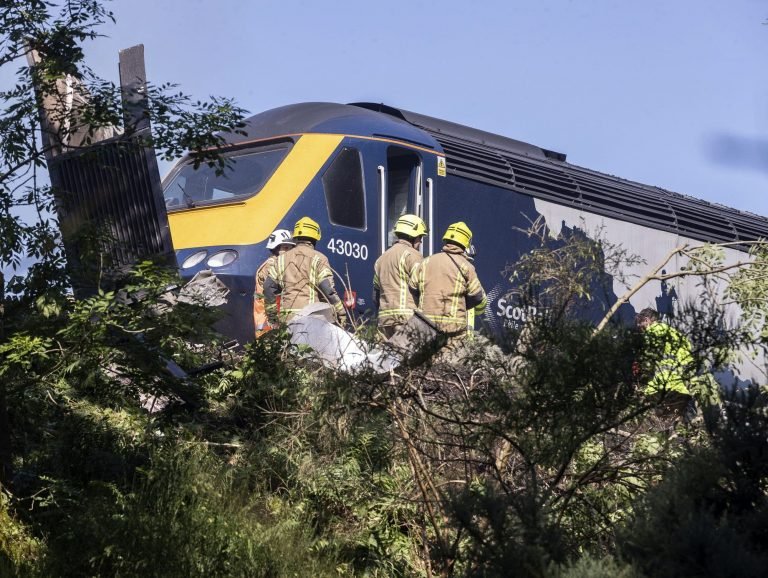
London (Metro Rail News): Three people have died with seven others injured in a train accident in Britain. The injured were taken to hospital after a ScotRail passenger train derailed near Stonehaven, Aberdeenshire, today. While formal identification is yet to take place, the driver of the train is believed to have died.

British Transport Police have said three people were pronounced dead at the scene and six more have been taken to hospital to be treated for injuries, which are not believed to be serious.

Police say the driver’s family have been informed and are being supported by specially trained family liaison officers.

BTP chief superintendent Eddie Wylie said: “This is a tragic incident and first and foremost our thoughts are with the families and friends of those who have very sadly died this morning.”

“I would like to reassure the public that this was not a busy service and from CCTV inquiries and witness statements we believe all passengers have been accounted for” He said.

Rail industry sources said the suspected cause of the incident is a landslip, following heavy rain in the area overnight.

The train involved was the 06.38 Aberdeen to Stonehaven, made up of a locomotive and four carriages.

It is understood that the locomotive and three carriages derailed, and slid down an embankment.

Boris Johnson, the Prime Minister of Britain said he was “saddened to learn of the very serious incident in Aberdeenshire” and  thanked emergency services at the scene.

Photos show at least seven ambulances, an air ambulance and police in attendance, and smoke rising from the train.

Emergency services were called just before 10am and around 30 emergency service vehicles are now reportedly at the scene.

Joka-Esplanade to be India’s first Metro to run on indigenous rails

Kolkata (Metro Rail News): Joka-Esplanade Metro will be India’s first Metro to run on the indigenously manufactured rail. The first lot of the rails reached Joka depot on Monday. Hitherto, all the Metros in India have been running on imported rails as Indian steel companies did not produce these head hardened (HH) rails, which are used for high-speed trains (>250 kmph), heavy traffic of varying axle loads for freights and Metro rail.

The 1080 grade HH rails are manufactured using an additional heat treatment. So far, these rails were used to be imported from Japan and Europe. Besides, supply issues from the foreign shores under the current situation, the manufacturing of HH rails is a move towards self-reliance. Now 20% of total procurement needs to be sourced indigenously.

According to a senior Rail Vikas Nigam Limited (RVNL) official, the executing agency of Joka-Esplanade Metro, following the Railway Board’s policy of indigenization and economy in purchase and procurement, RVNL became the first company to place order with Jindal Steel & Power Ltd (JSPL), which was selected through a rigorous bidding process.

Can the existing tracks handle high-speed trains! Southern Railways conducts trials

Chennai ( Metro Rail News ) – In a recent, Southern Railway has started to assess railway tracks to find out if they are fit for operating trains that will run at speeds above 130kmph.

A three-coach train fitted with oscillation monitoring system (OMS) sensors to check swaying motion of coaches and strength of tracks was run at high speed between Chennai Central and Gudur on Tuesday. The test run will be done on Chennai-Arakonam-Renigunta stretch on Wednesday.

“The test train touched 135kmph on Tuesday. Similar runs will be done a few times this month on these two routes and probably on other major routes. The shutdown and the suspension of train services have come in handy,” said an official. The series of tests will check the impact on coaches and tracks when the train is run at speeds of up to 143kmph.
The sensor will check the extent of vertical jolt and lateral acceleration of the coaches so that riding comfort can be gauged and improved by making changes and repairs to the tracks.

At present, the tracks can handle trains that run at 110kmph. “When changes, if any, are made, this can be increased to 135kmph without compromising the riding comfort of passengers,” said an official was stated saying. He said the OCM test was being done to find out the fitness of tracks.

The tests assume importance, as the stretches selected, are two main routes taken by express trains to western and northern destinations from the city. Private trains, which are expected to start running in two to three years, are expected to run on these routes. Railways are also looking at a possibility to run semi high-speed trains on Chennai-Bengaluru route.