Indian Railways awards “Regular Supplier” status to JSPL for 60kg 880-Grade Rails

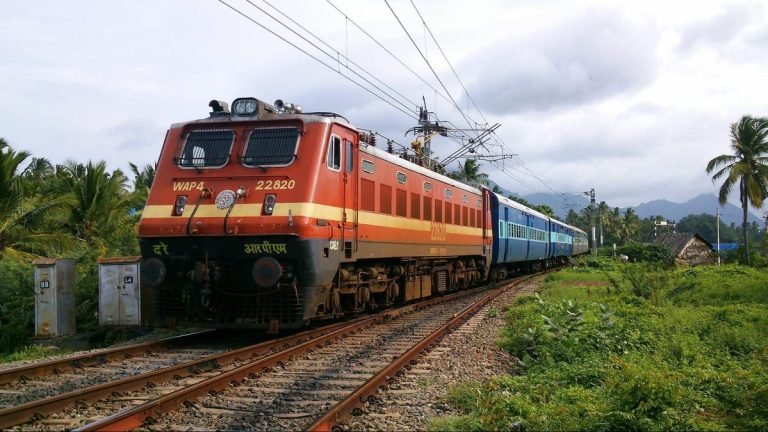
NEW DELHI (Metro Rail News): Jindal Steel & power limited (JSPL) has become India’s first private company to get “Regular Supplier” status from Indian Railways to supply 60kg 880 grade (90UTS)Rails. With this, Indian Railways, its subsidiary and track laying contractors can source 60kg 880 grade (90UTS) Rails manufactured by JSPL and utilize them for their ongoing and upcoming projects. 

Earlier, Research Design and Standards Organisation (RDS0), which works under the ambit of the Ministry of Railways, had approved field performance of UIC 60 kg, 880 Grade prime (Class- A) rails made by JSPL at its Raigarh Plant. Railway Board has accepted the field performance test report of RDSO and considered UIC 60 kg, 880 Grade prime (Class- A) rails are suitable for use in Indian Railways. It is now established that JSPL is capable of meeting out Indian Railways quality requirements. 
JSPL is also supplying 1080 grade Head Hardened rails to Rail Vikas Nigam Limited for construction of Kolkata Metro rail tracks. JSPL had also exported more than 2 Lakh tonnes of rails. 
Earlier RDS0 approved the 1080 grade HH rails of JSPL manufactured at its Raigarh plant in Chattisgarh. 1080 Head Hardened grade was approved by the internationally accredited agency TUV-Nord-Luxembourg (Gr 1080HH). 
JSPL also bagged an order from Pune Metro to supply Head Hardened Rails. JSPL rails have been used in special freight corridors & High-speed Train projects. Soon, JSPL is planning to supply grade 1175 HT for heavyweight traffic rail tracks conceived by the Indian railways. 
“We are happy that Indian Railways has awarded regular supplier status to JSPL made 60kg 880 grade (90UTS) Rails, It would be a big push towards an AtmaNirbhar Bharat. And it is a good achievement for our Rail business. We are thankful to RDSO and Ministry of Railways for field performance approval of UIC 60 kg, 880 Grade prime (Class- A) rails of JSPL”, said Mr V R Sharma, MD, JSPL.

Prime Minister Narendra Modi Inaugurates India’s First Driverless Train And National Common Mobility Card Services On Delhi Metro

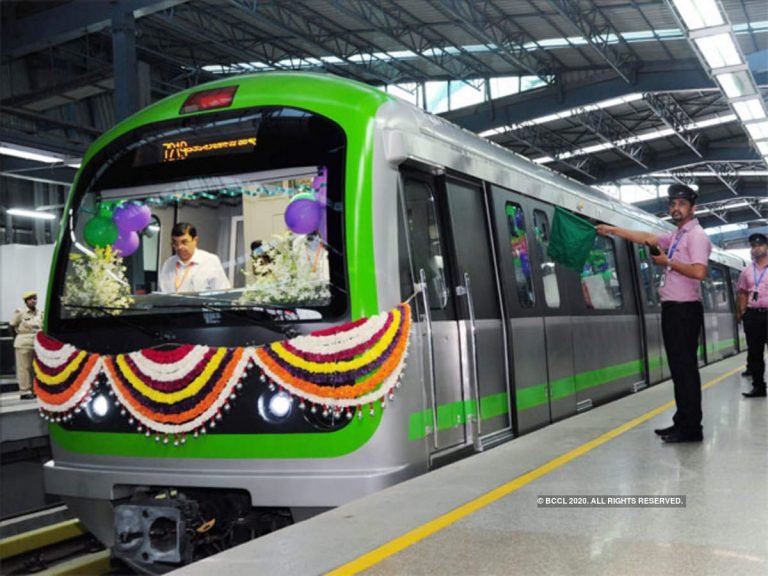
NEW DELHI (Metro Rail News): Prime Minister Narendra Modi today inaugurated the country’s first-ever fully automated ‘Driverless Train’ service by flagging off the first such train stationed at Jasola Vihar-Shaheen Bagh Metro station on Delhi Metro’s 37 km long Magenta Line (Janakpuri West to Botanical Garden) and also the National Common Mobility Card (NCMC) on the 23 km long Airport Express Line (New Delhi to Dwarka Sector 21) via video conference in the presence of the Union Minister of State (Independent Charge), Housing and Urban Affairs, Hardeep Singh Puri and the Chief Minister of Delhi, Arvind Kejriwal. 

The inaugural ceremony held through video conferencing was attended by thousands of people from across the globe as history was created with the operationalisation of India’s first-ever driverless train. Apart from senior dignitaries from the Central Government and the Government of the NCT of Delhi, the event was also witnessed online by HE Ambassador of Japan to India, Mr Satoshi SUZUKI. Senior dignitaries from Japan International Cooperation Agency (JICA), from Tokyo and Delhi, also witnessed the event online.

1609157522254110001 attach 138284503227080200
A Passenger shows her NCMC Card.


“With the launch of these fully automated Driverless Train operations (DTO), India enters into the elite league of few countries having this facility in their Metro system. The fully automated trains will reduce human intervention in operations and offer more reliability and safety for the commuters. This system also brings more flexibility in trains in operation. As a result, the number of trains in service can be regulated based on demand dynamically without any dependence on the availability of the crew. Since these trains operate on communication-based train control (signalling) system, they can be run with headway as high as 90 seconds to offer more carrying capacity”, the DMRC said.  

1609157522254110001 attach 138284503227080190
A view from the train.


In DTO, initially, the train operator will be present on the train to instil a sense of confidence and assistance. DTO’s higher level of diagnostic features will help move from conventional Time-Based Maintenance to Condition Based Maintenance. This will also reduce maintenance downtime of trains. 

The NCMC service enables passengers from any part of the country travelling on the Delhi Metro’s Airport Express Line to use their NCMC compliant RuPay debit card for seamless travel. The same card can also be used for shopping, banking transactions etc. across the country. DMRC’s system will be able to accept transactions from 23 banks through the RuPay debit card issued by them.

DMRC is planning to similarly upgrade its entire existing network by 2022 to facilitate the travel by this NCMC compliant Rupay Debit card. The existing Delhi Metro smart cards, tokens (currently not in use due to Covid 19 pandemic), QR Codes, etc., will also continue to remain in use. In addition, all upcoming corridors of Phase-IV will also be built with NCMC compliant Automatic Fare Collection (AFC) system at the stations”, it said. 

PM Modi to Inaugurate India’s First-Ever Driverless Train On Delhi Metro’s Magenta Line Tomorrow

NEW DELHI (Metro Rail News): Prime Minister Narendra Modi is going to inaugurate India’s first-ever driverless train operations on the Delhi Metro’s Magenta Line (Janakpuri West – Botanical Garden) as well as the fully operational National Common Mobility Card (NCMC) services on the Airport Express Line via video-conferencing tomorrow, i.e, 28th December 2020 at 11 am.
“These innovations are going to herald a new era of travelling comfort and enhanced mobility for the National Capital Region (NCR)’s residents. With the commencement of driverless trains on the Delhi Metro’s Magenta Line, DMRC will enter the elite league of seven per cent of world’s Metro networks which can operate without drivers”, the DMRC has said.
After starting driverless services on the 37 kilometres long Magenta Line (Janakpuri West – Botanical Garden), another major corridor of the Delhi Metro, the 59 kilometres long Pink Line (Majlis Park – Shiv Vihar) will also have driverless operations by the mid of 2021. After this, Delhi Metro will have a driverless network length of about 95 kilometres, which will be approximately nine per cent of the world’s total driverless Metro network.
“The driverless trains will be fully automated which will require minimum human intervention and will eliminate the possibilities of human errors. Delhi Metro has been a pioneer in introducing technology-driven solutions for passenger comfort and this is another step in the same direction”, a statement said.
The National Common Mobility Card, which will be fully operationalised on the Airport Express Line will also be a major milestone as anyone carrying a RuPay -Debit Card issued recently in the last 18 months by 23 banks (all these are NCMC compliant as per directions of the Department of Financial Services, Government of India) from any part of the country will be able to travel on the Airport Express line using that card. The same facility will become available on the entire Delhi Metro network by 2022.
The Delhi Metro currently operates on a network of about 390 kilometres with 285 stations spanning 11 corridors (including NOIDA – Greater NOIDA). Pre Covid, about 60 lakh journeys were being performed every day on the Delhi Metro network making it the mass transportation backbone of the National Capital Region (NCR).
The Metro rail scenario in the entire nation has undergone a massive transformation in the last six years.
While in 2014, only 248 kilometres of Metro lines were operational in five cities, presently 702 kilometres of Metro lines are operational in 18 cities in India. In the days to come, over a thousand kilometres of new lines shall be added and about 27 cities in the country will have Metro connectivity. By 2022, when the nation celebrates its 75th Independence Day, India will have a combined Metro network of over a thousand kilometres which will carry more than a crore passengers every day.

Commissioner of Metro Rail Safety Inspects Lucknow Metro Stations

LUCKNOW (Metro Rail News): Commissioner of Metro Rail Safety (CMRS)  Janak Kumar Garg inspected Lucknow Metro Janak Kumar Garg who is looking after the charge of Safety of all the Metro Railway of North India viz. DMRC, NCRTC, Noida Metro, Jaipur Metro, UP Metro, MP Metro, Bihar Metro etc inspected Lucknow Metro

“He started his inspection from CCS Airport Metro Station. He inspected metro stations for different safety arrangements and facilities for passengers and then proceeded to Transport Nagar Metro depot. He reviewed Lucknow Metro Workshop, Metro Training Centre, Operation Control Centre and safety performance of Lucknow Metro”, a statement said.

IMG 20201223 WA0008

UPMRC’s senior officials including Shri Sushil Kumar, Director (Operations), Shri Atul Kumar Garg, Director (Rolling Stock) and General Managers of Operations, Civil, Rolling Stock, Traction and S&T departments. He expressed his delight over excellent safety performance by Lucknow Metro and complemented efforts of UPMRC in adopting new techniques and systems to improve safety in operations and maintenance”, it added.

“The CMRS then inspected and travelled in the driving cab of Metro Train from Transportnagar Metro station to Hazratganj metro station and inspected track safety including all other safety aspects of metro stations, passenger safety, track safety, track structure, electrical systems etc. He also interacted with Train Operators, Station Controllers and checked their safety awareness and was satisfied with their response”, an official said. 

“The inspection was followed by a meeting with Shri Kumar Keshav, MD/UPMRC at UPMRC Administrative Building, Gomtinagar in which various safety aspects in upcoming projects of Kanpur and Agra Metros were discussed. He expressed his happiness on excellent progress of the ongoing metro projects and the approach being taken for passenger safety and facilities in these projects”, the statement added.

Delhi Metro Operations Steps Into Adulthood; 18 Years Completed Since Commencement Of Services

NEW DELHI (Metro Rail News): The operations on the Delhi Metro network stepped into adulthood yesterday, as DMRC completed 18 years of commencing passenger operations since the year 2002. On the 24th of December, 2002, operations on the 8.4 kilometres long Shahdara – Tis Hazari section was flagged off and passenger services were started from the next day.
Since then the Delhi Metro has emerged as one of the fastest-growing metro networks in the world both in terms of ridership as well as network length. In fact, with a network of 390 kilometres spanning 11 lines, today the Delhi Metro is among the largest Metro networks anywhere in the world.  
The expansion of the network has also been among the fastest in the world, as more than 380 kilometres of new lines have been added since 2002. During the pre-covid times, about 65 lakh journeys were being performed on weekdays on the Delhi Metro making it the mass transportation backbone of the National Capital Region (NCR).
Today, about 350 trainsets operate on the Delhi Metro system for 18 hours a day and perform more than 5,000 trips across the 285 stations on the network maintaining consistent punctuality of over 99.9 per cent. The impeccable punctuality rate of the Delhi Metro has remained consistent ever since the commencement of operations and has not been dented by the massive expansion in the scale of operations.
   
Having set high benchmarks in construction as well as operations, DMRC is now working on developing indigenous technologies in line with the Government’s ‘Make in India’ initiative and ‘Atma Nirbhar Bharat’ by indigenous development of many systems/ sub-systems of Metro. 
In March, the services of the Delhi Metro were halted for the first time ever to curb the spread of the Coronavirus virus pandemic. This crisis was turned into an opportunity by DMRC’s Operations and Maintenance team as a number of important maintenance and overhaul activities were taken up and completed, which otherwise would have been difficult to execute when the services were operational.  
The HVAC (heating, ventilation, and air conditioning) systems of the trains were cleaned to ensure consistent cooling. In addition, large scale renovation work was executed on the Dilshad Garden – Rithala Red Line corridor as it is DMRC’s oldest corridor. Subsequently, from 7th September 2020, the services were resumed in a graded manner following all Covid protocols.

Construction of the Panamkutty Bridge of KMRL to Get Over Soon

NEW DELHI (Metro Rail News): The Panamkutty Bridge, being constructed by Kochi Metro Rail Limited is nearing completion. The construction of the main bridge is over and sidewalls of the bridge are currently under construction. Tarring of the road and painting will be carried out in the coming days. KMRL issued the work order in October 2019 and started the construction of the bridge in November 2019.
“Even amidst the covid constraints, KMRL has managed to complete the construction on time. Once the tarring and other allied works are completed the bridge will be opened for public.” said Additional Chief Secretary Alkesh Kumar Sharma IAS, MD KMRL.

The Phase I (A) Extension of Kochi Metro consists of two works, first from Petta to SN Junction including 2 Stations viz Vadakkekotta and SN Junction & Panamkutty Bridge.
KMRL is constructing the bridge as part of its preparatory works in the Phase I Extension from Petta to Thrippunithura. KMRL is constructing an additional two-lane Bridge with a footpath which will make the stretch into a Four-lane corridor (two bridges) once completed.

The bridge consists of 5 spans. The total length including approach road is 250m in which around 70m is across Poorna River. Approximate cost of construction is Rs 17.2 Cr.

Delhi-Panipat RRTS Corridor gets Nod From Haryana Government

CHANDIGARH (Metro Rail News): The Haryana cabinet recently approved the implementation of the Delhi-Panipat Corridor of Regional Rapid Transport System (RRTS). It will have a total length of 103.02 km with 17 stations on the corridor.
“The construction and commissioning of the RRTS will be undertaken in two stages Sarai Kale Khan to Murthal, including Murthal depot (58.28 km), and Murthal to Panipat, including Panipat depot (44.74 km)” read a Statement.
“The project will enable efficient and effective movement of a large number of people into vastly congested places and provide important links for residents of urban/sub-urban nodes in Haryana to access services and facilities in towns and cities of the region while bringing and accelerating economic development of these urban nodes”, it further added.
The cabinet also approved to permit purchasable FAR of up to 1.25 within the project influence zone in Haryana. Since the sale of purchasable FAR is directly attributed to the development of the RRTS, it has been decided that 80 per cent of the revenue to be realised from the sale of additional FAR for the designated mixed-use areas will be shared with the RRTS project according to a news report. 

NHSRCL invites bids for survey works of Chennai – Bengaluru – Mysuru High-Speed Rail Corridor

NEW DELHI (Metro Rail News): The National High-Speed Rail Corporation Ltd. (NHSRCL) has invited online open e-tenders for the work “Survey, Identification of Overhead, Over Ground, Underground Utilities and Identification of Power Sourcing Options for substations Along the Proposed Chennai – Bengaluru – Mysuru (CBM) High-Speed Rail Corridor“. 

The length of this corridor will be around 450 km. A pre-bid meeting is scheduled to be held on 02 January and the tender submission date will start on 05 January. Currently, the Mumbai–Ahmedabad High-Speed Rail Corridor is under-construction. The High-Speed Rail Corridor will be connecting the cities of  Ahmedabad and economic capital of India, Mumbai.

It is the first High-Speed Rail Corridor of the country which has further set the motion for other such projects.

Indian Railways Conducts First Trial Run of Dakshineswar Metro

KOLKATA (Metro Rail News): Indian Railways on Wednesday conducted the first trial run of the Kolkata Metro train up to Dakshineswar along the city’s North-South corridor according to a news report.
“Once ready, this will enhance connectivity, benefit lakhs of daily commuters and enable devotees to comfortable visit Dakshineswar Kali Temple,” said the Ministry of Railways.

“The 4-km extension of the city’s existing North-South stretch to Dakshineswar is mostly on elevated structure”, an official was quoted saying by PTI.
After the trial, the Commissioner of Railway Safety (CRS) conducted an inspection as per rules ahead of clearance for commercial operations on the corridor.

Indian Railways on 23 Dec 2020 conducted first trial run of Kolkata Metro train up to Dakshineswar along the city’s North-South Corridor”, Mr Piyush Goyal wrote on Twitter.

Noida Metro to Terminate Operations of Feeder Bus Service

NOIDA (Metro Rail News): The Noida Metro Rail Corporation (NMRC) in its annual board meeting on Thursday decided to terminate the contract of the feeder bus service, four years after its operation. The fleet of 50 low-floor buses was meant to provide last-mile connectivity from metro stations to different sectors and villages. The feeder buses had been plying in Noida and Greater Noida since December 14, 2016, according to a news report by HT.

NMRC on Thursday convened its 26th board meeting followed by its 6th Annual General Meeting. Both the meetings were conducted via video conferencing at the NMRC headquarters in Noida. The NMRC’s monthly revenue from the bus service was is ₹1 crore, against ₹3 crore of operational expenses a month”, Manoj Vajpayee, general manager, NMRC  was stated saying by HT. 

As per details available with us, the NMRC had signed a contract with a private transport company for the bus service. NMRC had suspended the services of this bus facility since the outbreak of Coronavirus in March this year.

Chinese company disqualified for Vande Bharat Trainsets Project

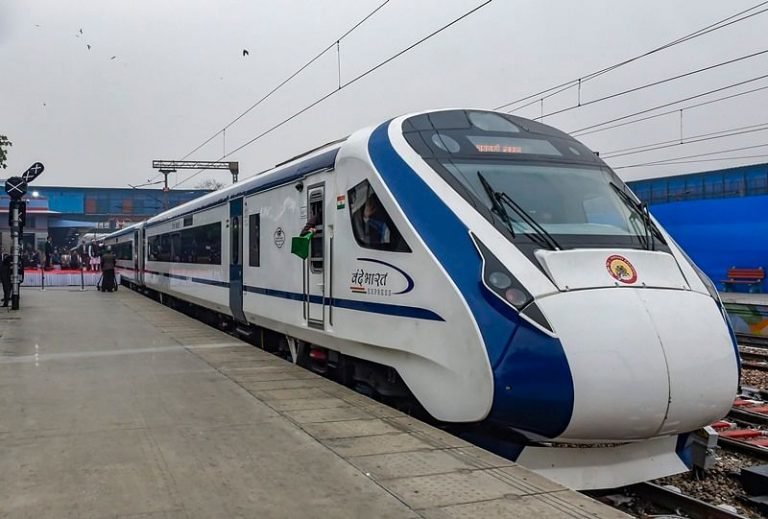
NEW DELHI (Metro Rail News): The Indian Railways has disqualified the bid of a consortium of a Chinese company and an Indian firm for the manufacturing of 44 Vande Bharat trainsets costing nearly Rs 1,800 crores. Now there are only two valid bids of BHEL and Medha Servo Drives. Medha, which had got the contract for the manufacturing for the first two such trains, has quoted the lowest bid, sources said.
Only three players had put the bid for the big contract including the CRRC-Pioneer Electric India, a joint venture between Beijing based CRRC Yongji Electric Ltd and India’s Pioneer Fil-Med Ltd, which has its plant in Haryana. It took almost four weeks for the railways to evaluate the tenders and take the final call. Railway officials had earlier said that the tender committee would take the decision on the validity of bids.
Before applying for the train set procurement tender, the CRRC-Pioneer Electric India had applied for registration here after it was made mandatory for companies with beneficial ownership in countries sharing land borders with India to get registered for participating in public procurement contracts.

– ANI

Maharashtra Metro Rail Corporation to Extend Rake Trials till Phugewadi

PUNE (Metro Rail News): The Maharashtra Metro Rail Corporation Limited also known as Maha-Metro is going to extend trial runs of the rakes across a 7km stretch between the Sant Tukaramnagar and Phugewadi stations.
The priority stretch falls on the PCMC-Swargate Metro corridor. Maha-Metro has said that it has completed constructing the viaduct, laying tracks and installing the overhead traction cable network between these two stations. Work on a crucial portion around Nashik Phata was the last to be finished — a couple of months ago.

“The trial runs will begin soon. We have chalked out a plan to test all parameters.
Some final work is pending and will be done in the next few days,” an official was stated saying by a media agency.

“As things stand, the rakes are running in phases for a few metres beyond both stations. All these trials have been successful so far,” the official had added.

Kochi Metro Rail Limited Decides to Adopt a Circular Economy

KOCHI (Metro Rail News): In a significant move Kochi Metro Rail Limited has decided to adopt a circular economy, an approach to sustainable development. The circular economy is a new way of creating value, and ultimately prosperity, through extending product lifespan and relocating the waste from the end of the supply chain to the beginning – in effect, using resources more efficiently by using them more than once.


“Kochi metro will start the use of building materials with recycled content to reduce dependence on virgin materials for less important areas. Use of local building materials and minimising environmental impacts from transportation is also under consideration”, a statement said. 


“KMRL is known for its sustainable development. The Circular Economy is gaining attention worldwide. Through adopting circular economy KMRL can work on the concept of reduce, reusce, redesign and regenerate. ” said Alkesh Kumar Sharma IAS, MD KMRL.
The new policy will encourage the use of materials with low emissions, so as to reduce adverse health impacts on the general public. KMRL has decided to maximize usage of structural steel in stations, especially in entry/exits and thereby reducing the quantity of cement concrete consumed· 
“As part of the new policy, KMRL will ensure reuse of removed materials from old road formations and building foundations/ walls etc. KMRL will ensure that usage of plastic and other polymers are reduced. KMRL will encourage usage of re-usable items or recyclable items in the case of daily use for site workers. KMRL has also planned to prepare centralized storage for identified reusable materials until put into actual use”, an official said. 

KMRL will ensure that materials for disposal like used oil or packing material shall be disposed of through authorized agencies without burning or burying in the ground. Introduction of noise reduction measures during construction for the effective control of noise pollution in construction site·There are plans to preserve topsoil and restore wherever it is feasible”, he added.

Maharashtra CM Uddhav Thackeray Inspects Ongoing Metro Rail Work in Mumbai

MUMBAI (Metro Rail News):  The Maharashtra Chief Minister on Sunday, December 20, inspected the ongoing Metro Rail work in Mumbai. Thackeray inspected the work at Andheri L-7 station, Akurli station, Dahisar metro rail bridge, Charkop metro depot, D N Nagar metro station as well as the sites of proposed Gundavali and Kandivali metro stations according to a statement issued by CMO, Maharashtra.
“During the visit, he directed the authorities to ensure that the quality of work is good and that it gets completed within the set deadline”, a statement read.
He also inspected the ongoing work at Metro Trial Run at Charkop along with the MMRDA’s Metropolitan Commissioner R. A. Rajiv, Additional Chief Secretary to the Chief Minister Ashish Kumar Singh.
The chief minister expressed satisfaction over the ongoing work, the statement added. Earlier, the Bombay High Court permitted the Mumbai Metro Rail Corporation Ltd (MMRCL) to carry out construction and other ancillary work for the Metro III project at Cuffe Parade in south Mumbai during the night.

It is noticeable that the car shed project has been in headlines for the past few years. The Aarey project has already seen huge protests.