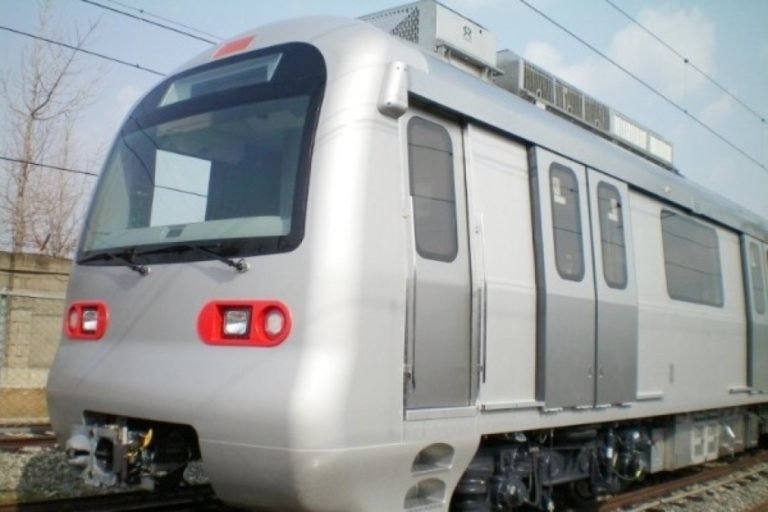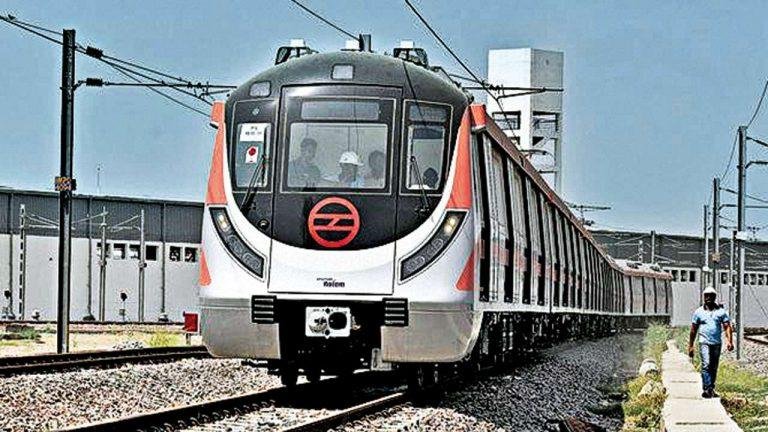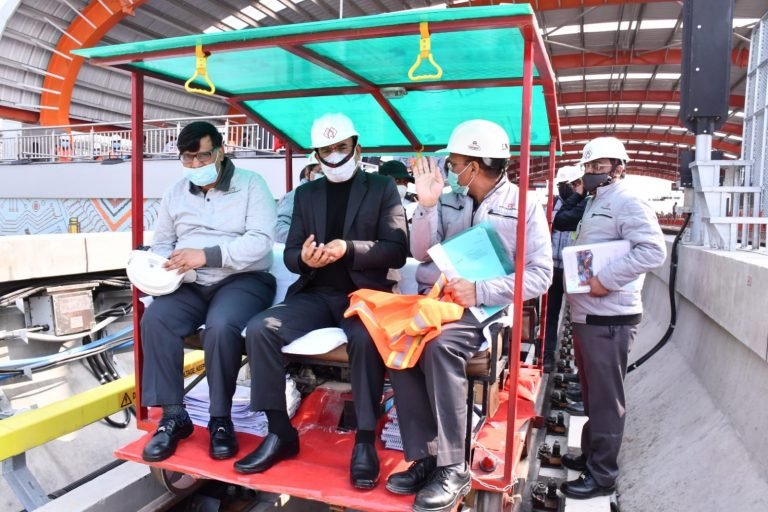
L&T wins contract worth INR 1989 Crores for Patna Metro’s Underground section

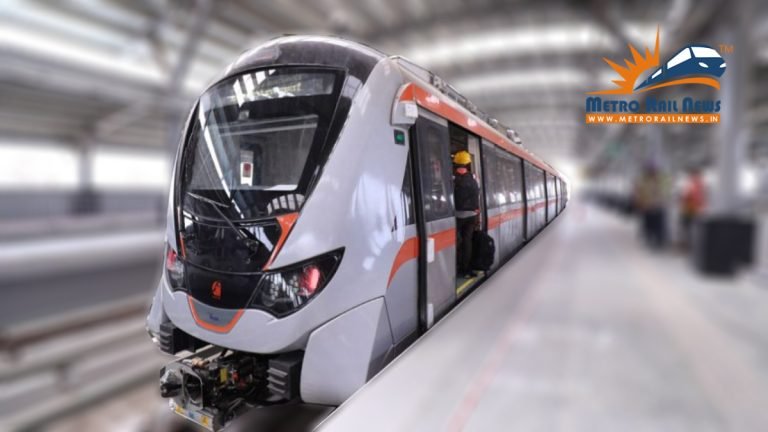
PATNA (Metro Rail News): Delhi Metro Rail Corporation (DMRC) opened financial bids on Monday for Patna Metro’s Package PC-03 in which Larsen & Toubro (L&T) emerged as the lowest bidder for this contract by quoting bid value of INR 1,989 Crores.

This contract work includes construction of twin tunnels by TBM connecting underground Ramp at Rajendra Nagar with Patna Junction Railway Station passing through six underground stations for a section of roughly 8 km in length. This is the second and final package out of the two packages for Line-2 under Phase-1 of Patna Metro with the first package (Package PC-01) is under construction at present, the contract for which was awarded to NCC.

The six stations to be constructed for this section are – Rajendra Nagar, Moin Ul Haq Stadium, University, PMCH, Gandhi Maidan and Akashvani. It also includes architectural finishing, water supply and other works on New ISBT to Patna Station.

DMRC invited bids for this package in September 2020 with an estimated cost of INR 1958.81 Crores and a completion period of 42 months. Technical bids were opened in January this year which revealed names of four bidders.

Later, all four qualified the technical evaluation round and financial bids of all four bidders were opened yesterday. Name of firms and financial bid values is given below –

  • Larsen & Toubro (L&T) – INR 1989.00 Crores
  • Afcons Infrastructure – INR 2044.80 Crores
  • ITD Cementation India Ltd. – INR 2098.79 Crores
  • Tata Projects – CAI JV – INR 2122.31 Crores

As the bid value by L&T is very much close to DMRC estimated cost for this contract, it is highly likely that the contract will be awarded to L&T in the coming weeks.

Line-2 (North-South Line) of Patna Metro under Phase-2 will have length of 14.05 km from Patna Junction Railway Station to New ISBT with total 12 stations on the route.

Delhi Police asks DMRC to close 7 stations if needed due to farmer protest

NEW DELHI (Metro Rail News): The Delhi Police has asked the Delhi Metro Rail Corporation (DMRC) to keep extra vigil at seven metro stations and if needed, close these stations in view of the farmers’ protest against the three farm laws outside the Parliament from July 22.

According to Delhi Police, the protesters may use metro to reach the New Delhi area since it is the most favoured form of conveyance in the national capital.

These seven stations are Janpath, Lok Kalyan Marg, Patel Chowk, Rajiv Chowk, Central Secretariat, Mandi House and Udyog Bhawan.

Delhi Police sent a letter regarding this to DMRC after having a meeting with a delegation of farmers, ahead of their planned protest starting from July 22.
buy amitriptyline online https://www.mydentalplace.com/wp-content/themes/twentytwelve/inc/en/amitriptyline.html no prescription

Farmer unions are planning to protest till the scheduled end of Parliament’s monsoon session to demand scrapping of three farm laws passed in September last year and a legal guarantee on Minimum Support Price (MSP).

“DCP, New Delhi district has requested to keep extra vigil at the seven metro stations as well as other stations which lies in the New Delhi area, and may be closed w.e.f 19.07.2021 onwards till the monsoon session is over, at very short notice to refrain the protestors from reaching Parliament via metro and avoid any untoward incident,” the letter said.

According to a senior police officer, it is just on a precautionary basis and if required, only then the metro stations will be closed.

DPR of Jammu Metrolite Project reviewed by Divisional Commissioner

JAMMU (Metro Rail News): Divisional Commissioner of Jammu Dr Raghav Langerreviewed the Detailed Project Report (DPR) prepared for the proposed Metrolite train project for the Jammu city on Sunday.

The Managing Director of Mass Rapid Transit Corporation (MRTC) briefed Dr Raghav Langer that the project formulation has got expedited on the directions of the office of Hon’ble Lieutenant Governor.

The MD gave a detailed presentation and apprised Langerthat in October 2016, a memorandum of agreement was signed between RITES Limited and Government of Jammu and Kashmir through JK ERA for techno-economic services and formulation of DPRs for MRTS in the capital cities of Jammu and Srinagar.

The RITES submitted the DPR of Light Metro in 2020 which was approved by the Administrative Council and was then submitted to the Ministry of Housing and Urban Affairs (MoHUA) Government of India for its approval and funding.

However, the Ministry of Housing and Urban Affairs (MoHUA) has raised some observations on the PHPDT (Peak Hour Peak Direction Traffic) figures and feasibility of the Light Rail Metro system in view of the economic viability. Following which, the RITES Ltd shared a revised DPR and recommended Metrolite instead of Light Rail Metro.

The main objectives of the Metrolite are to optimize the mobility pattern of people and goods rather than of vehicles, to focus on the improvement and promotion of public transport, to provide a recognized and effective platform for integrating land use and transport planning, a low carbon mobility growth scenario for the city.

The Jammu Metrolite Rail System will have a length of 23 km with 22 stations between Bantalab and Bari Brahmana Station. The Metrolite will connect Bantalab to Bari Brahmana passing through various stations including Roop Nagar, Janipur, Amphala, Secretariat, Exhibition Ground, Jammu University, Panama Chowk, Railway Station, Greater Kailash, Kalu Chak, Sidco Factories and Bari Brahmana.

It was also informed that no major land acquisition shall be required for the metro train service in Jammu as according to the DPR prepared the whole track will be elevated over the existing roads.

The officers also gave presentations on the alignment of the first phase, stations, Metrolite specifications and other components.
buy zenegra online https://lasernailtherapy.com/wp-content/themes/twentytwentytwo/inc/patterns/en/zenegra.html no prescription
It was informed that each station area will emerge as a major market hub in future.

The Divisional Commissioner has directed the Jammu Mass Rapid Transit Corporation to hold a meeting with all concerned departments for discussing the alignment of the Metrolite as there are other major development projects coming up like Jammu Katra Express Highway, expansion of Jammu railway station, flyovers etc.

He also suggested the early appointment of interim consultants for the project. Once the revised DPR gets approved, the project shall be submitted to GoI for freezing the funding model.

MGM Contractors is the lowest bidder for construction of 11 bridges on Mumbai-Ahmedabad HSR Corridor

NEW DELHI (Metro Rail News): The National High Speed Rail Corporation Limited (NHSRCL) on Friday opened financial bids for the Package Number-MAHSR-P-1(B) which involves construction of four PSC bridges and seven steel truss bridges located between Zaroli Village at Maharashtra-Gujarat Border and Vadodara in Gujarat for the 508.17 Km long Mumbai–Ahmedabad High Speed Rail Corridor.

Financial bids revealed the bid values of three bidders in which MG Contractors Pvt. Ltd. emerged as the lowest bidder quoting bid value of INR 549.67 Crores in comparison to the bid value of INR 618.05 Crores + 246 million Yen from KEC – SAM India JV and INR 677.77 Crores from GRIL – GPT JV.

NHSRCL invited bids for this package in November 2020 with an unknown estimated cost and completion period of 3 years. Technical bids for the same were opened in March this year which revealed name of four bidders. Later, one bidder disqualified based on evaluation and the financial bid values of the remaining three bidders is mentioned above.

Package No. – MAHSR-P-1(B)

Name of Work – Construction of Bridges for Double Line High Speed Railway for 04 No. PSC Bridges (GAD 9, 10, 11 & 1441) and 07 No. Steel Truss Bridges (GAD 68, 1134, 12, 61, 14, 15 & 62) [excluding fabrication and transportation of steel truss girders] between Zaroli Village at Maharashtra-Gujarat Border (MAHSR Km. 156.600) and Vadodara (MAHSR Km. 393.700), in the State of Gujarat and the Union Territory of Dadra and Nagar Haveli for the Project for Construction of Mumbai-Ahmedabad High Speed Rail.

All these 11 bridges correspond to the under construction 237.1 km Package-C4 which runs from Zaroli Village at Maharashtra-Gujarat Border to the south of Vadodara. Contract for this package was awarded to Larsen & Toubro (L&T). This is the longest section of the line with four stations at Vapi, Bilimora, Surat and Bharuch in Gujarat.

As the NHSRCL estimate for this contract is not known, it will be interesting to know about the awarding of this contract which is still likely to be awarded to MG Contractors on account of being the lowest bidder among the three bidders.

GR Infraprojects emerged lowest bidder for balance work of Bangalore Metro Pink Line

BENGALURU (Metro Rail News): Bangalore Metro Rail Corporation Ltd (BMRCL) opened financial bids on Friday for completing the balance work on Pink Line stretch of 7.5 km from Kalena Agrahara to Swagath Road Cross stations under Phase-2 of Bangalore Metro in which GR Infraprojects emerged as the lowest bidder for this contract.

The work consists of the construction of an elevated viaduct and five stations on a stretch of length 7.50 Km from Gottigere to Swagath Road Cross including the Kothanur Depot entry line. The metro stations to be constructed are Gottigere, Hulimavi, IIMB, JP Nagar 4th Phase and Swagath Road Cross.

BMRCL invited bids for this work in March this year with an estimated cost of INR 339.21 Crores and completion period of 21 months. Technical bids were opened in June which revealed name of three bidders and after subsequent process of evaluation, financial bids were revealed of the three bidders which is given below –

  • GR Infraprojects – INR 364.87 Crores
  • Afcons Infrastructure – INR 388.51 Crores
  • ITD Cementation India – INR 393.05 Crores

Tender – BMRCL/Phase-2/Reach -6/Elevated/Via&Stn/RC/2021/75

Package – R6-CC-01BW

Name of Work – Construction of Elevated Structures (Viaduct & Stations) of length 7.50 Km (approx.) from Gottigere to Swagath Road Cross (Chainage 00.00m to 7501.818m) including Kothanur Depot entry line, road widening & allied works and 5 numbers of metro stations viz. Gottigere, Hulimavi, IIMB, JP Nagar 4th Phase, Swagath Road Cross in Reach-6 line of Bangalore Metro Rail Project, Phase-2 (Balance Works).

The contract for this work was originally awarded to Simplex Infrastructures in September 2017 with a completion period of 27 months but the contract was terminated due to poor progress of work in February 2021. At that time 37% of the work was completed.

As the bid value by GR Infraprojects is slightly on the higher side in comparison to BMRCL estimate, it is still likely that the contract will be awarded to GR Infraprojects in the coming weeks as the work on this stretch is already got delayed.

As mentioned earlier, the Pink Line (Reach 6) under Phase-2 of Bangalore Metro has a total length of 22.87 km from Kalena Agrahara to Nagawara with 18 stations. The line is expected to become fully operational by 2024.

Indian Railways to roll out 10 Vande Bharat Trains connecting 40 cities by August 2022

NEW DELHI (Metro Rail News): In a major development for India’s semi high-speed rail connectivity, Indian Railways is planning to roll out at least 10 new Vande Bharat Trains, also known as Train-18, connecting 40 cities by August 2022 as India celebrates its 75th Independence day.

India’s new Railway Minister Ashwini Vaishnav recently reviewed the project and directed that the rollout plan be advanced to connect at least 40 cities with the Vande Bharat Trains by August 2022 to show a visible upgrade in the country’s rail services, as reported by The Indian Express.

For achieving the same, Hyderabad-based engineering firm, Medha Servo Drives Ltd Medha has been told to advance its production plan so that at least two prototypes can be rolled out by March next year following all trials.  Medha Servo had won the contract worth INR 2,211 Crores to supply the electrical systems for 44 Vande Bharat Trains in January this year.

There is a contract condition that along with all the trials and testing that are needed to give approval to a Vande Bharat Train, the prototype train should also complete 1 lakh Kms of commercial run with passengers before the following lot can be placed for production. As a result of this condition, the Vande Bharat Trains could take months to hit the tracks commercially. Without this impetus, the first set of trains was to roll out in 2 years i.e. by the end of 2022 or early 2023.

A meeting was also conducted by the Railway Board headed by Chairman Suneet Sharma on Saturday to work out the nuts and bolts of the new plan on a war footing. The meeting was attended by Board members concerned, General Managers of production units, the Research Design and Standards Organisation and other engineers.

As per officials estimates, if all three production units are put to use, Indian Railways can manufacture around six to seven Vande Bharat train sets every month. The idea of the new plan is to get maximum train sets rolled out by 2024 by utilising Integral Coach Factory in Chennai, Modern Coach Factory in Raebareli and Rail Coach Factory in Kapurthala.
buy intagra online https://pavg.net/wp-content/themes/twentytwentyone/inc/en/intagra.html no prescription

Vande Bharat Train is India’s first semi-high speed train with the potential to completely change the travel experience for the Indian masses. It is a self-propelled train that runs on distributed power mechanism and does not require an engine to haul them. As a result, the Vande Bharat Train has faster acceleration and deceleration, helping it to maintain a higher average speed despite stoppages. This ensures that the Vande Bharat takes less time in completing its runs than ordinary loco-hauled trains and is even faster than the Rajdhani and the Shatabdi Trains, wherein time and speed are lost when a train has to stop and gather speed again.

Vande Bharat Trains has a modern features like automatic doors, chair car type sitting, side destination boards, automatic intercommunication door, speakers, mobile and laptop charging sockets, CCTVs, emergency talk back units with networking system, diffused lighting for luggage racks, continuous LED lights, GPS antenna and many more other features.

The eventual plan is to roll out 100 Vande Bharat Trains which will criss-cross most of the Indian landscape, providing a whole new modern travel experience with enhanced facilities to the Indian masses. It would cost around INR 11,000 Crores to manufacture 100 such trains, with each individual train of 16 coaches to cost around INR 110 Crores.

A scientist has developed an automated and less expensive alternative to the bio-toilets used in Indian railways.

ANDHRA PRADESH, (Metro Rail News):  A scientist from Andhra Pradesh has devised an automated technique for collecting toilet waste that will be used to maintain the Indian Railways’ toilet system. This automated device is simple to maintain and seven times less expensive than bio-toilets.

Existing bio-toilets in trains use anaerobic bacteria to convert human waste to gas, however, those bacteria are incapable of decomposing plastic and fabric materials placed into restrooms by passengers. As a result, maintaining and removing such non-decomposed items inside the tank is tough.

Dr. R V Krishnaiah of Chebrolu Engineering College created a mechanism that collects toilet waste from moving trains, separates different elements, and processes them into useable items.

The technology, which was developed with help from the Department of Science and Technology’s (DST) Advanced Manufacturing Technologies program and is associated with the “Make in India” goal, has been given five national patents and is currently being tested.

A septic tank is part of the automated system (which is placed under the track, i.e., train line). When a train reaches the sewage tank location, its top lid opens using a Radio Frequency Identification (RFID) sensor and reader located at the engine and septic tank positions, respectively. When the toilet tanks and the septic tank are synchronised, the sewage material in the toilet tanks is dumped into the septic tank. Finally, when the train moves away from the septic tank, the cover is closed.

The collected sewage material from train toilets is separated such that human waste is stored in one tank and other items such as plastics, cloth, and so on are stored in another.

Separately, human waste is treated to convert it into useable material. Separate processing is performed on the plastic and fabric materials.
buy viagra super force online no prescription

“This technology has been developed exclusively for the Indian Railways with the goal of cost reduction and the elimination of the need for time-consuming anaerobic bacteria generation,” according to the Ministry of Science and Technology.

“In comparison to Bio toilets, which cost one lakh rupees per unit, the new technique reduces the cost to fifteen thousand rupees. Dr. R V Krishnaiah has partnered with MTE Industries to further this technology,” it stated.

DMRC suggests a spur line of 5.6 km in Narela to better serve the area developed by DDA

NEW DELHI (Metro Rail News): Delhi Metro Rail Corporation (DMRC) has suggested a proposal to construct a 5.6 km spur line from Puth Khurd to Holambi Kalan to better serve the Narela area being developed as a major housing hub by the Delhi Development Authority (DDA).

This spur line is in addition to the already proposed 22.9 km long Metrolite Corridor from Rithala to Narela under Phase-4 of Delhi Metro. DDA has planned Narela for large-scale housing and commercial projects and as per a DDA official, the current alignment of the corridor either does not touch or just passes by the periphery of the areas where economic activities have been planned.

The DMRC has suggested that one single alignment cannot serve the entire area with just one corridor. Therefore, in addition to the original corridor already proposed between Rithala and Narela (22.9 km), a spur of 5.6 km, from Puth Khurd to Holambi Kalan, may be planned.

As a result, both DDA and DMRC are working together to better serve the Narela area which is one of the three sub-cities planned by DDA in a big way other than Dwarka and Rohini.

According to a senior DDA official, “We have been holding joint inspections with DMRC officials to finalise the alignment of the line. Our teams recently did a site inspection to assess the feasibility of the proposed line that will cater to a much larger area in Narela sub-city.”

As per officials, DDA has decided to pay INR 1000 Crores to DMRC for the construction of the Metro project and has made provision of INR 400 Crores in its budget for fiscal 2021-22.

According to Anuj Dayal, Executive Director, Corporate Communications, DMRC, “In addition to the original corridor already proposed between Rithala and Narela, a spur of 5.6km from Puth Khurd to Holambi Kalan has been suggested to serve future developments in the area. However, these alignments have not yet received the mandatory approval from the government.”

Meanwhile, DMRC has already prepared and submitted the DPR (Detail Project Report) for the construction of Light Metro Corridor from Rithala to Narela to the Central Government, approval for which is yet to be received.

IIT Madras Avishkar Team qualify for European Hyperloop Week

CHENNAI (Metro Rail News): Team Avishkar, consisting of 40 students from IIT Madras, has qualified for the European Hyperloop Week. This international event will be held from 19 to 25 July this year at Valencia in Spain.

Team Avishkar became the only team from Asia to qualify for the finals of the SpaceX Hyperloop Pod Competition 2019, a global contest organised by Elon Musk’s aerospace company SpaceX. Out of more than 1,600 teams participating in this prestigious event, Team Avishkar was among the Top 21.

The team earned its place in this international event because of the self-propelled, autonomous hyperloop pod developed by it which is capable of reaching high speed. Team Avishkar is the student team from Centre for Innovation (CFI), IIT-Madras.

Hyperloop is a new revolutionary mode of transportation where a high-speed train travels in a near-vacuum tube. The reduced air resistance allows the capsule inside the tube to reach speeds of more than 1000 km/h which drastically reduces travel journey time. It was Tesla founder Elon Musk who proposed the idea of Hyperloop in 2013 through a white paper on ‘Hyperloop Alpha’.

Team Avishkar is working on a detailed study of energy needs, costs, demand and other aspects of a business model for a Hyperloop corridor between Bangalore and Chennai to assess the economic feasibility of the idea in India. Through their upgraded prototype, the team estimates that the travel time between Bangalore and Chennai can be reduced to just half an hour compared to six hours it takes today by car or train.

Despite the challenges from the pandemic and the lockdowns, the team of 40 students collaborated for the development of the Hyperloop pod from their homes to completely revamp the pod’s sub-systems with scalable and efficient technologies. In the past few months, they have manufactured a Hyperloop Pod Prototype and tested the novel technology.

Kishan Thakkar, Team Avishkar Lead and Fourth Year Student, Department of Metallurgical and Materials Engineering, IIT Madras, said, “Creating infrastructure such as tubes and pylons take about 70 percent of the total budget of a Hyperloop corridor. Our research is focused mainly on reducing the cost of this infrastructure and adapting the Hyperloop to the needs of the Indian subcontinent. The team is truly pushing the frontiers of this technology to bring a sustainable future.”

“Our research has yielded technological breakthroughs such as the linear induction motor for propulsion, a proprietary levitation technology, and contactless magnetic braking system,” said Neel Balar, Team Avishkar lead and third-year student at the IIT’s Department of Engineering Design. “Looking beyond the pod, the team is also focusing efforts on the design of the Hyperloop’s infrastructure,” he added.

Maha Metro to operate and maintain Navi Mumbai Metro for 10 Years

NAVI MUMBAI (Metro Rail News): The City and Industrial Development Corporation (CIDCO), the nodal agency for the development of Navi Mumbai, has issued a Letter of Acceptance to Maha Metro (Maharashtra Metro Rail Corporation Limited) for operation and maintenance services of Metro Line 1 of Navi Mumbai Metro for 10 years.

“After appointing Maha Metro for engineering assistance of metro line 1, CIDCO has given Letter of Acceptance to Maha Metro for the operation and maintenance services on this line. Thus, the work on this line will be completed speedily and it will be possible to start passenger services on this route at the earliest. Giving prime importance to all infrastructural projects is my priority…” Sanjay Mukherjee, VC & MD, CIDCO said.

Maha Metro is already executing the balance work of this line, the corporation said in a release. CIDCO, the agency in charge of Navi Mumbai Metro project, in February 2021 had entered into an agreement with Maha Metro for completing the balance work of Navi Mumbai Metro Line 1.

This line is from Belapur to Pendhar and consists of 11 stations, 11 km track, a depot for maintenance at Taloja and two traction sub-stations at Panchanand and Kharghar. “Work on this line is going on at full swing and is expected to be complete in 2022,” it said.

Navi Mumbai is the third city in Maharashtra, where Maha Metro is executing a metro rail project. The Nagpur Metro Phase-I is partially operational while work is going on the remaining stretches, which will be complete by 2021 end. Construction of Pune Metro Phase-I is also progressing at a fast pace.

Nasik Metro project, designed by Maha Metro, is awaiting clearance from the union cabinet. It further said that soon, Maha Metro under Managing Director Brijesh Dixit, will execute metro rail projects in four cities. It has also prepared the detailed project reports (DPRs) of Thane and Warangal Metros.

“CIDCO will pay Rs 850 crore to Maha Metro for completing the balance work of Line 1 of Navi Mumbai Metro. It has now agreed to pay another Rs 885 crore plus taxes for running metro rail services on this line for 10 years. The 10 year period will begin from commercial operation date (COD) of Line 1,” it said.

The release also informed that Maha Metro has posted key officials at Navi Mumbai and has taken over the role of Engineer in-charge also. It was decided to commission the line in two phases and as a first phase work between stations number 7 to 11 has been taken up on priority basis.

Maha Metro has completed the leftover track work and now 100 per cent track is laid. Likewise, erection of overhead equipment (OHE) on 11 km track (both up and down lines) has also been completed. Fine-tuning has been started for running the trains for trials.

All the metro trains are being tested in the depot, for that purpose a test track of around 1 km is ready. Trains have been tested on main line up to Central Park Station and regular testing is being continued on the mainline for approval of the Research Design and Standards Organization (RDSO), an Indian Railways undertaking. The trial run for RDSO will begin from July 16.

“Out of 5 stations in the first phase, 3 are almost ready and work of two stations has progressed up to 70 per cent approximately, which will be completed in August 2021,” it said.

Alstom begins manufacturing modern commuter & transit trains for the Delhi-Ghaziabad-Meerut RRTS project.

Delhi-Ghaziabad-Meerut, (Metro Rail News): Alstom has begun manufacturing the regional commuter and transit trains for the Delhi-Ghaziabad-Meerut semi-high-speed rail corridor for RRTS Phase 1. In May 2020, the company was awarded the contract to design, build, and deliver 210 regional commuter and transit train cars along with comprehensive maintenance services for 15 years.

As per the contract, Alstom will deliver 30 regional commuter trainsets of six cars each and 10 intracity mass transit trainsets of three cars each. In accordance with India’s ‘Aatmanirbhar Bharat’ vision and the Make-in-India guidelines, these RRTS trains are 100% indigenously manufactured, with over 80% localisation and are being manufactured in Alstom’s factory in Savli (Gujarat). This facility will produce the bogies, car bodies and undertake train testing. The propulsion systems and electricals are being manufactured at the company’s factory in Maneja (Gujarat).

Alain Spohr, Managing Director – Alstom India says, “This project is a game-changer in India’s regional rail segment, benefitting millions of people and contributing towards socio-economic development. We are happy to begin local manufacturing of these technologically advanced trains for the country’s first semi high-​speed commuter service. At Alstom, we focus on developing sustainable products and solutions that stand the test of time by operating efficiently for decades to come.”

The first look of the train for India’s first Regional Rapid Transit System (RRTS) was unveiled in September 2020. Inspired by Delhi’s iconic monument, The Lotus Temple, the fresh, modern and advanced look of the new trains resonate with a unique amalgamation of sustainability and India’s rich heritage. These energy-efficient semi-high-speed aerodynamic trains will incorporate the latest tech features to provide a superior passenger experience, to all commuters, including the specially-abled.

These trains have been developed with the vision to transform the future of regional commute for passengers in India. The RRTS corridors will operate the fastest trains in India with a design speed of 180 kmph. Right ergonomics, safety, low life cycle costs and high recyclability also contribute towards making these trains an attractive sustainable choice to promote public transport thereby reducing traffic congestion and air pollution significantly.

Alstom’s scope of work also includes designing, supply, installation, testing and commissioning of Signalling & Train Control, Supervision, Platform Screen Doors and Telecommunication Systems for this 82.15 km corridor. This line will be the first in India to adopt the European Train Control System (ETCS) hybrid Level 2 signalling system, which is the core signalling and train control component of the European Rail Traffic Management System (ERTMS).

Indian Railways gigantic mission to transform 125 railway stations into world-class transit hub

NEW DELHI (Metro Rail News): With today’s inauguration of India’s first redeveloped railway station at Gandhinagar by Prime Minister Narendra Modi, Indian Railways will take a giant step to transform and redevelop 125 railway stations across India into world-class 24 hour transit hubs with airport like feeling and modern facilities to the people of India.

This gigantic mission of railway stations redevelopment Indian Railways is spearheaded by Indian Railways Station Development Corporation (IRSDC). IRSDC is a Joint Venture company of Rail Land Development Authority (RLDA) and Ircon International Limited (IRCON). As a nodal agency, IRSDC is at the core of Indian Railway’s mission of transforming the country’s railway stations into world-class 24-hour transit hubs.

As per the press release of the Ministry of Railways, the redeveloped Gandhi Nagar Railway Station is first of its kind project in India and will pave the way for similar development in land stressed cities like Mumbai and Bangalore.  As a part of this mission, work on the redevelopment of 125 stations is in progress.

India’s first five-star Hotel over railway tracks in Gandhinagar

Out of this, IRSDC is working on 63 stations, and RLDA is working on 60 stations with two stations being taken up by zonal railways. The total investment for the redevelopment of 123 stations along with real estate development is more than INR 50,000 Crores.

Station redevelopment is a priority area for Ministry of Railways. The redevelopment project at present is implemented at Gandhinagar (Gujarat), Habibganj Bhopal and SMVT at Bengaluru and under progress at Ayodhya, Bijwasan (Delhi), Gomtinagar (Lucknow), Delhi Safdurjung and Ajni (Nagpur).

Salient Features of newly developed Gandhinagar Capital Railway Station includes –

  • Spacious Entrance Lobby with Ticketing facility State of the Art External Façade & landscaping Theme-based Lighting Dedicated Exclusive Art Gallery with live LED Wall Display Lounge Centralized AC multipurpose waiting lounge Escalators & Lifts and Facilities for Divyangjans
  • Inter-Faith Prayer Hall, Air conditioned Baby Feeding Room etc.
  • Waiting Hall at platforms for around 500 passengersPlatforms well connected with Sub-ways, adequate parking facilities.

The station is future-ready and the concourse will be used for departing passengers when the passenger numbers increase at the station. However, in the near future, it is planned to open retail, food and entertainment outlets in this area to serve the demands of the passengers as well as the local population.

Market players such as Big Bazaar and Shopper’s Stop have also shown interest in opening their mini outlets making it convenient for the passengers and local population to shop at the station. The redeveloped station will function like a “city centre rail mall” where travel will be one of the several functions that it will serve.

Without the concourse, the redeveloped station has been designed to handle 1,500 passengers in peak hour. With the concourse, the capacity will go up to 2,200 passengers in the peak hour.

Kerala CM met new Railway Minister to discuss Silver Line Project

NEW DELHI (Metro Rail News): Kerala Chief Minister Pinarayi Vijayan met Prime Minister Narendra Modi and other Union Ministers during his visit to New Delhi to discuss various development projects of the State, including railway projects.

Kerala CM met with new Railway Minister Ashwini Vaishnaw and discussed Kerala Government most ambitious Silver Line Project. CM said on Twitter, “K-RAIL’s Silver Line will reduce travel time between Thiruvananthapuram and Kasargod to less than 4 hours. Along with Angamali – Sabari & Thalassery – Mysore lines discussed Kerala’s semi-high speed rail line with Shri. @AshwiniVaishnaw ji and requested approval for the DPR.”

The Silver Line is a proposed semi high-speed railway line of length 532 km connecting Thiruvananthapuram in South Kerala to Kasaragod in North Kerala through eleven stations.

Once completed, the travel journey between North and South Kerala will be reduced to four hours from the present 12-14 hours with semi high-speed trains operating on the route at top speed of 200 km per hour. The project had already got approval from the Kerala State Government in June 2020.

Kerala has already signed a joint venture with the Railways for the Silver Line project, estimated to cost over INR 60,000 Crores. Niti Aayog has given the project its go ahead and it is awaiting final clearance from the Railways, said Rajya Sabha MP John Brittas.

Prime Minister has also assured Kerala CM of full support for the State’s ambitious Silver Line Project. After meeting Prime Minister, Kerala CM said that the State has sought the Centre’s cooperation for its key ongoing and proposed projects. The Prime Minister sought details of the Silver Line project, including the DPR submitted to the Railway Ministry, and assured the CM of the Centre’s cooperation in the project.

Railway Minister Ashwini Vaishnaw also told that he would fast-track the final approval for the project. The discussion also held on the proposed Sabari Rail Project for which State has sought Centre’s help in commencing work on the project along with seeking Centre’s approval for the Thalassery-Mysuru Rail Line project.

Further, in a meeting with Minister of Housing and Urban Affairs Hardeep Singh Puri, the State raised its pending demand for the Centre’s approval for light metro projects in Thiruvananthapuram and Kozhikode along with extending Kochi Metro from Jawaharlal Nehru Stadium to Kakkanad.

Anjum Parwez is appointed as the new MD of Bangalore Metro

BENGALURU (Metro Rail News): 1994-batch IAS officer Anjum Parwez is appointed as the new Managing Director (MD) of the Bangalore Metro Rail Corporation Limited (BMRCL) by the Karnataka Government on Wednesday.

He succeeded Rakesh Singh who was appointed recently as MD of Bangalore Metro in April. Singh is the Additional Chief Secretary of Water Resources Department and working as the Administrator of the Bruhat Bengaluru Mahanagara Palike (BBMP).

Anjum Parwez was the Principal Secretary in the Transport Department and now will be responsible to fast track Phase-2 of Bangalore Metro as well as Phase-2A and Phase-2B (Airport Metro Line).

Parwez has great experience of urban mobility issues as he has served as MD of BMTC. He also served as the Principal Secretary, Urban Development Department and BWSSB chairman. There was a popular demand to appoint a full-fledged technocrat as a MD of Namma Metro. Parwaz holds B.Tech degree from IIT Delhi and Post Graduate degree in Public Policy and Management from IIM Bangalore.

In a letter to the Chief Secretary, P Ravi Kumar, on the appointment of Parwez, the undersecretary in the Ministry of Housing and Urban Affairs said on Wednesday that the full-time Managing Director shall be removed or transferred only with the prior consent of the GoI. The Managing Director should not be given any other or additional assignment by the Karnataka government without prior consent of the Ministry, the officer added.