Titagarh Wagons subsidiary rolls out the first train for Pune Metro

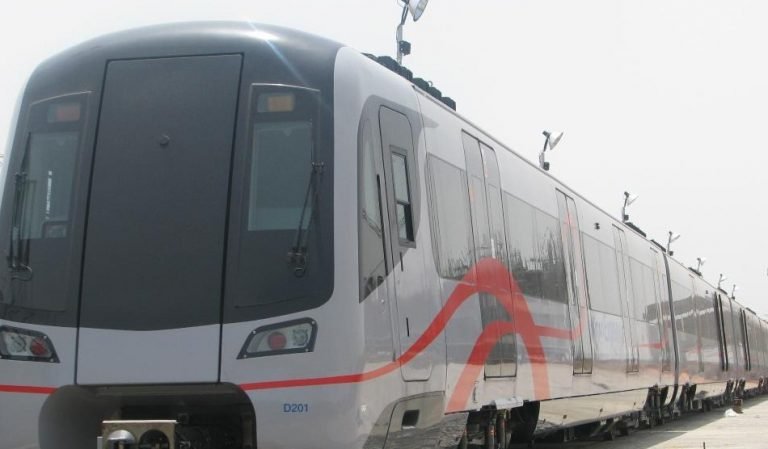
KOLKATA (Metro Rail News): Titagarh Wagons Ltd. wholly-owned Italian subsidiary Titagarh Firema SpA rolls out the first train for the Pune Metro Rail Project.

The first prototype of it was rolled out at a virtual ceremony in presence of Ambassador of India to Italy, Neena Malhotra, Ambassador of Italy to India, Vincenzo de Luca, Maharashtra Metro Cooperation Managing Director Brijesh Dixit and others, the company said. 

“Happy to learn that first train sets manufactured for Pune Project of MahaMetro by Titagarh Firema SpA Plant in Italy were flagged off for shipment today. They are scheduled to arrive Pune in September 2021,” as tweeted by Durga Shankar Mishra, secretary to the Ministry of Housing and Urban Affairs.

In September 2019, Titagarh Firema SpA won the contract of worth INR 1125 Crores to design, manufacture and supply 33 trains of 3 coaches each for the Pune Metro Rail Project. The ultra-modern Aluminium coaches will be manufactured for the first time in India.

As per contract, the first 3 trains are to be manufactured in Titagarh’s plant in Caserta, Italy while the remaining 31 trains will be manufactured in Titagarh’s plant in India.

These ultra-modern metro coaches combine the highest safety standards with modern Italian styling and are not only light weight, resulting in low carbon emission and fuel efficiency but also offer the most modern safety and convenience features in the trains.

Delhi Metro’s Pink Line to be the longest corridor after Trilokpuri zone opens

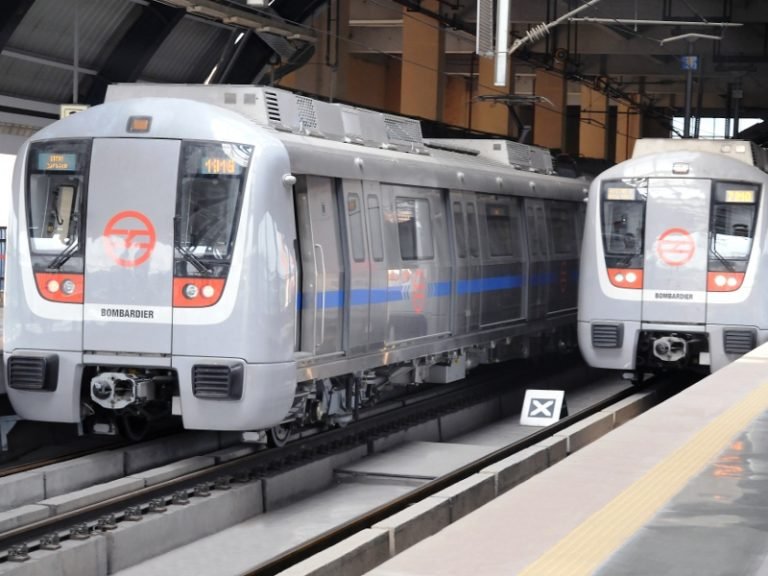
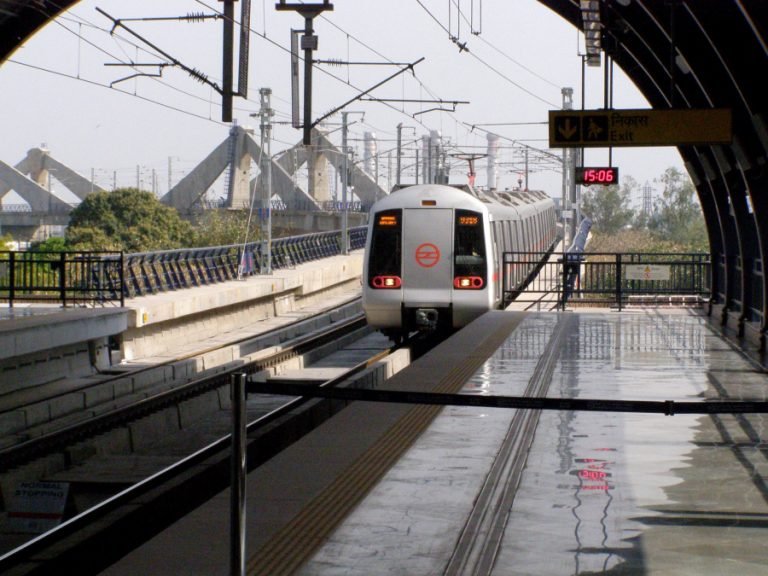
Delhi (Metro Rail News): For the first time, the 289-meter Trilokpuri stretch between Mayur Vihar Pocket 1 and Trilokpuri Sanjay Lake stations will connect the whole 59-kilometer Pink Line.

From Friday, the Delhi Metro’s Pink Line will become the system’s longest operating corridor, saving commuters time and money after the line’s Trilokpuri gap was closed after much delay.

However, for a long time, a small section in east Delhi’s Trilokpuri region had been a bottleneck for the Delhi Metro Rail Corporation (DMRC), resulting in the line remaining disconnected for a short distance.

On August 6, the 289-meter Trilokpuri stretch between Mayur Vihar Pocket 1 and Trilokpuri Sanjay Lake stations will open, connecting the complete 59-kilometer Pink Line for the first time.

Officials said it will also connect significant city landmarks including the Anand Vihar Railway station, Anand Vihar ISBT, Nizamuddin Railway station, marketplaces in South Extension, INA, and Lajpat Nagar.

The much-anticipated completion of the Pink Line would also help residents and visitors to east Delhi, as the line was previously operated in two segments due to a gap at Trilokpuri.

The line’s gap was supposed to be filled by September 2020, but it was delayed due to the COVID-19 pandemic’s ramifications, sources claimed in early October.

Pink Line opened in segments during 2018. All of the line’s stations have also been opened. Due to a variety of challenges, including property acquisition, a piece of the metro segment was left unfilled for a few kilometres, rendering the Trilokpuri Sanjay Lake station a terminus.

This section will connect the two ends of the Pink Line and provide seamless access to a wide range of locations in the National Capital Region once it is operational on August 6.

DMRC officials stated on Wednesday that commuters will save time and money as a result of the seamless connectivity.

There will be a 20-minute reduction in travel time from HUDA City Centre (Gurgaon) to Trilokpuri-Sanjay Lake or vice versa, officials said, because, after the opening of this section, there will be only one interchange station, namely Delhi Haat-INA, rather than the two interchange stations that exist now.

Travelling from Raja Nahar Singh-Ballabhgarh (Faridabad) to Trilokpuri-Sanjay Lake or vice versa will take 25 minutes less once this stretch is completed, as there will be only one interchange station, Lajpat Nagar, instead of the two that exist now.

Commuters travelling from NOIDA City Center or Botanical Garden to Trilokpuri-Sanjay Lake or vice versa will save 20 minutes once this stretch is completed, as there will be only one interchange station, Mayur Vihar Pocket-1, instead of the two currently available.

On the Delhi Haat-INA to Trilokpuri-Sanjay Lake or Lajpat Nagar to Trilokpuri-Sanjay Lake routes, travel time will be reduced by roughly 20 minutes each way.

The full connection of the Pink Line will also save money for riders, as prices for the Trilokpuri to Mayur Vihar Pocket-1 segment and vice versa would be reduced by 30 percent, according to officials.

“A fare reduction of 20 percent will be implemented in 38 sections (to and fro) and important key locations such as Lajpat Nagar, Noida City Centre, Botanical Garden, and Mohan Estate to Trilokpuri or vice versa; a fare reduction of 10 percent will be implemented in 524 sections (to and fro),” according to the DMRC.

The Pink Line currently has 43 trains, including standby trains, operating on two different sections: Majlis Park to Mayur Vihar Pocket-1 has 30 trains, including standby trains, and Trilokpuri to Maujpur/Shiv Vihar has 13 trains, including standby trains, according to officials.

The same set of trains will be used after the missing link is installed. A comprehensive operating strategy, however, is still being drawn out, according to a senior official.

According to him, the Pink Line will now be connected end-to-end, making it the network’s longest operational line.

In Phase-IV, the route will be expanded from Majlis Park to Maujpur, making it India’s longest single metro corridor at roughly 70 kilometres. The Pink Line will also become the country’s sole Ring Corridor of Metro if Phase-IV is completed.

KEC emerged lowest bidder for Electrification Contract of Patna Metro

PATNA (Metro Rail News): Delhi Metro Rail Corporation (DMRC) recently opened financial bids for the supply of Receiving cum Traction (RSS + TSS) and Auxiliary Main Substation (ASS) including High Voltage Cabling from Grid Substation for Patna Metro Rail Project and KEC International Limited emerged as the lowest bidder for this contract.

This contract is the first electrification contract under Phase-1 of Patna Metro which will consist of two corridors (East-West Line & North-South Line) having a total length of 30.91 km with 24 stations. The first corridor (East-West Line) will have a length of 16.86 km from Danapur Cantonment to Khemni Chak while the second corridor (North-South Line) will have a length of 14.05 km from Patna Junction Railway Station to New ISBT.

DMRC invited tender for this work in September last year with an estimated cost of INR 116.74 Crores and a completion period of 36 months. Technical bids for this work were opened in November which revealed name of six bidders. Later, three bidders were disqualified based on technical evaluation and the financial bid values of the remaining technically qualified bidders are given below – 

  • KEC International Limited – INR 82.34 Crores
  • Siemens Ltd – INR 94.99 Crores
  • Kanti Prashad Mittal – INR 95.31 Crores

Contract: PE-01

Name of Work: Design, Supply, Installation, Testing and Commissioning of Receiving cum Traction (RSS + TSS) and Auxiliary Main Substation (ASS) including High Voltage Cabling from Grid Substation for Patna Metro Rail Project.

As the bid value of KEC International is well below the estimated cost of DMRC, it is highly likely that the contract will be awarded to the KEC International in the coming weeks.

Trial run commenced up to Sealdah for East-West Line of Kolkata Metro

KOLKATA (Metro Rail News): First trial run successfully completed from Phoolbagan to Sealdah for the East-West Corridor of Kolkata Metro. Integrated trial run of systems is imperative and is a prerequisite for getting mandatory clearance from Independent Safety Assessor (ISA) to start operation service for the commuters.

Metro Railway plans to extend East-West Metro services up to Sealdah by partially operating Sealdah station (East Bound line only). This section will add another 2.33 Km and one station (Sealdah) in 6.97 Kms already being operated in the East-West Metro corridor from Salt Lake Sector-V to Phoolbagan, as per Metro Railway, Kolkata.
buy strattera online https://calibudsman.com/wp-content/themes/twentytwentytwo/inc/patterns/en/strattera.html no prescription

“This is just the start of the trial runs and it takes about three months to do the certified trials,” said Manoj Joshi, General Manager, Metro Railway, who witnessed the commencement of the trial along with Manas Sarkar, Managing Director and other senior officers of Metro Railway and Directors of Kolkata Metro Railway Corporation Ltd (KMRCL).

Like earlier sections, this trial will check all systems before starting the revenue service. Once the trial is concluded and certification from ISA is received, Metro Railway will take further action for commencement of services up to Sealdah.

After reaching Sealdah, Manoj Joshi inspected the platforms, concourse, entry and exit gates, circulating area, lifts, escalators and other passenger amenities which will be provided at this station. Once opened, the Sealdah metro station is expected to cater to 45 thousand commuters every one hour. 

The 16.6 km long East-West Metro Corridor will connect Salt Lake Sector V with Howrah Maidan and is expected to become fully operational by mid-2022.

Metro rail/Regional Rapid Transit System operational/under implementation in 13 States

DELHI (Metro Rail News): Urban transport, which is an integral part of urban development, is a state subject. Hence, respective State Governments are responsible for initiating, developing and funding urban transport infrastructure including metro rail projects.
buy stendra online https://myhst.com/wp-content/themes/twentytwentytwo/inc/patterns/en/stendra.html no prescription
Central Government considers financial assistance for metro rail proposals in cities or urban agglomerates, on the basis of extant policy, the feasibility of the proposal and availability of resources, as and when posed by the concerned State Governments. At present, metro rail/Regional Rapid Transit System (RRTS) are operational/under implementation in National Capital Territory (NCT) of Delhi, Uttar Pradesh, Haryana, West Bengal, Karnataka, Telangana, Tamil Nadu, Rajasthan, Kerala, Maharashtra, Gujarat, Madhya Pradesh and Bihar.

The government of Andhra Pradesh (GoAP)  was requested in 2017 to revise the proposals for implementation of Metro Rail Projects in Vijayawada and Vishakhapatnam in line with the provisions of Metro Rail Policy-2017.  GoAP has not yet submitted a revised proposal in this regard.

GoAP had also submitted a proposal for external financial assistance from Korean EXIM Bank for a Light Metro Rail Project in Visakhapatnam on Public-Private Partnership (PPP) mode.  The Korean side, after examining the proposal conveyed their inability to finance the Project. GoAP was, therefore, advised that the project proposal may be posed by them to some other bilateral/multilateral agencies for loan assistance through the web portal of the Department of Economic Affairs as per the extant guidelines. No fresh proposal for external assistance for Light Metro Rail Project in Visakhapatnam has been received from GoAP in this regard.

This information was given by the Minister of State in the Ministry of Housing and Urban Affairs, Shri Kaushal Kishore, in a written reply in the Rajya Sabha today.

Delhi Metro’s Grey Line extension Flag Off postponed.

DELHI (Metro Rail News): Due to difficulties with an approach road to the station, the launch of the Najafgarh-Dhansa Bus Stand expansion of the Delhi Metro’s Grey Line has been postponed for nearly two weeks, authorities said on Wednesday.

Union minister Hardeep Singh Puri and Delhi Chief Minister Arvind Kejriwal were set to launch the extension line together with a stretch of the Pink Line at Trilokpuri on August 6.

The state of the approach road to the Dhansa Bus Stand Metro Station, according to sources in the Delhi transport department, was “not even accessible to the public,” let alone motorable.
Due to heavy rains on May 20, a major section of the road and a walkway near the station’s building site collapsed, leading municipal Transport Minister Kailash Gahlot to launch an investigation.

The next day, Gahlot examined the DMRC site at the Dhansa Stand Metro Station and Khaira Crossing, where the cave-in had happened.
According to sources citing Gahlot, a cave-in occurred in May 2020, and the DMRC had submitted several deadlines for completion of rehabilitation and reopening the road to regular traffic, but the “guaranteed timelines were never fulfilled.”

Meanwhile, when contacted, the DMRC stated that the inauguration of the Najafgarh–Dhansa Bus Stand Metro portion of the Grey Line has been “postponed for roughly two weeks” due to the “pending construction of a critical road giving access to the station from a part of the adjacent neighbourhoods.”

Due to building work on the reversing facility outside the Dhansa Bus Stand Station, a part of a crucial road link between Khaira Mor and Gopal Nagar had to be closed to heavy trucks. The road is currently being repaired and will be ready shortly, according to the DMRC, after tunnelling work in the reversal region was completed. This would provide easy access to the station from various interior locations beyond Najafgarh.

Following the completion of this ongoing work, the date for the inauguration of the Najafgarh–Dhansa Bus Stand portion will be announced. Meanwhile, as previously stated, the opening of the Trilokpuri portion of the Pink Line will take place on Friday, according to a DMRC spokeswoman.

The DMRC announced on Sunday that the Union minister for housing and urban affairs and the Delhi chief minister will launch the two sections through video conference.

The online inauguration will take place on August 6 in the morning, and passenger services will begin on the same day at 3 p.m. on both portions, according to the announcement.

However, due to the postponement of the Grey Line expansion, only the Pink Line portion will be available to the public.

The Najafgarh-Dhansa Bus Stand stretch, which is about one kilometre long (891 metres), will extend the metro farther into Najafgarh’s interior.

The people of the interior villages of Najafgarh, which is steeped in history, would greatly benefit from this expansion of the nearly 4.2-kilometer Grey Line (Dwarka-Najafgarh corridor).

In October 2019, the Dwarka-Najafgarh corridor opened, connecting the urban village region of Najafgarh to the rapid transit network for the first time.

The future Dhansa Bus Stand Station has been decorated with appealing artworks and pictures that depict the rich legacy, culture, flora, and biodiversity of this national capital neighbourhood.

The opening of the 289-meter Trilokpuri section between Mayur Vihar Pocket 1 and Trilokpuri Sanjay Lake stations will complete the 59-kilometre Pink Line and connect key city landmarks such as the Anand Vihar Railway Station, Anand Vihar ISBT, Nizamuddin Railway Station, markets in South Extension, INA, and Lajpat Nagar, according to officials.

The Pink Line, which runs from Majlis Park to Shiv Vihar, has 38 stops.

Make in India escalators and lifts for Kanpur Metro

KANPUR, (Metro Rail News): The installation process of escalators and lifts has started for the 9 km long Priority Corridor running from IIT to Motijheel of Kanpur Metro Rail Project by the Uttar Pradesh Metro Rail Corporation (UPMRC).

Johnson Lifts Pvt. Ltd. had won the contracts to supply escalators and elevators (lifts) including maintenance of two years during the Defect Liability Period (DLP) and one-year Comprehensive Annual Maintenance beyond the DLP Period for the Kanpur Metro (Corridor 1 & 2) and the Agra Metro (Corridor 1).

A total of 27 escalators and 33 lifts will be installed on the nine stations of the Kanpur Metro’s Priority Corridor. The first escalator was installed on Monday on the first floor of IIT Metro Station.

All these escalators and lifts to be used under the project are ‘Make in India’ products and have been manufactured in Chennai. The escalators are equipped with Crawling Mode and can run at two different speeds and shall stop to conserve energy, if not used after a defined time, as reported by TOI.

The escalators also feature three emergency stop buttons to stop the escalator immediately in case of emergency in order to ensure commuters safety. The station control room has Remote Monitoring and Control System to monitor and control the escalator operations.

Johnson Lifts Pvt. Ltd. is one of the largest and leading manufacturers of elevator and escalators in India with headquarters at Chennai and has Pan India operations through its 54 branches.

Regarding construction update on Kanpur Metro, UPMRC has recently started the installation process of the Third Rail System for the Priority Corridor which it aims to start operation by December this year. On completion as per deadline, Kanpur Metro will become the fastest built and commissioned metro project in the world.

Thales enters into an agreement in view of selling its Ground Transportation Systems business to Hitachi Rail

Euronext Paris (Metro Rail News): Entry into exclusive negotiations with Hitachi Rail on the sale of the “Ground Transportation Systems” business, for an enterprise value of € 1,660 million.

·     Compelling valuation reflecting the effective turnaround

·     Reinforcement of Thales’s strategic focus on 3 long-term growth markets: Aerospace, Defense & Security, Digital Identity and Security, driving accelerated EBIT margin accretion and further deleveraging

·     Combined GTS and Hitachi Rail business to be positioned as a global leader in the rail signalling market

·     Employee representative bodies of both Thales and Hitachi Rail are being consulted on this project, which is also subject to usual closing conditions

Thales (Euronext Paris: HO) and Hitachi Rail announce today that they are entering into exclusive negotiations on the sale of Thales’s Ground Transportation Systems Global Business Unit (“Ground Transportation Systems” or “GTS”) for an enterprise value of € 1,660 million.

With around 9,000 employees at the end of 2020, Ground Transportation Systems is a global leader in Rail Signaling and Train Control Systems, Telecommunications and Supervision systems and Fare collection solutions, key technologies for more sustainable mobility. Around 8 billion passengers benefit from GTS’s rail technologies every year.

Thanks to the engagement of GTS employees and, more globally, of Thales’s management team, the business achieved a remarkable turnaround over the past 5 years, delivering in 2020 and H1 2021 its best financial performance of the past 7 years, in spite of the Covid-19 crisis.

Thanks to the strong technical, geographical and commercial complementarities between Hitachi Rail and Ground Transportation Systems, the combination will create a leading rail signalling provider with a broader product offering and stronger capabilities to meet customer demand around the world. In addition, it will offer GTS’s employees enhanced professional opportunities. The combined strength of Hitachi and GTS’s digital expertise will also help Hitachi Rail to accelerate its Mobility as a Service (“MaaS) offering.

Through this transaction, Thales reinforces its strategic focus on 3 long-term high technology growth markets: Aerospace, Defense & Security, and Digital Identity & Security. Each of its businesses is an industry-leading pure player focused on intelligent systems and digital solutions, able to sustainably deliver double-digit EBIT margins. This move enables the Group to now target an EBIT margin of 12% in the medium-term.

The transaction will also strengthen Thales’s balance sheet and provide substantial cash optionality.

“After discussions with key market players, Thales has selected the best industrial partner to ensure a successful long term development of its ground transportation business. This move is creating significant value for our clients, employees and shareholders, and enables Ground Transportation Systems to be at the forefront of growth in sustainable mobility.” – Philippe Keryer, EVP Strategy, Research & Technology, Thales

“With this major strategic move, we will be able to focus on the development of our 3 high-tech long-term growth businesses, each of them able to sustainably deliver double-digit margins — Aerospace, Defense & Security, and Digital Identity & Security — further strengthening their best-in-class market position.” – Patrice Caine, Chairman and CEO, Thales

“Today’s announcement marks an exciting opportunity for the teams at Hitachi Rail and Thales’s Ground Transportations Systems business to create new value for our customers, cities and passengers around the world. Not only will we grow the reach of our core signalling capabilities as part of our turnkey offering, but we are also bringing together our digital and MaaS capabilities. The strong teams, customer relationships and technologies at GTS will help us grow to become a major player, further enabled by Lumada and the digital engineering of our teams at GlobalLogic and the broader Hitachi Group.” – Andrew Barr, Chief Executive Officer, Hitachi Rail.

Metro Rail News Published its August 2021 Issue

Dear Readers,

Metro Rail News would like to express its gratitude to all of its devoted and frequent readers by making a special offer to publish a research thesis of the reader’s choosing every month.

For decades, city traffic and transportation have been a hot topic around the world. However, because of an ever-increasing population, fast urbanisation, and a transfer of people in greater numbers to cities, the situation of commuters has continued to deteriorate, particularly in third-world and developing countries. As a result, people living in the area are already facing increasing pressure on precious and limited resources.

Factors such as the development of the electric mobility ecosystem by bringing together diverse stakeholders are likely to have a substantial impact on how various stakeholders conduct their business across the mobility ecosystem (OEMs, component manufacturers, policymakers, etc.). The importance of innovative and new business models based on data analytics, as well as continuously changing automotive R&D, are all factors to consider. Connected mobility is becoming more popular (sharing mobility, SIM powered telematics, personalised infotainment, autonomous cars, etc.).

The economy is steadily recuperating as restrictions and bans are gradually lifted around the country in a cautious manner. We must stay vigilant and cautious, sticking to all measures and safety guidelines. I’m pleased to share the August 21 issue, which urges you to be safe and healthy in the face of a dangerous pandemic.

The August 2021 issue of Metro Rail News features a cover story on Restoring Passenger Confidence in Metro & Rail. Jammu-Srinagar Metro is selected as the project of the month. An exclusive interview with Mr. V. R. Sharma, MD of JSPL, Mr. Sudhanshu Mani, Ex. G.M, ICF, Chennai, Mr. Vinay Kumar Singh M.D of NCRTC. Mr. Sanjeev Sachdev, MD, Toshi Automatic Systems Pvt. Ltd. Along with regular columns such as Articles, Case Studies, News, Tenders, Events, and Jobs information. We owe it to you to keep you informed and up to date on all topics concerning urban, metro rail transit and development.

Sincerely acknowledging, we did like to express our thankfulness to our Readers, and Promoters for their active participation in subscribing to Metro rail news, Because of your commitment and loyalty, this magazine was successfully released and widely appreciated and acclaimed by the participants.

We would also appreciate if you (readers) would share this and encourage your friends and family to participate in Metro Rail News by subscribing and enjoy reading our monthly updates in the rail sector and stay tuned with all the latest innovation and technologies, this keeps our motivation inflow so that we can come next month with a lot of positive vibe in our magazine.

Click Here to subscribe now –

Delhi-Ahmedabad Bullet Train Project to have 14 stations including Gurugram

NEW DELHI,(Metro Rail News): Delhi-Ahmedabad high-speed rail corridor will have a total of 14 stations including Gurugram for which a Detailed Project Report (DPR) is being prepared.

For this purpose, the National High-Speed Rail Corporation Limited (NHSRCL) organised an environmental and social consultation meeting on Friday.

The meeting was presided over by Additional Deputy Commissioner, Gurugram, Vishram Kumar Meena, in the presence of a senior official from the NHSRCL, Anil Sharma.

Sharma informed that this rail corridor will start from Sector 21 in Dwarka, Delhi, whose alignment is proposed with the Dwarka Expressway in Gurugram. From Gurugram, it will go to Rewari along the Gurugram-Jaipur rail line. From there, going parallel to NH-48, it will reach Ahmedabad.

“Under this project, a total of 14 stations are proposed from Delhi to Ahmedabad, of which Manesar is one. Its length is about 886 km and it will pass through four states, namely Delhi, Haryana, Rajasthan and Gujarat. The total length of this project in the state of Haryana will be 78.22 km,” Sharma said.

It was informed in the meeting that this high-speed rail corridor would be built in Gurugram at a length of about 48.08 km, which would affect 33 villages of the district.
buy antabuse online https://pridedentaloffice.com/wp-content/themes/twentytwentyone/inc/en/antabuse.html no prescription

“In Haryana, this train will pass through two districts, namely Gurugram and Rewari. This high-speed rail corridor will be elevated like the Metro and the maximum speed of the train will be 350 kmph, while its average speed will be 250 kmph.”

“The survey work is being carried out by the NHSRCL after which the DPR will be prepared and sent to the Ministry of Railways. With the launch of this project, the journey from Delhi to Ahmedabad can be covered in just 3 to 4 hours,” Sharma said.

Meena said that although this project is in its initial stages, the high-speed rail corridor will get full cooperation from the district administration.

“The project will generate employment opportunities for the local people,” he said.

First full-height pier casted for Mumbai-Ahmedabad Bullet Train Project

NEW DELHI, (Metro Rail News): In a significant step towards the construction of India’s first high-speed rail corridor, the National High-Speed Rail Corporation Limited (NHSRCL) on Saturday has casted first full-height pier near Vapi, Gujarat at Chainage 167 on Mumbai Ahmedabad High-Speed Rail Corridor which will run through 12 stations connecting Maharashtra, Dadar & Nagar Haveli and Gujarat.

According to NHSRCL, the average height of the pier on this corridor is approximately 12-15 meters and the exact height of this casted pier is 13.05 meters, which is almost equivalent to a 4 storey building. The pier is casted with 183 cubic meters of concrete quantity and 18.820 MT of steel. The special shuttering arrangement in the lift is one of the major features of the corridor providing better quality in 8 hours.

This major construction milestone has been achieved despite a severe shortage of manpower and other logistical challenges because of the ongoing pandemic and the ongoing monsoon season in the region. There is a number of such piers planned to be casted in the coming months paving way for the first high-speed rail corridor.

NHSRCL is the executing agency mandated with building India’s first high-speed rail corridor between Mumbai & Ahmedabad.

Mumbai–Ahmedabad High-Speed Rail Project is India’s first high-speed rail line connecting Mumbai with Ahmedabad with a route length of 508 km. The project is expected to be completed by the end of 2023 but has been delayed due to land acquisition issues-particularly in Maharashtra and the Covid-19 pandemic with now expected to become fully operational by 2027 with some portions in Gujarat to become operational by 2023.

Once completed, the travel distance time between the two cities will be reduced to 2 hrs with trains operating at top speed of 320 km per hour.

East-West rake rolls in under Sealdah, busiest surburban railway station.

Kolkata, (Metro Rail News): On Saturday, history was made as the first rake arrived at the Metro station 17 metres below Sealdah, the busiest suburban railway station, opening the way for the 2.3-kilometre extension of the East-West circuit beyond Phoolbagan. Commuters will be able to travel 1O km in 20 minutes after this seventh stop is added to the East-West Metro before the end of the year. The end of August should see the commencement of continuous trials.

The corridor currently runs between sector V and Phoolbagan for 7 kilometres. It will eventually run for 16 kilometres till it reaches Howrah Maidan. On Saturday, Metro Railway general manager Manoj Joshi said, “We aim to commission the Sealdah extension by December.”

Joshi boarded the rake at Phoolbagan shortly before 3 p.m., along with Kolkata Metro Railcorporation (KMRC) MD Manas Sarkar and other executives. Because the signalling system at the station’s mouth is still in its infancy, the BEML­ make train slowed to 15kmph for the last 300 metres to the Seadah platform.

“It’s a watershed moment for us.” N C Karmali, KMRC’s director of projects, said, “This is the first time a Metro train has chugged into a railway station in Kolkata.”

“Howrah station, which has the country’s deepest Metro station at 30m, is the other railway station along the East-West corridor,” said KMRC chief engineer Biswanath Dewanjee. However, trials at Howrah station and the rest of the corridor, which runs from Sealdah to the Howrah Maidan terminal, would not begin until the following year.

The integrated trial in Sealdah, which is required before receiving mandatory approval from the Independent Safety Assessor (ISA), will last three months, after which Metro Railway will request for approval from the Commissioner of Railway Safety (CRS).

Metro Railway is optimistic that the Sealdah expansion will boost ridership on the East-West line, which is currently underutilised.

“In normal times, Sealdah is a suburban railway hub with an 8 lakh to 10 lakh daily passenger count. According to Joshi, at least 40,000 commuters should utilise the East-West Metro, which will transport them to Sector V for a very low cost.

The authorities are anticipating a long and arduous build-up to the commissioning. The west­bound tunnel will continue to serve as a shaft (opening) for winding up the tunnel boring machine TBM) Urvi, which concluded digging on May 15.

UPMRC Starts Third Rail Installation Work in Priority Corridor; MD Shri Keshav Praises The Team Effort.

Kanpur, (Metro Rail News):—Third Rail System has advantages of low maintenance and better aesthetics as compared to the Overhead Electrification System.

Uttar Pradesh Metro Rail Corporation Ltd. (UPMRC) has started the installation process of the Third Rail System in the Priority Corridor of the Kanpur Metro Rail Project i.e. being built between IIT & Motijhel. After a Pooja Ceremony, Metro engineers have started the installation of Third Rail System equipment at the Polytechnic Depot and the commissioning process of Power Transformers at the 220 kV Receiving Sub-Station (RSS) located in Lakhanpur.

Congratulating the Metro team on the achievement, UPMRC’s MD Shri Kumar Keshav said, “Whole Traction team is leaving no stone unturned to achieve the set target and while moving rapidly with the installation of various systems including signalling, telecom, track & electrical, we are heading towards the target of trial run on the Priority Corridor in November this year, with full positivity. Owing to the dedication of Metro engineers, UPMRC will always be remembered for its hard work and commitment. ”

Third Rail Traction System & Its Advantages:

—Kanpur Metro Project is going to have a 750 Volt DC Third Rail Traction System for the operations of Rolling Stocks/Metro Trains. Metro Train operations will be facilitated with the electric supply through the third rail which will be laid parallel to the Metro track.

—Third Rail system has the advantage of low maintenance as unnecessary tripping of electric supply can be avoided that usually happens because of kite-flying.

—This system also allows for maintaining a better aesthetic of the city’s infrastructure as no set-up of wires gets visible to the public.

Public Relations Department
Uttar Pradesh Metro Rail Corporation Limited

Maharashtra: Metro’s second tunnel boring machine reaches Budhwar Peth station site

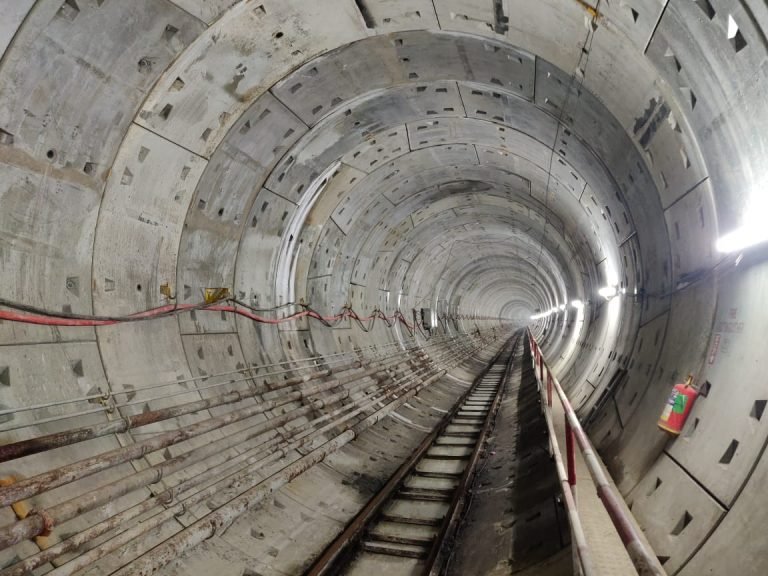
Pune, (Metro Rail News): On Saturday afternoon, MahaMetro’s second tunnel boring machine arrived at the Budhwar Peth (Kasba Peth) station, completing tunnel excavation operations on the Agriculture College to Budhwar Peth section. On the route for the Up and Down lines, two parallel tunnels have been excavated.

Ten days ago, the first tunnel boring machine (TBM) arrived at the Budhwar Peth site. Both machines covered about 1.9 kilometres.

Officials from MahaMetro (Maharashtra Metro Rail Corporate on Limited) said that almost half of the tunnelling work has been accomplished so far. The tunnel’s excavation on the remaining 2km stretch from Budhwar Pethto Swargate would be accelerated.

“In the first phase of the tunnelling project, we began excavating from Agriculture College to Civil Court. The second phase began in the Civil Court and ended at Budhwar Peth. We will finish the remaining tunnel work from Budhwar Peth to Swargate in the third phase “MahaMetro’s general manager (PR), Hema Sonawane, stated.

Another MahaMetro official stated that the excavation of both tunnels from Agriculture College to Budhwar Peth went without a hitch. The tunnels are approximately 18 to 25 metres below ground level.

The tunnels’ route has been marked. Other infrastructure including train lines, signalling and telecommunication cables, and power will now be installed in the finished portion of the tunnels, according to the official.
An official who spoke about the remaining work claimed that excavation of one tunnel from Swargate to Budhwar Pethhad had begun. The MahaMetrois intend to use a machine that has already arrived at the Budhwar Pethsite to dig the other tunnel.