



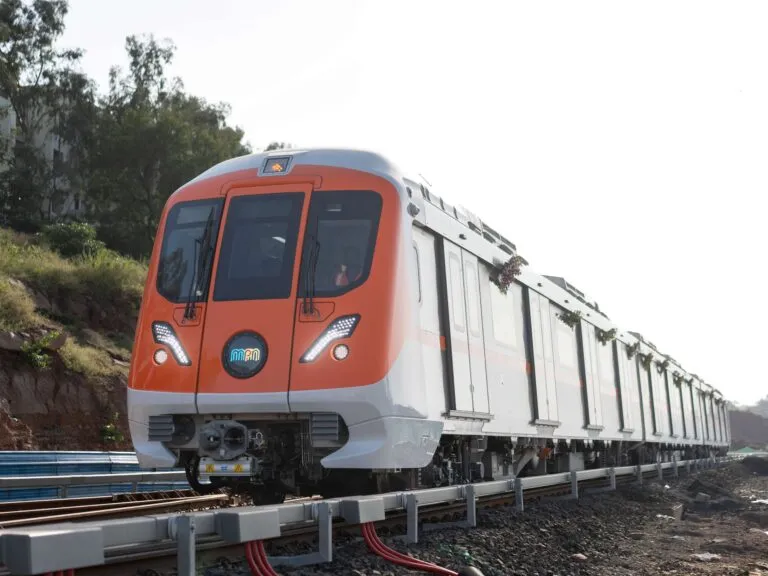
BHOPAL (Metro Rail News): Bhopal Metro is spending an estimated ₹38-48 lakh a week on operations and maintenance, while low passenger numbers could leave it needing more than 100 days to collect the same amount through fares. The gap highlights the financial pressure on the nearly 7 km priority corridor as the service waits for a wider network to attract more regular commuters.
Madhya Pradesh Metro Rail Corporation Ltd (MPMRCL) Managing Director S Krishna Chaitanya has estimated that running and maintaining the metro costs ₹20-25 crore a year. This works out to around ₹5.5-6.8 lakh per day, while the number of passengers using the service remains relatively low.
Based on estimates, the service carries around 150-500 passengers on weekdays and up to 1,500 on weekends. Assuming an average ticket price of ₹50, the revenue from ticket sales appears to be much lower than the cost of running the service. However, these figures are estimates, not audited financial data. The corporation’s public relations officer also did not provide updated passenger numbers.
Operating costs remain high as Bhopal Metro’s ridership stays limited
The metro’s daily services have increased from nine trips to around 20 since July. However, updated ridership figures were unavailable to establish whether the additional trips have led to a sustained increase in passenger numbers.The current priority corridor runs for nearly 7 km between AIIMS and Subhash Nagar, serving eight stations. It opened in December 2025, but its limited coverage restricts its usefulness for commuters travelling across the city.
Get the Daily Metro & Rail Brief
Join 125,000+ metro and rail professionals. Project updates, new tenders and contract awards from across India, in your inbox every day.
Chaitanya has said wider network coverage is expected only by 2028. Until then, the metro faces the challenge of operating the existing line while building a regular passenger base. Early ridership figures showed stronger demand on weekends than on weekdays. Passenger numbers rose from 275 on January 15 to nearly 1,000 on January 18, a Sunday. Between January 13 and 20, the system carried 3,350 passengers. These figures relate to the initial operating period and do not represent current ridership.
Bhopal Metro explores revenue beyond ticket sales
With fares unlikely to cover operating expenses at current passenger levels, MPMRCL has been pursuing non-fare revenue through advertising, commercial leasing, semi-naming rights and events. The initiatives include:

- Advertising on metro pillars: A tender issued in November 2025 offered advertising space on more than 700 pillars along the elevated corridor.
- Commercial leasing: In June, around 620 square metres at Board Office Chauraha and approximately 2,470 square metres at Subhash Nagar were listed for commercial use. Monetisation efforts continued in October.
- Events on metro premises: The Celebration on Wheels initiative, introduced in May, offers train coaches and selected station areas for birthdays, pre-wedding photography, film shoots and other events.
- Semi-naming rights and commercial spaces: These are among the other options being explored to supplement fare income.
However, early results from the event initiative have been limited. By early June, two bookings had been recorded in Indore over four weeks, while a Bhopal booking was cancelled. A fitness group also held an event in Bhopal on June 7, but such bookings have yet to demonstrate a reliable source of recurring income.
Wider network seen as key to long-term viability
The financial challenge is closely linked to the size of the operational network. A short corridor may serve local trips, but it offers fewer direct travel options than a connected citywide system. The expansion expected by 2028 could broaden the metro’s catchment area and improve its relevance for daily travel, although higher ridership will depend on connectivity, service frequency and commuter demand. Non-fare revenue could help offset some expenditure, but advertising and occasional events are unlikely to bridge a substantial operating gap on their own without sustained growth in passenger numbers.
Bhopal Metro must balance the cost of running services with the need to build ridership before its network expands. The key test will be whether new connectivity and commercial initiatives can generate enough recurring demand and revenue to improve the system’s financial position.
Also Read: As Bhopal Metro Work Advances, Traffic Pressure Mounts on Jawahar Chowk-New Market Road
 Read nextDMRC Floats Patna Metro Tender for 25kv Traction & 33Kv Substations and SCADA Works26 Oct 2026