



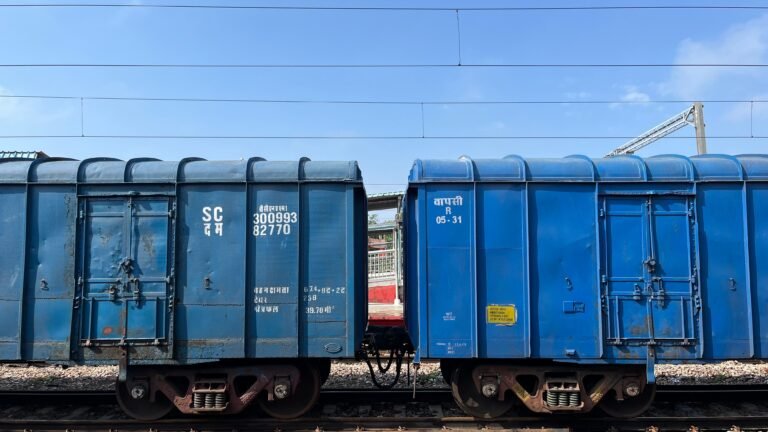
NEW DELHI (Metro Rail News): Indian Railways recorded a 5.4% year-on-year increase in freight loading in August 2026. The railway loaded 137.9 million tonnes of freight during the month, up from 130.9 million tonnes in August 2025. Freight revenue also rose 6.27% in August. The growth shows that Indian Railways continues to expand its freight business.
The increase came alongside the commissioning of five new Gati Shakti Cargo Terminals (GCTs), taking the total number of operational terminals to 149 as of August 31.
Indian Railways freight loading crosses 137 million tonnes
Indian Railways loaded 137.9 million tonnes of freight in August 2026, up from 130.9 million tonnes in August 2025. The growth was supported by higher movement of several major commodities:
| Commodity | Growth in loading |
| Iron ore | 12.1% |
| Clinker | 10.4% |
| Domestic containers | 9.2% |
| Coal | 6.0% |
| Finished steel | 4.9% |
| Mineral oil | 3.1% |
| Fertilizers | 1.6% |
| Other goods | 8.2% |
Iron ore recorded the highest growth among the listed commodities at 12.1%, while coal loading rose 6%. Container traffic also grew 9.2%, which indicates higher movement of a wider range of goods through the rail network.
The weekly brief metro & rail professionals read.
Freight revenue rises 6.27%
Freight revenue increased 6.27% year-on-year in August. The rise in both loading and revenue comes as railways continue to handle large volumes of industrial raw materials and finished products. Coal, iron ore, steel and fertilisers remain important components of the freight basket.
Higher rail movement also supports supply chains by moving bulk commodities between production centres, industrial clusters and consumption markets.
Indian Railways opened 5 new Gati Shakti Cargo Terminals
Indian Railways commissioned five Gati Shakti Cargo Terminals during August. This took the cumulative number of commissioned GCTs to 149 by August 31, 2026. The new terminals are located at:
- Shivlakha, Gujarat
- Nalli, Tamil Nadu
- Shaktinagar, Uttar Pradesh
- Deoragram, Madhya Pradesh
- Brajrajnagar, Odisha
The GCT network is intended to bring dedicated freight-handling infrastructure closer to industrial and commercial centres. By providing additional loading and unloading points, these terminals can reduce the need for longer road-based first- and last-mile movements. They can also help speed up freight evacuation from production and consumption locations.
Railway freight network expands beyond bulk commodities
The August figures show that growth was not limited to traditional bulk freight. Domestic container loading increased 9.2%, while other goods registered an 8.2% rise. This wider commodity mix is important for Indian Railways as it seeks to increase its share of the country’s overall freight market. Better terminal connectivity can make railway a more practical option for industries that move smaller or more diverse consignments.
The expansion of GCTs is also aimed at linking rail freight more closely with the country’s broader logistics network.
Also Read: Indian Railways Launches 1st Direct Freight Train to Nepal, Boosting Cross-Border Trade