
Home Blog Page 841

Download full Metro Rail Policy 2017 approved by Govt. of India

On 16th August 2017, the Union Cabinet chaired by Prime Minister Shri Narendra Modi has approved a new Metro Rail Policy that seeks to enable realization of growing metro rail aspirations of a large number of cities but in a responsible manner.

Indian cities are growing rapidly.

There is a need to direct growth in a planned manner with adequate attention to the transport system at early stages in their development. Cities are witnessing fast growth in the number of personal motor vehicles, with severe congestion and pollution being the most visible manifestation of the growth in the number of motor vehicles. Efforts at remedying the situation will need to focus on improving the public transport system. In several cities this would require implementation of Mass Transit systems such as metro rail, bus rapid transit, light rail, etc.

Urban Rail, popularly referred to as Metro Rail, has seen substantial growth in India in the recent years. More cities are experiencing the need for metro rail to meet their day-today mobility requirements. Most of the metro rail projects have been financed by the central government in partnership with the state governments, while some have been funded by the state governments either on their own or with private partnership. Metro rail projects provide high capacity public transit and are capital intensive. However, considering the rapid urbanization and the imminent need for enhancing mobility in cities through metro rail, it is imperative to explore alternative and innovative sources of funds to supplement the budgetary resources. At the same time, it is also important to ensure that the proposals are prepared and appraised in a comprehensive manner to enhance urban mobility as well as the speed and quality of implementation of metro projects. It is in this context that the need for a policy on metro rail has been felt necessary to ensure that such systems are decided upon and implemented in the most sustainable manner from the social, economic and environmental perspectives.

Now Metro Rail News providing you complete Metro Rail Policy 2017 approved by Government of India for standardization and expanding the metro network across various cities in India.

Click here to download New Metro Rail Policy 2017

If facing any trouble, you can write us directly at editor@metrorailnews.in

Click here to read related stories:-
Lucknow Metro | LMRC introduces insurance cover for metro commuters

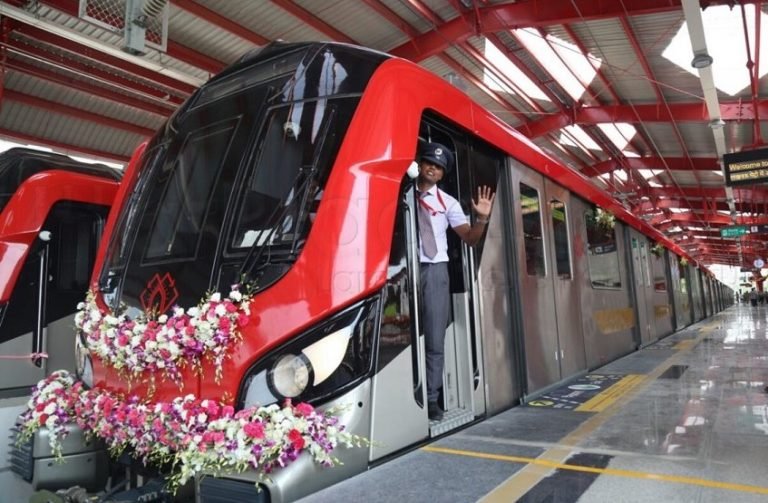
Lucknow: While all necessary arrangements have been done to ensure the safety of passengers on board the Lucknow Metro, the Lucknow Metro Rail Corporation (LMRC) on Tuesday announced that it had entered into an agreement with the United India Insurance Company for passenger accident and public liability insurance.

“For all passengers travelling on the Metro service, there would be a Rs 400,000.00 (four lakh) cover per person, for any accident that leads to death, permanent total disability, permanent partial disability, temporary disability and medical expenses and/or compensation awarded by any court of the land or tribunal,” Director (Operations) Mahendra Kumar said.

Against any similar accidents to people present in the Metro station premises other than paid area and trains, including unpaid areas, circulating area, parking area or any other areas under the jurisdiction of the LMRC, on any one accident, the insurance cover sum in total is Rs 10 lakh, Kumar added.

Japan Railways appoints Sanjeev Sinha as Advisor Ahmadabad-Mumbai Bullet Train project

New Delhi: Japan Railways had appointed IIT Kanpur alumni Sanjeev Sinha as advisor for project of Ahmadabad-Mumbai high speed bullet train.

In a conversation with Economic Times, Sinha said, “I will be the interface between the two governments. This is a prestigious project but extremely complex.

Converting the political will into actual execution will take a lot of effort.”Sinha had earlier worked with Goldman Sachs, Mizuho Securities, UBS Investment Bank and as Chief Country Representative in Japan for Tata Asset Management and Tata Realty and Infrastructure, a private equity fund.

The ambitious Mumbai-Ahmedabad High Speed Rail Project said to be cost around Rs 1 crore and would be backed by Japan’s low cost financing.

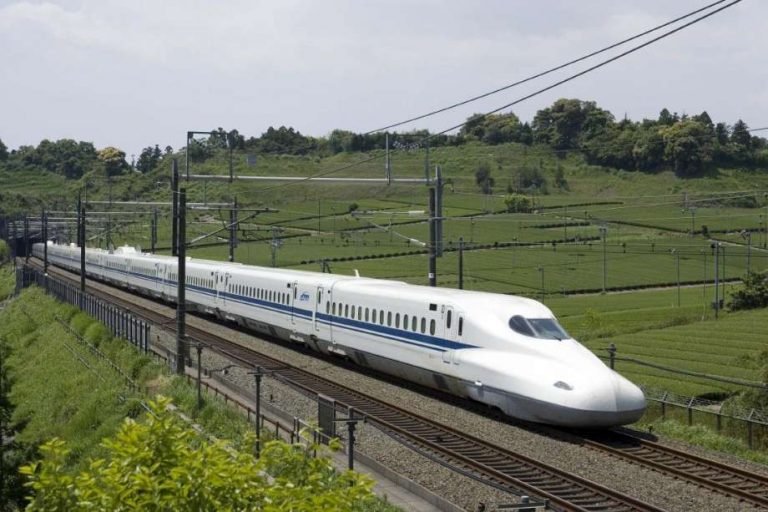
The much-awaited bullet train project would be based on Japnese technology.

The groundbreaking ceremony for the bullet train project, would be performed in Ahmedabad on September 14 by Prime Minister Narendra Modi and his Japanese counterpart Shinzo Abe.

Both the leaders are expected to stay here for three days, starting from September 13.

“Japanese PM Shinzo Abe and our PM would arrive in Gujarat on September 13 afternoon. The next morning, they would attend the groundbreaking ceremony of the high speed rail project at the Sabarmati railway station. Both of them are expected to leave on September 15 morning,” the official earlier told reporters.

Apart from this project, various MoUs related to investments and tie-ups would also be signed in the presence of these leaders, the official said, adding that bilateral talks will also be held between the two here. The high speed railway line between Ahmedabad and Mumbai is expected to cover 508 kilometers in about two hours with an operating speed of around 320 kmph. It is expected to become operational by 2023.

Sanjeev Sinha
Sanjeev Sinha appointed as Advisor for Ahmedabad-Mumbai bullet train project

Sanjeev Sinha, hailing from Barmer Rajasthan in relative proximity to Ahmedabad, is a graduate of IIT Kanpur. He is a prominent Indian resident of Japan for 21 years. He has worked with Goldman Sachs, Mizuho Securities, UBS Investment Bank and as Chief Country Representative in Japan for Tata Asset Management and Tata Realty and Infrastructure, a private equity fund.

Delhi Metro | Train runs with open door open between three stations

New Delhi: A Delhi Metro train, packed with commuters, made its way across two stations on Yellow Line on Monday, with one of its gates open.

The highly-unusual incident took place around 10 pm between Chawri Bazar and Kashmere Gate stations of Yellow Line, which connects north Delhi to Gurugram.

“The problem was only with one door. It was guarded by the DMRC staff. The train was taken to Vishwavidyalaya station to avoid any delay or bunching,” a metro spokesman said.

A similar incident had occurred back in July 2014 when a train had run with all its doors open between Ghitorni and Arjangarh stations on the same line.

Immediately after the incident, the train operator was suspended over “safety lapse”.

Delhi Metro | DMRC and Google Maps collaborate to make Metro commute easier

New Delhi: The Delhi Metro Rail Corporation (DMRC) has partnered with Google Maps to make commutes easier by sharing information on Metro routes, fares and connectivity. This partnership with Google has been done keeping in line with Delhi Metro’s vision for providing a better commuter friendly public transport system. This facility will provide the commuters complete information on Delhi Metro routes, line details, platform details, fares etc.

Delhi Metro’s integration with Google will be extremely beneficial to both new and existing commuters. Delhi Metro has launched several such initiatives in the recent past to help commuters to manage their travel time, and make more informed transport decisions. Transit details for Delhi Metro would also be available on mobile devices with Google Maps, so commuters can check available Metro schedules to make route changes on-the-go and plan their trips accordingly.

Metro Rail News Infographics
Know how would Google Maps benefit the commuters of Delhi Metro

As Delhi Metro is the preferred public transportation for millions of commuters every day, the integration of the Metro network with Google Maps would benefit new commuters and help existing commuters in discovering new routes and options.In the next stage of this collaboration, the Delhi Metro is further planning to integrate facilities available at the station such as parking, rest rooms etc.

The train timings and directions are for planning purposes only.

Ahmedabad Metro | Japanese firm Mitsui bags contract for supply of HH-Rails

Gandhi Nagar: Japanese firm Mitsui Co. Ltd. has won the bid to supply 10,600 metric tonne of Head Hardened Rails (HH-Rail) for the track work of the 37-km-long Phase-1 of the Ahmedabad metro-rail project at the cost of Rs 59.32 crore.

“Mitsui has been selected from a group of five bidders which included Voestalpine, Jindal Steel, British Steel, East Metals,” said IP Gautam, managing director of Metro-Link Express for Gandhinagar and Ahmedabad (MEGA) Company Ltd which is constructing the Rs 10,700 crore Phase-I of the project.

metro rail construction

Mitsui is the first Japanese firm to win a bid out of the 27 contracts that have been awarded.

The tender notice for procurement of the HH-rail was published on July 8, 2016 and the tender was awarded on June 15.

According to metro rail officials, the 1,080 grade HH-rail being procured for Ahmedabad metro has greater durability than the normal rail of 880 grade. The use of 1,080 grade HH-rail will dispense frequent rail checks on main lines.

“We will be using the HH-rail only for laying the metro tracks, while normal rail will be used in the depots,” an official added. Two depots — one at Apparel Park on the East West Corridor and the other at Gyaspur on the North-South Corridor is being built.

Delhi Metro | DMRC to open its first section of Pink Line in December 2017

New Delhi: This December, Delhi Metro is going to open its first section of the Pink Line(Majlis Park-Shiv Vihar), a 20.6km-long corridor, which will function like an arc connecting north, northwest, west and south Delhi. The remaining stretch of 58.5km will be commissioned by March next year.

While the existing Metro corridors have been designed as radials spread across Delhi NCR, the Pink Line has been conceptualised as a large ring that will connect all these corridors. The Majlis Park to Durgabai Deshmukh South Campus section is one part of the ring, which will begin from north Delhi and on its way down to south Delhi, connect areas in northwest and west Delhi.

“The trial runs between Shakurpur and Mayapuri stations are in progress. It will be extended to Majlis Park from Shakurpur station to Durgabhai Deshmukh South Campus station from Mayapuri in the next two months,” said a DMRC spokesperson.

The number of interchange stations in the Metro network will go up to 27 once the Phase-III project is completed and both the Pink Line and Magenta Line (Janakpuri West-Botanical Garden) become operational.

Starting from Majlis Park, there will be an interchange at Azadpur, which will connect with the Yellow Line (Samaypur Badli-HUDA City Centre). The next interchange station at Netaji Subhash Place will connect the Red Line (Rithala-Dilshad Garden) and the Rajouri Garden stop will link the Blue Line (Dwarka Sector 21-Noida City Centre/ Vaishali).

The last interchange will be between Durgabai Deshmukh South Campus and Dhaula Kuan station of the Airport Express Line. The two stations are located 1km away, which will be connected with a walkway that will have walkators.

Currently, the Airport Express Line sees a daily ridership of 50,000 commuters, which DMRC believes will go up substantially after the Pink Line opens.

While the Pink Line was envisaged as a ring connecting all parts of the city, difficulties in acquiring land at Trilokpuri created a missing link of 1.52km. This would mean that the trains coming from Majlis Park will have to reverse from Mayur Vihar Pocket 1 station and trains coming from Shiv Vihar will have to reverse from Trilokpuri station.

“The sections from Durgabhai Deshmukh South Campus station to Mayur Vihar Pocket 1 and Shiv Vihar to Trilokpuri station are expected to be ready for trial runs by the end of this year,” the spokesperson said.

Ahmedabad Metro | MEGA to adopt the technology of ‘driverless’ trains

Ahmedabad: After Delhi, Mumbai, Kolkata and Bengaluru, Gujarat’s Ahmedabad is all set to get its own metro transport network. Called MEGA (Metro-Link Express for Gandhinagar and Ahmedabad) the construction work for the phase-I route is in full progress and operations are slated to begin by end of 2018. Not only that, Ahmedabad Metro plans to take a leaf out of Delhi Metro’s book, and adopt the technology of ‘driverless’ trains!

We take a look at some salient facts about this upcoming metro project:-

  • The Phase-I of Ahmedabad Metro was sanctioned by the Central government in 2014 and spans a length of over 39 kilometres. Of the 39.2 kilometres stretch, 6.335 km will be underground, while the rest will be elevated.
  • The Ahmedabad Metro aims to connect the four corners of the city with two corridors – North-South and East West. In all there will be 32 stations.
  • The 18.5 km long North-South Corridor will have 15 stations; APMC, Jivraj Park, Rajiv Nagar, Shreyas, Paldi, Gandhigram, Old High Court interchange, Usmanpura, Vijay Nagar, Vadaj, Ranip, Sabarmari Railway station, AEC, Sabarmati and Motera Stadium. This corridor will be completely elevated.
  • The 20.7 km East-West Corridor will have 17 stations; Vastral Gaam, Nirant Cross Road, Vastral, Rabari Colony, Amraiwadi, Apparel Park, Kankaria East, Kalupur Railway Station, Ghee Kanta, Shahpur, Old High Court interchange, Stadium, Commerce Six Road, Gujarat University, Gurukul Road, Doordarshan Kendra, Thaltej, Thaltej Gaam. Four stations out of 17 will be underground.
  • The project is being made by part funding from the Central government, state government and a soft loan from the Japan International Cooperation Agency (JICA). Incidentally, Ahmedabad Metro is said to be a pet project of Narendra Modi and was conceptualised when he was the Gujarat Chief Minister.
  • The 6.5 km stretch from Vastral to Apparel Park is being treated as a priority corridor and is likely to become operational first.

As for the technology of using driverless trains, an official of MEGA told Media that initially attendants would be employed to make sure that no untoward incident takes place. While most of the operation will be automated, this attendant would intervene manually as and when required, the official said.

East-West Metro | JICA approves Rs 800 crore for the 1.878km extra length of the corridor

Kolkata: Japan International Cooperation Agency (JICA), the funding agency of the East-West Metro project, has approved Rs 800 crore for the 1.878km extra length of the corridor on its realigned route.

The latest decision is a marked deviation from JICA’s earlier stand, when the agency had raised serious doubt over the viability of the project that got mired in realignment knot. With multiple government agencies working together to remove the stumbling blocks, Jica then carried out a study to ascertain the viability of the new route. It was very satisfied with the cost-benefit analysis that promised a much higher ridership than that of earlier alignment.

According to the previous alignment, the corridor was supposed run through Bowbazar. But now, the alignment will move via Esplanade. The change in route, along with delay in implementation, has pushed up the project cost to 8,996 crore from Rs 4,874 crore.

When the project had kicked off, JICA’s share — 46% of the total cost — came to around Rs 2,253 crore. But now, the agency will shell out around Rs 4,138 crore for the project.

In 2015, the state government had engaged RITES to carry out a study on the realignment. The Railways had approved the new route in 2016. The project gained momentum thereafter, with the Railways allocating handsomely to East-West Metro in the Union Budget.

Meanwhile, Kolkata Metro Rail Corporation (KMRC) has awarded the Rs 484-crore contract to Afcons for constructing the 700metre stretch between Makakaran and Esplanade. The TBMs, which are currently moving below Brabourne Road, will now go upto the Esplanade shaft.

Kochi Metro | KMRL completes signal trial run in the second reach

Kochi: With the integrated trial run of the Kochi Metro using the signalling and communication system in the second reach up to Maharaja’s being successfully completed, the Kochi Metro Rail Limited (KMRL) authorities are waiting for the inspection by the Commissioner of Metro Railway Safety (CMRS). The CMRS will inspect the stretch by the third of week of this month, it is expected.

“The testing of the signalling and communication system which began on August 26 has been successfully completed on September 7. The remaining finishing works of the station construction are progressing at a fast pace,” said a top official with KMRL. As the integrated trial run has been completed, the normal time schedule of the Metro service along the Aluva – Palarivattom route has been restored. The timings of the service was changed to facilitate the trial run.

KMRL had started the trial run along the second reach with a focus on coaches, tracks and the third rail traction in July which was followed by signalling and communication testing. The Metro authorities are planning to open the stretch for traffic before the FIFA Under-17 World Cup matches scheduled from October 6. KMRL expects a significant increase in the number of regular passengers once the stretch is opened and the Metro agency has plans to introduce special packages and revisions in ticket fares.