Home Blog Page 819

Patna Metro | Bihar Govt. seeks center’s in principle approval to begin work

1
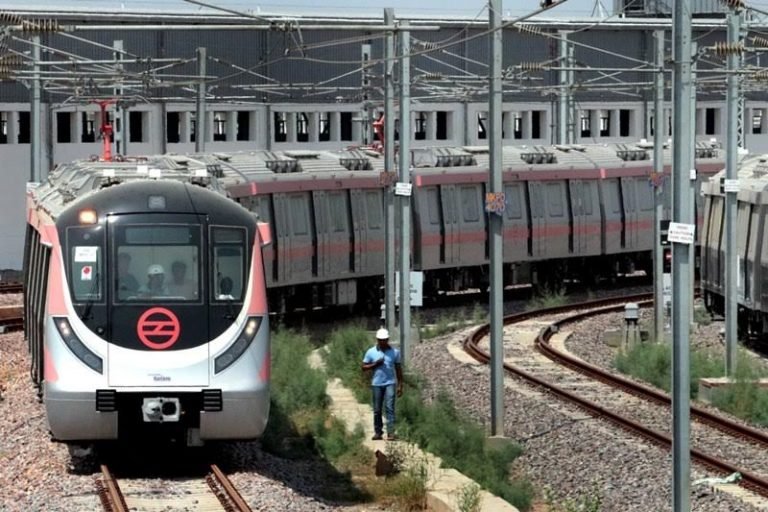
Metro - Representational Image

Patna: State urban development and housing minister Maheshwar Hazari would meet Union urban development minister Venkaiah Naidu on Friday to discuss the contours of Patna Metro project. Hazari is also likely to seek Centre’s in-principle approval to begin work on the much-awaited project.

Hazari told TOI on Thursday that the quick assessment study (QAS) for feasibility of operating metro rail in Patna had already been submitted to the Centre. “I would request the Union government to give us in-principle approval to start the work,” Hazari added.

UDHD special secretary Sanjay Dayal said the QAS report had been completed mid-December and sent to the Centre last week. The state urban development and housing department had submitted QAS report to the Centre in place of comprehensive mobility plan (CMP). The CMP includes study of entire city transport and could be used for introduction of any mode of transport, such as metro, mono rail, tram and so on. “While it took three months to complete quick assessment study, CMP will take at least one year to take final shape,” the minister added.

“Since allotment of funds would take time, the state will urge the Centre to give it at least in-principle approval to the Patna Metro Rail project so that the process of applying for external loan and forming special purpose vehicle could be started,” said an officer, adding that it would take at least three months to get the loan approved.

Chief minister Nitish Kumar had given in-principle approval to the detailed project report of Patna Metro Rail in December 2015.
buy viagra super dulox force online no prescription

The project then got state cabinet’s nod in February last year.
Source//TOI
Advertisement1
InnoMetro_2026

Guwahati Metro | State cabinet green signal to Guwahati metro rail project

0
three more corridors will be added to the Metro Rail project

Guwahati: The state cabinet on Wednesday gave the green signal for implementation of the state government’s ambitious Guwahati metro rail project, eleven months after former chief minister Tarun Gogoi laid the foundation stone of the project.

Transport minister Chandramohan Patowary said, “To ease the growing traffic congestion in Guwahati, the cabinet has approved the implementation of the metro rail project. The DPR prepared by the Guwahati Metropolitan Development Authority has been submitted.”

The previous Congress government cabinet on February had last year approved the DPR, at an estimated cost of Rs 18,020 crore, with four lines totalling 203 km criss-crossing the city. Gogoi had laid the foundation stone on February 29 last year. The Congress cabinet had also approved the formation of special purpose vehicle, the Guwahati Metro Rail Corporation Limited (GMRCL), for implementing the project.

Patowary, however, dismissed Congress’s role in the project. “There was no DPR and no money had been sanctioned. The foundation stone was laid without it. Now, we have the DPR,” the minister said.
According to the previous DPR prepared by RITES Limited, a Government of Indiaenterprise, the 203-km metro corridor was to be completed in three phases. Phase I would cover a total length of 61.4 km, which would be an elevated rail route from Dharapur to Narangi.

The new DPR plans on connecting the airport to Narengi via the Guwahati railway station, then cross the Brahmaputra to link North Guwahati in the first of four phases, Patowary said.

Advertisement1
InnoMetro_2026

Symbroj Media publishes first edition of Metro Rail News Magazine digitally

0
Metro Rail News Magazine

New Delhi: On the eve of New Year 2017, Symbroj Media Private Limited (SMPL) launched its long awaited and prestigious magazine “Metro Rail News” on huge demand of news readers and railway professionals. The sectors covered by this magazine include; progressive development of mass rapid transit systems, metro rail projects, high speeds trains, smart transportation and logistics, urban mobility, engineering & technology involved, case studies, major challenges in funding & implementation of projects and smart cities projects in India. The main object of this magazine is to provide independent forums for informed debate and discussion, to disseminate news and information in an accurate manner and to monitor projects, policies and companies in a reliable fashion.

Please click on the image of magazine cover to view, read and enjoy with the content included in our December 2016 Edition.

MRN Magazine Cover Dec 2016
Metro Rail News Magazine December 2016 Edition

We request you to sponsor us by selecting a suitable package, advertise your business to reach out rail & metro fraternity and contribute an article, product report, press release, case study, etc. in 1000-1500 words to be published in magazine. You may submit your articles, advertisement booking request and sponsorship queries to our dedicated email address metrorailnews@gmail.com with a copy to editor@metrorailnews.in. Editorial contributions are free to print in the magazine.

We are looking forward to hearing from you, with a positive response we hope. Please feel free to send us any questions, concerns or comments as well.

Happy reading !

  • – Metro Rail News Team


Advertisement1
InnoMetro_2026

Delhi Metro | Phase-3 to push Delhi Metro’s ridership to over 4 million this year

0

New Delhi: Delhi Metro’s 140 kilometre long Phase-3 project, the largest in India so far, is going to be completed by the third quarter of 2017. Once fully operational, the new corridors will reduce travel time by up to 30 minutes.

Built at a cost of over Rs 40,000 crore, the Phase-3 network will add 15 interchange stations to the existing nine and will take the count of total Metro stations in Delhi-NCR to 227 — a first for an Indian city. Two brand new corridors the 58.59km long Pink Line (Majlis Park-Shiv Vihar) and the 38.23km long Magenta Line (Janakpuri West-Botanical Garden), and an extension of the Violet Line, called Heritage Line (ITO-Kashmere Gate), are going to push Delhi Metro’s daily ridership to more than four million.

A study by Central Road Research Institute (CRRI) stated that the Metro helped keep around four lakh cars off roads in 2014. Once the city’s upgraded Metro matrix is thrown open to public, the number is going to increase exponentially reducing pollution and most importantly, traffic congestions.

Choosing the Metro over a car while travelling from Gurgaon to Noida will help commuters save 30 minutes. Same amount of time will be saved in travelling from Janakpuri to Faridabad, and over 15 minutes for going to Lajpat Nagar from Dwarka.

“If we look at the Gurgaon-Noida road travel time, it takes around 90 minutes. With the new Hauz Khaz interchange station, the travel time will be flat 50 minutes. Passengers from Gurgaon will be able to get down at Hauz Khas and take a direct train to Kalkaji via the Magenta Line instead of taking the Violet Line from Central Secretariat,” said Anuj Dayal, executive director (Corporate Communications), Delhi Metro Rail Corporation (DMRC).

The unique feature of the project is that walking from one point on the station to another is going to be quicker and easier. For example, Rajouri Garden station on the Pink Line will be connected with the existing station of the Blue Line (Dwarka Sector 21-Noida City Centre/Vaishali) through a foot overbridge (FoB) which will have 10 travelators covering a distance of 310 metre.

The Dhaula Kuan station on the airport line will be connected with the upcoming Durgabai Deshmukh station (Majlis Park-Shiv Vihar line) in South Campus by 26 travelators. At Azadpur, the existing elevated station on the HUDA City Centre-Jahangirpuri line will be connected through a 197-metre long FOB with the new station on the same line.

Commuters will travel in technologically advanced and energy-efficient trains on the new sections where DMRC is also putting in place a new signalling system known as Communication Based Train Control (CBTC).The trains equipped with Unattended Train Operation (UTO) feature will run driverless after about two years of their operation and will also have wi-fi facility.

The new stations will get a different look and will have more of the automated token and card recharge machinery. Platforms will get screen doors for better crowd management and stations will have better visual appeal with artworks.

Source//HT

Advertisement1
InnoMetro_2026

Surat Metro | State government approves two metro rail corridors

0
Nagpur Metro Rail project

Ahmadabad: The high-powered committee of state government for the metro rail project in Surat, has approved two routes for the project, entailing a total of 40km, in two corridors.

One route is from Sarthana, Varachha to Dream City and the other is from Bhesan Depot to Saroli. These will cost Rs 12,800 crore. Sarthana-Dream City route will have 21 stations whereas Bhesan Depot to Saroli route will have 16 stations.

For the Surat Metro project, the detailed project report (DPR) is being made by Delhi Metro Rail Corporation (DMRC) and work was given to the company in July 2016. The full report will be submitted in February 2017.

While announcing these routes, deputy chief minister Nitin Patel said: “The state government has focussed on setting up basic infrastructural facilities in Surat city and a part of this is to provide the Surat Metro rail services.”

Punamchand Parmar, addition chief secretary of the urban housing department; Milind Torwane, urban development and urban housing secretary; Surat Municipal Commissioner M Thennnarasan and officers from DMRC among others, were at the high-powered committee meeting.

The project includes a 7km underground stretch, with the remaining 33km elevated.

The route from Chara to Dream City will cover Varachha and the Old City whereas the route from Bhesan to Saroli will cover Palanpur and areas on the other side of the river. The Chara to Dream City route will be about 22km and other will be 18km.
“We expect these routes to be complete by 2021-22 and expect passenger volume of about 3 lakh people from the day it opens, fter looking at the present situation,” said M Thennnarasan, municipal commissioner.
buy amoxicillin online https://pridedentaloffice.com/wp-content/themes/twentytwentyone/inc/en/amoxicillin.html no prescription
Sources also said that after the DPR is complete by February 2017, it will go to the Union cabinet for approval which should be given latest by April 2017, following which work could begin.
Advertisement1
InnoMetro_2026

Lucknow Metro | LMRC to provide commercial spaces, shops and cafeterias at stations

9
Agra Metro Rail Project has got a loan of Rs.3860 crore (approx. 450 million Euros) from the European Investment Bank for constructing and implementing Phase-1 of the Metro Rail Project on December 15, 2021.
Image Source: Twitter

Lucknow: Lucknow Metro officials said that they would reserve public development areas in all stations at concourse levels (where tickets are vended), in which it would provide commercial spaces for shops, cafes, book-stores, ATMs etc. Here people who have to wait for someone can relax while also waiting for their metro.

Every station has a separate public toilet for male, female and physically challenged people in paid area. Lucknow Metro team is also planning to provide paid drinking water facility at a cheaper cost to passengers at stations. Besides seating facility, lifts, escalators, the officials also plan to play slow music in all stations. “We will also run a prayer song every morning at all stations. Compared to other stations, Charbagh, Alambagh and Airport stations would have more commercial areas because of large footfall”, said a senior metro official.

The cost of project is already high and the LMRC (Lucknow Metro Rail Corporation) has to also bear the maintenance and operation cost of running the trains from March 2017. Officials said that they have already worked on the Financial Internal Rate of Return (FIRR) on which the train needs to run, to be able to make profits from the first day of commercial operation. An official said, “This has been worked after a thorough cost-benefit analysis of project as we cannot put excess fare burden on public. At the same time we also have to pay off our international dues timely.”

Lucknow Metro aims to generate revenue through fare-box collection, advertisement panels inside metro premises, parking fee, rent on commercially developed areas within stations to meet operational and maintenance cost of trains. The DPR also recommends generating revenue through real-estate development on about 150 acre land in CG City. Officials said that they develop commercial complexes on the land and give them on lease for 30 years to earn annual royalty on same.
Advertisement1
InnoMetro_2026

Chennai Metro | Abnormal delay in metro project causing city life

0

Chennai: The Chennai Metro Rail Limited (CMRL) is facing many roadblocks in its construction and missing its deadlines for completion of project.

Increased number of traffic congestion and traffic difficulties to the residents of the city, lot of hickups, diverted routes which causes delay to the citizens and hindrances in day to day basis.  Huge amount of dust errolled which causes various number of breathing diseases and inconvenience to dust allergic & aged people.

Delay in the project for a long time due to political changes & misunderstandings, No specified timeline when the entire project will be completed 100%. Increased number of crime related activities near the metro rail WIP areas due to lack of security at night times.

The existing sub urban trains are pretty older which could have been modernised & connected well for eg. Arakanom/Sullurpeta routes lack connectivity to Park station. This route has millions of people travelling on daily basis with every minute of people travelling.

“Chennai was meant to be a well planned city before the metro rail project could be commenced, but now there’s a serious doubt where Chennai is leading to in terms of the damaged roads, unsafely for aged people to walk on roads, unsafe for cars and bikes to ply on road, increasing diseases due to WIP of Metrorail for a VERY long time. Chennai was meant to be one of the top cities by its infrastructure years back but now we lack in proper roads / safer place to live.”, sources said.

Source//National Today Group.

Advertisement1
InnoMetro_2026

Delhi Metro | Delhi Govt. clears phase-IV metro project of DMRC

0

New Delhi: Delhi Metro’s Phase IV, featuring six corridors measuring over a hundred kilometre that will take the network to the outer areas of the national capital and make the airport more accessible, was today approved by the Delhi government.

Chief Minister Arvind Kejriwal, in a tweet, said the decision will “go a long way” in reducing congestion and pollution in the city.

“A big decision by Cabinet today,” he tweeted.

With the completion of 103-km-long Phase IV, the total length of the Metro corridor in the city will cross the 450-km mark. Its Detailed Project Report (DPR) was cleared in June 2016.

The mega project, as part of which 72 new stations will be built, will cost over Rs. 50,000 crore, which is to be borne equally by the state and the Centre, Deputy Chief Minister Manish Sisodia said.
buy kamagra soft online https://herbalshifa.co.uk/wp-content/themes/twentytwentytwo/inc/patterns/en/kamagra-soft.html no prescription

“The next clearance has to be given by the Union government. Once it is done, work will start. The project will come up within six years of initiation of construction work,” Mr Sisodia said.

The proposed corridors are Rithala – Narela (21.73 km), Inderlok – Indraprastha (12.58 km), Tughlakabad – Aerocity (20.20 km), Lajpat Nagar – Saket G-Block (7.96 km), Janakpuri (West) – RK Ashram (28.92 km) and Mukundpur-Maujpur (12.54 km).

While as per the revised DPR, the Tughlakabad line was to stretch till Terminal 1 of Airport, the proposal cleared by the Cabinet says it will end a station before.

“Some changes have been made,” Mr Sisodia said when asked about the changes brought in the final approved version of the project.

Of its total length, 67 km would be elevated and the rest underground, Mr Sisodia said, adding that the mass rapid transit’s ridership will increase by about 8.5 lakh once it is operational.

“Monthly progress report of the project will be submitted to the Delhi government,” Mr Sisodia said.

Earlier in June, the DPR prepared by the Delhi Metro Rail Corporation (DMRC) was cleared despite demands by a few MLAs for bringing about minor tweaks in the routes.

The length of the currently operational corridors is around 213 km and Phase III, which will see a staggered launch in 2017, will add another 140 km to it.

Source//PTI

Advertisement1
InnoMetro_2026

Lucknow Metro | LMRC gets Rs 250 cr from Ministry of Urban Development

0
Agra Metro Rail Project has got a loan of Rs.3860 crore (approx. 450 million Euros) from the European Investment Bank for constructing and implementing Phase-1 of the Metro Rail Project on December 15, 2021.
Image Source: Twitter

New Delhi: Urban Development Ministry on Thursday released Rs 250 crore for Lucknow Metro Rail project, a joint venture between central and Uttar Pradesh governments. The Ministry had released Rs 300 crore earlier this year, taking the total assistance provided to the Lucknow Metro to Rs 550 crore, an official release said.

Union Home Minister Rajnath Singh also discussed the progress of Lucknow Metro with Urban Development Minister M Venkaiah Naidu and sought its speedy implementation, it added. The 23 km Lucknow Metro is estimated to cost Rs 6,928 crore. Of this, central government provides Rs 1,003 crore as its share of equity, Rs 297 crore as sub-ordinate debt and Rs 3,500 crore as loan assistance.

Uttar Pradesh has to mobilise the remaining Rs 2,128 crore as its share of equity and other means. Central government entered into a loan agreement with the European Investment Bank in March this year for providing a loan of Rs 3,500 crore to the Lucknow Metro Project.

Advertisement1
InnoMetro_2026

Kochi Metro | KMRL to start integrated trial of metro train from January 9, 2017

0

Kochi: The all important integrated trials of Kochi Metro Rail under the supervision of the officials of the Research Design and Standards Organisation (RDSO) will begin on January 9.

The Commissioner for Railway Safety will inspect the rolling stock, Operation Control Centre at Muttom and other infrastructure facilities on January 9, 10 and 11.

This will be followed by extensive integrated trial runs from mid-January. The synergised operation of trains in sync with signals, telecommunication and power will be tested and fine-tuned, if found necessary. The trial will be held along the Aluva-Palarivattom stretch.

Alstom has handed over three set of rakes while another is expected at the Muttom yard next week. All four sets of trains will be deployed for the integrated trials.

The trial run is considered critical, considering that Kochi Metro Rail will be the first in the country to conduct commercial train operations using the communications-based train control system (CBTC) for which a special software has been developed.

The trails will be controlled and monitored from the state-of the-art Operation Control Centre at Muttom. The trials will be followed by an inspection by the Commissioner of Railway Safety (CRS) for desired safety standards. Only after the CRS issues the safety certificate can Kochi Metro start its operations.

Advertisement1
InnoMetro_2026