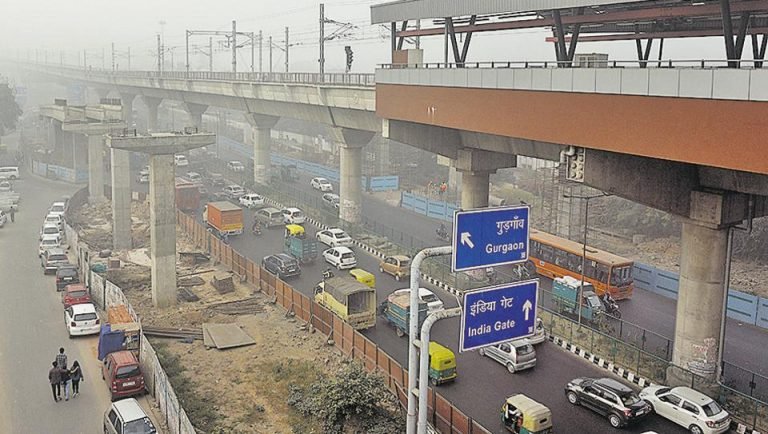
New Delhi: The Commissioner for Metro Railway Safety (CMRS) is scheduled to undergo inspection of newly completed stretch of Delhi Metro’s Pink Line between February 26 and 28 before a line is opened for public.
Recently the trial runs on the 20.6 km-long Majlis Park-Durgabhai Deshmukh South Campus stretch of the upcoming line between Majlis Park and Shiv Vihar were “succesfully” conducted, and the section is awaiting safety clearance from the Commissioner for Metro Railway Safety (CMRS).
According to Delhi Metro official, if the safety clearance received from CMRS then the section will be opened for public very soon.
The stretch for safety inspection constitutes one-third of the entire 58 km-long line and has 12 stations including three interchange stations at Azadpur, Netaji Subhash Place and Rajouri Garden.
Once the line is operational in April 2018 (as expected), a journey from South Campus to Vishwavidyalaya will take around 35 minutes with an interchange at Azadpur.
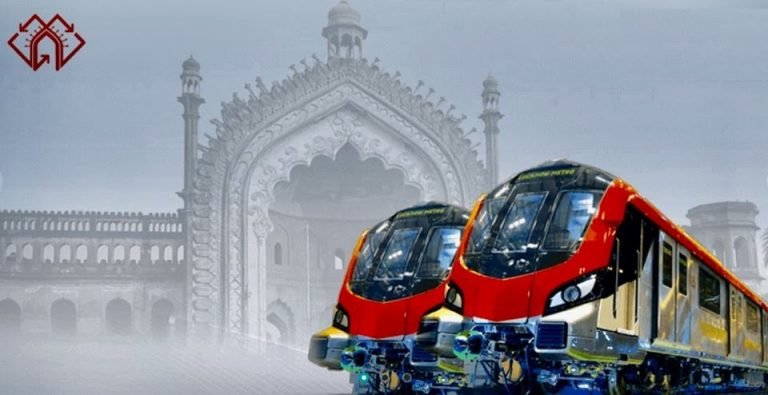
The Lucknow Metro Rail Corporation (LMRC), a joint venture company of Govt. of India and Govt. of Uttar Pradesh, inviting online applications from young, dynamic and motivated persons of Indian nationality for the following posts for Lucknow Metro Rail Project:-
Executive Category-
Assistant Manager/Civil – 7 posts
Assistant Manager/Electrical – 6 posts
Assistant Manager/S&T – 3 posts
Assistant Manager/Architect – 3 posts
Assistant Manager/Operations – 2 posts
Assistant Manager/IT – 1 post
Assistant Manager/Finance – 1 post
Assistant Manager/HR – 2 posts
Assistant Company Secretary – 1 post
Assistant Manager/Public Relations – 2 posts
Non-executive Category-
Station Controller cum Train Operator(SC/TO) – 101 posts
Customer Relations Assistant (CRA) – 49 posts
Junior Engineer/Civil – 31 posts
Junior Engineer/Electrical – 35 posts
Junior Engineer/S&T – 27 posts
Office Assistant/HR – 2 posts
Accounts Assistant – 1 post
Public Relations Assistant – 2 posts
Maintainer/Civil – 17 posts
Maintainer/Electrical – 65 posts
Maintainer/S&T – 28 posts
Important dates:
Online Registration : 23.02.2018 to 27.03.2018
Date of written examination: for SC/TO – 16.04.2018 and for others 06.05.2018
New Delhi: The Delhi Metro Rail Corporation (DMRC) invites open e-tenders from agencies on international competitive bidding (ICB) basis for the design, manufacture, supply, testing, commissioning and training of 36 numbers standard gauge cars for its Airport Express Line. The estimated cost of tender is Rs. 3960 million (excluding taxes).
The deadline to submit bids is 15th March 2018. The procurement of these cars will be funded by DMRC.
How to participate?
Bidders are required to enroll on the e-Procurement module of the Central Public
Procurement Portal (URL: https://eprocure.gov.in/eprocure/app) by clicking on the link
“Online bidder Enrollment” on the CPP Portal which is free of charge.
As part of the enrolment process, the bidders will be required to choose a unique
username and assign a password for their accounts.
Bidders are advised to register their valid email address and mobile numbers as part of
the registration process. These would be used for any communication from the CPP
Portal.
Upon enrolment, the bidders will be required to register their valid Digital Signature
Certificate (Class II or Class III Certificates with signing key usage) issued by any
Certifying Authority recognized by CCA India (e.g. Sify / nCode / eMudhra etc.), with
their profile.
Only one valid DSC should be registered by a bidder. Please note that the bidders are
responsible to ensure that they do not lend their DSC’s to others which may lead to
misuse.
Bidder then logs in to the site through the secured log-in by entering their user ID /
password and the password of the DSC / e-Token.
For more information regarding submitting online bids may be obtained at https://eprocure.gov.in/eprocure/app
The Delhi Airport Metro Express (DAME) is now operated by DMRC from New Delhi Metro Station to Dwarka Sector 21, linking the Indira Gandhi International Airport. Existing Eight six-car trains supplied by CAF Beasain were imported from Spain.
At present the line supports a speed of 80 km/hr providing for a 19-minute journey from New Delhi station to the Airport station.
Lucknow: The Lucknow Metro Rail Corporation (LMRC) bagged an award for undertaking and implementing Lucknow Metro – one of the smartest transport initiative of the Government. LMRC has been awarded with the ET Now CSR Leadership Award 2018 under the “Smart Transport Initiative”.
It is yet another achievement for Lucknow Metro Rail Corporation which speaks a volume about the sincere efforts of Lucknow Metro for providing the Mass Rapid Transit system (MRTS) to the people of Lucknow in less than three years.
This award was given on 18.02.2018 by Dr. R.L Bhatia, Chief Editor and Founder, World CSR Day to Smt. Pushpa Bellani, Company Secretary, Lucknow Metro in a function organised by ET Now at Taj Lands End, Mumbai. This event was attended by dignitaries from different sectors such as infrastructure, real estate, road transport, technology, healthcare, education, banking, agriculture, etc.
Mumbai: Virgin Hyperloop One announced the Indian State of Maharashtra’s intent to build a hyperloop between Pune and Mumbai beginning with an operational demonstration track.
Virgin Group Founder and Virgin Hyperloop One Chairman Sir Richard Branson announced the Framework Agreement in the presence of the Hon’ble Prime Minister Narendra Modi and the Hon’ble Chief Minister of Maharashtra Devendra Fadnavis to begin the development of the route. This historic signing at the Magnetic Maharashtra event was also attended by Virgin Hyperloop One board members and key investors Sultan Ahmed bin Sulayem, CEO and Group Chairman of DP World, and Ziyavudin Magomedov, Chairman of Summa Group.
Recognizing the Maharashtra government’s contribution to the country’s economy, Indian Prime Minister Narendra Modi said, “51 per cent of total investments in India have come to Maharashtra, and the state is attracting global investors. The state’s overall development in the past few years is a shining example of change thinking and improving conditions in the country. Maharashtra government was ahead of all other Indian states in terms of infrastructure spend and the state is on its way to achieving its bold vision of a trillion dollar economy.”
Hyperloop (Photo: Hyperloop One)
“I believe Virgin Hyperloop One could have the same impact upon India in the 21st century as trains did in the 20th century. The Pune-Mumbai route is an ideal first corridor as part of a national hyperloop network that could dramatically reduce travel times between India’s major cities to as little as two hours,” said Sir Richard Branson. “Virgin Hyperloop One can help India become a global transportation pioneer and forge a new world-changing industry.”
The hyperloop route will link central Pune, Navi Mumbai International Airport, and Mumbai in 25-minutes, connecting 26 million people and creating a thriving, competitive megaregion. The high-capacity passenger and cargo hyperloop route eventually will support 150 million passenger trips annually, saving more than 90 million hours of travel time, and providing citizens with greater opportunities and social and economic mobility. The hyperloop system will also have the potential for the rapid movement of palletized freight and light cargo between the Port of Mumbai and Pune, creating a robust backbone for on-demand deliveries, supply chains, and next-generation logistics.
The Pune-Mumbai route could result in USD billion (INR ₹350,000 crores) in socio-economic benefits (time savings, emissions and accident reduction, operational cost savings, etc.
) over 30 years of operation, according to an initial pre-feasibility study completed by Virgin Hyperloop One. The 100% electric, efficient hyperloop system will ease severe expressway congestion and could reduce greenhouse gas emissions by up to 150,000 tons annually.
“With Virgin Hyperloop One, we can create a sustainable infrastructure that will enhance the State of Maharashtra’s competitiveness and attract new investment and businesses,” said the Chief Minister of Maharashtra Devendra Fadnavis. “The Pune-Mumbai hyperloop route will be an economic catalyst for the region and create tens of thousands of jobs for India’s world-class manufacturing, construction, service, and IT sectors and aligns with Make in India initiatives.”
The Pune-Mumbai hyperloop project will begin with a six-month in-depth feasibility study which will analyze and define the route alignment including environmental impact, the economic and commercial aspects of the route, the regulatory framework, and cost and funding model recommendations. The feasibility study will build upon the findings of the pre-feasibility study signed in November 2017 between the Pune Metropolitan Regional Development Authority and Virgin Hyperloop One.
The project will enter a procurement stage upon the successful completion of the feasibility study to determine the public-private partnership structure. Construction of the Pune-Mumbai hyperloop route would commence after procurement and will be completed in two phases, beginning with an operational demonstration track built between two points on the route. The demonstration track will be constructed in two to three years from the signing of the agreement and serve as a platform for testing, certifying, and regulating the system for commercial operations. The second phase will target to complete construction of the full Pune-Mumbai route in five to seven years. Future projects could also extend the route to link central Pune with the New Pune International Airport and Jawaharlal Nehru Port in Mumbai with Pune’s industrial economic zones.
“The Pune-Mumbai hyperloop project will ultimately be executed by a public-private partnership which will save taxpayer money while delivering a transport option that will help the State of Maharashtra support economic growth, improve sustainability, and meet the transport demands,” said Kiran Gitte, CEO of the Pune Metropolitan Region Development Authority.
“We have always believed that India would be a tremendous market for hyperloop. The Pune-Mumbai route is one of the strongest economic cases we have seen to-date,” said Virgin Hyperloop One CEO Rob Lloyd. “The State of Maharashtra has made a strong commitment to building the first hyperloop route in India. We are looking forward to partnering with the State as well as our partners to make the Pune-Mumbai route a reality.”
National Capital Region Transport Corporation (NCRTC) – a Joint Sector company of Govt of India and States of Delhi, Haryana, Rajasthan and U.P, under the administrative control of Ministry of Urban Development, is mandated for implementing the Regional Rapid Transit System (RRTS) project across the NCR of India, ensuring a balanced and sustainable urban development through better connectivity and access.
NCRTC invites application from experienced persons for the following positions:-
Design Expert (Civil) – 1 post
Planing Expert (Civil) – 1 post
Architect – 1 post
Manager/HR – 1 post
Last date to apply: 12 March 2018
Where to submit application form:
Career Cell, HR Department National Capital Region Transport Corporation 7/6, AMDA Building, Siri Fort Institutional Area, August Kranti Marg, New Delhi – 110049
Bengaluru: The Karnataka Government has allocated around Rs 5,000 crore as its share towards ongoing Phase-II projects of the Bangalore Metro Rail Corporation Ltd (BMRC) in budget. The government also made public the proposed length and route of Metro Phase-III for the first time.
According to a BMRC official, “The state has given us a contribution of nearly Rs 5,000 crore. We had requested for Rs 5,600 crore in this year’s budget.” The sum will be utilised towards ongoing Phase-II works.”
The 72.1 km Phase-II is an extension of all the four Phase-I lines as well as two new lines from Nagawara to Gottigere and the R V Road to Bommasandra line. The entire project costs Rs 26,405 crore out of which 55% is provided jointly by the Centre and the state and 45% is taken as loans. The Union budget also allocated funds for BMRC. This is the highest ever budgetary allocation for BMRC in the state budget.
In 2016, it was earmarked Rs 1,881 crore, while in 2017 it was allocated Rs 2,566.39 crore.
The Chief Minister also made public the proposed route map for Metro Phase-III. The budget specifies 105.55 km as its total length.
Sources said that the Metro line from JP nagar to KR Puram via Hebbal, Toll Gate to Kadabagere, Gottigere to Basavapura, R K Hegde Nagar to Aerospace Park, Kogilu Cross to Rajanakaunte, Bommasandra to Attibele and Ibaluru to Karmelaram is proposed to be taken up. Most of the proposed routes will be elevated. The exact costs are yet to be worked out, but it is likely to cost around Rs 20,000 crore.
Asked about the present status of the project for which BMRC is readying the Detailed Project Report (DPR) on its own, a senior official said, “The preparation of the DPR has just begun. Traffic analysis and detailed studies as well as the feasibility of the route will be analysed. Only then can the entire route be finalised.
” It is too early to specify any deadline for the project, he added.
The CM also reiterated that Metro Phase-II will be thrown open for commercial operations by end of March in 2021. Union Minister of State for Statistics and Programme Implementation Vijay Goel had announced this deadline in mid-January this year during his visit to the city.
Pune: The Maharashtra Metro Rail Corporation Limited (Maha Metro) said on Thursday that the project is not facing any financial crunch at present. Around Rs300 crore has been spent on the ongoing work on the two Metro corridors in the city and most of the expenses have been on civil work.
This project received budgetary allocation of Rs 582 crore for the current financial year. The Maha Metro has sought allotment of Rs 750 crore and for the next financial year (2018-19).
According to Maha Metro managing director Brijesh Dixit, the corporation was in talks with two foreign firms for loan and the agreement was expected to be finalized by June. The Union government’s department of economic affairs had posed the Pune Metro project to European Investment Bank and AFD France. The talks with both the institutions are under way.
According to Maha Metro official, the preliminary work pertaining to planning and designing on the Swargate multimodal hub had started. The plan would be executed without dismantling the existing flyovers and grade separator.
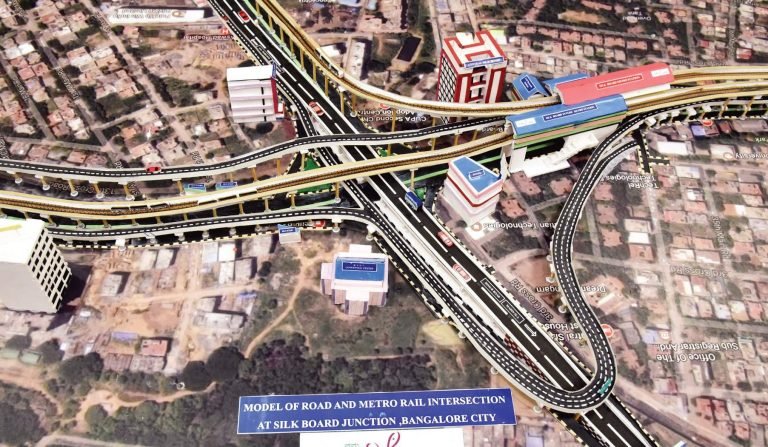
Bengaluru: The State Cabinet on Thursday gave its nod for floating tenders for the metro project linking Silk Board and K.R. Puram, under Phase 2 (A). It also accorded approval for innovative financing initiatives of BangaloreMetro Rail Corporation Limited to raise money.
The BMRCL had signed an MoU with Intel India and Embassy Group to raise funds for construction of two metro stations at Kadubeesanahalli and Bellandur.
The Cabinet decision will help the BMRCL to reach an agreement detailing terms and conditions with corporate entities based on the MoU.
The two corporate bodies have agreed to contribute ₹100 crore each to BMRCL payable in instalments, and they will get naming rights for a period of 30 years.
In other words, the corproate’s name will be prefixed to that of the station, like Embassy Kadubeesanahalli metro station. As per the terms of understanding, the companies will be offered 3,000 sqft space at the station for 30 years for retail purposes; advertisement space of 1,000 sq ft for the same period; and direct access from the concourse/ platform to the campus/ premises for 99 years.
A senior official of the BMRCL said, “Following the decision by the cabinet, the BMRCL will float a tender to execute the project.” The BMRCL is also in touch with other corporate bodies, real estate companies functioning along the stretch.
The Cabinet had earlier imposed a rider on the BMRCL that metro work on this line should commence only after it raised at least ₹250 crore through leasing of land, and received a commitment of another ₹250 crore through innovative financing.
The 17-km metro stretch will have 13 stations and is estimated to cost ₹4,202 crore. The State government had asked the BMRCL to raise ₹1,100 crore through innovative financing to implement the project.
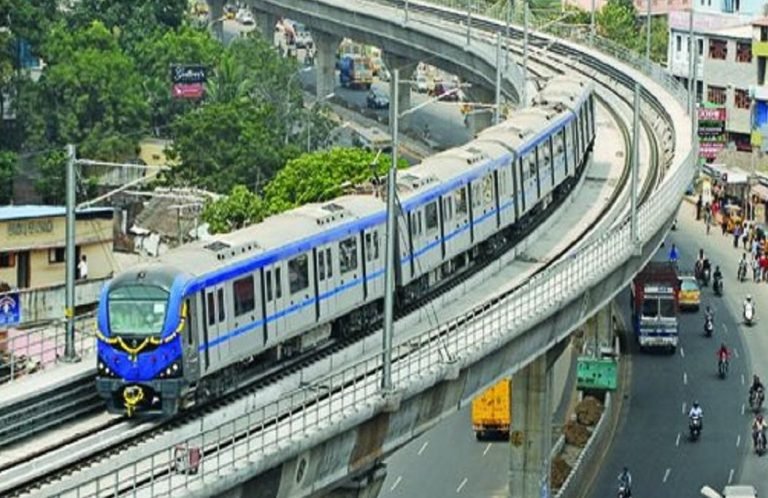
Chennai: The Chennai Metro Rail Limited (CMRL) is planning to invest Rs 400 crore to start work on its phase-II by floating tenders for three consultants to design civil structures and prepare drawing for execution of civil, architectural, track and other works.
The decision was taken during a high-level meeting wherein tenders will be floated to design the alignment of both elevated and underground structures as well as proposed Madhavaram depot.
Chennai Metro Rail will fund the project. The cost will be adjusted once the project is approved. Similarly, Chennai Metro Rail will also start the geo-technical investigation for the second phase and tenders in this regard will be floated soon, sources added.
Meanwhile, it is learnt that only 50 per cent of the phase-II of Metro Rail will be initially funded by Japan International Cooperation Agency (JICA) and tenders are likely to be awarded in this financial year.
Chennai Metro Rail had already submitted a revised Detailed Project Report (DPR) seeking Rs 80,000 crore for implementing the second phase which will have three corridors. These include Madhavaram-Siruseri, Chennai Mofussil Bus Terminus (CMBT)-Lighthouse and Madhavaram-Sholinganallur. The proposal is being revised to extend the rail line from Lighthouse near Marina Beach to Poonamallee on the city’s outskirts at an additional cost of Rs 3,850 crore.
However, the DPR has yet to get the approval from the Centre as the State is yet to come up with a revised Comprehensive Urban Mobility Plan (CUMP) under the National Transit Oriented Development Policy formulated by the State.
Sources indicated that Metro Rail has started work to prepare a CUMP after Rs 2.12 crore was sanctioned for the project during the beginning of this month.The first phase of the Metro commenced service in 2015.
According to Detailed Project Report (DPR), Rs 88,000 is estimated cost of phase-II project.