Home Blog Page 787

Alstom and partners launch Transport Decarbonisation Alliance at ITF 2018

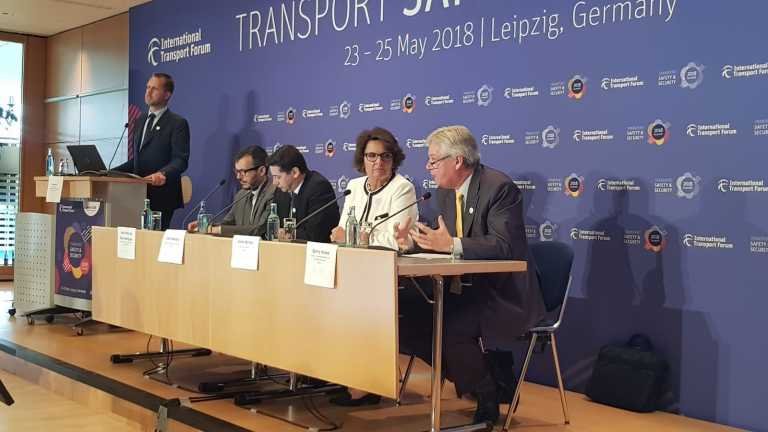
Alstom and partner companies, cities and countries, today assembled in Leipzig, Germany, for the official launch of the Transport Decarbonisation Alliance (TDA), a coalition aiming to catalyse the accelerated decarbonisation of the transport sector. The event takes place as part of the International Transport Forum (ITF), running from May 23rd to 25th.

With transport emissions today accounting for 25% of energy-related greenhouse gas emissions, the TDA brings together leading countries, cities and companies into a “coalition of the willing” seeking to transform the global transport sector to achieve net-zero emissions before 2050. The TDA, which forms part of the 12 commitments made at the One Planet Summit hosted by French President Emmanuel Macron in Paris, France in December 2017, will facilitate discussion on decarbonisation in the context of global, regional, national, local and corporate policy processes, while demonstrating that decarbonisation is technically feasible, economically attractive, and brings broad social and environmental benefits.

“Carbon neutrality in the mobility sector is achievable; all transportation systems need to be reinvented and transformed to rise to this challenge. With our partners in the Transport Decarbonisation Alliance we look forward to being at the forefront of this transition,” said Henri Poupart-Lafarge, Alstom Chairman & CEO.

Alstom joins other founding member companies CEiiA, EDP, ITAIPU Binacional, Michelin, and PTV. TDA member countries are Costa Rica, Finland, France, Luxembourg, Netherlands and Portugal, with member cities Curitiba (Brazil), Rotterdam (Netherlands), Lisbon (Portugal), and Porto-Gaia-Matosinhos Atlantic Front (Portugal).

Alstom has been engaged in the fight against climate change for several years through its sustainable innovations, its participation in the Conference of Parties (COP) events and its support for the Sustainable Low Carbon Transport Partnership (SLoCaT) and the Paris Process on Mobility and Climate (PPMC).

In order to help drive carbon neutrality in transportation, Alstom has defined its own strategy along three lines: placing energy-efficient electric solutions at the heart of its portfolio; enabling energy transition for sustainable mobility solutions; and decarbonising its operations.

As an example of its world-leading innovations, Alstom in 2016 presented the Coradia iLint, the world’s first hydrogen fuel cell train. The regional train is completely emission-free and offers an unprecedented alternative to diesel trains for operation on non-electrified railway lines. Powered by a fuel cell in which hydrogen is converted into electrical energy, the Coradia iLint only emits steam and water. Alstom proposes the Coradia as part of a full system, including the trains their service, as well as the infrastructure necessary for fueling them. The train will enter regular service on the Cuxhaven-Bremervörde route in Lower Saxony, Germany, during 2018. Earlier this year, it won the GreenTec Award 2018 in the category Mobility by Schaeffler.
Kochi Metro | Taxi providers Uber partners with Kochi Metro Rail Network

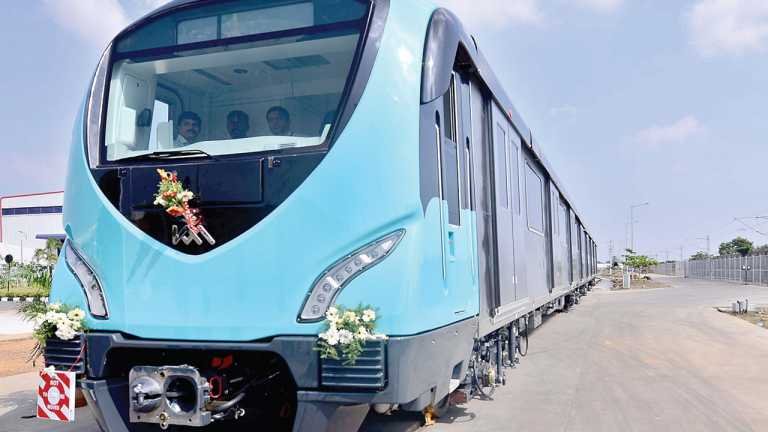
Kochi: Kochi Metro is setting up new benchmarks when it comes to offering hassle-free commute. Kochi Metro Rail Limited (KMRL) in an innovative move partnered with Uber, the online cab service provider to cab services to Kochi Metro Rail commuters. In the first phase Uber will be made operation in 13 metro stations as the last mile connectivity alternative. This move aims are reducing traffic and congestion issue with fewer cars plying on the route.

Uber partners with Kochi Metro to provide last mile connectivity to commuters

As per the plan Kochi Metro rail commuters will be able to book at ride from 13 stations earmarked for the project. These include Pathadipalam, Aluva, Companypady, Pulinchodu, Kaloor, Muttom, Maharajas College, Edappally, Lissie, Palarivattom, Changampuzha Park and CUSAT.

Managing director, Kochi Metro Rail Limited,  A P M Muhammed Hanish shared that by introducing this facility they are looking to bring about a qualitative change when it comes to last mile connectivity alternative. With this partnership Kochi Metro is making available various modes of transportation which will offer a happy travel experience to commuters. He stressed that the tie-up with Uber is a very important move in offering stress free travel to those using Kochi Metro Rail network.

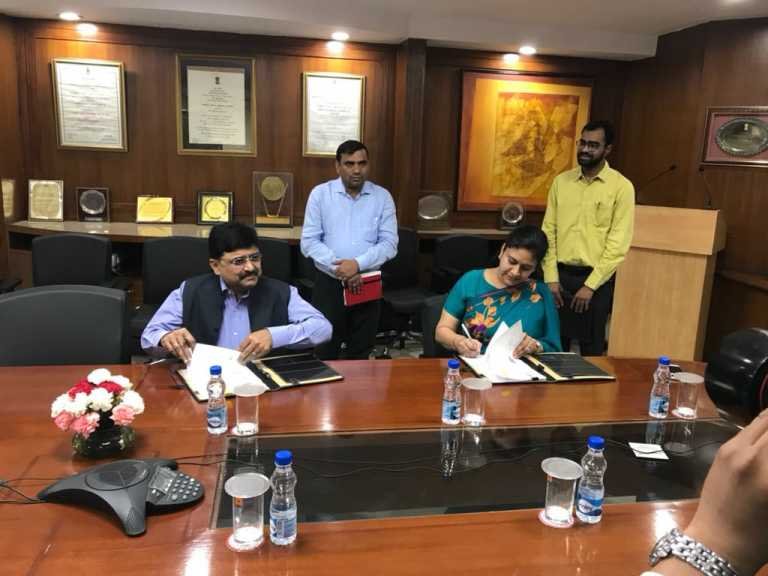
Uber on its part is happy with the partnership. General manager,  South, Uber India, Christian Freese in a media briefing Uber aims to offer sustainable and accessible transport facilities. Uber will work as a complementing service to the public transport network (metro). Freese also said that they with this tie-up, commuters will be able to come and exit Kochi Metro Rail network easily. They are happy to partner with KMRL and together they will work to redefine urban mobility’s future.

This is a unique partnership that will make public transport system more reliable and most frequented by commuters. With multiple options available, people will be able to plan their travel easily and reach destination on time.


Bahadurgarh Metro | DMRC team inspects Mundka-bahadurgarh route before final safety trial

Bahadurgarh: There is good news for people waiting for the Metro train to reach Bahadurgarh. If the trial is okay, then they will have to wait longer for only 30 days. After this, the Metro train will start run for 2 lakh people of Bahadurgarh. For this, Commissioner of Metro Railway Safety (CMRS) will conduct a final inspection of the Metro corridor on May 30 for important investigations before opening of Mundka-Bahadurgarh Metro corridor. On Tuesday, the a team the Delhi metro officers came to Bahadurgarh to investigate the preparation. During this period, minor investigation of 11.182 kilometer long elevated section track, signal, station, safety from Mundka to Bahadurgarh were also done.

DMRC writes letter for taking Safety Clearance Certificate

Only after satisfying the safety arrangements, the officials issue safety certificates, then the metro station will be opened for the public. DMRC officials said that the CMRS letter has already been received by DMRC on Monday. Earlier, DMRC had written a letter to CMRS to provide safety clearance to run metro train upto 85 km per hour in Line-5 from Mundka to City Park, due to which Commissioner Metro Rail Safety Shailesh Kumar Pathak will inspect the corridor with his team.

11.182 km long elevated track will be examined, 7 metro stations will also check the system. After opening of the route commuter will reach Mundka to Bahadurgarh city park in 20 minutes.

Trial test run is being conducted from Mundka to Bahadurgarh Metro corridor from December last year. After a one-week trial in December 2017, DMRC Chief Mangu Singh also reached the spot on December 13, 2017 to take stock of this line.

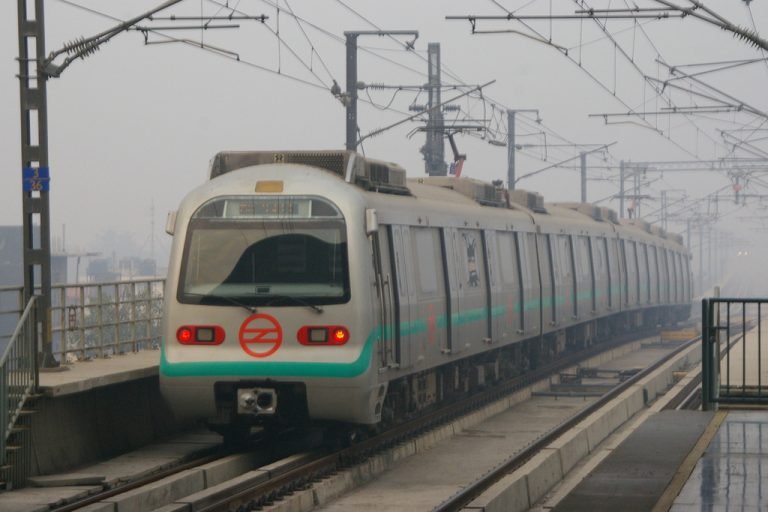
According to the DMRC, this corridor has the specialty that it is the first network in Delhi-NCR, which is quite straightforward. There is very little winding on this corridor. All stations in this line passing through the middle of Delhi-Rohtak road are elevated. This is the extension of the green line. The line from Indralok has Mundka’s extension line, which is already elevated. The last name of the station is named Mundka Industrial Area, Ghevara, Tikri Kalan, Tikri Border, Modern Industrial Estate, Bus Stand and City Park. Of these, 4 stations – Mundka Industrial Area, Ghera, Tikri Kalan and Tikri Border are made in Delhi, while three further stations are in Modern Industrial Estate, Bahadurgarh Bus Stand and City Park in Haryana. Besides this, a new metro depot has been built near Modern Industrial Estate Metro Station to provide adequate space for maintenance on both sides. After the launch of this line, people will be able to reach Mundka in just 20 minutes, Indralok in 45 minutes and Kirti town in 50 minutes from City Park. 6 coach trains on the Mundka-Bahadurgarh metro line will run only

Even before the commencement of the metro, demand for renaming of stations falling in Bahadurgarh is also catching up. Many social and political organizations do not agree with the names of Metro stations being built in Bahadurgarh.

In front of the authorities today, local people kept demanding that one station has not been named after Bahadurgarh. In such a way, the person entering Bahadurgarh from Delhi will know how Bahadurgarh will be known and some of the organizations are demanding the names of the stations named after martyrs and leaders, for which there have been many demonstrations and expeditions. At the same time, the DMRC has named the board of names at all the stations. The officials heard the questions of the people but of course no one got the answer.

DMRC Director Project DK Saini, Director Operation AK Garg started the investigation after reaching the City Park Metro Station with officials associated with the project. Investigated by the depth of the newly built City Park Metro. DMRC directors ordered all officers to complete all pending work before May 30. On this occasion, he sat in the petrol vans and examined the hours.

Land acquisition case reached to Supreme Court

Mundka-Bahadurgarh Metro has lost its deadline several times due to the screwed trap in land acquisition for the line of Metro yard. Due to lack of land for the yard line, the project of Metro has been delayed. DMRC has constructed depot in sector 9. To reach here, the showrooms are hanging. There is a scope for less compensation. Now this matter is in the Supreme Court. At the moment, the metro can be run directly, leaving the depot.

Ghaziabad Metro | GDA plans to form Ghaziabad Metro Rail Corp. to run metro in city

Ghaziabad: There is continuous hindrance to complete metro rail construction work from Noida Sector-62 to Sahibabad and Vaishali to Mohan Nagar due to the fund issue in the proposed metro route. Ghaziabad Development Authority (GDA) has asked DMRC to prepare a model of funding on the pattern of SPV (Special Purpose Vehicle). Under this, Ghaziabad Metro Rail Corporation (GMRC) is set to be set up in line with Lucknow Metro Rail Corporation (LMRC) and Noida Metro Rail Corporation (NMRC). On Tuesday, it was discussed in a meeting with DMRC regarding the funding pattern of Metro rail projects under the leadership of GDA Vice Chairperson Ritu Maheshwari.

DMRC is directed to submit their report on this till Thursday. On May 25, a decision will be taken in the meeting chaired by Chief Secretary Rajiv Kumar. If there is a green signal then the proposal will be sent to the Urban Development Ministry after approval of the state cabinet.

One of the biggest obstacles to form SPV model is that it can be applied only when the metro route is at least 30 km. To meet this issue, GDA has prepared a proposal for two more metro routes. According to this, there will be a route between U.P. gate to Pratap Vihar via AKG Engineering College. The second route will be proposed from New Bus Adda to Dadri via Lal Kuan.

Lucknow Metro | LMRC received ISO 14001 2015 certification for its corridor

Lucknow: Adding another feather to its cap, Lucknow Metro Rail Corporation (LMRC) has an upgraded Integrated Management System (IMS) certification for International Organisation for Standardization (ISO) 14001:2015 and the Occupational Health & Safety Assessment Series (OHSAS) 18001: 2007. This certification comes for the design and construction of Lucknow metro rail corridor starting from Chaudhary Charan Singh Airport Metro station to Munshipulia Metro station.

The stretch has 21 stations along with one depot belonging to the Lucknow Metro Rail Project, Phase- 1A. The approximate total length of the stretch is around 23 km. During the construction of Priority Section starting from Transport Nagar to Charbagh station and one Depot, LMRC had commenced certification of OHSAS 18001: 2007 & ISO 14001:2004

The officials at LMRC are buoyant and have informed that the along with them the agencies that are part of the construction project too have received certifications. These agencies will work along with LMRC to accomplish the goal to offer healthy and safe work environment to members of the staff, workers and common public in general.

After the certification the scope of work has increased in the area of civil construction for Lucknow metro rail stations. These would include the the Chaudhary Charan Singh Airport Metro station and the Munshipulia Metro station.

ISO 14001 is an Environmental Management System (EMS) which makes available a structure for evaluating and improving an organization’s environmental impact. On the other hand OHSAS 18001 is an Occupational Health and Safety Management System (OHSMS) which offers a system for measuring and improving an organization’s health and safety impact.

LMRC is taking all necessary steps to ensure the Lucknow Metro Rail project is completed as per the desired timeline. The officials are ensuring all safety measures are adopted while taking up construction work.

Currently the officials are also helping Lucknow Municipal Corporation to collect house tax where commuters can use the ‘GoSmart’ card to pay taxes up to Rs 3,000.  Talks are on between LMRC and LMC to start this facility are metro stations.

Kochi Metro| Solar power plan inaugurated at Kochi Metro Rail project

Kochi: At Kochi Metro Rail’s operational control centre located at Muttom, a 2,670 photovoltaic (PV) solar plant was inaugurated by managing direction of Kochi Metro Rail Limited (KMRL), A.P.M. Mohammed Hanish.  This project aims to boost the share of solar energy to 19.4% of metro’s total energy utilization at Kochi Metro Rail.

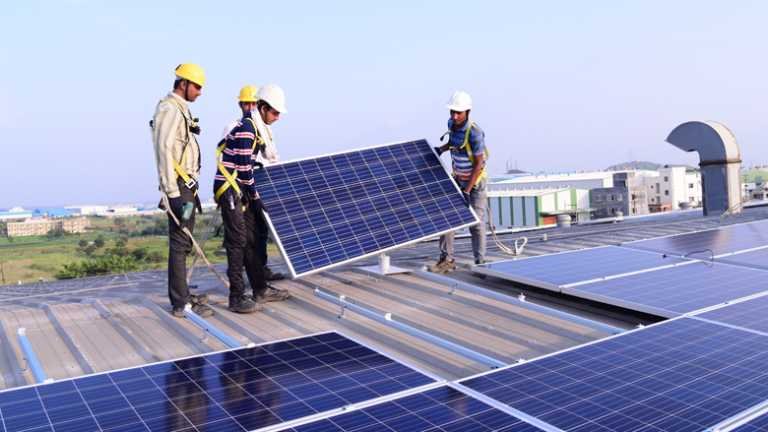
During the first phase of Kochi Metro Rail solar power was to be generated from the rooftop plants. These would be installed at 22 metro stations as well the Muttom depot. The entire project using the rooftop would have generated around 4MWp. This is an ambitious plan in order to work towards offering sustainable solutions.

Renewable Energy Service Company (RESCO) model has been adopted by KMRL to implement projects using green energy. As part of the model private vendor will be investing approximately ₹32 crore to set up the system as well as carry out operations and maintenance. KMRL on the other would sign a power purchase agreement wherein they will purchase power from the vendor at rate agreed by both the parities.

During the bidding the rooftop power generation project was awarded to M/S Hero Solar Energy (P) Ltd. at a cost of ₹5.51 per KWh of energy drawn, for the next 25 years. Ministry of New and Renewable Energy (MNRE) has already given an assistance of 15% of the total expenditure for the project. KMRL will get central financial assistance to carry out the rooftop solar power generation project shared the officials at Kochi Metro Rail stations.

In 2017, KMRL has already commissioner solar capacity of 2,148 KWp. Additionally 522 KWp is already installed and is all set to be commissioned. With this additional capacity, the capacity of solar power plant will be enhanced further to 2,670 MWp. KMRL has by April 2018 already generated 17.66 lakh units of solar energy with its existing installed projects. This figure is likely to increase as additional capacity is increased.

As per the figures shared by KMRL, they have generated 8,411 units from the solar plant per day against their consumption of 53,948 KWh units per day. This shows that they are able to generate solar energy that meets around 16% of the total demand per day. By adding more capacity the figure will increase around 20% from the existing 16%.

Enthusiastic with the solar power generation, KMRL are looking to install rooftop solar generation plan at various Kochi Metro Rail installations and infrastructure. The officials are exploring all possible opportunity to go green.

Mumbai Metro | Maharashtra to set-up India’s largest Metro Rail network

Mumbai: Financial capital of India, Mumbai will soon have country’s largest metro rail network. Thanks to the initiative of the state government, this project is going to help ease out traffic congestion problems that every Mumbaikar battles daily. Devendra Fadnavis, chief minister of Maharashtra in media interaction shared that they are working out a plan to set up India’s largest metro rail network in the state.

The state government along with the help of Mumbai Metropolitan Regional Development Authority (MMRDA) is working out a plan to set up metro rail network. The focus is to help in reducing traffic congestion in Mumbai.

Mumbai Metro Network
Mumbai Metro Rail Network (Source: MMRDA)

Fadnavis shared that the state government with the help from MMRDA has taken up this ambitious plan. With this project, Mumbai will have the distinction to have country’s largest metro rail network.

Things are gaining momentum with the chief minister had performed ground breaking ceremony for road widening work for the rail overbridge between Kopri to Thane stretch. The overbridge at Kopri unites Thane to Mumbai via the Eastern Express Highway.

Currently the bridge is a two-lane stretch. As part of the plan the bridge will be widened and made into a six-lane bridge. Two new lanes will be added on each side of the bridge making it wider and more accessible. With this expansion plan traffic at this stretch is likely to be eased out.

Apart from the Kopri-Thane bridge project ground breaking rituals, Fadnavis also launched the Ghansoli-Talavali flyover underpass at Mahape and Savita Chemical flyover through channel on Thane-Belapur road.

The chief minister also performed ground breaking ceremony for the elevated road and tunnel connecting Thane-Belapur road and National Highway-4. With an outlay of Rs. 382.02 crore, the construction will probably be concluded in 40 months, and is intended at decrease traffic clogging in Airoli and Navi Mumbai respectively. All these projects in a way will aid in setting up one of the largest metro rail networks in the country.

Delhi Metro | DMRC reschedules opening of Kalkaji Mandir-Janakpuri West section

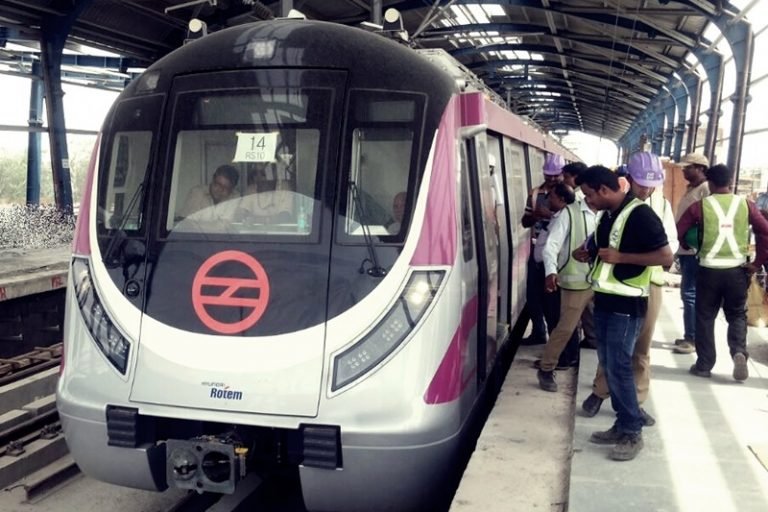
New Delhi: There is a good news on Monday for people waiting for the opening of the Kalkaji Mandir-Janakpuri West section on the Magenta Line of Delhi Metro Rail Corporation (DMRC). This section will be opened for the general public from May 29 next week. According to information received from DMRC, this section will be now inaugurated on 28th May instead of 24th May and the passengers will be able to take metro ride on this section on the next day i.e. 29th May, 2018.

According to earlier information received from DMRC, the section was scheduled to open on 25th May for the general public and the inauguration date was scheduled on 24th May. The latest update said that this section will be inaugurated on 28th May and will be opened to the public on May 29 at 6 am onward. With the launch of this line, people of Noida (UP) and Gururgram-Faridabad (Haryana) along with Delhi will also be get beneficiated.

Before this, the  Commissioner of Metro Rail Safety (CMRS) had issued clearance certificates to start the metro train service on the 25.6 km long route between Kalkaji Mandir-Janakpuri West.

In this section of the Magenta line (Kalkaji Mandir-Janakpuri West), there are 16 stations, including two interchange- Hauz khas (with Yellow Line) and Janakpuri West (with Blue Line) stations. There are total 25 stations on the entire Magenta Line (Botanical Garden – Janakpuri West, but at present the Metro service is started between Kalkaji Mandir and Botanical Garden (Noida). Once the service starts in the new section, the direct journey between the Botanical Garden and the Janakpuri West will begin. Travel time between West and South Delhi and Gurugram (Gurgaon), Faridabad and Noida will be reduced from Magenta Line.

Country’s longest escalator on Janakpuri West Interchange

At the same time, Janakpuri West will have an interchange facility and the escalator located here will be the longest escalator ever in the country. The length of this escalator will be 15.6 meters, which will also break the record of the Mumbai Airport terminal 2, which is 11.6 meters long. Now the length of this escalator at Delhi Metro station will be the highest in the country.

India's largest Esclator at Janakpuri West Metro Station
Janakpuri West Metro Station gets India’s largest Escalator (Image: TOI)

Haryana and UP passengers will also get benefited 

The journey from Noida to the airport directly from May 29 will be completed in just 50 minutes instead of 2 hours. Passengers will get connectivity from South Delhi directly to Noida, the journey will be completed in just 19 minutes. Not only this, there will be direct connectivity to Western Delhi from South Delhi and there will be less than 1 lakh people with this road.

To reach Faridabad to IGI Airport T-1 is easy

With the commencement of operation on this corridor, there will be direct Metro service between IGI Airport (Domestic) from Noida and South Delhi. From Faridabad, it will be easier to reach the airport. Between Noida and Gururam, the convenience of the traffic will be improved.

Magenta line is 38 kilometers long

The metro is running between Kalkaji temple from Botanical Garden on 25 December 2017 on a distance of 12.64 kilometers of 38 kilometers long magenta line. On the 25.36 km, stretch between Janakpuri West-Kalkaji Mandir is going to start operational and now it has also opened its way.

There are 16 stations on this corridor, including the Domestic Airport Metro Station. So the Botanical Garden will be delivered directly to Delhi Airport. Beside this, Faridabad’s people will be able to reach the airport by changing the metro train at Kalkaji Mandir Metro station.

Hauz Khas Hain Interchange Station

Hauz Khas will have a special metro station interchange station on Magenta Line. Currently, this Metro Station is available on Yellow Line (Samaypur Badli-Huda City Center). After starting metro services on the Magenta Line, people traveling from Noida to Gururgara can easily reach Huda city center by changing the train at Hauz Khas Metro Station. At present, passengers require to change the metro train from Botanical Garden to Rajiv Chowk, which takes longer time.

Chennai Metro | No mobile connectivity for Chennai Metro’s underground stretch

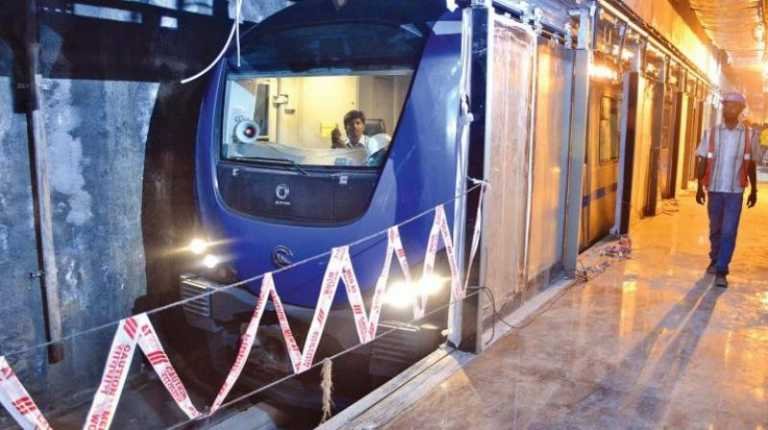
Chennai: When Chennai Metro Rail Limited (CMRL) has flagged of the Thirumangalam and Nehru Park metro rail, the officials had promised to offer mobile connectivity. This service was to be made available for the underground stretch, but a year has passed by and Chennai Metro commuters are still waiting for the promise to be fulfilled.

There is still no mobile connectivity at the underground stretch. CMRL officials had assured that they have installed mobile transmitters and connectivity at underground metro stations will be established by end by February. But there is no glimmer of hope as May is about to end and there is no sign of the services to start soon.

Commissioner of Metro Railway Safety (CMRS) completed safety inspection of Chennai Metro Underground Section.

Commuters have to suffer as they are not able to use their mobile phones when travelling through underground stretch using Chennai Metro. CMRL officials have been assuring that they are conducting test runs to see how the installed system is working. They have been promising that the services will be made available soon. But the promise is yet to light of the day.

The delay can also be attributed to the fact that CMRL is currently focusing on starting operations at two stretches. These include the Saidapet to AG-DMS and Nehru Park to Chennai Central Chennai Metro. Owing to work going on these two stretches, officials are unable to devote time for starting mobile connective at old as well as new underground stations.

Many commuters who have been waiting to take the Chennai Central to in Nanganallur through the Chennai Metro Rail are avoiding it. Office goers want mobile connectivity as it will not disrupt their work in case they are travelling via the underground route. People have complained that they are unable to make calls when travelling on the route and have requested the authorities to find a solution at the earliest.

Kochi Metro | KMRL to start metro services till SN Junction by end of 2020

Kochi: Kochi Metro is all set to spruce up the public transportation system by extending metro rail line from Pettah to SN Junction. The project is likely to be completed by 2020 end as per Kochi Metro Rail Ltd (KMRL) officials. Land acquisition for the project has begun with the officials completing discussion with oil companies as well as finished alignment work.

Managing director APM Mohammed Hanish of KMRL informed that they will be work along the central line of the route. Discussion with oil companies was held as oil pipelines have been laid on the same route where metro will run. After studying the area, KMRL officials have earmarked adequate horizontal clearance. The report was shared with oil companies who have accepted the suggestions.

Kochi Metro Work in Progress
Kochi Metro Work in Progress (Photo: KMRL)

Metro officials are optimistic that if things are on track than the project will be made operational by 2020. However, Hanish informed that acquiring land from Thykoodam to Pettah was delayed but completed. KMRL did not face this situation while acquiring land at other areas outlined in the stretch.

Hanish said that they are expecting to wrap up work till Thykoodam stretch by March 2019. In next six months Pettah stretch would be completed by October 2019.  He also informed that the extension plan was there in state’s allocation budget. KMRL will work towards acquiring land for Vadakkekkotta and SN Junction to implement the extension plan.

KMRL will so be rebuilding Pettah Bridge when work on metro project will begin. During rebuilding phase alternate traffic arrangements will be made to manage traffic. With new bridge at Thattappallikavu, it will be easier to manage traffic once work on the Pettah Bridge starts.

Hanish also appreciated the co-operation it received from the oil companies for implementing the extension plan. Giving technical details he explained that for the building of Metro from Pettah to SN Junction, a safe horizontal clearance of 3m between the pipeline and the metro pillars have been made available.

Apart from this the KRML has been aggressively exploring the possibility of expanding the Metro from SN Junction to the Tripunithura Railway Station.