Home Blog Page 33

CMRS team inspected safety and signalling system of Bhopal Metro

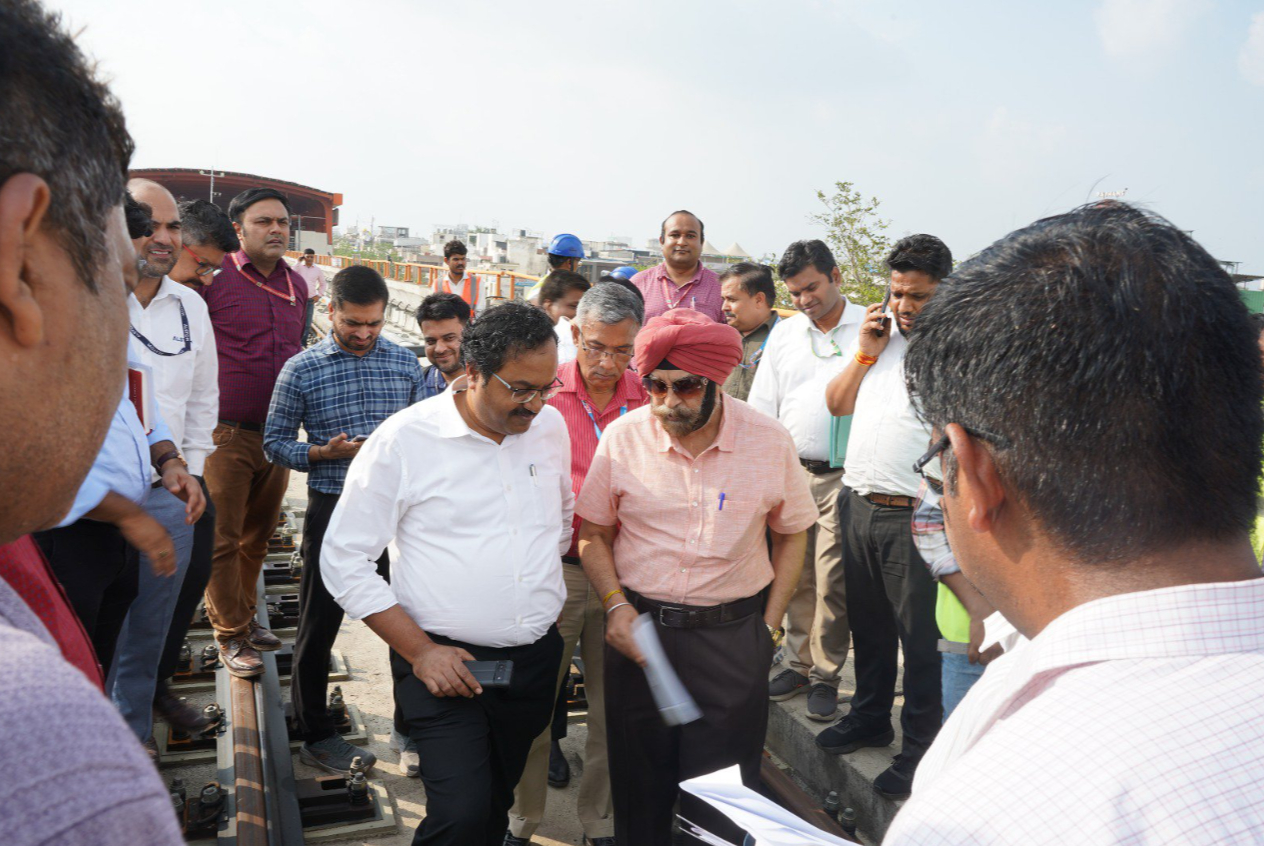
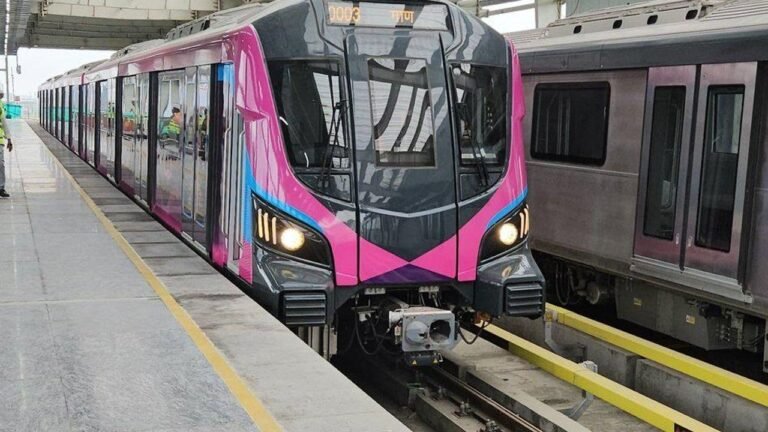
BHOPAL (Metro Rail News): The Commissioner of Metro Rail Safety (CMRS) team inspected the signalling system of Bhopal Metro on Thursday (June 25). The team tested the train control system at the Operation Control Centre (OCC) located at the Subhash Nagar Metro Depot. They travelled from Subhash Nagar metro station to AIIMS metro station on the Orange Line, further examining the safety and operational arrangements available at the metro stations.

Presently, only one metro is running in the Bhopal Metro system between 12:00 PM and 7:30 PM. After the results of the signalling inspection, more trains are likely to be added to the network and the service hours are also expected to increase. 

MP Metro Chairman reviewed metro progress 

Madhya Pradesh Metro Rail Corporation Limited (MPMRCL) Chairman Jaideep visited the Bhopal Metro Depot. He reviewed the current progress of both the Bhopal and Indore Metro projects. In the meeting, he instructed to complete all the work within the set down deadlines while adhering to the quality and safety standards.

About Bhopal Metro

Currently the Bhopal Metro has just one operational line. The 6.225-km Orange Line priority corridor covering Subhash Nagar to AIIMS was inaugurated on December 21, 2025 with 8 stations. The complete Orange Line stretching from Karond Circle to AIIMS and the Blue Line between Bhadbhada Square and Ratnagiri Tiraha are under construction.

Also Read: Maha Metro floats tender for the construction work on Line 4 of the Pune Metro

Maha Metro floats tender for the construction work on Line 4 of the Pune Metro

PUNE (Metro Rail News): Maharashtra Metro Rail Corporation Limited (Maha Metro) has invited bids for the design and construction of elevated metro viaduct with structural work of elevated stations of Line 4 and 4A of Pune Metro Rail Project (Phase-2).

Tender Information 

InformationDetails
Tender NumberP2-C03/2026 (ICB)
Bid Security (EMD)Rs. 6,41,00,000(Six Crore Forty One Lakhs only)
Pre-Bid Meeting28 July 2026 (11:30 hrs)
Date and Time of submission of Tender24 August 2026 (16.00 hrs)
Completion Period42 Months

Scope of Work 

The company will carry out the design & construction of elevated metro viaduct with structural work of eight elevated stations from Dandekar Pul (excluding) to Khadakwasla, a 9.675 km long viaduct for the Pune Metro Line 4 and Six Elevated Stations from SNDT College to Manik Baug along with a 7.247 km long viaduct for Line 4A of Pune Metro Rail Project (Phase-2).

About the Project 

Pune Metro Line 4 (Kharadi to Khadakwasla) with Spur Line (4A) Nal Stop-Warje-Manik Baug is a 31.64 km long corridor with 28 Elevated Stations. This line will provide MRTS connection between the South-West and North-East as well as connect the central part of the city. It will also act as a major link to the Mumbai-Bangalore highway boosting connectivity for the passengers.  

Also Read: Maharashtra cabinet approves Rs 310 crore Nagpur Metro extension project

Maharashtra cabinet approves Rs 310 crore Nagpur Metro extension project

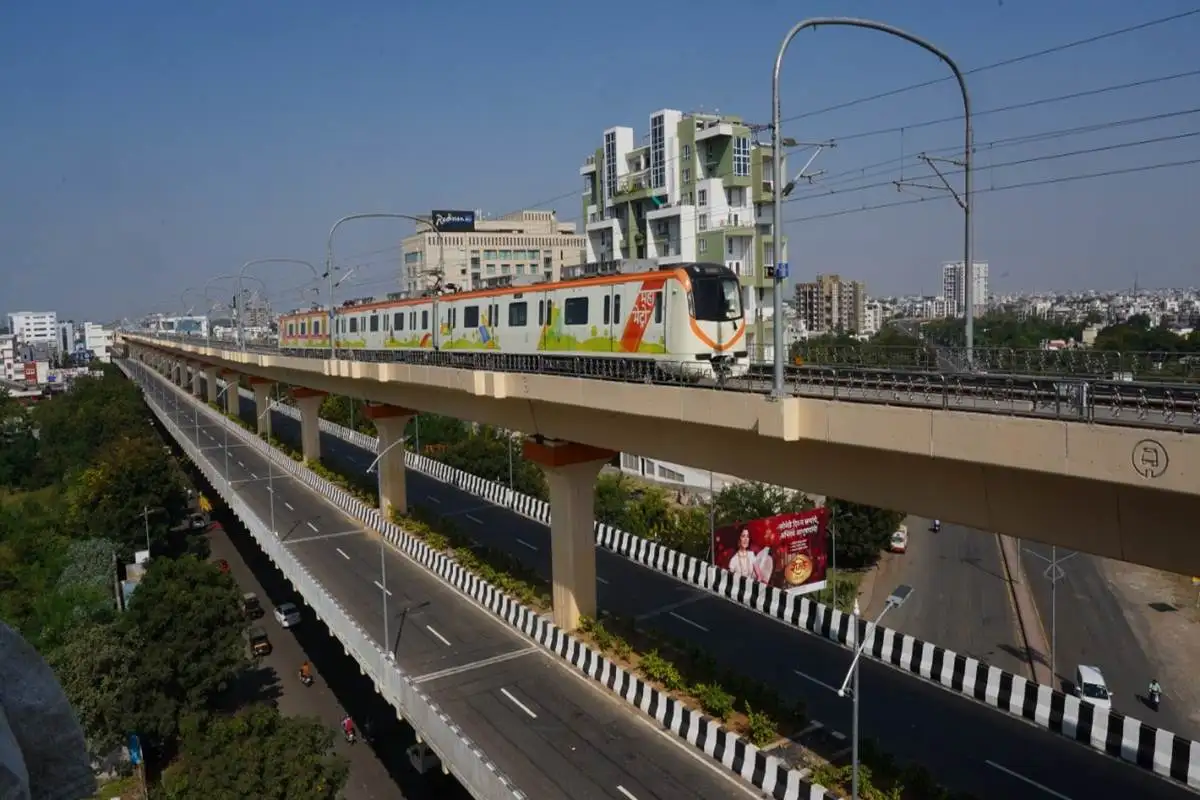
NAGPUR (Metro Rail News): Nagpur Metro’s network is set to expand. The Maharashtra government’s infrastructure committee has approved a new extension of the Phase-II North Corridor from Kanhan River to Kanhan town. 

The proposal was prepared by Maharashtra Metro Rail Corporation Limited (Maha-Metro), and according to The Economics Times report, It received approval from the state’s infrastructure sub-committee led by Chief Minister Devendra Fadnavis on Thursday. The project will extend the metro line by 1.4 km at an estimated cost of Rs 310.35 crore. The extension will include an elevated metro station at Kanhan town.

Need of this extension

Kanhan is located on the outskirts of Nagpur and it has a population of around 35,000. Every day, about 5,000 to 6,000 people travel between Kanhan and Nagpur for work, education, and other activities. With the metro reaching the town, commuters will have a faster and more convenient way to travel. The project will also improve access to nearby locations, such as:

  • Ramtek  
  • Tekdi  
  • Kandri Mines  
  • Nagardhan  
  • Gondegaon Mines  
  • Mauda Super Thermal Power Project

According to the proposal, the extension could serve nearly 20,000 more passengers every day.

Funding mechanism 

The project will depend on both government support and external financing.

Funding SourceAmount 
Central Government Equity Rs 39.88 cr
Maharashtra Government Equity Rs 39.88 cr
Concessional Multilateral LoansRs 155.18 cr
Other Support Interest free subordinate debt from the Centre and State Government 

Part of Nagpur Metro’s expansion plan

The Kanhan Town extension is part of the ongoing Phase-II expansion of Nagpur Metro. This expansion aims to improve public transport connections between Nagpur and the rapidly growing residential, industrial, and employment areas around the city. The new section will push the metro network further north and strengthen connections for commuters traveling to and from Nagpur.

Also Read: NCRTC submits DPR for the Gurugram-Faridabad-Noida RRTS corridor

NCRTC submits DPR for the Gurugram-Faridabad-Noida RRTS corridor

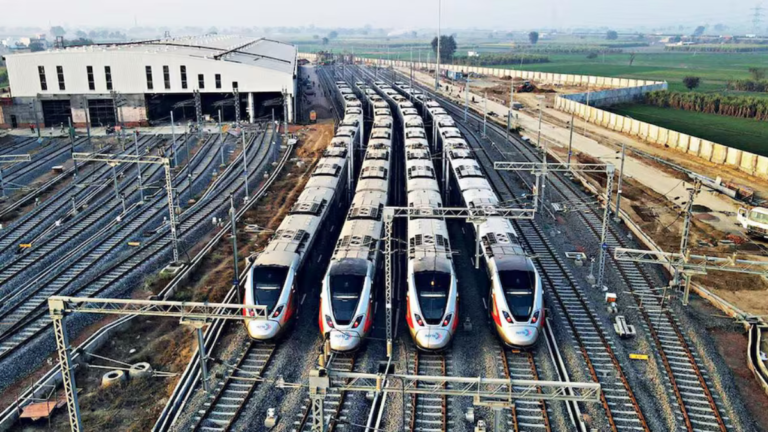
GURUGRAM (Metro Rail News): NCRTC has submitted the Detailed Project Report (DPR) for the development of the Namo Bharat RRTS corridor linking Gurugram, Faridabad, Noida and Greater Noida. The proposal was received by the Haryana Mass Rapid Mass Transport Corporation (HMRTC) and will be reviewed by the Haryana Government. A Haryana government spokesperson said that the DPR was discussed in a board meeting chaired by State Chief Secretary Anurag Rastogi on 22nd June, 2026.

The total estimated cost of the project is ₹19,390 crore. NCRTC will secure a soft loan of ₹10,102 crore to finance the project. The Haryana government (₹4,555 crore), the Uttar Pradesh government (₹1,364 crore), and the Centre (₹3,367 crore) will fund the remaining amount to construct this corridor.

As per the submitted DPR report, the total length of this corridor will be 63 km, out of which 50 km will fall in Haryana and 13 km in Uttar Pradesh. This semi-high-speed corridor will have seven stations. In Gurugram, IFFCO Chowk will serve as a starting interchange station. The other two stations are proposed at Sector-61 and Gwal Pahari. In Faridabad, three stations are proposed at Sainik Colony, Bata Chowk and Sector-87-88 intersection. The last two stations are planned in Noida Sector 142 and Surajpur.

The submitted DPR also proposes the construction of 15 new metro stations. In Gurugram, 5 new metro stations are planned at Sector 29, Millennium City Centre, Sector 52/52A, Wazirabad and Sector 57. Seven new stations are proposed in Faridabad, including NIT-3, NIT-1, the Sector 12/13/14/15 intersection, Sector 80, Sector 81/82 intersection, Sector 85/86 intersection and Badshahpur. The last three stations will be constructed in Noida and Greater Noida area, covering Noida’s Sector 135, Sector 141 and Suthiyana.

An official from HMRTC said, “The DPR is under review. Feedback will be sought from the GMDA, HSVP, Municipal Corporation Gurugram and departments concerned in Faridabad. 

Also Read: High-Speed Rail: NHSRCL invites bids to design civil structures for future 350 kmph bullet train corridors

High-Speed Rail: NHSRCL invites bids to design civil structures for future 350 kmph bullet train corridors

DELHI (Metro Rail News): Country’s high-speed rail program has moved forward. The National High Speed Rail Corporation Limited (NHSRCL) has called for bids on consultancy services to design civil structures for future bullet train corridors under the Bharat High Speed Rail Programme. The consultancy will assist NHSRCL in producing engineering designs for infrastructure that can support trains running at speeds of up to 350 kmph.

Tender Details

InformationDetails 
Tender Number NHSRCL/CO/CA/DDC-CIVIL/2026/12 
EMDRs 1 crore  
Tender Fee Rs 59,000 
Bidding MethodInternational Competitive Bidding  
Pre-Proposal Conference15 July 2026, 11:00 AM

Scope of work 

NHSRCL aims to develop standard civil structure designs to support future high-speed rail projects across India. The chosen consultant will create designs and technical standards for the infrastructure needed for trains operating at speeds of up to 350 kmph. 

Related to India’s next generation Bullet Train plans

The tender follows NHSRCL’s invitation for leading rolling stock manufacturers to showcase their capabilities in developing B35 high-speed trainsets designed for speeds of up to 350 kmph. The proposed B35 trains are expected to operate on future bullet train corridors across India, including –

  • Mumbai – Pune 
  • Pune – Hyderabad 
  • Hyderabad – Bengaluru
  • Hyderabad – Chennai
  • Chennai – Bengaluru
  • Delhi – Varanasi
  • Varanasi – Siliguri

Also Read: Big step towards High-Speed Rail: NHSRCL Invites global manufacturers to build faster version of bullet train in India

Big step towards High-Speed Rail: NHSRCL Invites global manufacturers to build faster version of bullet train in India

DELHI (Metro Rail News): India’s first bullet train hasn’t started yet, but NHSRCL is already planning for a faster version. The National High Speed Rail Corporation Limited (NHSRCL) has invited leading manufacturers to showcase their abilities in developing the proposed B35 high-speed train. The company will evaluate which firms can design and produce these trains for India’s expanding bullet train network. NHSRCL will hold presentations on July 17 and 18, and companies must confirm their participation by July 10. These trains will serve future high-speed rail corridors planned throughout the country.

Focus on design, technology and Make in India

Manufacturers must demonstrate their experience and skills in several key areas, such as:

  • Design capabilities for propulsion of 350 kmph speed.
  • Existing propulsion design and manufacturing experience. 
  • Design capabilities of vehicle electronics (TCMS). 
  • Existing design and manufacturing experience of vehicle electronics (TCMS). 
  • Design capabilities of mechanical systems of 350 kmph speed.
  • Existing design and manufacturing experience of mechanical systems. 
  • Make in India capabilities and plan to manufacture trains in India.  
  • Team (manpower) experience.  
  • Quality control systems implemented in existing facilities and certifications thereof.
  • Compliance with national security regulations. 

NHSRCL will pay special attention to trains that can perform reliably in Indian weather and conditions. The ability to design and manufacture key components in India will also be crucial during the selection process.

Planned for future bullet train corridors

The B35 trainsets are being planned for several proposed high-speed rail corridors across India, including:

  1. Mumbai – Pune
  2. Pune – Hyderabad
  3. Hyderabad – Bengaluru
  4. Hyderabad – Chennai
  5. Chennai – Bengaluru
  6. Delhi – Varanasi
  7. Varanasi – Siliguri

The B35 trains are also expected to operate on the Mumbai-Ahmedabad High-Speed Rail Corridor in the future.

B28 trains will arrive first

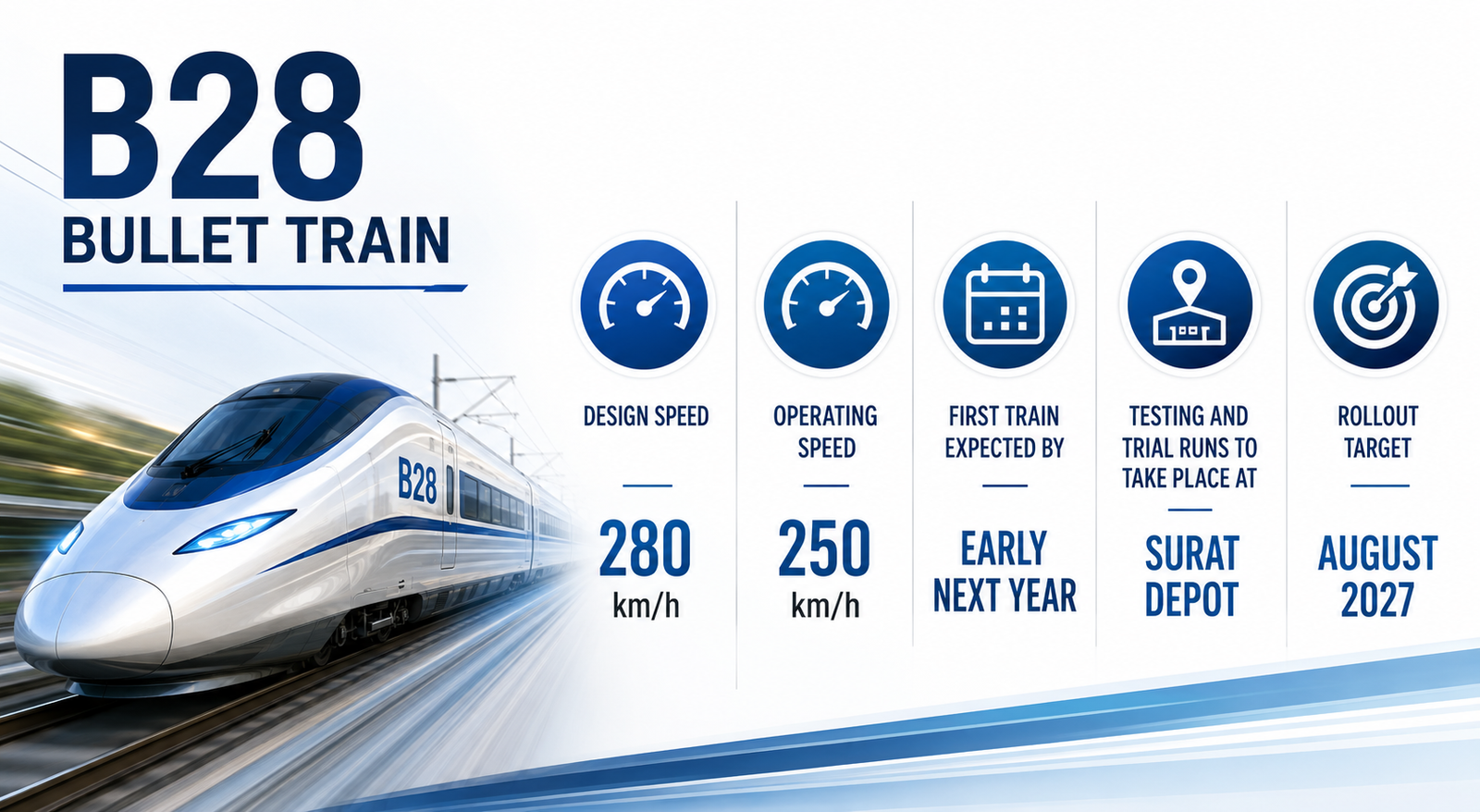
Before the B35 trains enter service, Indian Railways plans to introduce the B28 bullet train on the Mumbai-Ahmedabad corridor. BEML is currently manufacturing the B28 train at its facility in Bengaluru. Key details of the B28 train:

ChatGPT Image Jun 26 2026 11 49 51 AM

Mumbai-Ahmedabad Bullet Train Project moving ahead

Construction continues on the 508 km Mumbai-Ahmedabad High-Speed Rail Corridor, India’s first bullet train project. Indian Railways is planning to start operations on the 97 km Surat-Vapi section in Gujarat by August 2027. This section will be the first operational stretch of the corridor.

Also Read: Jupiter Wagons bags Rs 264 Cr worth orders from JSW Rail Logistics and CWC

Jupiter Wagons bags Rs 264 Cr worth orders from JSW Rail Logistics and CWC

DELHI (Metro Rail News): Jupiter Wagons Limited, an Indian manufacturer of railway rolling stock, received two substantial orders with a total value of Rs 264.32 Cr from the JSW (South) Rail Logistics Limited and the Central Warehousing Corporation (CWC). The orders include manufacturing and supply of railway rakes and wagons.

PartiesContract DetailValuation
Jupiter Wagons and JSW (South) Rail Infra Logistics LtdProduction and Supply of five BFNSM1 rakes and BVMC wagonsRs 122.88 Cr
Jupiter Wagons and CWCProduction and Supply of eight BLSS rakes including 32 BLSS-A wagons, 352 BLSS-B wagons and 8 brake vansRs 141.44 Cr
Total Valuation – Rs 264.32 Cr

Jupiter Wagons and JSW (South) Rail Logistics signed a Letter of Intent (LoI) for the production and supply of five BFNSM1 rakes and BVMC wagons. The value of this contract is cited as approximately Rs 122.88 Cr. The work is to be completed in seven months from the signing day.

In another contract between Jupiter Wagons and the Central Warehousing Corporation (CWC), a government enterprise, contract worth Rs 141.44 was received, stating the scope as production and supply of 8 BLSS rakes including thirty-two BLSS-A wagons, 352 BLSS-B wagons and 8 brake vans. The time-period for the execution of this contract is expected to be 1 year.

The Managing Director of Jupiter Wagons, Vivek Lodhi, expressed hopes for the company’s growth amidst the rising investment in rail logistics and freight infrastructure. He further stated that the company is committed to supporting the national infrastructure with advanced wagon solutions and logistics proficiency.

Also Read: Alstom wins Rs 1,160 cr contract to maintain 250 WAG-12B Freight Locomotives for Indian Railways

Alstom wins Rs 1,160 cr contract to maintain 250 WAG-12B Freight Locomotives for Indian Railways

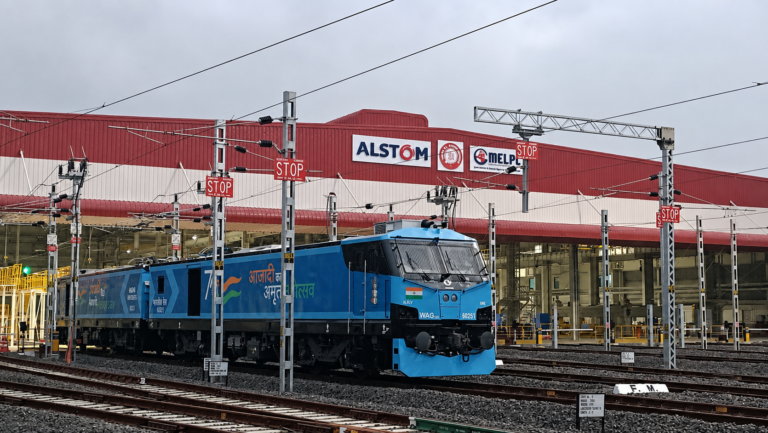
DELHI (Metro Rail News): Alstom secures 5-year maintenance service agreement at the Nagpur depot for WAG-12B electric locomotives through its joint venture with Indian Railways (MELPL)

  • The contract covers a five-year maintenance services agreement for 250 high-powered WAG-12B electric locomotives at the Madhepura Electric Locomotive Private Limited (MELPL) Nagpur Depot.
  • The €107 million contract reaffirms Indian Railways’ trust in Alstom’s world-class service capabilities, following four years of highly successful operations.

Alstom, a global leader in smart and sustainable mobility, today (26 June 2026) announced that its joint venture with Indian Railways, Madhepura Electric Locomotive Private Limited (MELPL), has been awarded a new five-year maintenance services contract. Valued at €107 million, the agreement covers the comprehensive maintenance of 250 WAG-12B electric locomotives at the MELPL Nagpur Depot. This contract renewal follows the successful execution of the previous four-year agreement and underscores Indian Railways’ continued confidence in Alstom’s high-quality services. The Nagpur depot has become a benchmark for collaborative excellence and operational success in the Indian rail sector.

Olivier Loison, Managing Director – Alstom India said, “This contract renewal is a strong validation of our commitment to Indian Railways and the success of our partnership. We are proud that the trust placed in us has translated into proven performance and reliability of the WAG-12B e-loco, which are vital to India’s freight revolution.”

The 12,000 HP Prima T8 WAG-12B locomotives are fundamental to India’s green mobility goals, capable of hauling 6,000-tonne loads at speeds of up to 120 kph. They serve as the workhorses of the Dedicated Freight Corridors, significantly increasing freight capacity while lowering carbon emissions.

Under the agreement, MELPL’s scope includes the full maintenance of the 250 locomotives and the depot’s infrastructure. To ensure rapid issue resolution and maximize fleet availability, Alstom will continue to deploy its specialized Prompt Response Teams (PRTs) equipped with tools and spares at strategic locations across the country. The contract also reinforces Alstom’s commitment to skill development through ongoing training programs at the depot.

Alstom in India

Alstom is the only multinational sustainable mobility provider in India, to have a comprehensive portfolio of offerings to meet customer specific needs and continues to be a strategic partner in supporting India’s rail revolution. With 6 industrial sites and 5 major engineering centres, the company caters to domestic as well as international project needs with its world class rolling stock, components, signalling and services solutions. Fully aligned with the country’s vision of Make-in-India and Atmanirbhar Bharat, Alstom remains deeply committed to strengthening its local sourcing and supply chain ecosystem.

About Alstom

Alstom is the pure rail leader, committed to making rail the backbone of sustainable transportation. We design and deliver a complete range of future-ready solutions – from high-speed and regional trains to metros, monorails, trams, turnkey systems, end-to-end services, infrastructure, signalling and digital rail solutions. With 87,800 people in 61 countries, Alstom brings together global expertise and multi-local presence to make every journey smarter, cleaner and more enjoyable. Together with our partners and customers, we realise the power of rail. Listed in France, Alstom generated revenues of €19.2 billion for the fiscal year ending 31 March 2026.

Source: Alstom India Press Release

Also Read: India’s first Hydrogen Train began its final high-speed trials today

Railway Board to issue new wagon design policy within 15 Days

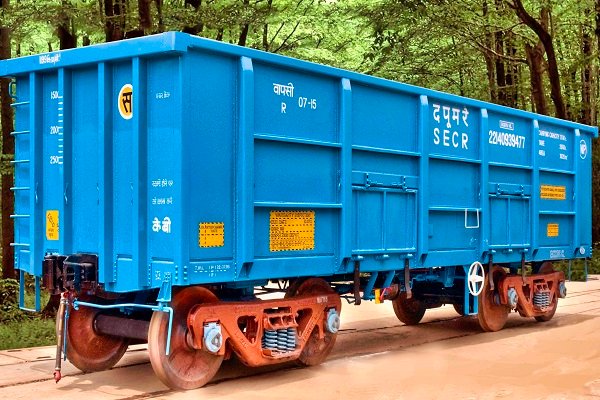
NEW DELHI (Metro Rail News): Taking another step forward to strengthen freight transportation, a review meeting chaired by Union Railway Minister Shri Ashwini Vaishnaw was held where discussions about improving rail based freight movement for various commodities were carried out. It was also decided that comprehensive reforms will be undertaken in the existing wagon design policy, the new policy is set to be finalized within 15 days.

During the meeting, industry representatives suggested that the customisation of wagon designs according to different transportation requirements for various commodities could help railways transport freight on a larger scale. Indian Railways is taking part in extensive consultations with industry experts, trade bodies, and major freight customers associated with commodities that have significant potential for rail transportation. 

The Union Railway Minister said that strict standards for design approval and prototype development will ensure the production of the highest quality wagons in India. Major reforms in the design policy will also be introduced, under which industries will be able to modify the wagon designs according to their specific requirements, such as, steel coils require special binding arrangements and dedicated loading and unloading systems for transportation, other commodities have their own transportation requirements, in this situation industries will be allowed to propose changes in the wagon designs as per their necessities. RDSO and the Chief Commissioner of Railway Safety (CCRS) will be overseeing safety compliance and technical standards. 

The success of recently developed specialized wagons for commodities such as cement and salt was also highlighted in the meeting demonstrating the significance of modifying wagons according to industries’ operational needs. 

This proposed new wagon policy will play a significant role in enhancing and strengthening rail freight transport and reduce India’s dependency on imported diesel, lower logistics costs, reduce carbon emissions, and make essential goods more affordable for citizens.

Also Read: India’s first Hydrogen Train began its final high-speed trials today

India’s first Hydrogen Train began its final high-speed trials today

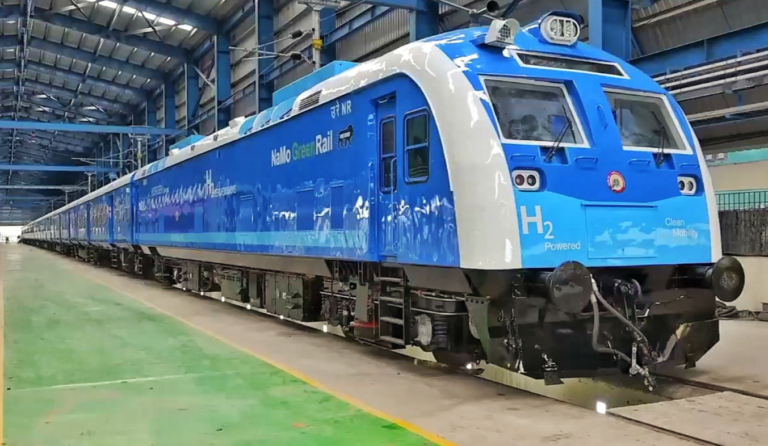
HARYANA (Metro Rail News): India’s first indigenously manufactured Hydrogen Train hit its final high-speed trials on Friday (June 26) from Jind railway station in Haryana. For this high-speed trial, the train left the Jind station to run at a speed of 120 kmph along the designated route at Jind-Sonipat Railway line. A specialized unit from the Research Design and Standards Organisation (RDSO), Lucknow, arrived at Jind station to oversee the testing.

The trial was earlier scheduled for Wednesday (June 24), but got rescheduled to June 26. The low-speed trial of the hydrogen train has been successfully executed. 

Press Trust of India (PTI) posted the video of the train leaving for the 120 kmph trial from Jind station on their X (formerly twitter) account:

High-Speed Test

The high-speed trial is set to access several key features of the train in the trial to ensure that all the operational and safety standards are meeting the level of quality. The team will evaluate the following things in the trial:

  • Brake execution performance
  • The engine capacity
  • Safety systems
  • Vibration level
  • The condition of tracks

The hydrogen train will mark India’s advancement towards a cleaner source of energy for the railway transportation sector. Only a handful of countries are exploring the area of hydrogen for eco-friendly rail transportation like Germany, Japan, China and the USA. After this initiative, India will also become a part of this exclusive group.

Hydrogen Train Route

The Hydrogen train will operate on a 90-km route covering Jind and Sonipat in Haryana. The average speed of the train is expected to range from 110 kmph to 140 kmph. A hydrogen refueling and storage provision has already been set up at the Jind station for this train. 

Also Read: Chennai Metro Phase 2: Pee Pee Mandal Projects wins corridor 4 track work contract