Home Blog Page 3

PM Modi dedicates Churu Rail Doubling Projects worth ₹900 crore

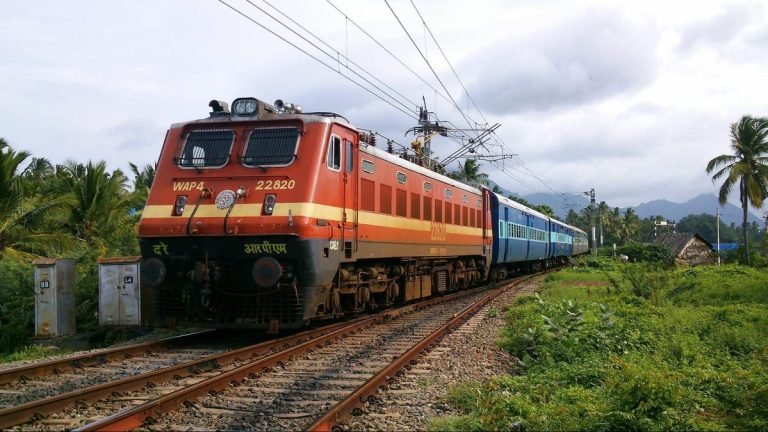
RAJASTHAN (Metro Rail News): PM Modi virtually dedicated the 58 km Churu–Sadulpur and 46 km Churu–Ratangarh rail-doubling projects on July 4, 2026. He addressed the event from Balotra, Rajasthan. The rail-doubling projects cost around ₹900 crore. Covering a total of 104 km, these projects will boost rail connectivity in northwest Rajasthan improving capacity for passenger and freight transport, reducing congestion, and fostering regional investment and job growth. The live event was the host site for a massive, centralized, state-level development mega-event. During the event, PM Modi launched multiple development projects worth over ₹1 lakh crore across Rajasthan and Gujarat. 

The newly upgraded corridors will allow smoother and more frequent train operations between regions. Several daily express and superfast services operate on this route: the Jodhpur–Delhi Sarai Rohilla Superfast connects Delhi and Rajasthan and the Howrah–Barmer Superfast links West Bengal and Rajasthan, Both trains link the towns of Sadulpur and Churu in about an hour. The main issue before construction was the single-line bottleneck. 

The project started around January 2024. Major civil, track, and related works including the doubling of the 58 km Churu–Sadulpur and 46 km Churu–Ratangarh rail lines are finished. The Railway authority highlighted the project’s benefits for smoother passenger and freight movement.

Also Read: DMRC urges to implement Kerala High Speed Rail Project

DMRC urges to implement Kerala High Speed Rail Project

NEW DELHI (Metro Rail News): Kerala is soon expected to join India’s future bullet train map. An expert committee of 4 members was appointed by UDFC to examine the proposed Thiruvananthapuram-Kannur high-speed rail project based on an interim report prepared by the “Metro Man of India”, E. Sreedharan. The expert committee is led by the secretary, transport (railways), including railway expert J. Vinayan, finance and environment experts, Dr C. Veeramani and Sridhar Radhakrishnan. The report will be submitted this week. 

As stated in a government order issued by the Transport Department, DMRC has prepared and submitted an interim report for the proposed high speed rail project. The Kerala High Speed Rail Project is planned as a 473.20-km standard-gauge corridor connecting Thiruvananthapuram and Kannur. 

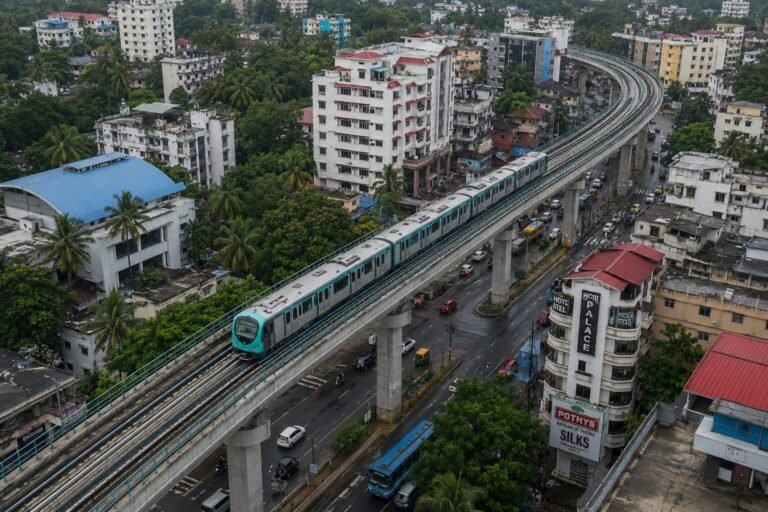
DMRC has briefed the Kerala Government about the project implementation plans and urged the state to assign the project to DMRC on a turnkey basis highlighting the successful implementation of the Kochi Metro project. DMRC has assured the state that the project will be completed within five years without delays as the entire line is planned to be constructed fully elevated or underground as mentioned in the interim report, significantly decreasing surface land requirements and minimising local protests. 

The Kerala High Speed Rail Project is expected to link all four airports in Kerala and facilitate public transit to regions with no rail connectivity. A Delhi Metro Rail Corporation (DMRC) spokesperson said, “Crucially, this line can easily be integrated into the cross-country high-speed network managed by NHSRCL, ensuring that Kerala does not remain isolated from India’s future bullet map”.

The estimated cost of the entire corridor is ₹57,000 crore, with the final completion cost of approximately Rs 60,000 crore. According to DMRC, the project will eventually have the capacity to carry 2.28 lakh passengers a day. The energy requirements of the entire corridor will be completed by captive solar power. The travel fare on this line will be significantly lower as the operational and maintenance cost of this project is expected to be two-third compared to normal railway lines. 

The report also mentions the future plans of extending this line to Kasaragod and developing branch lines connecting Kozhikode and Kalpetta, Pattambi and Palakkad, and Thrissur and Palakkad.

Also Read: Central Railway deploys standard Kavach system on Nagpur Division’s Godhani-Teegaon section

Central Railway deploys standard Kavach system on Nagpur Division’s Godhani-Teegaon section

NAGPUR (Metro Rail News): Central Railway has started using the Standard Kavach Automatic Train Protection (ATP) system on the Godhani-Teegaon section of the Nagpur Division. This step will enhance train safety on one of the busiest and most difficult railway routes while lowering the chances of accidents caused by human error.

The Godhani-Teegaon section is part of the busy Itarsi-Nagpur route. This area includes a challenging ghat section with steep slopes, heavy train traffic, and complex operating conditions. Central Railway officials said that Standard Kavach will make operations for passenger and freight trains safer and more efficient along this route.

standard Kavach system

Standard Kavach is a indigenous Automatic Train Protection (ATP) system. It continuously tracks train movement and assists loco pilots during operations. The system can:

  • Monitor train movement continuously
  • Help loco pilots keep to the allowed speed
  • Prevent Signal Passing at Danger (SPAD) incidents
  • Apply brakes automatically when needed to avoid unsafe situations

These features help lower the risk of accidents caused by human error and improve overall train safety.

Importance of this route 

The Godhani-Teegaon section serves many passenger and freight trains each day. The steep grades and tough terrain make train operations more difficult than usual. By introducing Standard Kavach on this section, Central Railway has taken another step towards making train operations safer and more dependable. 

Also Read: Odisha Rail Infra receives dual boost via Amrit Bharat Train & Puri–Koraput Express Launch 

Odisha Rail Infra receives dual boost via Amrit Bharat Train & Puri–Koraput Express Launch 

ODISHA (Metro Rail News): Odisha’s industrial and interstate passenger mobility received a significant dual-track upgrade on Monday, 6th June 2026. Chief Minister Mr. Mohan Charan Majhi and Union Railway Minister Mr. Ashwini Vaishnaw jointly flagged off the newly Brahmapur-Udhna (Surat) Amrit Bharat Express, which marks the upgrade of the service from tri-weekly to daily operation, alongside the brand-new, tri-weekly Puri–Koraput Express.

The Brahmapur–Udhna Amrit Bharat Express connects the “Silk City of Odisha,” Brahmapur (Odisha), to Udhna (Gujarat), a major business hub in Western India. The high-profile launches conducted via synchronized events at the Puri and Brahmapur railway stations are designed to directly scale up interstate labor mobility. 

Meanwhile, the intrastate Puri–Koraput Express connects Puri, one of Odisha’s major pilgrimage sites, to Koraput in the state’s western region. While the Brahmapur–Udhna Amrit Bharat Express runs daily, the Puri–Koraput Express operates three times a week.

This dual launch emphasizes safer, more convenient travel and stronger cultural and economic ties between Odisha and Gujarat, crediting central government support under the “Double Engine” framework for a Viksit Odisha (Developed Odisha) and Viksit Bharat (Developed India).

Brahmapur–Udhna daily Amrit Bharat Express: Inter-State economic corridor 

Amrit Bharat Express from Brahmapur(Odisha)-Udhna (Surat),train no -19021/19022 Connects Brahmapur, Silk city of Odisha to Udhna major business hub of Gujarat via other states such as Andhra Pradesh, Chhattisgarh, and Maharashtra. The Brahmapur Amrit Bharat Express operates daily, covering a distance of 1,710 km (1,063 mi) in 30 hours and 15 minutes at an average speed of 56 km/h. The train features a total of 22 coaches, including 11 General Second Class (GS) seating coaches, 8 Sleeper Class (SL) coaches, 2 Second Class-cum-Luggage Vans, and a pantry car, allowing it to accommodate more than 1,800 passengers per trip. It is equipped with modern amenities similar to Vande Bharat standards, such as CCTV cameras in all coaches, fireproof seats, LED display boards, public announcement systems, and ergonomically designed berths. 

The Intra-State anchor: Puri to Koraput Tri-Weekly Express 

The Puri–Koraput Express (Train No. 18407/18408) connects Puri, one of the major pilgrimage sites in Odisha, to Koraput. The tri-weekly train operates three days a week, departing from Puri every Monday, Thursday, and Saturday. The Puri–Koraput Express features 18 coaches across multiple seating tiers, including 1 AC Two-Tier (2A) coach, 3 AC Three-Tier (3A) coach, 8 Sleeper Class (SL) coaches, 4 General Unreserved (GS) coaches, and 1 Second Class-cum-Luggage Brake Van and 1 Driving-friendly Second Class-Cum Luggage coach. The official capacity of the train is 1,834 passengers per single trip. 

During the function, Union Railway Minister Mr. Ashwini Vaishnaw announced that Brahmapur Railway Station will be redeveloped into a world-class facility under the Amrit Bharat Station Scheme at an estimated cost of approximately ₹300 crore. The transformed station will feature state-of-the-art passenger amenities, contemporary architecture, enhanced accessibility, and seamless multimodal integration, positioning it as a landmark gateway for southern Odisha.The minister also inspected the ongoing redevelopment of Puri Railway Station under the Amrit Bharat Station Scheme and reviewed comprehensive preparedness for the ongoing Rath Yatra.  He informed that Indian Railways has scheduled the operation of over 300 Special Trains during Rath Yatra, established holding areas for more than 30,000 devotees, augmented ticketing counters, strengthened food distribution mechanisms, and enhanced safety and passenger amenities to ensure a seamless pilgrimage experience.

Also Read: MRVC invites bids for electrification work in Borivali-Virar Section of Western Railways

MRVC invites bids for electrification work in Borivali-Virar Section of Western Railways

MUMBAI (Metro Rail News): Mumbai Railway Vikas Corporation (MRVC) floated a tender for electrification works between Borivali-Virar Section of Western Railways. The work includes the proposed lines 5th and 6th between Borivali-Virar Section of the Mumbai sub-urban railway covering 26 Route Kilometers (RKm). 

Tender Details

Opening Date31 July 2026 (12:00 Hours)
Closing Date07 August 2026 (15:00 Hours)
RFB NoMRVC/W/244 
Bid Security Amount₹2,90,80,200
Contract Duration36 months

Scope of Work

The chosen contractor will Design, Supply, Fabrication, Erection, Testing and Commissioning of 1×25 kV OHE Works in connection with proposed 5th & 6th lines Between Borivali-Virar Section (26 RKM and Approximate 115 TKM) of Western Railway, Including EMU Stabling Sidings, Supply of OHE Spares and T&P Items under Mumbai Urban Transport Project (MUTP)-3A.

About the Project

The Mumbai Urban Transport Project (MUTP)- 3A is a project introduced to improve the connectivity of the Mumbai sub-urban area. It is expected that this project will meet the future demands of passengers. A total amount of ₹33,690 has been sanctioned for this project.

Also Read: In-Train Audio Ads to boost non-fare revenue of Delhi Metro

In-Train Audio Ads to boost non-fare revenue of Delhi Metro 

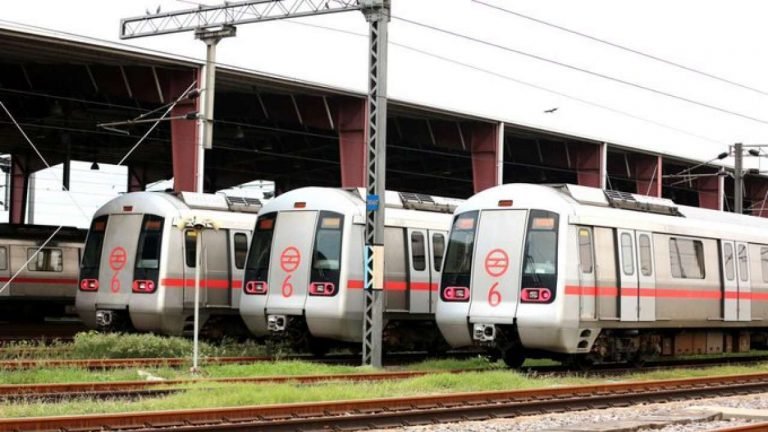
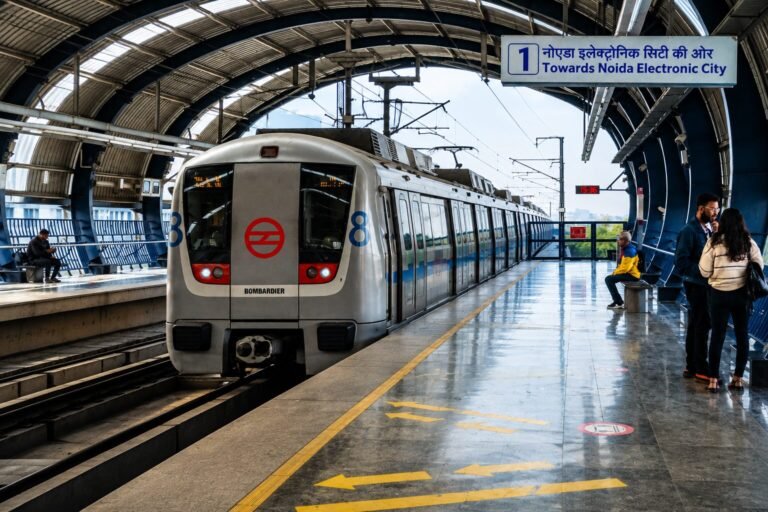
DELHI (metro Rail News): The Delhi Metro Rail Corporation (DMRC) is planning to introduce in-train audio commercials over the Red (Line 1), Yellow (Line 2), Blue (Line 3), and Magenta Lines (Line 8), which will streamline the non-fare revenue and provide long-term sustainability to the Delhi Metro system. Against this backdrop, DMRC floated a tender for the licensing of audio advertisement slots in selected trains in the Metro Lines 1, 2, 3, and 8.

Here is the duration of audio advertisements across the four metro lines.

Metro LineSectionAudio Ads Slots (in secs)
Red Line(Line 1)Dilshad Nagar-Rithala353
Rithala-Dilshad Nagar368
Total721
Yellow Line(Line 2)Kashmere Gate-Sultanpur385
Sultanpur-Kashmere Gate211
Total596
Blue Line (Line 3)Dwarka-Kakarola-Yamuna Bank318
Yamuna Bank-Dwarka-Kakarola316
Total634
Magenta Line(Line 8)Janakpuri West-Botanical Garden150
Botanical Garden-Janakpuri West 150
Total300

Delhi Metro’s Non-Fare Revenue

Delhi Metro earned a total revenue of ₹4,600.62 Crore in the FY 2024-25. Non-Fare revenue from commercial advertisements, parkings, rents from commercial spaces within the metro premises, station box area, fines and feeder services constituted around 20 percent of this revenue, while the primary resource still remained the ticketing revenue with around 80 percent contribution.

This shows an excessive dependence on the ticketing revenue. Non-fare revenue is significant for the metro system to diversify its income sources and attain financial stability. It strengthens the overall financial structure of the metro system. For comparison, the Hong Kong metro, known globally for its financial sustainability, earns more than half of its total revenue from non-fare sources.

Also Read: Jupiter Wagons to manufacture Vande Bharat and Metro coaches in Hooghly

Jupiter Wagons to manufacture Vande Bharat and Metro coaches in Hooghly

WEST BENGAL (Metro Rail News): Jupiter Wagons Limited has announced a major project involving the manufacturing of India’s premium train, Vande Bharat and Metro coaches. The company is setting up a new manufacturing plant at Hooghly in West Bengal that will boost the production of Vande Bharat and Metro coaches. Upon its establishment, the plant will stand out as West Bengal’s second railway rolling stock manufacturing facility after Titagarh’s Uttarpara plant.

The chairman of the company, Mr ML Lohia said that the new plant where they are going to manufacture Vande Bharat, Metro and other passenger train coaches will come up at Hooghly district. He said that the exact location of the facility will be informed later, as reported by Times of India (TOI). 

He further informed that the Hooghly plant was among several projects in their pipeline as the company targets a revenue of ₹5,000 Crore in 2027-’28 compared to ₹3,000 Crore currently. Moreover, the company envisions a revenue of ₹10,000 Crore by 2028-’29.

Earlier, Titagarh Rail Systems Limited had started a facility to manufacture railway rolling stock at Uttarpara in West Bengal in collaboration with BHEL.

The development strengthens India’s position as a rolling stock manufacturing hub.

Company to Export Railwheels

Jupiter Wagons is also setting up another 100 acres facility at Khordha in Odisha to manufacture integrated axles and wheels in collaboration with a German company. The facility is expected to start Axle manufacturing by December 2026, followed by the production of wheels by 2027. 

The chairman informed that there will be foreign investments in all upcoming projects, and 50 percent of the output will be targeted for export. This project is expected to strengthen India’s position as an exporter in the global market.

More about Jupiter Wagons Limited

Jupiter Wagons Limited is an Indian manufacturer of mobility infrastructure. It operates 13 manufacturing units across the country. The company is strengthening India’s mobility sector by providing solutions and technologies for the sector’s growth. With the company’s indigenous solutions, India is emerging as a global rolling stock manufacturing hub.

Also Read: Northeast Frontier Railway rolls out first MEMU train connecting Tripura and Assam 

Northeast Frontier Railway rolls out first MEMU train connecting Tripura and Assam 

NEW DELHI (Metro Rail News): Every new train in the Northeast Frontier Railway tells the story of how the region has moved closer to the rest of the country. The region now has its first Mainline Electric Multiple Unit (MEMU) train, which offers faster, cleaner, and more comfortable rail travel between Tripura and Assam.

The new MEMU train will operate between Agartala and Karimganj. It will replace the previous Diesel Electric Multiple Unit (DEMU) service. The Northeast Frontier Railway (NFR) will run and manage the train. Tripura Chief Minister Dr Manik Saha launched the new service on Saturday.

A journey that took decades

In the Northeast, improved railway connections did not come easily. Railway services first arrived in Tripura in 1964, but the network did not expand much for many years. Changes began after railway development in the Northeast became a national project. Rail connectivity reached Kumarghat in 1990 and then extended to Agartala in 2008. Now, the region marks another milestone with its first MEMU train.

First MEMU train for the Northeast 

This train will run as 75679/75680 between Agartala and Karimganj junction. A senior railway official said that the train can carry about 3000 passengers, including both seated and standing commuters. NFR Chief Public Relations Officer (CPRO) Kapinjal Kishore Sharma said that MEMU trains can speed up and slow down way too quickly than DEMU trains. This allows them to cover suburban and short-distance routes more effectively. He also mentioned that MEMU trains provide smoother rides, lower noise levels, fewer maintenance needs, and zero emissions at the point of operation.

Route and timings

The MEMU train will run six days a week and will complete the 205 km journey in around 6 hours and 30 minutes. This train will stop at 23 stations between Agartala and Karimganj.

  1. Train 75679 (Agartala to Karimganj Junction)
  • Departs Agartala: 7:20 am
  • Arrives Karimganj Junction: 1:50 pm
  1. Train 75680 (Karimganj Junction to Agartala)
  • Departs Karimganj Junction: 2:25 pm       
  • Arrives Agartala: 8:40 pm

Stations covered: Jogendra Nagar, Jirnia, Teliamura, Mungiyakami, Ambasa, Jawaharnagar, SK Para, Manu, Nalkata, Kumar Ghat, Pencharthal, Panisagar, Dharmanagar, Nadiapur, Churaibari, Tilbhum, Chandkhira Bagn, Kalkalighat, Patharkandi, Kanaibazar, Baraigram Junction, Kayasthagram, Nilambazar and Suprakandi Halt. 

Importance of this MEMU train

Railway officials say the new MEMU service will help daily commuters, students, office workers, traders, and tourists travelling between Tripura and Assam. The service is expected to:

  • Improve rail connectivity between Tripura and Assam.
  • Provide faster and more comfortable travel.
  • Support local businesses and small traders.
  • Strengthen social and economic ties between the two states.
  • Encourage more people to choose rail transport over road options.

Also Read: North Central Railway’s Prayagraj Division Sees 16.78% commercial revenue increase in June

North Central Railway’s Prayagraj Division Sees 16.78% commercial revenue increase in June

NEW DELHI (Metro Rail News): The Prayagraj division of the North Central Railway zone has registered a 16.78% increase in commercial revenue earning Rs. 258.38 crore in June 2026, compared to Rs. 221.26 crore of revenue earned in June 2025. The Prayagraj division is a key railway division of the North Central Railway zone. The division also surpassed its targeted commercial revenue of Rs. 241.61 crore by 6.94%.

The Prayagraj Division forms the spinal cord of Indian Railways connecting the coal-steel belt of the Eastern region to the consuming areas. Having a total route length of 1070 kms, it encompasses the Southern part of Uttar Pradesh and covers 21 districts. 

PRO of Prayagraj Division, Amit Kumar Singh said, “Regular intensive ticket-checking campaigns are being carried out at stations and on trains to curb ticketless and irregular travel. At the same time, the division has continued efforts to provide passengers with safe, clean and quality railway services, including better catering, safe drinking water and hygienic toilet facilities. He credited the growth to the Senior Divisional Commercial Manager Hari Mohan and Divisional Railway Manager Rajneesh Agrawal. 

The revenue growth was led by better ticket-checking, increased freight loading, expansion of non-fare revenue sources, strategic revenue optimisation, and enhanced facilities for the passengers. 

Also Read: AECOM India-Nippon Koei JV wins general consultancy contract of Thane Metro

AECOM India-Nippon Koei JV wins general consultancy contract of Thane Metro 

MAHARASHTRA (Metro Rail News): Maharashtra Metro Rail Corporation Limited (Maha Metro) has awarded the General Consultant contract for the Thane Integral Ring Metro Project to an AECOM-led consortium. The consortium includes AECOM India Private Limited and Nippon Koei India Private Limited. The estimated cost of the contract is Rs 179.86 cr (excluding GST).

Contract details

InformationDetails 
Tender NumberT1-019/Consul05/2025 
Awarded ToAECOM India Pvt. Ltd. in consortium with Nippon Koei India Pvt. Ltd.
Contract ValueRs 179.86 crore (excluding GST)  
Contract Period 1,827 days 

Bidder details

BidderBid ValueStatus
AECOM India Pvt. Ltd. in consortium with Nippon Koei India Pvt. Ltd.Rs 179.86 crore (L1)Awarded  
Ayesa Ingenieria y Arquitectura, S.A.U.Rs 148.1 Cr (L2) Rejected (Financial)
Hill International Private Limited Rs 209.7 Cr (L4) Rejected (Financial)
Systra Mva Consulting (India) Private Limited Rs 170.3 Cr (L3) Rejected (Financial)

Thane Metro Project

The Thane Integral Ring Metro is a 29 km urban transit project planned to improve public transport and reduce traffic issues in Thane. The estimated cost of this metro corridor is  around Rs 12,200 crore and it will have 22 stations, including 20 elevated stations and 2 underground stations. Once completed, it will make travel within the city faster, easier, and more convenient. The project is expected to be fully operational by 2029.

Also Read: Indian Railways commissions Kavach 4.0 on Tundla – Panki Dham rail section