Home Blog Page 13

Ahmedabad Metro Phase 3 Gets PIB Clearance, Dholera Airport Link Moves Closer

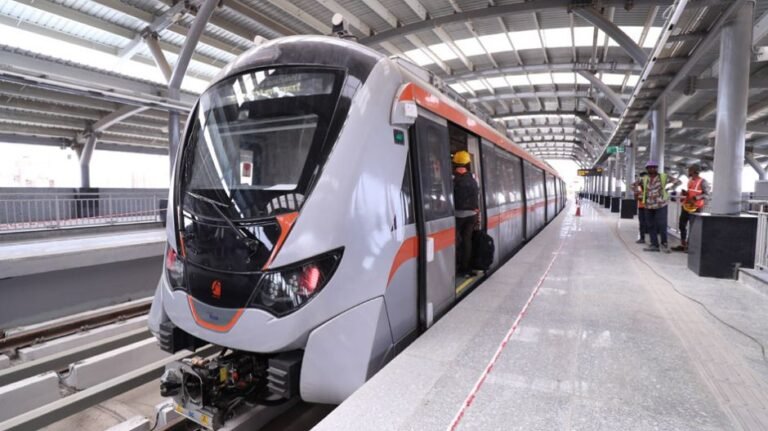
AHMEDABAD (Metro Rail News): The Public Investment Board (PIB) has approved the proposed Phase 3 expansion of the Ahmedabad Metro. This will create a 60 km network with a planned connection to Dholera International Airport. The Gujarat Metro Rail Corporation (GMRC) is developing the project. It needs final approval from the Union Cabinet before civil construction can start.

Ahmedabad Metro Phase 3 to expand network towards Dholera

A key part of Phase 3 is the new corridor from Thaltej Gam to Badrabad via Godhavi. The line will begin at Shilaj Canal Road and follow the Sardar Patel Ring Road. It will go through important areas and intersections like Bopal and Shantipura before reaching Badrabad near the Ahmedabad-Dholera Expressway. The Badrabad terminal is planned as a future connection point for extensions towards the Dholera Special Investment Region (SIR) and Dholera International Airport. The new corridor is expected to improve connectivity for the growing residential, commercial, and institutional areas in southwest Ahmedabad.

Metro link to Sports Hub

Ahmedabad Metro Phase 3 plan will also link the metro network with the South West Ahmedabad Sports Arena (SWASA) at Godhavi. This sports complex is being developed as a major sporting facility and could host significant events in the future, including those related to Gujarat’s bid for the 2030 Commonwealth Games. A direct Metro connection is expected to make this venue more accessible from different parts of Ahmedabad.

Vadaj Circular Metro to connect major areas

The Phase 3 proposal also includes a circular Metro corridor that will start and end at Vadaj. The proposed loop will cover several parts of western, eastern, and southern Ahmedabad. Key locations include:

  • Akhbarnagar
  • Naranpura
  • Shivranjani
  • Shyamal Crossroads
  • Jivraj Park
  • APMC
  • Pirana
  • Isanpur
  • Amraiwadi
  • Rakhial Road
  • Dudheshwar

The circular route aims to provide an alternative to traveling through the central areas of the city. Major interchange stations are planned at Gujarat University, APMC, Amraiwadi, and Vadaj. These interchanges will allow passengers to move between different parts of the city without going through the central business district.

41 elevated stations planned

The proposed Ahmedabad Phase 3 network will include 41 elevated stations across the 60-km expansion. The new corridors will connect emerging suburban areas with the existing East-West and North-South corridors of Ahmedabad Metro. This will create more interchange options and expand the reach of the city’s Metro network.

Although the Union Cabinet’s final approval is still pending, preparatory work has already begun. According to the information provided, GMRC has hired Detailed Design Consultants (DDCs) to handle the structural alignments. Other preparatory activities include:

  • Geotechnical soil testing
  • Utility diversion planning
  • Utility diversion tenders
  • Structural design work

These activities aim to minimize the time needed before construction starts once the project gets final approval.

Next Step: Union Cabinet approval

The PIB clearance marks a significant step for the Ahmedabad Metro Phase 3 expansion. But, the project still requires final approval from the Union Cabinet before construction can begin. If approved, the expansion will extend Ahmedabad Metro towards rapidly developing areas around the city and create a future transit link to Dholera.

Also Read: Ahmedabad Metro crosses the milestone of 50 Lakh monthly ridership in July

New Metro Line to Connect Thane-Diva via Kalwa and Mumbra

MAHARASHTRA (Metro Rail News): The Maharashtra government has proposed a new Metro line linking Thane, Kalwa, Mumbra, and Diva to improve public transport in these rapidly growing areas. Maha Metro will conduct a feasibility study and prepare a Detailed Project Report (DPR) in six months. This new line will also connect with the Mumbai-Ahmedabad High-Speed Rail corridor and Metro Line 12.

State approves metro proposal in principle

According to the Hindustan Times Report, The proposal was discussed at a meeting led by Maharashtra Deputy Chief Minister Eknath Shinde in Mumbai on Monday. Transport Minister Pratap Sarnaik, MP Naresh Mhaske, MLAs Ravindra Phatak, Madhavi Naik, and Niranjan Davkhare, along with Thane Municipal Commissioner Saurabh Rao and Maha Metro Managing Director Shravan Hardikar, attended the meeting. Shinde gave tentative approval to the proposal and instructed Maha Metro to submit the DPR within six months. An agency has already been chosen to carry out the feasibility study and prepare the DPR. The final project cost, route, and construction timeline will depend on the DPR.

Proposed metro to link Thane, Dive and Mumbra

The proposed line will connect several tightly populated areas that currently rely heavily on suburban trains and road transport. The route is expected to cover:

  • Thane
  • Kalwa
  • Mumbra
  • Diva
  • Kolbad
  • Old Thane

The corridor will be partly underground and partly elevated. The final route will be determined during the DPR process. Maha Metro MD Shravan Hardikar noted that acquiring land and completing other necessary steps may be simpler than in some other Metro projects, as the proposed route has enough open land.

Link with Bullet Train Corridor and Metro Line 12

A key feature of this proposal is its planned integration with other major transport projects. The Thane-Diva Metro will connect with the Mumbai-Ahmedabad High-Speed Rail Corridor at Mhatardi in Diva. This connection could provide passengers arriving from Gujarat with added access to Thane and nearby areas. The corridor will also link with Metro Line 12 at Manpada. This planned integration would establish a broader Metro network connecting:

Thane – Diva – Dombivli – Taloja – Kalyan – Bhiwandi – Thane

This connection could offer commuters an alternative to the crowded suburban railway system.

Around 3 lakh residents expected to benefit

MLA Niranjan Davkhare mentioned that Kalwa, Mumbra, and Diva have expanded quickly but were not included in the original Metro plans. He stated the proposed corridor could benefit nearly three lakh residents. The new line could also ease pressure on suburban trains and roads. These areas currently experience heavy passenger movement, especially during peak hours. The proposal also aims to enhance connectivity while reducing the need for commuters to make long road or rail transfers.

Maha Metro will now complete the feasibility assessment and prepare the DPR. This report will determine the final route, construction method, project cost, and implementation schedule.

Also Read: Thane Metro Project: MMRCL invites bids for EHV Line Shifting & Diversion

Residential & Commercial buildings around the station: Namo Bharat RRTS TOD plan

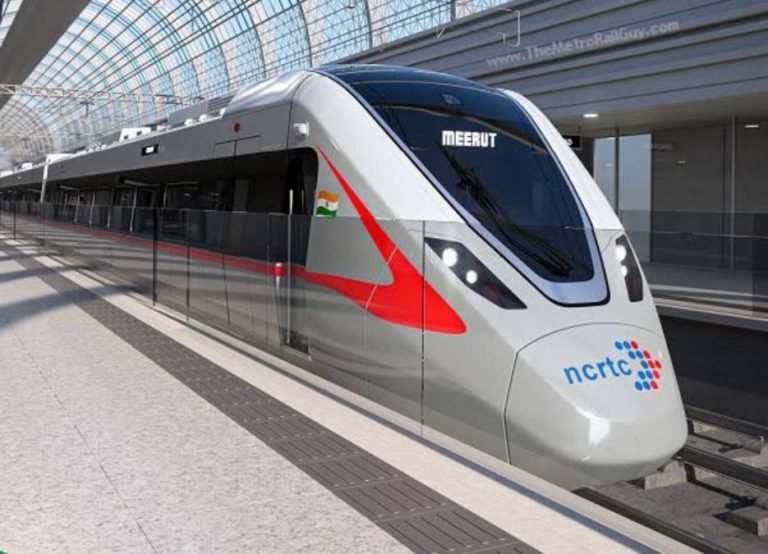
NEW DELHI (Metro Rail News): In the Lok Sabha session on Thursday (6th August), the Ministry of Housing and Urban Affairs (MoHUA) described the Transit Oriented Development (TOD) plan of Namo Bharat Regional Rapid Transit System (RRTS). As per the plans, there are multiple TOD projects planned around the corridor thereby projecting residential and commercial buildings around the station. 

TOD refers to building residential and commercial infrastructure around the metro and RRTS corridors and stations aligning development with commutation friendly infrastructure. TOD can become a major source of non-fare box revenue for Namo Bharat. It will also become a foundation for the upcoming Namo Bharat projects. 

TOD Plans for Namo Bharat

National Capital Region Transport Corporation (NCRTC), the implementing agency of Namo Bharat RRTS has informed the ministry that it has implemented several interventions across the Delhi-Meerut RRTS route including:

  • It has designed TOD zones of the Delhi-Ghaziabad-Meerut route. The report has been notified in the masterplan with special areas for TOD. 
  • NCRTC has laid out ideas for Influence Zones Plans (IZB) for the TOD nodes at Jangpura and Sarai Kale Khan under Delhi TOD policy, 2021.
  • Further, as per the provisions of Delhi TOD policy, 2026, any new RRTS corridor will be considered for TOD in Delhi. 

Significance of the TOD plan

A Transit Friendly Zone

The TOD plan will present the Namo Bharat RRTS as a commutation friendly zone. The zone will foster higher mobility across the corridor and create new potential for the overall economy. It will make RRTS stations a commercial hub. Moreover, it will utilize the space around the corridor for commercial and residential purposes, fostering optimum utilization of land.  

Non-Fare Revenue

The TOD plan will prove to be an important source of Non-fare box revenue for the system. This way the Namo Bharat will get a new avenue to generate income.  Non-fare box revenue includes the earnings from sources such as parking, lending out commercial and residential spaces. In short, it includes income from all the sources excluding the income from ticketing. For long term financial stability, the system must generate a significant amount through non-fare revenue sources. 

About Namo Bharat

The Namo Bharat RRTS project was introduced to decongest the National Capital Region (NCR) and enhance its connectivity with the satellite cities. The first RRTS corridor in this project, Delhi-Ghaziabad-Meerut RRTS is now operational on an approximately 82 km stretch. Besides, Delhi-Alwar and Delhi-Panipat projects are prioritized for implementation. 

Also Read: Namo Bharat records highest ridership amidst Kanwar Yatra on Monday

NHSRCL Signs Bullet Train Maintenance Machinery Contract 

DELHI (Metro Rail News): The National High-Speed Rail Corporation Limited (NHSRCL) has signed a contract with the KCS-AVADH Consortium to supply specialized machinery for rolling stock maintenance on the Mumbai-Ahmedabad Bullet Train project.

The contract includes the design, manufacture, supply, testing, commissioning, and deployment of the machinery. Meanwhile, construction work at key stations in Vadodara and Bharuch is progressing.

Contract covers specialized maintenance machinery

The agreement with the KCS-AVADH Consortium includes machinery needed to support the maintenance of rolling stock on the Mumbai-Ahmedabad Bullet Train corridor. The scope includes:

  • Design and manufacture of specialized machinery 
  • Supply and deployment of the equipment 
  • Testing of the machinery 
  • Commissioning and operational deployment 
  • Support for rolling stock maintenance activities  

The machinery will become part of the maintenance infrastructure needed for the high-speed rail project.

Mumbai-Ahmedabad Bullet Train project

The Mumbai-Ahmedabad Bullet Train project will link Mumbai with Ahmedabad through a 508 km high-speed rail corridor. The project requires a network of stations, depots, maintenance facilities, track infrastructure, and other systems to support high-speed train operations.The progress at Vadodara and Bharuch stations also show that work is advancing across different parts of the corridor.

The specialized maintenance machinery will help ensure the Bullet Train system is ready for operation, while progress at Vadodara and Bharuch stations brings the passenger infrastructure closer to completion.

Also Read: Mumbai-Ahmedabad High-Speed Rail: Vadodara Bullet Train Station enters final Structural Phase as steel erection begins 

Patna Metro Corridor-1:DMRC floats ₹10.86 Cr tender for track fastening system

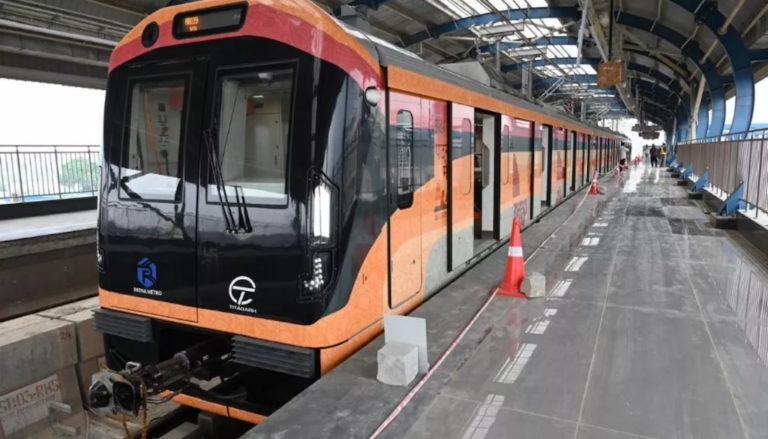
New Delhi (Metro Rail News): Delhi Metro Rail Corporation Ltd., on behalf of Patna Metro Rail Corporation Limited, has floated a tender of about ₹ 10.86 Cr for the manufacturing and supply of a track fastening system from Mithapur Null point to Khemni Chak of Corridor-1 for the Patna Metro Rail Project.

Tender Details

Information Details
Tender No2026_DMRC_920561_1 
Approximate cost of work ₹ 10.86 Crores 
Bid Security ₹ 10.86 Lakhs 
Completion period of the Work 05 months
Pre-bid Meeting13.08.2026 at 1100 hrs
Bid submission start date01.09.2026 (from 0900 hrs.) 
Bid submission end date07.09.2026 (up to 1500 hrs.) 

Scope of Work

The scope of work includes manufacturing and supply of the track fastening system from Mithapur Null point to Khemni Chak of Corridor-1 for Patna Metro Rail Project.

About Corridor -01 of Patna Metro Rail Project

Corridor- 1 is part of Phase 1 extension of the Patna Metro network. As part of Phase 1 of the Patna Metro network, Corridor 1 (Red Line) and Corridor 2 (Blue Line) together form the backbone of the city’s new rapid transit system. Corridor 1, spanning approximately 16.86 km from Danapur Cantonment to Khemni Chak, connects western residential areas, government administrative offices, and prominent educational and medical centers across Patna. Khemni Chak serves as a primary interchange hub, allowing seamless connectivity and passenger transfers between Corridor 1 (Red Line) and Corridor 2 (Blue Line), which connects Patna Junction to the New ISBT terminal.

Also Read: Bangalore Metro Pink & Blue Lines Receive Fresh Deadlines under New Leadership 

Bangalore Metro Pink & Blue Lines Receive Fresh Deadlines under New Leadership 

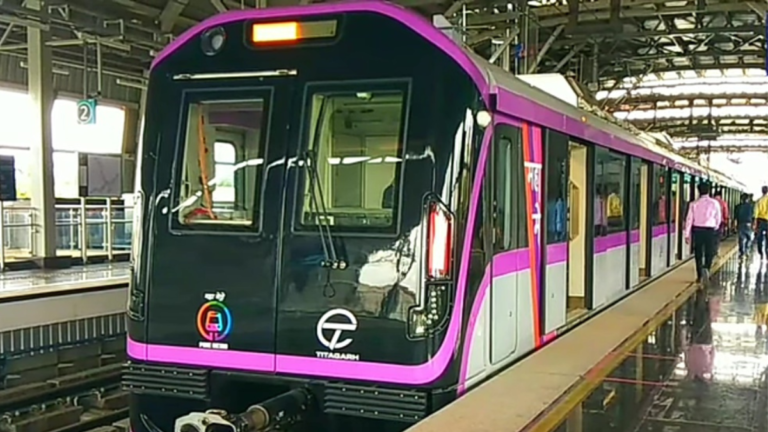
BANGALORE (Metro Rail News): The newly appointed Managing Director of Bangalore Metro Rail Corporation Limited (BMRCL), Jaffer PC, has made the launch of the long-delayed Pink Line and quicker completion of the Blue Line to Kempegowda International Airport his top priorities. He stated that the Metro operator is collaborating with various authorities to secure the remaining approvals for the elevated section of the Pink Line.  

The Pink Line has missed several launch dates, including the most recent goal of August 15. Jaffer mentioned that BMRCL hopes to complete the approval process in stages before opening the corridor for passenger services.

Bangalore Metro Pink Line awaits final safety approvals

The first phase of the Pink Line features a 7 km elevated stretch between Kalena Agrahara and Tavarekere on Bannerghatta Road with six stations. According to Jaffer, BMRCL anticipates receiving approval from the Railway Board for the signaling system within the next few days. Following that, the Research Designs and Standards Organisation (RDSO) will issue the Interim Speed Certificate (ISC).  

He noted that BMRCL has already asked the Chief Commissioner of Railway Safety (CCRS) to inspect the rolling stock, and the commissioner has agreed. The inspection is expected to happen between August 12 and 14. Once these steps are completed, the Commissioner of Metro Railway Safety (CMRS) will conduct a detailed inspection covering:  

  • Trial runs  
  • Signaling and telecom systems  
  • Integration of safety systems  
  • Stations and track  
  • Power supply  
  • Passenger facilities  
  • Overall operational readiness

The Pink Line will open for public services only after the CMRS gives final safety clearance. Sources indicated that BMRCL expects to receive all required approvals by the end of September.  

The full 21 km Pink Line connects Kalena Agrahara with Nagawara under Phase II of the Bangalore Metro project. After the elevated section opens, BMRCL plans to start the remaining underground stretch from Dairy Circle to Nagawara by March 2027. The corporation has already received eight Metro trainsets for the Pink Line and plans to use three to four trains initially on the elevated section.  

image 5

Blue Line to Airport also gets priority  

Jaffer stated that BMRCL is also working to speed up progress on the 58 km Blue Line, which will connect Silk Board with Kempegowda International Airport (KIA). Trial runs on the Outer Ring Road section between KR Pura and HSR Layout are expected to begin in October. BMRCL had previously aimed to open the KR Pura-Central Silk Board section in 2026.  

More trains planned for Green Line 

The new Managing Director mentioned that the CMRS is currently inspecting newly delivered trainsets and checking their integration with the signaling system before they go into service. Officials are already in Bangalore to carry out technical inspections and verify various operational parameters. Sources added that four more trainsets are in production at Titagarh Rail Systems and will be delivered in phases.  

Green Line frequency reduced for inspection  

BMRCL will temporarily reduce Green Line services on Friday night to support the inspection of new trainsets. Trains between Yeshwantpur and Madavara will run every 20 minutes instead of every 10 minutes from 10:30 pm until the end of service. Services between Madavara and Silk Institute will continue according to the regular schedule.

Also Read: Karnataka’s CM outlines 500-km Bengaluru Metro expansion plan 

Chennai Metro Phase 2 recorded 24th tunnel breakthrough at Moolakadai station

CHENNAI (Metro Rail News): Chennai Metro Rail Limited (CMRL) achieved its 24th tunnel boring machine (TBM) breakthrough in the Phase 2 project. The tunnelling on the 819-metre up-line section between Madhavaram High Road and Moolakadai stations has been completed by TBM named Nilagiri.

This marks the 11th breakthrough on the 9 km underground stretch between Madhavaram Milk Colony and Kellys on Corridor 3. The section is being executed by Tata Projects. Seven TBMs have been deployed for this package.

Map of the underground section of Phase II of CMRL

image 4

(Total Underground Section Madhavaram Milk Colony and Kelly (9km), 24th breakthrough of 819 m upline completed from Madhavaram High Road to Moolakadai stations)

The drive was one of the most challenging under the contract. The machine had to pass beneath the Buckingham Canal and a busy traffic corridor while managing 14 borewells along the alignment. Alternative water sources were provided to residents during construction. Continuous instrumentation and monitoring ensured that ground settlement remained within permissible limits.

CMRL is accelerating work on the overall 118.9 km Phase II project, estimated to cost ₹63,246 crore. The network covers three corridors:

  • Corridor 3: Madhavaram Milk Colony to SIPCOT
  • Corridor 4: Lighthouse to Poonamallee Bypass
  • Corridor 5: Madhavaram Milk Colony to Sholinganallur

Meanwhile, the first operational stretch of Phase II is nearing launch. The 14.64 km elevated corridor between Poonamallee Bypass and Vadapalani, with 11 elevated stations, has completed all mandatory safety clearances and is awaiting an inauguration date from the Centre.

Also Read: Chennai Metro records highest-ever monthly ridership of 1.06 cr 

Two Himachal Pradesh Rail Projects Face ₹2,264 Crore Shortfall from State: Shri Ashwini Vaishnaw 

New Delhi (Metro Rail News): Union Railway Minister Shri Ashwini Vaishnaw informed the Rajya Sabha that a shortfall of ₹2,264 crore in cost-sharing contributions from the Himachal Pradesh government is linked to the progress of two railway infrastructure projects in the state. The information was provided in a written reply to a question from Member of Parliament Shri Anurag Sharma. The new major projects on delay are 

  • Bhanupalli-Bilaspur-Beri New Rail Line 
  • Chandigarh-Baddi New Rail Line.

Bhanupalli-Bilaspur-Beri New Rail Line (63 km)

The project was sanctioned on a cost-sharing basis, with 25% to be contributed by the Himachal Pradesh government and 75% by the Central Government.

Total expenditure incurred on the project so far is ₹8,237 crore. As per the cost-sharing arrangement, ₹2,910 crore was to be provided by the Government of Himachal Pradesh. The state has deposited ₹847 crore, leaving a balance of ₹2,063 crore. An additional amount of ₹70 crore is also to be given by the state government. Non-deposition of the state’s share is stated to be affecting the progress of the project. 

Chandigarh-Baddi New Rail Line (28 km)

This project was sanctioned at a cost of ₹1,540 crore on a 50:50 cost-sharing basis with the Government of Himachal Pradesh.

Total expenditure incurred so far is ₹1,099 crore. As per the arrangement, ₹549 crore was to be contributed by the state government. It has deposited ₹348 crore, leaving a balance of ₹201 crore. Non-deposition of the state’s share is stated to be affecting the progress of the project.

The minister stated that the progress of both projects is affected due to non-fulfilment of commitments by the state government. The Government of India is prepared to execute the projects, and their success depends on support from the Government of Himachal Pradesh.

Completion of the projects depends on various factors. These include land acquisition, forest clearance, shifting of infringing utilities, statutory clearances from various authorities, geological and topographical conditions of the area, the law and order situation at the project site, and the number of working months available in a year for the particular project site. These factors influence both the timeline and the cost of the work.

Also Read: L&T Bags ₹1,234 Cr Noida Metro Aqua Line’s Civil Contract

L&T Bags ₹1,234 Cr Noida Metro Aqua Line’s Civil Contract

NOIDA (Metro Rail News): Noida Metro Rail Corporation Limited (NMRC) has awarded a ₹1,234 crore contract to Larsen & Toubro (L&T) for the design and construction of elevated viaducts and 10 metro stations under the Aqua Line extension project. The contract covers two important extensions that will strengthen metro connectivity across Noida and Greater Noida.

Contract details 

InformationDetails
Tender Number 2026_NMRCL_1148041_1 
Awarding AuthorityNoida Metro Rail Corporation Limited (NMRC)
ContractorLarsen & Toubro Limited (L&T)
Contract Value₹1,234 crore
Completion Period1,096 days
image 4

Scope of work

The contract includes the design and construction of Elevated Viaduct and 10 nos of Elevated Stations for extension projects of NMRCs Aqua Line from Botanical Garden to Noida Sec-142 (from Chainage (-) 383.959 to 12130.143) and from Depot Station to Boraki MMTH (Chainage).

About the project

The Botanical Garden-Sector 142 corridor is a key part of the Aqua Line expansion. The 11.56-km elevated corridor has an estimated cost of ₹2,254.35 crore and includes eight stations:

  • Botanical Garden
  • Sector 44
  • Sector 96 (Noida Authority Office)
  • Sector 97
  • Sector 105
  • Sector 108 (Police Commissionerate)
  • Sector 93
  • Panchsheel Balak Inter College (Sector 91)

The corridor will improve connectivity between Botanical Garden, one of Noida’s busiest interchange stations on the Blue Line and Magenta Line, and the city’s growing residential and commercial sectors. It will also provide better access to Greater Noida, the Noida International Airport at Jewar, and offer smoother metro connectivity to Indira Gandhi International Airport in Delhi through the existing Delhi Metro network.

On the other hand, The ₹416 crore Depot-Boraki section will have two stations-Junpat and Boraki. It will connect the proposed Multimodal Transport Hub (MMTH) at Boraki, bringing together the ISBT, railway station, and Metro at one place for easier travel. 

Also Read: Ahmedabad Metro crosses the milestone of 50 Lakh monthly ridership in July

Ahmedabad Metro crosses the milestone of 50 Lakh monthly ridership in July

AHMEDABAD (Metro Rail News): Gujarat Metro Rail Corporation (GMRC) Limited announced that Ahmedabad metro completed a new ridership milestone. In July 2026, the metro surpassed the number of 50 lakh monthly commuters for the first time since it became operational. 

Around 51.12 lakh passengers travelled through Ahmedabad metro in this month. The previous record for highest monthly ridership was in May 2026 with a ridership of 48.37 lakhs. This year the metro has shown an overall growth in the monthly ridership setting new highest records twice in January and May before surpassing the 50 lakh milestone.

Graphical Representation of Monthly Ridership of Ahmedabad metro 

Here is a graph representing the monthly ridership of Ahmedabad metro from April 2023 to July 2026: (Source: GMRC)

image 3

The metro has provided a convenient mode of public transport. It has taken initiatives for last mile connectivity using feeder buses and coordination between local agencies. The high ridership indicates that the city is accepting the metro as a fast, safe and affordable travelling alternative. After the upcoming expansions, the metro is expected to further increase its ridership.

About Ahmedabad Metro

The Ahmedabad metro is a mass rapid transit project in the twin city of Ahmedabad and Gandhinagar. It was inaugurated on 4th March 2019 by Prime Minister Shri Narendra Modi. The total length of the Ahmedabad Metro is 68.28 km with 54 stations. Currently, the phase 2A extension project is under development. 

Also Read: Mumbai-Ahmedabad High-Speed Rail: Vadodara Bullet Train Station enters final Structural Phase as steel erection begins