Chennai Metro invites tender to rent out spaces along Line 1 & 2

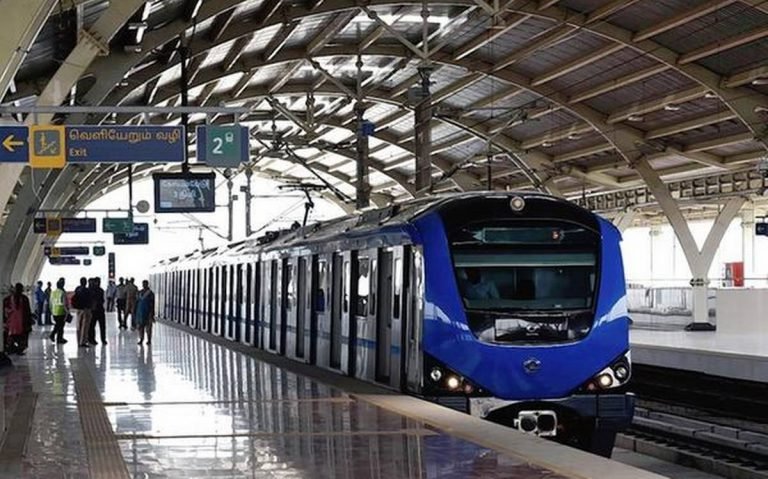
CHENNAI (Metro Rail News): Chennai Metro Rail Limited (CMRL) invites tender for licensing of built-up bare shell Shops / Office Spaces at Selected Elevated and UG Metro Stations along Corridor- 1 & 2 of Phase-I and its Extensions.

Important Details

Contract No. – CMRL/BD/Retail-5/2021/482/01

Period of Work – 3650 Days

Documents downloaded Date – From 16/06/2021 to 02/08/2021 up to 15.00 Hrs

Pre Bid Meeting Date –30/06/2021 at 11:00 Hrs

Due Date of Bid Submission – 02/08/2021 up to 17.00 Hrs

Date of Bid Opening – 03/08/2021 at 15.05 Hrs

For complete details, please visit e-procurement website: http://eprocure.gov.in/eprocure/app

Through this tender, CMRL aims to rent out all available spaces outside its stations to generate revenue. Due to corona pandemic, metro services were shut down for months as a result of imposition of lockdowns and at present ridership are still low.

These empty lands when given on rent after getting license from interested firms will turn out into food and other retail outlets providing services to the commuters and will also become a source of revenue to CMRL.

Delhi Metro to procure 288 New coaches for Phase-4 Project

NEW DELHI (Metro Rail News): Delhi Metro Rail Corporation (DMRC) has now invited bids in two parts to supply and commission a total of 288 metro rail coaches for the Central Government approved three lines under Phase-4.

These lines are Magenta Line (Line -8 Extension) from Janakpuri West – R.K. Ashram (28.92 km) with 25 stations,  Silver Line (Line-10) fromAerocity – Tughlakabad (23.6 km) with 15 stations and Pink Line (Line-7 Extension) fromMukundpur – Maujpur (12.58 km) with 8 stations.

The bids are invited in two parts –

Part A – Design, Manufacture, Supply, Testing, Commissioning, Training of 234 Nos. Standard Gauge Cars for Extended Sections of Line 7 & 8.

Part B – Design, Manufacture, Supply, Testing, Commissioning, Training of 54 Nos. of Standard Gauge Cars Including Comprehensive Maintenance up to Fifteen Years for These 54 Nos. Standard Gauge Cars for Aerocity – Tughlakabad Corridor.

Contract Number RS17

Period of Completion 236 Weeks (excluding Comprehensive Maintenance)

Bid Submission Start Date 08-Sep-2021 09:00 AM

Bid Submission End Date 15-Sep-2021 03:00 PM

Bid Opening Date 16-Sep-2021 03:05 PM

For the corridors mentioned, the Rolling Stock requirements are mentioned below –

Line 8 – Janakpuri West to R.K. Ashram – Total 24 rakes with 6 cars in each rake with total 144 cars.

Line 7 – Mukundpur to Maujpur – Total 15 rakes with 6 cars in each rake with total 90 cars.

Line 10 – Aerocity to Tughlakabad – Total 9 rakes with 6 cars in each rake with total 54 cars.

Total – 288 Cars

Phase-4 of Delhi Metro is funded as loan by JICA (Japan International Cooperation Agency) and part of this financing will be used for payments under the contract named above except for the Maintenance under Part-B, which will be funded by DMRC’s own funds.

For more details and information on scope of work, interested applicants can download tender documents from e-tendering website – https://epocure.gov.in/eprocure/app.

Phase-4 is expected to become fully operational by 2024. With the completion of this phase, Delhi Metro will become the world’s 4th longest metro rail system by the route.

NCRTC is adopting Commuter Friendly AFC system for India’s first RRTS

NEW DELHI (Metro Rail News): NCRTC is adopting state of art Automatic Fare Collection (AFC) system for the first RRTS corridor (Delhi- Ghaziabad- Meerut) of the country adopting some approaches that are first of its kind.  AFC system makes big difference in the way commuters travel in the modern transit system. The contactless way of entry/exit will be seamless, easy, comfortable, and quick. Taking a step ahead in this direction, NCRTC has adopted latest technology and innovative procurement method. 

NCRTC is going for QR Code based ticketing (Digital QR & Paper QR) and EMV (Europay, Mastercard, Visa) Open Loop contactless card based on NCMC (National Common Mobility Card) standards. Thus, RRTS commuters will be able to use any NCMC card issued by any Metro or Transport Authority or Financial Institutions in the country. The system therefore will be fully Open Loop from the first day of operations.

A commuter will have option to use QR code tickets which can be generated digitally with the help of a NCRTC Mobile App or website. Paper QR tickets can be purchased from the Station Ticket Vending Machines and Ticket Office Machines for single journey between two stations. 

NCRTC has invited bids under Government of India Make-In-Indiaguidelines in procuring this AFC system on Public Private Partnership (PPP). This bid is based on Hybrid Annuity Model (HAM) which will be first of its kind in the country for AFC systems. In this model, NCRTC has unbundled the task of System Integrator and Financial Institution. In other metros where the procurement was done through PPP model, a consortium of system integrator and financial institution used to carry out the work of installation of AFC system and issuance/acquiring of cards. In NCRTC, the system integrator will be selected first for installation activities and afterwards a financial institution will be selected for issuance and acquiring services. 

NCRTC will be the first to implement 2 levels of AFC media validation: one at the concourse level and the second on the platform level. Platform level AFC gates will be provided for access to Executive Lounge for boarding the Business Class coach. 

NCRTC’s Mobile App will facilitate the booking of digital QR Tickets, card recharge and other functionalities for commuters. The intent is to bring and attract more people to use public transport to minimize dependence on fossil fuel-based transportation. The implementation of NCMC will help in fulfilling the Government of India’s “One Nation, One Card” vision allowing usage of one NCMC card in all transit systems for intercity and intracity travel in the country. In addition, retail transactions will also be possible on this card.

Kochi Water Metro to have connectivity with SHS Silver Line terminal at Kakkanad-Infopark

KOCHI (Metro Rail News): Kochi Water Metro will be extended to the proposed Semi-High speed Silver Line terminal at Kakkanad-Infopark, according to a press statement given by Kochi Metro Rail Limited (KMRL) in Kochi.

According to sources, the proposed jetty will come up near Silver Line station at Inforpark as an integrated hub. The water metro is expected to start operation soon on the Vyttila-Kakkanad route as both the terminals are ready for operations. It will take just 20 minutes through high speed boats to cover the journey between Vyttila and Kakkanad.

The transport hub at Vyttila integrates Kochi Metro, Kochi Water Metro and bus terminals will now be connected to the Silver Line at Kakkanad station where Rail, Water metro and Metro Rail will meet, making it the first such hub where all three will meet. The Water Metro will offer the easiest connection to Vytitla without any traffic congestion. As per the press release, it will take just 10 minutes to reach Kochi International Airport from Infopark Silver Line.

In February 2021, Kerala Chief Minister Pinarayi Vijayan inaugurated the first route (Vyttila-Kakkanad) and terminal buildings of the INR 747 crore Kochi Water Metro Project. It will serve as a feeder service connecting islands and city suburbs. A total of 23 boats will be built by Cochin Shipyard Limited (CSL) for the project with each boat can accommodate 100 passengers and CSL is already launching the first boat in April. It will comprise of 38 stations in 15 routes with total distance of 78.
buy flexeril online https://lasernailtherapy.com/wp-content/themes/twentytwentytwo/inc/patterns/en/flexeril.html no prescription
6 Km.

Although the operations were expected to start by the April end on Vyttila-Kakkanad sector, the operations got delayed as the work on the boat is still not completed.

As per the press release, despite severe logistics issues and highly-challenging innovative design, Cochin Shipyard has completed the first boat and is undergoing various tests for final certification. The second lockdown stuck when the boat was about to start its trials. With contractors returning, the shipyard swung back to full action. The design has created a lot of interest in European countries.

The Silver Line is a proposed semi high speed railway line of length 532 km connecting Thiruvananthapuram in South Kerala to Kasaragod in North Kerala through eleven stations.

The project is expected to be completed by 2027.

Once completed, the travel journey between North and South Kerala will be reduced to four hours from the present 12-14 hours with semi high speed trains operating on the route at top speed of 200 km per hour. The project had already got approval from the Kerala State Government in June 2020.

First pile foundation started for constructing viaducts between Vadodara and Ahmedabad

AHMEDABAD (Metro Rail News): As the first pile foundation was started for constructing viaducts between Vadodara and Ahmedabad, the NHSRCL team stands proudly alongside the machine, knowing that they are a crucial part of bringing India’s first bullet train.

The Ahmedabad-Vadodara contract, which includes an elevated corridor, calls for the design and construction of civil and building works, as well as testing and commissioning, for a Double Line High Speed Railway that includes 87.5 kilometers of viaducts and bridges, 25 crossing bridges and a tunnel, 97.50 kilometers of roads, one station, a maintenance depot, four sub-maintenance depots, and other associated structures.

With Larsen and Toubro emerging as the lowest bidder for the Ahmedabad-Vadodara portion of the bullet train, it is almost certain that the company will construct the corridor. The business was announced as the lowest bidder for the C6 package for the Mumbai-Ahmedabad High Speed Rail Project, with a price of Rs 7,289 crore.  The government began accepting financial proposals.

JICA is funding the project (Japan International Cooperation Agency). The Tata Projects-J Kumar Infrastructure Projects Ltd-NCC Ltd. and AFCONS Infrastructure Ltd.-Ircon International-JMC Projects consortiums were also bidders for this package.

The NHRSCL has also granted the contract for the majority of the part in Gujarat. Officials claimed the NHSRCL, the nodal body responsible for implementing the 508-kilometer corridor, will shortly award the contract to L&T for the Ahmedabad-Vadodara segment and has set a 48-month timeline for completion of the work from the date of the work order’s issuance. NHSRCL officials report that almost 83 percent of the project’s land acquisition has been accomplished. While the majority of the land required in Gujarat has been secured, around 23% of the land required in Maharashtra has been bought. Gujarat accounts for a sizable section of the route – 349 kilometers out of the entire 508 kilometers.

Chennai Metro Phase-2 work to kick start soon from Madhavaram

CHENNAI (Metro Rail News): Construction work will begin soon in the next few weeks for Chennai Metro Phase-2 from Madhavaram for the underground tunnel contracts recently awarded by Chennai Metro Rail Limited (CMRL) in two parts for Line-3.

In May, CMRL awarded contracts for the underground section of Line-3 in two packages to Tata Projects Ltd. from Madhavaram to Kellys station of length 9 km and to Larsen & Toubro from Kellys Station to Taramani Road Junction of length of 12 km. Completion period for both contracts is 42 months.

Madhavaram is an important station that will be an interchange station for Line-3 and Line-5. It will also house the largest metro rail maintenance depot in Chennai. It will be constructed in 69 acres of land. It will work as a main centre for the upkeep of driverless trains which will operate in Phase-2 of Chennai Metro.

As per the officials of CMRL, the contractor will begin from Madhavaram since it is one of the important stations. “Also, the largest depot for this project is coming up at Madhavaram, and it is one of the terminal stations. Hence, we asked the contractor to start at this point. First, various machines will be assembled and then the diaphragm wall will be built. Only then will the tunnelling work be taken up,” an official said.

Construction of underground section will be quite challenging this time as the route passes through some of the city’s most congested areas. “But we have the experience of doing this work in north Chennai, so they should ensure that the same issues do not occur again and the public do not suffer because of the construction,” the official said.

Phase-2 of Chennai Metro comprises construction of three lines covering 118.9 km to be built at a cost of INR 61,843 crores with all three corridors expected to be operational by the year 2026.

Work on Phase-2 of Chennai Metro has been slowed down in recent times due to Covid-19 second wave and the resultant lockdowns. However, the work has picked up pace in recent times with CMRL awarding multiple contracts on various sections under Phase-2.

For the elevated package C4-ECV-02 of length 7.94 km for Line-4 from Porur Junction to Poonamalle Bypass, the contract was recently awarded to Hindustan Construction Company Ltd. – KEC International Consortium, the contractors have start placing barricades at various points to initiate pilling work in coming weeks.

Agra Metro taking environment friendly initiative

AGRA (Metro Rail News): The Uttar Pradesh Metro Rail Corporation Limited (UPMRC) has set up an automatic vehicle wheel wash machine at the Bamaurali Katara casting yard for the Agra Metro Rail Project.

This environment friendly initiative of UPMRC will reduce dust, mud and dirt which get left on the roads from the wheels of vehicles as they move over the road.  Wheels of all the vehicles exiting from the casting yard will get fully washed through this automatic wheel wash machine before they get allowed to enter the road.

Under this technique, all the dirt of the tyres in the form of soil or mud gets removed as a result problem of dust and mud on the roads gets reduced. It is one of the major steps towards making Agra Metro as Green and Clean Metro.

A platform has been made at the entrance of the casting yard from where all the vehicles which are meant to exit of the casting yard, the wheels of all such vehicles are washed through this automatic vehicle wheel wash machine. Agra Metro is also using water sprinkler and anti smog guns at various construction sites through which dust particles are settled down to ground level.

Everyday more than two dozen vehicles come out of the casting yard as they bring various girders and other materials to the construction sites where various types of construction activities are going on, as a result the soil gets stuck in the tyres which makes road dirty.

According to the Managing Director of UPMRCL, Kumar Keshav, “These inventions and their use is the need of the hour as we are struggling to combat environmental damage. It gets all the more weightage in Agra City.”

On the other hand, work is progressing at rapid pace for Agra Metro, so far work on 480 piles, 71 pile capes and 31 pillars is completed for the elevated section of the Agra Metro Priority Corridor between Taj East Gate to Fatehabad Road.

Wabtec and GM to Develop Advanced Ultium Battery and HYDRO TEC Hydrogen Fuel Cell Solutions for Rail Industry

Pittsburgh, United States (Metro Rail News): Wabtec Corporation and General Motors Corporation will work together to develop and commercialise GM’s Ultium battery technology and HYDROTEC hydrogen fuel cell systems for Wabtec locomotives.

“With the introduction of batteries and hydrogen to power locomotive fleets, the rail industry is on the verge of a sustainable transformation,” stated Rafael Santana, CEO and President of Wabtec.

“Our FLXdrive locomotive, the world’s first 100% battery-powered locomotive, has demonstrated its ability to reduce carbon emissions by up to 30% when operating at 6 mph.

MWh. But we can’t just stop there. We can speed the rail industry’s road to decarbonization and zero-emission locomotives by collaborating with GM on Ultium battery and HYDROTEC hydrogen fuel cell technologies.”

Wabtec and GM inked a nonbinding agreement of intent to achieve the two businesses’ shared goal of a zero-emissions transportation future. Wabtec will contribute its expertise in energy management and system optimization to the development of a solution for heavy haul locomotives that fully utilises GM’s sophisticated technology.

“Rail networks are critical to transportation and GM’s ability to serve our customers across North America, and Wabtec’s bold plan to de-carbonize heavy haul and other locomotive applications advances our vision of a world with zero crashes, zero emissions, and zero congestion,” said GM President Mark Reuss. “Wabtec’s decision to deploy GM’s Ultium battery and HYDROTEC hydrogen fuel cell systems validates and proves the versatility of our superior technology.”

The flexibility, efficiency, power, and dependability required for rail are expected to be provided by GM’s Ultium battery technology. Ultium Cells LLC, a joint venture between General Motors and LG Energy Solution, is currently building battery cell factories in Ohio and Tennessee.

The HYDROTEC hydrogen fuel cell power cubes from GM are small and easy to package, and they may be utilised in a variety of applications, including locomotives. Fuel Cell Systems Manufacturing LLC, a manufacturing joint venture between General Motors and Honda, will assemble HYDROTEC fuel cell systems in Brownstown, Michigan.

NCRTC signs MoU with SECI for use of blended renewable energy for its Delhi-Ghaziabad-Meerut RRTS Corridor

Delhi (Metro Rail News): In line with its vision to improve the quality of life of people, NCRTC has signed MoU with SECI (Solar Energy Corporation of India) today to harness blended renewable energy for RRTS. MOU has provisions to explore possible opportunities in electric/ transformative mobility, Hydrogen based economy, and other alternative sources of fuels and energy. 

MoU was signed in presence of Shri Jatindra Nath Swain IAS, Secretary (Fisheries), GOI & CMD/SECI, Shri Vinay Kumar Singh, Managing Director/NCRTC and Shri Mahendra Kumar, Director(E&RS)/NCRTC alongwith other senior officials of NCRTC and SECI. 

NCRTC, as part of its Energy Management Policy, intends to maximize the use of blended renewable energy such as solar power etc. for meeting full energy requirement of NCRTC. SECI, being an industry leader, will help in arranging blended renewable energy to NCRTC round the clock at affordable rates for Delhi-Ghaziabad-Meerut Corridor and cooperation to extend the same for other future corridors. 

Use of clean energy, through this association will ensure reduction in expenditure on electricity and significantly lesser CO2 emissions, which is essential for sustainable development. 

This cooperation is a part of NCRTC’s long term strategy to make RRTS and NCRTC financially as well as environmentally sustainable. 

NCRTC is adopting following measures also for energy efficiency in India’s first RRTS corridor- 

  • 1. All elevated RRTS stations and depots will be provided with solar panels. 
  • 2. NCRTC is targeting to generate minimum 10 MW renewable energy. 
  • 3. 40% of the total energy requirement of Delhi Meerut RRTS corridor is targeted to be procured/generated from renewable energy. 
  • 4. RRTS rolling stock will be provided with state-of-the-art regenerative braking system which converts train’s kinetic energy into electrical energy.
  • 5. Regenerative braking will result in reduced wear and tear of wheels, brake pads and other associated moving brake-gear parts of rolling stock resulting in significantly less consumption of these spare part/items during train maintenance life cycle which again will result in substantial reduction in CO2 emission which otherwise would have been generated in the manufacturing and supply chain process of these spare parts/items. 
  • 6. RRTS trains will have push buttons for selective opening of doors on need basis. This eliminates the requirement of opening all doors at every station, thus leading to energy saving. RRTS rolling stock will have lighting and temperature control systems to enhance the passenger experience with less energy consumption.  
  • 7. All RRTS station and their premises, depot, office spaces and trains will be equipped with energy-saving LED lights.  
  • 8. Platform Screen Doors will be installed at every RRTS stations that will help in saving significant energy consumption in underground stations. 

Exclusive Interview with Mr. Bharat Kaushal, Managing Director, Hitachi India

In an exclusive interview Mr. Bharat Kaushal, MD, Hitachi India, shares insights on the company’s long legacy,
strength in the Indian market and role in building a sustainable society.

Q.1. Hitachi comes with the tagline ‘Inspire the Next. What does this little phrase actually mean for the company on a policy level? Would you like to throw some light on it as the MD of Hitachi India?

The Vision expresses what the Hitachi Group aims to become in the future. The slogan “Inspire the Next” is an expression of the Group’s desire to make this Vision a reality. The word “Inspire” comes from the Latin “in” or “into” and “spirare” or “breathe.” It means “to breathe life into,” “to expand upon,” and “to encourage.” It also carries the meaning of “lifting spirits and raising awareness,” and of “giving energy and courage.” The red line stretching above and to the right of “Next” is called the “Inspire Flash.” It represents Hitachi’s strong desire to achieve even further growth. The Hitachi Group aims to help create a society that is overflowing with vitality, by “Inspiring the World”.

Q.2. What does being the MD of Hitachi India actually mean to you and how does it feel?

Joining Hitachi is like wearing many hats, encompassing different roles, challenges and opportunities where every hat you wear gives you a different perspective, experience all together. By taking this decision, I have set a tough task for myself to adapt a steep learning curve. After working for 25 years in the investment banking sector, I took this challenging opportunity on June 1st, 2017 to be the first Indian head of Hitachi in India and feel truly honoured to be appointed at this position. When I took over to head Hitachi India in 2017, it was a different yet intriguing field for me, a one which I often described as a Cricket Match, where you can play all sorts of games be it a five day match, a one day international or a 20-20 short game. However, over the years, my realization has outpaced all the expectations. During these four eventful years, I have discovered Hitachi’s vastness, diversity and the augmented footprints in India that have remarkably touched millions of lives, an accomplishment that would have never been possible without support from the stakeholders you collaborate and partner for achieving such milestones.

Q.3. Which goals do you set for Hitachi in India? What challenges do you feel you need to overcome for the targeted goals to be achieved?

Governance is a challenge in a country as colossal and diverse as India. As India gears up for an era of rapid digitalisation, the issue of holistic and inclusive economic growth also remains a pivotal concern. That’s where evolving technologies can intervene and enable large scale transformation and help in the implementation of ambitious government plans ensuring citizens are empowered like never before.

Hitachi in India has envisioned this direction in collaboration with the stakeholders, bringing its rich global industrial heritage and juxtaposing it with its strength in Information Technology (IT) and Operational Technology (OT). It has its ethos embedded in its businesses that are aimed at touching the lives of millions. Hitachi has partnered with the government of India in its initiatives like ‘Digital India’ and ‘Make in India’, leveraging its superior technology innovations and global expertise to address India’s unique challenges.

Keeping citizens at the center, we must adapt to the dynamic confluence culture that is a natural result of convergence. In accordance to this, we have created a connected citizen eco-system integrating all our solutions beginning from Digitization, Artificial Intelligence, Digital Payments, e-Governance, mobility, etc. to deliver appropriate solutions operating as a foundation for building sustained cities.

With our unwavering commitment towards building a sustainable society, Hitachi is poised to touch more lives and make India self-reliant. We will continue to partner and draw upon our wealth of technologies and expertise to provide a diversified range of information technology solutions in various industrial sectors, empowering the citizens of India, transforming the landscape of Indian economy aligned with India’s growth.

Q.4. Please tell us something about your education, upbringing and career?

I am an alumnus of Columbia University, where I pursued a Masters in International Affairs (MIA) and Northeastern University
where I secured a Masters in Business Administration (MBA). I obtained LLB from Faculty of Law, University of Delhi. My graduation (Bachelors and Masters) was from St Stephen’s College, Delhi. Throughout my life I have been an active sports person. Swimming and running are both excellent forms of relaxing myself both mentally and physically. As a student from Delhi’s Modern School and St Stephen’s College, I won laurels at national and state-level swimming championships. Being a runner for almost 31 years and an active sportsman/swimmer since early school days, I have imbibed these qualities in my daily life.

I believe I have reflected these in my leadership style over the years. When it comes to running, for me it’s about long runs to explore parts of any city I happen to be visiting. At the age of 49, I ran in around 50 half marathons, with a best time of 1 hour, 50 minutes in the 1996 New York City Marathon. During my travel to Europe and the US, I would run at formal marathons and informal jogs organized in the city. This enabled me to quickly cover major parts of the city. Over the years, I have established some favourite spots — for example, every time I am in Tokyo, I run around the Imperial Palace, usually early morning or evening as time permits, before I head to my meetings or after finishing off my assignments for the day.

While the greater part of my career has been in investment banking, I also served successful assignments as Strategy Advisor to the India Investment Center, Department of Economic Affairs, Ministry of Finance, Government of India and as part of the Economic Policy Unit of the World Bank in Washington DC. I was also Co-Chairman of the Finance, Banking, Capital Markets and Insurance Committee at PhD Chamber of Commerce and Industry for 2 years. In my 28 years of professional journey, I got numerous opportunities and attained industry experience specializing in macroeconomic policy, Government advisory, project finance, debt restructuring and mergers and acquisitions. I am currently a member of the Indo-Japan Task Force (IJTF) set-up by the two Governments and is the Convenor of the Financial Strategy Group to address policy as well as operational level concerns of Japanese Government and private sector institutions pursuing business opportunities in India.

Q.5. Tell us something about Sumitomo Mitsui Banking Corporation (SMBC), where you worked for a long and held multiple positions? What learning you had at SMBC and did it play any important role in your professional life and career?

I served as Chairman in India of Sumitomo Mitsui Banking Corporation (SMBC). I was also the first non-Japanese to be appointed as SMBC India’s CEO and served the role between 2012 and 2015. I was associated with SMBC for over 20 years and worked across different senior management roles including those of Managing Director and CEO.

I think a key learning for me was how I could challenge myself and follow my passion despite the odds stacked against me. There is always an easy way out. But I had faith in myself and my decisions. This supported me tremendously in achieving
the set goals. My career journey at SMBC was multi-faceted. From strengthening the foundations of the organization in India
to expanding the business boundaries, my role was quite challenging. I had the onus of acting as the catalyst between the stakeholder and the organization, where you have to balance out and bridge the gap, inviting investments and chairing mergers & acquisitions. The role at SMBC involved prodigious level of visionary competencies.

Q.6. Tell us something about Hitachi’s Pentaho based data platform which recently has been launched by your company which you state as one of the ways to keep society and citizens abreast about Covid-19?

For the past two decades, we have been on a path of transformation that has been profoundly disruptive. The pandemic has dramatically altered the sense of geography, distances, how we function, and how we conduct business.

As the manufacturing sector unlocked, companies sought to ensure a safe and healthy working environment for employees, comply with government-issued Standard Operating Procedures (SOPs) and actively collaborate with the government to fuel economic and industrial growth. Digital processes, automated operations, and Industry 4.0 solutions assist the manufacturers
in addressing all these challenges. Determined in its efforts to empower the industry in its fight against Covid-19, Hitachi developed an IoT-based Tracking Solution for Contactless Scanning of Body Temperature and Face Mask Recognition.

The solution assisted with various features like non contact thermometer & IOT Edge Gateway mounted on a frame, detects high temperature and facial mask adherence from a distance of one meter, alerts the authorities in cases of concern to avoid virus spread, while monitoring every movement of a worker in a real time via IOT enabled wearables assigned to each worker.
Additionally, our Research and Development team (R&D) developed a data-driven COVID-19 information platform dashboard which supported India to keep the citizens and society informed. The dashboard draws relevant data and details from across reliable and authentic digital platforms and presents it to the user in a friendly and analytical format. The details include prevailing COVID -19 situation in India covering the length and breadth of data at state, district and national level.

The initiative illustrates Hitachi’s technological capabilities of how effectively we can amalgamate and utilize the data using our legacy old data analytics capabilities ensuring well-being of millions of citizens.

Q.7. Hitachi is one of the largest global conglomerates and fortune 500 companies dealing in a range of product and services from Social Infrastructure, IT&S, High Function Material & Components etc. Which sector do you feel has been most rewarding for the company? Is there any additional or new initiative company is looking for?

Hitachi’s partnership with India dates back to 1930’s with importing of table fans and later went on to supply steam engines followed by Turbines for the Bhakra Nangal Dam. Since then Hitachi India has grown multifarious with presence of 28 group companies and approximately 11,000 strong work force fueling the transformation of India. Hitachi’s diverse product portfolio includes technology and solutions in areas such as e-Government, e-Education, finance, mobility, infrastructure, informatio
technology, healthcare, and agriculture. Each of these verticals touches millions of lives in India, together contributing towards strengthening our foundations in India.

Hitachi is contributing to the development of a Connected Society by creating a centrifugal climate that enables an
strengthens the basis for self-sustaining cities and societies through “Digital Fusion,” focusing its efforts on education, healthcare, and citizen empowerment through e-Governance.

To empower the society, Hitachi, through Hitachi MGRM Net, is becoming an integral part of the next-generation government and private sector services and offers to engage with customers and citizens for a better quality of life. It will improve people’s lifestyle providing them with an enhanced environment. Hitachi aims to aid and enhance their imagination by way of revisiting, resetting, and transforming its technology, which is everlasting, multi-functional, multi-operable and based on real-time systems.

Restructured work; Redefined roles; Reserves of trust coupled with reskilling of resources will be the future of work. Work and life are rapidly changing, and they will never be the same again. The world will witness major behavioral and social changes. Amidst all this, technology will play a vital role in bridging the gap between the public and private sectors.

With transformative initiatives such as the Smart Cities Mission, Make in India, and Digital India, the Indian government is driving the country’s growth model. The government is redefining how it interacts with people through using Information Technology (IT), Operational Technology (OT), Internet of Things (IoT), and big data analytics. Disruption fueled by future technologies paves the way for policymakers to resolve the challenges of rapid urbanization. Organizations are increasingly evolving from “closed innovation” to cocreation and strategic partnerships to keep up with rapid technological advancement
and innovation.

It began slowly, but as Internet and digital technology got evolved, it grew to include e-Services ranging from banking to train
ticketing, healthcare, and agricultural information. With the introduction of new technologies and solutions, as well as how they are reaching out to the masses, India is undoubtedly prepared for this astounding digital transformation. As one of the leaders in offering Social Innovation Business solutions, Hitachi can accomplish a competitive edge in the world, by improving not only operational resilience but enabling flexibility in a new reality, characterized by rapidly changing market dynamics. This is an opportune time for us to reflect on the enormous talent base we possess and leverage it to build a pervasive foundation.

Hitachi is reforming social and business infrastructure with emerging technology to empower people more than ever before as they reimagine how goods and services are delivered. Consisely, Hitachi continues to play a vital role to build a sustainable society that is evolutionary and forward-looking, constructed on the principles of Information, Interaction, Transaction and Transformation.

Q.8. Hitachi India is a part of Hitachi Group which is a Japanese Company. The role of big companies in nation-building is one of the relevant issues & topic these days. How do you see Hitachi India’s role and part in this segment? Are you satisfied with your efforts in terms of Nation building?

India has witnessed unprecedented growth in terms of the adaption of Artificial Intelligence (AI). We expect AI to play a critical role in transforming the social and economic environment as it is implemented through a variety of industries such as customer service, engineering, supply chain, and finance. India’ is fast-tracking a predominantly agrarian India into the IoT era, a leap
that is critical to the nation’s emergence as global production and economic powerhouse. Hitachi’s global legacy and expertise on technological innovation has no less stirred a social revolution here. Whether its railways, IT, healthcare, education, agriculture, infrastructure, Artificial intelligence (AI) is the base of all the solutions that Hitachi provides. Hitachi develops innovative products and solutions powered by cutting-edge technologies to create value for customers.

Hitachi’s connected citizen ecosystem integrates all our solutions from digitisation, artificial intelligence, digital payments, e-Governance, mobility and more to provide the foundation for a sustainable society. With innovation and expertise, Hitachi provides a diversified range of solutions across various sectors to empower the citizens of India, transform the economic landscape and continue to remain a part of India’s great growth story contributing towards creating a sustainable society and
improve people’s quality of life.

Q.9. Most of the big players in India have already started making a significant contribution towards GOIs effort of a self-reliant India. Be it clean energy, defence, urban transportation, e-Education, healthcare, payments, aerospace, and space technology. Few top notches in the country are playing their part in this segment. What is Hitachi India’s plan?

In line with the government’s vision of Self-Reliant India, we at Hitachi are actively partnering with the Government of India across its digital journey, leveraging our vast experience in OT X IT. Hitachi has deep rooted foundation and partnership with India which is over eight decades old. Tackling challenges faced by the mobility infrastructure in India, Hitachi leverages its holistic urban transport solutions, ranging from energy-efficient rolling stock, advanced signaling systems, traffic management system, automatic fare collection and financial services solutions, world-class station equipment, passenger information & security solutions, and more, to progressively improve social and economic values for the people of India.

Hitachi has also been actively collaborating with the Government of India in evolutionary high-capacity, high-speed infrastructure ventures, as part of the Indian Railways’ ambitious expansion and modernization programme. The Western Dedicated Freight Corridor is one of them (WDFC). Another project is for Mumbai Metro Lines 2 and 7. The scope of work for Hitachi is design, manufacture and supply of High Voltage, Energy efficient Propulsion system as well as Train Control & Management System (TCMS) and Event Recorders for the Driverless/UTO trains being built by our manufacturing partner BEML Ltd.

On January 7, 2021, Prime Minister Narendra Modi dedicated the first 306 kilometers of the 1506-kilometer Western Dedicated Freight Corridor (WDFC) from New Rewari to New Madar to the nation for commercial use. Under this, Hitachi is executing two notable projects. One, a complete signalling and telecommunication system for the 915 km (Rewari in Haryana to Vadodara
in Gujarat) line involving 31 stations with facilities to connect and interchange with Indian Railways tracks running in parallel;
the other is the installation of automatic train protection based on ETCS system of train protection and warning system (TPWS) for 1337 km (Rewari-Haryana-JNPT-Mumbai) line involving 43 stations and on-board system to be deployed on first 200 electric locomotives. The safety approval for implementing Hitachi’s Electronic Interlocking system for a larger network of DFCs under feasibility will be a notable achievement.

This will also pave the way for Hitachi’s Electronic Interlocking system to be used more widely in the modernization of Indian Railways’ bigger yards, due to its high capacity and compact nature, which will suit yards with 300 to 800 routes. Not just for Railways, Hitachi has commissioned successful projects for Metro as well. By successfully implementing the Communication Based Train Control (CBTC) based signalling and telecommunication system for Noida Metrorail project in a record time of 28 months, it has paved the way for an intelligent transport infrastructure with digital integration that puts commuters’ safety and convenience at the forefront. A state-of-the-art Metrorail system thus put into operations is enhancing the lives of people in rapidly expanding Noida and Greater Noida region. Hitachi India is assisting manufacturers in identifying and implementing the most cost-effective digital solutions in their manufacturing operations, transforming factories of the past into Smart Factories of the future. Being an active collaborator and supporter of the Make in India initiative, Hitachi supports and employs local talents and products to boost its manufacturing capabilities.

Hitachi is integrating data, technology, and governance as a force to accelerate e-Government initiatives and enhance decision-making. Several projects have been launched to encourage e-Government as a whole and enhance the delivery of public services to people. Hitachi MGRM Net has been instrumental in facilitating the digitalization of India’s education market. It is also assisting the Indian government in taking the National Education Program (NEP) to the most remote areas of the region. The Hitachi e-Governance platform also addresses the time-consuming aspects of education, enabling school administrators and faculty to focus on what they do best: imparting education. Unlocking the Agri potential in India is imperative, for the industry to follow a positive growth trajectory year-on-year. In Agriculture, we have partnered with the State governments and agriculture universities to build an integrated platform that seamlessly connects with the food chain industry. Hitachi is widening its horizons in the automotive and motorcyle industries, going beyond just providing its expertise.

On January 1, 2021, Hitachi Automotive Systems, Ltd., Keihin Corporation, Showa Corporation, and Nissin Kogyo Co., Ltd. concluded management integration to form Hitachi Astemo, Ltd., a leading provider of mobility solutions to the automotive and motorcyle industries, to contribute to environmental conservation and adapt to technological change. Hitachi Astemo is all set to drive innovation in CASE (meaning Connected, Autonomous, Sharing and Electrification), an area that is expected to develop exponentially, by using its expanded scale and the advanced technologies of the four integrating companies. With Hitachi Astemo we are looking at component perspective as well, focusing on a larger share of the market in the automotive
and motorcyle industries. Hitachi’s Advanced Payment Solutions are also contributing to the financial inclusivity of the nation. Hitachi Payment Services and State Bank of India (SBI) entered a Joint Venture (JV) for the establishment of a state-of-the-art card acceptance and future ready digital payment platform for India. The JV combines the unparalleled distribution network, customer trust of SBI with cutting edge technology and services of the Hitachi Group in areas such as digital payments technology, services, big data, analytics, and artificial intelligence. The JV will help in further strengthening the financial inclusivity of the nation.

Hitachi is committed to ‘Powering Good’ by co-creating solutions that are enhancing Social, Environmental and Economic values of the society and the customers. With our decades of legacy, we have been Powering Technology, and contributing towards improving the Quality of Life of the citizens and empowering them more than ever before.

Q.10. What are your views about the Make in India Campaign?

India has a great geographic advantage, allowing us to offer state of the art technology not just to the Indian market, but also to South-East Asia, South Asia, Middle East, Africa, etc., enabling us to indulge in value creation across different parts of the world. We are re-inventing ourselves, by localising infrastructure capabilities and setting up greater capacity in India, enabling ourselves to indulge in value creation across different parts of the world.

Our robust manufacturing facilities spread across different parts of India is actively and aggressively contributing to the PM’s vision of Make in India and Supply to the world that constitutes products like Construction Machinery Equipment, Metals, Cash Recycling Machines, Industrial UPS invertors etc. Hitachi India is assisting manufacturers in identifying and implementing the most cost-effective digital solutions in their manufacturing operations, transforming factories of the past into Smart Factories
of the future. Being an active collaborator and supporter of the Make in India initiative, Hitachi supports and employs local talents and products to boost its manufacturing capabilities. Hitachi has partnered with the government of India in its initiatives like ‘Digital India’ and ‘Make in India’, leveraging its superior technology innovations and global expertise to
address India’s unique challenges. We are belligerently contributing, by localising the infrastructure capabilities through sprucing up capacity in India.

Q.11. What would be your message to youth aspiring to join Hitachi in its various sectors? What are the growth opportunities in the company? What preparedness and education are required to make a start or entry into the company?

In the current dynamic work environment, we all need to be highly adaptive, with a “growth mindset”. Thus, the advice would
be that one should be relentless, keep reinventing be fast and agile. These skills will support in expanding the business which will ultimately motivate you, inspire you, and evolve you as an individual as well. There is a famous saying which I resonate well with,

“Choose a job you love and you’ll never have to work a day in your life”

Not every work day can be met with unbridled enthusiasm. We all have moments when our mood lags far behind the “to do” list in front of us. It really could be anything — an annoying interaction from the previous day or a stressful commute. Ultimately, the “less than optimal” mood spells serious trouble for the day ahead. I believe, to get an entry into any company one needs to possess right attitude, right skills that can help you to make it easier to establish your professional presence and how you can contribute towards the growth of the company. One should have the enthusiasm, excitement and passionate about working with a particular company.

Q.12. What would be your role play for Job scenario in the country? What efforts are you taking for creating job opportunities?

The government has been spearheading radical digitalisation to induce economic inclusiveness and social transformation, through initiatives like ‘Digital India’, ‘Make in India’ and ‘Skill India’. Hitachi in India has envisioned this direction in collaboration with the stakeholders, bringing its rich global industrial heritage and juxtaposing it with its strength in Information Technology (IT) and Operational Technology (OT).

It has its ethos embedded in its businesses that are aimed at touching the lives of millions. Hitachi has partnered with the government of India in its initiatives like ‘Digital India’, ‘Make in India’, and ‘Skill India’ leveraging its superior technology innovations and global expertise to address India’s unique challenges. Contributing towards this initiative, in a conscious bid to employ local engineering and project management talent and to boost indigenous manufacturing capabilities, we have sourced and integrated locally manufactured products in our projects, while ensuring the highest quality standards in its execution. By investing and expanding the production base in various sectors in the country, Hitachi is leading the initiative from the front and bringing world-class manufacturing facilities helping India emerge as a global industrial hub and also support government’s mission of ‘Make in India’ and ‘Skill India’ with employment of manpower from the country.

Q.13. Any message to our readers and your views on Metro Rail News Magazine.

Firstly, would like to congratulate you for successively running the Metro Rail News Magazine. I am highly fascinated with the
kind of content and the concept of the magazine. The magazine appropriately captures various developments related to Urban Mobility issues and how it is being addressed by various metropolitan and sub-urban city development authorities in India. Considering the content is always focused on various aspects like urban mobility, metro railway projects, mass rapid transit systems, high-speed rail projects, etc. it is one magazine one can refer to keep themselves up breast of all the latest happening related to railway industry in India.

This interview first appeared on Metro Rail News June 2021 issue on page no 22-26. to Subscribe & Read

Chennai Metro under Phase-2 will tower over 3 flyovers

CHENNAI (Metro Rail News): Under Phase-2 of Chennai Metro which will consist of three corridors of total route length of 118.9 km, there will be three flyovers over which metro trains will zip over. These flyovers are in the stretch between Madhavaram and Shollinganallur.
buy tadora online https://blackmenheal.org/wp-content/themes/twentytwentytwo/inc/patterns/en/tadora.html no prescription
 

These three flyovers over which metro trains will zip over are the Porur and Medavakkam flyovers while the third one which is yet to be constructed will be between Mugalivakkam and Ramapuram.

This new flyover will be constructed at a cost of INR 300 Crores by Chennai Metro Rail Limited (CMRL). It will be a four lane flyover of length of 3 km which will help vehicles cross Ramapuram Road junction, DLF junction and Mugalivakkam junction on the Mount-Poonamallee Road.

Initially, this flyover was proposed by the Highways Department which will now pay the amount to CMRL to design and construct this project. Metro trains will operate at level two and below will be the flyover at level one.

As per the Highways Department sources, the above mentioned three junctions has warranted the need to construct the flyover as road traffic had exceeded 1.5 lakh passenger car units (PCUs) per day three years ago with the Ramapuram Road junction facing the most traffic congestion problem.

The flyover will be completed in next two years and there will not be any problem regarding land acquisition as the same will be minimal as the road is already six lanes and the entire structure will be along the median along with the Metro with columns having width of two meters. The contract will be awarded for this work sometime this year and work will began subsequently, as per the officials of CMRL.

According to an official, “We will take care and make sure the foundations are stronger in such cases. We have done this before in Vadapalani and Alandur. We are hoping to finish it on time, but that will depend on the lockdown and restrictions as well.”

Work to start on Janakpuri West – R.K. Ashram UG section of Delhi Metro Phase IV soon

NEW DELHI (Metro Rail News): Work will commence soon on the underground stretch of Janakpuri West to R.K. Ashram (Line-8 Ext.) of Phase-4 of Delhi Metro. This underground section of length 7.74 km will comprise the construction of six stations: Derawal Nagar, Ghanta Ghar, Pulbangash, Sadar Bazar, Nabi Karim, and RK Ashram Marg.

Work on Phase-4 of Delhi Metro has been slowed down since last year due to Covid-19 and the resultant lockdowns in the capital. However, Delhi Metro Rail Corporation (DMRC) has expedited construction work on tracks and stations from last one and half months.

The increase of pace of construction along with inviting tenders for various sections under Phase-4 is mainly attributed to the sanctioning of funds in the form of loan by JICA ((Japan International Cooperation Agency) for Delhi Metro Phase-4.

Few days back, DMRC has invited tenders for this underground stretch of Janakpuri West to R.K. Ashram (Line-8 Ext.) under Package DC-05. The tender process will take another couple of months before the contract gets awarded for this work and it is expected that work will begin as soon as possible on this stretch. The period of completion for this work is 42 months.

The President of India has received a loan for an amount of JPY 119,978 Million from Japan International Cooperation Agency (JICA) towards the cost of Delhi Mass Rapid Transit System Project (Phase 4). It is intended that part of the proceeds of this loan will be applied to eligible payments under the Contract DC-05, as per the tender inviting notice.

Under Phase-4 of Delhi Metro, total 6 lines having length of 104 km will be constructed. Out of these 6 lines, Central Government has given approval to 3 lines with a total length of 65 km. These 3 lines are Magenta Line (Line-8 extension) from Janakpuri West – R.K. Ashram (28.92 km) with 22 stations, Silver Line fromAerocity – Tughlakabad (23.6 km) with 15 stations and Pink Line fromMukundpur – Maujpur (12.58 km) with 8 stations.

This Janakpuri West – R.K. Ashram Line is expected to operational by June 2024. This corridor will have an elevated section of 21.18 km and an underground section of 7.74 km.

Construction of Launching shaft for tunneling started in Anand Vihar, Delhi for India’s first RRTS corridor

DELHI (Metro Rail News): The construction of launching shaft commenced today in Anand Vihar, Delhi for Tunnelling work. The first Diaphragm Wall (D-Wall) panel reinforcement cage of size of about 20 m deep (equal to height of a 10-storey building) and 5 m wide was lowered and concreted. With this milestone, construction of underground section for RRTS has entered the next stage.
buy cipro online https://www.adentalcare.com/wp-content/themes/medicare/editor-buttons/images/en/cipro.html no prescription

D-wall acts as a shield or frame to balance the earth pressure, thereby reducing the possibility of soil collapse and also prevents water seepage during excavation.

Construction of Launching shaft for tunnelling started in Anand Vihar for Delhi Meerut RRTS Corridor

This Launching Shaft is 20 m long and 16 m wide, located at South side of Anand Vihar underground RRTS station. Two Tunnel Boring Machines (TBMs) will be lowered in this shaft to bore RRTS twin tunnels from Anand Vihar towards Sarai Kale Khan.

The total drive of these two TBM machines will be around 3 Kms. It will be the longest tunnel section between any two stations amongst the available Metro Systems in the country. An air ventilation shaft will be constructed in between this large section connecting both sides of tunnels, for ensuring safety of passengers during any emergency. Emergency evacuation facility for passengers is also being constructed to facilitate safe exit of passengers from tunnels, in a rare eventuality requiring evacuation.

Parallelly, construction of north tunnel launching shaft will start soon to bore twin-tunnels of more than 2 kms length from Anand Vihar towards Meerut.

These tunnels will be of higher diameter as compared to that of Metro systems in the country due to larger rolling stock and higher design speed of 180 Kmph in case of RRTS. The internal clear diameter of these tunnels is 6.5 m to reduce the air pressure and discomfort to passengers, due to generation of shock waves in tunnels because to higher speed of these trains.

NCRTC team is making best efforts to recover the time lost due to the impact of second wave of COVID-19 restrictions on the construction activities and supply chains. The construction activities are being carried out while following COVID appropriate behaviour at sites, with due safety protocols in compliance to COVID SOPs.

Pune Metro to start operation from this year

PUNE (Metro Rail News): PCMC (Pimpri Chinchwad Municipal Corporation) to Phugewadi section of 6.2 km of Pune Metro Line-1 will become operational by this year. It is a part of under construction Line-1 from PCMC to Swargate of length 16.59 km which will have 14 stations.

Another section from Vanaz to Garware College of length 5.4 km is expected to become operational this year. This section is a part of under construction Line-2 from Vanaz to Ramwadi of length 14.665 km which will have 16 stations.

Both these lines are implemented by the Maharashtra Metro Rail Corporation Limited (Maha Metro). According to officials, 40% work is completed related to construction of traffic lights on both routes, laying of cables for power supply etc. About 43% of the electrical work is also completed.

Although work has been delayed in recent times for the Pune Metro Rail project due to the second wave of Covid-19 but now the construction activities have gained momentum.

In another important news on Pune Metro, Maha Metro has got the possession of 300 slums near Kamgar Putala and expects to get possession of 900 shanties by the end of this month.

The vacated land will be given for Pune Metro Rail project. Civil Court station will be constructed here by Maha Metro as a multimodal hub. This station will be the interchange station for all three lines of Pune Metro i.e. PCMC to Swargate (Line-1), Vanaz to Ramwadi (Line-2) and Hinjawadi to Civil Court (Line-3).

Maha Metro and Pune Municipal Corporation (PMC) will require shifting of 1,264 slum dwellers out of which 300 have been shifted. Maha Metro demanded a total of 44 hectares of land for the project and has got almost all the land in record time for this project.