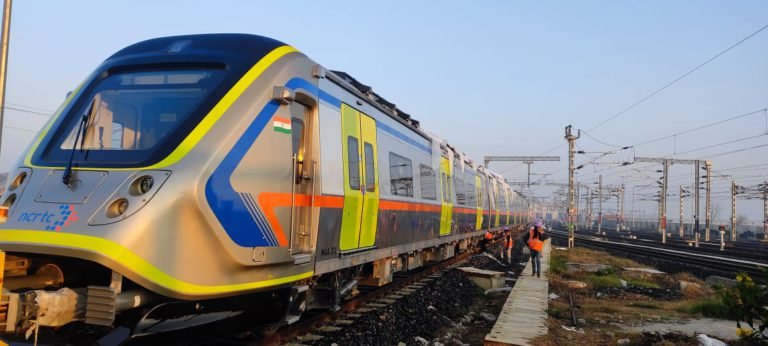
The First Meerut Metro trainset arrived at NCRTC Depot, Duhai

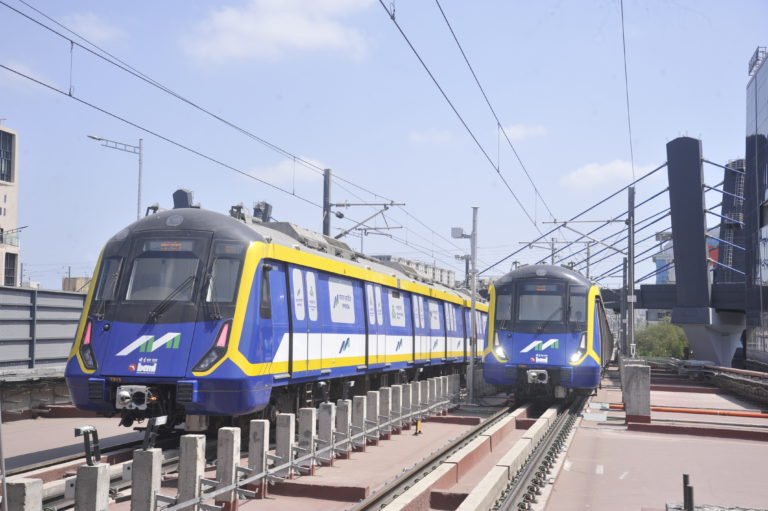
GHAZIABAD (Metro Rail News): The first Meerut Metro trainset arrived at the NCRTC Depot in Duhai, Ghaziabad at midnight of February 27, 2024. Consisting of three cars, the trainset was transported on large trailers and has been unloaded for further assembly and testing.

Recently, the first look of the Meerut Metro trainset was unveiled by Shri Vinay Kumar Singh, MD, NCRTC. Subsequently, Alstom has handed over the first trainset to NCRTC at Savli, Gujarat. With this unveiling and the commencement of the delivery of Meerut Metro trainsets, this marks the arrival of the first trainsets at the NCRTC Depot in Duhai.

The Make in India, Meerut Metro trainsets, with modern design, is energy efficient, lightweight, and equipped with regenerative braking system, compatible with Automatic Train Protection (ATP), Automatic Train Control (ATC), and Automatic Train Operations (ATO). The Metro train has a maximum operational speed of 120 kmph.

Meerut Metro aims to provide a safe, fast, and modern transportation solution for the residents of Meerut, Uttar Pradesh. With the arrival of Meerut Metro trainset, the trial runs of Meerut Metro will be started soon. The Meerut Metro corridor spans a length of 23 km with 13 stations. Construction of the Meerut Metro is progressing rapidly, and all stations are taking shape.

This is the first time in the country that both Namo Bharat trains and Meerut metro will run on the Delhi-Ghaziabad-Meerut RRTS infrastructure. To enable this operation, NCRTC has implemented European Train Control system (ETCS) Level 2 signalling with Hybrid Level 3 over Long Term Evolution (LTE), marking a pioneering endeavour in global rail transportation. It seamlessly integrates the RRTS and metro services within Meerut, allowing for closer headways and increased service frequency.

Features of the Meerut Metro Trainsets

Meerut Metro design encapsulates a modern aesthetic approach, prioritizing optimized passenger comfort, safety, and security. The trains are air-conditioned, featuring comfortable seating, luggage racks, grab handles, USB device charging facility, and many other new-age facilities required for the convenience of modern-day commuters.

  • The Meerut Metro will comprise of three (3) Car Train sets. It will have ergonomically designed 2×2 transverse as well as longitudinal seating arrangement. More than 700 passengers can travel in a train.
  • State-of-the-art Modern Light Weight, Stainless steel coaches.
  • Comfortable standing space, luggage racks, CCTV cameras, mobile charging facility, dynamic route maps, infotainment system, illumination-based auto control ambient lighting system and other amenities.
  • Total adherence to safety by synchronizing Metro operation with Platform Screen Doors (PSDs) at all stations ensuring better crowd management.
  • Selective door opening via push buttons to reduce energy consumption, and safety measures like emergency egress devices, fire extinguishers, alarms, and talk-back systems are integrated.
  • Provision of space to carry medical stretcher in case of emergencies, space for wheel chair.
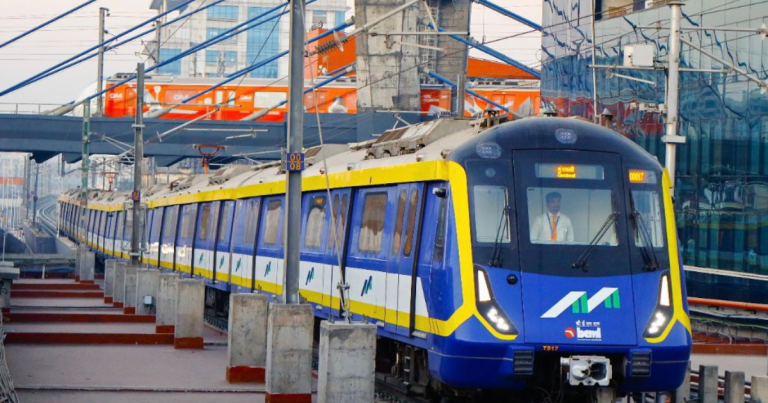
MMRDA Invites Bid for Mumbai Metro Line 5’s Rolling Stock & Signaling Contract CA-241

MUMBAI (Metro Rail News): Following the recent re-invitation of bids for Line-4’s systems, the Mumbai Metropolitan Region Development Authority (MMRDA) has now initiated bids for supplying critical systems for Mumbai Metro’s 24.90 km Line-5 (Orange Line) under Package CA-241.

The tender notice for Line-5’s crucial systems includes the provision of rolling stock (22 trains, each comprising 6 coaches, totaling 132 coaches), CBTC signaling & train control (S&TC), telecommunication, platform screen doors (PSDs), and depot machinery & plant (M&P) at Kasheli Depot.

Asian Infrastructure Investment Bank (AIIB) intends to finance the design and build aspect of this contract, spanning 50 weeks (approximately 1 year), through a proposed USD 186.57 million loan. MMRDA will fund the comprehensive maintenance component for a period of 17 years, inclusive of a 2-year Defects Liability Maintenance Period (DLP).

Key Details:

  • Estimated Cost: Rs. 2640.72 crore
  • Contract Period: 1 + 17 years
  • Pre-Bid Meeting: March 22, 2024, at 11 am
  • Bid Submission Deadline: May 14, 2024, at 3 pm
  • Technical Bid Opening: May 15, 2024, at 3 pm

MMRDA’s Scope: The project entails the design, manufacture, supply, installation, integration, testing, and commissioning of Rolling Stock, Communication Based Signaling & Train Control, Telecommunication, Platform Screen Doors Systems, and Depot Machinery & Plant for Line 5 (Phase 1 – Kapurbawadi – Kasheli – Dhamankar Naka & Phase 2 – Dhamankar Naka – Bhiwandi – Kalyan APMC) of the Mumbai Metro Rail Project, including 15 Years of Comprehensive Maintenance After 2 Years of Defect Liability Maintenance Period.

According to the tender schedule, the delivery timeline for Line-5’s Phase 1 prototype train requires the first prototype train to be delivered at week 56 (1.1 year) after contract signing, followed by the next 2 trains at week 78, and the subsequent 9 trains at week 96.

For Line-5’s Phase 2, where construction is pending, the first two trains must be delivered at week 180, and the following 8 trains at week 196 (approximately 3.75 years) from contract signing.

While uncertainties regarding the technical bid opening persist, the anticipation is for financial bids to be opened in Q4 (October – December), with subsequent contract signing contingent upon bid placement. This marks a significant milestone as MMRDA advances its rolling stock procurement process for all under-construction lines, including Line-4 (Green Line) and Line-6 (Pink Line).

Alstom Launches LEAP Program to Enhance Last-Mile Connectivity to Bengaluru Metro

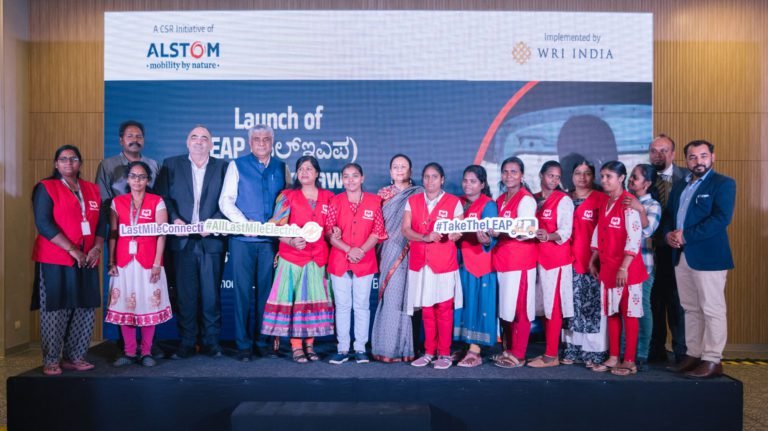
BENGALURU (Metro Rail News): Alstom unveiled the Low Emission Access to Public Transport (LEAP) program, an initiative under its Corporate Social Responsibility endeavor. LEAP aims to bolster last-mile connectivity and promote greater usage of public transport. As part of the program’s pilot phase, electric autorickshaws provided by MetroRide will operate as last-mile services from Yelachenahalli and Indiranagar stations of the Namma Metro in Bengaluru. MetroRide, a startup mentored under Alstom’s Sustainability Incubation Program, has trained approximately 25 women drivers to operate the electric rickshaws in the region. Commuters can conveniently book rides through the MetroRide app.

The program’s inauguration witnessed the presence of Olivier Loison, Managing Director of Alstom India, Mr. Srinivas Alavilli from WRI India, Mr. Rajeev Gowda, Vice Chairman of the State Institute for the Transformation of Karnataka, and Smt. Kalpana Kataria, Executive Director (Connectivity & Asset Management) of Bangalore Metro Rail Corporation Limited.

Olivier Loison highlighted the pivotal role of Namma Metro in alleviating Bengaluru’s traffic challenges and emphasized LEAP as a significant step towards promoting public transport. Through collaboration with WRI India and leveraging the innovations brought forth by MetroRide, Alstom aims to address the last-mile connectivity issue effectively. The program seeks to enhance the metro experience, making it more accessible, efficient, and environmentally friendly.

Bengaluru, known for its congested roads and high private car usage, faces a significant last-mile connectivity challenge, particularly for metro commuters. LEAP aims to bridge this gap by improving access to Bengaluru Metro, especially for women, and fostering women’s participation in the transport workforce. WRI India’s collaboration underscores a commitment to data-driven decision-making in public transport, aiming to provide safe, low-cost, and low-emission transport options while contributing to sustainable livelihoods.

Alstom’s partnership with NRSCEL, IIM Bangalore’s incubation center for startups, reflects its dedication to combatting climate change and addressing sustainability and mobility challenges. LEAP, as a flagship program under Alstom’s impact pillar, is poised to expand to other metro stations, ultimately increasing metro ridership and providing connectivity to high-frequency hubs

Cengrs Secures Geotechnical Contract for Gurugram Metro’s HUDA – Cyber City Line

 PANCHKULA (Metro Rail News): Cengrs Goetechnica has recently been awarded a contract worth Rs. 53.90 lakh for conducting geotechnical soil investigation for a new 28.50 km elevated metro line in Gurugram (Gurgaon), linking HUDA Millennium City Centre with DLF Cybercity.

The approval for this entirely elevated line, encompassing 27 stations across new and old Gurugram, was granted by the Indian Government’s Union Cabinet in June 2023. Subsequently, Haryana Mass Rapid Transport Corporation Limited (HMRTC) initiated bids for its inaugural geotechnical contracts in December 2023, adhering to a 112-day deadline.

The scope of this contract entails investigating the soil profile along a 12.76 km stretch, spanning from Millennium City Centre to Sector 9, as outlined in the Detailed Project Report (DPR) prepared by RITES. The findings will be integrated into the civil construction tender documents, aiding infrastructure firms in making informed financial bids and selecting suitable machinery, methods, and technology for construction.

Brief Scope: Geotechnical Investigation for the 12.76 km segment with 13 Stations from Millennium City Centre to Sector 9 (inclusive) of the Elevated Corridor (28.5 km) from Millennium City Centre to Cyber City (26.65 km) with a spur (1.85 km) to Sector 101 Gurugram.

Reports indicate that the contract signing ceremony took place today.

The project’s 26.65 km main-line will establish connectivity between HUDA City Centre and Cybercity through 26 stations, while a 1.85 km spur will link Basai Village to Dwarka Expressway, featuring 1 station to facilitate access to the depot.

Meanwhile, the bidding process is underway for the third time to appoint the line’s Detailed Design Consultant (DDC). Initially, HMRTC received 1 bid, followed by 3 bids in the second round. With the current technical bid opening scheduled for March 7, the likelihood of commencing construction in 2024 appears slim, considering the time required for detailed designs and the bidding process for civil construction.

CEG – KNR JV Secures General Consultant Contract for Mumbai Metro Line-6’s Kanjurmarg Depot

MUMBAI (Metro Rail News): The Consulting Engineers Group – Korea National Railway (CEG – KNR JV) has emerged as the preferred bidder for the General Consultant (GC) contract for Mumbai Metro Line-6’s Kanjurmarg Depot, announced earlier this month.

Spanning 15.18 km, Mumbai’s elevated Pink Line will link Swami Samarth Nagar (Lokhandwala) to Vikhroli via 13 elevated stations. The consultancy contract (Package CA-208) will oversee the construction of the train depot (carshed) at Kanjurmarg, as part of Package CA-209, for which Sam India Builtwell secured the lowest bid in early February.

Situated along the Eastern Expressway Highway (EEH), Kanjurmarg Depot’s site will accommodate 18 stabling lines, 3 inspection bays, 4 workshop bays, an 811m long test track, operations control centre (OCC), administrative buildings, and staff quarters.

MMRDA initiated bids for the GC in September 2023, expecting the selected consultant to remain engaged for a minimum of 30 months, aligning with the project’s anticipated completion timeline.

The technical bid opening in January 2024 revealed three contenders – CEG – KNR JV, ILF Consulting Engineers, and RITES. ILF’s bid was deemed technically non-compliant and was consequently disqualified.

Financial Bid Values:

  • CEG – KNR JV: Rs. 20.42 Crore
  • RITES: Rs. 25.20 Crore

MMRDA’s Scope: The scope entails the appointment of a General Consultant (GC) for civil works of the Depot and Essential Staff Quarters for Metro Line 6, connecting Swami Samarthnagar to Vikroli EEH of the Mumbai Metro Rail Project at Kanjurmarg.

This contract marks a unique development in the metro space, as dedicated GCs for depot works are uncommon. While the bidding process typically follows the Quality and Cost-Based System (QCBS) method, it appears that no technical or financial score was assigned in this instance.

Simultaneously, bidding is in progress for Line-6’s systems contract (Package CA-232), encompassing the supply of rolling stock (18 trains of 6 coaches), CBTC signaling, and the installation of depot machinery & plant (M&P) at Kanjurmarg Depot.

MMRDA Re-Issues Tender for Mumbai Metro Line 4’s Rolling Stock & Signaling Contract CA-234

MUMBAI (Metro Rail News): The Mumbai Metropolitan Region Development Authority (MMRDA) has once again opened bids for supplying critical systems for Mumbai Metro’s Line 4 & Line 4A (Green Line), covering a total stretch of 35.2 km, under Package CA-234.

This decision follows a significant development occurring precisely two years after Alstom Transport, originally awarded Line 4’s rolling stock contract MRS2 and signaling contract CA72, withdrew from the project in 2022 due to sluggish progress in civil construction, particularly the unresolved location of the line’s train depot at that time.

The new tender notice for Line 4’s major systems entails the provision of rolling stock (39 trains, each comprising 6 coaches, totaling 234 coaches), CBTC signaling & train control (S&TC), telecommunication, platform screen doors (PSDs), and depot machinery & plant (M&P) for Mogharpada Depot.

Germany’s KfW will finance the design and build aspect of this contract, with a loan amounting to EUR 545 million, spread over a duration of 168 weeks (approximately 3.22 years). MMRDA will cover the comprehensive maintenance component for a period of 17 years, including a Defects Liability Maintenance Period (DLP) of 2 years.

Key Details:

  • Estimated Cost: Rs. 4297.49 crore
  • Contract Period: 2 + 17 years
  • Pre-Bid Meeting: March 27, 2024, at 11 am
  • Bid Submission Deadline: May 20, 2024, at 2 pm
  • Technical Bid Opening: May 21, 2024, at 3 pm

MMRDA’s Scope: The project encompasses the design, manufacture, supply, installation, integration, testing, and commissioning of Rolling Stock, Communication Based Signaling & Train Control, Telecommunication, Platform Screen Doors Systems, and Depot Machinery & Plant. Additionally, it includes 15 Years of Comprehensive Maintenance following a 2-Year Defect Liability Maintenance Period for Line 4 and its Extension Corridor (4A) [Wadala – Kasarvadavali – Gaimukh] of the Mumbai Metro Rail Project under MMRDA’s jurisdiction.

CMRS Completes Safety Inspection for Agra Metro’s Priority Corridor

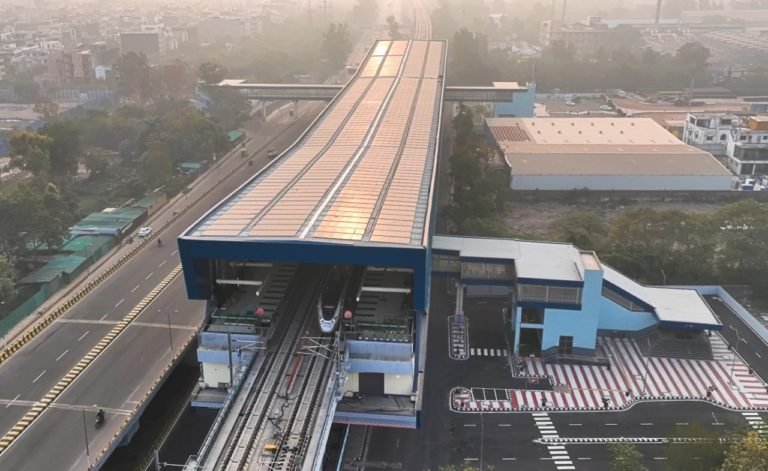
AGRA (Metro Rail News): The Commissioner of Metro Railway Safety (CMRS) recently concluded a thorough two-day safety evaluation of Agra Metro’s Phase 1 project, focusing on its vital 5.2 km Priority Corridor linking Jama Masjid to Taj East Gate.

This priority route, boasting a remarkable combination of three underground stations (Fatehabad Road, Basai, & Taj East Gate) and three elevated stations (Jama Masjid, Agra Fort, & Taj Mahal), was constructed rapidly to meet stringent timelines.

CMRS inspection 1

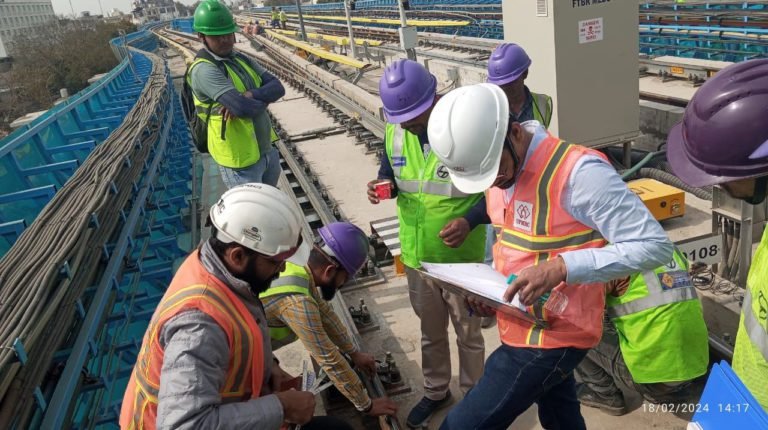
During the inspection, conducted on Tuesday and Wednesday, the CMRS meticulously assessed passenger amenities and control room facilities across all six stations. A detailed motor trolley examination of critical systems, including tracks provided by Larsen & Toubro, was carried out. The assessment culminated in a speed trial, with one of Agra Metro’s 3-coach Alstom trains achieving a top speed of 90 kmph.

Construction milestones were highlighted, including the commencement of work by Sam India Builtwell on the 2.4 km elevated package AGCC-01 in December 2020, and by Afcons Infrastructure on the 2.8 km underground section (part of the 7.93 km package AGCC-02) in April 2022. Notably, trial runs on the viaduct and through tunnels commenced in July 2023 and December 2023, respectively.

Reports suggest that the CMRS has already submitted their approval letter to UPMRC. While conditional in nature, the approval signifies a significant step toward operational readiness. The next steps entail UPMRC addressing any identified conditions promptly, followed by a compliance report submission to CMRS.

With the imminent launch of the Priority Corridor, Agra Metro is poised to become India’s 17th operational metro system, marking a significant milestone in the country’s urban transport landscape.

Trial Runs Commence on Ahmedabad Metro Phase 2’s Gandhinagar Section

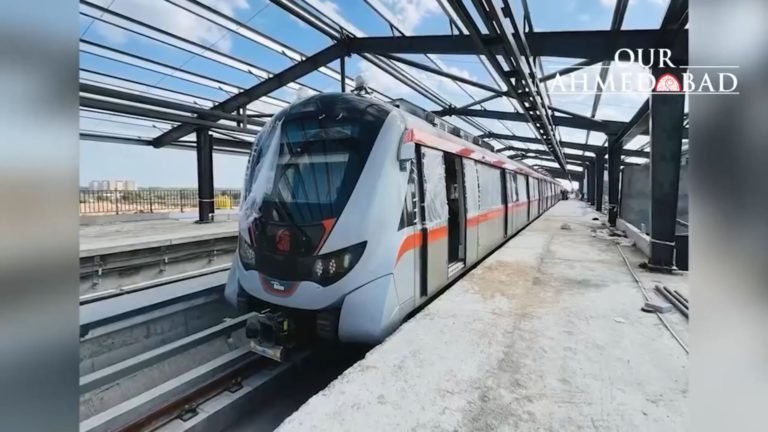
AHMEDABAD (Metro Rail News): Gujarat Metro Rail Corporation (GMRC) commenced trial runs on a 3.3 km elevated segment of the 28.25 km Phase 2 project of the Ahmedabad Metro on February 24, 2024, connecting Dholakuva to Gujarat National Law University (GNLU) in Gandhinagar District.

Despite ongoing electrification efforts, GMRC’s team utilized a Zephir battery-operated railcar mover to maneuver one of their Hyundai Rotem trains along a section of the elevated viaduct, constructed by Ranjit Buildcon (RBL) as part of the 6.478 km Package C2, linking GNLU to Gandhinagar’s Sector-1.

The primary objective of this trial was to ensure Schedule of Dimensions (SOD) clearances and assess the train’s interaction with the civil structure, aiming to identify and rectify any potential physical obstructions.

VNC – KEC – Emrail JV commenced track-work on this stretch in August 2023, followed by Ranjit Buildcon’s installation of the final U-girder in October 2023.

The commencement of comprehensive trial runs is contingent upon GMRC’s activation of the line’s Third Rail. Subsequently, they will conduct tests on various systems, including telecommunication, signaling, and train control, alongside assessing the behavior of the trains.

With the impending Lok Sabha elections, it is anticipated that the Gujarat Government will organize a formal event to commemorate the initiation of trial runs.

Mumbai-Ahmedabad Bullet Train to be Operational  by Aug 2026

AHMEDABAD (Metro Rail News): Ashwini Vaishnaw, the Union Railways Minister, announced on Friday that the initial phase of the Mumbai to Ahmedabad High-Speed Bullet Train project, linking Surat to Bilimora, is set to be operational by August 2026.

Disappointment with MVA Government

The minister voiced his frustration with the delays attributed to the previous Maha Vikas Aghadi government, led by former Maharashtra chief minister Uddhav Thackeray. He commended the current Shinde-Fadnavis administration for accelerating the project by overcoming obstacles related to land acquisition. 

A Torch of Economic upliftment 

Vaishnaw, while addressing reporters after inspecting the construction progress of the 508-km-long corridor in Mumbai, emphasised the significant economic benefits that the high-speed line will bring. He noted that the 284 km-long bullet train corridor viaduct in Gujarat has been completed, marking a significant milestone in the project’s development. During his visit to the Bandra Kurla Complex (BKC) and Vikhroli project sites, Vaishnaw reviewed the ongoing work to ensure its timely and efficient execution.

MAHSR Corridor 

The Mumbai-Ahmedabad High-Speed Railway (MAHSR) is India’s initial high-speed train route connecting Mumbai and Ahmedabad. It is expected to cost around 1.08 lakh crore. The central government has agreed to contribute ₹10,000 crore, and Gujarat and Maharashtra will contribute ₹5,000 crore each. The remaining funds will be obtained through a loan from Japan at a meagre 0.1% interest rate.

Stay tuned for the updates! 


Intrigued by the future of Metro and its impact on our city? Join us at our upcoming InnoMetro event to delve deeper into this vital issue. Stay informed, get involved, and let’s ride the Metro towards a brighter, more sustainable future together.

Nana TBM of the Kanpur Metro Records Breakthrough at Chunniganj

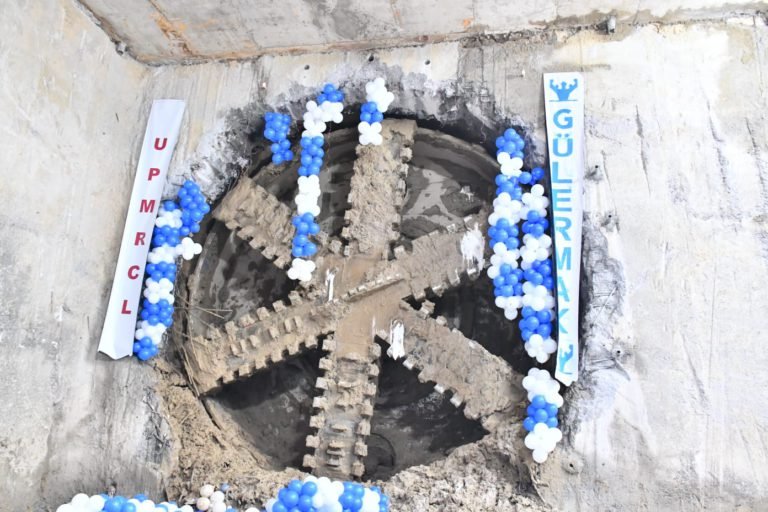
KANPUR (Metro Rail News): TBM S93, or the Nana, achieved a breakthrough at Chunniganj station of the 3.619-km long KNPCC-05 Package of the Kanpur metro. 

KNPCC-05 Package 

Excluding the ramp, the KNPCC-05 package on the 23.785 km Line-1, which links IIT Kanpur to Naubasta, spans 3619 meters and encompasses four stations: Chunniganj, Naveen Market, Bada Chauraha, and Nayaganj, each with a length of 215 meters.

Nana TBM Breakthrough 02

Assignment completed 

The Terratec TBM, boasting a diameter of 6.52 meters and stretching 120 meters in length, was utilised in the construction of a segment of the up-line tunnel for Kanpur’s Line-1, spanning 23.785 kilometres from IIT Kanpur to Naubasta. It successfully concluded its fourth drive within approximately 70 days.

The Contract 

In March 2021, Uttar Pradesh Metro Rail Corporation (UPMRC) granted Gulermak – Sam India the construction contract for Package KNPCC-05, with a deadline of 36 months.

Assignment complete by TBM, so far 

A list of the breakthroughs achieved by the TBM so far is below: 

  1. Bada Chauraha to Nayaganj (1025m) – December 2022
  2. Chunniganj to Naveen Market (748m) – June 2023
  3. Naveen Market to Bada Chauraha (516m) – September 2023
  4. MacRobertganj to Chunniganj (420m) – February 2024
Nana TBM Breakthrough 01

The next assignment of the TBM 

The TBM Nana is slated for dismantling and subsequent storage, with plans for redeployment in early 2025 for tunnelling operations along the Kanpur Metro Line-2’s underground Package KNPCC-11. This project was awarded to the Kalpataru Projects International Ltd. – Gulermak JV in December 2023.

Kanpur Metro 

Kanpur metro is being built for Rs. 11,076.48 Crores, with its First Phase, the Orange Line running between IIT Kanpur & Motijheel, being inaugurated in December 2021 by PM Narendra Modi. The remaining 14.9 km stretch of Orange Line between Motijheel & Naubasta is under construction. 


Discover the endless possibilities of our city’s Metro at InnoMetro, our flagship Expo and Conference. Be an active participant in shaping its future towards a more sustainable tomorrow. Stay informed and join us to take a step towards a brighter future.

NCRTC To Submit DPR of Ghaziabad-Jewar RRTS by April 4

NOIDA (Metro Rail News): National Capital Region Transport Corporation (NCRTC) plans to submit the Ghaziabd-Jewar RRTS’s DPR by April 4. 

Meetings Being Held 

The NCRTC is already in for presentations for the upcoming route alignment. Presentations and meetings are already being held regularly between both. 

Submission by April 4 

“The NCRTC informed that it will ready the detailed project report of this project for further progress on April 4. After studying the DPR, we will send it to the Uttar Pradesh government for requisite approvals. Once the UP government and the government of India give all required approvals, the work on this project will be taken to the next stage,” said Arun Vir Singh, chief executive officer of the Yeida.

Speed Revolution 

“The NCRTC will operate the RRTS and Metro on this corridor. The operation of the Noida airport is set to start in September-end this year. The entire proposed route of 25 stations will be developed in phase I. We have asked the NCRTC to design the operation of RapidX in such a way that it should not take over 50 minutes to reach IGI from NIA. With the maximum speed of 150 KMPH, it is possible to achieve this travel time,” said Singh.

Assignments done so far. 

The NCRTC is ready with the ridership evaluations, conducting topographical surveys, designing the alignment, and planning stations along the route. Simultaneously, ongoing surveys encompass geotechnical analysis and environmental and social impact assessments.

Projected Ridership 

“The alignment will have a ridership of 2.95 lakh passengers per day in 2031, growing to 5.23 lakh passengers in 2041 and to 6.32 lakh per day in 2051,” said Singh.

Approval 

The DPR will be sent to the state government for approval. 

Proposal 

The feasibility report has suggested the following alignment: 

  1. 37.15 Km long Metro/RRTS between Ghaziabad & Kasna 
  2. 35.11 Km Long RRTS corridor between Kasna & Noida Airport

The first stretch will have 22 stations, 15 for the metro & 7 for the RRTs, while the second will have four stations. 

Metro/RRTS between Ghaziabad & Kasna 

The proposed local metro module between Ghaziabad & Kasna will have 15 stations: Siddharth Vihar, Sector 16C in Greater Noida, Ecotech 12, sectors 2, 3, 10 and 12 in Greater Noida, near Surajpur, Malakpur, Ecotech 2, Knowledge Park 3, Gamma 1, Omega 2, Phi 3 and Ecotech IE.

Ncrtc has suggested a local metro module on this route as it passes through the residentially populated areas of Noida & Greater Noida. The project, through this, aims to ensure that the residents of Ghaziabad, Greater Noida & YEIDA not only enjoy RRTs but also popper accessibility to metros etc.  

RRTS Corridor between Kasna & Noida Airport

The Second stretch between Kasna & Noida Airport will be 35.11 km long with a total of 4 number of stations. The proposed stations are Dankaur, Yeida North (sector 18), Yeida Central (sector 21, 35) and the Noida airport.

The NCRTC has plans to develop the second stretch, too, with the same module as the first stretch, precisely with a parallel metro alignment to serve plans of the authorities of a township or something crops up in the region. 

Funding 

The proposed plan for the funding is as follows: 

Agency Share 
Government of UP 50%
Government of India 20%
YEIDA + Greater Noida 30%

Noida Airport 

The commencement of operations for the Noida airport is anticipated by December 2024, with a projected capacity to accommodate approximately 71 million passengers daily by the fiscal year 2042-43. To facilitate a seamless connection between the airport and its surrounding region, the state government has approached the NCRTC to prepare a feasibility report for constructing a high-speed train corridor to facilitate efficient transportation to and from the airport.


Are you intrigued by the future of Metro and its impact on our city? Join us at our upcoming InnoMetro event to delve deeper into this vital issue. Stay informed, get involved, and let’s ride the Metro towards a brighter, more sustainable future together.

Alstom commences production of the latest generation trainsets for Delhi Metro Phase IV

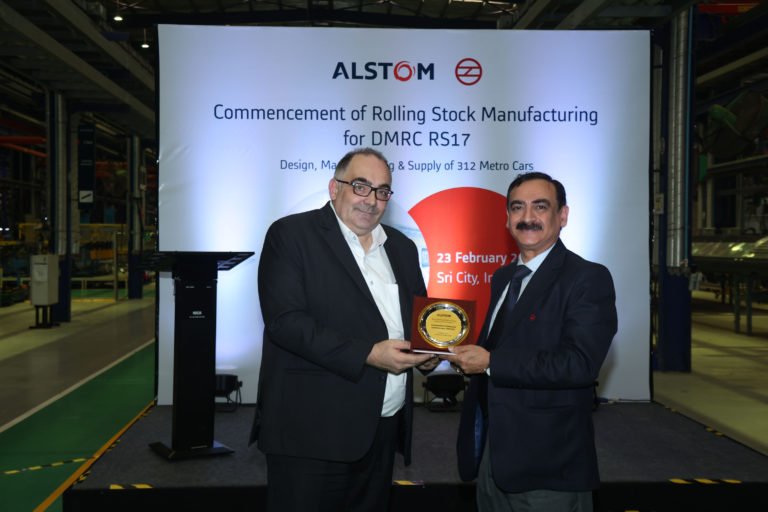
NEW DELHI (Metro Rail News): Alstom, a global leader in smart and sustainable mobility, today commenced the production of its world-class Metropolis trainsets for the Delhi Metro Rail Corporation (DMRC) Phase IV. Awarded in November 2022, this order aims to deliver 52 train sets, each comprising six cars. The project is designed to cater to three different lines of DMRC, with two lines being extensions of the existing Line 7 and 8 and the new Gold Line 10 connecting Aerocity to Tughlakabad, which covers a total distance of 64.67 km. The production was commenced at a commemorative ceremony led by leaders from Delhi Metro Rail Corporation and Alstom India.

Speaking about this milestone, Dr Vikas Kumar, Managing Director, DMRC, said, “The Delhi metro stands as the lifeline of our city, and the addition of new routes will greatly enhance connectivity in the national capital. We are glad that Alstom is commencing the production of Metro trains for the Delhi Metro’s fourth phase of expansion. We are sure the new age trains will ensure passengers a smooth and comfortable ride.”

On the occasion, Olivier Loison, Managing Director of Alstom India, said, “We have a longstanding association with the Delhi Metro, and it is a matter of pride for us to join India’s largest metro network in its continued growth and expansion. Our Metropolis metros have a noteworthy track record, low lifecycle cost, and keen focus on passenger experience, and we are honoured to build these modern trains for the commuters in Delhi NCR, further promoting the transition towards sustainable mass mobility solutions.”

The total value of the project is 312 million euros, which also includes the maintenance of 13 trainsets of the new line for 15 years. This 360-degree scope is a game-changer for India’s metro segment as it will be the first maintenance project for Delhi Metro outsourced to an OEM. The Line 8 extension will extend the Magenta Line from Janakpuri West to RK Ashram. In contrast, the Line 7 extension will connect the Pink Line between Maujpur and Mukundpur and improve DMRC connectivity another step above. Alstom has also been awarded the contract for supplying and commissioning the train-control and signalling solution for Delhi MRTS Phase-IV Mukundpur – Maujpur (Line 7 ext.) and Aerocity – Tughlakabad Corridor (Line 10). These lines will be equipped with Alstom’s scalable Communications-Based Train Control solutions (CBTC), which will operate with its Automatic Train Supervision (ATS) system.

Alstom and DMRC dignitaries at the start of RS production event at Alstom Sricity 1

Highlights of the Delhi Metro Phase IV

The Metropolis trains offer a unique design and a wide range of configurations and ensure the highest performance due to the perfect combination of proven and reliable components and innovations. These new trains are the most advanced state-of-the-art green vehicles, designed for a safe speed of 95 kmph and operational speed of 85 kmph, with GOA 4 driverless features, which makes them an environmentally friendly and comfortable metro solution for passengers of New Delhi.

Design specifications

Inspired by the tricolours of the national flag of India, the door pillar for the saloon interior of the trains will sport a mix of saffron, white, and green paint. The front of the train for Line 10 has a metallic gold paint, making it the first time for Alstom to use this colour for a metro project in India. Under the ‘Make in India’ initiative, these Metropolis trains have been completely designed in India and will be built at the manufacturing facility in Sri City (Andhra Pradesh). This is Alstom’s largest Urban Rolling Stock manufacturing site in India, with a strong delivery portfolio for major domestic and international projects.

Over the years, Alstom has provided over 800 metro cars in use throughout the Delhi Metro system, one of Asia’s largest rapid transit systems. Alstom has also partnered with DMRC for several other projects, including the successful implementation of the supply and commissioning of train control and signalling system for DMRC’s Red Line (L1), (Yellow Line (L2), Green Line (L5), Violet Line (L6), and Pink Line (L7) during Phase I, II & III.


Discover the endless possibilities of our city’s Metro at InnoMetro, our flagship Expo and Conference. Be an active participant in shaping its future towards a more sustainable tomorrow. Stay informed and join us to take a step towards a brighter future. 

PM Modi Likely to Inaugurate 3 Corridors of the Kolkata Metro

KOLKATA (Metro Rail News): Kolkata Metro Rail Corporation is likely to invite PM Modi to inaugurate its newly approved three lines of the Kolkata metro. 

The Inauguration 

The KMRC will pitch an hour-long plan to PM Modi to inaugurate the three lines. It will be followed by a ride in the metro up to Howrah or Howarah Maidan station after boarding the metro from Esplanade. 

Stage of Approval 

The railway board has yet to send the proposal to the PMO. The proposal’s core is to get the PM a ride on India’s First underwater stretch of the Kolkata metro. 

The Three Lines

The three lines to be inaugurated are: 

  1. 4.8km section between Esplanade and Howrah Maidan
  2. 5.4 Kms New Garia-Ruby Section on the orange line 
  3. Purple line’s 1.2 Km Extension up to Majerhat. 

1.2 Km Extension up to Majerhat

Metro Railways Kolkata conducted the Taratala Majerhat Stretch of Kolkata Metro’s Purple Line trial on 13th Jan 2024 at 12.16 hrs. The trials were conducted for the 1.25 Km stretch in  AC trial rake MR-417. 

Esplanade and Howrah Maidan

Shri Janak Kumar Garg, Chief Commissioner of Railway Safety (CCRS), inspected all the stations from Howrah Maidan to Esplanade of Green Line for the second consecutive day o­n 06.02.2024.  

New Garia-Ruby Section 

The New Garia-Ruby portion of the New Garia-Ruby stretch of the New Garia-Airport Metro Corridor underwent a safety examination on January 30, 2023, according to the Commissioner of Railway Safety (CRS). In under seven minutes, the train completed the five stations in trial. 


Discover the endless possibilities of our city’s Metro at InnoMetro, our flagship Expo and Conference. Be an active participant in shaping its future towards a more sustainable tomorrow. Stay informed and join us to take a step towards a brighter future. 

Pune Metro Begins Land Survey for The Extension of Its Corridors  

PUNE (Metro Rail News): Pune Metro authorities have begun work on the land survey for its extension, namely  PCMC to Bhakti-Shakti and Swargate to Katraj.

PCMC to Bhakti-Shakti Corridor 

It is a 4.5 Km extension running elevated from PCMC to Bhakti-Shakti with four stations: Chinchwad, Akurdi, Nigdi and Bhakti-Shakti. The centre has approved it with a budget outlay of  Rs 910.18 crore over 39 months.

Swargate to Katraj Corridor 

It is a 5.5 Km extension running underground from Swargate to Katraj, with three stations: Market Yard Gultekdi junction, Saibaba Nagar and Katraj. It is yet to be approved by the centre. It is an extension of the existing Shivajinagar to Swargate route of the Pune Metro. 

Reason Behind the Hurry 

Pune metro is completing the land survey work beforehand so that actual land acquisition or construction can start immediately after approval.

Pune Metro 

The Pune metro is a rapid transit system serving the city of Pune, encompassing three lines totalling 54.14 km. Currently, two lines are in operation:

  1. Purple Line: Connects PCMC Bhavan to Swargate.
  2. Aqua Line: Runs from Vanaz to Ramwadi.
  3. Line 3: Extends from Hinjawadi to Civil Court via Balewadi.

Intrigued by the future of Metro and its impact on our city? Join us at our upcoming Inno Metro event to delve deeper into this vital issue. Stay informed, get involved, and let’s ride the Metro towards a brighter, more sustainable future together.