Home Blog Page 854

Siemens launches Digital Rail Service in the United States

SIEMENS has announced that it will launch a new digital rail service in the United States, which will use sensors and software platforms to put intelligence behind billions of data points created on the country’s rail network.

The software aims to help operators reduce unplanned downtime, improve efficiency, planning and performance, and generate energy and cost savings.

Siemens will build its digital services hub in Atlanta, Georgia, and a new east coast locomotive service headquarters in New Castle, Delaware, later this year.

The city of Atlanta and Charlotte Area Transit System (Cats) will be among the first transport providers to put the data to use from their existing fleets to improve operations and safety.

Siemens will collect information captured by onboard systems used on the Siemens-built Atlanta streetcar and analyse data points to make best use of the fleet. Potential data points include:: slow vehicle movements to identify traffic bottlenecks in order to reduce delays, passenger comfort, and horn usage by cars or pedestrian traffic warnings to determine possible infrastructure improvements that could increase safety.

In Charlotte, Cats is working with Siemens on a pilot programme for near real-time diagnostics and analysis of light rail system data to assist with maintenance recommendations.

The digital services offered are based on Railigent, a cloud-based industrial data analytics platform which features smart monitoring for real-time insight on vehicle state and location.

Source: Rail Journal

Delhi Metro | DMRC’s ITO-Kashmiri Gate (Heritage Line) to open in May 2017

New Delhi: After many breached deadlines, the Delhi Metro’s ‘Heritage Line’ from ITO to Kashmere Gate is finally set to open by next month. DMRC officials say that they have applied for the safety inspection of the line to the Commissioner, Metro Rail Safety (CMRS).

“Once the inspection is done and we get the go ahead, we will start operations on the line. It will certainly be thrown open to the public by the next month,” said a senior Metro official.

The 5.17 km-long line, which is entirety underground, will connect four heritage stations including — Jama Masjid, Delhi Gate, Lal Quila, and Kashmere Gate. Delhi Metro officials said that the opening of the line will bring respite to commuters, as the overall frequency of trains will improve. Besides, reaching Old Delhi will not be a hassle anymore.

The corridor is an extension of the Delhi Metro’s Violet Line — Escorts Mujesar (Faridabad) to ITO.

“Once the line is open, the operational constraints won’t be there, as trains will go directly to Kashmere Gate. So far, the frequency was low, as initially ITO was not supposed to be the originating station for the trains. But it was opened to public early, as it was a busy area and the rest of the line was not ready by then,” the official said.

Delhi commuters welcomed the move. Anisha Agarwal, a commuter said, “At present the frequency is very low at ITO. At times there is a gap of 15 to 20 minutes for the next train to come and it becomes too crowded. We need the new line to open soon.

The corridor, which was slated to open by December 2015, was postponed to October 2016 and later to February this year. However, according to officials, the delay was because of multiple challenges that cropped up from the beginning, since these were heritage areas.

“Earlier, it took some time to get approvals from all heritage committees to start work. Later in October, construction work was stopped for a while because of pollution-control measures in which our machinery and labour had to be removed,” said the official.

Delhi Metro | Metro services to begin from 4 AM on MCD polling day

New Delhi: The metro train services in Delhi will commence from 4 AM on April 23 in view of the municipal polls, the DMRC today said.

Elections to the three civic bodies are due on Sunday and the Delhi State Election Commission is gearing up for the electoral exercise.

“On the day of the MCD elections, the Delhi Metro train services will start from 4:00 AM so that the staff deployed in election duty can avail the facility.

“The trains will run with a frequency of 30 minutes on all the lines till 06:00 AM. After 6:00 AM, metro trains will run as per the normal timetable throughout the day on all lines,” a senior DMRC official said.

The Delhi Metro Rail Corporation (DMRC) currently operates through various corridors — Yellow, Blue, Violet, Red, Green, Orange Lines — spanning across the length and breadth of the national capital and few neighbouring cities.

The Commission which has come up with special campaigns to raise awareness among voters has also displayed advertisements inside and out of metro premises.

Over 1.1 lakh voters in this polls are eligible to exercise their franchise for the first time.

The total number of electorate for the civic polls stands at 1,32,10,206 which include 73,15,915 men, 58,93,418 women and 793 voters in the other category.

(This article has not been edited by Metro Rail News's editorial team and is auto-generated from an agency feed.)


Reliance Infra, Veolia extends partnership to bid upcoming metro rail projects in India

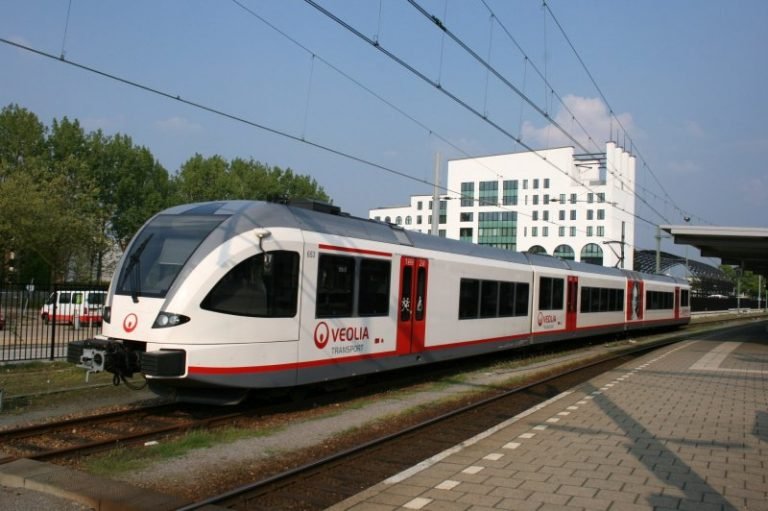
Mumbai: Anil Ambani-led Reliance Infrastructure (RInfra) is looking to take its partnership with French company Veolia Transport, part of the Veolia Environment Group, to bid for metro rail projects in various Indian cities. Veolia operates in four continents covering 28 countries and has 37,000 buses, tramways, metros, suburban and long-distance trains and ferry boats.

“Here in Mumbai, it is originally a five year contract after which we will extend it on mutual consent. We are very happy with them (Veolia Transport). In fact we are thinking to have a joint venture with them and go and bid for other metro contracts,” told RInfra’s chief executive officer Lalit Jalan to Media.

Through a separate joint venture, RInfra and Veolia Transport will undertake operations and maintenance of the project for an initial period of five years. As per the finer details of the agreement, the contract ends on 7 June 2019, which is five years from the metro line’s commissioning date (June 8, 2014).

In Mumbai, RInfra and Veolia Transport have a joint venture for Mumbai Metro One Private Limited (MMOPL), wherein they are operating and maintaining 11.4-km long Versova-Andheri-Ghatkopar. RInfra holds 69% of the equity share capital of MMOPL, while Mumbai Metropolitan Region Development Authority (MMRDA) holds 26% and remaining 5% is held by Veolia Transport-RATP Asia of France.

In the recent past, development authorities from Chennai have called RInfra to participate in the Chennai metro-bidding process. The company is also looking to operate and maintain troubled Mumbai Monorail, the only monorail in India, between Jacob Circle-Wadala-Chembur. Bidding process is under way to appoint an operator for the only monorail line of the country.

“With the entire monorail route likely to be operational from October onwards and ridership picking up drastically due to the monorail corridor alignment, the route will be sought after by the operators,” said government sources.

Due to financial crunch the company has changed its business strategy and will go for only those metro rail contracts that are being offered on engineering, procurement and construction (EPC) basis. “In order to run such operations, the government recently said that it wants world class operators. We will have EPC and operation and maintenance businesses where we will provide our role and services,” added Jalan.

The cities where metro routes are planned includes Mumbai, Pune, Varanasi, Agra, Patna, Meerut, Guwahati, Visakhapatnam, Surat, Bhopal, Indore and Gwalior.

Indian Railways to establish Independent Rail Regulator

New Delhi: In a major policy reform initiative, India’s cabinet approved a proposal on April 5 to establish an independent rail regulator, which will be responsible for setting Indian Railways’ (IR) freight and passenger tariffs and ensuring a level playing field for stakeholders and investors.

The Rail Development Authority (RDA) – which will comprise a chairman and three members – will set efficiency and performance standards for IR on the basis of “global benchmarking parameters”. It will have the powers to engage experts from other fields.

The RDA is expected to revive investor sentiment, as it will ensure greater continuity on the railway when a change of government occurs.

With the setting up of the regulator towards the fourth quarter of 2017, passenger fares on the IR network – which have remained hugely subsidised in recent decades – are also likely to rise.

A focus for the RDA will be addressing the huge disparity in yield between IR’s passenger and freight businesses. According to the 2015 White Paper on Indian Railways, yields from IR passenger services are among the lowest in the world – calculated at $US 0.01 per kilometre, against $US 0.027 cents in China, $US 0.067 in Russia, $US 0.094 in Japan and $US 0.062 in Germany.

Conversely, freight yields are among the highest at 1 US cent per tonne-km, compared with 0.58 cents in China, 0.75 cents in Russia and 0.51 cents in the United States.

With continuing losses in the passenger segment, IR has been diverting profits earned from freight to subsidise passenger services.

Losses in the passenger segment in the last fiscal year were estimated at Rs 320bn ($US 4.9bn).

“The setting up of the regulator means that the culture of populism will vanish and objective decisions in respect of freight and passenger tariffs will be taken,” an official said. “In all probability, passenger fares will henceforth be fixed on calculations of the Consumer Price Index.”

According to the Indian cabinet’s decision on April 5, an initial sum of Rs 500m will be set aside to establish the RDA, which will operate under the 1989 Railway Act.

Delhi Metro | Now recharge your Delhi Metro Smart Cards directly from Ola Money app

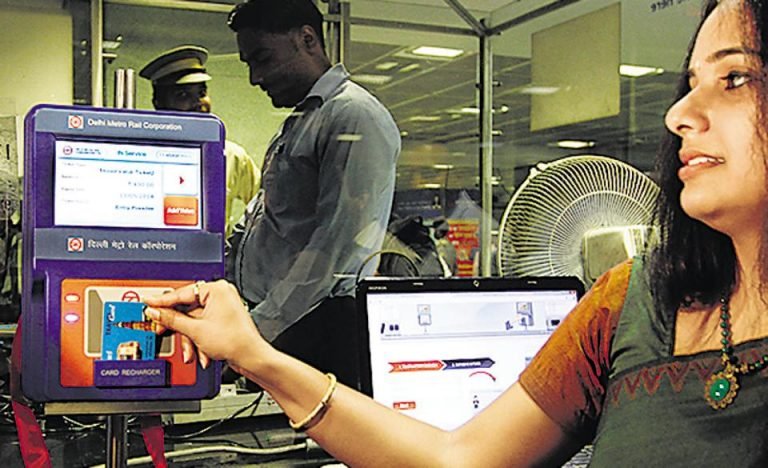
New Delhi: The Delhi Metro Rail Corporation (DMRC) and Ola Money on Wednesday announced their partnership towards promoting a cashless digital economy as their integration will allow DMRC commuters to recharge their metro cards directly from the Ola Money app.

In awe of promoting the digital economy, Ola Money and DMRC will now enable commuters to avail the option to pay from their Ola Money wallet at the DMRC website.

“We hope to make the transition smoother for metro commuters by integrating Ola Money as a payment mechanism for metro rides. Other than offering an eco-friendly and affordable daily commuting option, DMRC is committed towards encouraging people to use online payment alternatives,” said Anuj Daya, Executive Director (Corporate Communications) DMRC.

“We are extremely delighted to be working closely with Delhi Metro to take the mission of a cashless India forward. Millions of people travel by Delhi metro and they recharge their metro cards on a regular basis. This integration will make the process simpler and seamless as they would be able to use their Ola Money balance to recharge their cards with just a few taps on the Ola Money app or by visiting the DMRC website,” said Sr. Director-Marketing Communications at Ola, Anand Subramanian.

Both DMRC and Ola share the common vision of building sustainable and convenient mobility solutions for the citizens of the country.

Furthermore, with flagship government initiatives such as “Digital India” acting as key catalysts and enablers of digital transformation, DMRC’s integration with Ola Money is a step towards building a more convenient and hassle free payment ecosystem for millions of commuters.

(This article has not been edited by Metro Rail News’s editorial team and is auto-generated from an agency feed.)

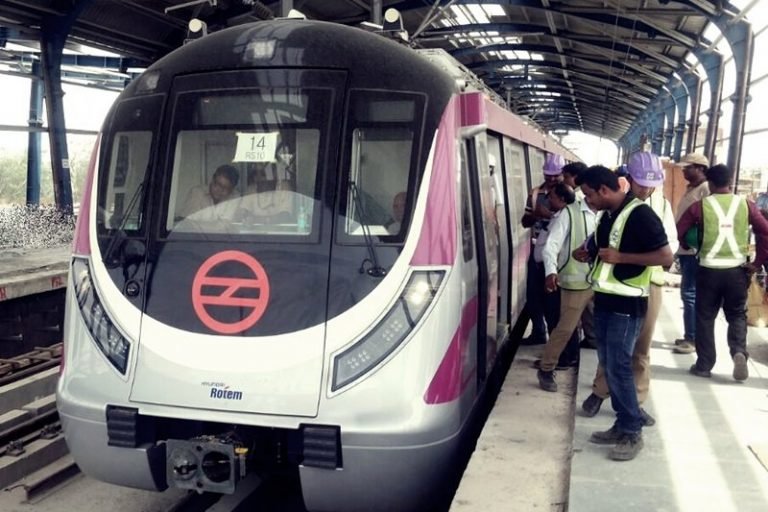
Delhi Metro | DMRC’s Mukandpur-Shiv Vihar (Pink) Line completion deadline pushed to April 2018

New Delhi: The Delhi Metro Rail Corporation (DMRC) has set April, 2018 as the fresh deadline for the completion of its longest upcoming corridor, Mukundpur-Shiv Vihar Pink Line, which has been battling land acquisition woes at certain stretches.

With this, Delhi’s wait for the crucial extension of its signature mass rapid transit, which provides a much needed sheen to its lumbering and inadequate public transport system, just got longer.

However, a major part of the line, from Mukundpur to Lajpat Nagar, will be “completed” by September, a Delhi Metro Rail Corporation (DMRC) official said, adding that its eventual commissioning may take some more time.

The metro’s Phase III, of which the 59-km-long Pink Line is a part, has already missed its December 2016 deadline.

Since then, the metro has revised the new target date of completion several times.

Around 91 per cent of civil works on the line is complete as of March, says the latest available project status report.

Magenta Line, another crucial project of Phase III, that will connect west Delhi to Noida via IGI Airport’s domestic terminal, is likely to be “opened” in three stages – from May to September, the report adds.

Here, the progress of civil works up to March stands at 91.37 per cent.

A small section of the 38-km-long line (Line 8), running between Noida, Botanical Garden and Kalkaji, may be opened by May, before its launch in entirety in December, an official said.

Pink Line will touch portions of the inner-ring road and also drastically cut travel time between eastern and southern flanks of the national capital.

It will connect northwest Delhi’s Mukundpur to northeast Delhi’s Shiv Vihar cutting across various south Delhi areas including Sarojini Nagar, INA, South Extension and densely populated parts of east Delhi such as Mayur Vihar Phase I, Vinodnagar and Karkardooma.

DMRC chief Mangu Singh had earlier said that both these lines will be launched in a staggered manner, meaning, small sections will be made operational instead of the entire corridors being thrown open in one go.

Under the phase-III expansion project being implemented at a cost of around Rs 40,000 crore, a total of 140 km of network will be added to the current coverage of 213 km.

(Except headline, the article has not been edited by Metro Rail News’s editorial team and is auto-generated from an agency feed.)

Delhi Metro | Botanical Garden-Kalkaji corridor (Magenta line) to be open in June 2017

New Delhi: The Delhi Metro Rail Corporation (DMRC) is set to throw open the stretch between Botanical Garden and Kalkaji Mandir for public use by June this year. After the opening of the stretch, Botanical Garden metro station will become the first and only interchange station in the National Capital Region, outside Delhi.

The Botanical Garden station will provide interchange between the currently operational Line 3 (Noida City Centre – Dwarka Sector 21) and the upcoming Janakpuri West – Botanical Garden corridor. This station will also help in connecting Noida with important locations of south Delhi like Nehru Place, Kalkaji and Hauz Khas.

The Indira Gandhi International airport will also get direct connectivity to the Janakpuri West – Botanical Garden line, once it is fully operational.

“The projected interchange load at Botanical Garden station, as per the Detailed Project Report ,will be around 97,780. At present, nearly 14,000 passengers use the station every day. The station has a total parking area of about 1,420 sq metres, with a capacity to hold about 400 vehicles,” said a spokesperson of DMRC. He further added that with the new interchange station, travelling time between Noida and Gurgaon will come down by anything between 30 and 50 minutes, with interchange facility at Hauz Khas. Presently, a journey from HUDA City Centre in Gurgaon to Botanical Garden in Noida takes about 90 minutes, requiring an interchange at the busy Rajiv Chowk Metro station.

Noida will also get directly connected with the domestic terminals of the Indira Gandhi International Airport for the first time after the completion of the line. The journey from the Botanical Garden station to the domestic terminal will take about 40 minutes.

The new station building at Botanical Garden will be connected with the existing station with the help of a pathway that is 20 meters wide and 100 meters long. There will be platform to platform and concourse to concourse connectivity, a DMRC official said.

“To save time of passengers, we have provided them platform to platform connectivity. Passengers coming from Noida city centre can get down at Botanical garden and walk straight and take a train towards Kalkaji. They won’t have to get down and take any stairs,” the DMRC spokesperson said.

The construction work of the new station building is in its final stage, he added.

Suzhou Metro China | Suzhou opens fourth metro line for public

Suzhou, China: SUZHOU Metro added a second north-south line to its metro network on April 15 with the start of trial passenger operation on Line 4.

The line runs for 42km from Longdaobang in the north to Tongli in the south, with a 10.8km branch from Hongzhuang to Muli, which will ultimately become part of the future Line 7.

The Yuan 36bn ($US 5.2bn) line adds 37 stations to the network, including interchanges with metro Line 1 and the main line network at Suzhou Railway Station.

Peak services operate at six-and-a-half minute headways on the main line, with trains running every seven-and-a-half minutes on the branch to Muli.

Services are operated by a fleet of 40 six-car type B trains supplied by CRRC Nanjing Puzhen.

The completion of Line 4 takes the total length of the Suzhou metro network to 121km with 97 stations.

For detailed information on metro projects in India and around the world subscribe to Metro Rail News.

Source: Rail Journal

Centre to tighten norms for appraising metro rail projects in India

New Delhi: It will soon become tough for states to send proposal for building metro rail in its cities and get central approval.

Wary that many such metro projects, which are hugely capital intensive, may not be financially viable and can end up burning a big hole in the government exchequer, the Ministry of Urban Development (MoUD) is tightening the norms for appraising proposals sent by states.

Ministry of Urban Development is the nodal agency for sanctioning metro projects.

In the last few years, proposals to build metro rail in Tier I and Tier II cities such as Chandigarh, Patna, Kanpur, Varanasi and Kochi have landed in MoUD’s doorstep, for approval. They are yet to get the central nod.

Take for instance Delhi Metro Rail Project. It has the highest ridership in the country and making operational profits but is yet to achieve break-even. Almost all the other functional metro networks are currently running at loss including the Mumbai Metro Line-1 that suffers an estimated daily loss of Rs 1 crore, government sources said.

Government sources said the rigorous appraisal norms will ensure that metro rail gets constructed only if it is of utmost necessity and all other measures to de-congest a city such as increasing the public transport fleet has been explored.

The new norms being finalized will allow Centre to approve only those projects, which ensures a 14% return on investment. Currently, the Centre clears projects offering an 8 % financial internal rate of return (FIRR).

The ministry will not consider projects where the EIRR (Economic Internal Rate of Return) is less than 14%. “The EIRR, along with ridership will also capture long term economic gains accruing from a project such as job creation, environmental gains by reducing pollution, reducing road accident deaths, etc.,” said a government source.

Though a metro project has a life of 100 years but the current method of appraisal considers just a 30-40 year life span for assessing its net present value. “This is inadequate to capture the full economic and environmental outcomes of projects,” the source added.

MoUD secretary Rajiv Gauba has set a one month deadline for finalizing the new norms.

The ministry will also fix an appropriate ridership for considering metro projects, keeping in view the present and future traffic projections in the context of expansion of cities.

As of now, though the minimum ridership is fixed at 12000 PHPDT (Peak Hour Peak Direction Traffic), many cities do not adhere to it. For instance, Vijaywada that has sent a proposal to build metro has shown the current PHPDT of 6,000. “At this low ridership, it will take the project a long time to become financially viable,” said a finance ministry official.