Home Blog Page 822

Delhi Metro | DMRC puts several lives into jeopardy during lowering of new coaches

0

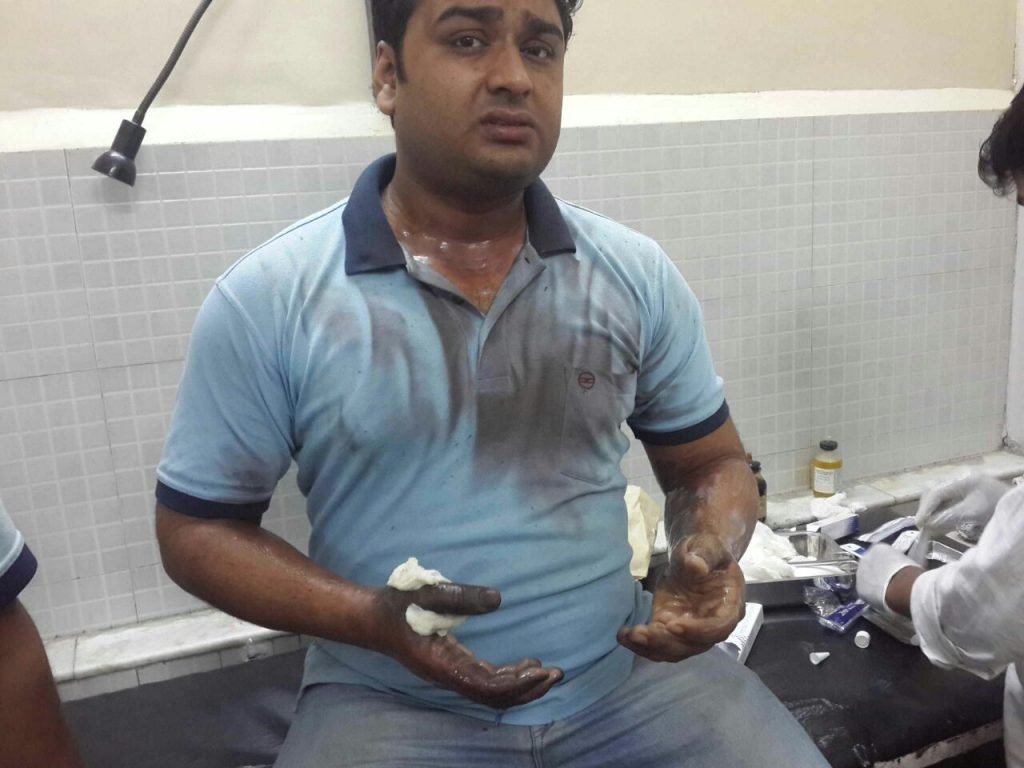
New Delhi: It is noticed that during the launch of operation of almost all phases of metro being operational by Delhi Metro Rail Corporation (DMRC), prescribed safety measures are being ignored by the agency thereby putting the lives of hundreds of personnel involved at risk of major accidents like paralytic attacks, serious injuries and death, etc.  News of several accidents including deaths in Delhi Metro sites are pouring into from various sources. It shows total negligence on the part of so reputed DMRC.

There might be lack of proper consultancy for crowd management, safety measures, first aid mechanism, etc. in DMRC. As a result of maladministration or due to lack of up to date safety engineering technologies in DMRC, several accidents, deaths or suicides by the innocent commuters are taking place and the number is increasing day by day.  Environmental issues are also kept aside during the launch of such show off functions which does not have any positive impact on the public. Rather huge expenses are being incurred by DMRC for so called celebrations and by doing so the public funds are being misutilised for nothing.

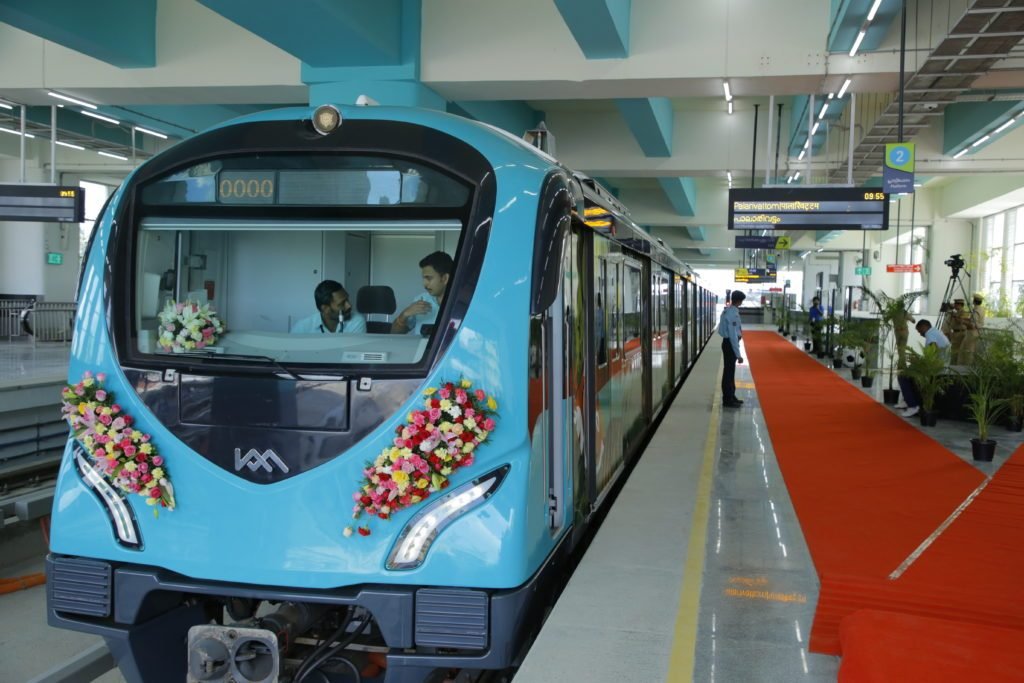
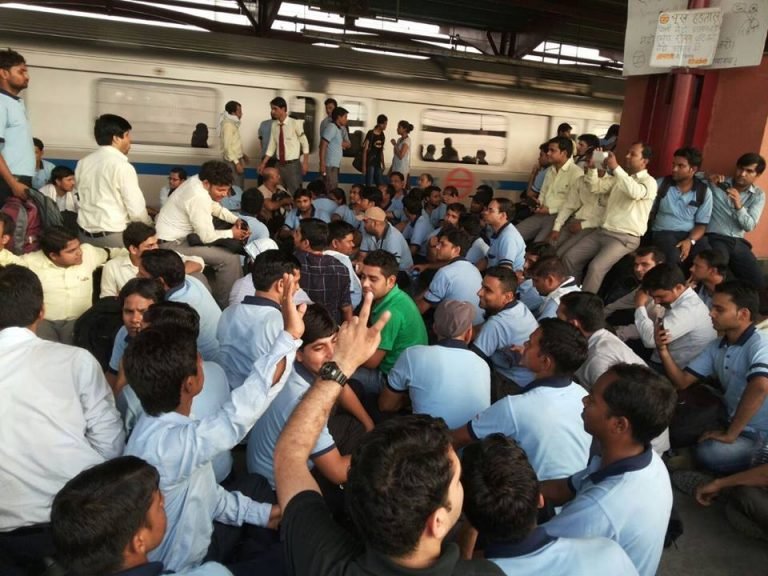
An incident took place recently during inaugural ceremony of new phase-3 metro trains lowered on track, where it was obviously observed that no safety measures were adopted. Many attendees clustered around the spot were seen putting their lives in danger as they had not put on any safety accessories. DMRC has to reply to such loopholes to the public through the appropriate forum and they should admit the blunder and take precautionary measures for further future such ceremonies.

Read also: Delhi Metro officials summoned in Zamrudpur pillar collapse case

The above lapse in public safety by DMRC shows that they didn’t learnt anything from the pillar collapse case in Zamrudpur during construction of Line-6 under its phase-II project.

DMRC needs to introspect by not considering itself as complacent for sake of the betterment and smooth functioning of the metro transportation for the commuters as also to retain and sustain the credibility obtained so far amongst the urban smart transportation fraternity in India.

Advertisement1
InnoMetro_2026

Kolkata East West Metro | KMRC starts making tunnel 300 meter from river

0

Kolkata: The East-West Metro is exactly 300 m away from the riverbed. It has crossed the Howrah station and is ready to enter the final lap to go under the Hooghly.

One of the two tunnel-boring machines (TBMs) was pressed into service on Monday; the other is expected to resume boring work this week after routine maintenance. This is the first time in the country that boring for a railway tunnel under a riverbed is being done. The work under the Hooghly river is likely to start by January and end by September 2017 when the the machines reach the other side of the river.

The Rs 5,000-crore East-West Metro that will link Salt Lake’s Sector V with Howrah Maidan, covering a distance of 16.55 km from eastern part of the city to west, is Kolkata’s biggest infrastructure project so far. For the first time in India, a train will travel under a river — through a 520 m stretch of tracks that will go through a tunnel under the Hooghly river.
Construction of the twin tunnels — with the crown depth being 10m at the start — started in April 2016 from Howrah Maidan. Both the tunnels have already snaked under heritage buildings like Colvin Court and Cambridge Terrace. The tunnels have crossed the railway yard (the depth being 19m at this point) and were in close proximity to the foundation of Bankim Setu safely.

Engineers of Kolkata Metro Railway Corporation (KMRC), the implementing agency of the project, said around 1,200 metres of tunnelling has been done ever since the TBMs were initiated on April 21. “The machines are about 300 metres away from Hooghly. They are expected to reach the river in two months’ time.” The tunnel will cover 520 metres of the riverbed and its crown will be 13m below river bed, where average depth of water will also be 13m.
Advertisement1
InnoMetro_2026

Delhi Metro | DMRC places new generation coaches directly on elevated ramp

0

New Delhi: Two new generation coaches, part of Delhi Metro’s Phase III expansion, were today directly placed on the tracks near the Sadar Bazar metro station of the upcoming Magenta Line.

It was done to expedite trial runs on a 13-km-long section between the Janakpuri West, one of its ends, and IGI Airport (domestic terminal) stations. The other end of the line is at Botanical Garden in Noida.

Source//PTI.
Advertisement1
InnoMetro_2026

Delhi Metro | DMRC organises 200 puppet shows in Delhi schools

0

New Delhi: The Delhi Metro Rail Corporation (DMRC) today reached another landmark in its social outreach and CSR campaign by completing a series of 200 puppet shows at schools across the national capital region. Started in July 2015, the puppet shows have been successfully organized in various Government schools, Kendriya Vidyalaya(s) and private schools covering more than fifty thousand (50,000) students of the age group between 10-14 years and above so far.

The Delhi Metro also organizes these puppet shows at all the depots, residential colonies of the DMRC network to spread awareness about travelling etiquettes in Delhi Metro among children.
buy vardenafil online https://www.ecladent.co.uk/wp-content/themes/twentyseventeen/inc/en/vardenafil.html no prescription

It is an initiative to inculcate good manners and etiquettes among the children and create disciplined Metro commuters for the future. The duration of each puppet show is 15 minutes and these shows are organized free of cost for schools located in Delhi/NCR. Puppeteers from `Kathputli Colony’ in north Delhi perform these shows.

The efforts by the Delhi Metro towards inculcating the spirit of discipline and ownership among the commuters have been well received and appreciated. DMRC also received the first prize for having the best Corporate Communications campaign at the Corporate Communications summit 2016 held in July this year under the aegis of Standing Conference of Public Enterprises (SCOPE).

Delhi Metro has also established a Museum at Patel Chowk Metro Station to connect to the children of the city more effectively. All major milestones, issues regarding the selection of the technology, unique management style, earthquake proof structures and the distinction of being the first railway project to claim carbon credits have been prominently displayed here. It keeps organising workshops and visits of children, senior citizens from all classes of the society. In the past the museum has conducted workshops for children undergoing treatment for cancer, orthopedically challenged children, underprivileged sections, senior citizens etc.

Advertisement1
InnoMetro_2026

Delhi Metro | DMRC increased Smart Card top-up limit to Rs.2000

0
New Delhi: The Delhi Metro Rail Corporation has decided to increase the maximum top up limit of its Smart Card by Rs. 1000/- to Rs. 2000/- from tomorrow i.e, 11th December 2016. The increased top up limit will remain effective till 31st December 2016 only.
The decision to increase the maximum top up limit has been taken with a view to facilitate the commuters who might come with new currency notes of Rs.
buy ivermectin online https://pavg.net/wp-content/themes/twentytwentyone/inc/en/ivermectin.html no prescription

2000/- to top up their smart cards. With the present maximum top up ceiling of Rs. 1000/-, it would have created problem in the availability of adequate currency notes for passengers and currency to to be returned to such passengers, specially in view of shortage of new Rs. 500/- currency notes.
With the increased top up limit, passengers can now easily top up upto a maximum of Rs. 2000/- in which new currency notes of Rs. 2000/- will come quite handy and problem of shortage of currency notes, specially Rs. 500/- notes, would be tackled in a more effective manner, which would have been otherwise required to be returned to the commuters after maximum top up of Rs. 1000/-.
This is a temporary measure and will remain effective till 31st December 2016 only. It is expected that by that time enough currency of various denominations, specially Rs. 500/-, will be available to hand over over as change to facilitate transactions for a maximum top up limit of Rs. 1000/-.
Delhi Metro at present carries about 27-30 lakh passengers on an average, of which approximately 70% are smart card users. There are about two lakh top ups done by the commuters every day ranging from a minimum of Rs.100 to a maximum of Rs.1000/-
Source//DMRC
Advertisement1
InnoMetro_2026

Delhi Metro | Delhi Govt approves extension of DMRC Chief Mangu Singh’s tenure

2
Govt. extended Dr. Mangu Singh tenure till 31st March 2022
Image Representation Only

New Delhi: The Delhi government today approved a proposal to give five-year extension to Delhi Metro Rail Corporation (DMRC) Chief Mangu Singh.

The approval was today given at a Cabinet meeting chaired by Chief Minister Arvind Kejriwal.

“The Chief Minister has given approval for five-year extension of the DMRC chief,” a senior government official said.

The matter of extending the DMRC Chief’s tenure will be put before the Union Urban Development Ministry as both UD Ministry and Delhi government have 50-50 partnership in the Delhi Metro.

Singh had taken charge as DMRC chief in 2011 succeeding E Sreedharan who had retired after a 16-year tenure.

Singh is an Indian Railways Service of Engineers (IRSE) officer of the 1981 batch and worked with Sreedharan in the Kolkata Metro project. He has been associated with the Delhi Metro since its inception.

Source//PTI

Advertisement1
InnoMetro_2026

TRANSLOG Connect 2016 | New Phase of Logistics and Supply Chain Management

0

Thanks to the significant annual event, TRANSLOG Connect Congress – generally known as a great professional hub for logistics and supply chain management peers and decision makers in Central & Eastern Europe – several new cooperation and partnership has been established that promotes collaboration between the delegates and solution providers in the rapidly growing region.

More than 2000 pre-scheduled and ad-hoc business meetings, hundreds of decision-makers from all countries of the region and countless exchange of ideas and best practises made the sixth annual TRANSLOG Connect an outstanding success.

The conference doors closed but new business opportunities opened in the cutting-edge B2B networking event as professionals were facing the future of the industry, innovative technologies and services. Digitalisation, increasing flexibility of supply chain in line with cost reduction – defined as key challenges waiting to overcome in the CEE markets from different angles.

A well-managed supply chain operation is increasingly a critical factor in a business’s success. Transforming and bringing it up-to-date generally involves not just the introduction of powerful new technologies but a fundamental review of processes and organization. The programme and activities of TRANSLOG Connect have been exceptionally well-received by the knowledgeable audience from more than 14 countries. Among the numerous acclaimed presentations, one of the most visited was Prof. Dr. Sebastian Kummer’s – Vienna University of Business and Economics. The charismatic Austrian presenter and chairman of the event was highlighting the challenges of digitalization globally as well as addressing the Central and Eastern European countries: how the augmented reality might change our lives and our logistics performance, furthermore how personal assistants and artificial intelligence could support our supply chain processes, ultimately how smart robotics are becoming more and more usable in many fields of logistics. The age of self-driven cars and trucks are getting closer to our industries, businesses and our everyday lives as well.

Delegates received fascinating presentations from leading industry professionals like Tomas Mayer, (Head of Corporate Key Account Management, Corporate Sales, Gebrüder Weiss) who spoke about Gebrüder Weiss’s solution model, Slawomir Blotny (Business Development Director, Raben Group) who was providing exclusive information about “supply the west from the east” and Arkadiusz Glinka (Director of  Transportation Eastern Europe, C.H. Robinson) who was sharing the secrets where to find the biggest, fastest transportation savings in our supply chains.

One of the most prominent and expected moments of the event was the 4th Central Eastern European Logistics & Supply Chain Excellence Award ceremony opened by Prof. Dr. Sebastian Kummer – Head of Institute of Transport and Logistics, WU Vienna – who announced the winners and handed out the CEE Awards to the French-Polish Blulog in the service provider category and to the Serbian interCLEAN company in the manufacturer category.

Companies don’t need to be big to have great ideas.  – Let us know one of the jury member during the cocktail reception which gave an exclusive environment and background to celebrate and discuss further developments, sharing best practices and benchmarking strategies for achieving “the next frontier of supply chain operations.”

The organizer – TEG The Events Group – is passionate about bringing together annually in November in Budapest the best representatives and innovators of the logistics and supply chain industry to create a valuable and engaged professional network in the CEE region.

TRANSLOG will be taking place again in November, 2017 in Budapest. For further information, please visit the website at www.translogconnect.eu or contact the organiser at info@tegevents.eu

Advertisement1
InnoMetro_2026

Lucknow Metro | LMRC Board approves Rs.3502 crore loan from European Investment Bank

0
Agra Metro Rail Project has got a loan of Rs.3860 crore (approx. 450 million Euros) from the European Investment Bank for constructing and implementing Phase-1 of the Metro Rail Project on December 15, 2021.
Image Source: Twitter

Lucknow: The 3rd Annual General Meeting of the Lucknow Metro Rail Corporation Limited (LMRC) was held today under the Chairmanship of Shri Durga Shanker Mishra, Additional Secretary, MoUD, Govt of India at Administrative office of the Company. It was attended by Shri Mukesh Mittal Finance Secretary, Shri Bhuvanesh Kumar, Commissioner, Lucknow, GoUP, Shri Kumar Keshav, Managing Director, along with functional Directors of LMRC, Statutory auditor of the Company with various shareholders of the Company and other senior officials of Lucknow Metro Rail Corporation.

In Meeting, Chairman appreciated about the progress of the Lucknow Metro Rail Project in short span of time and advised to plan for feeder bus services to the various Metro Stations.

In AGM Shareholders adopted Annual report for FY 2015-16 and Fixation of Remuneration of Statutory Auditor of the Company for FY 2016-17.

In Meeting Shareholders also approved the proposal for revision of Memorandum of Association (MoA) & Articles of Association (AoA) of the Company in line with the approval of the GOI to the Lucknow Metro Rail Project vide MoUD, GoI letter dated 25th January 2016 and external funding for Lucknow Metro Phase-1A project in form of loan of Rs. 3,502/- Crores from European Investment Bank (EIB).

Shri Durga Shanker Mishra, Additional Secretary, Ministry of Urban Development (MoUD), Government of India, today also visited the Lucknow Metro’s project site along with Transport Nagar Depot to review the work of Lucknow Metro project. He was accompanied by Shri Kumar Keshav, Managing Director, LMRC, Directors and other senior officers of Lucknow Metro Rail Corporation.

The Additional Secretary visited the Transport Nagar Metro Depot where he saw Workshop cum Inspection Bay Lines, Depot Control Centre (DCC) and the LMRC’s Training Centre (Centre for Excellence for Training) and was briefed about the various activities being done there. He also inspected the Metro train and appreciated aesthetic design of the train. He was also briefed about the technical facilities of the train. He also visited the Receiving Sub-Station (RSS) in the depot and appreciated the 132 KV Gas insulated Sub Station installed there.

Later, he visited at Sachivalaya underground metro corridor and was briefed about the tunnelling work through the Tunnel Boring Machine (TBM) for the 3.5 km underground stretch connecting the Hazratganj, Sachivaalaya and Hussainganj Metro Stations. He expressed his happiness over the Metro project and congratulated Managing Director for the successful commissioning of the trial run of Lucknow Metro Train.

Source//LMRC Press Release.

Advertisement1
InnoMetro_2026

Pune Metro | Centers approves Pune Metro Rail Project first phase

0

New Delhi: The Union Cabinet today approved the development of phase-I of Pune Metro Rail Project which will cover a length of 31.25 km at the total completion cost of Rs. 11,420 crore.

It comprises two corridors — Pimpri Chinchwad Municipal Corporation (PCMC)- Swargate covering length of 16.589 km and Vanaz to Ramwadi with a length of 14.665 km.

“The Union Cabinet, chaired by Prime Minister Narendra Modi has approved the development of Pune Metro Rail Project Phase 1,” an official release said.

The population of approximately 50 lakh of Pune Metropolitan Area will be benefited through this metro corridor, it added.

The project is scheduled to be completed in five years from the date of start of work as per the Detailed Project Report (DPR).
buy propecia online https://www.adentalcare.com/wp-content/themes/medicare/editor-buttons/images/en/propecia.html no prescription

The Project will be implemented by Maharashtra Metro Rail Corporation Limited (MAHA-METRO), which will be a 50:50 jointly owned company of Government of India and Maharashtra government.

The existing Nagpur Metro Rail Corporation Ltd (NMRCL), a joint Special Purpose Vehicle (SPV) of Government of India and Maharashtra government, would be reconstituted into MAHA-METRO for implementation of all metro projects including Pune Metro Rail Project Phase-1 in the state of Maharashtra outside Mumbai Metropolitan Region.

The approved alignments are expected to provide the much needed connectivity to the commuters and would traverse through some of the densest and traffic congested routes in the Pune Metropolitan Area, the release said.

Advertisement1
InnoMetro_2026

Delhi Metro | DMRC’s Phase IV to get govt nod this week

0

New Delhi: The Delhi government is all set to give its go ahead to the fourth phase of Delhi Metro, which will have six new lines connecting outer parts of the city to its heart and forming intersection with all existing lines.

When completed (tentative deadline 2020), the new lines will expand the reach of Metro network to 434 kilometres across 308 stations. The daily ridership is also likely to go up to 63 lakh from the current 28 lakh.

In May, the AAP government had given an in-principle approval to the R55,000-crore project but the Centre returned the file saying they needed to give financial approval first. Delhi’s transport and urban development minister Satyendar Jain told Media the project will be put before the cabinet again this week.

“The file had one sentence — decision on fund commitment will be considered by the cabinet later. This confused the central government. They thought that this was a rider attached to the approval. They asked the Delhi government to clear it,” said a government official.

Usually 70% of the cost of Metro projects is paid by loan and 15% each is shared by the Delhi and central governments.

Once the cabinet approves it, the file will be forwarded to the Union government. After their approval, tenders will be floated, the official said.

The 104-kilometre phase 4 network is expected to have a daily ridership of 1.5 million. These lines, in addition to the 140 kilometres of network being added in Phase 3, are expected to free up traffic bottlenecks in the congested central and southern parts of the city and help people residing in outer Delhi.

Phase 3 is likely to be completed by September 2017, and the Delhi Metro Rail Corporation (DMRC) was seeking approval for phase 4 for more than a year.

The DMRC intially proposed to build a 20-km-long corridor between the Aerocity and Tughlakabad metro stations but has now extended it to Terminal 1 station. The line will go through densely populated areas such as Saket, Mehrauli, Vasant Kunj and Mahipalpur in south Delhi.

Passengers travelling on the ITO-Faridabad line can change for the Terminal 1 line at Tughlakabad while those travelling on the Gurgaon line can board a Metro on this network from Saket.
buy orlistat online https://nouvita.co.uk/wp-content/themes/twentynineteen/fonts/en/orlistat.html no prescription

Currently, the airport line is connected only with Gurgaon-Jahangirpuri line, that too at New Delhi railway station. Once the Terminal 1-Tughlakabad line starts, the passengers from different lines will have easier access to the airport. From Aerocity, they can take the airport line to go to Terminal 3,” said a senior DMRC official.

Source//Hindustan Times

Advertisement1
InnoMetro_2026