Home Blog Page 804

Union Budget 2018 | Metro rail project allocations hit three-year low

New Delhi: The government has outlined big plans for metro rail projects in India, but the latest Union Budget does not reflect this.

Allocations made in Union Budget 2018 for the metro rail projects are at a three-year low of Rs 15,000 crore. As per the statistics, in 2016-17 Rs 15,327 crore (actual) was spent on metro projects and Mass Rapid Transit System, the following year in 2017-18 Rs 18,000 crore was allocated and revised estimates remain unchanged.

Metro Rail Policy, 2017 makes private sector participation mandatory, which is a big change. This change will be a catalyst for creating the right models to attract investment from the private players. This also helps the government in reducing their outlay,” said Rajaji Meshram, Director, Infrastructure, KPMG India.

For example, recently Delhi Metro received bids for rolling stock of 25 trains on a lease basis from manufacturers. Similarly, Kochi Metro wants a Public-Private Partnership (PPP) model for ticketing with the participation of banks and financial institutions to invest in an automated fare collection system.

Secondly, a change in the Metro Rail Policy 2017 approved in August states that cities with a population of 20 lakh or more should go for a metro rail system or else look for other alternatives.

The need for a new policy came up after PPP in metro rail projects faced legal tangles such as the ones with Delhi Airport Metro Express Private Ltd and Mumbai Metro One Private Ltd.

“There’s adequate allocations done for different works planned for the next fiscal. Moreover, there are plenty of metro lines scheduled for commissioning in 2018-19, which would obviously need lesser funds towards the fag end of construction, thereby leading to lesser outlay in the Budget,” said an industry insider.

During 2018-19, 190 km of metro rail networks are proposed to be commissioned in Delhi (114 km), Chennai (15.

50 km), Bengaluru (12.80 km), Ahmedabad (6.30 km), Nagpur (11.70 km) and Noida-Greater Noida (29.70 km).

The Budget has made allocations for metro rail in Delhi, Chennai, Bengaluru, Ahmedabad, Nagpur, Mumbai, Kochi and Lucknow; a total of 342 km, some of which are scheduled for completion.

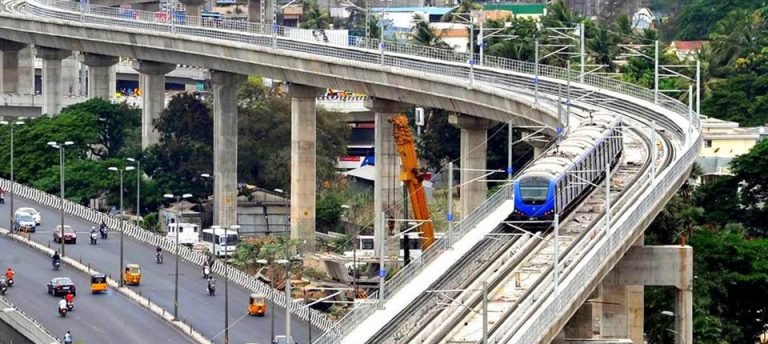
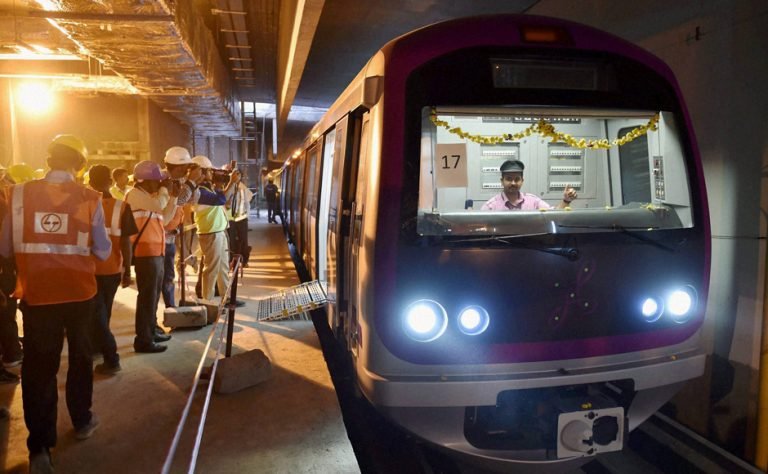
As per the allocations, in the next fiscal, additional corridors under Phase-III of Delhi Metro are slated for completion. For Chennai Metro elevated viaduct, station and depot are slated for completion, while the second phase of civil works will commence for all four extensions of Bengaluru Metro.

In Ahmedabad, the test track will be commissioned in 2018-19 from the budgetary allocation. With the monetary assistance from the Budget, Nagpur Metro will complete construction of 2,500 piers, 400 girders, three station buildings, a depot, viaduct construction, testing and commissioning of rolling stock.

Meanwhile, Mumbai Metro Rail Corporation will continue with its civil construction work of its underground line and will commence track work, power supply-overhead equipment systems, rolling stock, signalling-telecommunications and other system works. Similarly, Lucknow Metro will complete its underground line and Pune Metro will go ahead with the civil works.

Delhi Metro | DMRC deploys Ex-servicemen to guard some metro stations

New Delhi: The Delhi Metro Rail Corporation (DMRC) deployed nearly 200 Ex-serviceman to watch the security and crowd management at various metro stations of Airport Express Line and the Kashmere Gate to Rajiv Chowk stretch of Delhi Metro’s Yellow Line, one of the busiest sections of the metro network.

DMRC has deployed ex-defense personnel for not only better crowd management and discipline at stations, but also to be on the lookout for suspicious commuters and to prevent suicide attempts.

“Under customer facilitation services, these ex-servicemen provide services at station platforms, automatic fare collection (AFC) gates, circulating areas of station and other locations in and around the station premises, including station access points, galleries, ticketing areas, staircases, escalators etc. Under watch and ward services, they guard the service buildings (ancillary building, DG room, chiller plant, cooling tower), theft prone areas, etc. “A total of 183 personnel have been engaged at these five stations ” said a DMRC spokesperson.

According to DMRC officials, the ex-servicemen are trained to be customer oriented while dealing with commuters and general public. The work profile of the ex-servicemen include overall crowd management, ensuring proper queuing of passengers on the platforms, assistance to differently-able passengers, guiding passengers on their queries related to journey and keeping entry and exits free from encroachment by vendors, vehicles, beggars, etc.

The Army Welfare Placement Organization, a registered society, is facilitating the services of these ex-servicemen to DMRC.

Bangalore Metro | BMRC suffers huge loss due to stolen tokens by commuters

Bengaluru: The Bangalore Metro Rail Corporation (BMRC) is suffering from a loss of Rs 35 lakh due to missing tokens. As per the information revealed via Right to Information, from the starting day of the services to January 1, 2018 the BMRC has witnessed 1.78 lakh cases of stolen tokens causing a loss of Rs 35 lakh to the Company.

To recover the losses, the Metro authorities initially collected a penalty of Rs 50 which was later hiked to Rs 200 in case of loss of token during the journey. So far the authorities have collected Rs 8.62 lakh as penalty from 10,739 passengers who lost tokens during the their journey.

According to the BMRC officials, so far 1,67,320 tokens continue to remain missing. It means that the passengers took extra tokens with them.

Some passengers buy extra tokens. They use one token to get the entry and travel while taking the extra ones with them. Smart card users also purchase tokens.

Loss of tokens in last 6 months:

Period: June 1, 2017 – January 1, 2018
Loss of tokens: 75,096
Loss of amount: Rs. 15,01,920

BMRC bought 1.50 lakh tokens in 2017 at a rate of Rs 18.30 per token and spent a total of Rs. 27.45 lakh.

Metro officials say there has been a significant increase in the sale of travel smart cards since the beginning of the Metro services but majority of the commuters still prefer tokens.

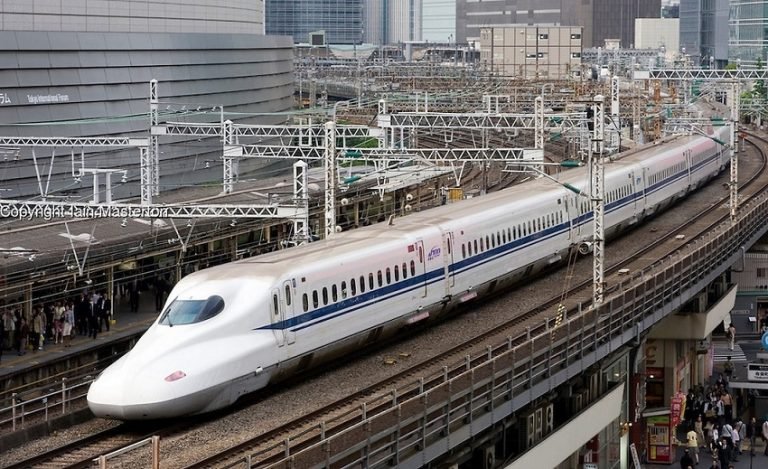
Mini Bullet Train | Bihar Govt. plans to run Mini Bullet Train between Patna and Bodh-Gaya

Patna: The Bihar government has prepared a blueprint to run high-speed train between Patna and Bodh-Gaya, one of the biggest Buddhist pilgrimage sites in the world. The 100 km route between Patna and Bodh-Gaya will pass through Rajgir and Nalanda, CM Nitish Kumar’s Assembly constituency.

Bihar Chief Minister, Nitish Kumar will embark on his 4-days visit to Japan on February 18 during which he is likely to sign a deal for a mini-bullet train project.

Sources said that the entire route will be underground. A high-level delegation of Bihar government will also accompany Nitish on the crucial Japan tour to finalise the road map for the project.

Observers believe that Nitish, who is facing relentless attacks from Lalu Prasad’s Rashtriya Janata Dal (RJD) ever since he walked out of the Grand Alliance or Mahagathbandhan last year, will use the high-speed train project as his major achievement in the next Assembly election in the state.

Apart from the ambitious project, the Bihar government is also aiming to finalise record number of deals with Japan which will bring huge investments in the state from the foreign country, reports said.

Delhi Metro | DMRC notifies vacancy for Director (Operations) post

Delhi Metro Rail Corporation (DMRC), a joint venture of Govt. of India and Govt. of NCT of Delhi, has been set up for implementation and operation of rail-based Mass Rapid Transit System in Delhi & NCR. DMRC intends to appoint the following official:-

Post Name: Director (Operations)
Vacancy: 01 (One)
Pay Scale: Rs.75000-100000 (IDA)

Duration of Appointment: The appointment to this post will be on contract basis, presently for a period of 5 years or the date of superannuation, whichever is earlier.

How to apply: Application in the prescribed format (Annexure-I) giving the details about qualification, experience and career achievements should reach to GM/HR (DMRC) positively by 05/03/2018.

Click here to read complete recruitment notification.
Click here to download application form.

Chennai Metro | IGBC gives platinum rating to CMRL’s four under ground stations

Chennai: Indian Green Building Council (IGNC) has given platinum rating to Chennai Metro’s four underground stations operational in Phase-1 for adopting green concepts in design, construction and operation.

The four underground stations are Thirumangalam, Anna Nagar Tower, Anna Nagar East and Shenoy Nagar which have received platinum rating and global leadership recognition from IGBC.

According to a metro official, “We have submitted documents for three other stations and they are under process. The ratings and recognition are given on the eco-friendly features in the stations”.

In last year, thirteen elevated stations — including Little Mount, Guindy, Nanganallur Road, Meenambakkam, Airport, Koyambedu, CMBT, Vadapalani, Alandur and St Thomas Mount — had received the certification. IGBC has a rating system and to achieve it a metro rail project must satisfy certain requirements and achieve maximum number of credit points.

Kochi Metro | KMRL signs power purchase agreement for 2.3 MWp solar plant

Kochi: The Kochi Metro Rail Ltd (KMRL) on Monday signed a power purchase agreement (PPA) with AMP Solar India Private Ltd. The power generated by the plant will be connected to the power distribution system of KMRL.

According to the agreement, AMP Solar India will set up a ground-mounted solar plant on the land available in KMRL’s Muttom depot. The agreement is on condition that KMRL will purchase solar power at the lowest rate quoted by the successful bidder for the next 25 years. The PPA was signed by KMRL Director (Projects) Thiruman Archunan and AMP Solar Director (Distributed Generation) Shriprakash Rai, in the presence of KMRL MD A P M Mohammed Hanish.

“KMRL has always taken the effort to make Kochi metro the most environment-friendly, green metro in the country, and we are committed to taking up all possible measures towards this goal. Today, we are very happy to add 2.3 MWp more by erecting solar panels in the vacant space at our Muttom yard.

We are on the lookout for opportunities to generate more solar power and become more energy efficient,” said Mohammed Hanish.

The power generated by the plant will be connected to the power distribution system of KMRL, which will utilise the energy generated by the plant. The plant is capable of producing 34.3 lakh units (KWH) of electric energy per year. With this green initiative, KMRL will be able to save about Rs 63 lakh per year of energy cost directly, in addition to the indirect benefit of saving in fossil fuels and reduction in pollution. The plant will be commissioned in nine months.

This would raise the total solar power generated by the Kochi metro rail project to 6.3 MWp. KMRL has adopted the renewable energy service company model for both their solar projects, where the vendor will undertake the complete investment as well as the operation and maintenance, and KMRL will purchase power from the vendor. At present, the Kochi metro rail project has placed solar panels on the rooftop of 16 stations and buildings in the metro yard. The installed capacity of the rooftop project is 4 MWp.

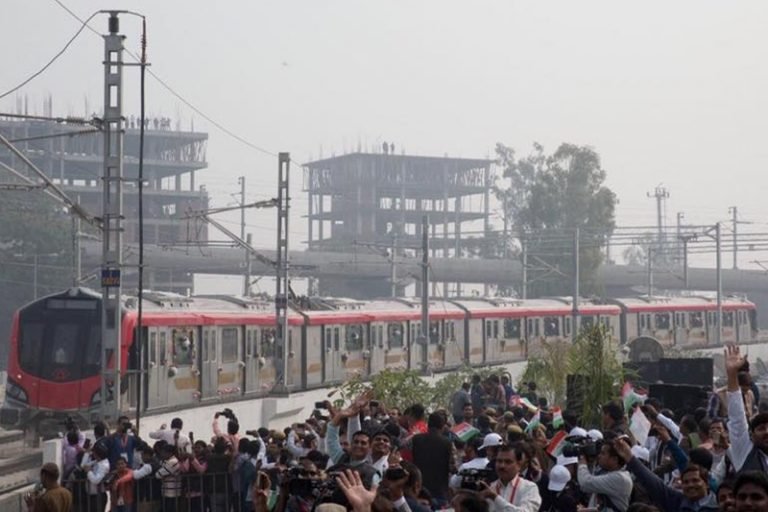
Lucknow Metro | LMRC to run a special drive for metro commuters

Lucknow: To promote the usage of the automatic Recharge Card Terminal Machine (RCTM) and the automatic Token Vending Machine (TVM) installed at Metro stations, the Lucknow Metro Rail Corporation (LMRC) shall be undertaking a three day “special drive” from 8th February to 10th February 2018 at all the eight operational Metro stations between the Transport Nagar and the Charbagh.

According to press release, during this special drive LMRC shall be selling the single journey travel tokens and recharging the ‘GoSmart’ travel cards for passengers through the automatic Recharge Card Terminal Machine (RCTM) and the automatic Token Vending Machine (TVM) only. All Metro commuters shall be encouraged to purchase the tokens and recharge their smart cards through these terminals during this period.

The Ticket Operating Machine (TOM) meant for manual sale of tokens/smart cards at all Metro stations will be closed throughout the commercial revenue hours during the three day period. As such, there will be no manual sell of tickets through these counters and the Metro commuters will have to purchase the single journey token and recharge their smart card through these automatic machines installed at Metro stations.

LMRC has deputed sufficient Metro staff and the Customer Relation Assistant (CRA) at the RCTM/TVM at all Metro stations. They will facilitate, guide, educate and help all Metro commuters in getting token or recharging their ‘GoSmart’ card through these terminals.

This drive is being carried out by Lucknow Metro in order to educate and aware the Metro users for inculcating a habit among themselves for using the automatic services for a smarter way of travel in the capital city of Uttar Pradesh.

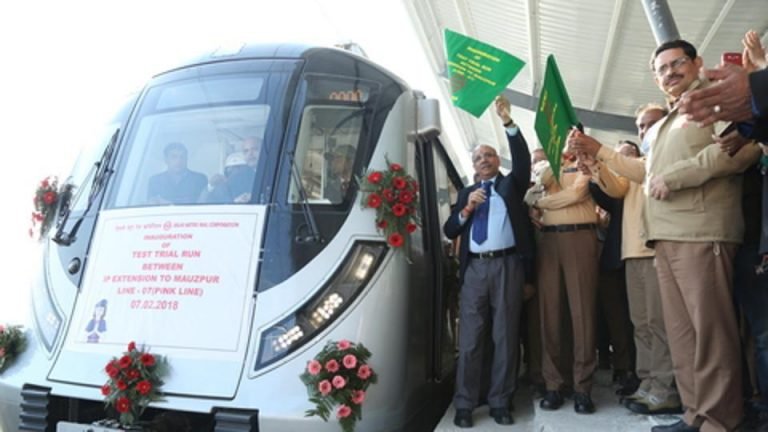
Delhi Metro | DMRC starts test runs on Pink Line between I.P. Extension and Maujpur

New Delhi: The Delhi Metro Rail Corporation (DMRC) today started test runs on the 10.47 kms stretch between the I.P. Extension and Maujpur elevated section of the upcoming 59 kms long Majlis Park – Shiv Vihar corridor (Line 7) of Phase-III, also known as the Pink Line. The Test Runs were flagged off by DMRC Chief Mangu Singh.

According to press release, during these test runs, the interface of the Metro train will be checked to ensure that there is no physical infringement with civil infrastructure during the movement of the train on the track and also testing of various subsystems of coaches shall be done.

The new signaling technology known as Communication Based Train Control (CBTC) will be implemented on this corridor and will undergo rigorous testing in stages. The response of the train at different speeds, braking of the train and the interconnection with the Operations Control Centre (OCC) will also be monitored during the trials. The behavior of the track system and the Over Head Electrification (OHE) will be checked repeatedly.

This section from I.P. Extension to Maujpur consists of 09 elevated stations viz. I.P. Extension, Anand Vihar, Karkardooma, Karkardooma Court, Krishna Nagar, East Azad Nagar, Welcome, Jaffrabad and Maujpur Station.

The trains for this section have already arrived and are stabled at Vinod Nagar Depot. This depot is equipped with 4 inspection bay lines, 2 workshop lines. Total 32 trains can be stabled in this depot. To minimize the occupation of land, this depot is constructed with a double deck system, in which the stabling yard has been created on both decks.

This section has three interchange stations at Anand Vihar, Karkardooma and Welcome. The facility of interchange of Metro trains between line7 & line 3/4 is available at Anand Vihar and at Karkarduma Station and between line 7 & line 1 at Welcome Station. The Maujpur Station is a four (4) track station having provision of connection from Maujpur to Mukundpur, a corridor proposed in Phase-IV of Delhi Metro project.

Special Spans and Sharp Curves

This section between I.P Extension and Maujpur consists of 5 Special Spans including 2 Steel Spans over existing DMRC Red line(Line 1) and Northern Railway track between Welcome & Shahdara.

Cantilever Construction (CLC) Spans of lengths total 255 mtr over Anand Vihar Railway Yard and Main line tracks were constructed over running track with 25 KVA OHE System.

Due to uneven twist and turns in this alignment, Delhi Metro had to construct as many as 10 curves on this stretch that passes through very congested areas like  I.P. Extension, Anand Vihar, Welcome, Seelampur, Jaffrabad and Maujpur.

Curves of less than 300 meters of radius are considered “Sharp Curves” in Urban Rail Construction. The work of building sharp curves requires great deal of engineering skills and several factors have to be kept in mind while designing special segments/spans at the concerned turn/juncture. DMRC had to form especially dedicated beds in its casting yard for casting of special segments. The segments were constructed according to the already defined ”radius of curvature” and then put on the viaduct.

Cantilever piers and portals were constructed at appropriate places to provide smooth transition for the curves, wherever required to take care of the shifted alignment due to curvature.

Earlier DMRC had constructed sharpest broad gauge curve on its elevated section in Gurgaon near IFFCO Chowk with at radius of 282.05 meters in Phase II and 242 meters curve on standard gauge between Okhla and Jamia in Phase III.

As part of Delhi Metro’s one of the most challenging corridors of Phase 3, the construction of this section had to be completed by managing heavy traffic at various points on the Patparganj, Anand Vihar, Welcome, Jaffrabad and Maujpur.

The construction in running drain, land acquisition at Patparganj, Anand Vihar, Welcome, Jaffrabad and Maujpur also posed a bottleneck during construction.

Major utility diversions like shifting of water pipelines at Jaffrabad were avoided by re-aligning of station foundations. Electrical installations were shifted for the construction of Anand Vihar ISBT station.

Union Budget 2018: Center allocates Rs 7,000 crore for high speed bullet train project

New Delhi: The Mumbai-Ahmedabad bullet train project has got a Rs 7000-crore boost, showed Budget documents released on Tuesday. The Finance ministry has set aside the amount for the high-speed corridor, which until now had remained only on paper. The estimated cost of the project is Rs 1 lakh crore.

The 508-km-long corridor being implemented by the High Speed Rail Corporation Limited. Last year there was no allocation made in the budget. The Bullet train is expected to cut travel time between the two cities from seven hours to close to three hours. It will run at speeds of 350 kmph with an average speed of 320 kmph. It will stop at 12 railway stations on the route.

In September last year, India and Japan signed a memorandum of understanding for this big-ticket project for which Japan will lend nearly nearly Rs 88,000 crore at 0.1 per cent interest.

The train will begin from Bandra Kurla Complex where it is expected to be closely connected with the metro rail having its route there. It will have a 21-km-long tunnel between Boisar and BKC, of which seven km will be underwater.

The railways will require around 825 hectares of land for the project as 92 percent of the route will be elevated, six percent would go through tunnels and only the remaining two percent would be on the ground.

The railways would run about around 35 bullet trains when it starts operation with about 70 trips per day. Initially, the train would have 10 coaches with a total seating capacity of 750 passengers. The train would require a cleaning time of four hours, after running for 20 hours. The government wants to start the services of the Mumbai-Ahmedabad High Speed Rail Network by August 15, 2022 to mark India’s 75th year of Independence.