Home Blog Page 796

Centre may spend Rs 2.5 Lakh Crore on metro rail projects in India

0
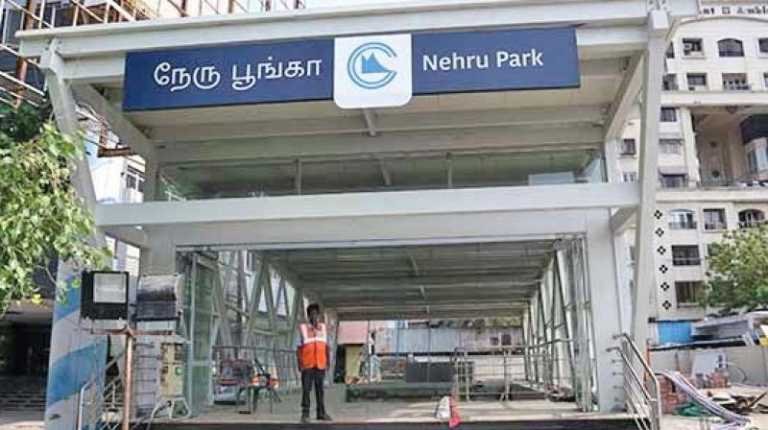
Chennai Metro Rail depot

New Delhi: After a failed public-private partnership (PPP) model to execute metro rail projects in India, the government will spend Rs 2.5 lakh crore to implement metro rail projects in various Indian cities, said ratings agency ICRA.

The spending will be over the next five years, eventually helping not only the stressed infrastructure companies to present stronger financial results, but also companies involved in manufacturing and supply of rolling stock, it said.

The government of India has standardised specifications for rolling stock and signalling systems for metro rail so that ‘Make in India’ can be promoted.

A month ago, Prime Minister Narendra Modi, during the inauguration of Kochi Metro, had said, “A number of initiatives have been taken to enhance public transport in the cities. Foreign investment has been invited in this sector. Fifty cities in India are ready to implement metro rail projects.”

In fact, in April 2017, the Union government also issued a National Transit Oriented Development Policy to transform cities, from being transit dependent to being transit oriented.

Due to differences between the government and private players over Concession Agreement clauses, PPP metro projects have had a failed start. The problems faced by PPP metro projects have varied from project-to-project.

In India, there have been five metro projects with private equity participation, namely Delhi Airport Metro Express (which is now managed by Delhi Metro Rail Corporation), Reliance Infrastructure-led Mumbai Metro One, Hyderabad Metro with majority owned by Larsen & Toubro and two fully private Rapid Metro in Gurugram by IL&FS. This excludes a contract for another metro project in Mumbai, which was terminated even before implementation.

Meanwhile, infrastructure companies are also having a tough time in raising debt to execute infrastructure projects including PPP metro rail projects. This is resulting in companies to look forward to engineering, procurement and construction (EPC) projects instead.

“There has also been a demand by certain sections of the state government, particularly, Maharashtra to amend the Metro Railways Act to make it more relevant for PPP metro rail projects. The existing regulation was formed with a view of government-owned metro lines,” said a state official.

“Going by the developments in PPP metro projects, it is better to opt for EPC projects. Right of Way and clearances are among the major issues in executing such a project,” said an official with an infrastructure company.

Many large Indian construction companies have taken up metro rail projects. While ITD Cementation has bagged the highest number of EPC projects, Larsen & Toubro has exposure to both EPC and PPP contracts. Other companies like Afcons, NCC, IL&FS Group, Simplex Engineering, J Kumar, etc. also have sizeable metro contracts.

K Ravichandran, senior vice-president and Group-head, corporate ratings, ICRA Research and Ratings Agency said, “Roads and urban infrastructure, including metro rails, are two key segments which have witnessed robust order inflows for the construction companies. Further, with a sizeable pipeline of projects in these segments, the construction sector is expected to have sufficient order inflows, and companies with strong track record and healthy balance sheet are expected to exhibit strong growth going forward.” Therefore, this is expected to boost the order book of construction companies by Rs 75,000-90,000 crore over the next three to five years.

Source: DNA
Advertisement1
InnoMetro_2026

Bengaluru Metro | BMRC’s Phase II project gets Rs 3,650-crore boost

0
Namma Metro Green Line

Bengaluru: Namma Metro’s Phase II has received a shot in the arm with the European Investment Bank (EIB) granting a loan of about Rs 3,650 crore (500 million Euros). EIB is the leading financier for Phase II and the second international lender to fund the 72-km project.

Bangalore Metro Rail Corporation Ltd (BMRCL) is expected to use this money for the construction of the 23-km Gottigere-Nagawara line, which consists of 12 underground and six elevated stations. The deal was approved on July 14 with a repayment period of 20 years. In 2015, French funding agency Agence Francaise De Development (AFD) extended a Rs 1,500-crore loan for Phase II.

This is in addition to the Rs 810 crore that the AFD lent for the now complete Phase I.

The total cost of Phase II is an estimated Rs 26,404 crore. Of this, the Centre and the State are granting Rs 5,281 crore and Rs 8,983 crore respectively. BMRCL has to raise Rs 12,140 crore in the form of debt.

Three foreign lending institutions have backed Phase II. Other than AFD and EIB, BMRCL is also in the final stages of discussion with the Asian Infrastructure Investment Bank (AIIB).

“The AIIB team was here for three days. The appraisal process is over and the matter is before the AIIB board for approval. We are expecting Rs 2,300 crore from them,” BMRCL managing director Pradeep Singh Kharola said.

It was speculated that the corporation was expecting a loan of Rs 3,600 crore from the Ger man Development Bank (KFW). BMRCL, however, denied any such development. ” A total of Rs 7,400 crore loan is being raised from AFD, AIIB and EIB. We are not in talks with the German-bank,” Kharola said.

About the options before them, Kharola said: “We will raise longterm loans from domestic institutions (as the interest rate has come down) as well as by floating bonds. In total, we expect to raise a total of Rs 2,500 crore.” He did not disclose details on how the corporation will manage to bridge the gap of about `3,000 crore. This sum is crucial for the construction of the RV Road Bommasandra and the Baiyappanahalli-Whitefield lines.

For Phase I of the project, BMRCL availed loans from Japan International Cooperation Agency (Rs 3,700 crore), Asian Development Bank (Rs 1,600 crore), Housing and Urban Development Corporation (Rs 700 crore) and France’s AFD (Rs 810 crore).

Source: Economic Times
Advertisement1
InnoMetro_2026

Delhi Metro | Technical glitch on metro train creates havoc in Violate Line

0

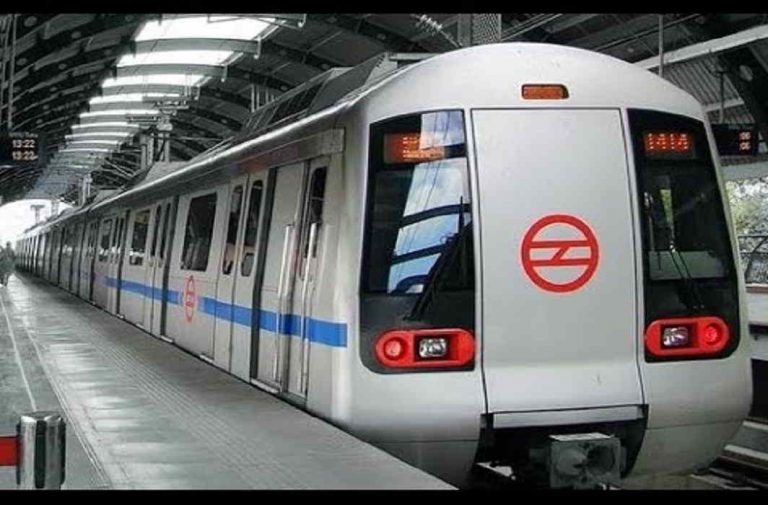
New Delhi: Commuters on Delhi Metro’s Violet Line had a hard time on Saturday evening, when the automatic doors of a train could not be closed. This delayed the services for at least half an hour at the Central Secretariat metro station.

The technical glitch occurred during the evening peak hours between 6.30 pm and 7 pm. The Violet Line which connects Delhi’s Kashmere Gate to the satellite town of Escorts Mujesar, Faridabad is one of the busiest at an interchange station.
buy Glucophage generic bloinfobuy.com over the counter

A large crowd swelled on the platform while the train was stuck because of the glitch. This put all the other trains on the line on hold.

“I was to board the train from Central Secretariat to go to Moolchand. One of the gates of the train did not close,” said Aysuhi Mittal, a marketing professional who is a regular Metro commuter.

While the Metro’s technical staff tried to fix the glitch, operations remained shut for around 20 minutes.

“After several unsuccessful attempts to rectify the fault, the officials decided to shut the doors manually. However their efforts did not yield results,” said Raghav Joshi, a student, who was in the train.

Meanwhile, Delhi Metro Rail Corporation (DMRC) officials, said, “A technical glitch had occurred due to which the doors could not be closed. Operations were not affected. However, in view of passenger safety, the train doors were manned by Metro staff till Badarpur after which the train was sent to the depot.”

Advertisement1
InnoMetro_2026

Delhi Metro | DMRC’s Airport Express line to be extended till Dwarka Sector-25

0
Delhi Metro Airport Express Line
Delhi Metro Airport Express Line/Representational image
New Delhi: Delhi Metro’s Airport Express line, which connects the centre of the city to the Indira Gandhi International Airport, will now be extended till Dwarka Sector-25.
With the extension, commuters will be able to travel between New Delhi and the upcoming Exhibition-cum-Convention Centre in Dwarka Sector-25 within 25 minutes.
The Centre has been planned and is being constructed on the lines of ITPO and Indian Habitat Centre.
Delhi Metro Rail Corporation (DMRC), after receiving an in-principle nod from the Centre, has already conducted the feasibility study for the extension.
The entire stretch will have a twin box tunnel and the underground station, namely Exhibition-cum-Convention Center Metro station (ECC), is expected to have footfall of 10,000 people daily.
The DMRC worked out the budget and allotted Rs 310 crore for the design and construction of the twin tunnel by cut-and-cover method and architectural finishing of an underground Metro station.
The Corporation has given 30 months to complete the project.
The ECC, which will be able to host 5,000 to 10,000 delegates, will be around 15 minutes away from the international airport here, in close proximity to mixed use and entertainment district, with hotels available on site and within short distances.
“DMRC, after receiving an in-principle nod from the Centre, has already conducted the feasibility study for the extension,” said an official.
A source at DMRC informed that the Centre had written to the Corporation for the extension of the Airport Express Line till Dwarka sector-25, following which the feasibility survey for the same has already been conducted.
The Airport Metro corridor, at present, connects New Delhi area to the international terminal of the IGI Airport and terminates at Dwarka Sector-21.
The western part of the city does not have any such convention centre at present to organise exhibitions and seminars.
“In a bid to facilitate smooth commute of people to the fairs, events or seminars organised at the upcoming convention centre, the Union government wanted the high-speed corridor to be extended till Sector-25 Dwarka,” said the sources at DMRC.
He also added that the Airport Line extension route will help in enhancing the ridership of the airport line corridor.
The work will begin as soon as the necessary approvals are granted.
The Airport Express Line comprises six Metro stations including New Delhi, Shivaji Stadium, Dhaula Kuan, Aerocity, Terminal 3 and Dwarka Sector-21. The line has already crossed the benchmark of 50,000 commuters.
Advertisement1
InnoMetro_2026

Lucknow Metro | LMRC trains equipped with latest protection systems

0
Lucknow metro phase 2
Lucknow Metro Train

Lucknow: The Lucknow Metro Rail Corporation (LMRC) is equipped with most modern train protection system which ensures non collision of trains. A minimum distance between two trains is maintained through train protection system. The moment this minimum distance is crossed in the train the automatically brakes are applied.

The modern state of art, Light weight stainless steel LMRC trains run on 1435 mm Standard gauge and will carry 1574 passengers. The coach has a width of 2.9m. It is expected to reduce the journey time between 50% to 75% depending on the road conditions.

LMRC Trains are designed to run at the maximum speed of 90Kmph and at an operational speed of 80Kmph . The average speed will be approximately 33 to 34 Kmph.

LMRC Train will have the most advance signalling and train control system- called the communication based train control system which can be upgraded to virtually driverless mode. The train has regenerative braking which saves 30% to 35% of traction energy.

Talkback systems are provided for emergency communication between the passengers and the driver in each coach. The announcement in the train are in Hindi & English. Whereas the display will be shown in English, Hindi & Urdu. There are also route maps and LCD display systems in every coach.

Advertisement1
InnoMetro_2026

Delhi Metro | Lajpat Nagar to become Delhi metro’s second biggest interchange stn

1

New Delhi: Delhi Metro commuters can now cheer as work is on to make Lajpat Nagar Metro station, in South Delhi, the second biggest interchange station of the Delhi Metro network. So far, Kashmere Gate on the Red Line (Dilshad Garden-Rithala) is the biggest interchange with three metro lines crisscrossing here, and hence having the highest number of commuters.

Currently, work on Lajpat Nagar Metro station is at Phase-III. By October 2017, the Pink Line (Majlis Park to Lajpat Nagar) will be open. Between Majlis Park and Lajpat Nagar, there will be 18 metro stations, proving to be a boon for commuters.

Post October, work will begin for Phase IV. The project will have three lines intersecting at this station, making it one of the busiest stations in Delhi.

“In Phase-IV Lajpat Nagar will be connected to the Yellow Line Huda City Centre – Samaypur Badli). The new 7.96 km corridor between Lajpat Nagar and Saket G-block will begin. This will in total make three lines meeting at this station, with which the daily ridership is also expected to go up. This will also help take the load off on already overcrowded Yellow and Red Lines,” said a senior metro official.

The Pink Line will be extended to Shiv Vihar. The 58 km-long Pink Line will then become the longest corridor in the entire Delhi Metro Rail Corporation (DMRC).

Officials add that the work on Phase-IV will extend the network to outer Delhi areas as well as make the IGI airport more accessible. The proposed six corridors under the phase-IV include — Rithala – Narela (21.73 km) Inderlok – Indraprastha (12.58 km), Tughlakabad – Aerocity (20.
buy zoloft online blackmenheal.org/wp-content/languages/new/noprescription/zoloft-no-prescription.html no prescription

20 km), Lajpat Nagar – Saket G-Block (7.96 km), Janakpuri (west) – RK Ashram (28.92 km) and Mukundpur-Maujpur (12.54 km).

Lajpat Nagar Metro Station to have three interchanges —
1. Kashmere Gate to Escorts Mujesar
2. Majlis Park to Lajpat Nagar (extending to Shiv Vihar)
3. Lajpat Nagar to Saket G-block

Source: DNA

Advertisement1
InnoMetro_2026

Mumbai Metro | CM Fadnavis promises to extend Metro rail upto Gaimukh

0

Mumbai: The Chief Minister of Maharashtra Mr. Devendra Fadnavis promised Mira-Bhayander residents that Metro will be extended up to Gaimukh and assured to conduct a feasibility study immediately.

“MMRDA is meant to develop the metropolitan region and we are committed to fulfill your requirements. I promise you an integrated transport system and also a stadium at the Netaji Subhash Chandra Bose Maidan in Mira Road”, the Chief Minister was speaking at the Bhoomipujan ceremony for the 403 MLD Surya Regional Water Supply Scheme on Monday.

The Chief Minister further announced a Ro-Ro service which will carry passengers and vehicles around areas Gorai, Borivli, Bhayander Vasai etc., ”This would mean that the Mira-Bhayander area will get connectivity through Railway, Metro, Road and Water”, he said.


Advertisement1
InnoMetro_2026

Mumbai Monorail develops technical snag, stops at Chembur station

0
Mumbai Monorail

Mumbai: Once again the monorail is back in the news and this time too for wrong reasons. The Mumbai monorail that was heading towards Chembur from Wadala developed a technical snag and stopped after reaching near Chembur station.

The incident took place at around 9-9.30 pm on Saturday and the train filled with passengers, suddenly developed technical issues.

The monorail had reached the Chembur platform halfway when it suddenly ceased to operate. Another train arriving from Wadala had to then towed the monorail to the end of the platform. All the passengers are safe and this incident is currently under investigation,’ said an MMRDA official.

Advertisement1
InnoMetro_2026

Bengaluru Metro | Employees on strike, train services suspended

0
BMRC employees on strike demanding pay revision.

Bangalore: The Bangalore Metro Rail Corporation (BMRC) had temporarily suspended metro train services on Friday as employees staged a protest over alleged manhandling and arrest of two Bangalore Metro Rail Corporation Limited officials after a scuffle with security personnel. As many as four lakh commuters were stranded when they found all stations had been closed, police said. “Train service temporally stopped,” Bangalore Metro’s Twitter handle said.

The services were resumed later after negotiations with police and BMRCL officials who prevailed upon the employees to withdraw the protest, officials said. BMRCL employees were demanding the release of two of their officials arrested yesterday when they got into a scuffle with Karnataka State Industrial Security Force (KSISF) personnel deployed at a station here. The Metro employees and KSISF personnel reportedly exchanged fisticuffs and abuses over a row on security checks at Sir M Visveswaraya Central College station.

Sources said that BMRC Chief Pradeep Singh Kharola had instructed some station staffs to use minimum electricity and stop uses of lifts and escalators where less footfalls. Accordingly, the KSISF personnel deployed at various metro stations stopped uses of automatic security scanners and started manual security checking. A BMRC employee found that the KSISF allowing some commuters without proper checking then he told the deployed security personnel to check the commuters properly to ensure security of metro property as well as other commuters. Despite of hearing and following his advice the security personnel started beating him on the spot. A video of this incident was also made viral through various means of social media like WhatsApp, Facebook etc. The victim has reported the incident to higher authorities including his colleagues but initially no action was taken. Then the employees started the protest against the management and KSISF, and demanding appropriate action against the guilty KSISF staffs.

About 35 metro staff allegedly retaliated, after which six employees were arrested. Four of them have been released but the metro staff is demanding that the remaining two be let off. Two constables of the Karnataka State Industrial Security Forces were also arrested on the complaint of a Metro staffer.

The employees resorted to protests after talks between KSISF and Namma Metro officials to resolve the matter failed. The services have been resumed after negotiations with the workers who were on strike was successful.

Advertisement1
InnoMetro_2026

Integral Coach Factory to build ‘Make in India’ metro rail coaches for the country

0
Representational image only

Chennai: Integral Coach Factory (ICF) is itching for an on-track showdown with the world’s top coach-makers in the hope that it can provide metro rail companies in the country with the most efficient and cost-effective rakes.

The Chennai coach manufacturing unit, owned and operated by the Indian Railways, has approached metro rail companies, including Chennai Metro Rail Ltd (CMRL), for a trial order of one prototype rake — coaches that form an entire train — so they may compare its performance against those manufactured by firms like Germany’s Bombardier and France’s Alstom, whose coaches Indian metro rail companies currently operate.

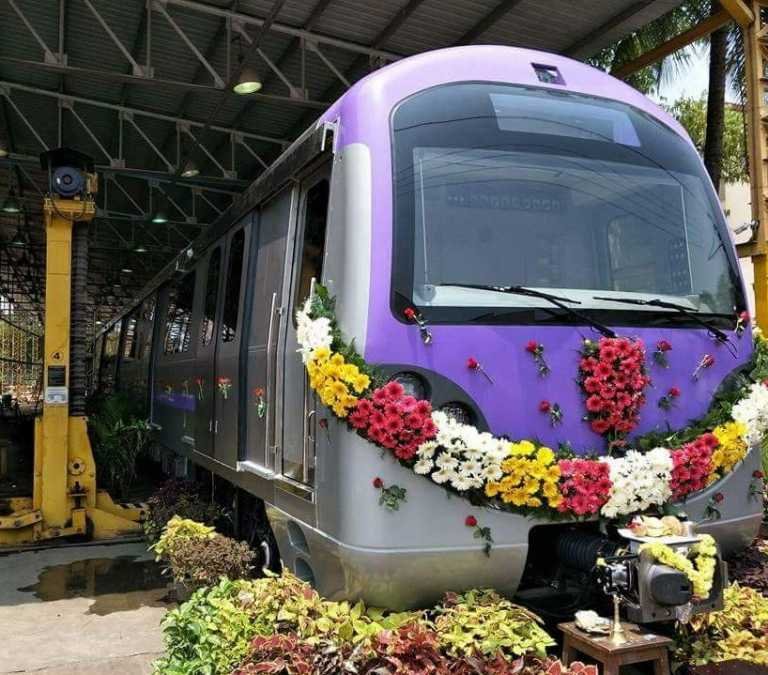
ICF rakes, made with indigenous technology, can cost just 50% of the price of foreign units, experts said on Tuesday, as the coach-maker flagged off its first high-quality rake for the Kolkata metro in the presence of Railway Board chairman A K Mittal.

A couple of CMRL officials were at ICF when Mittal flagged off the air-conditioned rake for the Kolkata metro that the coach-maker manufactured. ICF will supply a total of 26 such full trains for the Kolkata metro, 14 of which it will send by 2018.

The coach-maker has deliberated for a few years on whether eligibility conditions permitted it to take part in metro rail tenders.
buy finasteride online https://calibudsman.com/wp-content/themes/twentytwentytwo/inc/patterns/en/finasteride.html no prescription

The ministry of urban development, which has to give the green light to metros, has communicated with ICF, asking for details on the proposal, senior ICF officials said.

CMRL, a senior official of the company on Tuesday said, is already in talks with ICF for the supply of coaches, or ‘rolling stock’ in railway parlance, but currently does not have any requirement.

ICF has managed to use high-end technology like a three-phase IGBT-based propulsion system, regenerative braking (which saves 30% of energy consumed) and conical springs for smoother rides. The ICF officials said the new rake matched international standards. The cost of each rake, which can carry 3,050 passengers, is Rs 40 crore, or half the cost of an imported metro rake.

But ICF faces a challenge because the coaches it manufactures are for broad-gauge tracks and metro rail systems use standard-gauge coaches.

“We redesign the bogies and body to suit standard gauge,” a senior ICF official said. “It is not a major problem.”
Source: TNN
Advertisement1
InnoMetro_2026