Home Blog Page 69

Bridging Two Economic Hubs: India’s First Regional Rapid Transit System – Delhi-Meerut RRTS

0
RRTS

Introduction 

Delhi and Meerut, the two prominent cities in northern India, are interconnected through deep historical, economic, and social ties. Delhi serves as the country’s administrative and economic centre, while Meerut, on the other side, is a city located in Western Uttar Pradesh and is known for its deep cultural heritage and pivotal role in India’s history. The city serves as a major economic hub and is known for its growing industrial base and expanding services sector. However, the daily commute between these two cities was a major concern due to traffic congestion and insufficient public transportation options. 

To address these challenges, the Government of India saw a semi-high-speed rail project as the best solution to offer a fast, reliable, and sustainable mode of transport to enhance the connectivity between the two cities. The Government of India, through the National Capital Region Transport Corporation (NCRTC), initiated the Delhi-Meerut Regional Rapid Transit System (RRTS) Project. The RRTS system aims to establish a direct link between Delhi and Meerut. In addition, it will alleviate pressure on existing infrastructure and improve the quality of life for daily commuters and streamline equitable economic development throughout the National Capital Region. 

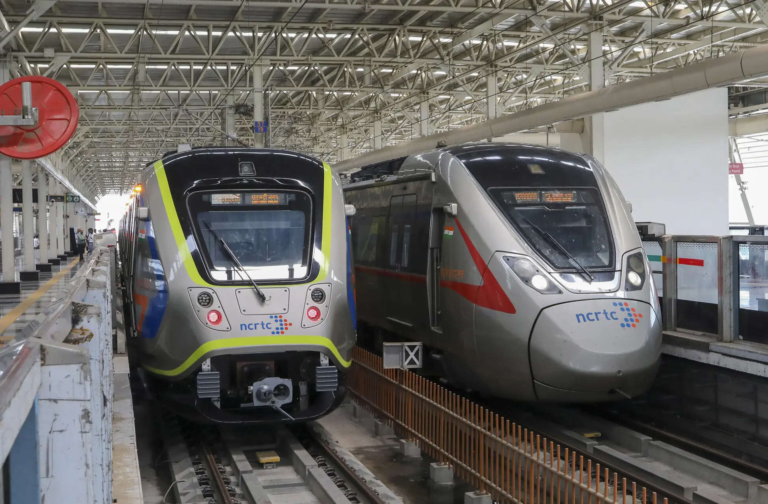
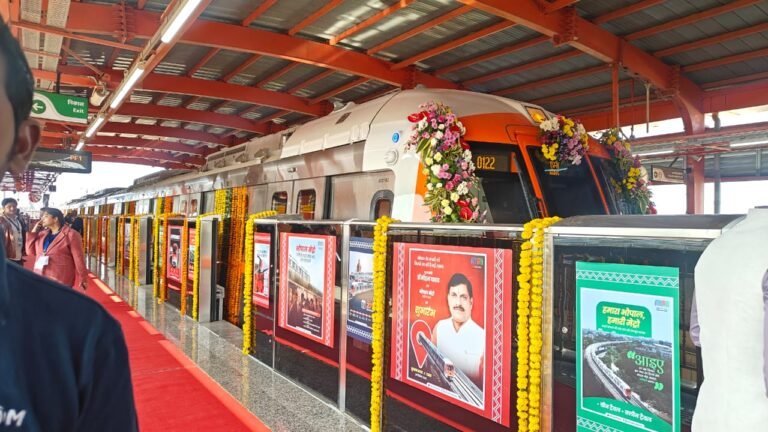
Namo Bharat Train closeup 1

Delhi-Meerut RRTS: A Journey from Vision to Foundation

1998: A study conducted by Indian Railways identified the possibility of an RRTS network in the National Capital Region. 

2009: The Functional Plan on Transport for NCR 2032 was prepared by the National Capital Region Planning Board and identified 8 RRTS corridors in NCR and received approval.Out of 8 Corridors, 3 corridors were prioritised to be constructed in Phase 1. 

29 June 2011: A Memorandum of Understanding (MoU) was signed between the Government of India and the State Government for the implementation of the RRTS Project in NCR.

21 August 2013: National Capital Region Transport Corporation (NCRTC) was incorporated under the Indian Companies Act for the implementation and execution of the RRTS project in NCR. 

May 2017: The Uttar Pradesh State government approved the  Delhi Meerut RRTS line’s DPR (Detailed Project Report) for construction 

September 2017: Pre-construction work started with geotechnical investigation for the Delhi-Ghazibad-Meerut RRTS Corridor. 

May 2018: As part of pre-construction activities, road widening work started in Ghaziabad for the Delhi-Meerut RRTS Project. 

30 January 2019: Initial pile load testing started at Sahibabad for the elevated corridors of the Delhi-Ghazibad-Meerut RRTS Corridor. 

February 2019: The Government of India approved the Delhi-Meerut RRTS Project.

8 March 2019: Hon’ble Prime Minister Shri Narendra Modi laid the foundation stone for the Delhi-Meerut RRTS Project.

AD 4nXfcLmjE4k1NYfp347XQE7rA3VxbmFPbh5WXYApOs8H2Zm5Jh fTCklT Vlm1h uRRf8yu9tInWGRSXz9FwOdWgqkSep1qVXYRpe 9Z3fDa2iZf0QthSNalFJQTdokVIIdKXoCQ3kNeR1jvm20WfDvU?key=kN8lwDr

Delhi-Meerut RRTS: A New Era in Urban Rail Mobility

Overview

  • The Delhi-Ghazibad-Meerut RRTS is an 82 km partly operational and under-construction semi-high speed rail corridor connecting Delhi, Ghaziabad, and Meerut. 
  • Currently, 55 km of the Delhi Meerut RRTS corridor is operational, while 27.15 km of the route is under construction. NCRTC is managing the project, and the Delhi-Meerut RRTS Corridor features 22 stations.

Key Specifications 

Authorised Authority National Capital Region Transport Corporation (NCRTC)
Speed
Design Speed: 180 kmphOperational Speed: 160 kmphAverage Speed: 100 kmph
Track Gauge: Standard Gauge – 1435 mm
SignallingEuropean Train Control System (ETCS) Level 2 of ERTMS
Traction1 x 25 KV AC overhead catenary (OHE)

Funding Mechanism

The Delhi-Meerut RRTS project has a multi-layered funding mechanism. The total estimated cost of the project is ₹30,274 crore (approximately US$3.5 billion). The project is being financed through a combination of multilateral development banks, the central and state governments.  

Estimated Project Cost: Rs. 30,274 crore

The estimated financing plan for the Delhi-Meerut RRTS Investment Project is summarised below. 

Funding SourceAmount (₹ Crores)Share (%)
Asian Development Bank (ADB)8,706.730.4%
Asian Infrastructure Investment Bank4,150.014.5%
Japan Fund for Poverty Reduction24.90.1%
Government15,750.955.0%
Total Project Cost28,632.5100.0%

1. Loan from ADB & AIIB 

  • The Government of India planned to finance the  Delhi-Ghaziabad-Meerut RRTS Corridor through USD $1 billion from the Asian Development Bank (ADB). 
  • On 18 August 2020, the Asian Development Bank (ADB) approved the USD $1 billion funding package for the Delhi-Ghaziabad-Meerut RRTS Corridor. 
  • ADB is financing the project under its Multi-tranche Financing Facility (MFF) in a total of four tranches.
  •  The Financing for the project by ADB are planned to be implemented in four tranches between August 2020 and May 2025. 

Note: The loan from the Asian Development Bank (ADB) will be allocated to finance the first, third, and fourth tranches, whereas the loan from the Asian Infrastructure Investment Bank (AIIB) will be designated for financing the second tranche.

First Tranche 

  • On 8 September 2020, a loan agreement for Rs. 3750 Crore ( US $500 million), which was the first tranche of the approved US $1 billion loan, was signed between the Government of India and the Asian Development Bank for funding the Delhi-Ghaziabad-Meerut RRTS Corridor.
AD 4nXeBXExyYfqyGxuTThci2L0BSEJehBoY0lMoQjQDqHb35udzUilP3h5Qi6mUqb2y RuJlvRY1L0XZWZhUzqN4whQDoRL3vfvXG hW176dqyWz1 Vu2 6DuauyEZ9wMa Fg7ivG Fw16EPtJkHKyyZLA?key=kN8lwDr

Second Tranche 

  • The Asian Infrastructure Investment Bank approved the  Rs. 3750 Crore ( US $500 million) loan for the Delhi-Ghaziabad-Meerut RRTS Corridor. The AIIB loan referred to as “Tranche 2” became effective on June 8, 2022. 

Third Tranche 

  • On 15 December 2023, the Government of India and the Asian Development Bank (ADB) signed an agreement for a 37 billion Japanese Yen ($250 million) loan for the  Delhi-Meerut RRTS corridor.

2. Loan from New Development Bank (NDB) 

  • On 19 November 2019, the Government of India and NDB signed a  loan agreement of USD 500 million (Approx. Rs. 3,700 crores) for funding the Delhi-Ghaziabad-Meerut RRTS Corridor. 
AD 4nXeiHcJCabt5Ys85QJ1ZrmvZwktBz96BphWWgiBqAxmJHVYvPf CzWd3PG3rkhxwUOPeLXEcBCaRhwaMhyoQkvoHx6jYxM6amBXk37JlL Tfw17Qykhac2JRymy5AjMPg1sl6NcgDZTGO0HEqzx9fks?key=kN8lwDr

  3. Funding From the Government 

  • In February 2023, the Uttar Pradesh Government allocated Rs 1,306 crores for the Delhi-Meerut RRTS project for finance year 2023-24 in the budget. 
  • In March 2019, the Delhi Government made the payment of the first instalment of Rs. 265 Crores for the Delhi-Meerut RRTS Project.
  • In March 2019, Delhi Government released the first installment of Rs. 265 Crores for the Delhi-Meerut RRTS Project. Furthermore, In May 2023, the Delhi Government released its second installment of Rs. 500 Crore for the Delhi-Meerut RRTS Project. 

Contractor’s List 

ContractContractor
Operations & Maintenance (O&M) DB Engineering and Consulting Gmbh
General ConsultantAyesa lngenieria Y Arquitectura S.A.U. – ITALFERR S.p.A. – Ayesa India Private Ltd JV (AIAI JV)
Package 1: Sahibabad Ramp – Ghaziabad Station (elevated, 2 stations)KEC-CCECC JV
Package 2: Ghaziabad Station – Duhai EPE crossing (elevated, 2 stations)APCO Infra – CRFG JV
Package 3 Lot-1: Duhai (EPE) – Modi Nagar North (elevated, 2 stations)Larsen & Toubro (L&T)
Package 3 Lot-2: Modi Nagar North – Shatabdi Nagar (elevated, 5 stations)Larsen & Toubro (L&T)
Package 4: New Ashok Nagar Ramp – Anand Vihar – Sahibabad Ramp (underground, 1 station)STEC (Shanghai Tunnel Engineering Co)
Package 5A: Duhai Depot & WorkshopVNC – KEC JV
Package 6: Sarai Kale Khan – New Ashok Nagar (elevated, 2 stations)Afcons Infrastructure
Package 7: Shatabdi Nagar – Brahampuri DN Ramp AND Begumpul Ramp – Modipuram (elevated, 5 stations)Larsen & Toubro (L&T)
Package 8: Brahampuri DN Ramp to Begumpul UP Ramp (underground, 3 stations)Afcons Infrastructure
Package 25: Design, manufacture, supply, testing & commissioning of 210 standard gauge coachesAlstom 

Route Details  

Overview 

The Delhi-Ghaziabad-Meerut Corridor is currently partially under construction and partially operational. The route spans 82 km, covering 22 stations. Over the period, Mr Narendra Modi inaugurated the 55 km section of the Delhi-Meerut Corridor. The key dates have been mentioned below: 

Inaugural DateRoute Distance
Oct 2023Sahibabad – Ghaziabad – Guldhar – Duhai17 km
March 2024Duhai – Muradnagar – Modinagar South – Modinagar North17.1 km
August 2024Modinagar North – Meerut South8 km
January 2025 Sahibabad- Anand Vihar-New Ashok Nagar 13 km 
AD 4nXdSrB logg5dieCxzryvDXnFTvosK0CjHgqWYDFevsB gMMpfhevo3vhVFYTrS8wikQbM6guglGVAXM e8vfFIn8 mTY3Ave4QFK3c87qkbPT3UU 3p vxHXdFfdQddtnmgru3D50c1opEerFbq w?key=kN8lwDr

Route Information 

Operational: 55 km 
Under Construction: 27.15 km  
  • Route: Delhi-Ghaziabad-Meerut 
  • Length: 82.15 km
  • Type: Elevated & Underground
  • Depots: Duhai Depot, Modipuram Depot & Stabling Lines at Jangpura
  • Number of Stations: 22
  • Station Names: Nizamuddin / Sarai Kale Khan, New Ashok Nagar, Anand Vihar, Sahibabad, Ghaziabad, Guldhar, Duhai (EPE), Murad Nagar, Modi Nagar South, Modi Nagar North, Meerut South, Partapur, Rithani, Shatabdi Nagar, Brahmapuri, Meerut Central, Bhaisali, Begum Pul, MES Colony, Daurli, Meerut North and Modipuram
Recent Developments on Delhi Meerut RRTS Route 
Trials runs 
In April 2025, NCRTC initiated trial runs on a 5 km stretch between New Ashok Nagar and Sarai Kale Khan. The NCRTC team conducted a trial operation through the Namo Bharat Train. The train began its journey with a low-speed run at 10 km/h from New Ashok Nagar on the down-line tracks. Furthermore, NCRTC announced the successful electrification of the section between New Ashok Nagar and Sarai Kale Khan.
AD 4nXcQNpi vG2qPJ66ta onLdJiPjYDo3UgTsurtQRgqwwzmtWD4qLOrnb6u0gP0SHJK6JH0KhoisThimt2WGbSoFkF4jEkDVHuVj0oO565WQ3ksuGwDkwQHE5GBDiNV4Qv6EAnqdMpDWPelc3yH0crA?key=kN8lwDr
AD 4nXdnB8ZVTqBf1EY1mTau JM xOYANps1Rw0LFr5t6ys73XCDaksCTofNoQFY65VUWXTXtO19ZaXZkpMmQmhcMOXppLBsKOoug8d4M80UiRAXwZnlpISFHVFB a1tK9MPL KU KaJxl92Br0516HWUJM?key=kN8lwDr

In February 2025, NCRTC initiated a trial run on an additional 6 km stretch between Meerut South and  Shatabdi Nagar in Meerut. This 6 km stretch features 3 stations in total, and Shatabdi Nagar Station is part of the Delhi-Ghaziabad-Meerut RRTS Project, while the remaining two stations are part of the Meerut Metro Project.  

Latest Update On Delhi-Meerut RRTS Project 

1. Track Work 

  • In April 2025, The Delhi – Ghaziabad – Meerut RRTS project advanced with the completion of track laying work at Modipuram RRTS station. The Modipuram station is also the last Namo Bharat station (towards Meerut) of this corridor. 
AD 4nXdS3XJm4WssgPqP5J0dzCucu98Zd wWfOwpesFSc6SZotxzMImqGTZADfSBpD1 ATQ gTBqTsPZRcefMTk6UYtBKilrTPUnHm0jUKUbk8GYby j32I9dk3xIwaOtsnHEDeADopc7GIW L is2WLiw4?key=kN8lwDr
2. Stations Near Completion
  • The Begumpul RRTS Station and Sarai Kale Khan RRTS Station are almost near completion. The NCRTC stated that work has started on the external facade at Sarai Kale Khan RRTS Station, and the stations are expected to become operational by June.  
AD 4nXfRV0slyWQmxo4nCfKCZqy ofxSi9FybzcB6xLa4gUID03kZGv1xU3ZWll4kUrXqeh5W3KHSDe9MQMxWIKSEBpje EKbtBc HHJqyf1YDZKZLwAN3H8H JtADcMG92Fw BrLlhfwIL8c4AboYfSPw?key=kN8lwDr

3. Trial Runs 

On 1st May 2025, NCRTC initiated a trial run up to Modipuram, the last station (towards Meerut) of the Delhi-Meerut RRTS Project. The trial run was conducted between the Shatabdi Nagar and Modipuram RRTS stations, featuring 3 stations. 

AD 4nXfwuZbaLPhIclcxhsmggQmIaEw0EAAhb9C6snZMxWEcxMCQjDw2w41IejUpI4GEFuC 4Hqsp2KWNUNoOd2qJZbF7TiVd34TiSLI7UCX 8tj0mh 4YUqd78yNEbpjwveI8SSC2keQmWMTMjMwgt4EcA?key=kN8lwDr

Namo Bharat: Indigenous Semi-High-Speed Trainsets for RRTS Applications

Overview 

  • The rolling stock for the Delhi-Meerut RRTS project, known as “Namo Bharat” trains, and the Meerut Metro are being supplied by Alstom. Alstom secured the Rs. 2577 crore Rolling stock contract of Delhi- Meerut RRTS in mid-May 2021.  As per the Contract, Alstom was supposed to supply 30 trainsets, each consisting of 6 coaches, to NCRTC for the Delhi-Meerut RRTS Project. 

First Namo Bharat Trainset 

  • On 7 May 2022, Alstom delivered India’s first semi-high-speed regional train of the Delhi-Meerut RRTS project to NCRTC. The rollout ceremony was held at Alstom’s manufacturing site in Savli, Gujarat.
AD 4nXfmfyQLpIbqhx6DFBcSubcXERlcjt8oNXR5sgbuEKIUsHjJUqNmYiHNjpHFXzjC1Mb7lH93Dn5iQt vL4 akGRDB1Iv TQj0 YcgB7H3MAujQWONLU8smWTMBvadxtyJqkC1xH iAbLhYuvLAl 8Q?key=kN8lwDr

About Namo Bharat Trains 

  • The Namo Bharat Trainsets have been designed and built to operate at 180 kmph and are capable of decreasing the travel time between Delhi and Meerut by 40%. 
  • The air-conditioned aerodynamic RRTS trains are lightweight with a radiating stainless steel outer body. The train design has been inspired by New Delhi’s iconic Lotus Temple. 
  • Alstom has designed and supplied RRTS trains in accordance with India’s vision of ‘Aatmanirbhar Bharat ’ and ‘Make in India’ guidelines. 
AD 4nXeHazXw80FuXUrxMl359SdgY m9z7J7NlnNy71F2RJGl6cF3YnLaR3lowmyk7lBjuaOfYStrcLIEZBfT1srDeZRMVV6o8S6y6FJb2ucwmtJHEuVqwDSIuVguNhT4WXH6XmwYr5lYX l1pDdakRr28o?key=kN8lwDr
CategorySalient Features
Universal AccessibilityDedicated wheelchair & stretcher space with safety restraints, Accessible ramp for easy boarding
SafetyCCTV surveillance, Fire & smoke detectors, Intercom system, Fire extinguisher, Exterior camera, Door status indicator
Passenger InformationDigital route map, Infotainment display, Speakers for announcements
ComfortAir-conditioning system, Cantilever cushioned seats, Adequate legroom, Draught screen, Lighting with dimming control
Access & LayoutMixed seating arrangement,  Wide doors and gangway, Optimised aisle width, Grab handles & standee rails, Overhead luggage rack
ConnectivityOnboard Wi-Fi, USB charging ports for mobile/laptop
AD 4nXekhLJ05emvF8xobbaVpLoILFWy9aGFM GbTLWlQpMecl94aL yVO4jg2tgm bGfKpnZkigN2tE 2Lkc8dxNFeVrgimMHkVfdLaJHvIylVdj1GGlZVgiY5AQUloQ3eNNUSacdBt81tYcINKYFkhNXM?key=kN8lwDr

Impacts of Delhi-Meerut RRTS Project 

1.  Enhanced Connectivity: The Delhi-Meerut RRTS Project represents a major development initiative aimed at enhancing regional connectivity throughout the NCR.

By establishing a semi-high-speed rail corridor that connects Delhi with key urban centres such as Ghaziabad, Modinagar, and Meerut, the project effectively reduces travel time to under one hour. 

The RRTS Project creates a fast and efficient transportation corridor between Delhi and Meerut, promoting seamless transit within the region.

2. Multi-Modal Integration: The Delhi-Meerut RRTS project has been designed with a strong focus on multi-modal integration to facilitate smooth transition of passengers between different modes of transport.

 Some of the prominent examples have been mentioned below: 

  • Integration with Delhi Metro: Some of the RRTS Stations offer direct connectivity to the Delhi Metro System. For Example, the New Ashok Nagar and Anand Vihar RRTS stations link directly with the Blue Line and Pink Line, respectively. 
  • Connectivity with Indian Railways: The Anand Vihar and Sarai Kale Khan RRTS stations have been strategically located near major railway terminals, which ensures convenient shift of transportation for intercity and regional rail travel.
  • Integration with Bus Terminals: The Anand Vihar and Sarai Kale Khan RRTS stations are adjacent to major Inter-State Bus Terminals (ISBTS). This strategically planned location of stations allows bus passengers to conveniently switch to the RRTS. 

3. Economic Growth: The Delhi-Meerut RRTS will majorly promote economic growth across the NCR. The enhanced regional connectivity improves access to business opportunities, which will generate more employment in the region, economic growth. 

The RRTS project has created numerous jobs, providing long-term employment opportunities. Furthermore, the development of RRTS stations has attracted numerous business setups which will ultimately give a boost to local economies. 

4. Environmentally Sustainable: As a system that operates on electric traction, the RRTS minimises dependence on fossil fuels in comparison to road-based transportation, thereby contributing to reduced carbon emissions and enhancing air quality in the NCR. 

  • The NCRTC has implemented various initiatives to ensure the long-term sustainability of the Delhi-Meerut RRTS project.

 For Example, all elevated RRTS stations and depots are equipped with solar panels to harness clean energy. The NCRTC aims to achieve a minimum solar power generation capacity of 11 MWp throughout the corridor.

Conclusion 

The Delhi-Meerut Regional Rapid Transit System (RRTS) Project is a major project that strengthens regional connectivity and enhances urban mobility within the National Capital Region. Recognised as India’s first semi-high-speed rail corridor, the RRTS effectively minimises travel time between Delhi, Ghaziabad, and Meerut, and provides a safe, efficient, and sustainable transportation solution. The project incorporates advanced infrastructure, including the Namo Bharat trains, alongside seamless multimodal integration with existing transit systems. The RRTS aims to alleviate congestion, reduce carbon emissions, and improve the overall quality of life for daily commuters. Its implementation is supported by a strong funding structure, involving international financial institutions and strong governmental backing,  which makes it an exemplary model for future transit development initiatives across India.

Advertisement1
InnoMetro_2026

The Intelligent Rail Network: Smart Traffic Management System for Efficient Train Operations 

0

Introduction 

Over the decades, the metropolitan cities witnessed a major increase in population growth due to rapid urbanisation. This rapid population growth placed immense pressure on existing urban infrastructure and transportation systems. Traditional modes of transport, primarily road-based, have become increasingly inadequate to handle the sheer volume of commuters in cities. 

In response to these challenges, the metro system emerged and evolved as a crucial transportation solution. However, the Metro systems started facing escalating passenger demand, the necessity for higher service frequencies, and the requirement to uphold stringent safety protocols while simultaneously optimising operational efficiency and minimising environmental impact. 

Traditional traffic management methodologies, often characterised by reliance on manual interventions, static timetables, and limited real-time responsiveness, were demonstrably inadequate to address these complex and dynamic demands. This necessitated the adoption of data-driven solutions like Smart Traffic Management Systems (STMS), which harness the power of emerging modern technologies like Artificial Intelligence and Machine Learning to establish intelligent, adaptive, and resilient rail networks. 

This article studies the critical role of Smart Traffic Management Systems in maximising the use of rail infrastructure while navigating through the roadblocks that impede the effective implementation of these systems.

Integrating Intelligent Technologies for Resilient and Responsive Metro Traffic Management

The smart traffic management systems, particularly within metro systems, incorporate a range of technologies such as Artificial Intelligence (AI), the Internet of Things (IoT), and Cloud Computing to efficiently manage and regulate train operations, passenger flow, and other critical infrastructure components. Additionally, the traffic management system facilitates real-time monitoring and reporting capabilities, enabling the detection and response to any disruptions or incidents that may arise. The inclusion of smart traffic management systems within metro systems enables the regulation of train speed, the maintenance of safe distances between trains, and the coordination of train movements, thereby preventing collisions and optimising traffic circulation.

Core Technologies Enabling Smart Traffic Management System

Smart traffic management systems in metro networks effectively integrate Artificial Intelligence (AI), Internet of Things (IoT), and Cloud Computing technologies to manage train operations, passenger flow, and infrastructure components.

  1.  Artificial Intelligence: In metro systems, AI is employed for predictive maintenance, anomaly detection, and optimising train schedules. For instance, AI uses real-time data to identify patterns that could indicate safety risks. 
  1. IoT Devices: The concept of the “Internet of Trains” is an extension of the Internet of Things (IoT), which is being used specifically for rail transportation. IoT devices, such as sensors on trains and tracks, collect and transmit real-time data to facilitate continuous monitoring of assets in rail infrastructure. These devices are crucial for predictive maintenance as they detect anomalies before they lead to failures.
AD 4nXetYTePHY6oSLFeKvbR0DvJBsYnQ1zUttTPIEDwe3fbLDPEBn5RpwQfUU5xTT4tA6TwfLYUM34PsWv2dHShvOGAmk6h GKLAtH4Mk7EWkdoSJQ2DSrx8f7mCblr9kIczxLwC1eYThwK2Wfw To07Q?key=Fs1z K8FIehwPsc3nthqEl4q

Examples:

  • Systems such as the Duos Technologies Railcar Inspection Portal (RIP) employ AI to capture and analyse 360-degree images of train cars while operating at standard speeds.
  • The Hyderabad Metro Rail (HMR) Managing Director, N.V.S. Reddy, stated that the Hyderabad Metro is currently using AI and IoT for ‘predictive maintenance’ to bring down costs. 
  • Common Asset Management System for Mumbai Metro Line 3:In July 2021, Mumbai Metro Rail Corporation (MMRC) collaborated with Bahwan CyberTek (BCT) to implement a Common Asset Management System (CAMS) for Mumbai Metro Line 3. This system is designed to manage a wide range of assets, including rolling stock, tracks, power supply systems, traction systems, signalling and control systems, platform screen doors, telecommunication systems, plants and equipment, automated fare collection systems, escalators, lifts, and tunnel ventilation systems.
AD 4nXcS42D1 jP0B KuHP86tV nJvem1peiQb2AtLYO5OXbfuzHoJhVB6woFSk37sHghcvzUTUj35hWV4UW9IVSlNaHGPqftSWIrou3UA4O60k3gG1bXMrAsOXklS8vnZIKVpDiRvhVac3 AQbVpJb8wY?key=Fs1z K8FIehwPsc3nthqEl4q
  1. Big Data Analytics: Big Data analytics processes substantial volumes of traffic data collected from Internet of Things (IoT) sensors and various other sources to extract actionable insights. These analytics facilitate predictive maintenance of infrastructure and vehicles, thereby enhancing overall system reliability and operational efficiency. 
AD 4nXf

Example: 

  • ITMS System: To modernise rail infrastructure, Union Railway  Minister Ashwini Vaishnaw announced the deployment of the Integrated Track Monitoring System across the entire rail network in India. This system uses Track Recording Cars (TRCs) equipped with sophisticated sensors to collect data and monitor and assess track conditions in real-time at speeds ranging from 20–200 km/h. The data is processed using Big Data analytics to identify potential issues and plan maintenance before failures occur.
AD 4nXdN0GjG9UekXEL3Gry6VznDqpUS9mypS8WLkn0TE4z0GplFmrzLBZfN5sKSmpNtb9UAJbEzTtLPz3Q1uPGj
  1.  Cloud Computing in Rail Infrastructure:  Cloud computing encompasses the provision of computing services, including servers, storage solutions, databases, networking capabilities, software applications, and sophisticated technologies such as data analytics and artificial intelligence, delivered via the internet.This model offers scalable and flexible infrastructure for processing and analysing large volumes of data, which is essential for modern rail systems. Cloud platforms enable rail operators to store and process massive datasets which is generated from various sources, including ticketing systems, train operations, passenger flow sensors, CCTV, and maintenance records. 
AD 4nXeIR p UaU8bQ XgD1ookCkqWVIjRCsP3N7ArsRq4k9AszPVVbL5WcKkubU9FD7NuD2ibldTM7OlzpWsYlxmEZ

One of the main benefits of cloud computing is its ability to scale resources on demand. This eliminates the need for costly on-premises infrastructure and provides flexibility. This allows rail operators to adapt their resources as required, based on operational demands.

AD 4nXd HvYWB6AgHTol5SiQINk02wdW9p3dP1DJV

Example

  • Data collected from various systems, such as ticketing, train operations, passenger flow sensors, CCTV cameras, and maintenance records, can be archived in a cloud database. This configuration makes better analysis and management of the operations possible.

These technologies work in conjunction with essential systems, including the signalling system, Public Information System, and Ticketing System, which will be discussed in the subsequent sections.

  1. Signalling System: Enabling Safe and Efficient Train Movements

AD 4nXdIQWdPs47287LOD4luojNGl7ywLrjCVev05ZvPGVp0qkj RgRnZgwHZSGYoyIRj9rclj51YmHIzcz0PZmzoZXjr090Ou3tUlGk8LPH5M0Q4VVTeCS6PDxg8HKef4ySS5eA3IvIhPDwQ27E jBov w?key=Fs1z K8FIehwPsc3nthqEl4q

  • The signalling system in a metro network is a crucial component that ensures the safe and efficient movement of trains by preventing collisions between trains, over-speeding, and derailments. 
  • The signalling system uses a combination of wayside and onboard equipment like signals, train detection, interlocking, and automatic protection systems to ensure train safety and adherence to schedules.
  • In the era of smart metro systems, Communications-Based Train Control (CBTC) signalling system has emerged as a better alternative for effectively utilising the full capacity of rolling stock and associated rail infrastructure. CBTC increases the reliability and flexibility of train operations by facilitating real-time communication between trains and infrastructure.

Example:

India’s first indigenously developed Signalling System: In February 2023, the Delhi Metro launched the country’s first indigenously developed signalling system, the Automatic Train Supervision system, i-ATS. This system was jointly developed by Bharat Electronics Limited (BEL) and DMRC under the ‘Make in India’ and ‘AatmaNirbhar Bharat’ initiatives. The system has been deployed on the Red Line corridor. 

AD 4nXdvDhb5PWwX69AkN0GkjmsDsWPuQDBwSCiGgDIQCzUbfdNluSxosRsXpCZtikneFPe4Loc9Eprxe994gk4woh89I2Hca6cN18HIEJfE
  • Provision of CBTC Signalling System for Delhi Metro Phase 4: Alstom is equipping Delhi Metro Phase 4’s Line 10 (Golden Line) and the Line 7 extension with its scalable CBTC system, which will operate in conjunction with its Automatic Train Supervision (ATS) system.
  • The Mumbai Metro’s Aqua Line has also been equipped with Alstom’s Communications-Based Train Control (CBTC) System. 
  • The Bengaluru Metro Phase 2, Reach 6, 2A and 2B will deploy a fully automated Communications-Based Train Control (CBTC) signalling system provided by Alstom.
AD 4nXfEu6jNnc9yTcLe M1zVU5ujswppcu0Z2desfowJV0ueoNahs1oCBJc1dIiOKVps3s0FaDJmYKpsdnwOKwK4ANohIU0bMF9cbDsVXblF8GNo9GylqGDVgdWtiPhyc QLCadFkTv41avoNTRViEFyHM?key=Fs1z K8FIehwPsc3nthqEl4q

Inclusion of Modern Solutions to Streamline Passenger Flow 

  1. Ticketing Systems 
  • The modernised ticketing system is integral to the Traffic Management framework. The implementation of advanced payment solutions automates the payment process, facilitates cashless transactions, and enhances the efficiency of transit operations. 
  • These innovative payment solutions eliminate the necessity for cash handling and manual ticketing, thus saving time for passengers and aiding in the management of passenger flow, which in turn ensures seamless operational functionality.
AD 4nXcUM5bDibG1 td2Vlx SnvMVtDKQdI14RIjQmXUhKmkEgkNoUYt ZmwnQae7DuJZqFcrxlPxuLR 3uj8YKZAUQkDVXkUA4Cq4wiNuONzRzrL uXhIimgbH fVhEoEkAS u19p9o3k25mED24p4LzvQ?key=Fs1z K8FIehwPsc3nthqEl4q

Examples 

  • Contactless Smart Cards: These smart cards allow passengers to preload monetary value, enabling tap-in and tap-out transactions at the start and conclusion of their journeys
AD 4nXdKAkcbkObBqD23sTI01hwlJanwVvHk0SgYYPCgO48ahUNEkO vQ7wIABK8af64uzcFISQTxnqoCZDGkamWbyHILdMmeKXTdSuofqrVgpepLXfl2BXfJLYDZ6PmAnzoReiUnaThVQ
  • Mobile Ticketing and QR Codes: Current automated fare collection (AFC) systems now offer ticketing through mobile applications that generate QR codes, streamlining the purchasing process while enhancing user experience.
Case Study
The Delhi Metro Rail Corporation (DMRC) has implemented a mobile-based QR-ticketing system, which enables passengers to purchase tickets online. This innovation diminishes the dependence on physical ticketing methods and effectively alleviates congestion at station queues.
AD 4nXfHdFXC2qIghq0vDFY79fgUUwLALMeTwQ2UKVW1GbgxMCF XZ auOlaRjQKOiuwSw2 LRugDvdmERbzbvW7QKhFCHNwWA2 QoX052vbGp0SscrSTGzyUcmZAJUJ pDk lYcgGLorszQKvryJtUPdXo?key=Fs1z K8FIehwPsc3nthqEl4q
  1. Passenger Information Systems (PIS) in Metro Networks
AD 4nXdIwiF5MYc DY3kpY4C d5EFGO9qX2gDQBc CYTP9tjnotwjWMmIsF3K I0bBBmh0b74dOHqahUy7WO 83uRIF1Meo8i5waBfEsCIktIW6WsB3jnITqWO eBrUzvTyIZ 7vKrSL8oGmldlnEdLUoP8?key=Fs1z K8FIehwPsc3nthqEl4q
Metro systems in cities like Delhi, Mumbai, and Bengaluru have adopted Iot-integrated PIS to provide real-time updates on train arrivals, crowd density, and platform information, to optimise passenger experience and operational efficiency.

Example:

  • In March 2025, the Delhi Metro Rail Corporation (DMRC) announced the upgradation of its Passenger Information Display System (PIDS) to enhance the passenger experience with the latest technology. The upgrade will involve 110 units across 18 stations on the Yellow Line. 
  • The new display units are made to accommodate ambient light levels, varying brightness to provide maximum visibility without being uncomfortable. The units are also flexible, able to display static and dynamic messages, images, and videos.

Impacts of the Traffic Management Systems

1. Predictive Maintenance: One of the primary advantages of Smart Traffic Management Systems is their ability to facilitate predictive maintenance. Internet of Things (IoT) sensors are deployed on critical components, including tracks, wheels, and signalling systems, to collect real-time data regarding their condition.

 AI algorithms are utilised to analyse this data for analysis and to predict potential issues, thereby enabling predictive maintenance.. This proactive approach allows for the identification of potential issues before they turn into failures, thereby minimising disruptions to traffic flow. The predictive maintenance extends the lifespan of infrastructure and rolling stock.

Example

The metro systems in Hong Kong utilise predictive maintenance strategies to prevent unforeseen breakdowns and to minimize delays and operational disruptions.

  • The fourth phase of the Delhi Metro is planning to integrate AI into its operations and project management processes. 
  •  Singapore’s Circle Line (CCL), recognised as the world’s first fully automated underground Mass Rapid Transit (MRT) line, utilises a Condition Monitoring System to continuously gather data regarding the equipment on the trains, facilitating ongoing monitoring of their condition and supporting predictive maintenance efforts.

2. Streamlined Passenger Experience: Smart Traffic Management Systems (STMS) are established to enhance the efficiency of train and passenger flow within metro networks. These systems utilize advanced technologies to monitor, control, and forecast traffic patterns, resulting in improved operational efficiency. 

Example 

  • Innovative solutions such as Smart Ticketing at Kochi Metro, Delhi Metro facilitate a seamless ticketing process.. This advancement contributes to a more convenient, efficient, informative, secure, and environmentally sustainable experience for metro passengers.

3. Improved Safety: Smart traffic management systems enhance safety through the real-time analysis of data obtained from various sources, including CCTV networks and signalling systems. Advanced AI algorithms are capable of detecting casualties, accidents, or security threats identified through video analytics and signalling information, thereby providing immediate alerts and facilitating appropriate action. 

Example 

  • Integration of signalling systems like CBTC facilitates the movement and coordination between two rolling stocks to avoid train collision and enhances operational efficiency. 

Roadblocks in Enabling the Smart Traffic Management Systems

1.  Cost Effectiveness: The issue of cost-effectiveness emerges as a barrier to the establishment and maintenance of smart traffic management systems within metro operations, primarily due to the substantial initial capital investment required for complex technologies such as sensors, communication networks, and centralised control centres. The complexities associated with integrating new systems into existing infrastructure, the necessity for scalability, and the imperative for robust cybersecurity measures further exacerbate these financial challenges.

2. Prone to Cyber Attacks: Although traffic management systems offer numerous advantages, including optimised train schedules, enhanced safety, and efficient passenger flow, they are notably prone to cyber attacks due to their increasing dependence on interconnected digital technologies. Modern metro systems encompass various subsystems—such as signalling, train control, and communication networks—all interconnected through Information Technology (IT) and Operational Technology (OT) networks. This interconnectedness results in a broader attack surface for potential threats. 

3. Integration with Conventional System: The integration of traffic management systems with established conventional systems presents a considerable challenge due to technical interoperability issues stemming from diverse technologies, interface complexities, and data integration demands, particularly under real-time operational constraints. Furthermore, operational challenges, including system migration, personnel training, the long-term maintenance of disparate systems, and the assurance of scalability, contribute to the overall complexity of the integration process. 

Conclusion 

Smart Traffic Management Systems signify a transformative advancement in the operation and management of contemporary metro systems. By using core technologies such as Artificial Intelligence, the Internet of Trains, Big Data Analytics, Cloud Computing, advanced signalling, and modern ticketing systems, these systems provide substantial benefits, including predictive maintenance, enhanced passenger experience, and improved safety. These data-driven solutions empower metro operators to proactively address potential issues, optimise passenger flow, and ensure safer operations. However, the widespread adoption and successful implementation of Smart Traffic Management Systems are accompanied by notable challenges. The considerable costs associated with deployment and maintenance, the persistent risk of cyber attacks on interconnected systems, and the complexities inherent in merging these advanced technologies with existing conventional infrastructures pose significant obstacles.

Advertisement1
InnoMetro_2026

HCC Bags Package PC06 of Patna Metro Line 1 

0
Metro
For Representational Purpose Only

PATNA (Metro Rail News): Hindustan Construction Co. Ltd. (HCC) has been declared as the lowest bidder for the underground tunnelling contracts, PC06 of Patna Metro’s Line-1 by the Delhi Metro Rail Corporation (DMRC). Line 1 of the Patna Metro spans 16.86 km from Danapur Cantonment to Khemni Chak.

In December 2023, Delhi Metro Rail Corporation (DMRC) issued a tender in December 2023 with an estimated cost of Rs. 1377 Crore. Furthermore, Technical bids were opened in October to reveal that 5 firms have submitted for the Package PC06 of the Patna Metro.  

Financial Bid Values 

FirmBid (Rs. Crore)
Hindustan Construction Co. Ltd. (HCC)1147.50
Afcons Infrastructure – Sam India JV1266.40
ITD Cementation India Ltd.1286.61
Larsen & Toubro Ltd. (L&T)1304.99
Tata Projects Ltd. (TPL)1585.75

About Package PC06 Of Patna Metro 

Contract Deadline: 42 months

Funding: The Package PC06 will be financed through a loan from the Japan International Cooperation Agency (JICA).

The scope of work under this package includes the construction of twin tunnels, an Underground Ramp at Rukanpura and the construction of three Underground Metro Stations.

Stations

Rukanpura

Raja Bazar 

 Patna Zoo 

Additionally, the contract also includes the Architectural Finishing, Water Supply, Sanitary Installation & Drainage Works of Stations on Danapur to Khemnichak Corridor of Phase-I of Patna Metro. 

Brief Scope of PC-06: Design and Construction of Twin Tunnel by Shield TBM, Tunnel by Cut & Cover, Underground Ramp at Rukanpura and Three Underground Metro Stations viz. Rukanpura, Raja Bazar & Patna Zoo including Architectural Finishing, Water Supply, Sanitary Installation & Drainage Works of Stations on Danapur to Khemnichak Corridor of Phase-I of Patna MRTS

Advertisement1
InnoMetro_2026

HCC Bags Package PC05 of Patna Metro Line 1 

0
Metro
For Representational Purpose Only

PATNA (Metro Rail News): Delhi Metro Rail Corporation (DMRC) has announced Hindustan Construction Co. Ltd. (HCC) as the lowest bidder for the underground tunnelling contracts, PC05 of Patna Metro’s Line-1. Line 1 of the Patna Metro spans 16.86 km between Danapur Cantonment and Khemni Chak.

In December 2023, the Delhi Metro Rail Corporation (DMRC) floated a tender for this contract, with an estimated cost of Rs. 1,683 crore. Technical bids were opened in October, revealing that five firms have submitted bids for the Package PC05 of the Patna Metro.  

Financial Bid Values 

FirmBid (Rs. Crore)
Hindustan Construction Co. Ltd. (HCC)1418.30
Afcons Infrastructure – Sam India JV1545.30
ITD Cementation India Ltd.1567.53
Larsen & Toubro Ltd. (L&T)1592.99
Tata Projects Ltd. (TPL)1913.93

About Package PC05 Of Patna Metro 

Contract Deadline: 42 months

Funding: The Package PC05 will be financed through a loan fromthe Japan International Cooperation Agency (JICA).

The scope of work under this package includes the construction of twin tunnels, an Underground Ramp at Mithapur and the construction of three underground Metro Stations.

Stations 

  • Vikas Bhawan
  • Vidyut Bhawan
  • Patna Station

Additionally, the contract also includes the Architectural Finishing, Water Supply, Sanitary Installation & Drainage Works of Stations on Danapur to Khemnichak Corridor of Phase-I of Patna Metro. 

Brief Scope of PC-05: Design and Construction of Twin Tunnel by Shield TBM, Tunnel by Cut & Cover, Underground Ramp at Mithapur and Three Underground Metro Stations viz. Vikas Bhawan, Vidyut Bhawan & Patna Station including Architectural Finishing, Water Supply, Sanitary Installation & Drainage Works of Stations on Danapur to Khemnichak Corridor of Phase-I of Patna MRTS

Advertisement1
InnoMetro_2026

Kanpur Metro: TBM Saraswati achieves TBM Breakthrough at Rawatpur Station of Line 2 

0
TBM Breakthrough at Rawatpur Station of Kanpur Metro Line 2

KANPUR (Metro Rail News): The Kanpur Metro Rail Project progressed as Kalpataru Projects International Ltd. (KPIL) – Gulermak JV’s TBM Saraswati has achieved a breakthrough at  Rawatpur Metro Station of Line 2 under Package KNPCC-11.

Gs3X4X bsAAYfcj
Gs3X4g8bwAAkzHq

About TBM Saraswati

TBM (S-839C), nicknamed Saraswati, is the 2nd TBM deployed following the TBM Gomati to construct a twin tunnel on Line 2. TBM Saraswati is also the 6th TBM deployed for the entire Kanpur Metro Phase 1.

For this assignment, TBM Saraswati constructed a 622 m tunnel (down-line) from Rawatpur Station towards Corridor-2 Depot Ramp.

Package KNPCC-11

In December 2023, Uttar Pradesh Metro Rail Corporation (UPMRC) awarded KPIL – Gulermak JV the Package KNPCC-11 at Rs. 762.50 crore with a 30-month deadline.  

The Package KNPCCC-11 spans 4.08 km between the Agriculture Depot and the Double Pullia Ramp. This section features 3 underground metro stations. 

Stations 

  • Rawatpur, 
  • Kakadeo 
  • Double Pullia

Scope of Work 

The awarded contractor is responsible for the Design and Construction of TBM Tunnel, Cut and Cover Tunnel, ramp after Double Pullia, ramps in the Agriculture Depot for main line and depot connections and three underground metro stations (viz. Rawatpur, Kakadeo and Double Pullia), including Architectural finishes, etc., on Corridor-2 of the Kanpur MRTS Project. 

Advertisement1
InnoMetro_2026

Fujitec India Wins Escalator Contract of Line 3 of Chennai Metro Phase 2

0
Chennai metro
Chennai metro

CHENNAI (Metro Rail News): Chennai Metro Rail Corporation (CMRL) has announced Fujitec India Pvt. Ltd. as the lowest bidder for the escalator contract of Chennai Metro Phase 2’s Corridor 3. This Line spans 45.4 km from Madhavaram Milk Colony to SIPCOT 2 through 49 stations. 

Bidding Process 

CMRL invited bids for this contract with a 2070-day deadline. On 6 November 2024, technical bids were opened, revealing that only one firm, Fujitec India, had submitted for the contract. 

On 5 June 2025, the technical evaluation of the submitted bid took place. Furthermore, financial bids were opened on 6 June 2025, revealing that Fujitec India is the lowest bidder for the contract. 

Contract Details  

Contract Period: 2070 Days 

Fujitec India Bid Value: ₹ 898.5 Cr

Contract’s Scope of Work

 The contract’s scope of work includes the Design, Manufacturing, Supply, Installation, Testing, and Commissioning of Heavy Duty Escalators between the Madhavaram Milk Colony Metro and Sholinganallur Metro stations of Chennai Metro Phase 2’s Line 3. 

Brief Scope of Work: Design, Manufacturing, Supply, Installation, Testing, and Commissioning of Heavy Duty Escalators and Travelators for CMRL Phase II Corridor 3 (From Madhavaram Milk Colony Metro to Sholinganallur Metro stations)

Advertisement1
InnoMetro_2026

DRA Infracon–Siemens JV Receives LoA for Signalling Contract of Mumbai-Ahmedabad Bullet Train Project

1
High-Speed Rail
Survey Begins for High-Speed Rail Corridor Between Delhi and Amritsar ( Representative Image only)

DRA Infracon – Siemens JV has received a Letter of Acceptance (LoA) for the signalling and telecommunication (S&T) system Package S-1 of the Mumbai–Ahmedabad Bullet Train Project. 

PHOTO 2025 06 10 11 08 57

Bidding Process 

In January 2025, National High Speed Rail Corporation Ltd. (NHSRCL) floated tender for this contract with a 2555-day (7-year) deadline.

On 30 April 2025, technical bids were opened, revealing that 2 firms had submitted bids for the contract. Technical evaluation of the bids took place on 14 May 2025. 

Financial bids were opened on 15 May 2025, and financial evaluation of the bids took place on 9 June 2025, revealing that DRA Infracon – Siemens JV has received LoA for the contract.

Financial Values 

FirmBid (Rs. Crore)

DRA – Siemens JV
4,140.06

Alstom – L&T JV
12,686.13

About Package S-1 of the Mumbai-Ahmedabad Bullet Train Project

IFB Number: Package No. MAHSR – S-1

The awarded contractor will be responsible for the end-to-end design, installation, and commissioning works for the Mumbai–Ahmedabad High Speed Rail Corridor. 

Brief Scope: Design, Manufacture, Supply, Installation, Overall Integration, Testing, Commissioning, and Comprehensive Maintenance of Signalling & Train Control System, Telecommunication System, and Operation Control Centre System on Mumbai Ahmedabad High-Speed Rail Project, India.

Advertisement1
InnoMetro_2026

TBM Breakthrough achieved at Tughlakabad Railway colony Station of the Delhi Metro Phase 4’s Golden Line

0
Delhi (Metro Rail News): The Delhi Metro Rail Project has achieved a major milestone in Phase 4 with the successful tunnel breakthrough atTughlakabad Railway colony Station of the Delhi Metro Golden Line.

Delhi (Metro Rail News): The Delhi Metro Rail Project has achieved a major milestone in Phase 4 with the successful tunnel breakthrough at Tughlakabad Railway colony Station of the Golden Line. The Golden Line (Line 10) of Delhi Metro Phase 4 spans 23.622 km from Aerocity to Tughalakabad through 15 stations. 

TUNNELLING june 2.original
TUNNELLING june 4.original

During the Breakthrough, Dr. Pankaj Kumar Singh, Hon’ble Minister for Health & Family Welfare, Transport, Information Technology, Govt of NCT of Delhi, Dr. Vikas Kumar, Managing Director/DMRC and other senior officials were present.

TUNNELLING june 1.original

About the TBM Breakthrough 

The tunnel breakthrough at the Tughlakabad Railway colony Station has been achieved through a mammoth 96-metre-long Tunnel Boring Machine (TBM). 

The TBM  has constructed a 0.792-kilometre-long -long tunnel between the Maa Anandmayee Marg and Tughlakabad Railway colony station of the Golden Line. 

The tunnel between the Maa Anandmayee Marg and Tughlakabad Railway colony station has been constructed at an average depth of approximately 18 meters. 

As per the DMRC Press Release, about 566 rings have been installed in the tunnel, with an inner diameter of 5.8 meters. 

Advertisement1
InnoMetro_2026

NCES Receives LoA for Ticket Vending Services contract for Delhi Metro

0
Delhi Metro

Delhi (Metro Rail News): Delhi Metro Rail Corporation ( DMRC) has issued a Letter of Acceptance ( LoA) to Nuvision Commercial and Escort Services (NCES) for the Ticket Vending Services contract at various stations of Delhi Metro. 

Artboard 1@4x 1 1

Bidding Process 

DMRC issued tender for this contract with a 1440 days deadline. On 18 March 2025, technical bids were opened, revealing that 5 firms had submitted bids for the contract. 

Technical Evaluation of the submitted bids took place on 24 April 2025. During the technical evaluation, 3 firms’ bids were rejected. 

Financial bids were opened on 24 April 2025, and the financial evaluation of the remaining bids took place on 3 June 2025, revealing  Nuvision Commercial and Escort Services (NCES) as the lowest bidder for the contract. 

On 3 June 2025, Nuvision Commercial and Escort Services (NCES) received LoA for the contract. 

Contract Details 

  • Contract Value: ₹ 172.8 Cr
  • Contract Period: 1440 Days

DMRC Brief Scope: Provision Of Ticket Vending Services At Various Metro Stations Of Line- 2, 3, 4, 5, 9, Ael And Other Locations.

Advertisement1
InnoMetro_2026

Modernising Railcar Cleaning Systems: Insights from Mr. Naohiro Masuda, CEO of JCW

0

Metro Rail News conducted an exclusive interview with Mr Naohiro Masuda, President & CEO, Nihon Sharyou Sejouki Co., Ltd., Tokyo (JCW). During the interview, Mr. Masuda discusses the company’s focus on providing effective cleaning solutions for railway systems across the world. He explains how JCW customises solutions based on different climatic and operational conditions. Mr. Masuda also shares JCW’s involvement in several international projects, including those in Asia. Furthermore, he emphasises JCW’s interest in expanding in India to support its growing rail transport sector. Here are the edited excerpts.

Question 1. Mr. Naohiro Masuda, could you elaborate on your two-decade journey as the President & CEO of Nihon Sharyou Sejouki Co., Ltd. (JCW) and how your leadership has influenced the company’s growth over the years?

We are, at our core, a cleaning company and our focus is on delivering effective cleaning solutions. I have attributed the origins and the goal of bringing up the company. So, our primary goal is to exist for the customers. And we are just aiming to be the best in our sector. And we would like to be the world’s best manufacturer one day.

Question 2. Could you provide insights into the primary products and services JCW offers for the railway industry?

We have a lot of products at hand. There are just too many to explain. A few examples would be car body washing equipment, boggy washing equipment, bearing washing, parts washing, etc. We also have wastewater treatment, recycling equipment, reverse osmosis water production equipment, and many others.  To sum it up, we design and manufacture all the equipment that does the cleaning. 

Question 3. How has JCW evolved over the years to meet the dynamic demands of modern rail transportation?

We have always challenged ourselves to meet our customers’ needs and demands. We have never said that we cannot do what our customers request. We have also never received a complaint after we have delivered what has been requested of us. We put all the knowledge that we have into our products. We invite specialists to produce something that is lacking in our products. That is why our product today is much better than what it was years ago. We always strive to be better than what we were yesterday. 

Question 4. What distinguishes JCW’s railcar cleaning and maintenance systems from others in the global market?

The main thing would be that all of our equipment has a very low failure rate. According to our annual operating hours, it is down to less than 0.3%. We have also experienced very low stoppage rates, and we have been producing cleaning equipment for 70 years. Therefore, 70 years of experience is infused in our products and our machines. In the event of an unexpected breakdown, after receiving information, we have trained our maintenance system to respond to it within 24 hours. It is done for the convenience of our customers.

Question 5. How do your solutions cater to both high-speed and urban rail systems, including metros and commuter trains?

We cater to numerous customers from all over the world, such as Japan Railways, trains and mass rapid transport in Singapore, Hong Kong Subway, and many other Southeast Asian railways. It is a long, long list. We also cater to customers from different fields, such as the military, mining, food manufacturing companies, and many, many others. Different fields require different cleaning equipment. With all the knowledge and experience gained from our experience, it has made us more attuned to solving different systems of transportation and machinery.

Question 6. JCW has been involved in various international railway projects. Could you share a few key collaborations or projects outside Japan?

Recently, almost all major railway projects in Asia have incorporated our products, including the Hong Kong Airport Railway, Jakarta MRT (a mass rapid transit system), Manila Metro, and the Manila North–South Commuter Line.

Question 7. JCW is known for its railcar washing systems. What recent innovations or technologies have you introduced in this domain?

Currently, we are developing unmanned cleaning equipment for the front and rear cars of high-speed trains. This system is being developed and produced in collaboration with one of the most renowned railroad companies in the world; however, we cannot disclose the name due to a non-disclosure agreement (NDA). This is the world’s first unmanned washing system specifically designed for the front and rear sections of high-speed trains. This cleaning equipment will be something that is beyond our imagination, so after extensive testing, including the creation of a one-by-one scale mock-up model vehicle, it will be finished by December 2025 this year.

Question 8. Automation is emerging as a core element in driving smooth operations. How does JCW integrate automation systems to improve efficiency and reduce operational downtime?

Yes, automation is indeed one of our most important systems. Our current machines can operate unattended, but actions are performed for safety checks and operational purposes. However, with our current technology, we can build machines and systems that might not require human intervention one day. In the event of a breakdown in such a machine, the system can automatically inform the engineer, who can then sort it out.

Question 9. Sustainability is a growing concern globally. How is JCW incorporating eco-friendly practices into its manufacturing and service processes?

All of our products are designed and manufactured with sustainability in mind. For our cleaning equipment, we source components from world-renowned brands that also prioritise sustainability, such as Mitsubishi, SMC, Panasonic, Omron, and Sumitomo. These Japanese companies integrate sustainable development goals into their core brand values.

Furthermore, we develop and produce a large number of products in-house. By doing so, we contribute to sustainability as well. 

Question 10. Could you shed light upon any specific water-saving or energy-efficient features in your railcar washing systems?

Our cleaning equipment uses water and recycles 100% of it during the cleaning process. Complete cleaning requires a large amount of water, which can be harmful to the environment and result in high operating costs. That is why all of our cleaning equipment uses recycled water only.

Question 11. How do you customise your systems to suit the specific climatic and operational conditions of different countries?

Of course, we customise our systems according to the country and the place. It varies from country to country. The dirt & stains can also vary from country to country even within same country. For instance, the dirt and stains found on train cars in Delhi can be very different from those in Mumbai. These differences are influenced by factors such as humidity, temperature, air pollution, vehicle mileage, and more. Therefore, the cleaning method is adapted based on the location where the equipment is installed, and we tailor our systems accordingly.

Question 12. India’s rail transport sector is expanding with projects in metro rail, RRTS, and high-speed corridors. How does JCW intend to explore potential opportunities in the Indian market?

In India, we aim to incorporate the knowledge and expertise we have gained over the past 70 years in Japan, as well as from our global operations. Thereafter, as an Indian manufacturer of cleaning equipment, we would like to expand further and align our efforts with India’s Make in India policy too.

We already have a subsidiary company in India, and we are currently in the process of inquiring about various cleaning equipment throughout the country. As per our findings, the Indian equipment is not up to the mark by the Japanese standard. They might fit into the look of cleaning equipment, but their functionality and efficiency can be considered a little bit below the standard as per Japanese standards.

For instance, if we install an air conditioner and then if it doesn’t work properly, then it is a problem, right? Rather than seeing this as a business opportunity, we would genuinely love if India makes use of our cleaning devices. So being the oldest manufacturer of cleaning equipment in the world, I feel that India would greatly benefit from our company and our devices. And we also intend to follow the Swachh Bharat policy and respect that.

Question 13. What message would you like to convey to the readers of Metro Rail News?

As we know that India is a developing country and Indian railroads are under development and redevelopment. However, it will soon become the world’s largest railroad powerhouse. The number of lines, the length of distance covered by the tracks, and the number of coaches would soon be the number one in the world. This is only possible with the right number of people and funding, of course.
We are looking into having the best skills and experiences in order to make the Indian railway system the best railroad network in the world. We want to be a company that grows with the growth of the nation as well as the Indian railway system. To do so, we need many teachings of India and the Indian people. We also want to be a company that is loved by India, loved by Indian people and respected by everyone.

Watch full interview Here: https://youtu.be/f2RCN3wAvWA?si=pX0yOTubuJqRfKHq

Advertisement1
InnoMetro_2026