Home Blog Page 29

From Expansion to Integration: A Year of Milestones in Indiaโ€™s Rail Mobility

Introduction 

As India steps into 2026, it becomes essential to take a measured view of the cumulative progress that has been achieved across the countryโ€™s rail mobility landscape. Over the past year, rail development has moved beyond a narrow focus on route additions and project commissioning. Instead, the emphasis has increasingly shifted towards building integrated, technology-driven, and resilient systems capable of supporting Indiaโ€™s long-term urbanisation and economic growth.

This transition is visible in the growing adoption of advanced signalling and rolling stock technologies, the steady expansion of indigenisation across critical rail systems, and sustained efforts to increase safety, reliability, and operational efficiency. Together, these developments reflect a broader attempt to strengthen rail mobility as a core component of national infrastructure and a key enabler of a Viksit and Atmanirbhar Bharat.

During 2025, multiple segments of Indiaโ€™s rail ecosystem recorded notable milestones. The continued expansion of Vande Bharat train services improved intercity connectivity across key corridors, while the approval of new RRTS corridors recognises the role of high-frequency regional rail in addressing emerging mobility demands. At the urban level, Indiaโ€™s metro network crossed the 1,000-km operational mark, which shows the scale at which metro systems are now being planned, executed, and integrated into city transport frameworks.

Against this backdrop, this article presents a comprehensive overview of progress across the metro, RRTS, Indian Railways, and the countryโ€™s bullet train project. It examines key expansions, commissioning milestones, and policy developments, while reflecting on how these initiatives collectively contribute to the development of a modern, rail infrastructure capable of supporting Indiaโ€™s mobility needs in the decades ahead. 

Indian Railways: Transitioning Towards a Safer, Faster, and Smarter Network

Railways has trancended its role of just connecting the disconnected. Today, it is striving to reposition itself as a modern mobility provider that prioritises safety, speed, and service reliability. This vision is being brought to reality with innovations, Sustainability & indigenisation. In 2025, a total of 42 railway projects were dedicated to the nation, 13 projects were inaugurated, and 21 had their foundation stones laid, with a combined estimated cost of over โ‚น25,000 crore.

The following sections highlight some of the key milestones achieved by Indian Railways during 2025.

Landmark Projects Commissioned:

During 2025, Indian Railways commissioned several infrastructure projects of national importance. One of the most notable developments was the commissioning of the Udhampur-Srinagar-Baramulla Rail Link (USBRL), which established rail connectivity to the Kashmir Valley. The year also saw the opening of Indiaโ€™s first vertical-lift railway sea bridge at Pamban, improving connectivity to Rameswaram. In the Northeast, the commissioning of the Bairabi-Sairang line extended rail access into Mizoram, strengthening regional connectivity.

  1. Connecting the Kashmir Valley with the Nation: Commissioning of USBRL Project:
Chenab Bridge 06 1024x640 1 1

The  Udhampur-Srinagar-Baramulla Rail Link project carries profound national significance; it was a dream that was finally realised after 100 years in 2025. With the commissioning of this 272 km rail link, Kashmir is again engraved on the map of Indian Railways. Beyond connectivity, the USBRL project highlights Indiaโ€™s engineering prowess in executing complex infrastructure projects in some of the countryโ€™s most challenging geographies.  The project features 3 landmark structures, including: 

  • The worldโ€™s highest railway arch bridge, the Chenab Bridge 
  • Indiaโ€™s first cable-stayed railway bridge, the Anji Bridge
  • Indiaโ€™s longest operational railway tunnel, T-50.

By connecting more than 95 villages, the USBRL project is expected to provide reliable, all-weather transportation and play a catalytic role in facilitating regional development. Improved accessibility is anticipated to support employment generation, tourism, education, and broader economic activity.

  1. Indiaโ€™s First Vertical-Lift Railway Sea Bridge
GdhlWy3aoAA8yN9

Another achievement was the inauguration of the New Pamban Bridge on 6 April 2025. This bridge is Indiaโ€™s first vertical-lift railway sea bridge. It connects Rameswaram to the Indian mainland and has a projected design life of over 100 years. The bridge restores a vital rail link to Rameswaram. Beyond local travel, the bridge also supports pilgrimage and tourism while opening possibilities for future transport links across the Palk Strait between India and Sri Lanka.

  1. North East Rail Link: Bairabi-Sairang Line

In 2025, Indian Railways improved connectivity in the Northeast with the inauguration of the 51 km Bairabi-Sairang broad-gauge line in Mizoram. This line places Aizawl on Indiaโ€™s rail map for the first time. 

bairabisairangrail 1756814885

New Economic Corridors

In 2025, Indian Railways continued its efforts to improve capacity, efficiency, and sustainability. Beyond moving passengers, the IR is working toward stimulating economic activity, with dedicated freight corridors.

Three Major Economic Corridors

Under three identified economic corridors, a total of 434 projects have been planned with a combined estimated cost of โ‚น11.17 lakh crore:

  • Energy, Mineral & Cement Corridor: 192 projects
  • High-Traffic Density Routes: 200 projects
  • Port Connectivity: 42 projects

So far, 121 of the 434 identified projects have been approved, covering a track length of 12,133 km with a total estimated cost of โ‚น2,02,551 crore.

By improving freight efficiency and linking industrial hubs with ports and consumption centers, these corridors are expected to strengthen regional economies, support supply chains, and lay the groundwork for future industrial and logistics growth.

Indian Railway Rises as Worldโ€™s 2nd Largest Freight Carrier

image 26 1024x576 1

In 2025, India strengthened its position on the global rail freight map, overtaking both the United States and Russia to become the worldโ€™s 2nd-largest rail freight carrier. Over the 2024โ€“25 financial year, Indian Railways moved 1.6 billion metric tonnes of goods, a milestone largely enabled by the Eastern and Western Dedicated Freight Corridors. This growth is not just a reflection of volume; it signals a broader shift toward a freight system that is more efficient, cost-effective, and environmentally sustainable, supporting the countryโ€™s industrial and economic development.

Wagon Production Ramps Up as Freight Volumes Rise

Indian Railways has scaled up wagon production as part of its broader effort to strengthen freight operations and improve earnings. This push aligns with the long-term objective of achieving 3,000 million tonnes of freight loading by 2029โ€“30, which requires a sustained increase in wagon availability. The upward trend has continued in the current year, with 33,703 wagons produced between January and November 2025, indicating consistent improvement in wagon supply.

Modernising the Passenger Fleet Through LHB Coach Production

Indian Railways has continued to expand the indigenous production of LHB coaches as part of its ongoing coach modernisation programme. This effort supports the broader objectives of Atmanirbhar Bharat and Make in India, while also improving safety and ride quality across the passenger fleet.

In FY 2025โ€“26 (up to November 2025), more than 4,224 LHB coaches were produced, which signals an 18% increase over the corresponding period of the previous year. 

Production details:

  • ICF Chennai: 1,659 coaches
  • MCF Raebareli: 1,234 coaches
  • RCF Kapurthala: 1,331 coaches

Strengthening Indiaโ€™s Self-Reliance in Locomotive Manufacturing

Indian Railways has expanded domestic locomotive manufacturing to enhance haulage capacity and reduce import dependence. Between January and November 2025, a total of 1,542 electric locomotives were produced. This growth is supported by modern manufacturing facilities developed through public-private partnership (PPP) models.

  1. Madhepura Electric Locomotive Factory (Bihar)
    The facility is part of the partnership between Indian Railway and Alstom India. The facility has supplied 576 units of 12,000 HP electric locomotives, including 76 units, from April to November 2025.ย 
  2. Marhowra Diesel Locomotive Factory (Bihar)
IMG 20250616 WA0046 1

Set up in partnership with Wabtec Locomotive Private Limited, the factory has delivered 773 locomotives so far (569 of 4,500 HP and 204 of 6,000 HP), including 73 units in FY 2025โ€“26 (up to November). About 65% of components are sourced domestically. The facility has also secured USD 400 million export orders for 150 locomotives to Guinea.

  1. Dahod Electric Freight Locomotive Facility (Gujarat)
Revised D9 features

In response to meet the freight demand, Indian Railways has partnered with Siemens Mobility, which is set to deliver 1,200 Electric Locomotives of 9000 HP and provide 35 years of full-service maintenance. The production will take place at the Dahod facility, which was inaugurated by Prime Minister Narendra Modi on May 26, 2025.

Electrification on Track

railway electrification project going on at full pace in v0 fwsgwcdjosm91

Sustainability has become a central operational priority for Indian Railways. As part of its objective to achieve net-zero emissions by 2030, the focus on electrification has been accelerated across the network. As of now, about 99.2% of the Broad Gauge network has been electrified, with work underway on the remaining sections.

This level of electrification places Indian Railways ahead of several major rail networks globally, including the UK, Russia, and China. At the domestic level, 14 Railway Zones and 25 States and Union Territories have already achieved 100% electrification.

Track Infrastructure Expansion

Network capacity enhancement has continued to remain a focus area for Indian Railways. Between 1 April and 30 November 2025, more than 900 km of new railway lines were commissioned.

Alongside new line additions, track renewal has progressed at scale. During the same period, rails were renewed over 6,880 track kilometres. This augmentation continues to improve ride quality, higher permissible speeds, and enhanced safety across the network.

Indian Railwaysโ€™ Steady Shift towards Safer Operations

Technology-led interventions are strengthening the safety framework of Indian Railways. In this context, Kavach emerges as a central element of this shift. The indigenously developed Automatic Train Protection (ATP) system enforces speed limits and initiates automatic braking in cases of human error. In 2025, Kavach Version 4.0 has been commissioned over 738 route kilometres and is slated for wider deployment across the network as part of a long-term safety strategy.

These efforts are supported by a substantial rise in financial commitment. The safety budget has nearly tripled over the past decade, increasing from โ‚น39,463 crore in FY 2013โ€“14 to โ‚น1,16,470 crore in the current financial year. 

The Amrit Bharat Station Scheme: A Nationwide Push to Modernise Railway Stations

The Amrit Bharat Station Scheme has initiated a large-scale transformation of passenger railway stations across the country. The programme moves beyond the conventional view of stations as mere transit points. Today, the stations are being seen as integrated urban spaces that connect transport with the surrounding city.

Under the scheme, 1,337 stations have been identified for redevelopment, making it one of the largest station reconstruction initiatives globally. As of December 2025, redevelopment has been completed at 155 stations, with construction activity continuing at many others at different stages of progress. 

Green Railway Stations: A Big Step Towards Net-Zero Emissions

Indian Railways is pursuing a range of measures to move towards net zero emissions, with a growing focus on integrating renewable energy into its operations. Solar power has become a key component of this transition, with around 2,626 railway stations across the country now powered by solar energy.

In parallel, Indian Railways has commissioned a total of 898 MW of solar power capacity, of which nearly 70% is being used for traction. This shift has helped improve energy security and lower carbon emissions while supporting more environmentally responsible railway operations.

Expansion of New-Generation Passenger Train Services

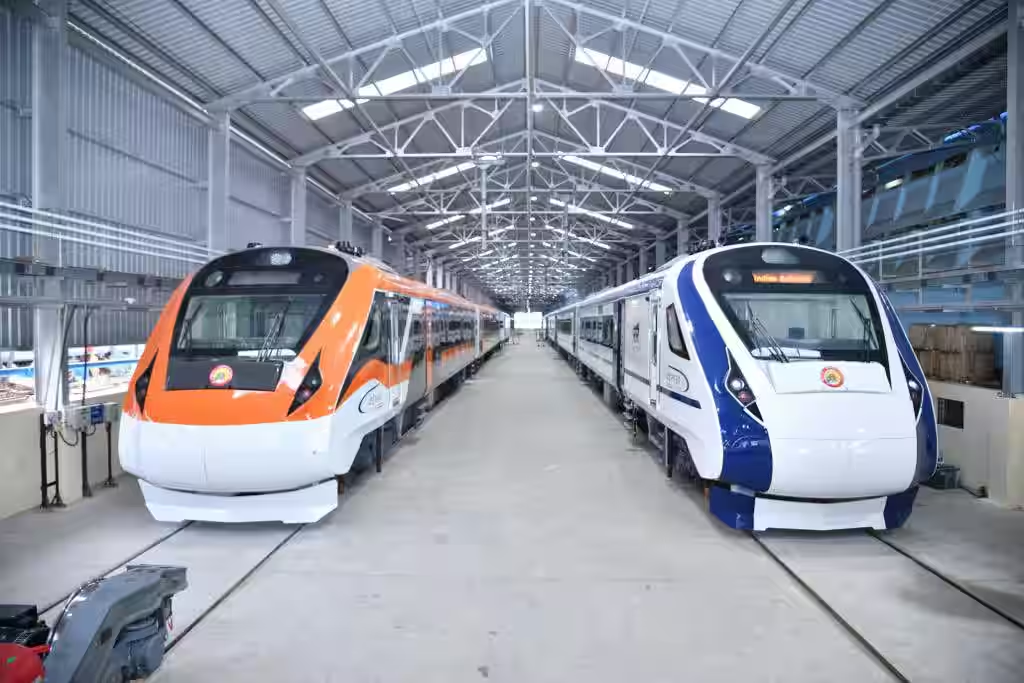
  • Vande Bharat Train: By 26 December 2025, the Vande Bharat programme had expanded to 164 train services across the Indian Railways network, which reflects its nationwide acceptance and operational maturity. During the calendar year 2025 alone, 15 new Vande Bharat Express services were introduced. 
  • Amrit Bharat trains are non-AC services introduced to improve travel conditions for passengers who rely on sleeper and general class coaches. In 2025, 13 Amrit Bharat Express services were added. With these additions, 30 Amrit Bharat trains are now running on the Indian Railways network.

The progress recorded over the past year reflects Indian Railwaysโ€™ steady efforts to strengthen its role in national development. The focus has extended beyond expanding routes to improving operational efficiency, safety standards, and service quality. Through sustained investment and system-level reforms, the rail network continues to support economic activity while responding to the growing demand for reliable and sustainable mobility. Railways has historically played a central role in Indiaโ€™s growth, and recent developments reaffirm its relevance in a changing transport landscape. 

Indiaโ€™s Metro Revolution

Much like the national rail network, Indiaโ€™s metro rail systems have emerged as a critical component of urban mobility. What began as a solution for a few large cities has gradually evolved into a reliable and widely accepted mode of transport for dense urban regions. As congestion intensifies and emissions rise due to increasing dependence on private vehicles, metro rail has proven its ability to move large passenger volumes efficiently while limiting environmental impact.

By 2025, Indiaโ€™s operational metro network crossed the 1,000 km mark, placing the country among those with the largest metro systems globally. Alongside this growth, several cities are planning new metro projects, while existing networks continue to expand toward suburban and peripheral areas to improve regional connectivity.

The scale and pace of this expansion during 2025 are reflected in the following key indicators.

Operational Metro Network in India

Metro Rail Projects Sanctioned between January and November 2025

New Metro Lines Commissioned in 2025

Expansion of Metro Services Across Cities

Key Operational Milestones in 2025

Opening of 1st Section of Delhi Metro Phase 4

Delhi Metroโ€™s Phase IV programme moved from planning to operations in January 2025 with the opening of its first completed section. During the year, a 2.8-km stretch between Janakpuri and Krishna Park was inaugurated. The section signals the start of the next phase of network expansion in Delhi.

Rithala-Kundli Expansion

Alongside the commissioning of the first Phase IV section, progress was also made on future corridors under Delhi Metroโ€™s expansion programme. During the year, the foundation stone was laid for the 26.5-km Rithala-Kundli corridor. The corridor will extend metro connectivity from Rithala in Delhi to Nathupur in Kundl.

Expansion of Ahmedabad Metro Phase 2 Services

Ahmedabad Metro Phase II is being developed as an extension of Phase I to strengthen connectivity between Ahmedabad and Gandhinagar. A major portion of the corridor became operational in September 2024, when 20.8 km of the 28.2-km alignment, along with 8 hstations covering the Motera-Mahatma Mandir and GNLU-GIFT City sections, was inaugurated in 2024. A 1.9 km route up to Sachivalaya was commissioned for passengers in April 2025. 

Indore Joined Indiaโ€™s Metro Network

Indore made its debut into Indiaโ€™s metro network in 2025 with the inauguration of the first phase of its Yellow Line. The initial section, designated as the Super Priority Corridor, was opened to passengers on 31 May 2025, which made metro rail services available to the city for the first time.

Indiaโ€™s Oldest Metro Continues to Expand 

Indiaโ€™s oldest metro system continued to expand in 2025 with the opening of new sections across the Green Line, Orange Line, and Yellow Line. These were all officially inaugurated on August 22, 2025.

The newly operational sections in 2025 are:

Line SectionLength
Green LineSealdah-Esplanade2.6km
Yellow LineNopara-Jai Hind Bimanbandar6.7km
Orange LineHemanta Mukhopadhyay- Beleghata4km

Inauguration of Bengaluru Metro Yellow Line 

Bengaluruโ€™s metro network continued to expand in 2025, which reflects the cityโ€™s growing reliance on rail-based urban transport. A key development during the year was the opening of the 19-km Yellow Line between RV Road and Bommasandra in August, adding an important north-south link to the system. The corridor has taken Bengaluruโ€™s operational metro length to 96 km.

Foundation Stone of Phase 3

Alongside this operational milestone, the city also moved into its next phase of expansion. The foundation stone for Bengaluru Metro Phase 3 was laid during the year, which signals the start of a โ‚น15,610-crore programme that will add more than 44 km of new lines with 31 elevated stations. Once completed, Phase 3 is expected to extend metro coverage to new growth areas and strengthen the overall reach of the network.

Gx mIbyWIAA241w 1536x1038 1

Mumbaiโ€™s Aqua Line Became Fully Operational

After years of construction and testing, one of Indiaโ€™s most complex metro projects, Mumbai Metro Line 3, became operational in October 2025. As the cityโ€™s first fully underground metro corridor, the 33.5-km line now provides end-to-end connectivity from Aarey JVLR to Cuffe Parade via BKC. Since commissioning, the corridor has begun to show its impact on urban travel patterns, recording a peak daily ridership of about 1.8 lakh passengers, with average daily ridership stabilising around 1.4 lakh.

Metro Services Commenced in Patna 

Patna entered Indiaโ€™s metro map in 2025 with the partial commissioning of its first corridor. On 6 October 2025, operations began on the 3.6-km Priority Corridor of the Blue Line, connecting New ISBT, Zero Mile, and Bhootnath stations.

Bhopal entered Indiaโ€™s Metro Club

Bhopal became part of Indiaโ€™s metro system in December 2025 with the formal inauguration of the Bhopal Metro, also known as the Bhoj Metro. The commercial operations began on 21 December 2025 on the stretch between Subhash Nagar and AIIMS Bhopal. 

The year 2025 proved to be a crucial period for Indiaโ€™s metro sector. Metro services were extended to 3 new cities, while network expansion continued across several existing systems. At the same time, new metro projects progressed in cities such as Visakhapatnam and Vijayawada, which shows a sustained momentum in urban rail development across the country.

Progress on Indiaโ€™s RRTS Network

The Delhi-Meerut RRTS Line, also known as the Namo Bharat Corridor acheived expansion and ridership milestones in 2025. It has extended its reach into Delhi.

1. Network Expansion

  • Entry into Delhi (Jan 5, 2025): Prime Minister Narendra Modi inaugurated a 13-km extension from Sahibabad to New Ashok Nagar. This brought the total operational length to 55 km with 11 functional stations.
  • Operational Stretch: As of now, the corridor provides semi-high-speed connectivity spanning 55km from New Ashok Nagar (Delhi) to Meerut South (UP).

2. Ridership and Performance Milestones

  • 2 Crore Commuter Trips: By December 2025, the Namo Bharat RRTS surpassed a cumulative 20 million passenger journeys since its October 2023 launch.
  • Ridership Surge: Monthly footfall peaked at nearly 15 lakh commuters by mid-2025, with single-day ridership records exceeding 81,500 passengers.

3. Awards and Sustainability

Global Recognition: NCRTC was conferred with the UITP Award 2025 for Public and Urban Transportation Strategy, along with the Gold Award at the National Awards for e-Governance 2025.

Green Energy: On the sustainability front, NCRTC launched a pilot โ€˜Solar on Trackโ€™ initiative at the Duhai Depot and secured a Platinum rating for the Anand Vihar underground station from the Indian Green Building Council.

PIB Sanctions 2 New RRTS Lines for NCR

In November 2025, the Public Investment Board (PIB) approved two new Regional Rapid Transit System (RRTS) corridors for the National Capital Region (NCR). The new RRTS lines are:

RRTS LineLengthEstimated Cost
Sarai Kale Khan-Bawal93kmRs 320bn
Sarai Kale Khan- Karnal136kmRs 330bn

High-Speed Rail Development in India

Indiaโ€™s first bullet train project has started taking shape. The 508 km-long high-speed rail corridor will connect Mumbai and Ahmedabad through 12 stations. The first section of this corridor is expected to be operational by mid-2027. 

  1. Project Progress Overview

Construction Progress

Bridges & Structures Completion

Milestones Completed in 2025

Historic Milestone Major Tunnel
  • Completion of First Underground Tunnel

In September 2025, the bullet train project reached a crucial milestone with the completion of the 4.88 km undersea tunnel connecting Ghansoli and Shilphata. This achievement signaled the successful conclusion of one of the most challenging sections of the alignment.

Mountain Tunnel Breakthrough

The first mountain tunnel breakthrough was achieved in the nearly 1.5-kilometer-long Mountain Tunnel-5 (MT-5) in the Palghar district of Maharashtra.

Construction Progresses on 7 Mountain Tunnels in Maharashtra

Tunnel IDLength (metres)Current Status / Progress
MT-182015% completed
MT-2228Preparatory works underway
MT-31,40335.5% completed
MT-41,26031% completed
MT-645435% completed
MT-741728% completed
Total6,000Seven mountain tunnels under construction

This progress reflects the steady momentum of Indiaโ€™s first bullet train project towards completion. Despite earlier delays, the project has continued to maintain its pace. According to Railway Minister Ashwini Vaishnaw, the first section will open between Surat and Bilimora in Gujarat in 2027, followed by two more sections Vapi to Surat and Vapi to Ahmedabad.

Conclusion

As India moves into 2026, the developments of the past year point to a gradual but clear evolution in the countryโ€™s rail mobility framework. The focus is no longer limited to adding new routes or announcing projects, but to strengthening systems, improving safety, and ensuring that investments translate into reliable and efficient operations. Progress across Indian Railways, metro networks, RRTS corridors, and the high-speed rail project reflects this shift towards integration, capacity building, and long-term sustainability. The advancements in indigenisation, electrification, station redevelopment, and modern rolling stock indicate a more structured approach to meeting growing mobility demands. At the same time, the expansion of metro and regional rail services into new cities highlights the increasing role of rail-based transport in urban and regional planning. While execution challenges will continue to test institutions, the direction taken during 2025 suggests a more mature and outcome-oriented rail ecosystem that is well established to support economic activity, urban growth, and environmental goals in the years ahead.

Delhi Metro: DMRC Invites Tenders for Miscellaneous Civil Works in Saket-G -Sangam Vihar Section

DELHI (Metro Rail News): Delhi Metro Rail Corporation has invited bids to carry out miscellaneous civil works from Saket-G to Sangam Vihar station of the Golden Line.

Tender Overview

Contract NumberDC-04F
Scope of WorkMiscellaneous Civil Works from Saket-G to Sangam Vihar for Interface Activities to Assist ROD Timelines
Approximate Costโ‚น9.90 crore (inclusive of 18% GST)
Completion Period12 months
Tender Securityโ‚น0.99 lakh
Document Costโ‚น23,600 (inclusive of 18% GST, non-refundable)
Document Sale PeriodMarch 10 to April 9, 2026 (up to 15:00 hrs)
Clarification DeadlineMarch 20, 2026 up to 17:00 hrs
Pre-Bid MeetingMarch 23, 2026 at 11:00 hrs (video conference)
Addendum DeadlineMarch 27, 2026
Bid Submission PeriodApril 2-9, 2026 (09:00-15:00 hrs)
Bid OpeningApril 10, 2026 at 15:00 hrs

Interface Activities and ROD Significance

The contract focuses on miscellaneous civil works essential for coordinating interface activities between multiple subsystems along the Saket-G to Sangam Vihar section. Interface works address physical, operational, and technical coordination requirements where different systems, structures, or contractors’ scopes interact, ensuring seamless integration necessary for Ready for Operation Date (ROD) compliance.

Saket-Sangam Vihar Section 

The Saket-G to Sangam Vihar section represents an important component of Delhi Metro’s network expansion, providing rapid transit connectivity to southern Delhi neighbourhoods. Sangam Vihar, one of Delhi’s largest unauthorised colonies with significant population density, benefits tremendously from metro connectivity, improving accessibility, reducing commute times, and supporting economic development.


Discover how AI is bringing the next phase of sustainable urban rail mobility for Viksit Bharat at InnoMetro 2026, Indiaโ€™s prime exhibition and conference for metro & railways, which is going to be held on 21-22 May 2026 at Bharat Mandapam, New Delhi.

Register Now: https://zma.page/ek9

USBRL Project: Konkan Railway Invites Bids for Electrification Works on Katra-Banihal Section

JAMMU & KASHMIR (Metro Rail News): Konkan Railways has invited e-tenders for comprehensive maintenance works of railway electrification infrastructure in the Katra (Excl.) to Banihal (Excl.) section of the Udhampur-Srinagar-Baramulla Rail Link (USBRL) project in Jammu & Kashmir. 

The comprehensive maintenance contract ensures sustained operational reliability and safety of electrification infrastructure across one of India’s most challenging railway sections, traversing difficult Himalayan terrain in Jammu & Kashmir.

Tender Overview

Tender NumberKR-PD-JK-EL-CMC-RE-KB-3
Project SectionKatra (Excl.) to Banihal (Excl.), USBRL Project, J&K
Contract Period60 months (5 years)
Contract Valueโ‚น73,21,82,745.45 (approximately โ‚น73.22 crore)
Earnest Money Depositโ‚น38,10,900 (online payment only via IREPS)
Pre-Bid ConferenceMarch 16, 2026 at 11:00 hrs (video conference)
Bidding Start DateMarch 21, 2026
Tender Closing DateApril 4, 2026 at 12:00 hrs
Bid Validity60 days from closing date

Scope of Work: Comprehensive Maintenance (Breakdown/ Preventive) Works Of Railway Electrification Works Including Rocs & Focs System For 05 Years In The Katra (Excl.) To Banihal (Excl.) Section Of Udhampur-Srinagar- Baramulla Rail Link Project, Jammu & Kashmir 

USBRL Project Significance

The Udhampur-Srinagar-Baramulla Rail Link represents one of India’s most ambitious and challenging railway projects, connecting the Kashmir Valley with the rest of the Indian railway network. The Katra-Banihal section traverses extremely difficult Himalayan terrain including the world’s highest railway bridge at Chenab, numerous tunnels through unstable geology, and sections vulnerable to extreme weather, landslides, and seismic activity.

Railway electrification infrastructure in this section operates under uniquely challenging conditions.

Discover how AI is bringing the next phase of sustainable urban rail mobility for Viksit Bharat at InnoMetro 2026, Indiaโ€™s prime exhibition and conference for metro & railways, which is going to be held on 21-22 May 2026 at Bharat Mandapam, New Delhi.

Register Now: https://zma.page/ek9

Vijayawada Metro: A New Dimension in Urban Rail Mobility

Introduction 

Vijayawada, also known as Bezawada, is the second-largest city and a prominent commercial centre in the Indian state of Andhra Pradesh. It forms a vital part of the Andhra Pradesh Capital Region and is strategically located on the banks of the Krishna River. The city is widely known for the famous Kanaka Durga Temple, an important Hindu shrine that attracts millions of devotees each year. Vijayawada is often regarded as the commercial, political, cultural, and educational capital of the state. In recent years, Vijayawada has emerged as one of Indiaโ€™s fastest-growing urban areas. Reflecting its rapid development, an Oxford Economics report has ranked the city among the top ten fastest-growing cities in the world.

Factors Leading to the Development of the Vijayawada Metro

image 5

                     Vijayawadaโ€™s Total Population By Year

1. Rapid Population Growth: The graph shows a steady and sharp rise in Vijayawadaโ€™s population from 1950 to 2025. This growth was mainly due to rapid urbanisation and migration to the city for jobs and education. This growth substantially raised commuting demand, placing heavy pressure on the existing road network. Therefore, a reliable and high-capacity mass transit system like the Vijayawada Metro was necessary to meet future transport needs and support planned urban growth.

image 6

2. Rising Traffic Congestion: Vijayawada’s steadily growing population drove a surge in private vehicle ownership, which overwhelmed the city’s existing road network. This influx led to frequent traffic jams, extended commuting times, and severe congestion during peak hours. Policymakers also recognised that buses and auto-rickshaws alone could not meet long-term mobility demands. A metro rail system emerged as the preferred solution to address these challenges and alleviate road traffic in Vijayawada. 

Tracing the Evolution of the Vijayawada Metro 

  • 2014- 2015: The concept of a Vijayawada Metro gained momentum soon after the bifurcation of Andhra Pradesh, when Amaravati was planned as the new capital. During this period, the Detailed Project Report (DPR) was prepared for the Vijayawada Metro Project.
  • September 2015: The Andhra Pradesh government signed an agreement with the Delhi Metro Rail Corporation (DMRC) to implement Phase-1- a 26.03 km heavy-rail Mass Rapid Transit System (MRTS). DMRC subsequently invited civil construction bids for both proposed lines.
  • 2015โ€“2016: The DMRC cancelled the procurement process due to high project costs and projected low ridership.
  • 2017: The Vijayawada Metro project faced delays due to administrative changes and uncertainties in funding, which slowed the overall progress of the project.
  • 2017โ€“2018: ย The state government decided to switch from a heavy-rail system to a Light Rail Transit (LRT), aiming for a more cost-effective, flexible, and scalable solution for Vijayawada.
  • 2019: To reduce overall project costs and adjust the network for more realistic ridership projections, the project was revised and SYSTRA โ€“ RITES โ€“ GOPA JV submitted the Revised DPR for the project.
  • 2024: The state government approved the Detailed Project Report (DPR) of Vijayawada Metro Project.ย 

Vijayawada Metro: Addressing Urban Growth and Connectivity

image 10

Overview 

Vijayawada Light Metro is a Light Rail Transit (LRT) system which will be built in the city of Vijayawada and Amaravati, the new capital of Andhra Pradesh. Currently, the project is in the implementation stage. The project is being managed and implemented by the Andhra Pradesh Metro Rail Corporation (APMRC), formerly known as Amaravati Metro Rail Corporation (AMRC).

The Vijayawada Metro Rail Phase 1 project covers a total length of 38.4km via 2 corridors. The route details have been mentioned below: 

CorridorSectionLengthStations
Corridor-1PNBS โ€“ Gannavaram25.95 km22
Corridor-2PNBS โ€“ Penamaluru12.45 km12

Vijayawada Metro Route Detailsย 

Phase 1A Route

Line-2: Pandit Nehru Bus Station (PNBS) โ€“ Vijayawada Airport at Gannavaram

  • Length: 25.90 km
  • Type: Elevated (23 km) & underground (2.90 km)
  • Number of Stations: 22

Phase 1B Route

Line-1: Pandit Nehru Bus Station (PNBS) โ€“ Penamaluru

  • Length: 12.76 km
  • Type: Elevated
  • Number of Stations: 12
  • Station Names: Pandit Nehru Bus Station, Museum, IG Stadium, DV Manor, Benz Circle, Autonagar Gate, Ravindra Bharati School, Gayatri JR College, Law College, Tadigadapa, Poranki and Penamaluru

Vijayawada Metro Phase 2 Route

Line-2: Pandit Nehru Bus Station (PNBS) โ€“ Amravati Reservoir

  • Length: 27.80 km
  • Type: Elevated (4.7 km) & Underground (23.1 km)
  • Number of Stations: 18
Recent Update on Vijayawada Metro Project 
In July 2025, Andhra Pradesh Metro Rail Corporation (APMRCL) floated a tender for the first civil contract worth Rs. 4150 Crores of the Vijayawada Metro Rail Project.The contract includes the design and construction of a 38.40 km viaduct, 1 Underground metro station and 32 Elevated Metro stations for Phase 1 of the Project. 

Impacts of Vijayawada Metro Projects 

image 8

1. Improved Urban Mobility: The Vijayawada Metro Project will substantially enhance urban mobility by providing efficient and seamless connectivity across the city. The project will link major residential areas with important commercial centers and transport hubs.The metro system will support balanced urban development and improve accessibility for students, workers, and businesses in Vijayawada. 

2. Minimising Traffic Congestion and Private Vehicle Usage: The Vijayawada Metro Project will reduce the traffic congestion by offering a fast, reliable, and efficient public transport alternative. With improved connectivity, the commuters will be encouraged to shift from private vehicles to metro services. This shift will decrease the number of cars and two-wheelers on busy roads, especially during peak hours. The reduced road traffic will lead to smoother vehicle movement, fewer traffic jams, and lower travel stress for commuters.

image 7

3. Environmental Sustainability: The establishment of the Vijayawada Metro system will contribute to a cleaner, more organised, and sustainable urban transport network. By reducing dependence on private vehicles, the metro will help lower fuel consumption and decrease harmful vehicular emissions, leading to improved air quality. 

4. Impact on Real Estate and Economic Growth: The Vijayawada Metro Project is expected to stimulate real estate development and boost economic growth across the city. Improved connectivity around metro corridors will increase property demand, encourage commercial investments, and promote the development of residential and business hubs. Additionally, the project will also generate employment during construction and operation phases, boosting local income levels. Furthermore, enhanced mobility will also support the business expansion and commercial activity, contributing to the overall economic development of the city.

Conclusion 

The Vijayawada Metro Project represents a transformative step in the cityโ€™s journey toward becoming a modern, sustainable, and well-connected urban center. As Vijayawada continues to experience rapid population growth, rising travel demand, and increasing pressure on its road infrastructure, the metro system will emerge as a strategic solution to address long-term mobility challenges. By integrating key residential zones, commercial districts, educational institutions, and transport hubs, the Vijayawada Metro will substantially improve accessibility and reduce dependence on private vehicles. Once operational, the Vijayawada Metro Project will reshape the cityโ€™s mobility landscape.


Witness the innovations & AI- powered solutions in railway & metro systems from over 200 exhibitors at the 6th edition of InnoMetro. Join Indiaโ€™s dedicated show for the rail transit sector which is going to held on 21-22 May 2026 at Bharat Mandapam, New Delhi

Register now: https://innometro.com/visitor-registration/

DMRC Announces L1 for Ticket Vending Services Contract for Chennai Metro Phase-II

NEW DELHI (Metro Rail News):ย Delhi Metro Rail Corporation (DMRC) has announced the lowest bidders for a contract that entails providing ticket vending services at various metro stations of Chennai Metro Rail Limited (CMRL) Phase-II. The contract, bearing Award No. DMRC/CMRL/Phase-II/TVS/2025/01 and dated 9 March 2026, was procured by DMRC on behalf of CMRL.

Two bidders JMD Consultants and Nuvision Commercial and Escort Services (NCES) submitted identical quotes of โ‚น31,76,73,820, both emerging as L1.

Contract Details at a Glance

Award No.DMRC/CMRL/Phase-II/TVS/2025/01
Tender / e-Tender ID2025_DMRC_889290_1
Technical Bid Opening24 February 2026
Technical Evaluation Date9 March 2026
Financial Bid Opening9 March 2026
Contract Date9 March 2026
Contract Amountโ‚น31,76,73,820
No. of Bidders4 (2 technically qualified)
Tender AuthorityDelhi Metro Rail Corporation Limited (DMRC)

Bidding Process

Technical bids were opened on 24 February 2026. Of the four bidders who submitted proposals, two BVG India Limited and Godawari Farms and Services, were rejected at the technical evaluation stage for being technically non-compliant. Technical evaluation was completed on 9 March 2026, and financial bids of the two qualified bidders were opened the same day.

S.No.BidderBid AmountStatus
1Nuvision Commercial and Escort Services (NCES)โ‚น31,76,73,820L1
2JMD Consultantsโ‚น31,76,73,820L1
3BVG India Limitedโ€”Rejected โ€” Technically Non-Compliant
4Godawari Farms and Servicesโ€”Rejected โ€” Technically Non-Compliant

Scope of Work: Providing Ticket Vending Services toDelhi Metro Rail Corporation (DMRC) for Phase-II of Chennai Metro Rail Limited(CMRL)


Discover how AI is bringing the next phase of sustainable urban rail mobility for Viksit Bharat at InnoMetro 2026, Indiaโ€™s prime exhibition and conference for metro & railways, which is going to be held on 21-22 May 2026 at Bharat Mandapam, New Delhi.

Register Now:ย https://zma.page/ek9

Vande Bharat Express Train: Driving Rail Modernization Through Make in India

Introduction 

Indian Railways, one of the largest rail networks globally with over 68,000 kilometers of route, has served as the foundation of India’s transportation system for decades. It supports economic development by enabling efficient movement of goods and passengers while promoting social and cultural integration across diverse regions of the country. As passenger demand evolved toward faster, safer, and more comfortable travel, Indian Railways recognized the need to modernize its rolling stock and adopt advanced, indigenous technologies to sustain its role as the backbone of national transportation.

In response, Indian Railways introduced the Vande Bharat Express, Indiaโ€™s first indigenously designed and manufactured semi-high-speed train, developed entirely under the Make in India initiative. The launch of Vande Bharat marked a major milestone in Indiaโ€™s journey toward self-reliance in advanced railway technology, setting new benchmarks in speed, safety, energy efficiency, and passenger-focused design while showcasing the nationโ€™s growing engineering and manufacturing capabilities.

Indiaโ€™s Journey Toward High-Speed Rail Development

In 1960, the Railway Board of India initiated detailed studies to improve train speeds, which at the time were restricted to about 96 km/h on broad gauge routes. A phased speed enhancement program was introduced, with an initial target of 120 km/h and a long-term objective of reaching 160 km/h.
ย 

In 1969, the Rajdhani Express was introduced with diesel locomotives, marking Indiaโ€™s first premium high-speed train service and operating at speeds of up to 120 km/h.

Further progress was made in 1988 with the launch of the Shatabdi Express, hauled by WAP-1 electric locomotives, which increased operational speeds to around 130 km/h. 

The evolution culminated on 15 February 2019 with the launch of the Vande Bharat Express, Indiaโ€™s first indigenous semi-high-speed train, operating on the New Delhi-Kanpur-Allahabad-Varanasi route.

image 21

Vande Bharat Express : A New Era in Indian Railways

The Vande Bharat Express, earlier known as Train 18, is Indiaโ€™s first indigenous semi-high-speed train and a major milestone in the history of Indian Railways. The Vande Bharat Express is designed for a maximum operational speed of 160 kmph and tested up to 180 kmph, representing a substantial step toward modernizing the nationโ€™s rail network.The train offers Shatabdi-like travel classes with improved passenger amenities, delivering a superior travel experience focused on speed, safety, and service.

The Vande Bharat Express, Indiaโ€™s first indigenous semi-high-speed train, was entirely designed and manufactured at the Integral Coach Factory (ICF) in Chennai within just 18 months, showcasing the nationโ€™s advanced engineering capabilities. This landmark project reflects the Government of Indiaโ€™s strong commitment to the โ€˜Make in Indiaโ€™ campaign.

image 23

Features and Amenities of Vande Bharat Express

1. Passenger Comfort and Convenience: Vande Bharat Express ensures a smooth and enjoyable journey with multiple passenger-centric features which have been mentioned below: 

  • Bio-vacuum toilets for high hygiene standards.
  • Dual-mode lighting: general diffused illumination and personal lighting for each seat.
  • Pantry services in every coach offering hot meals, hot and cold beverages.
  • High insulation to minimize noise and maintain a comfortable temperature inside the coaches.
  • Fully sealed gangways and sensor-controlled interconnecting doors to provide a dust-free environment.
  • An improved air-conditioning system ensures comfortable travel in all weather conditions.

2. Modern Coaches: The train features 16 air-conditioned coaches, including 2 executive class coaches, accommodating a total of 1,128 passengers. The design shifts all electrical equipment below the coaches, increasing seating capacity compared to conventional trains. Furthermore, All coaches have automatic doors for enhanced safety and convenience.

3. Advanced Technology: The Vande Bharat Express integrates cutting-edge technology to provide a smarter and more convenient travel experience. It features a GPS-based audio-visual passenger information system that keeps travelers updated throughout the journey, while the onboard Wi-Fi hotspot allows passengers to stay connected and entertained. 

4. Safety Features: Passenger safety is a top priority on the Vande Bharat Express. The train is equipped with a regenerative braking system that ensures precise acceleration and deceleration for smooth and safe travel. Additionally, fire survival cable indoor circuits are installed to provide extra protection during emergencies, ensuring a secure journey for all passengers.

5. Accessibility for All:  The train is designed with Divyang-friendly facilities, ensuring accessibility and convenience for differently-abled passengers.

Vande Bharat 2.0: Indiaโ€™s High-Speed Rail Revolution

image 19

Building on the success of the Vande Bharat Express, Indian Railways unveiled the next-generation version, Vande Bharat 2.0, designed to deliver faster, safer, and more comfortable rail travel across India. The Vande Bharat 2.0 was developed during the challenging period of the COVID-19 pandemic.This upgraded train incorporates advanced technologies and enhanced passenger amenities to further strengthen Indiaโ€™s semi-high-speed rail capabilities.

Development and Production

  • On 21 January 2021, M/s Medha Servo Drives Ltd. received a contract worth โ‚น2,211 crore from Indian Railways to manufacture 44 Vande Bharat 2.0 trains, each comprising 16 coaches. This marked a substantial step in Indiaโ€™s โ€œMake in Indiaโ€ initiative, emphasizing domestic engineering excellence and self-reliance in railway manufacturing.

First Vande Bharat 2.0 

  • The first Vande Bharat 2.0 trainset was flagged off by Prime Minister Shri Narendra Modi on 30 September 2022, traveling from Gandhinagar to Mumbai, signifying a major milestone in Indiaโ€™s rail modernization journey.

Vande Bharat 3.0 : A New Definition of Comfort, Safety & Speed

image 20

The Vande Bharat Sleeper Trains 3.0, the sleeper version of Vande Bharat, have been specifically developed to cater to long-haul overnight journeys. The Indian Railways aims to revolutionize overnight rail travel for millions of passengers across the country by the sleeper variant of the Vande Bharat series,   Developed under the Make in India initiative, Vande Bharat 3.0 reflects Indiaโ€™s ambition to offer world-class overnight rail services. 

First Contract for Vande Bharat Sleeper Trainsets

  • On 23 May 2023, BEML secured a โ‚น675-crore contract from the Integral Coach Factory (ICF), Chennai, for the manufacture of the first 10 Vande Bharat Sleeper trainsets.

Flag-Off of Indiaโ€™s First Vande Bharat Sleeper Trainset

  • On 1 September 2024, the Honโ€™ble Union Minister for Railways, Shri Ashwini Vaishnaw, flagged off Indiaโ€™s first Vande Bharat Sleeper trainset at BEMLโ€™s Bangalore rail complex. The sleeper version was designed by a dedicated team of engineers at ICF, while manufacturing was undertaken by BEML, a public sector enterprise formerly known as Bharat Earth Movers Limited.

Prototype Unveiling and Manufacturing Completion

  • In October 2024, the Integral Coach Factory (ICF) unveiled the prototype of the Vande Bharat Sleeper rake in Chennai. Subsequently, ICF completed the manufacturing of Indiaโ€™s first Vande Bharat Sleeper trainset on 17 December 2024.
image 22

Indian Railways to Launch First Vande Bharat Sleeper on Patna-Delhi Route

Indian Railways is preparing to introduce the countryโ€™s first Vande Bharat Sleeper train on the Patna-New Delhi corridor, marking a major step forward in modern overnight rail services. Designed for long-distance travel, the new sleeper variant is expected to complete the nearly 1,000-kilometre journey in around eight hours, with a maximum operating speed of 160 kmph.

Trial operations for the train are in their final stages, and the official launch is likely before the New Year. The Patna-Delhi Vande Bharat Sleeper is planned to run six days a week and will feature 16 coaches equipped with a large number of berths. By deploying this train on one of the busiest rail routes in the country, Indian Railways aims to ease congestion while providing a premium travel option.

Prime Minister Flags Off Four New Vande Bharat Express Trains 

In November 2025, Prime Minister Shri Narendra Modi inaugurated four new Vande Bharat Express services from Varanasi, Uttar Pradesh, further strengthening Indiaโ€™s modern rail network. This launch represents a significant step toward the Prime Ministerโ€™s vision of delivering faster, safer, and more comfortable travel through world-class railway infrastructure.

The newly introduced Vande Bharat Express trains will connect Banaras-Khajuraho, Lucknow-Saharanpur, Firozpur-Delhi, and Ernakulam-Bengaluru, offering passengers a swift and premium travel experience.

cbc27c69 2bf7 445e 8877 77c82f145064

Expansion of Vande Bharat Express Services Across India

  • As of December 2025, Indian Railways has operationalized 164 world-class Vande Bharat Express train services, connecting major cities across the nation. These semi-high-speed trains have substantially enhanced intercity connectivity and passenger comfort. Of the total services currently in operation, 24 Vande Bharat Express trains serve stations in the state of Maharashtra, highlighting the stateโ€™s important role in Indiaโ€™s modern rail network.

Government of Indiaโ€™s Vision for 400 Vande Bharat Trainsets

  • In the Union Budget 2022- 23, Honโ€™ble Finance Minister Smt. Nirmala Sitharaman announced an ambitious plan to develop and manufacture 400 new-generation Vande Bharat trains within three years. These trains are designed to offer improved energy efficiency, advanced technology, and a superior riding experience, reinforcing the Government of Indiaโ€™s commitment to transforming railway infrastructure and passenger services nationwide.ย 

Conclusionย 

The Vande Bharat Express has emerged as a cornerstone of Indiaโ€™s railway modernization, reflecting a clear shift from conventional rail operations to advanced, indigenous technology. Developed under the Make in India initiative, the Vande Bharat Express has set new standards in speed, safety, energy efficiency, and passenger comfort on key intercity routes. The steady progression from the Vande Bharat Express to Vande Bharat 2.0 and the sleeper variant of Vande Bharat highlights Indian Railwaysโ€™commitment to continuous improvement and innovation. Each generation of Vande Bharat has addressed evolving passenger needs, ranging from faster daytime travel to efficient overnight long-distance journeys. With more than 160 Vande Bharat services already in operation and a national vision to introduce 400 next-generation trainsets, the Vande Bharat Express has become a key instrument in transforming Indiaโ€™s rail infrastructure.


Discover how AI is bringing the next phase of sustainable urban rail mobility for Viksit Bharat at InnoMetro 2026, Indiaโ€™s prime exhibition and conference for metro & railways which is going to held on 21-22 May 2026 at Bharat Mandapam, New Delhi

Register now: https://innometro.com/visitor-registration/

Kochi Metro Floats Tender for Telecommunication System in Phase-IIย 

KOCHI (Metro Rail News): Kochi Metro Rail Limited has invited bids for the design, manufacture, supply, installation, testing, and commissioning of a comprehensive telecommunication system for Phase-II of the Kochi Metro Rail Project.ย 

Tender Overview

Tender NumberKBTL1/2026
Tender Issue DateMarch 9, 2026
KMRL Reference NumberKMRL/PROC/TENDER/2025-26/103
Scope of WorkDesign, Manufacture, Supply, Installation, Testing & Commissioning of Telecommunication System
Completion Period21 months from date of LOA issuance
Document DownloadFrom March 9, 2026 
Document Costโ‚น23,600 (including GST + processing fee, non-refundable)
Pre-Bid MeetingMarch 17, 2026 at 11:00 hrs (physical + video conference)
Query DeadlineMarch 23, 2026 by 17:00 hrs (Format per Form 11)
EMDโ‚น86,50,000 (no MSE exemption)
Clarification Reply DateOn or before March 27, 2026
Bid Submission DeadlineApril 6, 2026 @ 15:00 hrs
Technical Bid OpeningApril 7, 2026 at 15:30 hrs

Scope of work: Design, Manufacture, Supply, Installation, Testing, and Commissioning of Telecommunication System for Phase-II of Kochi Metro Rail Project.

Kochi Metro Phase 2 (Pink Line) is an 11.2 km, 11-station elevated corridor connecting JLN Stadium to Infopark via Kakkanad. As of March 2026, construction is nearing 50% completion with viaduct installation underway.ย 

Also Read: Kochi Metro Invites Bids for Heavy-Duty Escalators for Phase-II


Discover how AI is bringing the next phase of sustainable urban rail mobility for Viksit Bharat at InnoMetro 2026, Indiaโ€™s prime exhibition and conference for metro & railways, which is going to be held on 21-22 May 2026 at Bharat Mandapam, New Delhi.Register Now: https://zma.page/ek9

Kochi Metro Invites Bids for Heavy-Duty Escalators for Phase-IIย 

KOCHI (Metro Rail News): Kochi Metro Rail Limited has issued an invitation for bids for the design, manufacturing, supply, installation, testing, and commissioning of heavy-duty escalators for Phase-II of the Kochi Metro Rail Project. 

The comprehensive package encompasses complete end-to-end responsibility from conceptual design through final commissioning, ensuring seamless integration of escalator systems with Phase-II stations. 

Tender Overview

Tender NumberKBE-03/2026
Tender Issue DateMarch 9, 2026
KMRL Reference NumberKMRL/PROC/TENDER/2025-26/105
Scope of WorkDesign, Manufacturing, Supply, Installation, Testing & Commissioning of Heavy-Duty Escalators
EMDโ‚น 45,26,000
Completion Period18 months from date of LOA issuance
Tender Document Costโ‚น23,600 (including GST + processing fee, non-refundable)
Pre-Bid MeetingMarch 19, 2026 at 11:00 hrs (physical + video conference)
Tender Securityโ‚น45,26,000 (no MSE exemption)
Addendum DeadlineMarch 27, 2026
Bid Submission DeadlineApril 6, 2026 @ 15:00 hrs
Technical Bid OpeningApril 7, 2026 at 15:30 hrs

Contract Scope

Design, Manufacturing, Supply, Installation, Testing & Commissioning of Heavy Duty Escalators for Phase II of The Kochi Metro Rail Project.

Kochi Metro Phase-II Context

Kochi Metro Phase 2 (Pink Line) is an 11.2 km, 11-station elevated corridor connecting JLN Stadium to Infopark via Kakkanad. As of March 2026, construction is nearing 50% completion with viaduct installation underway. Phase-II of the Kochi Metro Rail Project represents a significant expansion of Kerala’s first operational metro system, extending rapid transit connectivity to additional neighborhoods and activity centers across Greater Kochi. 


Discover how AI is bringing the next phase of sustainable urban rail mobility for Viksit Bharat at InnoMetro 2026, Indiaโ€™s prime exhibition and conference for metro & railways, which is going to be held on 21-22 May 2026 at Bharat Mandapam, New Delhi.

Register Now: https://zma.page/ek9

Chennai Metro Phase 2: TDC Contracting Wins โ‚น92.10 Cr E&M Contract for Nine Stations on Line 3

CHENNAI (Metro Rail News): Chennai Metro Rail Limited (CMRL) has announced the TDC Contracting Private Limited as the lowest bidder for a contract which involves the supply, installation, testing, commissioning, and training of electrical, fire alarm and detection, fire fighting, ventilation and air conditioning (VAC), and building management system (BMS) works at nine elevated stations from Sholinganallur Lake to SIPCOT 2 Station, including stabling lines, on Corridor-3 of Chennai Metro Rail Project Phase-II.

Bidder Details

RankBidderEvaluated Bid (incl. GST)
L1TDC Contracting Private Limitedโ‚น92,10,45,357.44
L2Toyota Tsusho India Pvt. Ltd.โ‚น1,04,66,43,000.96
L3Universal MEP Projects & Engineering Services Ltd.โ‚น1,18,24,86,604.66
L4Jakson Limitedโ‚น1,32,05,83,919.13

Notably, Universal MEP offered an 8.94% discount on their quoted price and Toyota Tsusho a 2% discount, yet TDC Contracting’s base quote of โ‚น74,66,48,608 (ex-GST) remained the lowest across all evaluated bids. The three competing bidders were rejected at the financial evaluation stage. The award was signed by the Director (Systems and Operation), CMRL.

Project Context

The nine-station stretch from Sholinganallur Lake to SIPCOT 2 covers a high-density commuter corridor along Chennai’s OMR (Old Mahabalipuram Road) a major IT and industrial spine. The E&M systems package is critical to making the stations operationally ready, covering passenger safety systems (fire detection and fighting), environmental control (VAC), and integrated building management. The stabling lines at this location will support rolling stock maintenance and berthing for this section of Corridor-3.


Discover how AI is bringing the next phase of sustainable urban rail mobility for Viksit Bharat at InnoMetro 2026, Indiaโ€™s prime exhibition and conference for metro & railways, which is going to be held on 21-22 May 2026 at Bharat Mandapam, New Delhi.

Register Now: https://zma.page/ek9

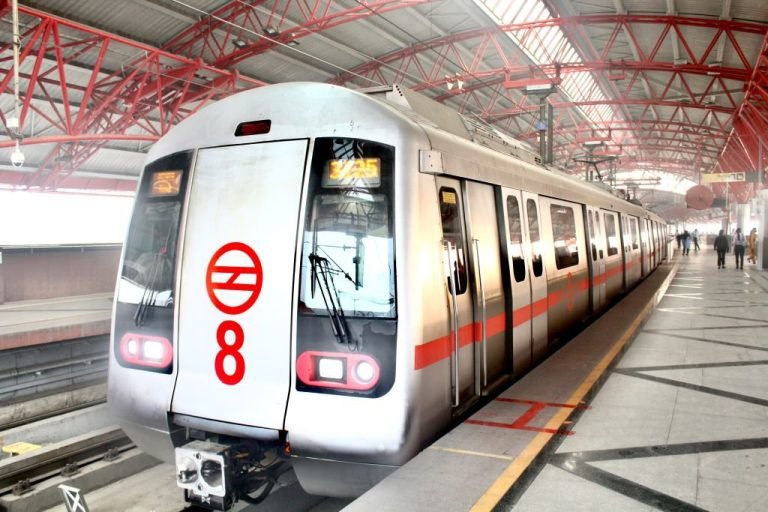
Delhi Metro Line 7 and Line 8 Extension Commences Revenue Service with Alstomโ€™s Trains and Signalling System

DELHI (METRO RAIL NEWS): Alstom, global leader in smart and sustainable mobility, joined Delhi Metro Rail Corporation (DMRC) ย in celebrating the commencement of revenue service on Delhi Metro Line 7 and Line 8 extensions, with the opening of Majlis Park to Maujpur (Line 7 โ€“ Pink line) and Majlis Park to Deepali Chowk which in future will be extended up to RK Ashram and Janakpuri (Line 8 โ€“ Magenta line).

Alstom is supplying modern Metropolis metro trainsets for both Lines’ extensions along with signalling system for Line 7 extension which will contribute to further enhance seamless, sustainable connectivity for commuters across the National Capital Territory. The current section of Line-8 extension is strategically important as this provides interchangeability to three lines of Delhi Metro Network Yellow line (at Badli), Red Line (at Madhuban Chowk) and Pink Line (at Majlis Park).

Commenting on this milestone, Olivier Loison, Managing Director, Alstom India said, โ€œWe are honoured and proud to be a long-standing partner of DMRC through its journey of becoming one of the worldโ€™s largest metro networks today. Together, we are committed to providing a safe, efficient, and environmentally friendly travel experience to commuters and the Magenta and Pink line extension will truly enhance DMRCโ€™s neural metro network connectivity in the regionโ€.

As a part of a larger โ‚ฌ312 million contract Alstom is currently supplying 312 cars for Delhi Metro Phase IV. These 100% made-in-India driverless (trains are designed for a 95 kph safe speed and 85 kph operational speed. Alstom’s long-standing partnership with DMRC has seen the delivery of more than 800 metro cars already in service across the Delhi Metro network. The comfortable Metropolis trainsets enabling this new service are entirely manufactured at Alstom’s state-of-the-art facility in Sricity, Andhra Pradesh, its largest urban rolling stock manufacturing site in Asia. The metro trains are designed for high recyclability and low energy consumption, supporting sustainable urban mobility.

Alstom has also deployed Urbalis Flo, signalling system, a Communications Based Train Control (CBTC) system for Line 7 extension. This state-of-the-art technology is designed to operate the trains in the future with Grade of Automation (GOA) 4 driverless features. With the operation of the extension to existing Line 7, also called the Pink Line, will become the first circular line in the Delhi Metro Network and also the longest metro line with the highest Unattended Train Operation level (GoA4) in India.

Recently, Alstom has strengthened its collaboration with Delhi Metro Rail Corporation (DMRC) by securing a 10-year maintenance contract for Lines 1 & 2, encompassing comprehensive annual maintenance of trains, machinery, plant systems, and housekeeping at DMRCโ€™s Badli depot. 

Alstom has also partnered with DMRC for several other projects, including successful implementation of supply and commissioning of train control and signalling system for DMRCโ€™s Red line(L1), (Yellow Line (L2), Green Line (L5), Violet Line (L6), Pink Line (L7) during Phase I, II & III. Alstom has also delivered metro trains and rail solutions for other Indian cities such as Chennai, Mumbai, Lucknow, Kochi, Agra, Kanpur, Bhopal and Indore. Recently, Alstom has also delivered world-class trains and signalling solutions for Indiaโ€™s first semi-high-speed regional rail network, NCRTC-RRTS, connecting Delhi โ€“ Ghaziabad โ€“ Meerut.

About Alstom in India

Alstom is the only multinational sustainable mobility provider in India, to have a comprehensive portfolio of offerings to meet customer specific needs and continues to be a strategic partner in supporting Indiaโ€™s rail revolution. With 6 industrial sites and 5 major engineering centres, the company caters to domestic as well as international project needs with its world class rolling stock, components, signalling and services solutions. Fully aligned with the countryโ€™s vision of Make-in-India and Atmanirbhar Bharat, Alstom remains deeply committed to strengthening its local sourcing and supply chain ecosystem.