Home Blog Page 26

Western Dedicated Freight Corridor completed: A big shift in Indiaโ€™s logistic sector

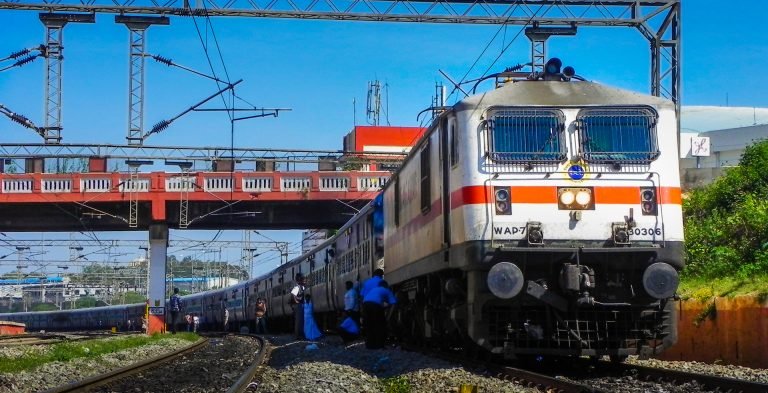
DFCCIL has achieved a historic milestone in rail freight by conducting successful trials on the JNPT-New Saphale (Vaitarna), which is the lastย  102 km section of the Western Dedicated Freight Corridor, on 31st March 2026. This trial run on the last section signals the completion of the entire WDFC.

The trial itself was operationally straightforward: two container trains ran simultaneously in opposite directions at 11:50 hrs, one electric-hauled from JNPT toward New Saphale, one diesel-powered in the reverse direction.

Also Read: Milestone for Railways: ICF to roll out Indiaโ€™s first Vande Bharat Freight train for RDSO trials

Why this section matters disproportionately

The JNPT-Vaitarna stretch is not just the last piece of the WDFC puzzle; it is arguably the most strategically critical. JNPT handles roughly 55% of India’s containerised cargo. A direct, dedicated rail link to the freight corridor network means port dwell times can drop, and container movement can be decoupled from the chronically congested Mumbai road network.

According to DFCCIL, full commissioning of this section will reduce freight train transit times by nearly four hours a figure that may sound modest but has compounding effects on asset utilisation, rolling turnaround, and ultimately, the cost per tonne-kilometre that makes rail competitive against road.

India’s Railways has long struggled to hold its share in freight movement against an aggressive road transport sector. The modal share of rail in freight was once over 80% in the 1950s, but has declined steadily, hovering now under 30%. The DFC project was conceived precisely to reverse this trajectory by offering speed, reliability, and capacity that the legacy network burdened by passenger traffic simply cannot provide.

With both the Eastern and Western corridors now approaching full operationalisation, the network effect begins to kick in and that is where the real economic argument lies.

The trial run is a technical green light, not a commercial one. The commissioning timeline, the tariff structure for port-linked freight, and the pace of private terminal development along the corridor will determine how quickly the WDFC translates from an engineering achievement into a logistics market disruptor. 


Discover how AI is bringing the next phase of sustainable urban rail mobility for Viksit Bharat at InnoMetro 2026, Indiaโ€™s prime exhibition and conference for metro & railways, which is going to be held on 21-22 May 2026 at Bharat Mandapam, New Delhi.

Register Now: https://zma.page/ek9

Kanpur Metro’s tunnelling work completed with TBM Parvati’s breakthrough at Double Pulia Station

KANPUR (Metro Rail News): Kanpur Metro’s underground construction journey has reached a landmark moment. The tunnelling work for the Kanpur Metro Phase 1 project has been officially completed with the final tunnel breakthrough of TBM Parvati at Double Pulia Station on March 30, 2026.

About the Breakthrough

Double Pulia Station is part of Corridor 2, which stretches approximately 8.38 km between Agriculture University and Barra-8. The completion of tunnelling on this corridor brings the Kanpur Metro project closer to its operational goals, with underground civil work now wrapped up.

HEqcXw0bIAA kgR

TBM Parvati, technically designated as S-840C, is a refurbished ร˜6.5m Herrenknecht mixed-shield Earth Pressure Balance (EPB) tunnel boring machine. It holds the distinction of being the 7th TBM commissioned for the underground tunnelling works of Kanpur Metro Phase 1.

This was not TBM Parvati’s first contribution to the project. In its earlier drive, the machine had successfully constructed a 750-metre tunnel for the upline stretch between Rawtapur and Kakedeo before being deployed for this final, decisive breakthrough at Double Pulia.

The tunnelling work was executed by KPILโ€“Gulermak JV under package KNPCC-11. The successful completion reflects the precision, technical expertise, and on-ground coordination of the teams involved in delivering one of Kanpur’s most ambitious urban infrastructure projects.

The completion of tunnelling is more than just a construction update  it signals that Kanpur Metro is firmly on track. With underground civil work now behind them, the focus shifts to systems installation, station finishing, and eventually trial runs. For a city long awaiting a modern mass transit solution, TBM Parvati’s final breakthrough is a moment that brings that reality closer.


Also Read: Milestone for Railways: ICF to roll out Indiaโ€™s first Vande Bharat Freight train for RDSO trials

Discover how AI is bringing the next phase of sustainable urban rail mobility for Viksit Bharat at InnoMetro 2026, Indiaโ€™s prime exhibition and conference for metro & railways, which is going to be held on 21-22 May 2026 at Bharat Mandapam, New Delhi.

Register Now: https://zma.page/ek9

Surat Metro trial runs begin between Dream City and Althan Tenement Station

SURAT (Metro Rail News): The Surat Metro project has gained momentum with Gujarat Metro Rail Corporation Limited (GMRCL) initiating the trial runs on the 8.5 km viaduct between Dream City and Althan Tenement Station on March 29. This elevated section is part of the first corridor, which spans 21.61 km between Sarthana and Dream City.

1774775484294
Image Credit: Er. Irshad Alam

The trials will run for approximately 15 days, during which all crucial components, including safety mechanisms, security protocols, and technical capabilities, will be thoroughly tested to ensure the system’s readiness for operations.

But that’s not the end of it. After internal trials wrap up, RDSO (Research Designs and Standards Organisation) and CMRS (Commissioner of Metro Rail Safety) will step in for their own thorough inspections covering the trains, tracks, infrastructure, and signalling systems. A green light from CMRS is mandatory before commercial operations can begin.

Progress So Far

Looking at the overall progress of the Surat Metro project, officials have confirmed that construction of 7 stations has been completed so far.

A Closer Look at Surat Metro Phase 1

Screenshot 2026 03 31 114553

Surat Metro Phase 1 covers a total length of approximately 40 km across two corridors. The first corridor stretches 21.61 km between Sarthana and Dream City, establishing connectivity between the northern and southern areas of Surat. The second corridor will cover a total length of 18.74 km between Bhesan and Saroli, connecting the eastern and western parts of the city.

Impact of Metro on Urban Development in Surat

The beginning of metro services will be a turning point in Surat’s overall urban growth. Metro operations across the city will reduce the reliance of commuters on private vehicles by offering a more convenient and comfortable mode of transport. The entire Phase 1 of the Surat Metro project is expected to be operational by late 2027.

Also Read: Milestone for Railways: ICF to roll out Indiaโ€™s first Vande Bharat Freight train for RDSO trials

Discover how AI is bringing the next phase of sustainable urban rail mobility for Viksit Bharat at InnoMetro 2026, Indiaโ€™s prime exhibition and conference for metro & railways, which is going to be held on 21-22 May 2026 at Bharat Mandapam, New Delhi.

Register Now: https://zma.page/ek9

MPMRCL floats โ‚น277.8 Cr tender for electrical & mechanical systems across 19 Bhopal Metro stations

BHOPAL (Metro Rail News): Madhya Pradesh Metro Rail Corporation Limited (MPMRCL) has invited e-tenders for the design, supply, installation, testing, and commissioning of Electrical and Mechanical systems, DG Sets, ECS, TVS & BMS/SCADA system across 19 stations of the Bhopal Metro Rail Project under Package BH-14.

The contract, valued at approximately โ‚น277.8 crore (inclusive of GST), covers 17 elevated stations and 2 underground stations, along with associated tunnel sections, cross passages, and ramps. 

Tender Details: 

ParameterDetails
Tender PackageBH-14
Issuing AuthorityMadhya Pradesh Metro Rail Corporation Limited (MPMRCL)
Approximate Costโ‚น277.8 Crore (Incl. GST, Excl. Custom Duties)
EMD / Tender Securityโ‚น2.78 Crore
Tender Feeโ‚น50,000 (Incl. GST, Non-Refundable)
Completion Period749 Days / 107 Weeks (Excl. DLP & CAMC)
Tender Documents AvailableMarch 28, 2026 โ€“ May 19, 2026
Last Date for QueriesApril 12, 2026 (by 18:00 hrs)
Pre-Bid MeetingApril 17, 2026 (at 15:30 hrs)
Last Date for AddendumMay 2, 2026
Tender Submission WindowMay 9 โ€“ May 19, 2026
Technical Bid OpeningMay 20, 2026 (at 16:30 hrs)

Scope of work: Design Verification, Detail Engineering, Supply, Installation, Testing & Commissioning of Electrical and Mechanical System, DG Sets, ECS, TVS & BMS/SCADA system for 17 Elevated Stations & 02 Under Ground Stations with Ancillary Building and associated Tunnel section, cross passages, ramps and two-years DLP (Defects Liability Period) followed by three-years of CAMC (Comprehensive Annual Maintenance Contract) of Bhopal Metro Rail Project.

Key Dynamics of the Bhopal Metro Project

Phase 1 of Bhopal Metro spans about 30km and features 2 metro lines, including the Orange Line and the Blue Line. In December 2025, the first section of Bhopal Metro Phase 1 became operational from AIIMS to Subhash Nagar. This 7km stretch is part of the Orange Line. The upcoming sections of the project will be opened in a phased manner. Amidst these developments, there is another emerging aspect of Bhopal Metro, which is cost overruns. The Bhopal Metro Phase 1 was initially planned to be built at โ‚น6,941 crore; the delays have pushed this cost to โ‚น10,000 crore, which is a major concern for the long term financial sustainability of the project. 

Also Read: Indore Metro opens bids for ECS, TVS & BMS systems for 9 UG stations

Also Read: Milestone for Railways: ICF to roll out Indiaโ€™s first Vande Bharat Freight train for RDSO trials

Also Read: Bhopal Metro floats โ‚น123 Cr tender for escalator & lift procurement


Discover how AI is bringing the next phase of sustainable urban rail mobility for Viksit Bharat at InnoMetro 2026, Indiaโ€™s prime exhibition and conference for metro & railways, which is going to be held on 21-22 May 2026 at Bharat Mandapam, New Delhi.

Register Now: https://zma.page/ek9

Milestone for Railways: ICF to roll out Indiaโ€™s first Vande Bharat Freight train for RDSO trials

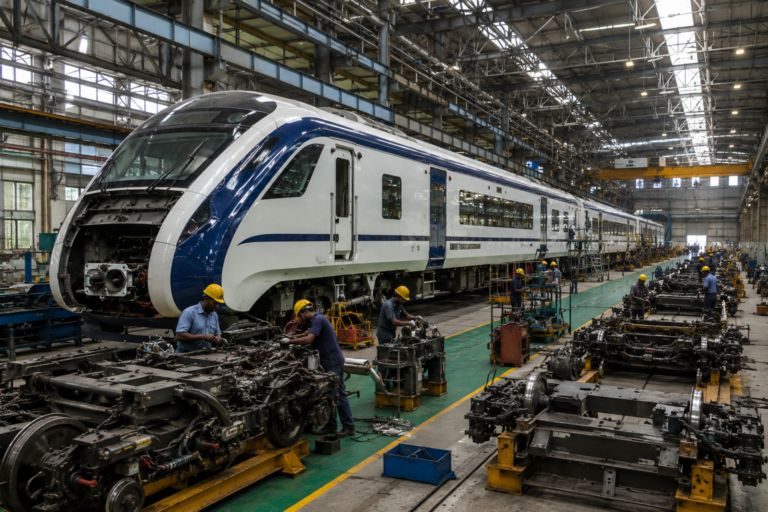
NEW DELHI (Metro Rail News): Building upon the success of Vande Bharat Trains, a new era of high-speed freight transport is going to begin with Vande Bharat-based freight trains. Indian Railways is gearing up to launch Indiaโ€™s Vande Bharat freight EMU, and as per the sources, ICF Chennai will roll out the first prototype of Vande Bharat Freight train for testing and trials this week.

The prototype will be thoroughly tested by the Research Designs and Standards Organisation (RDSO) before its commissioning. During the testing, RDSO will perform multiple checks, including oscillation testing, emergency braking distance (EBD) evaluation, and full-load performance assessments.

Key Technical Specifications of Vande Bharat Freight Trains

Speed160 km/h
Payload Capacity264 tonnes (16-car rake)
Distributed Power50% (EMU configuration)
Door Type1800 mm automatic plug doors
Floor SystemPneumatic roller floor
Cargo TypePalletised containers
Special CapabilityReefer (temperature-controlled) containers
Manufactured AtIntegral Coach Factory (ICF), Chennai
Trial OversightRDSO, Lucknow

The 16-car Electric Multiple Unit (EMU) rake is designed to carry up to 264 tonnes of palletised container cargo at a maximum speed of 160 km/h, which signals a major leap over conventional freight trains that typically operate well below 100 km/h on Indian networks. The first operational corridor is planned between the Delhi NCR and Mumbai regions, one of the countryโ€™s busiest logistics arteries.

Engineered for Speed and Efficiency

A standout feature of the rake is its reefer container capability, which enables temperature-controlled transport of perishables, pharmaceuticals, fresh produce, and dairy segments that have historically relied on road transport due to the lack of fast, reliable rail alternatives.

The pneumatic roller floor system and wide automatic plug doors are engineered for rapid, mechanised loading and unloading at dedicated terminals, which will slash turnaround times that have long hampered rail freight competitiveness against road logistics.

Strategic Significance

If trials proceed as planned, the Vande Bharat Cargo EMU could become a blueprint for similar services on other high-density freight corridors across India, which will be a decisive shift in how the national railway positions itself in the modern logistics ecosystem.


Discover how AI is bringing the next phase of sustainable urban rail mobility for Viksit Bharat at InnoMetro 2026, Indiaโ€™s prime exhibition and conference for metro & railways, which is going to be held on 21-22 May 2026 at Bharat Mandapam, New Delhi.

Register Now: https://zma.page/ek9

Indore Metro opens bids for ECS, TVS & BMS systems for 9 UG stations

INDORE (Metro Rail News): Madhya Pradesh Metro Rail Corporation Limited (MPMRCL) has floated a tender for the design, supply, installation, testing, and commissioning of electrical and environmental control systems for nine underground stations of the Indore Metro Rail Project.

Tender Details

ParameterDetails
Tender Number703/MPMRCL/2026/Package IN-11
Approximate Contract Valueโ‚น366.07 crore (incl. GST, excl. customs duties)
EMD / Tender Securityโ‚น3.66 crore
Tender Document Feeโ‚น50,000 (incl. GST, non-refundable)
Tender Documents on Sale26 March 2026 to 14 May 2026
Pre-Bid Meeting11:00 AM, 16 April 2026 (Bhopal / Video Conferencing)
Last Date for Queries18:00 hrs, 9 April 2026
Last Date for Corrigendum30 April 2026
Bid Submission Window7 May 2026 (11:00 hrs) to 14 May 2026 (16:00 hrs)
Technical Bid Opening16:30 hrs, 15 May 2026
Completion Period1,610 days (230 weeks), excluding DLP and CAMC
Scope of Work:

Design Verification, Detail Engineering, Supply, Installation, Testing & Commissioning of Electrical Works (of ECS & TVS), ECS, TVS & BMS System for 09 (Nine) nos. Underground Stations with associated Tunnel, Cross Passages, Ramps, Ancillary Building and Utility Gallery/Duct including the Integrated BMS (Interface with existing 18 nos. Elevated Stations, existing 01 no. Depot & 09 nos. Underground Stations) at OCC & BCC and two-years DLP (Defects Liability Period) followed by three years of CAMC (Comprehensive Annual Maintenance Contract) of Indore Metro Rail Project.

The Indore Metro is an under-construction rapid transit system in Madhya Pradesh. It features a 33.5 km “Yellow Line” (Phase 1) connecting Gandhi Nagar to the airport, with 29 stations.


Discover how AI is bringing the next phase of sustainable urban rail mobility for Viksit Bharat at InnoMetro 2026, Indiaโ€™s prime exhibition and conference for metro & railways, which is going to be held on 21-22 May 2026 at Bharat Mandapam, New Delhi.

Register Now: https://zma.page/ek9

BEML-Medha consortium to supply 16 high-speed trains for Mumbai Ahmedabad High Speed Rail Corridor

NEW DELHI (Metro Rail News): A consortium of BEML Limited and Medha Servo Drives has put forward its bid to the National High Speed Rail Corporation Limited (NHSRCL) for designing and manufacturing 16 high-speed trainsets for the Mumbai-Ahmedabad High-Speed Rail project, as per a Moneycontrol report.

This move comes after NHSRCL issued a single-vendor tender earlier in February, specifically inviting BEML to participate in the process. With this submission, the consortium has formally entered the race to supply rolling stock for Indiaโ€™s first bullet train corridor.

In 2024, the Integral Coach Factory granted a contract valued at โ‚น866 crore to the BEMLโ€“Medha consortium for the development of two eight-coach high-speed trainsets. These trains are being developed to achieve a top speed of 280 kmph, with a scheduled operating speed of 250 kmph.

The BEMLโ€“Medha consortium has quoted approximately โ‚น250 crore per train for the proposed 16 trainsets, which also includes a seven-year maintenance agreement. Out of this, BEMLโ€™s portion covers the carbody and interior works and is estimated at around โ‚น150 crore per train, while Medha Servo Drives is expected to account for nearly โ‚น100 crore per train for propulsion equipment, bogies, and the Train Control and Management System (TCMS). 

The first two prototype trainsets are projected to have about 50% indigenous content, with this share expected to rise gradually as the domestic supply ecosystem develops.

Delay in Shinkansen procurement

Talks with Japan regarding the supply of Shinkansen trainsets are still unresolved due to differences over pricing. As a result, the National High Speed Rail Corporation Limited (NHSRCL) has decided to move forward with the procurement of 16 domestically manufactured trainsets to ensure sufficient rolling stock is available when operations begin.

The timeline for the rollout of the first prototype has now been pushed to March 2027 from the earlier target of December 2026, as manufacturing activities have not yet started.

Phased commercial operations

The Suratโ€“Bilimora section of the Mumbai Ahmedabad High Speed Rail Corridor will become the first to witness the high-speed train operations in August 2027.


Discover how AI is bringing the next phase of sustainable urban rail mobility for Viksit Bharat at InnoMetro 2026, Indiaโ€™s prime exhibition and conference for metro & railways, which is going to be held on 21-22 May 2026 at Bharat Mandapam, New Delhi.

Register Now: https://zma.page/ek9

Bhopal Metro floats โ‚น123 Cr tender for escalator & lift procurement

BHOPAL(Metro Rail News): The Madhya Pradesh Metro Rail Corporation Limited (MPMRCL) has floated a โ‚น123.14 crore tender for the supply and installation of heavy-duty lifts, escalators, and moving walks across stations of the Bhopal Metro project – the latest in a series of procurement drives as the city’s metro network moves closer to full operations.

Tender Information:

Package BH-12
Cost of workโ‚น123.14 crore (Including 18% GST)
Pre-bid Meeting15-April-2026
Bid Submission Deadline13-May-2026
Work Completion Period695 Days (Excluding DLP and CAMC)

MPMRCLโ€™s brief scope of work: โ€œDesign, Manufacture, Supply, Installation, Testing and Commissioning of Heavy-Duty Machine Room-Less & Gear-Less Lifts, Heavy-Duty Escalators and Moving Walks along with two-years DLP (Defects Liability Period) followed by three-years of CAMC (Comprehensive Annual Maintenance Contract) for Bhopal Metro Rail Projectโ€

2024 04 30 BH Aln Map Distances

Key Dynamics of the Bhopal Metro Project

Phase 1 of Bhopal Metro spans about 30km and features 2 metro lines, including the Orange Line and the Blue Line. In December 2025, the first section of Bhopal Metro Phase 1 became operational from AIIMS to Subhash Nagar. This 7km stretch is part of the Orange Line. The upcoming sections of the project will be opened in a phased manner. Amidst these developments, there is another emerging aspect of Bhopal Metro, which is cost overruns. The Bhopal Metro Phase 1 was initially planned to be built at โ‚น6,941 crore; the delays have pushed this cost toย โ‚น10,000 crore, which is a major concern for the long term financial sustainability of the project.ย 


Discover how AI is bringing the next phase of sustainable urban rail mobility for Viksit Bharat at InnoMetro 2026, Indiaโ€™s prime exhibition and conference for metro & railways, which is going to be held on 21-22 May 2026 at Bharat Mandapam, New Delhi.

Register Now: https://zma.page/ek9

Indian Railways Clears โ‚น1,236 Crore for Kavach Expansion and Communication Upgrade

NEW DELHI (Metro Rail News): Indian Railways has approved 3 major infrastructure projects worth approximately โ‚น1,236 crore to modernise its communication backbone and extend the Kavach automatic train protection system across key zones. The approvals span Central Railway, Southern Railway, and Western Railway, and address two critical pillars of railway modernisation: fibre optic communication networks and collision-avoidance safety technology.

Central Railway to Get Dual Fibre Backbone: โ‚น623.63 Crore

Two complementary works have been sanctioned to build a robust, dual-path communication backbone across all five divisions of Central Railway, including Solapur, Nagpur, Pune, Bhusawal, and Mumbai.

The first component involves installing OPGW (Optical Ground Wire, 96-fibre) along the existing 25 KV electric traction lines over 2,250.68 route km, covering four divisions. This specialised composite overhead wire serves a dual purpose; it acts as an earth protection wire for the traction system while simultaneously carrying optical fibre for communication. Since it uses existing traction towers, no new civil infrastructure is required. This work is approved at โ‚น238.94 crore.

The second component involves laying underground optical fibre cables (2ร—48 fibre) on one side of the track over 2,673.21 route km across all five divisions, at a cost of โ‚น384.69 crore. Together, the OPGW above ground and the underground cable create two fully independent fibre paths on every route. The surplus dark fibre capacity will also be leased out commercially, generating additional revenue for Indian Railways.

Kavach 4.0 to be Extended to 548 km on Southern Railway: โ‚น310.18 Crore

Kavach, Indian Railways’ indigenously developed automatic train protection system, will be deployed on high-traffic routes across Tamil Nadu, Kerala, and Karnataka under this approval. The system automatically applies brakes to prevent collisions when two trains are on a conflicting course or when a signal is passed at danger.

The first section covers Jolarpettai-Erode (180 km, Salem Division) and Chennai Beachโ€“Tambaram-Chengalpattu (60 km, Chennai Division), along with new optical fibre cabling, at a cost of โ‚น158.74 crore. The second section covers Shoranur-Mangalore (308 km, Palakkad Division) along with 4ร—48 fibre OFC cabling, at โ‚น151.44 crore. 

Fibre Network in Gujarat: โ‚น302.26 Crore

Optical fibre cables (2ร—48 fibre on each side of the track) will be laid on the remaining stretches of two Western Railway divisions in Gujarat: 1,064 km in the Rajkot Division and 589 km in the Bhavnagar Division, totalling 1,653 km at a cost of โ‚น302.26 crore.

Project-wise Breakdown

Project Route (km)CostScope
Central Railway – OPGW2,250.68 Rkmโ‚น238.94 Cr96-fibre OPGW on traction lines (4 divisions)
Central Railway – UG OFC2,673.21 Rkmโ‚น384.69 Cr2ร—48 underground fibre (all 5 divisions)
Southern Rly – Kavach 4.0 (Jolarpettai-Erode & Chennai Beach-Chengalpattu)240 kmโ‚น158.74 CrKavach + OFC, Salem & Chennai Divisions
Southern Rly – Kavach 4.0 (Shoranur-Mangalore)308 kmโ‚น151.44 CrKavach + 4ร—48 OFC, Palakkad Division
Western Railway-OFC (Rajkot + Bhavnagar)1,653 kmโ‚น302.26 Cr2ร—48 OFC on both sides of track

Overall Impact

These approvals are part of Indian Railways’ broader strategy to modernise infrastructure through the integration of advanced communication systems and safety technologies. 


Discover how AI is bringing the next phase of sustainable urban rail mobility for Viksit Bharat at InnoMetro 2026, Indiaโ€™s prime exhibition and conference for metro & railways, which is going to be held on 21-22 May 2026 at Bharat Mandapam, New Delhi.

Register Now: https://zma.page/ek9

Kochi Metro Phase 2: Crescent Construction Wins Rs. 21.5Cr Civil Contract

KOCHI (Metro Rail News): Kochi Metro Rail Limited (KMRL) has awarded a civil construction contract worth Rs. 21,49,69,334.50 to Crescent Construction Company for the construction of entry and exit buildings at two Phase II stations: Civil Station Junction and Cochin SEZ.

The contract covers balance civil works and excludes architectural and building services works, which are to be procured separately. 

Contract Details: 

Tender ReferenceKMRL/PROC/TENDER/2025-26/047
E-Tender ID2025_KMRL_787246_1
Stations CoveredCivil Station Junction & Cochin SEZ
Awarded ToCrescent Construction Company
Contract ValueRs. 21,49,69,334.50 (including GST)
ScopeCivil works (excluding Architectural & Building Service works)
Scope of WorkConstruction of Entry & Exit Buildings of Civil Station Junction and Cochin SEZ Metro Station for Phase II of Kochi Metro Rail Project (excluding Architectural and Building Service works)- (Balance Works)
Awarding AuthorityCompetent Authority, KMRL

Civil Station Junction is strategically positioned near Kochi’s civil services administrative hub, which makes it a high-footfall station for government employees and visitors.  On the other hand, Cochin SEZ station will directly serve the Special Economic Zones.

About Kochi Metro Phase II (Pink Line)

Kochi Metro Phase II, known as the Pink Line, is an 11.2 km elevated metro corridor connecting Jawaharlal Nehru Stadium in Kaloor to Infopark II in Kakkanad. The foundation stone was laid by Prime Minister Narendra Modi on 1 September 2022, and construction officially began on 3 July 2024. The Pink Line will feature 11 stations and is being developed in two sub-phases. The first five stations are targeted for launch by June 30, 2026, while the remaining stations including Civil Station Junction and Cochin SEZ (covered under this contract) are scheduled for completion by December 2026.

Despite a three-month delay caused by heavy monsoon rains and underground pipeline relocation challenges, KMRL remains committed to its June 2026 target for the first five stations and December 2026 for the full Pink Line.


Discover how AI is bringing the next phase of sustainable urban rail mobility for Viksit Bharat at InnoMetro 2026, Indiaโ€™s prime exhibition and conference for metro & railways, which is going to be held on 21-22 May 2026 at Bharat Mandapam, New Delhi.

Register Now: https://zma.page/ek9