



Home Blog Page 903

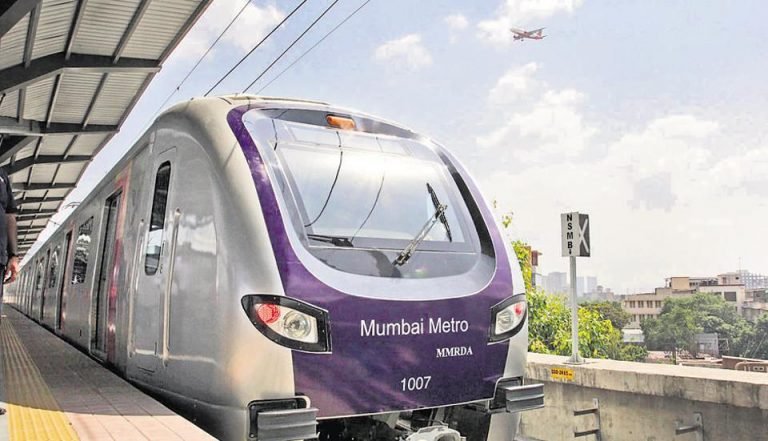
Mumbai Metro| Work to begin on Mumbai Metro’s costliest corridor early 2016

Mumbai: The Mumbai Metro Rail Corp. Ltd (MMRC), which is building Mumbai Metro’s longest corridor between Colaba in south and Seepz in west, plans to clear all hurdles delaying the project in the next two months.

Work on the 33.5km Colaba-Bandra-Seepz corridor is likely to start early 2016, said MMRC’s managing director Ashwini Bhide. The MMRC is a joint venture between the government of India and the government of Maharashtra formed to execute the Rs.23,136-crore metro corridor between Mumbai’s two business districts Seepz and Bandra Kurla Complex with the city’s southern tip.

Measuring 146km, the Mumbai Metro is one of the shortest such projects in the world. The Shanghai Metro which opened in 1993 is the longest in the world—538km. The world’s oldest metro system, the Tube in London, is 402km long.

However, its relatively smaller specifications do not mean the Mumbai Metro project is easier to execute, Bhide argued. “This corridor is not just the longest of the eight metro lines in Mumbai. It is also an entirely underground corridor,” Bhide said. It is also Mumbai’s costliest stand-alone infrastructure project.

The MMRC, after delays caused by environmental concerns and resettlement issues, is in a position to fast-track the project by February 2016. The MMRC plans to build this corridor by 2022. “This is the deadline the state government has set and we are very confident of meeting it,” Bhide said.

The Mumbai Metro plan proposes to construct eight corridors in Mumbai and another line connecting Mumbai with Thane. The first line connecting Versova-Andheri-Ghatkopar is already operational. The plan is being implemented in three phases and the Colaba-Bandra-Seepz corridor is part of phase one. The MMRC has further split the corridor in eight different packages, each involving a track of 3-4km. It has received about 31 bids from eight consortia to construct different packages. Of the estimated total cost of Rs.23,136 crore, MMRC has contracted 57.2% (Rs.13,235 crore) from the Japan International Cooperation Agency, while the rest will come from various stakeholders in the form of equity.

Two main problems have confronted the project so far.

The first is the construction of a Metro car shed first proposed near Aarey Colony in Goregaon where the city’s western periphery meets the Sanjay Gandhi National Park. Environmentalists and citizens opposed this plan since the green patch in Aarey Colony is one the very few such open spaces in Mumbai and the car shed plan over 30 hectares involved cutting nearly 2,300 trees.

Chief minister Devendra Fadnavis formed a six-member committee under Mumbai metropolitan commissioner U.P.S. Madan with representatives from the Nagpur-based National Environmental Engineering Research Institute (NEERI) and IIT Mumbai as members to propose alternative sites.

This committee came up with six options, of which the state government and MMRC chose the land in Kanjur. “It is a government land but there are a few private claimants who have contested it through litigations. We hope to get a clear claim over this land soon,” Bhide said.

The six-member committee also suggested an alternative plan for the car shed in case the MMRC does not get the Kanjur land in two to three months. The committee has proposed a smaller piece of land—10 hectares—in Aarey itself, but a double-decker car shed would cost an additionalRs.750 crore.

“This is not the option the committee and even the state government would ideally prefer since the cost involved is quite high. Ideally we are in favour of a smaller shed at Aarey and the main shed at Kanjur since the Kanjur land is one contiguous piece of land which has a more clear government title,” a committee member said. As per this plan, the Kanjur car shed will have around 25 stabling lines and the smaller shed at Aarey will have 16. These two car sheds have been proposed to cater to all the metro cars under the Mumbai metro project and so are critical to the entire plan.

The second concern confronting the Colaba-Seepz corridor has been the resettlement of 1,780 hutments and 709 families which will be affected by the project along the 33.5km track. The Shiv Sena has opposed what it alleged as the planned “demolition” of 28 buildings in Girgaon and Kalbadevi. “We are not demolishing these buildings. We have in fact agreed to rehabilitate people living in these buildings in the same area and a consultant has been appointed to propose a holistic resettlement plan,” Bhide said, adding that the MMRC was confident of finding a solution acceptable to all stakeholders.

Lucknow Metro| LMRC MD Kumar Keshav wins Shaan-E-Lucknow Award

Lucknow: Shri Kumar Keshav, Managing Director, Lucknow Metro Rail Corporation (LMRC), was today bestowed with the Shaan-E-Lucknow award by the organisers of the Lucknow Book Fair.

Shri Keshav, received this prestigious award in the presence of Shri Raj Shekhar, District Magistrate, Lucknow and other distinguished guests. On the occasion, a special postal envelope cover bearing the logo, symbol and mnemonic of Lucknow Metro along with the symbol of Lucknow Book Fair was also released to commemorate the event.

This a unique feat for the team of Lucknow Metro Rail Corporation (LMRC) under the leadership of Shri Kumar Keshav, Managing Director, as the good works done so far is being recognised in such a memorable and historic way. It a special and momentous occasion for the whole team as their efforts are being reflected in public domain through such award and recognition.

Speaking at the occasion, the Managing Director said “Such an award and recognition further inspires us to work harder to achieve new feats in Metro construction so as to accomplish the dream project of the Hon’ble Chief Minister Shri Akhilesh Yadav and the people of Lucknow in the shortest possible time. Lucknow Metro will add a new feather to the glorious history of Lucknow.”

“The Indian Postal department’s association with Lucknow Metro is a very unique and special recognition to LMRC. No other Metro has achieved such a recognition so far”, he added.

All system contracts have also been awarded by LMRC in a very fast manner and the system contracts are in process. The detailed designs of these systems are in process and these works will also commence shortly for the overall completion for commissioning of trial runs by December, 2016 as per the set target.

The Lucknow Metro has already achieved the distinction of being the fastest Metro project execution ever been undertaken in the country. So far, almost 56 per cent of the civil works of the project has been completed and LMRC aims to complete the civil infrastructure work by October, 2016 in order to commission the trial runs of Metro train by December, 2016.

Delhi Metro| DMRC signs MoU with Solar Energy Corporation of India for Solar Energy Project

New Delhi: The Delhi Metro Rail Corporation (DMRC) and the Solar Energy Corporation of India (SECI) will now jointly collaborate on taking up an ‘off site’ solar power project, to maximize the use of renewable energy, mitigate the impact of regular increase in grid tariffs and to reduce the carbon footprint.

A fresh Memorandum of Understanding (MoU) with this objective was signed today in the presence of DMRC’s Managing Director, Dr. Mangu Singh and other senior officials from DMRC and SECI.

DMRC intends to take 1,000 MU annually from “offsite” renewable sources, through a one stop solution. As per the MoU, both the organizations shall collaborate for sourcing additional requirement of power by DMRC from other developers /generators not on DMRC sites within NCR region.

In the initial phase, 500 MWp capacity of ground mounted solar power projects within a duration of three years is targeted. Both DMRC and SECI shall jointly develop an ‘Action Plan’ to source solar power on mutually agreed terms and conditions, from sources other than solar power generated on DMRC sites.

The whole process of tendering and conducting bidding process / e-auction shall be conducted by SECI. DMRC shall enter into Power Purchase Agreement (PPA) with Developer as may be decided by DMRC out of the names selected and forwarded after the whole tendering process by SECI.

In order to carry out the above mentioned ambitious project, DMRC and SECI will constitute a Joint Development Team (JDT) which will consist of senior officials from both the organizations. The Joint Development Team shall decide the ACTION PLAN in achieving the objective of DMRC in the best manner possible through collaboration with SECI.

As per the MoU, both the companies have also decided to extend the understanding incorporated in an earlier MoU dated 17th Sep 2013 and further collaborate for the development of Solar PV Projects (ground mounted, rooftop and other possible modes) at identified DMRC sites.

Mumbai Metro| Bombay High Court stays proposed Metro fare hike till January 29

Mumbai: The Bombay High Court on Thursday stayed till January 29 the proposed hike in fares of the Versova- Ghatkopar Metro rail corridor. The stay was granted by a bench headed by Justice Abhay Oka which said that the hike should not be implemented until the final hearing of the petition, filed by Mumbai Metropolitan Regional Development Authority (MMRDA).

Sanjay Nirupam, head of Congress party in Mumbai, also filed an intervention application challenging the hike. His plea has been taken up for hearing along with the petition filed by MMRDA.

Mumbai Metro One (MMOPL), a subsidiary of Reliance Energy, which is operating the Versova-Ghatkopar corridor, had earlier announced that it will increase the fares by Rs 5 from December 1. Instead of the earlier slabs of Rs 10, 20, 30 and 40, the proposed new structure will have five slabs of Rs 10, 20, 25, 35 and 45.

The fare slabs per trip for the return journey token category have been similarly revamped from Rs 10, 15, 25 and 30 to Rs 10, 20, 22.50, 30 and 35.

However, MMRDA, which had commissioned the Mumbai Metro, has challenged the hike.

Nirupam has alleged that the central government was facilitating private profiteering by allowing multiple fare hikes. He demanded that there should be a fare hike every four years, as per the agreement, and not frequently.

Bullet Train Project| Indians need toilets more than Mumbai-Ahmedabad bullet train

New Delhi: On December 12, 2015, India inked a pact with Japan to lay India’s first bullet train network between commercial nerve centre of Mumbai and Ahmedabad, in a much-ambitious project worth Rs 98,000 crore.

As part of its 2014 Lok Sabha election manifesto, the BJP is on the way to fulfill its promise of constructing a “Diamond Quadrilateral” by connecting the cities with a network of bullet trains. Diamond Quadrilateral project aims to connect four metropolitan cities-  Chennai, Delhi, Kolkata, and Mumbai, with high speed trains. The trains on these routes will have a speed of about 160km-200km per hour.

The bullet train network will link India’s financial hub Mumbai with Ahmedabad in Modi’s home state Gujarat. Bullet train between the two cities will cut travel time on the 505-kilometre route from eight hours to around three. Other proposed routes for running the new bullet train services include Delhi-Agra, Delhi-Chandigarh, Mysore-Bangalore-Chennai, Mumbai-Goa and Hyderabad-Secunderabad.

As per the data provided on the Government of India Budgets, obtained by Scroll, Prime Minister Narendra Modi-led NDA government has spent 2.4k crore on Swachh Bharat initiative in 2014 to 2015.

Here is the exact expenditure by the Modi government in other sectors:
1. Mumbai – Ahmedabad bullet train – Rs.98 Crore
2. Center spend of highways, 2015-16 – Rs.43 Crore
3. Center spend of schools, 2015-16 – Rs.42 Crore
4. Center spend of railways, 2015-16 – Rs.42 Crore
5. Center spend of health, 2015-16 – Rs.30 Crore
6. Safety investment in railways, 2015-16 – Rs.25 Crore
7. Center spend of Swachh Bharat, 2014-15 – Rs.2.4 Crore

When it comes to implementing Swachh Bharat (clean India) campaign, then the Indian government needs to invest more. Only Rs 2.4k crore won’t help India in getting rid of the waste and other filth. There should be complete stoppage on open defecation, by building more number of toilets, especially in the rural parts of India.

The point to be noted is that Indians are in the desperate need of toilets across the country, rather than the bullet trains.

As per a report published in Scroll, 44% of Indians do not have the access to toilets, as compared to other developing countries like Nepal (32%), Pakistan (13%) and Bangaladesh (1%).

Interestingly, Mumbai and Ahemdabad are already well-connected with road, rail and air routes.

Then, the humongous amount of Rs 98,000 crore on bullet trains to connect both cities, looks like an ‘absurdly wasteful’ investment.

Indian railway system is said to be one of the most unsafe in the world. Every year, many lives are claimed in freak train accidents. Unmanned crossing also lead to fatal train accidents.

On Dec 8, 2015, The Palwal-Ghaziabad Electric Multiple Unit (EMU) train rammed into the Delhi-bound Lokmanya Tilak Haridwar Express at Baghola village near Palwal in which the driver of the local train was killed and hundreds were injured.

The Indian government should invest more wisely on railway safety, rather than creating a luxurious gift for the elite. The Centre government should also spend more on the construction of schools, better education, health and transport facilities.

According to World Health Organisation (WHO), India ranks at 112th number, on the healthcare index, while a country like Bangladesh is at 88th rank!

“Due to a constraint on India’s financial resources”, The Modi-led NDA government had reportedly scrap the plan for a universal healthcare scheme.

So, the pertinent question that arises is whether Modi government should focus more on reducing the travel time Mumbai to Ahemdabad and vice-a-versa or they should think for the betterment of the common citizens of India, by providing them with the basic necessities, that demand more attention.

Modi government, that will complete two years in May 2016, is yet to fulfill its promise of bringing “acche din” (good days), as the nation awaits for a better future eagerly!

Chennai Metro| The facts behind the Chennai Metro Rail project delay

Chennai: Delay in land acquisition and non-performance of a contractor are said to be the major reasons for the Chennai Metro Rail missing its deadline.

Answering a question in the Lok Sabha, the Union Minister for Urban Development Venkaiah Naidu said the original date of completion was March 2015, but due to land acquisition delays and non-performance of a contractor leading to re-tendering, the project missed this deadline.

But the reply itself presented two different deadlines for the project. It stated that the “expected schedule of completion” as December 2016 and the “approved date of completion” as December 2017.

The re-tendering work here refers to the termination of the contract of Gammon India by Chennai Metro Rail after its partner, Russian firm Mosmetrostroy, abandoned the project.

The contract was terminated due to tardy progress of work. Soon after the termination, Chennai Metro Rail Limited (CMRL) floated fresh tenders for the work.

Chennai Metro Rail, estimated to cost Rs. 14,600 crore, sprawls over 45 km of the city. Of this, 24 km will be underground and the remaining 21 km elevated.

So far, Rs. 6,597 crore has been released over three years for this project.

The phase I extension of Chennai Metro Rail from Washermanpet to Wimco Nagar was granted sanction only recently.

The extension, expected to cost around Rs. 3,700 crore, is a 9-km stretch that runs partly underground and is partly elevated. CMRL is in the process of finalising consultants for this stretch.

Noida Metro| Noida-Gr. Noida metro extension to be open by March 2017

Noida: The 30-km long elevated Noida-Greater Noida metro extension is likely to be thrown open by March 2017, months ahead of its deadline, Delhi Metro Rail Corporation chief Mangu Singh said today.

Singh made the comments at an event to mark the installation of the first ‘U-girder’, horizontal segments on which metro tracks are laid on elevated sections, of this upcoming corridor.

Singh expressed hope that in view of the “fast pace” of construction, it “should be possible” to open this section for the public a few months before the schedule.

“Generally, the casting of the U girders takes at least six months. However, the same was achieved within a period of four months facilitating the installation work within such a short time,” DMRC CPRO Anuj Dayal said.

The said extension, that will be an extension of two lines, namely Dwarka Sector 21-Noida City Centre and the upcoming Noida-Noida Sector 62 stretch, will comprise 21 stations, work for which begun earlier this year.

Hyderabad Metro| Phase one project to be commissioned by 2016

Hyderabad: The phase one of L&T Metro Rail Hyderabad Ltd will be commercially operational by the first quarter of 2016. The Telangana Government is exploring the possibility of expanding the metro rail network mandate from 72 km with the addition of another 85 km.

“The L&T and Hyderabad Metro Rail Limited have done a great job thus far in implementing the project as planned. Most of the hurdles for the project have been sorted out and we expect some of the remaining issues relating to the project in the Old City of Hyderabad would also be thrashed out soon paving way for completion of the project as per schedule in 2017,” KT Rama Rao, Telangana Minister for IT and Panchayat Raj, said.

Interacting with reporters after a test run of the metro rail project over a stretch of 8 km between Mettuguda and Nagole, the Minister said that the State Chief Minister, K Chandrasekhar Rao, is keen that the project is expanded from the current under construction 72 km stretch to 200 km in a phased manner.

“However, in the next phase, we have identified five extensions of total stretch of 85 km,” he said. Referring to the proposals made by the Telangana Government after it assumed office last year about change in alignment, Rao said the government had proposed certain changes keeping in mind the heritage structures and some requests made in a couple of corridors.

“All of these have been sorted out, we expect the works to be expedited and completed as per schedule,” he said.

The alignment issues got resolved as the metro authorities have agreed to develop the project even in a smaller 65 feet road width stretch. By doing so, the bottlenecks have been sorted out and the concerns expressed by hawkers will also be sorted out, he said.

‘We will provide special place and make it a hawkers’ paradise for those affected by the metro construction. They will get the best compensation too,” Rao added.

The test run conducted for the media in the presence of four Telangana Ministers and the officials of L&T Metro and Hyderabad Metro, over a stretch of 8 km, was very enjoyable, as per feedback from some of those who took the ride. Most on board took to selfies to share with their friends and families.

The 8-km stretch was covered in less than 8 minutes. The rail was piloted by Srilakshmi, a young lady from Peddapalli town.

Lucknow Metro| Sreedharan expresses his satisfaction with Lucknow Metro Rail project progress

Lucknow: Dr. E. Sreedharan, Principal Advisor to Lucknow Metro, who was on a visit to the Lucknow Metro Rail Corporation Ltd. (LMRC) today, undertook a review of the various undergoing works of the project and expressed his overall satisfaction with the progress of the project.

He took a review of the physical progress of the project along with the Operation & Maintenance (O&M) preparedness of the organisation. In the morning, a presentation was given to him by the Project Director of M/s L&T, who briefed the ‘Metroman’ about the on-going civil construction activities which is being undertaken for the 8.5 km priority Metro corridor from Transport Nagar to Charbagh.

Dr. Sreedharan stressed the need for completing the civil works in time for system contractor to take up their work further and desired the civil contractors to take measures accordingly.

During this review meeting, LMRC also made a presentation on the draft Detailed Project Report (DPR) of Varanasi Metro which is being prepared by M/s RITES in coordination with Lucknow Metro. This draft DPR is proposed to be submitted to the government by the end of this month. Dr. Sreedharan, however, gave his invaluable suggestions towards preparation of this DPR.

The Principal Advisor finally expressed his satisfaction over the progress of work of LMRC and communicated his happiness over the fast progress of the works being undertaken by by Shri Kumar Keshav, Managing Director, and his team.

Modi dreams Bullet Train, but India needs High-Speed upgrade

The Bullet Train project highlights:-

  • Highlight of Japanese PM Shinzo Abe’s visit is Rs 98,000-crore bullet train project
  • Project will take two-and-a-half years to plan, eight years to complete
  • Railways says Mumbai-Ahmedabad bullet train fare will be around Rs 6/km
  • At 300-350 kmph, Mumbai-Ahmedabad will take less than two hours to cover
  • Six proposed high-speed rail routes will bring down the cost of living and lead to economic development
  • India cannot depend on air travel alone for reasons of energy efficiency and climate change

An agreement on the Rs 98,000-crore bullet train between Mumbai and Ahmedabad is the highlight of Japanese Prime Minister Shinzo Abe’s visit to India. The project will be financed with a 50-year yen loan at 0.1 percent, which includes a moratorium on interest payments for the first 20 years.

Railway Minister Suresh Prabhu’s aides say the train will be viable with rates that are one-and-a-half times the current AC first class fares, or nearly Rs 3,000. That is Rs 6 per km.

Viability will depend on traffic and the frequency of service. Rail officials say there is enough between the two cities: trains are chockfull and flights are packed. At 300-350 kmph, the distance should be licked in less than two hours. This will create additional demand. With quick visits possible, more people will travel. Earners might persuade their families to relocate outside expensive and congested Mumbai.

Financial Rate of Return

The Japanese International Cooperation Agency (JICA), the aides say, has estimated the financial rate of return at 4.4 percent a year. This is less than the yield on government bonds. But the economic rate of return – or the impact on the economy – is estimated at 13 percent annually.

Fares alone will not be enough. Japanese bullet trains are cross-subsidised by revenue from property development. India’s bullet train corporation should be able to skim the increased land value it will create along the route through industrial enclaves and townships.

The project will take two-and-a-half years to plan and eight years to complete.

Though Japanese financial terms seem fetching, they may not actually be so. Former railway official Ved Mani Tiwari who, until August, was director of Kochi Metro Rail, found the dollar to be the most stable over a 40-year period, with annualised volatility of 4.5 percent. The currencies constituting the Euro yo-yoed by 6.5 percent while the yen swung the most at 9.5 percent annually.

India May End Up Paying More

If the Japanese loan for the bullet train is ‘tied’ and India can only buy Japanese equipment it might pay more than it should. Japanese electric engines for the Japanese-financed western freight corridor cost more than Rs 50 crore each. Alstom India has undertaken to supply higher capacity (12,000 hp) electrical engines with maintenance thrown in from its Madhepura plant for Rs 24 crore each.

Making Travel Efficient

As India’s economy grows and people’s income goes up, it will need an efficient way of moving large number of people quickly over long distances. It cannot depend on air travel alone for reasons of energy efficiency and climate change. Trains use one-fifth the energy of airplanes and the carbon emission per passenger is much lower.

The Railways have already conducted studies to examine the viability of six high-speed rail routes. These are:

  • Delhi–Chandigarh–Amritsar (450 km)
  • Pune–Mumbai–Ahmedabad (650 km)
  • Hyderabad–Dornakal–Vijaywada–Chennai (664 km)
  • Chennai–Bangalore–Coimbatore–Ernakulam (649 km)
  • Howrah–Haldia (135 km) and
  • Delhi–Agra–Lucknow–Varanasi–Patna (991 km).

But if funds were finite and India had to choose between rail services that would give the biggest bang for money, it would opt for elevated 200 kmph semi-high speed trains connecting the metros with satellite cities that would make quick getaways possible.

  • Japanese International Cooperation Agency estimates financial rate of return at 4.4 percent a year
  • Economic rate of return – or the impact on the economy – estimated at 13 percent annually
  • If Japanese loan is ‘tied’ and Japanese equipment purchased, India might end up paying more
  • India needs more freight-only rail corridors and upgrading of existing routes to semi-high speed
  • Moving trains to higher speed, comfort and safety would have a greater impact
Decongest Metros

If one could cover the distance between Delhi and say Agra or Alwar in about an hour, it would make sense to live there and work in the capital. Such services would decongest the metros, bring down the cost of living, improve the quality of life and spread economic development around.

They would also boost domestic manufacturing of railway equipment, just as intra-city metro rails have done.

There would be a lot more demand for engines, coaches and communication and signalling equipment, which would spur the ‘Make in India’ campaign.

The Japanese had themselves recommended semi-high speed for the Delhi–Mumbai route when the western freight corridor became operational. A JICA study expected 60 percent of freight trains on the Delhi-Godhra route, and 90 percent on the Godhra–Mumbai leg to shift across.

The capacity released would make semi-high speeds passenger trains of up to 200 kmph possible on the existing track (with fenced or elevated tracks, heavier rails, curves designed for tilting and collision preventing signalling systems).

Freight-Only Rail Corridors

JICA has estimated the cost of a 12-hour travel-time route between Delhi and Mumbai to cost a little less than $7 billion, or Rs 47,000 crore. A 10-hour journey time track would cost more than double ─ Rs 107,500 crore. The slower track was said to be financially viable.

If he had Rs 1 lakh crore to play around with, Alstom India Managing Director Bharat Salhotra, who was formerly with the Railways, says he would spend it on more freight-only rail corridors and upgrade the existing routes to semi-high speed. India, he says, requires quick mass transport before rapid transport.

Moving trains to a higher speed, comfort and safety band both within cities and between them would have a greater impact on the 4.5 billion suburban and 3.8 billion passengers who travel on the rail network annually, than a showcase project like the bullet train.