




Introduction
Meerut has always been a city with a strong past. Walk through it, and you will find reminders everywhere. Old markets, colonial era buildings and landmarks like the Augarnath Temple are closely linked to the uprising of 1857. The city played a crucial role in the Indian Rebellion of 1857, and that legacy still shapes its identity. But while history gave Meerut recognition, it did not guarantee growth.
Over the years, the city expanded rapidly. By 2026, the city’s population will stand at around 1,964,000, while the larger urban region population is around 2,139,000. In 2026, Meerut ranked as the 34th most populous city in India. It also became the second-largest city in the National Capital Region, right after Delhi. This kind of growth brings opportunity.
Now, Meerut has grown in size and ambition. New residential areas came up, population increased, and business activity grew, especially in sectors like sports goods, metal work and agricultural-based trade. At the same time, Meerut remained closely tied to Delhi. Thousands of people travelled daily between the two cities for work, education and business. And that’s where the problem began. The city’s infrastructure struggled to keep up. Roads became overcrowded, public transport remained limited, and long travel hours became part of daily life. Within the city, moving from one area to another often meant dealing with traffic congestion and delays. The growing gap between expansion and infrastructure created a clear need. Meerut needed a faster, more reliable, and structured transport system. At the same time, planners saw an opportunity. With its strategic location near the National Capital Region, Meerut could become more than just a neighbouring city. It could become an active economic extension of Delhi. But for that connectivity had to improve. This idea gave rise to the Meerut Metro, integrated with the Namo Bharat Corridor.
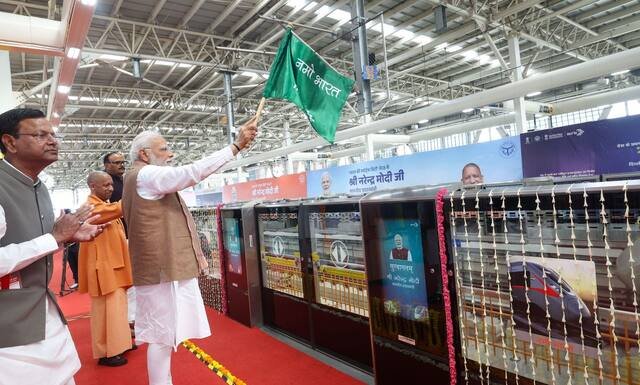
On 26 February 2026, when Prime Minister Narendra Modi inaugurated the project, it marked a turning point. The city that once depended on slow, crowded roads suddenly gained access to high-speed modern transit.
Get the Daily Metro & Rail Brief
Join 125,000+ metro and rail professionals. Project updates, new tenders and contract awards from across India, in your inbox every day.
This article explores the journey of the Meerut Metro in detail. It explains the metro’s current network and future expansion plans. It also studies its impact on business and the city. It also examines financial and operational challenges. Because the real question is simple. Can this metro truly change Meerut’s future?
Meerut Metro: The journey from plan to reality
The Meerut Metro did not appear overnight. It took years of planning, studies, and coordination before the first train could run. The idea started in the early 2010s. At that time both the center government and Uttar Pradesh government began to look at better transport options for cities near Delhi. Meerut stood out because of its growing population and strong daily connection with the capital. Officials wanted a system that could solve two problems at once. They wanted to improve travel within the city. They also wanted faster connectivity with Delhi and outer NCR areas. This thinking led to a combined vision. The Meerut Metro would work along with the Namo Bharat corridor instead of running as a completely separate project. The next step involves technical studies.
In 2015, RITES did a feasibility study. The study examined whether the metro would work in Meerut. It looked at expected passenger demand, costs, routes, and long-term benefits. After that in June 2016, the agency prepared the Detailed Project Report (DPR). The DPR acted as the blueprint for the project. It defined the route, station locations, cost estimates, and construction plan. Once the DPR was ready, the project moved into the approval stage.
In 2017, the Uttar Pradesh Metro Rail Corporation took on a key role. It worked as a coordinator between different agencies. Large infrastructure projects require multiple stakeholders, including state authorities, central ministries, and technical teams. UPMRC helped bring them together.
A major milestone came on 8 March 2019. On this day Prime Minister Narendra Modi laid the foundation stone for both the Meerut Metro and the regional rapid rail project. This marked the official start of the construction. Work began soon after in July 2019. Construction did not move easily. Like most large projects, it also faced challenges. Teams had to deal with land acquisition, traffic management, and complex engineering work. Building Underground stations in busy areas like Begumpul and Meerut Central required careful planning and execution. At the same time engineers worked on integrating the metro with the Namo Bharat system. This step made the project unique. Instead of building separate tracks, both systems would share the same infrastructure in the Meerut section.
Over the next few years, the project moved steadily forward. Trial runs began in early 2025. Finally on 22 February 2026, the Prime Minister flagged off the Metro for the public.
Quick overview: Meerut Metro at a glance
| Details | Information |
| Inauguration | 22 February 2026 |
| Total corridor | 23.60 km |
| Stations (city network) | 13 |
| Key stations | Meerut South, Pratapur, Rithani, Shatabdi Nagar, Brahmapuri, Meerut Central, Bhaisali, Begumpul, MES Colony, Daurli, Meerut North, Modipuram, Modipuram Depot |
| Speed | Up to 120 kmph |
Existing routes
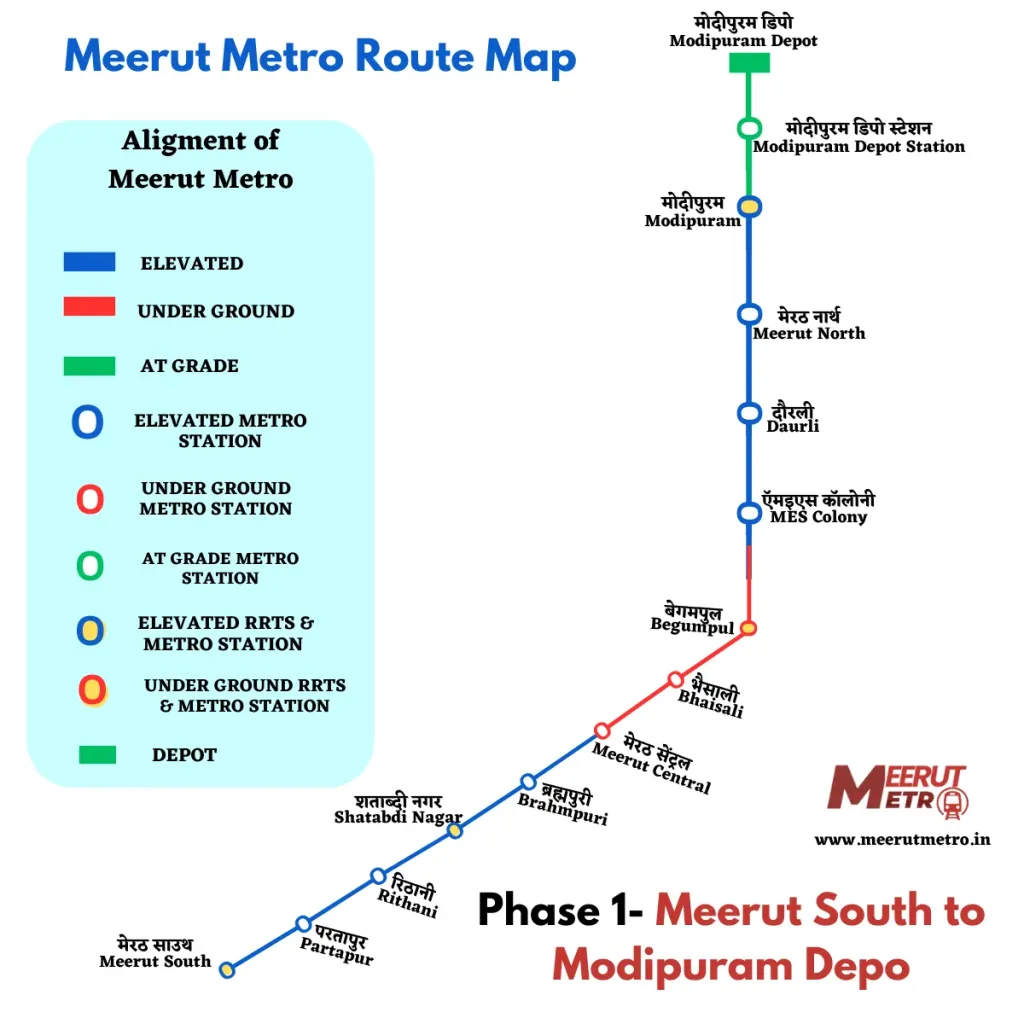
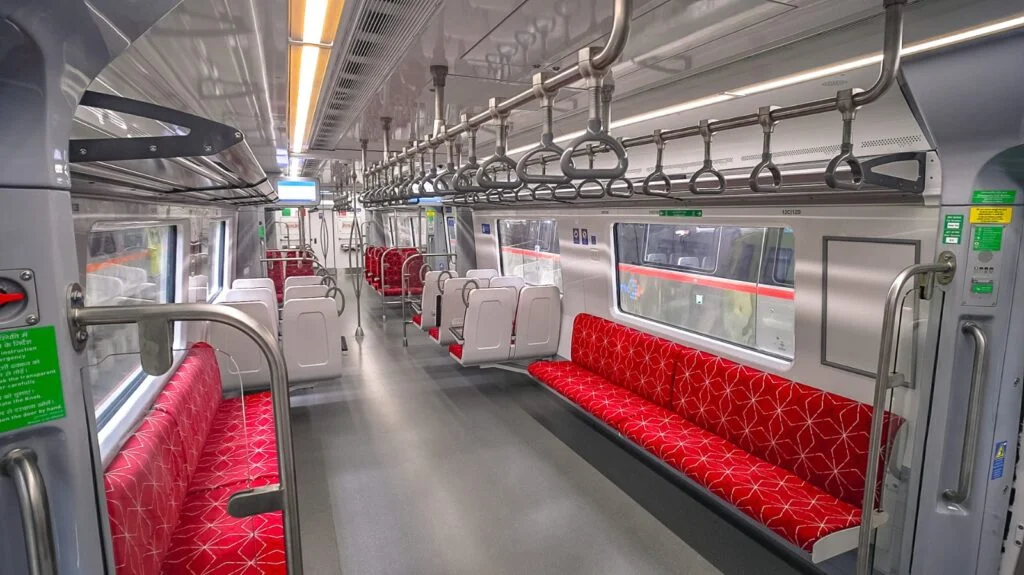
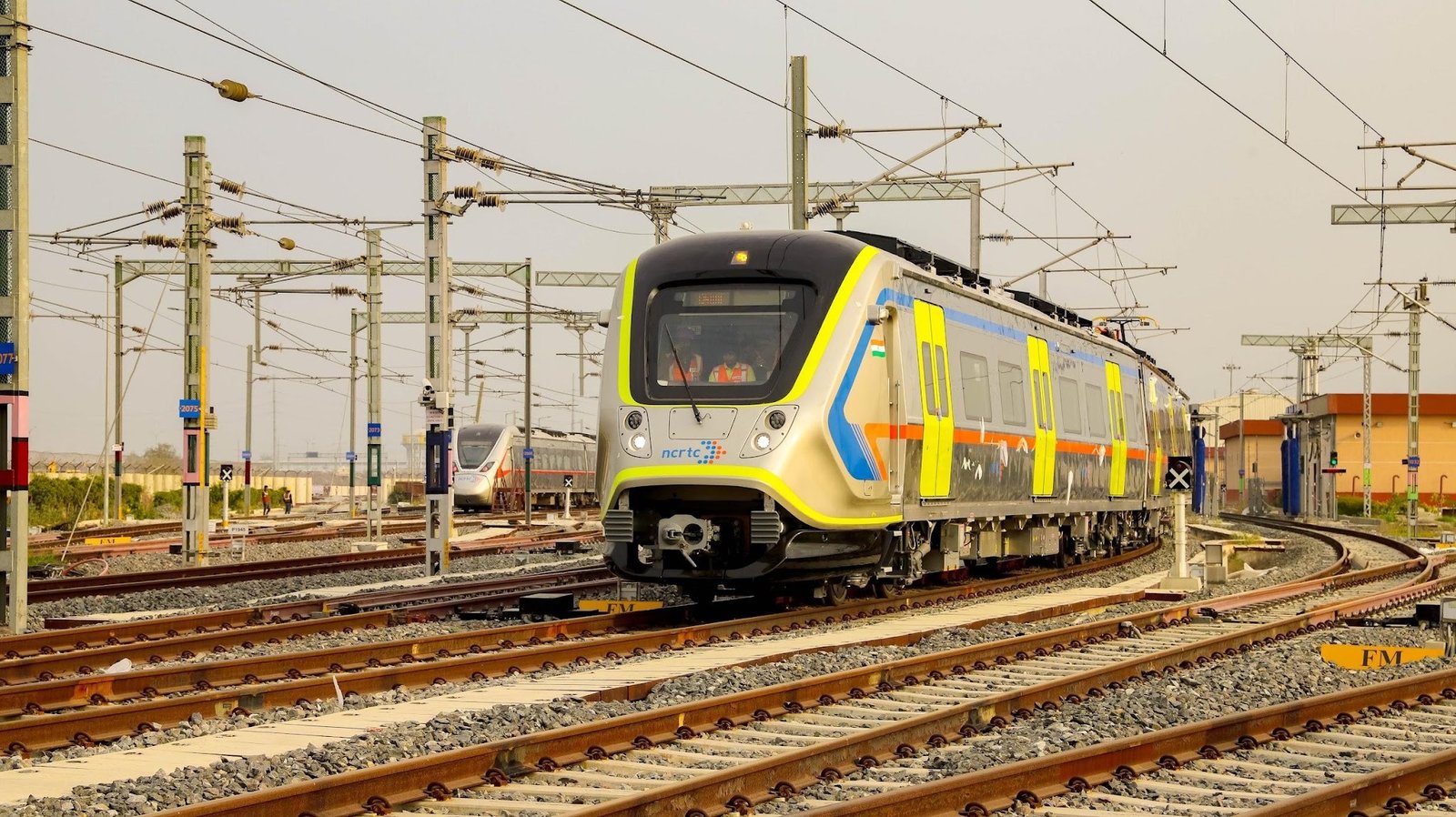
The current Meerut Metro Corridor runs from Meerut South to Modipuram. It covers around 23 km and connects important parts of the city. This route includes both elevated and underground sections. The elevated track covers about 16 km, while the underground tunnels stretch for around 7 km through dense urban areas. The system includes 13 stations in total.
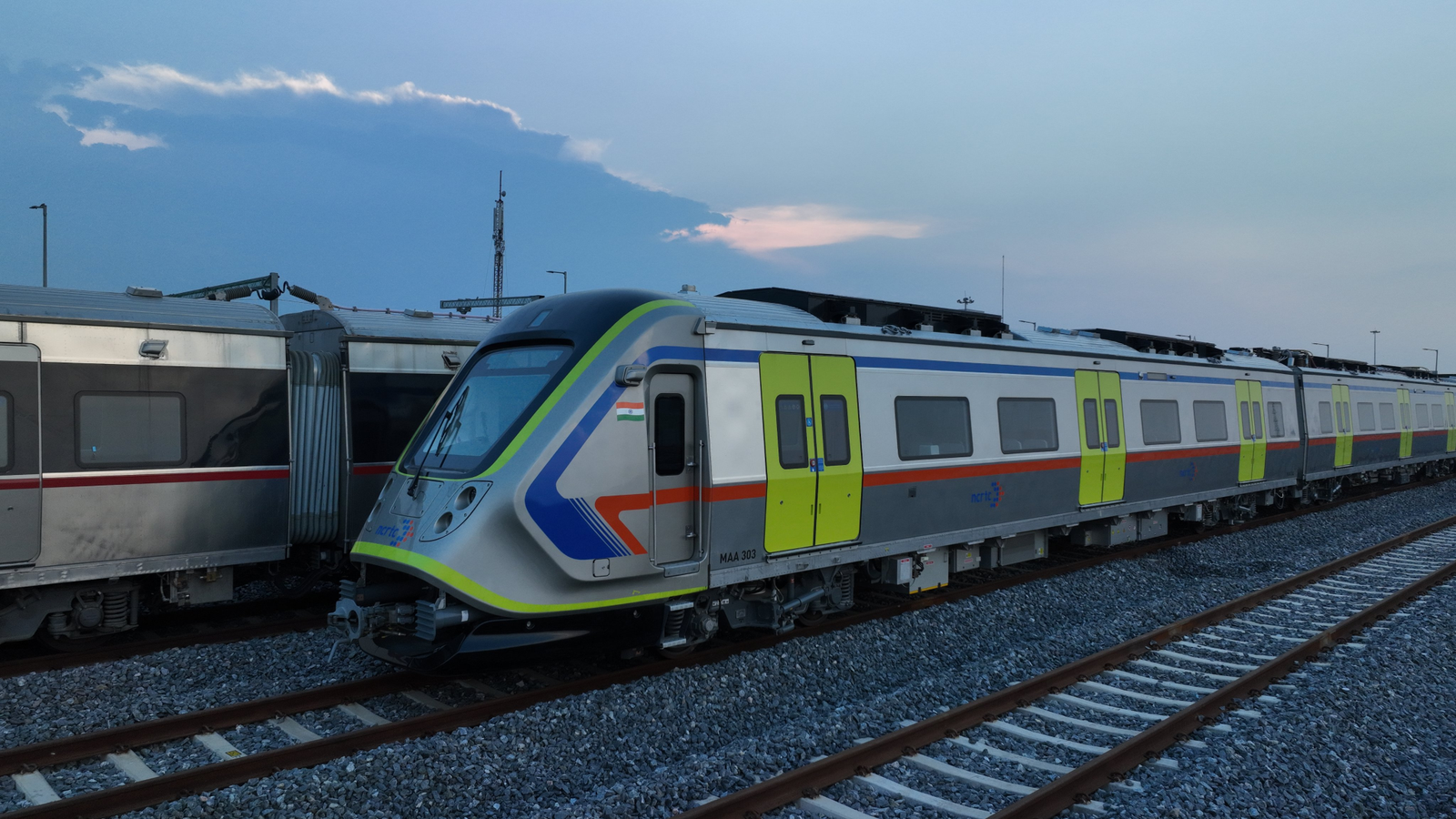
One of the most important features of the Meerut Metro is its integration with the Namo Bharat. The metro shares tracks and infrastructure with the semi high-speed regional rail. The setup allows passengers to move between local and intercity travel without switching stations. A commuter can travel within Meerut and continue towards Delhi using the same network. Meerut Metro also stands out for its speed. With an operational speed of up to 120 kmph, it is currently considered India’s fastest metro system. It can cover the city corridor in about 30 minutes. During the peak hours, trains arrive every 5 to 10 minutes, which supports daily commuting.
Future expansions
The current Meerut Metro provides a strong base, but it does not cover the entire city. Authorities have proposed additional corridors to improve network reach and maybe a more effective system. One of the key proposals is Line-2, which will connect Shradhapuri Phase 2 to Jagriti Vihar. This corridor aims to link several dense residential and commercial areas, improving accessibility across important parts of the city.
Proposed Line 2: Shradhapuri Phase 2 to Jagriti Vihar
| Details | Information |
| Length | 15 km |
| Type | 10.7 km elevated and 4.3 km underground |
| Number of stations | 13 |
| status | proposed |
| Proposed stations | Shradhapruri Phase 2, Kanker Khera, Meerut cantt, Railway station, Rajban Nagar, Begumpul, Baccha Park, Shahpeer gate, Hapur Adda Chauraha, Gandhi Ashram, Mangal Pandey Nagar, Taj Grahi, Medical College, Jagruti Extension |
| Implementing agency | Uttar Pradesh Metro Rail Corporation (UPMRL) |
Line 2 is expected to strengthen connectivity within Meerut by linking areas that currently depend heavily on road transport. It will also improve access to major transit points like Meerut Cantt, Railway Station, making multimodal travel more convenient. In addition, this corridor can support future urban expansion. It can guide planned growth and reduce unstructured development by connecting developing areas such as Mangal Pandey Nagar and Jagriti Vihar
If implemented effectively, Line 2 will not only increase the metro’s coverage but also improve its usability for a larger section of the population. It can play a key role in boosting ridership and making the metro a more practical option for daily commuting.
Business and economic impact
The Meerut Metro influences the economy beyond transportation. It supports urban development, business growth, and environmental improvement.
Real Estate and urban developement
Metro connectivity often increases the value of nearby properties. Meerut has started to experience this trend. Areas around metro stations have become more attractive for residential and commercial development. Locations such as Begumpul, Modipuram, and Shatabdi Nagar are witnessing increased demand. Property values near metro stations have risen from Rs 8,000 to 12,000 per square yard to Rs 12,000 to 20,000 per square yard over time. Improved connectivity encourages people to invest in these areas.
Transit Oriented Development (TOD) will further support this growth. Planned development around stations, can lead to organised urban expansion. This approach can reduce unplanned growth and improve infrastructure planning.
Employment and commercial activity
The metro project has created employment at multiple levels. Construction work generated direct jobs. Operations and maintenance continue to support employment. Beyond the project itself, the metro creates opportunities for businesses.
Commercial activity is expected to grow around metro stations. Offices, retails spaces, and small business centers are likely to come up near these locations. These areas will offer easy access for daily commuters. It will make them attractive for companies and employees. As a result, station zones may develop into active business hubs. This can also create new job opportunities and support local economic activity around the metro network.
Environmental sustainability
The Meerut Metro is also playing an important role in improving the city’s environmental conditions. Urban trans[ortation remains one of the main contributors to pollution in cities like Meerut. Increasing use of private vehicles has led to higher emissions, traffic congestion, and declining air quality. In this context, the metro offers a cleaner and more efficient alternative. Electric trains produce significantly lower emissions compared to petrol and diesel vehicles. As more people shift to rail based transport, the overall pressure on roads can reduce. This shift is expected to take nearly 1 lakh private vehicles off the roads over time. As a result, It could see a reduction of around 2.5 lakh tonnes of carbon emissions annually. The impact goes beyond numbers. Fewer vehicles on the road means less congestion, smoother traffic flow, and better urban air quality. At a broader level, projects like the Meerut Metro reflect a shift in how cities approach development. They show a growing focus on cleaner mobility and planned urban growth.
Challenges: A Closer Look at Ground Reality
Despite its advantages, the Meerut Metro faces several challenges. These challenges may affect its long term performances.
Ridership and revenue gap
A metro system depends on regular passenger use. Meerut currently lacks the high commuter density seen in larger metro cities. Many people prefer cheaper and flexible transport options such as auto-rishkaws and buses. These options provide door-to-door connectivity. If ridership remains low, revenue from ticket sales will not meet operational costs. This gap can affect financial stability.
Financial Stability
Metro projects required large investment. Costs include construction, maintenance and daily operations. If revenue remains limited, the system may remain on government support. This can create financial pressure over time. Long-term sustainability requires:
- Increasing ridership
- Expanding commercial revenue
- Efficient cost management
Infrastructure projects often deliver benefits over a long period, but financial challenges appear early.
Competition and limited resources
Meerut already has an established informal transport system. Autos and shared vehicles provide flexible travel options. The metro cannot replace these services completely. Instead, it must work alongside them. Limited network coverage also affects usage. If the metro does not connect key areas like Ganga Nagar, Shastri Nagar, Pallavpuram and peripheral zones like Ved Vyas Puri, commuters may choose other options.
Strong last-mile connectivity is essential. Feeder services must support the metro network to improve accessibility.
Conclusion
The Meerut Metro has given the city a new direction. For a place that relied heavily on roads, this shift matters. Daily travel no longer depends only on traffic conditions and long delays. For many people, the metro has already started to make movement easier and more predictable. With its link to the Namo Bharat, the distance between Meerut and Delhi feels shorter in Practical terms. The changes are gradual but noticeable. Areas around stations are becoming more active. Small shops, service providers, and local businesses are seeing more Movement. At the same time, the system is still in its early stages. Its long-term success will depend on how people respond to it. Convenience will play a major role. If reaching the station is easy and the service remains reliable, more people will choose the metro over other options.
There are also practical concerns. The network is still limited in coverage. Many areas remain outside its reach. Local transport, such as auto and e-rickshaws, will need to support the system better. Without strong last-mile connectivity, the metro can not serve its full purpose. Financial stability is another factor. Running a metro system requires steady usage. If passenger numbers remain low, it will take longer to recover costs. That is why expansion and consistent ridership will matter in the coming year. Even with these challenges, the metro has created a strong base. It has introduced a faster way to travel and opened up new possibilities for growth. It has also shown how better infrastructure can change the pace of a city. Meerut now has an opportunity. If the system grows in the right direction and people begin to rely on it, the metro can become a central part of daily life.
Also Read: Mumbai-Ahmedabad Bullet Train Project completes all 13 Portal Beam launches